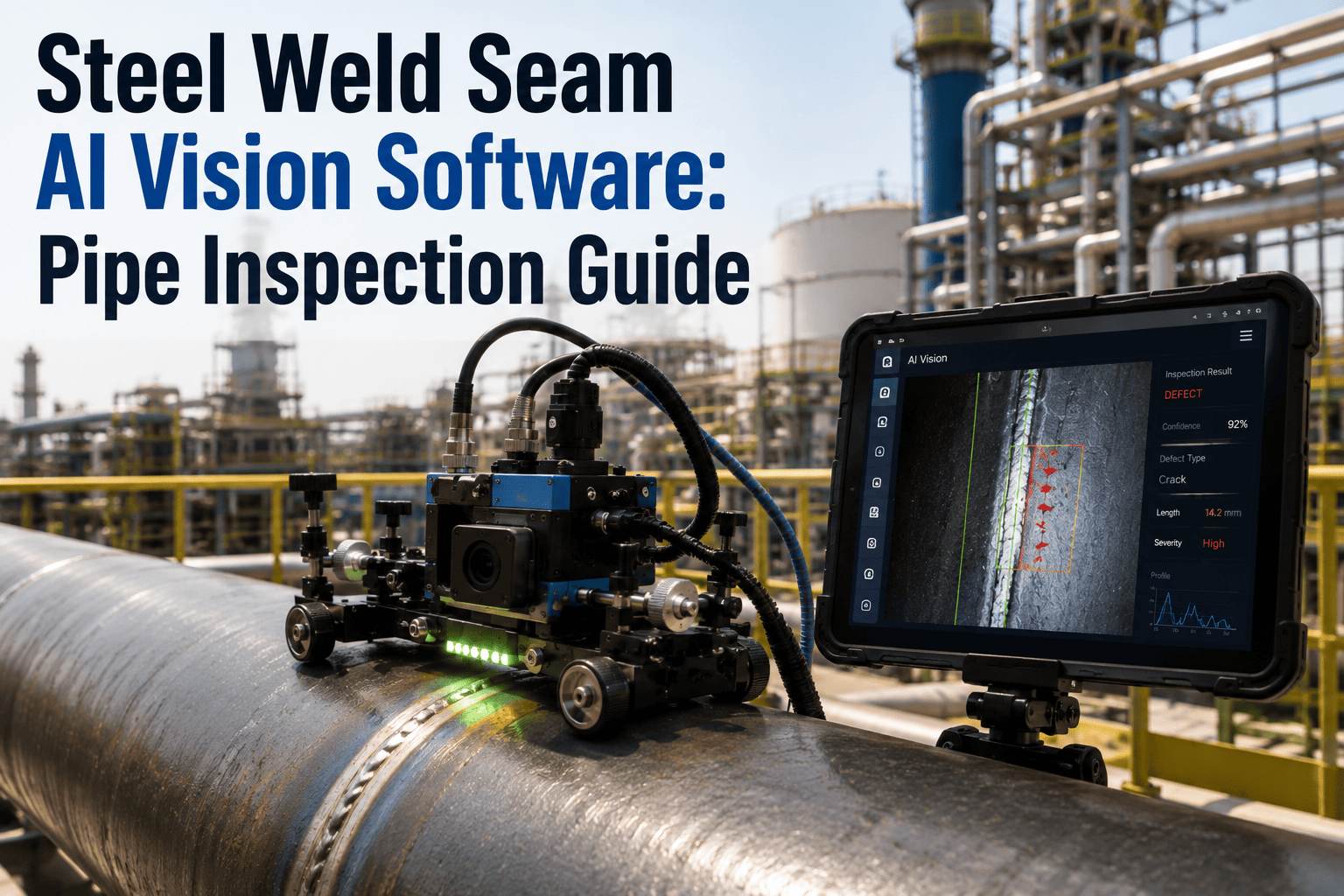
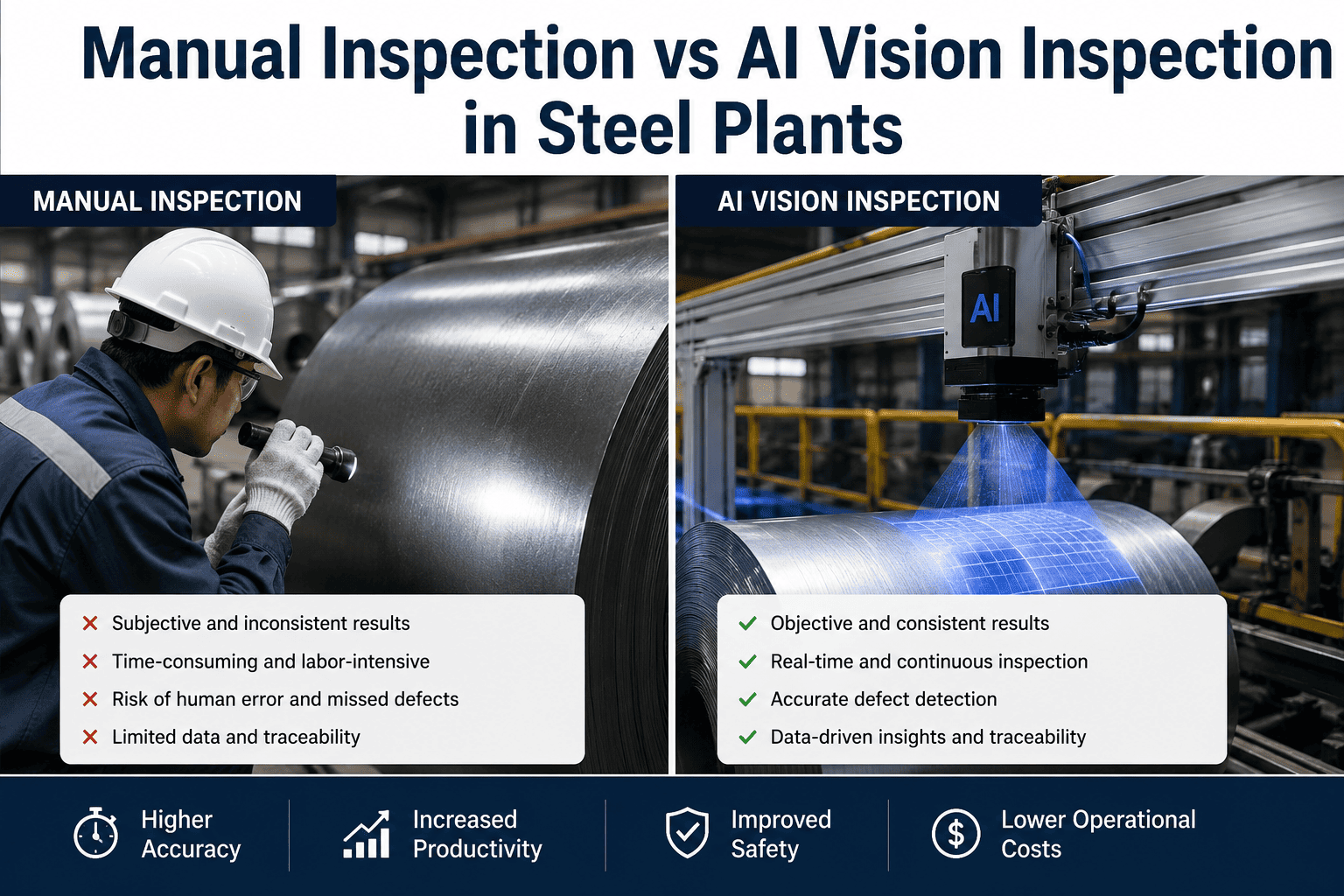
The automotive assembly line was inspecting parts at 800 units per minute, but the vision system's 180ms latency meant defects sailed past quality gates before rejection signals arrived. Quality escapes cost $120,000 monthly, and line slowdowns to accommodate the system reduced throughput by 15%. After deploying optimized Vision AI with sub-30ms end-to-end latency, defect detection happens in real-time—rejects trigger instantly, quality escapes dropped to near zero, and line speed increased 25% without missing a single defect. That's the competitive advantage latency optimization delivers.
<30ms
Total Inspection Latency
Optimized Vision AI systems process image capture, inference, and output triggering in under 30 milliseconds—enabling real-time quality control at production speeds exceeding 1,000 parts per minute without compromising accuracy.
Speed means nothing if quality suffers, but neither does accuracy if results arrive too late for action. Vision AI latency optimization bridges this gap—delivering millisecond-level response times that enable true real-time inspection without sacrificing detection performance. Schedule a consultation to explore how latency-optimized Vision AI can accelerate your quality operations.
Why Latency Matters in Vision AI
Manufacturing operates in real-time with microsecond precision. Vision AI must match this speed to deliver actionable results—not historical observations that arrive after defective parts have passed downstream stations.
<30ms
End-to-end latency enables inspection at speeds exceeding 1,000 parts per minute with instant reject triggering
85%
Reduction in quality escapes through real-time defect detection and immediate response capability
25%
Increase in line throughput when inspection keeps pace with production without slowdowns
$200K
Average annual savings from eliminating quality escapes and reducing line speed constraints
Ready for real-time vision inspection? Join manufacturers achieving sub-30ms latency for quality control that never slows production.
Sign Up Free
Latency Sources in Vision Systems
Total inspection latency comprises multiple sequential stages. Optimizing each component—from image acquisition to output triggering—determines whether your system achieves real-time performance or introduces unacceptable delays.
01
Image Acquisition (2-5ms)
Camera exposure and readout time. High-speed industrial cameras with global shutter minimize motion blur while maintaining fast cycle times. Trigger-to-image latency depends on interface speed and camera architecture.
02
Image Transfer (1-8ms)
Data transmission from camera to processing unit via GigE, USB3, or Camera Link. Interface bandwidth and protocol efficiency determine transfer speed for high-resolution images.
03
Preprocessing (2-10ms)
Image corrections, filtering, and formatting. GPU-accelerated preprocessing pipelines reduce latency through parallel processing of multiple operations simultaneously.
04
AI Inference (8-50ms)
Neural network processing for defect detection. Model optimization, quantization, and hardware acceleration dramatically reduce inference time without sacrificing accuracy.
Sign up for Oxmaint to deploy optimized models achieving sub-15ms inference.
05
Output Communication (2-10ms)
Result transmission to control systems via industrial protocols or discrete I/O. Low-latency communication ensures inspection results trigger immediate actions on production equipment.
Optimization Techniques
Achieving sub-30ms total latency requires systematic optimization across hardware selection, software architecture, and algorithm design. Each technique targets specific bottlenecks in the inspection pipeline.
Edge AI Processing
Deploy inference at the edge with dedicated GPU or NPU hardware. Eliminates network round-trips to cloud or datacenter while enabling deterministic latency for real-time applications.
Model Quantization
Reduce neural network precision from FP32 to INT8 or mixed precision. Achieves 2-4x inference speedup with minimal accuracy loss through careful quantization-aware training.
Pipeline Parallelization
Process multiple images simultaneously in overlapping stages. While one image undergoes inference, the next is transferred and the previous result communicates—maximizing throughput without adding per-image latency.
Hardware Acceleration
Leverage specialized inference hardware like NVIDIA Jetson, Intel Movidius, or custom ASICs. Purpose-built accelerators deliver order-of-magnitude improvements over general CPU processing.
Model Architecture Selection
Choose efficient architectures like MobileNet, EfficientDet, or YOLO variants optimized for speed. Appropriate model selection balances accuracy requirements with latency constraints.
Zero-Copy Data Transfer
Eliminate memory copies between processing stages using shared buffers and DMA transfers. Reduces overhead and enables faster data movement through the inspection pipeline.
Hardware Platform Comparison
Selecting the right processing hardware fundamentally determines achievable latency. Different platforms offer distinct tradeoffs between inference speed, power consumption, cost, and deployment complexity.
Latency figures represent typical inference times for common defect detection models at 1920x1080 resolution.
Uncertain which hardware platform meets your latency requirements? Our team will assess your inspection needs and recommend optimal configurations.
Schedule Assessment
Traditional vs. Optimized Vision AI
Understanding the performance difference between conventional vision systems and latency-optimized implementations reveals why modern approaches enable real-time quality control at speeds previously impossible.
Traditional Vision AI
❌
- 150-300ms total latency
- Cloud-dependent processing
- Variable network delays
- Limited throughput scalability
- Unsuitable for high-speed lines
600 PPM
maximum inspection rate
Latency-Optimized Vision AI
✔️
- 20-30ms total latency
- Edge-based inference
- Deterministic timing
- Parallel pipeline processing
- Real-time production speed
1,200+ PPM
sustained inspection rate
Model Optimization Techniques
AI model design profoundly impacts inference latency. Strategic optimization techniques reduce computational requirements while maintaining detection accuracy essential for quality applications.
ROI of Latency Optimization
Low-latency vision systems deliver measurable returns through increased throughput, reduced quality escapes, and elimination of line speed constraints that bottleneck production capacity.
Reduction in quality escapes
Increase in inspection throughput
Reduction in line slowdowns
Calculate your latency optimization ROI. Create a free Oxmaint account and model the throughput impact for your specific production environment.
Sign Up Free
Implementation Roadmap
Deploying latency-optimized vision systems follows a structured approach that validates performance requirements before full production rollout. Systematic testing prevents deployment failures from unmet timing expectations.
Week 1
Baseline Assessment
Current latency measurement
Bottleneck identification
Target specification
Week 2-3
Model Optimization
Quantization and pruning
Hardware acceleration setup
Accuracy validation
Week 4
Performance Validation
End-to-end latency testing
Throughput stress testing
Determinism verification
Week 5+
Production Deployment
Gradual rollout
Real-time monitoring
Continuous optimization
Latency isn't a feature—it's the foundation. We spent six months perfecting our AI model's accuracy only to discover it was useless at production speeds. Rebuilding with latency-first design took three weeks and transformed it from a lab curiosity into our most profitable quality improvement.
— Director of Manufacturing Engineering
Deploy Vision AI That Keeps Pace with Production
Your quality systems must operate at line speed, not hold it back. Oxmaint delivers latency-optimized Vision AI achieving sub-30ms inspection cycles—enabling real-time defect detection at throughputs exceeding 1,200 parts per minute without sacrificing accuracy.
Frequently Asked Questions
What causes high latency in traditional vision systems?
Major contributors include cloud-based processing requiring network round-trips, unoptimized neural networks, inefficient image transfer protocols, CPU-only processing without GPU acceleration, and sequential rather than pipelined architectures.
Schedule a consultation to identify bottlenecks in your current system.
How fast is fast enough for real-time inspection?
Target latency depends on line speed and part spacing. For 1,000 PPM with adequate safety margin, total system latency should stay under 30ms. Higher speeds require correspondingly lower latency. Calculate your requirements based on conveyor speed and minimum part spacing.
Does optimization reduce detection accuracy?
Properly executed optimization maintains accuracy within 1-2% of baseline through techniques like quantization-aware training and careful model selection. Some aggressive techniques like heavy pruning may trade more accuracy for speed—the right balance depends on your application requirements.
Sign up for a free account to test optimized models on your data.
What hardware investment is required for low-latency vision?
Edge AI platforms range from $500 embedded modules for moderate performance to $5,000+ industrial PCs with discrete GPUs for maximum speed. The right choice depends on image resolution, model complexity, and required throughput. Most applications achieve excellent results with mid-range options under $2,000.
Can we optimize existing vision systems or must we start over?
Many systems benefit from optimization of existing models through quantization, hardware acceleration, and communication improvements. However, systems with fundamental architectural limitations may require redesign.
Book a demo to assess your optimization potential.