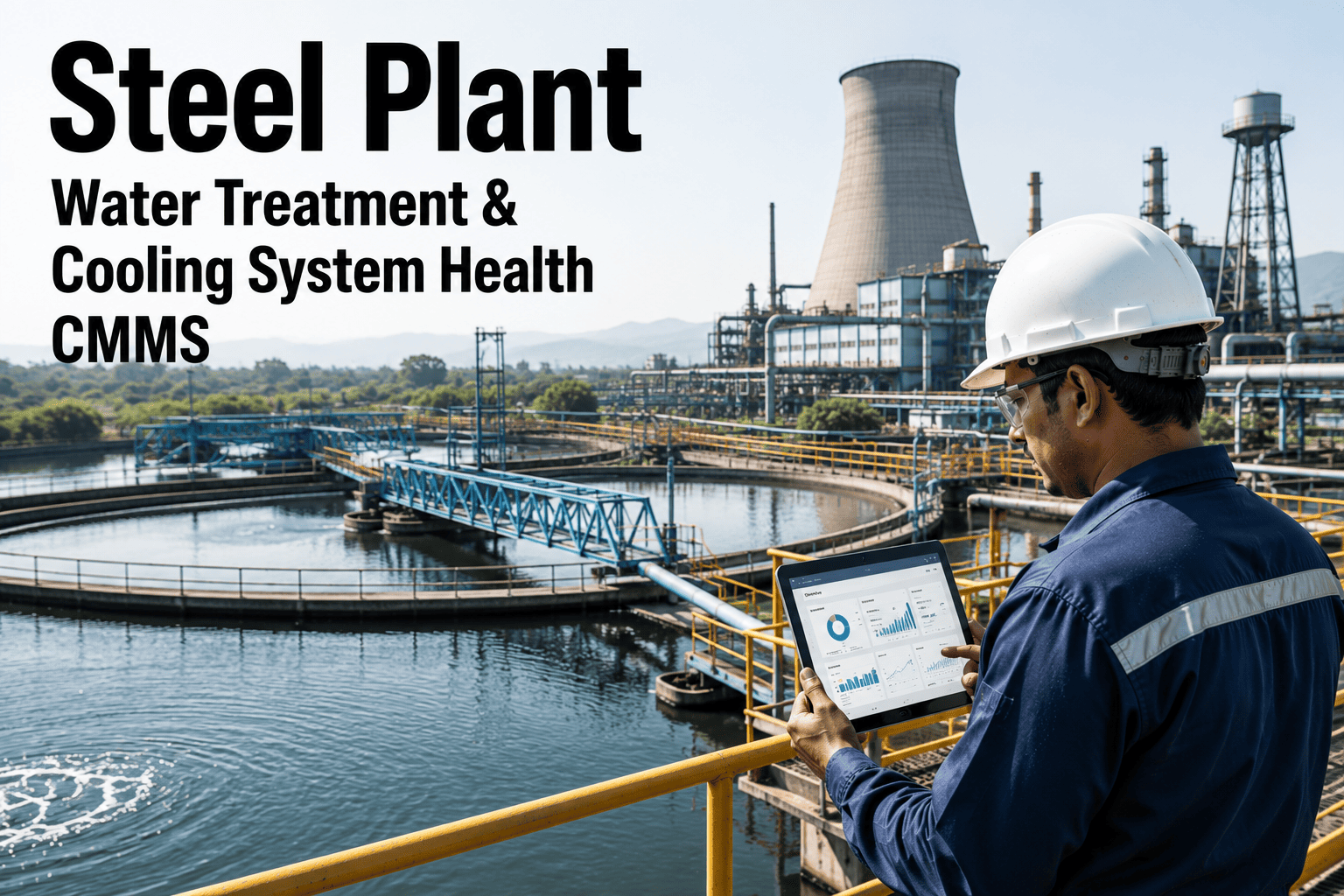
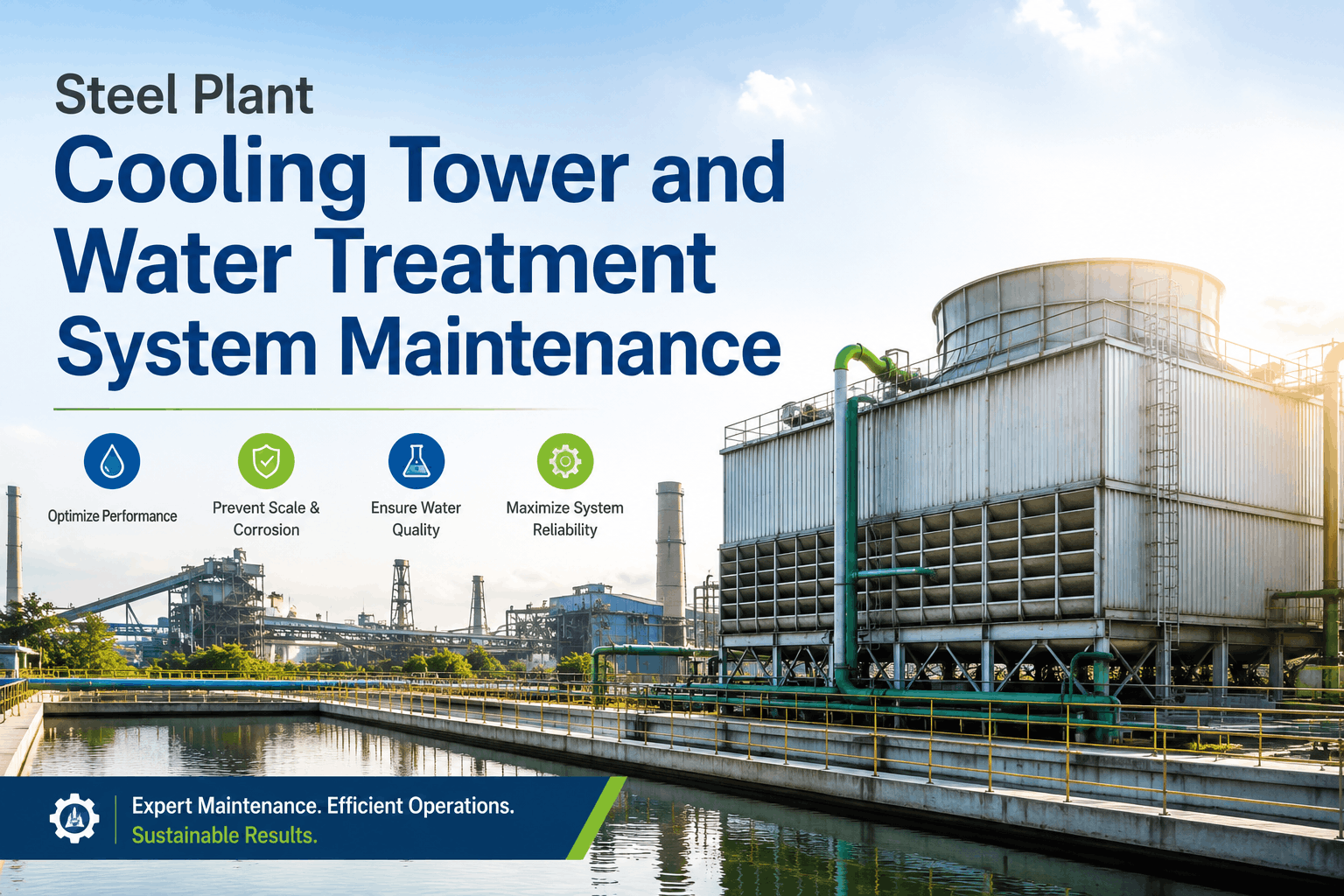
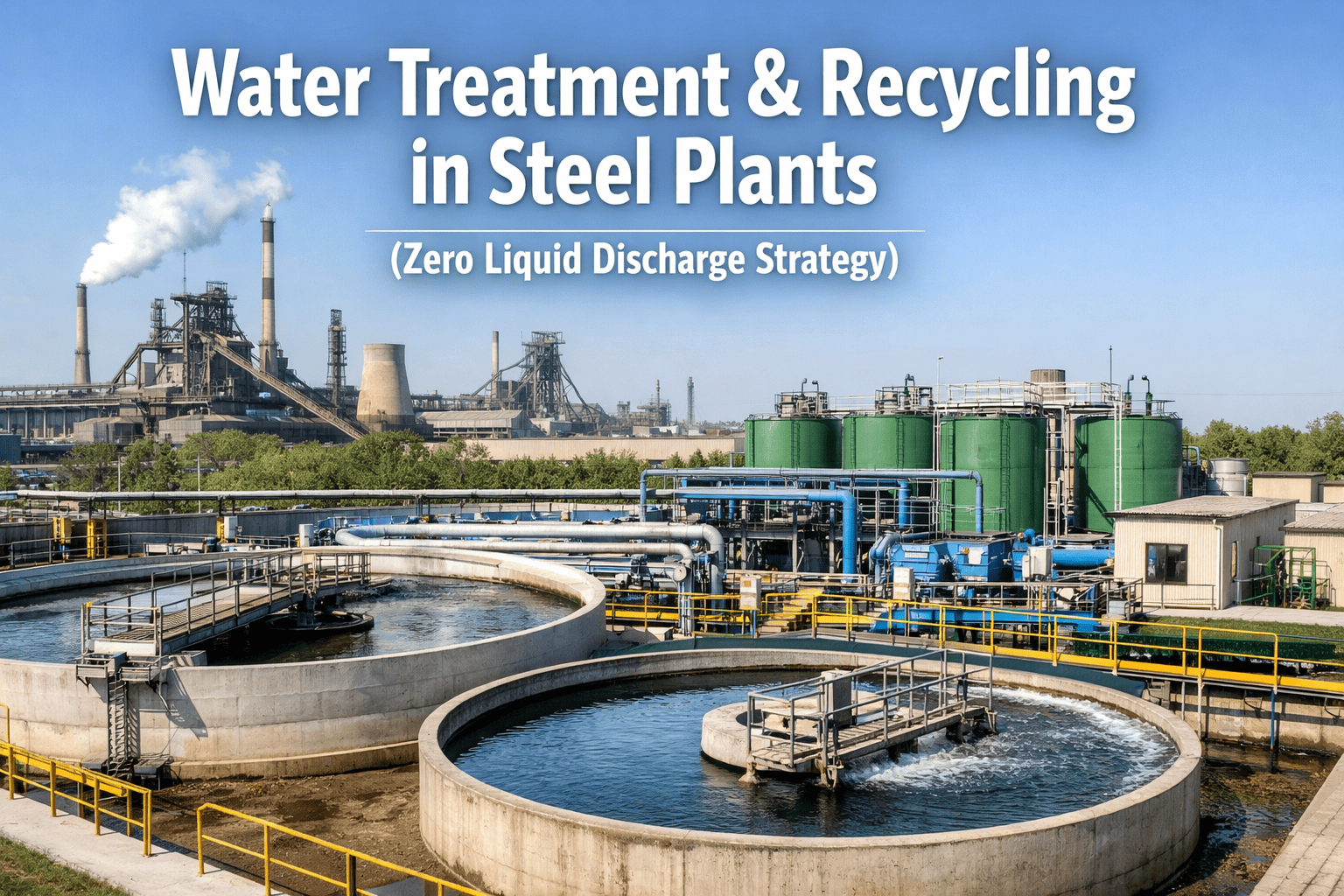
Steel production is one of the most water-intensive industrial processes on earth. An integrated steel plant takes in an average of 28.6 m³ of water per ton of steel produced (World Steel Association), while an EAF plant uses 28.1 m³/ton. The actual consumption — water lost primarily to evaporation — is much lower at 1.6-3.3 m³/ton, because roughly 90% of water is discharged after cooling and treatment. But that 90% recirculation rate depends entirely on water treatment: controlling scale, corrosion, biological growth, and contamination across dozens of separate cooling circuits serving blast furnaces, BOFs, EAFs, caster molds, rolling mills, and finishing lines. When treatment fails, equipment fails — fouled heat exchangers, corroded piping, plugged nozzles, and unplanned shutdowns costing thousands per hour.
Managing water treatment across a steel plant means tracking chemical dosing, water quality parameters, equipment condition, and regulatory compliance across multiple circuits simultaneously — each with different water chemistry requirements. Oxmaint CMMS centralizes water treatment management — scheduling chemical dosing, logging water quality readings, tracking cooling tower maintenance, managing blowdown cycles, and generating compliance reports — so your water treatment team can optimize every circuit from a single platform.
Water Usage by Process: Where the Water Goes
Each production area in a steel plant has distinct water requirements, contamination risks, and treatment needs. The CMMS must track each circuit independently:
Track Every Circuit, Every Parameter, Every Treatment
Oxmaint manages water quality logs, chemical dosing schedules, cooling tower maintenance, and blowdown tracking across all plant circuits — with automated alerts when parameters drift out of range.
The Three Enemies: What Water Treatment Controls
All cooling water treatment in a steel plant targets three interconnected problems. Failure to control any one leads to cascading failures across the system:
Scale & Deposits
As water evaporates in cooling towers, dissolved minerals concentrate. Calcium carbonate, silica, and other minerals precipitate onto heat transfer surfaces. Just 1mm of scale reduces heat transfer by 10-12%. In a steel plant operating at 1,500-1,600°C, even small reductions in cooling efficiency can cause equipment damage, product quality defects, or dangerous overheating.
Corrosion
Steel plant cooling water is aggressive — high temperatures, dissolved oxygen, chlorides, process contaminants (acids, heavy metals), and pH fluctuations all accelerate corrosion. Corroded piping leaks, heat exchangers fail prematurely, and corrosion products (iron oxide) become deposits that further reduce heat transfer. Pipe wall thinning creates safety hazards.
Biological Growth
Warm, nutrient-rich cooling water is ideal for bacteria, algae, and biofilm. Biofilm acts as insulation (reducing heat transfer) and as a site for under-deposit corrosion. Legionella is a serious health risk in cooling towers. Process contaminants like oil and organics from coke ovens and rolling mills feed biological growth. Fouled fill media reduces tower efficiency.
What the CMMS Must Track for Water Treatment
Effective water treatment management requires systematic data collection across every circuit:
The Makeup Water Equation: Why Blowdown Management Matters
Every evaporative cooling system follows the same fundamental balance — and optimizing it is the key to reducing both water consumption and treatment costs:
Optimize Water Treatment Across Every Steel Plant Circuit
Oxmaint tracks water quality parameters, chemical dosing, cooling tower maintenance, blowdown management, and compliance reporting — so your water treatment program delivers maximum equipment protection at minimum cost.
Frequently Asked Questions
How much water does a steel plant use per ton of steel produced?
According to the World Steel Association, an integrated steel plant (BF-BOF route) takes in an average of 28.6 m³ per ton of steel, while an EAF plant uses 28.1 m³/ton. However, actual consumption is much lower at 1.6-3.3 m³/ton because approximately 90% of water is discharged after cooling and treatment. Water losses are primarily due to evaporation. Individual steel plants vary widely — from under 1 m³ to nearly 150 m³ per ton depending on plant configuration, geography, water availability, and local regulations. In India, some plants consume up to 60 m³ per ton (Fluence). Roughly 82% of total water is consumed by once-through cooling systems (worldsteel survey of 29 steelworks representing 111 million tons annual output).
Which processes in a steel plant use the most water?
Cooling is the dominant use across all processes. Blast furnace: 7.6 m³/ton for stave cooling, tuyere cooling, and gas scrubbing (500 m³/hr for wet scrubbing). Continuous casting: 456 m³/hr total — 6 m³/hr demineralized water for mold cooling, 300 m³/hr coolant water, 150 m³/hr direct machine cooling. BOF steelmaking: 180 m³/hr for wet scrubbers plus lance and hood cooling. Hot rolling: largest volume circuit for descaling, roll cooling, and laminar cooling. Coke ovens: 0.4 m³/ton but generate the highest concentration of problematic contaminants (tars, phenols, cyanide, ammonia). Cold rolling/finishing: lowest volume but strictest water quality requirements (acids, heavy metals, oil emulsions).
What are the main water treatment challenges in a steel plant?
Three primary challenges: Scale and deposits — mineral concentration increases as water evaporates in cooling towers, leading to calcium carbonate, silica, and other deposits on heat transfer surfaces (1mm of scale can reduce heat transfer 10-12%); Corrosion — high temperatures, dissolved oxygen, chlorides, and process contaminants (acids, heavy metals) accelerate pipe and equipment corrosion; Biological growth — warm, nutrient-rich water supports bacteria, algae, and biofilm that reduce cooling efficiency and create health risks (Legionella). Additionally, process-specific contaminants complicate treatment: oil and hydraulic fluid from rolling mills and casters, heavy metals from finishing operations, phenols and cyanide from coke ovens, and suspended solids (1,000-5,000 mg/L in steelmaking operations).
What is the makeup water equation and why does it matter?
The fundamental cooling water balance is: Makeup = Evaporation + Blowdown. Evaporation is fixed by thermal load (can't reduce it without reducing production). Blowdown is the optimization lever — water deliberately discharged to prevent mineral concentration from getting too high. Cycles of concentration (CoC) = Makeup ÷ Blowdown. Higher CoC means less blowdown, which means less fresh water makeup needed and lower treatment costs. Running at 3 CoC wastes far more water than running at 5-8 CoC, but higher cycles require better treatment chemistry to prevent scaling. The CMMS tracks CoC, TDS, and water quality parameters to ensure the system runs at the highest safe concentration, minimizing water consumption while protecting equipment.
How does CMMS software improve steel plant water treatment management?
A CMMS centralizes water treatment across all circuits: Water quality logging — scheduled parameter readings (pH, TDS, hardness, chloride, silica, biocide residual) per circuit with automated out-of-range alerts; Chemical management — dosing schedules, pump calibration tracking, chemical inventory, and cost-per-m³ analysis; Equipment maintenance — cooling tower inspections (fill, fan, drift eliminators, basin), heat exchanger cleaning schedules, pump performance tracking; Compliance — discharge quality monitoring, Legionella testing schedules, heavy metals tracking, blowdown volume records, permit reporting. This replaces manual logbooks and disconnected spreadsheets with a single system that creates an auditable trail and enables trend analysis for continuous optimization of water consumption and treatment costs.