AI Vision Cameras for Industrial Maintenance: Detect Defects 24/7
By Riley Quinn on May 2, 2026
A 50-micron crack on a turbine blade. A 2-millimeter rust patch on a pressure vessel weld. A worker entering Zone 4 without a hard hat. An oil drip forming at the base of pump bearing housing. None of these will be caught by your monthly inspection walk-down. None of them will register on a vibration sensor or a temperature probe. But all of them are visible — and a single industrial AI vision camera, mounted once and forgotten, will catch every one of them within seconds, 24 hours a day, 365 days a year. Human inspectors miss 20–30% of defects under real production conditions. AI vision systems hit 95–99% accuracy and never get tired, never blink, never need a coffee break. The shift is structural: by 2026, over 70% of manufacturers plan to deploy AI-based visual inspection within 18 months, and plants leading the charge are reporting 80% reductions in inspection time alongside $2M+ annual savings from a single deployed line. See how Oxmaint's AI vision platform turns existing IP cameras into a 24/7 inspection workforce — start your free trial.
MAY 12, 2026 5:30 PM EST , Orlando
Upcoming Oxmaint AI Live Webinar— Deploy AI Vision Cameras Across Your Plant in One Session
Join the OxMaint team in Orlando to design your AI vision deployment — defect detection, leak monitoring, corrosion tracking, and PPE compliance running on existing IP cameras with edge inference and zero cloud dependency.
Human vs AI Vision — The Accuracy Gap That Costs Manufacturers Millions
Human Inspector
70–80%
Accuracy
AI Vision Camera
95–99.2%
Accuracy
15–25%accuracy loss after just 2 hrs
20%of revenue lost to poor quality cost
<100msAI inference time per image
10K+parts per hour, every shift
The 6 Industrial Use Cases AI Vision Cameras Solve
An AI vision camera isn't a single tool — it's a platform that runs different deep learning models on the same hardware. The same camera mounted above a conveyor can be running surface-defect detection, hi-vis vest checking, and oil-leak monitoring simultaneously. Here are the six highest-value use cases plants are deploying in 2026.
Use Case 01
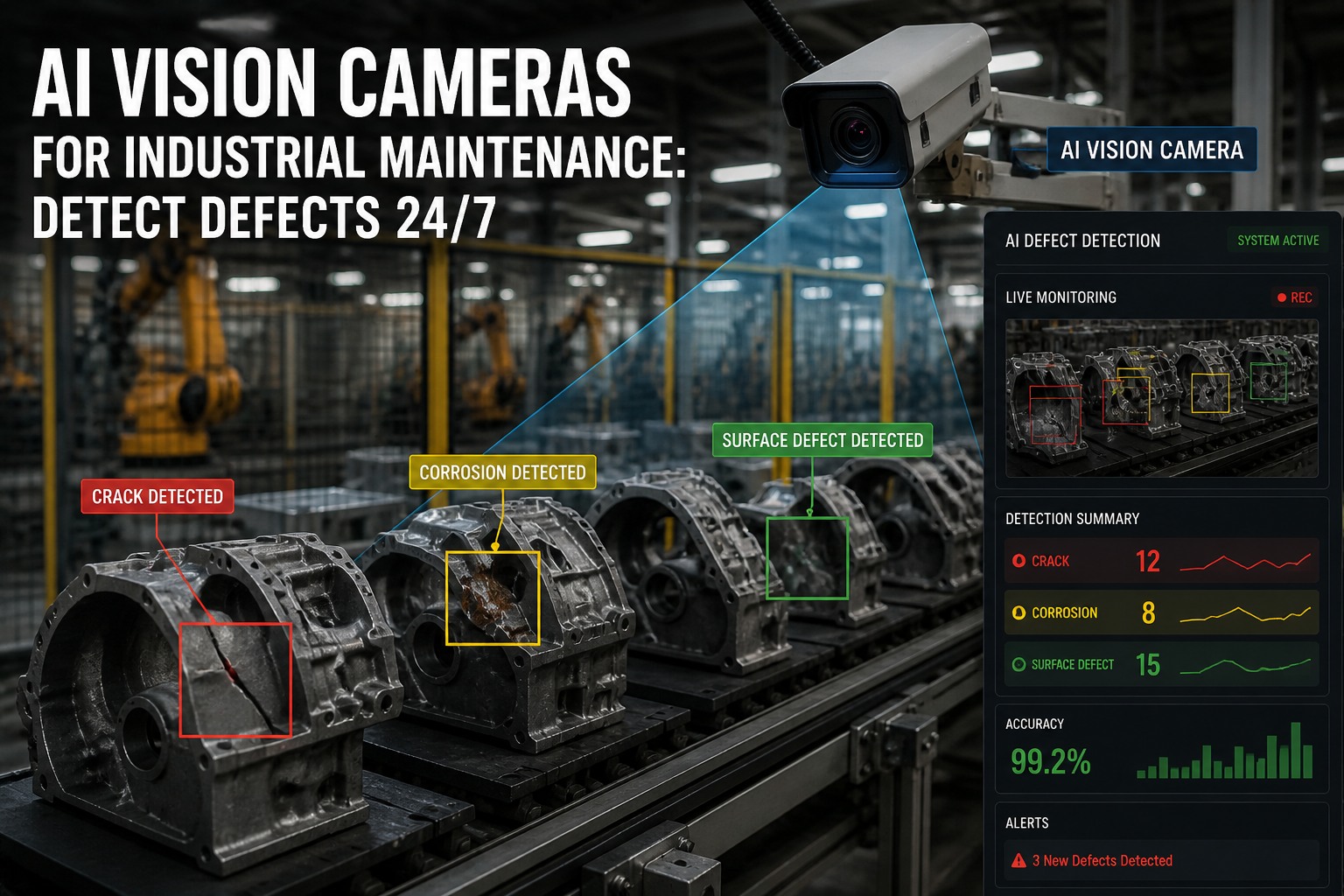
Crack & Surface Defect Detection
Detects hairline cracks (50 microns and below), pitting, inclusion voids, and coating variations on metal, ceramic, glass, and composite surfaces. Models trained on 500–2,000 sample images per defect class.
Turbine bladesPressure vesselsWeldsCastings
Use Case 02
Corrosion & Rust Tracking
Tracks rust progression over weeks and months. Compares current image against historical baseline to flag growth in corrosion area, color, and texture before structural integrity is compromised.
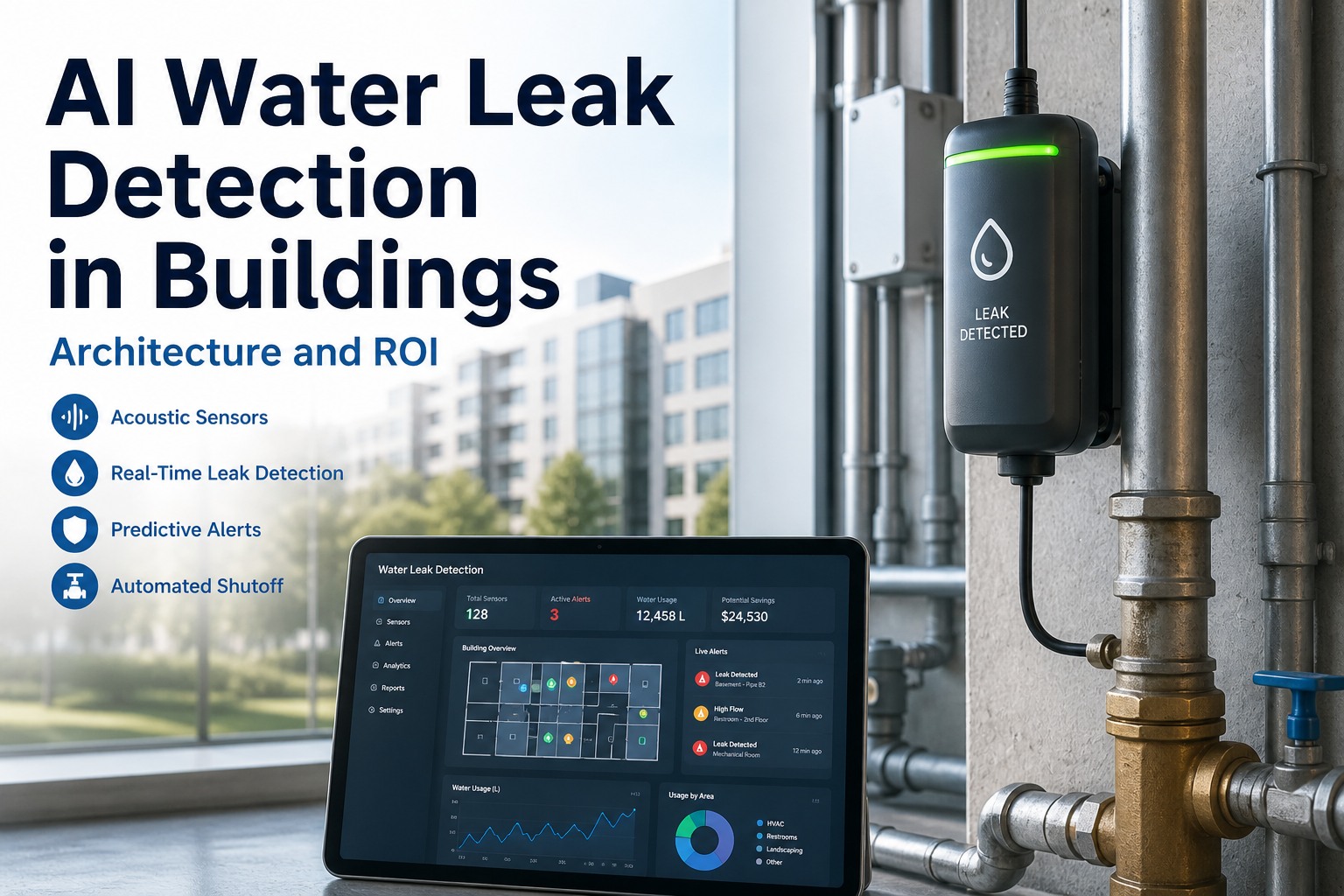
Spots oil drips, hydraulic fluid pools, water leaks, and chemical spills before they spread. Differentiates active leak formation from existing stains by tracking pixel-level changes frame to frame.
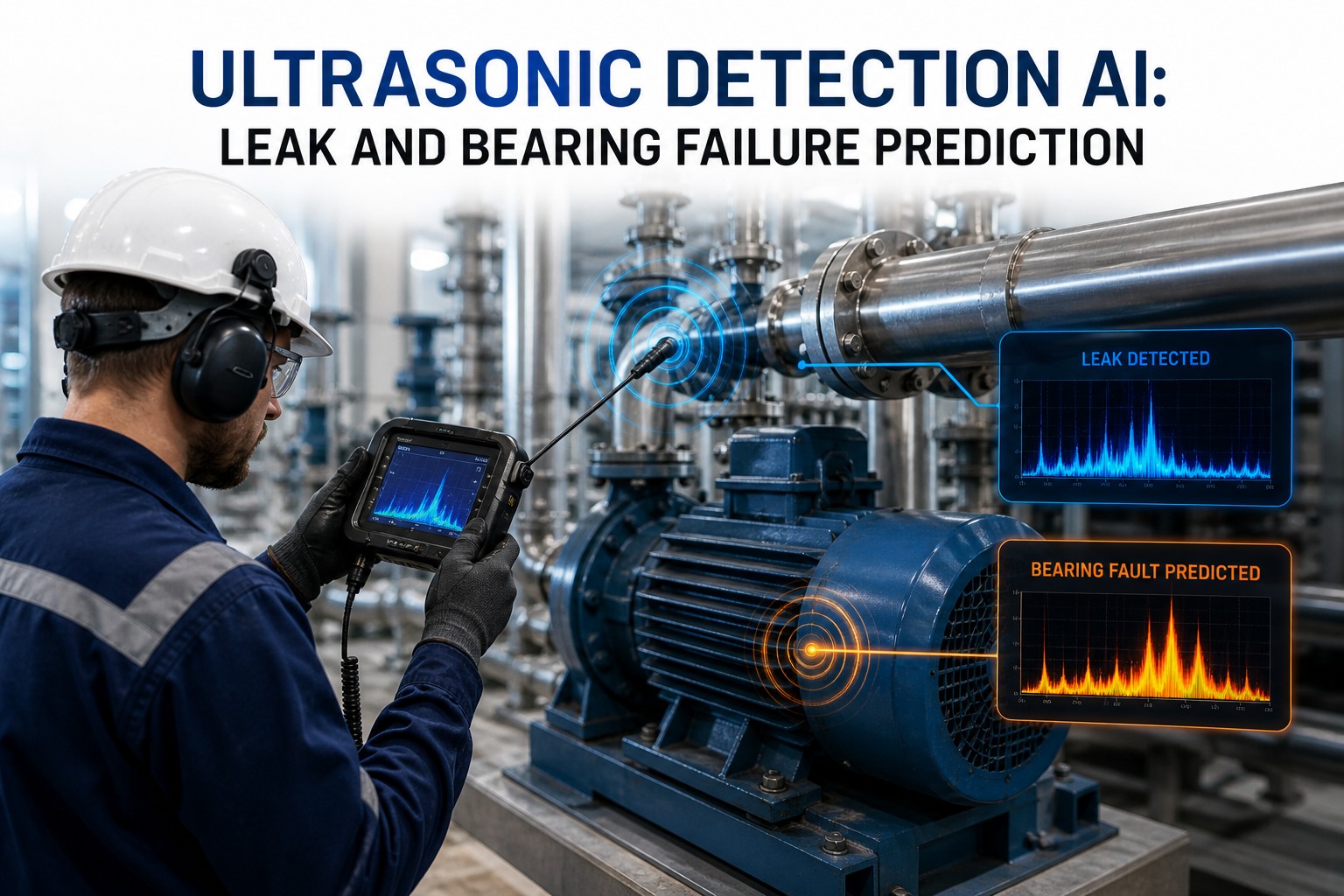
IR cameras + AI overlay catch overheating bearings, electrical hotspots in switchgear, and steam leaks invisible to standard cameras. Flags any temperature anomaly above the asset's learned baseline.
Detects missing hard hats, hi-vis vests, gloves, goggles, harnesses, and respirators per zone. Edge-processed for full data privacy — no facial recognition required for PPE compliance.
Press linesChemical zonesForklift areasConfined space
Use Case 06
Assembly & Component Verification
Confirms presence, orientation, and alignment of every component on every part — torque marks, gaskets, fasteners, labels, seals. Catches missing or mispositioned items at line speed.
AutomotiveElectronicsPackagingPharma
Turn Every Camera in Your Plant Into a 24/7 Inspector
Oxmaint's AI vision platform deploys on existing IP cameras (ONVIF/RTSP) and runs on edge GPUs inside your network — sub-100ms inference, no cloud dependency, multi-model support per camera. Live in 2–4 weeks.
Anatomy of an AI Vision Camera System — The 4 Layers
An AI vision camera is not a "smart camera" in the consumer sense. It's a four-layer pipeline: optics + lighting capture the image, edge GPU runs inference, the AI model classifies what it sees, and the result triggers downstream action — all in under 100 milliseconds. Here's what each layer actually does. Walk through the full hardware and software stack with Oxmaint's vision team — book a 30-minute session.
L4
Action & Integration Layer
Auto-generates work order in CMMS with annotated image. Triggers PLC reject mechanism. Pushes mobile alert to operator and quality engineer. Logs traceability event.
CMMS · PLC · MQTT · OPC-UA · Push notifications
L3
AI Inference Layer
Deep learning models — CNN, YOLO, Vision Transformer — output defect class, bounding box location, pixel-level mask, and confidence score. Trained on 500–2,000 of your part images.
CNN · YOLO · Vision Transformer · TensorRT
L2
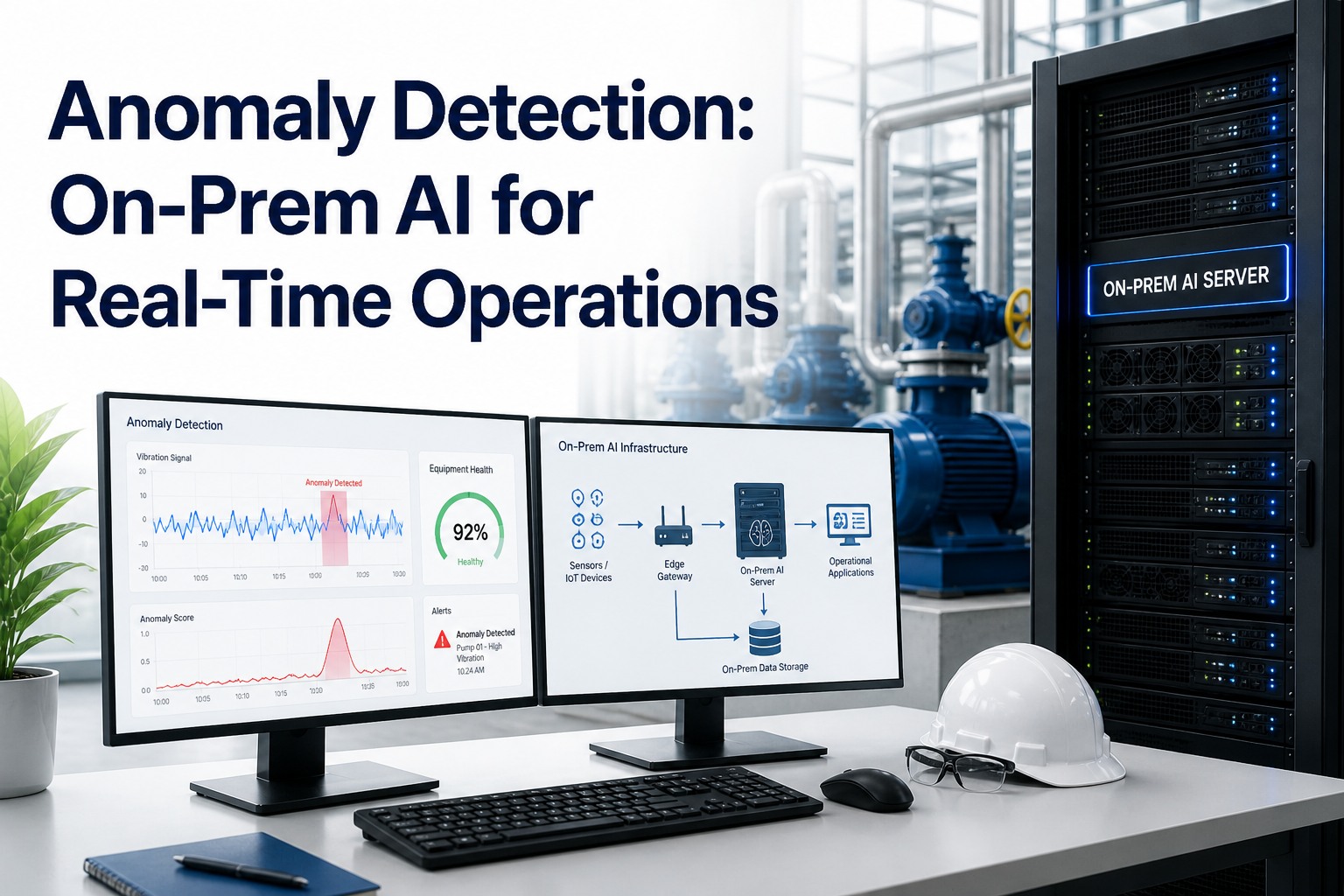
Edge Compute Layer
NVIDIA Jetson or L4 GPU edge servers run inference on-premise. Sub-100ms per image. No cloud round-trip. Air-gap capable for regulated environments.
NVIDIA Jetson · L4 GPU · TensorRT · CUDA
L1
Optics & Lighting Layer
Industrial cameras (5–45 MP, 30–500 fps) plus specialized lighting — diffuse, coaxial, dark-field, structured — designed for the specific defect type. Lighting design is the single biggest factor in detection accuracy.
GigE Vision · Sony IMX sensors · Custom lighting
The Real ROI — What Plants Actually Save
AI vision inspection isn't a quality department expense. It's a profitability investment that pays for itself in 7–8 months on average and delivers 374% three-year ROI per Forrester research. The savings come from four sources running in parallel — and the math compounds across every product line that gets monitored.
$691K
Labor savings per line annually
Inspectors redirect from repetitive checking to root cause analysis and process improvement
$500K+
Annual scrap reduction
Catching defects in first 5 minutes prevents wasted raw materials and energy on doomed parts
$1–2M
Warranty claim elimination
Defects caught on the line never reach customers — eliminates warranty exposure on a per-line basis
35%
Throughput increase
Inspection bottleneck eliminated — line runs at design speed without quality checkpoints slowing it down
374%
Three-year ROI (Forrester)
7–8 months
Average payback period
$2M / yr
Intel's documented per-line savings
Expert Review — Why Lighting Matters More Than the Camera
The single biggest difference between an AI vision deployment that works and one that fails has almost nothing to do with the camera resolution or the model architecture. It's the lighting design. A 5-megapixel camera with the right diffuse coaxial illumination will outperform a 45-megapixel camera under standard factory fluorescents every single time. The defect you're trying to catch — a hairline crack, a coating variation, a 50-micron pit — is only visible when light strikes it at the right angle and wavelength. Get the lighting wrong, and even the best deep learning model on the most expensive GPU will struggle past 75% accuracy. Get it right, and a moderate camera plus a YOLO model trained on 500 samples will hit 99%. The plants that succeed in 2026 aren't the ones who buy the most expensive cameras. They're the ones who hire someone who understands light first, and treats the camera as the second decision.
99.9% Accuracy 24/7 vs 80% From Humans
An AVI system maintains 99.9% accuracy 24 hours a day, 7 days a week. Human inspector accuracy drops up to 20% after just 2 hours of repetitive observation — and inter-inspector agreement runs only 55–70%.
Foxconn Cut Defects 80% — Siemens Up 30%
Real production deployments: Foxconn achieved 80% improvement in defect detection rates with 30% inspection time reduction. Siemens reported 30% accuracy improvement. GE reduced manufacturing costs 30% in AI vision divisions.
$100 to $10,000 — The Late-Detection Penalty
A defect caught at the inspection station costs ~$100 to fix. The same defect caught at the customer costs $10,000+ in warranty, recall, and reputation damage. AI vision flips the entire detection economics.
Your 4-Week Pilot Path — Start With One Camera, Scale From There
Plants that succeed with AI vision don't try to deploy across 50 cameras at once. The proven pattern is single-station pilot first, prove ROI, then scale. Here's the realistic 4-week sequence used by manufacturers achieving 99%+ accuracy in production.
Week 1
Camera + Lighting Setup
Position camera at the highest-impact inspection point (30 min per camera). Configure specialized lighting per defect class. Test image capture under all production conditions.
Week 2
Data Capture & Model Training
Capture 500–2,000 images covering good, marginal, and defective parts. Active learning minimizes labeling effort. CNN model trained on your specific products and conditions.
Week 3
Shadow-Run Validation
AI runs alongside human inspection for one week. Outputs compared, edge cases resolved. Target 99%+ recall before handover. Operators trained on alert workflow.
Week 4
Go-Live & Continuous Learning
AI live in production. Continuous learning pushes accuracy from 90–92% to 99%+ within first week of full operation. ROI measurable. Scale to next station.
Stop Missing 20% of Your Defects — Deploy AI Vision in 4 Weeks
Oxmaint's AI vision platform connects to your existing cameras, trains custom models on your products, and runs on edge GPUs inside your perimeter. Start with one inspection station. Prove ROI. Scale from there.
How accurate are AI vision cameras compared to human inspectors?
Production-grade AI vision systems achieve 95–99% detection accuracy consistently across all shifts, while human inspectors hit only 70–80% under real production conditions — and that accuracy drops 15–25% after just two hours of continuous observation. Inter-inspector agreement on defect severity runs only 55–70%, meaning identical parts get different verdicts on different shifts. AI maintains identical standards 24/7, classifies defect type, severity, and location systematically, and generates the inspection data that human teams cannot produce at scale. Plants typically see accuracy climb from 90–92% in the first week to 99%+ within 30 days as the model continuously learns from production data. The accuracy gap is the single biggest cost driver in manual inspection — and it's the gap AI vision closes structurally.
Do AI vision cameras work with our existing IP cameras and CCTV infrastructure?
Yes — modern AI vision platforms support existing IP cameras via ONVIF and RTSP protocols alongside purpose-built industrial cameras. The AI processing happens on edge GPU servers (NVIDIA Jetson or L4) connected to your network, not on the cameras themselves. Most plants deploying AI vision in 2026 use a hybrid approach: existing CCTV cameras for wide-area monitoring like PPE compliance and leak detection, paired with purpose-built industrial cameras (5–45 MP, 30–500 fps, with Sony IMX global shutter sensors) for precision defect detection requiring micron-level accuracy. The most common upgrade isn't camera replacement — it's lighting design, since lighting matters more than camera specifications for detection accuracy on cracks, surface defects, and subtle anomalies.
How many sample images do we need to train an AI vision model?
Training data requirements scale with defect complexity. For simple, high-contrast defects (missing components, obvious cracks), 50–150 labeled examples per defect class are sufficient. For moderate complexity (surface scratches, weld spatter), 150–500 images per class. For complex or subtle defects (hairline cracks below 50 microns, subsurface porosity, fine coating variations), 300–800 images per class. Coverage of variation matters more than absolute count — the dataset must include multiple material batches, different shifts, and lighting variations within your acceptable operating range. Most plants reach the required image count within 2–3 days of normal production. Active learning techniques further minimize the labeling effort while maximizing model accuracy, and pre-trained industry-specific models can reduce required images by an additional 60–80%.
Can AI vision cameras run multiple use cases on the same hardware simultaneously?
Yes — this is one of the major advantages of GPU-based edge inference over fixed-function machine vision systems. A single NVIDIA Jetson AGX Orin edge server can simultaneously run defect detection, PPE compliance monitoring, leak detection, and thermal anomaly classification on multiple camera feeds — all in real time at sub-100ms inference per image. The AI models are loaded as separate inference graphs and the GPU schedules them in parallel. This is why deploying AI vision delivers compounding ROI: the same hardware investment that catches surface defects on the conveyor also handles PPE compliance in the surrounding zone and leak detection on adjacent equipment. Most plants find that the second and third use cases on existing AI vision infrastructure deliver near-zero marginal cost.
What's the realistic ROI and payback period for an AI vision deployment?
Forrester research documents 374% average three-year ROI from AI visual inspection deployments with an average payback period of 7–8 months. Per-line savings average $691,200 annually in labor costs alone, before counting scrap reduction ($500K+), warranty claim elimination ($1–2M), and throughput increase (up to 35%). Deployment cost ranges $30,000–$200,000 per inspection station depending on complexity, lighting requirements, and line speed. Real-world examples: Intel publicly reports $2 million annual savings from a single wafer vision inspection deployment. An electronics manufacturer cut its defect escape rate from 2.3% to 0.1%, eliminating $1.8 million of warranty exposure per year. For a $10 million revenue manufacturer with industry-typical 20% cost of poor quality, reducing quality costs by 25% saves $500,000 annually — a payback inside the first year on a single station deployment.