Digital Twins for Maintenance: From Concept to Real-Time Asset Replicas
By Riley Quinn on May 7, 2026
For most of the past decade, "digital twin" meant a 3D model you could spin around in a CAD viewer. Useful for design reviews, useless for actually running the plant. The 2026 reality is fundamentally different. A modern digital twin is a live, sensor-fed, physics-simulated, AI-grounded replica that lets you ask questions before you act — extend this PM interval, what fails first; chiller fails Tuesday at 2 PM, what cascades. Sign up free to see how digital twins integrate with your maintenance program.
MAY 12, 2026 5:30 PM EST , Orlando
Upcoming OxMaint AI Live Webinar — Digital Twins for Maintenance Explained
Live session for maintenance directors, reliability engineers, plant CIOs, and operations leaders evaluating digital twin technology. We'll walk through the five maturity tiers (static → autonomous), demonstrate live what-if simulations on real industrial assets, show the anatomy of a working twin, and walk through the OxMaint deployment that ships pre-configured with NVIDIA Omniverse integration in 6–12 weeks.
The Maturity Ladder — Where Your Twin Actually Sits
Most "digital twins" being sold today are stuck on the bottom rung. They look impressive in a sales demo and deliver almost no maintenance value because they aren't actually connected to anything live. The ladder below shows the five tiers a digital twin can occupy, what each one can do, and what it cannot. Knowing where your existing twin sits — or where the one you're evaluating sits — determines everything about ROI.
05
AUTONOMOUS
Twin closes the loop · executes actions on real asset
Twin ↔ Asset · automated control with human oversight
Frontier · pilot deployments only in 2026
04
PRESCRIPTIVE
Twin recommends optimal action · "extend PM to 42 days"
AI optimization layer · ranked recommendations with confidence intervals
OxMaint default tier · what-if simulation included
03
PREDICTIVE
Twin forecasts future state · "bearing fails in 18 days"
ML models trained on historical sensor data · physics-informed neural networks
Mainstream tier · most modern PdM platforms
02
CONNECTED
Twin mirrors live sensor data · current temp, vibration, RPM
Real-time IoT sync · observational only · no forecasting
Common tier · "operational dashboard"
01
STATIC
Twin is a 3D model · CAD geometry, no live data
Visualization only · useful for design review, training, layout
Entry tier · most common "digital twin" sold today
The Anatomy of a Working Twin
A predictive or prescriptive digital twin isn't one thing — it's a stack of layers, each contributing something specific. Understanding the stack is what lets you evaluate vendor claims and identify which layer is actually doing the work versus which layer is decorative. Every modern industrial twin assembles these six layers; the difference between mature and immature platforms is which layers are first-class versus bolted on. Book a demo to walk through each layer running on your asset data.
06
USER INTERFACE
3D visualization · what-if controls · work order integration · mobile
Pump · compressor · motor · turbine · the thing that needs maintaining
Source of truth
One Simulation, Three Acts — Should We Extend the PM Interval?
This is what a working digital twin actually does. A maintenance director suspects the 30-day PM interval on a primary process pump is too conservative — too much labor, too many parts replaced before they're worn. The twin runs the experiment without touching the real asset. Three acts, fifteen virtual minutes of compute time, one defensible answer. Sign up free to run your own what-if simulations on your asset register.
ACT I
SETUP
"What if we extend PM from 30 days to 45?"
AssetPMP-04 · 75 kW
Current PMEvery 30 days
PM cost$1,800 / cycle
Twin baseline2 years sensor data
Twin loaded with two years of vibration, thermal, current data. Physics model captures bearing wear curve, seal degradation rate, lubrication breakdown.
ACT II
SIMULATION
Day 0
Healthy · score 1.2
Day 15
Healthy · score 1.8
Day 30
Healthy · score 2.4
Day 38
Drift starts · 3.6
Day 45
Action zone · 5.1
Day 51
Failure risk · 7.8
Twin runs 1,000 stochastic simulations across operating conditions. 87% of runs stay healthy through Day 45. 13% drift earlier under high-load scenarios.
ACT III
VERDICT
EXTEND TO 42 DAYS
94% confidence interval
Annual savings$8,640
Failure risk+0.3%
Confidence floor42 days
Hard ceiling48 days
Twin recommends 42-day interval (not 45 — leaves safety margin under high-load scenarios). Annual labor + parts savings: $8,640 per asset.
The Four Maintenance Plays Twins Run Best
Not every maintenance question deserves a digital twin. Some can be answered with a spreadsheet; some need a CMMS report. The four use cases below are the ones where a working twin produces answers that no other tool can. They're the ones that justify the GPU investment, and they're the four that the OxMaint Synapse AI twin module ships pre-configured to handle. Sign up free to test these plays on your equipment.
PLAY 01
PM Interval Optimization
When you ask:
"Are we doing this PM too often?"
Twin runs 1,000 stochastic simulations across operating envelopes
Recommends optimal interval with confidence floor + ceiling
PLAY 02
Failure Cascade Simulation
When you ask:
"What breaks if Pump 3 fails Tuesday at 2 PM?"
Twin propagates failure through dependency graph + production schedule
Lists downstream impacts ranked by criticality + dollar exposure
PLAY 03
Production-Speed Stress Test
When you ask:
"If we run the line 8% faster, what fails first?"
Twin applies physics models to stress every asset under new conditions
Identifies bottleneck assets + estimates time-to-failure under new load
PLAY 04
Operator Training Replicas
When you ask:
"Can our techs practice this repair before doing it live?"
Twin instantiates a virtual replica with realistic fault behavior
Cuts mean-time-to-repair by 30-50% on first live execution
Owned, Not Rented — The OxMaint Digital Twin Stack
The OxMaint Digital Twin deployment isn't a SaaS subscription you pay every month forever. It's a pre-configured AI server bundled with the OxMaint twin runtime, NVIDIA Omniverse integration, PhysicsNeMo simulation libraries, the what-if simulation engine, and the predictive maintenance pipeline that catches every degradation mode the twins are designed to model. Get a quote and order it like the hardware it is — pre-configured, pre-tested, ready to ingest your asset register and CAD geometry within days, and owned outright the day delivery completes.
Perpetual License
No monthly fees, no per-asset twin charges, no per-simulation billing. Future costs are entirely optional and at your discretion.
Data Sovereignty
CAD geometry, sensor history, simulation runs, twin state — all live on your server, behind your firewall.
Source Access
Source code and modification rights included. Customize physics models, extend the simulation library, build domain-specific twins.
AI-Native Core
Predictive maintenance, anomaly detection, NLP work orders — built around twin-grounded simulation, not bolted on.
Pre-Configured · Omniverse-Ready · Ships in 6–12 Weeks
Order an OxMaint Digital Twin Stack — Pre-Loaded, Owned
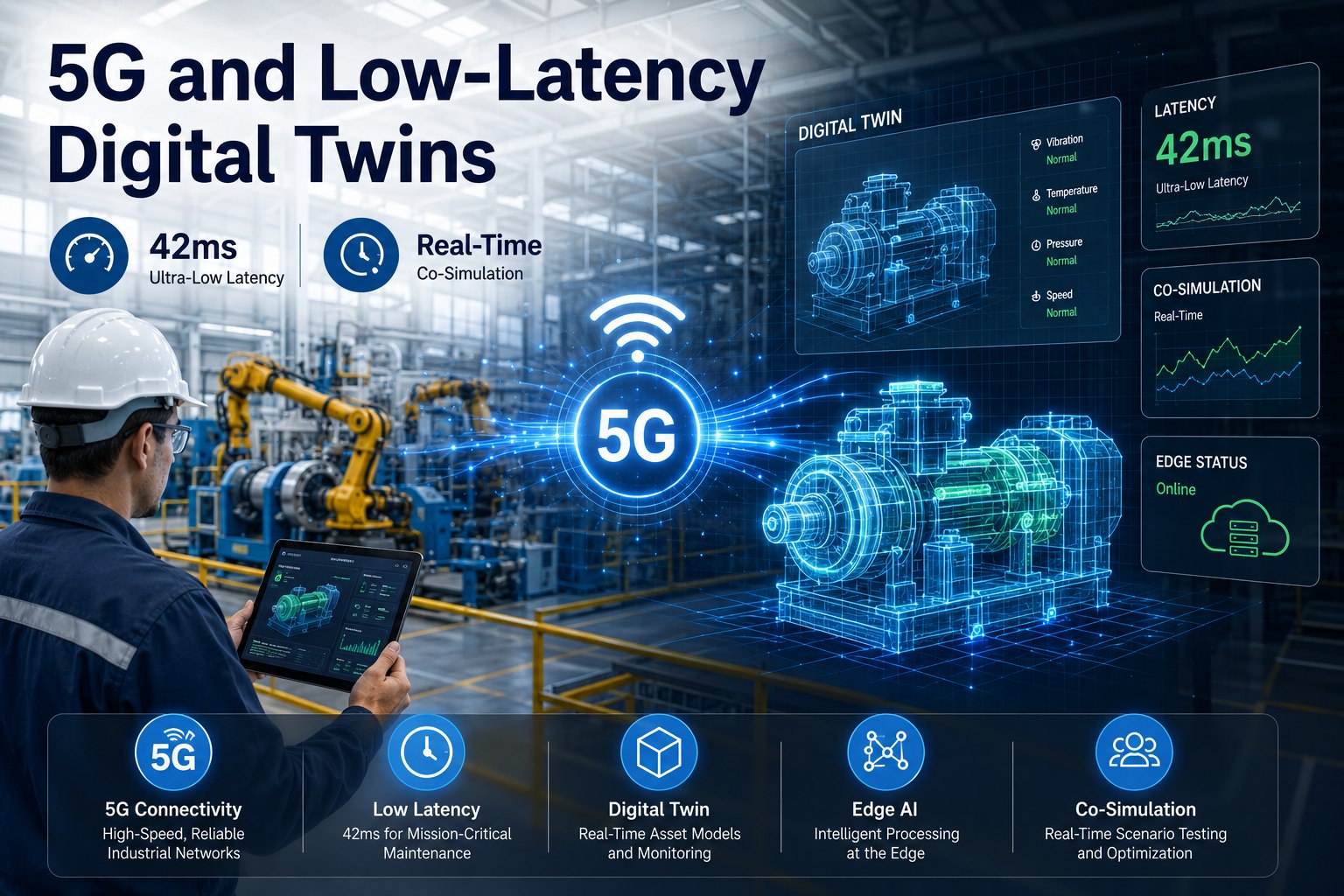
A complete on-prem digital twin deployment. AGX Orin appliances running per-asset real-time sensor sync at 42 ms edge-to-twin latency. RTX PRO 6000 Blackwell central server running NVIDIA Omniverse integration, PhysicsNeMo PINN models, what-if simulation engine, and the OxMaint dashboard. Pre-loaded with industrial twin templates for pumps, compressors, motors, turbines, ready to ingest your CAD geometry and sensor history within days. NeMo fine-tuning toolchain included for plant-specific physics adaptation.
The OxMaint Digital Twin Stack uses the standard per-plant architecture: central RTX PRO 6000 Blackwell server plus two AGX Orin edge appliances. Twin runtime, Omniverse integration, PhysicsNeMo libraries, simulation engine, and CMMS connectors all included in the OxMaint AI Software + Integration line. Book a demo to walk through per-plant pricing for your twin footprint.
Swipe to see breakdown
Component
Unit Cost
Per Plant
Notes
RTX PRO 6000 Blackwell 96GB Server
$19,000
$19,000
Omniverse runtime + PhysicsNeMo + dashboard
NVIDIA AGX Orin #1 (Sensor Edge)
$4,000
$4,000
Real-time vibration + thermal sync to twin
NVIDIA AGX Orin #2 (Simulation Edge)
$4,000
$4,000
Local what-if compute · model serving
Industrial Ethernet Switch + Cabling
~$2,500
~$2,500
Plant-floor switch, Cat6A, SFP modules
Local Electrical / Instrumentation
$8,000–$12,000
~$10,000
Sensor mounts, gateways, sub-meters
OxMaint AI Software + Integration
$35,000–$55,000
$45,000 avg
Twin runtime, CAD ingestion, training
Per-Plant Total
$72,500–$94,500
~$84,500 avg
4-month delivery per plant
4-Plant Full Rollout (with Enterprise AI)
~$420,000–$520,000
Total programme
Parallel delivery + DGX Station GB300 Ultra
$84.5K
Avg per plant
4 mo
Delivery
$0
Recurring fees
∞
Perpetual
Perpetual · Owned · Source Access · Data Sovereignty
Stop Settling for 3D Models — Own a Real Twin
Live sensor sync at 42 ms. PhysicsNeMo PINN simulation. What-if engine answering PM-interval, failure-cascade, and stress-test questions in minutes. Your team owns the platform, the AI models, and the source code outright. The architecture every modern reliability program needs as digital twins move from sales-demo curiosity to operational backbone.
Do we need NVIDIA Omniverse to have a useful digital twin?
Not strictly — but for physics-based industrial twins (the kind that actually simulate corrosion, fatigue, fluid dynamics, electromagnetic behavior), Omniverse + NVIDIA's PhysicsNeMo PINN libraries are the dominant choice in 2026 because they pair tightly with the GPU acceleration these simulations need. Siemens Energy uses Omniverse + PhysicsNeMo for HRSG corrosion modeling that NVIDIA estimates could save the utility industry $1.7 billion per year. BMW deploys Omniverse twins across 31 factories. Caterpillar announced (2025) Omniverse-based twins for predictive maintenance and dynamic scheduling integrated with NVIDIA NIM microservices. Continental's ContiVerse twin platform is reporting 10% reduction in maintenance effort and downtime. The OxMaint Digital Twin Stack ships with Omniverse runtime pre-integrated; you can also use Dassault Systèmes' Virtual Twin platform (which announced a partnership with NVIDIA in March 2026 to combine SIMULIA physics with CUDA-X acceleration) if that's already in your stack. Either way, GPU acceleration is non-negotiable for serious industrial physics simulation.
How much CAD work does it take to build a twin from scratch?
Less than people expect — and dramatically less than five years ago. Most modern industrial assets ship with manufacturer CAD geometry available in STEP, IGES, or USD format. The OxMaint deployment ingests these directly. For older assets without OEM CAD files, the deployment supports two paths: laser-scan reconstruction (typically a half-day site visit per major asset, generating a usable USD model in 24-48 hours) or template-based instantiation (selecting a generic pump, compressor, or motor template from the OxMaint library and parameterizing it with the specific asset's nameplate data). Most plants we deploy with reach a usable first-twin in 2-3 weeks, full coverage of critical assets in 8-12 weeks. This is roughly 10x faster than the 6-12 months a custom twin project required in 2020.
What's the actual ROI math — when does a twin pay for itself?
The honest answer is: it depends entirely on which tier you're operating at and which use case you're solving. A static or connected twin (Tiers 1-2) primarily delivers visualization value — useful but rarely produces hard ROI. A predictive twin (Tier 3) typically pays back in 8-15 months from preventing one or two unplanned failures per year on critical assets. A prescriptive twin (Tier 4) — the OxMaint default — typically pays back in 6-12 months because it generates ongoing optimization value across PM intervals, production-speed decisions, and operator training. Concrete numbers from typical deployments: a single PM-interval optimization saves $5,000-$15,000 per asset per year; a single failure-cascade simulation that gets used in a real planning meeting saves 100-1,000 hours of management deliberation; an operator training replica reduces mean-time-to-repair by 30-50% on first execution. Multiply across a critical asset register of 50-200 items and the per-plant ROI lands in the 6-12 month range for most manufacturing deployments.
How is this different from running a CMMS predictive maintenance module?
The shortest answer: a PdM module tells you something is going to fail; a digital twin tells you what happens if it does — and lets you simulate alternatives before committing to one. PdM modules typically operate on a single asset's sensor stream and output a remaining-useful-life estimate. Digital twins operate on the whole asset network and let you ask compound questions: "if Pump 3 fails Tuesday, what cascades through the line, what does it cost, which alternative repair window is cheaper, can we run reduced-output for 6 hours while we wait for parts." That compound-question capability is the value digital twins add on top of PdM. Most modern deployments — including OxMaint — fuse them: the predictive layer flags the risk; the twin simulates the consequences and the alternatives; the prescriptive layer recommends the optimal action. They're complementary, not competitive — but the twin is what makes the PdM output actionable at the planning level, not just at the work-order level.
How long until our team is actually using twins in their daily work?
Most teams reach productive twin usage within 4-6 weeks of deployment and operational fluency within 3-4 months. The OxMaint deployment includes structured twin-specific training: weeks 1-2 cover the unified dashboard, twin navigation, and live sensor visualization; weeks 3-4 cover what-if simulation construction, scenario libraries, and verdict interpretation; weeks 5-12 cover advanced topics including custom physics model tuning, multi-asset cascade simulation, and integration with corporate planning systems. Adoption rates from production deployments: by week 4, 40-60% of maintenance planners run at least one what-if simulation per week. By month 3, 80%+ run simulations as routine input to monthly maintenance reviews. The fastest signal of operational fluency is when twin output starts appearing in capex justification documents — that's when the planning team has internalized that twin verdicts carry the same weight as historical work-order data.