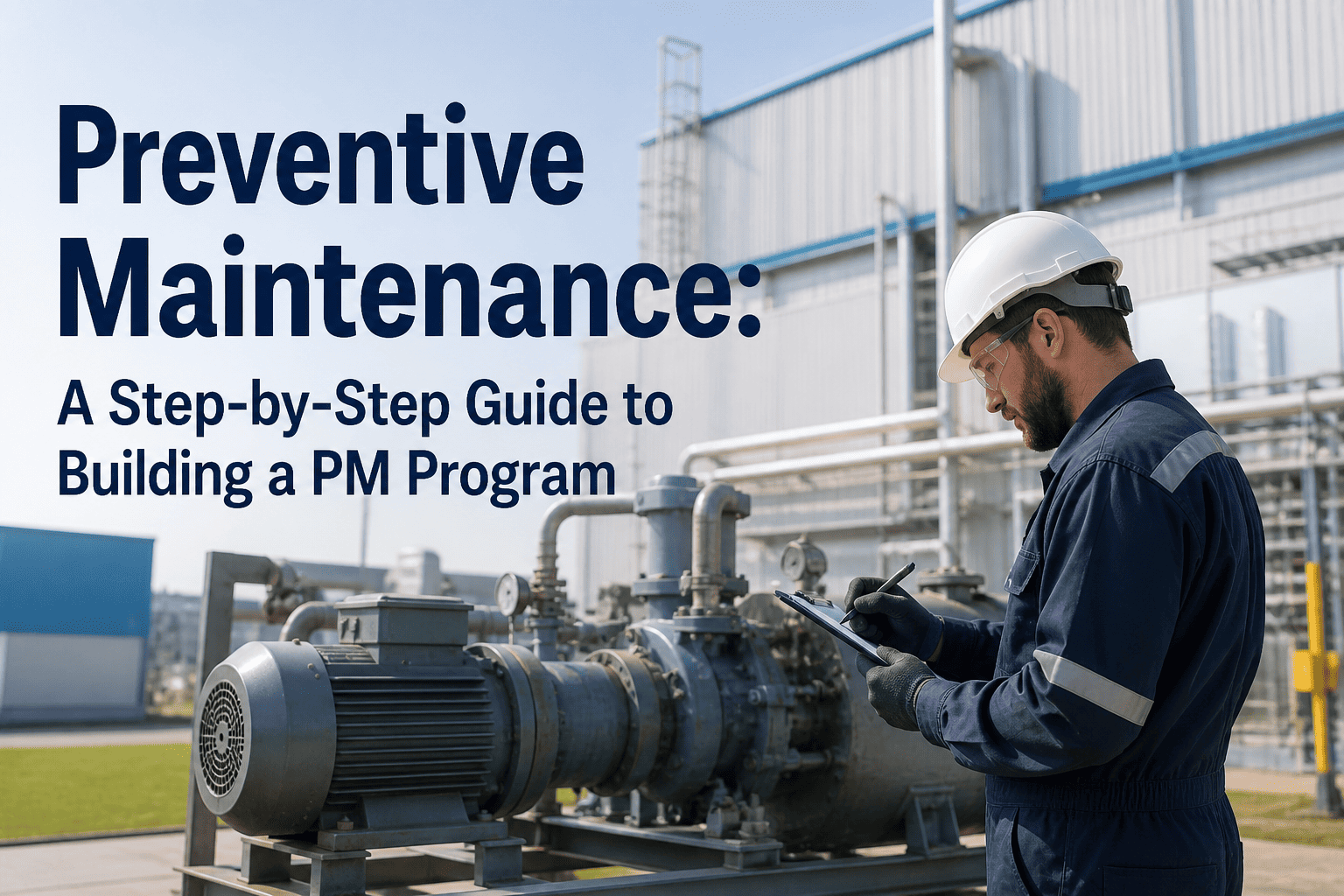
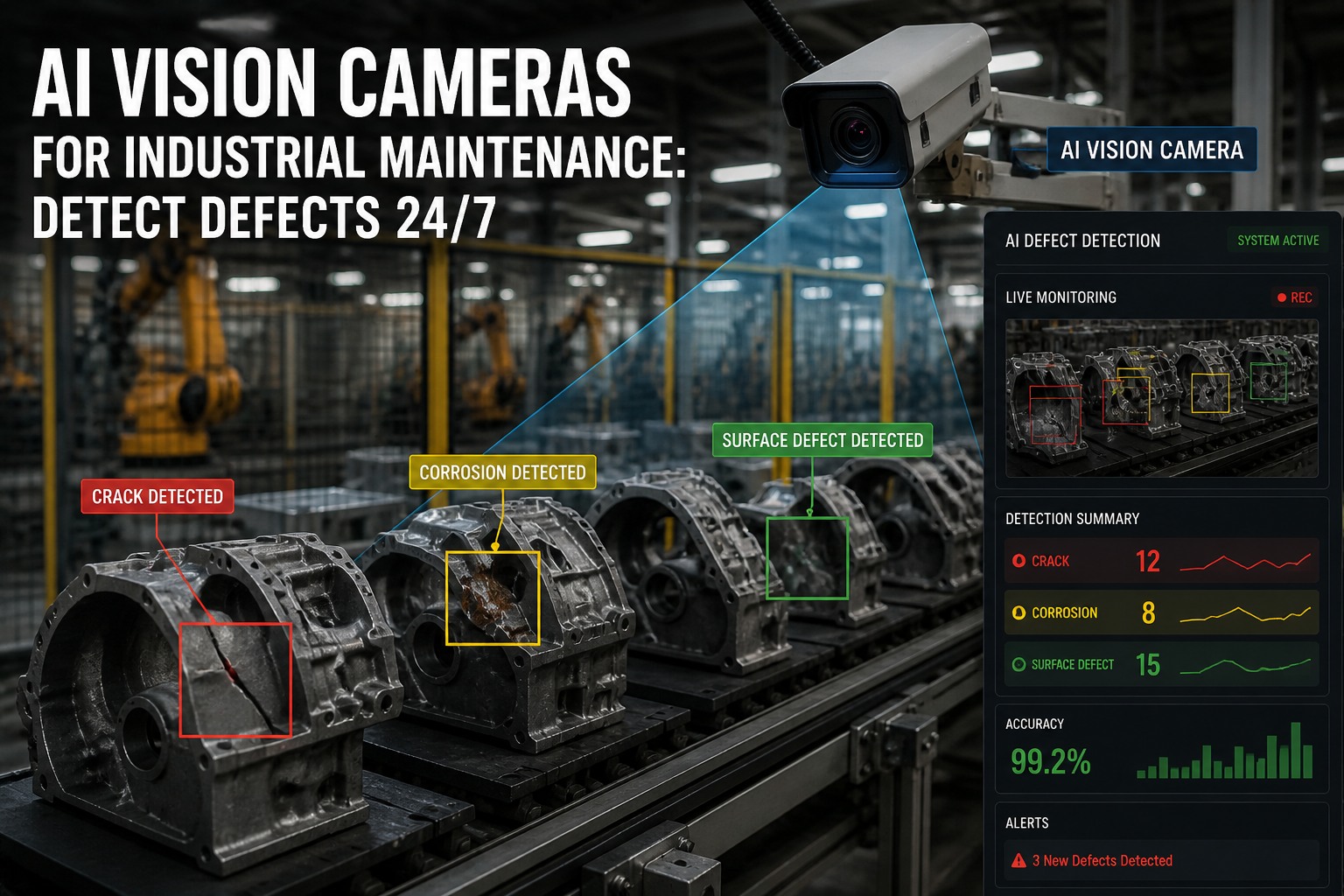
Reactive maintenance costs 3 to 5 times more than preventive maintenance when you factor in emergency labour, expedited parts, lost production, and collateral damage. Yet most facilities still spend 60 to 80 percent of their maintenance budget responding to failures that a structured PM program would have caught weeks earlier. Oxmaint's Preventive Maintenance module automates every step of the process — from schedule creation and technician assignment to completion tracking and compliance reporting — so your team spends time fixing equipment, not chasing paperwork. This guide gives you the complete framework to build a PM program that actually works.
MAY 12, 2026 · 5:30 PM EST · ORLANDO
Upcoming Oxmaint AI Live Webinar — Build a Zero-Touch PM Workflow in One Session
Join the Oxmaint team in Orlando to design an AI-powered preventive maintenance program — from schedule creation to mobile dispatch to completion — mapped to your existing assets, teams, and CMMS infrastructure.
Live PM schedule builder walkthrough
AI-based frequency optimization demo
Mobile technician dispatch & checklists
KPI dashboard — MTBF, completion rate, backlog
The Business Case
Why Preventive Maintenance Is the Highest-ROI Maintenance Strategy
The numbers from independent research are consistent and compelling. Organizations that make the shift from reactive to preventive maintenance don't just reduce downtime — they restructure how their entire maintenance budget performs.
545%
ROI documented by JLL study across 14M sq ft of mixed-use properties
75%
Reduction in equipment breakdowns (US Dept. of Energy benchmark)
3–5x
Cost multiplier for reactive vs. preventive maintenance per incident
18%
Direct maintenance cost reduction from a structured PM program (Brightly, 2025)
PM Types
The 4 Types of Preventive Maintenance — Which One Fits Your Assets?
Not all PM is the same. Choosing the wrong trigger type for an asset is one of the most common reasons PM programs underperform. Here is the full breakdown of PM types, when each applies, and how to match them to your asset portfolio.
01
Time-Based PM
Calendar-driven intervals
Tasks triggered by fixed time intervals regardless of usage. Weekly inspections, monthly filter changes, annual safety valve tests. Best for assets with consistent duty cycles and regulatory inspection requirements.
Best for: HVAC, fire systems, statutory inspections
02
Usage-Based PM
Runtime hours or cycle counts
Tasks triggered by operating hours, production cycles, or mileage. More accurate than calendar PM for variable-duty assets because it tracks actual wear rather than elapsed time. Prevents both over-maintenance and under-maintenance.
Best for: Compressors, motors, vehicles, pumps
03
Condition-Based PM
Sensor-triggered thresholds
Tasks triggered when a measured condition — vibration, temperature, current draw, oil particle count — crosses a defined threshold. The most precise form of PM. Eliminates unnecessary maintenance on healthy assets while catching deterioration early.
Best for: Rotating equipment, electrical switchgear, chillers
04
Predictive PM
AI-driven failure forecasting
Uses machine learning on historical failure data, sensor readings, and operating patterns to predict remaining useful life and schedule maintenance at the optimal point — before failure, after maximum utilization. The highest-efficiency form of PM.
Best for: Critical production assets, high-replacement-cost equipment
Step-by-Step Build
How to Build a PM Program in 6 Structured Steps
Build and Verify Your Asset Register
No PM program can run without a complete, accurate asset register. Walk every site, tag every maintainable asset, and capture manufacturer, model, serial number, install date, and criticality rating. This is your PM foundation — gaps here mean gaps in coverage. Prioritize assets by criticality: production impact, safety consequence, and replacement cost.
Define PM Tasks and Frequencies Per Asset Class
Source PM tasks from three inputs: OEM maintenance manuals (the baseline), historical failure data from your work order system, and regulatory compliance requirements. Assign the correct trigger type — time, usage, or condition — to each task. Over-scheduling PM wastes labour. Under-scheduling allows deterioration. Match trigger type to asset failure mode.
Build PM Checklists with Required Data Fields
Every PM task needs a structured checklist — not a blank "completed" checkbox. Include measurement fields (temperature readings, vibration levels, pressure values), pass/fail inspection items, required photos, and mandatory signature fields. Checklists with quantitative fields generate the condition data that enables failure pattern analysis and RUL prediction.
Load Schedules into CMMS and Set Up Auto-Triggers
Manual PM scheduling in spreadsheets fails at scale. Load all PM schedules into a CMMS with auto-generation enabled — the system creates the work order, assigns the right technician based on skills and availability, and sends mobile notifications automatically. The target is zero manual PM scheduling overhead for the maintenance planner.
Deploy to Technicians on Mobile with Offline Capability
Technicians working in plant rooms, rooftops, and remote sites need a mobile interface that works without reliable network coverage. PM checklists, asset history, and SOPs must be available offline. Completed inspections sync when connectivity is restored. Mobile-first PM execution is what drives completion rates above 95% — paper-based systems average 67%.
Track KPIs and Optimize Frequencies Quarterly
A PM program is not set-and-forget. Review PM completion rate, MTBF trend, planned vs. unplanned work ratio, and cost-per-PM quarterly. Assets with zero failures over 24 months may be over-maintained. Assets with recurring reactive work may need higher PM frequency or a shift to condition-based triggering. Data-driven frequency optimization is what separates good PM programs from great ones.
PM KPI Benchmarks
PM Performance: Industry Benchmarks vs. World-Class Targets
Use this table to assess where your PM program currently sits and what targets to drive toward. World-class benchmarks are achievable with a structured program supported by a modern CMMS — they are not theoretical ideals.
| KPI |
Industry Average |
Good |
World-Class |
What Drives It |
| PM Completion Rate |
67% |
85–90% |
95%+ |
Auto-scheduling + mobile dispatch |
| Planned vs. Reactive Work Ratio |
40:60 |
70:30 |
80:20 |
PM coverage + frequency accuracy |
| Mean Time Between Failures (MTBF) |
Baseline |
+30–50% |
+75%+ |
Correct PM type + checklist data quality |
| PM Labour as % of Total Maintenance Labour |
24% |
40–55% |
60%+ |
AI scheduling + wrench time recovery |
| Emergency Work Orders per Month |
High variance |
–40% from baseline |
–75% from baseline |
PM coverage of critical assets |
| CMMS PM Compliance Documentation |
Manual / partial |
Structured digital |
Auto-generated audit trail |
Checklist + closure data requirements |
Shift Comparison
How a Technician's 8-Hour Shift Changes With a PM Program
Where the Hours Go — Before vs. After PM Automation
8-hour shift breakdown per technician per day
Before — Reactive-Led
Actual repair work · 1.9 hrs
Hunting parts & info · 1.4 hrs
Travel between calls · 1.3 hrs
Admin & paperwork · 1.1 hrs
Waiting for approvals · 1.1 hrs
Re-work / wrong job · 1.2 hrs
After — PM Automated
Planned PM work · 4.0 hrs
Optimized travel · 1.4 hrs
Diagnostics & review · 1.1 hrs
Mobile documentation · 0.8 hrs
Admin · 0.7 hrs
Expert Review
What Maintenance Directors Say About PM Program Discipline
"The plants I visit that are running 80 percent planned maintenance didn't get there by accident. They built an asset register, wrote proper PM tasks with measurement fields, loaded it into a CMMS, and protected the PM schedule from reactive firefighting. It takes discipline for the first six months. After that, the data starts showing you fewer failures, lower costs, and longer asset life — and the culture shifts permanently. The teams that struggle are the ones that load PM schedules into the system and then let reactive work crowd it out. Your CMMS completion rate is the most honest metric in your operation. If it's below 85%, your PM program exists on paper only."
TW
Thomas Wren
VP Reliability Engineering, Fortune 500 Industrial Manufacturer · 24 years in maintenance strategy
"Every dollar deferred from preventive maintenance becomes four dollars in capital renewal costs. We proved this in our own portfolio — the buildings with the lowest PM completion rates had FCI scores three times higher than the well-maintained cohort within five years. PM is not a cost. It is asset value protection."
KM
Karen Mehta
Director of Facilities, Global Real Estate Portfolio
PM Schedule Template
Standard PM Frequency Reference by Asset Class
Use this reference table to sanity-check your PM frequencies against industry norms. Adjust based on OEM requirements, asset age, operating environment severity, and your own historical failure data.
| Asset Class |
Weekly |
Monthly |
Quarterly |
Annual |
Trigger Type |
| HVAC — AHUs / FCUs |
Filter check |
Filter change |
Belt, coil, drain |
Full service + refrigerant |
Time-based |
| Pumps and Motors |
— |
Vibration check |
Lubrication |
Full overhaul per OEM |
Usage + condition |
| Electrical Distribution |
— |
Thermal imaging |
Panel inspection |
EICR / testing |
Time-based |
| Fire Suppression |
Visual check |
Head inspection |
Flow test |
Full system test |
Time-based (regulatory) |
| Generators |
Run test |
Fluid levels |
Load test |
Full service |
Time + usage |
| Conveyors / Production Lines |
Belt and tension |
Lubrication |
Alignment check |
Full mechanical overhaul |
Usage-based |
Frequently Asked Questions
Preventive Maintenance: Common Questions
Stop Firefighting. Start Preventing.
Build Your PM Program in 14 Days With Oxmaint
Asset register, PM templates, auto-scheduling, mobile checklists, technician routing, and KPI dashboards — all connected, all automated. Teams using Oxmaint report 75% fewer emergency work orders within 90 days and a planned-to-reactive ratio shift from 40:60 to 75:25 within 6 months.