AI without business context is just expensive guessing. Large language models can generate fluent text, but when asked "Why did delivery times spike last quarter?", a generic AI has no idea what your purchase orders, supplier relationships, or production schedules actually look like. SAP Knowledge Graph changes this — it maps every business entity, relationship, and process across your SAP landscape into a semantically rich data layer that AI agents can reason over. The result: AI that understands your business, not just language. For maintenance and operations teams, Oxmaint takes this further by connecting frontline execution data — work orders, asset condition, parts consumption — directly into the enterprise context that makes AI decisions trustworthy and actionable. Start your free trial and ground your maintenance AI in real operational data from day one. Or schedule a demo to see how Oxmaint bridges field execution with enterprise intelligence.
Enterprise AI
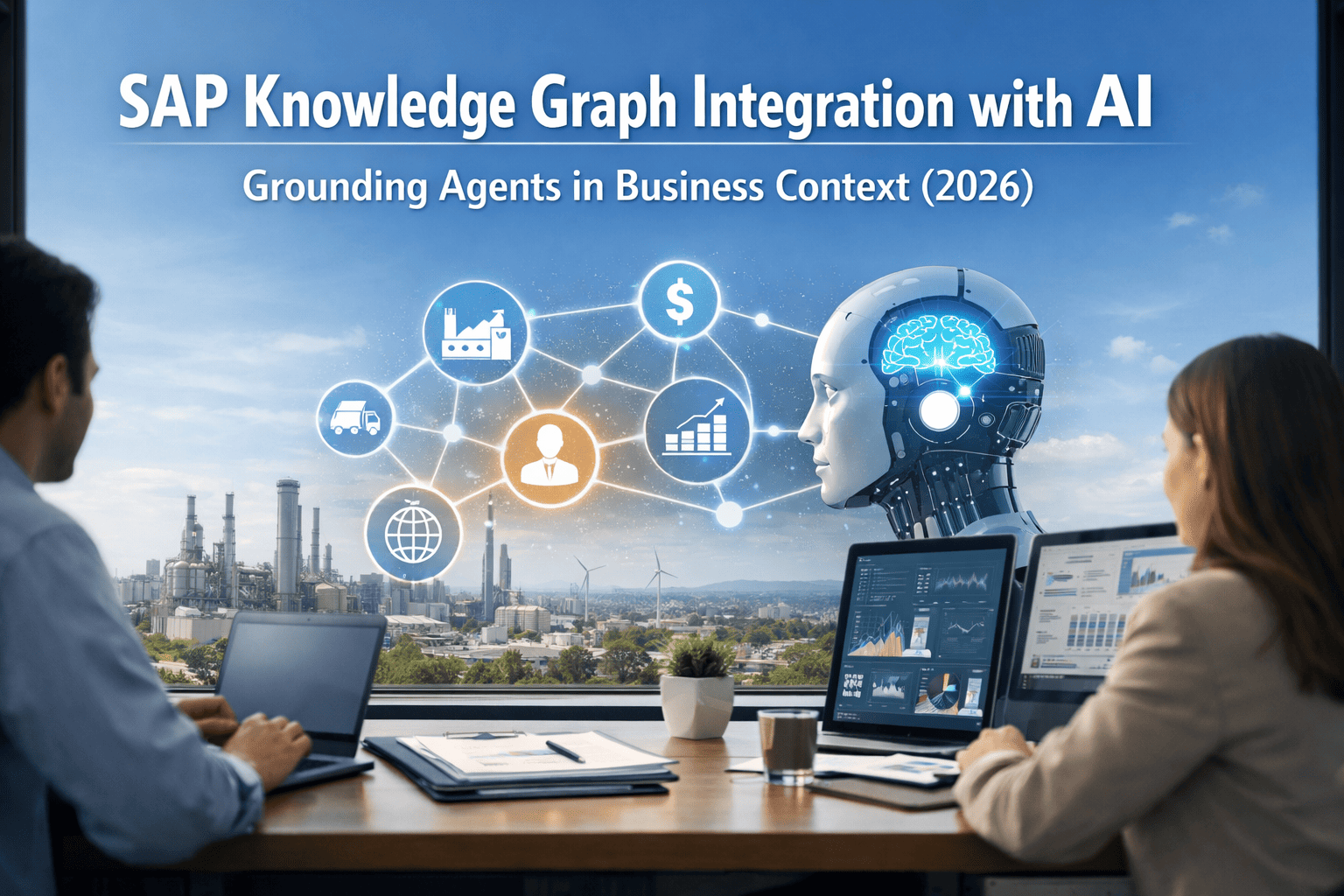
SAP Knowledge Graph Integration with AI: Grounding Agents in Business Context
Strategic Guide · 8 min read
452K
ABAP tables mapped into SAP S/4HANA's Knowledge Graph — the largest enterprise semantic model in existence
7.3M
Fields connected across the SAP Knowledge Graph, giving AI agents access to granular business context
80K
CDS views integrated — transforming raw SAP data into semantically rich, AI-ready business objects
70%
Industrial organisations struggle to use operational data for analysis — Knowledge Graphs solve this
Oxmaint: Field-Ready AI Grounded in Real Maintenance Data
Oxmaint connects work order execution, asset condition scores, parts consumption, and technician insights directly into your enterprise data layer — giving AI agents the frontline context that SAP alone cannot capture. The missing link between enterprise knowledge and operational reality.
What Is SAP Knowledge Graph?
SAP Knowledge Graph is a semantic data layer that connects your company's entire business data fabric — purchase orders, invoices, customers, equipment, suppliers, cost centres, production schedules — into a structured network of entities and relationships that AI can understand and reason over. Instead of storing data in isolated tables, the Knowledge Graph makes the meaning and connections between business objects explicit. When an AI agent asks "which supplier is linked to this delayed delivery, and which production line is affected?", the Knowledge Graph provides the full chain of relationships instantly — no manual data modelling required.
Equipment Masters
Assets, hierarchies, BOMs
Purchase Orders
Vendors, costs, timelines
Work Orders
Tasks, labour, completions
Production Plans
Schedules, output, OEE
Inventory & Parts
Stock, reorder, consumption
Cost Centres
Finance, budgets, allocation
Why AI Agents Fail Without Business Context
Generic AI models are trained on the entire internet — but they know nothing about your specific equipment hierarchy, your supplier relationships, or your maintenance history. When deployed in enterprise environments without proper grounding, these models hallucinate: they generate plausible-sounding answers that are factually wrong in your business context. SAP Knowledge Graph solves this by providing AI agents with the explicit semantics and relationships they need to deliver accurate, trustworthy responses grounded in your actual business data.
✗
Generates plausible but incorrect answers about your operations
✗
Cannot distinguish "pump" the equipment from "pump" the action
✗
No awareness of supplier-to-production-line dependencies
✗
Treats every query as isolated — no memory of business relationships
✗
Cannot trace a failure from component to cost centre to budget impact
✓
Responses anchored in your actual SAP business data and relationships
✓
Disambiguates terms using SAP's semantic model — context-aware results
✓
Traces dependencies: supplier → part → production line → delivery date
✓
Reasons across connected entities — not isolated data queries
✓
Full traceability from anomaly to asset to work order to financial impact
How SAP Knowledge Graph Powers AI Agents
SAP Knowledge Graph does not replace your AI models — it supercharges them. By sitting between your raw SAP data and your AI layer, the Knowledge Graph acts as a semantic bridge that translates complex enterprise data structures into relationships AI agents can navigate. Here is how each capability works in practice.
01
Understanding Complex Problems
The Knowledge Graph disambiguates business terms, links concepts to specific entities, and grounds alerts in domain-specific knowledge. When a technician reports "vibration on Line 3", the AI knows exactly which equipment, which location, which maintenance history, and which production impact that refers to.
02
Evaluating Decision Paths
AI agents use the Knowledge Graph to evaluate multiple resolution paths simultaneously — weighing business constraints, budget impact, part availability, and production schedules before recommending action. Not just "what could we do?" but "what should we do given our specific constraints?"
03
Reasoning Across Relationships
The graph structure allows AI to infer connections that are invisible in flat database tables. A recurring bearing failure can be traced to a specific supplier batch, linked to other equipment using the same batch, and flagged for proactive replacement — all through relationship traversal, not manual investigation.
04
Executing Resolutions
Grounded in the full business context, AI agents activate the right workflows: creating purchase requisitions in SAP MM, triggering work orders in your CMMS, adjusting production schedules, and notifying the right stakeholders — all through a transparent, repeatable process.
The Missing Piece: Frontline Maintenance Context
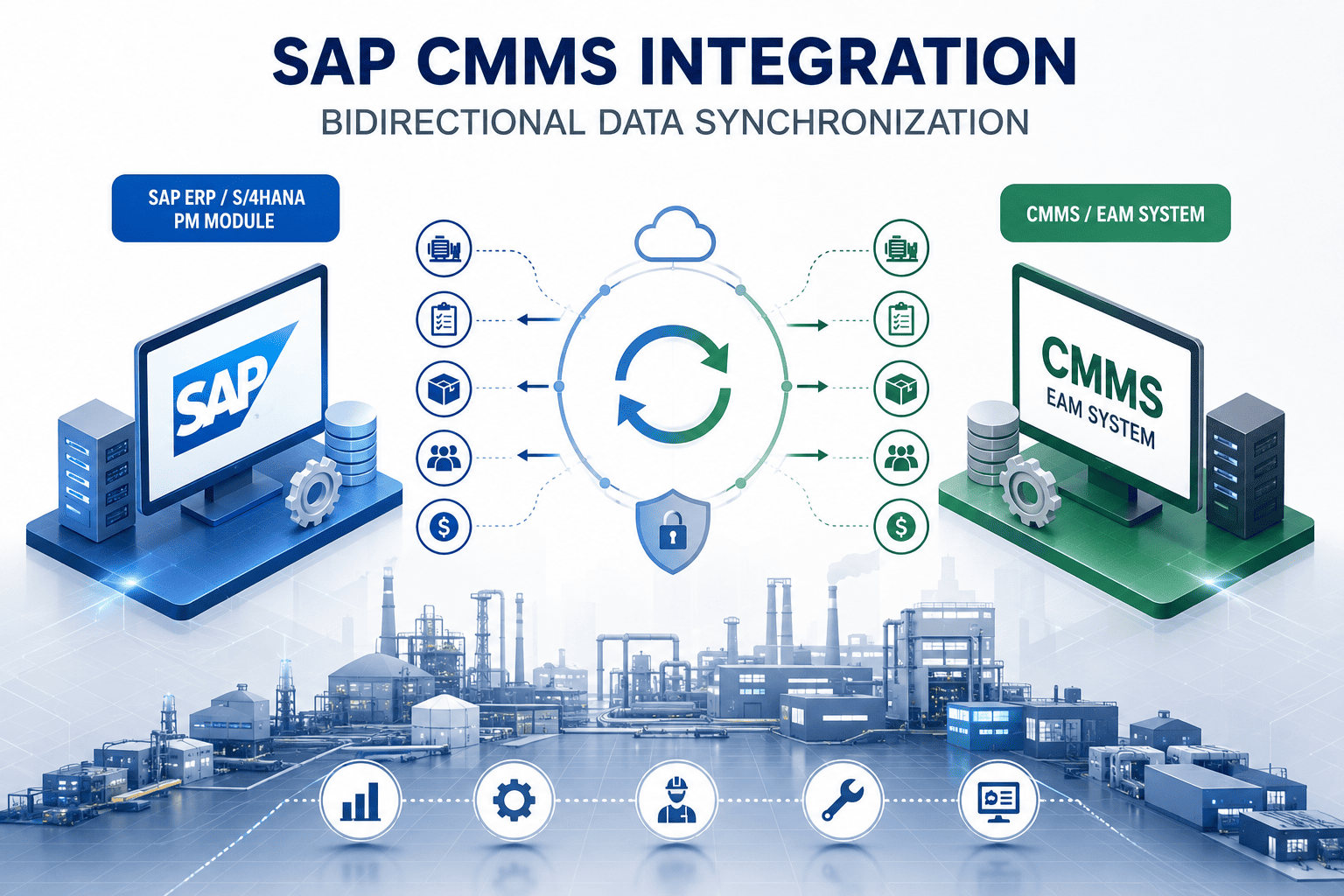
SAP Knowledge Graph captures the enterprise backbone — financial data, master records, procurement chains, and planning hierarchies. But there is a critical blind spot: the field execution data that only exists where maintenance actually happens. What the technician observed. Which parts were actually consumed. What the condition readings showed. How long the repair took in practice versus the planned estimate. This is the data that makes AI decisions operationally trustworthy — and it lives in your CMMS, not in SAP's planning layer. Oxmaint captures this frontline intelligence and syncs it bi-directionally with SAP, completing the context loop that knowledge-graph-powered AI agents need to deliver decisions that are not just semantically correct but operationally grounded.
AI Agent Layer
Joule, custom agents, LLMs — reasoning across enterprise + operational data
SAP Knowledge Graph
Semantic model: 452K tables, 80K views, 7.3M fields — entity relationships mapped
SAP Enterprise Data
PM, MM, FI/CO, QM — equipment masters, procurement, finance, compliance
Oxmaint Field Execution
Work orders, condition scores, technician notes, parts consumption, meter readings, photos
Without Oxmaint's frontline data, the AI layer reasons over plans and records — not reality. Oxmaint completes the picture.
Complete the Context Loop: Enterprise Data + Field Execution
Oxmaint captures the maintenance execution data that SAP's planning layer cannot — and syncs it bi-directionally so your AI agents reason over what actually happened, not just what was planned.
Knowledge Graph + AI: Industrial Use Cases
When AI agents can traverse the full chain of business relationships — from sensor reading to equipment record to supplier contract to financial impact — entirely new categories of operational intelligence become possible. Here are the highest-impact use cases for SAP enterprises with maintenance and production operations.
Predictive Maintenance with Business Context
An AI agent detects vibration anomaly on a pump → traverses the Knowledge Graph to find the pump's maintenance history, the supplier batch of the last bearing replacement, three other pumps using the same batch, and the production impact if any fail → generates a prioritised work order with pre-staged parts.
Supply Chain Failure Traceability
A quality defect is traced from a failed component → through the Knowledge Graph to the purchase order, vendor, inspection lot, and every other asset in your portfolio that received parts from the same supplier batch → proactive recalls triggered before cascading failures.
Autonomous Cost-Aware Decision Making
Instead of simply alerting "stock is low", an AI agent evaluates the cost centre budget, compares alternative suppliers with lead times, checks production schedule dependencies, drafts a purchase requisition, and routes it for approval — all by reasoning through the Knowledge Graph.
Production-Maintenance Coordination
A production agent detects OEE decline → queries the maintenance agent for related open work orders → the Knowledge Graph reveals the root cause is a deferred PM task on a critical component → maintenance is rescheduled to the next planned changeover, protecting output capacity.
What Makes SAP's Knowledge Graph Unique
01
Pre-Built Enterprise Semantics
SAP proactively manages the business context — relationships between purchase orders, invoices, customers, equipment, and processes are pre-mapped. No weeks of manual ontology creation. The semantic model comes ready with SAP's decades of enterprise process knowledge.
02
GraphRAG: Beyond Vector Search
Traditional RAG (retrieval-augmented generation) vectorises documents but loses relationships. SAP Knowledge Graph combines GraphRAG with vector-based RAG, enabling AI to traverse structured business relationships and unstructured content simultaneously — dramatically reducing hallucinations.
03
Neurosymbolic AI Architecture
SAP's approach combines probabilistic AI (LLMs, prediction models) with deterministic business rules stored in the Knowledge Graph. AI adapts and reasons while the graph enforces business logic, compliance, and process constraints — making enterprise AI both intelligent and governable.
04
Multi-Agent Collaboration
Finance, procurement, production, and maintenance agents exchange data through the Knowledge Graph in real time. If a production line fails, the production agent queries finance for budget impact while instructing procurement to expedite parts — all grounded in the same semantic layer.
How Oxmaint Strengthens the Knowledge Graph Loop
Oxmaint is a comprehensive maintenance management platform that captures the field execution data your AI agents need to make operationally grounded decisions. While SAP Knowledge Graph provides the semantic backbone of enterprise relationships, Oxmaint feeds the reality layer — what actually happened on the plant floor, captured in real time by technicians using mobile devices, even offline.
Mobile Work Order Execution
Technicians complete work orders on Oxmaint's mobile app with photos, readings, notes, and failure codes — all synced to SAP PM in real time. AI agents now reason over actual field outcomes, not just planned tasks.
AI Condition Monitoring
Oxmaint's AI engine calculates condition scores and remaining useful life per asset from sensor data, inspection results, and work order patterns — feeding the Knowledge Graph with live equipment health intelligence.
Real-Time Parts Consumption
Every part consumed through Oxmaint posts to SAP MM instantly — so AI agents tracking supply chain dependencies always have accurate, current inventory data to reason over.
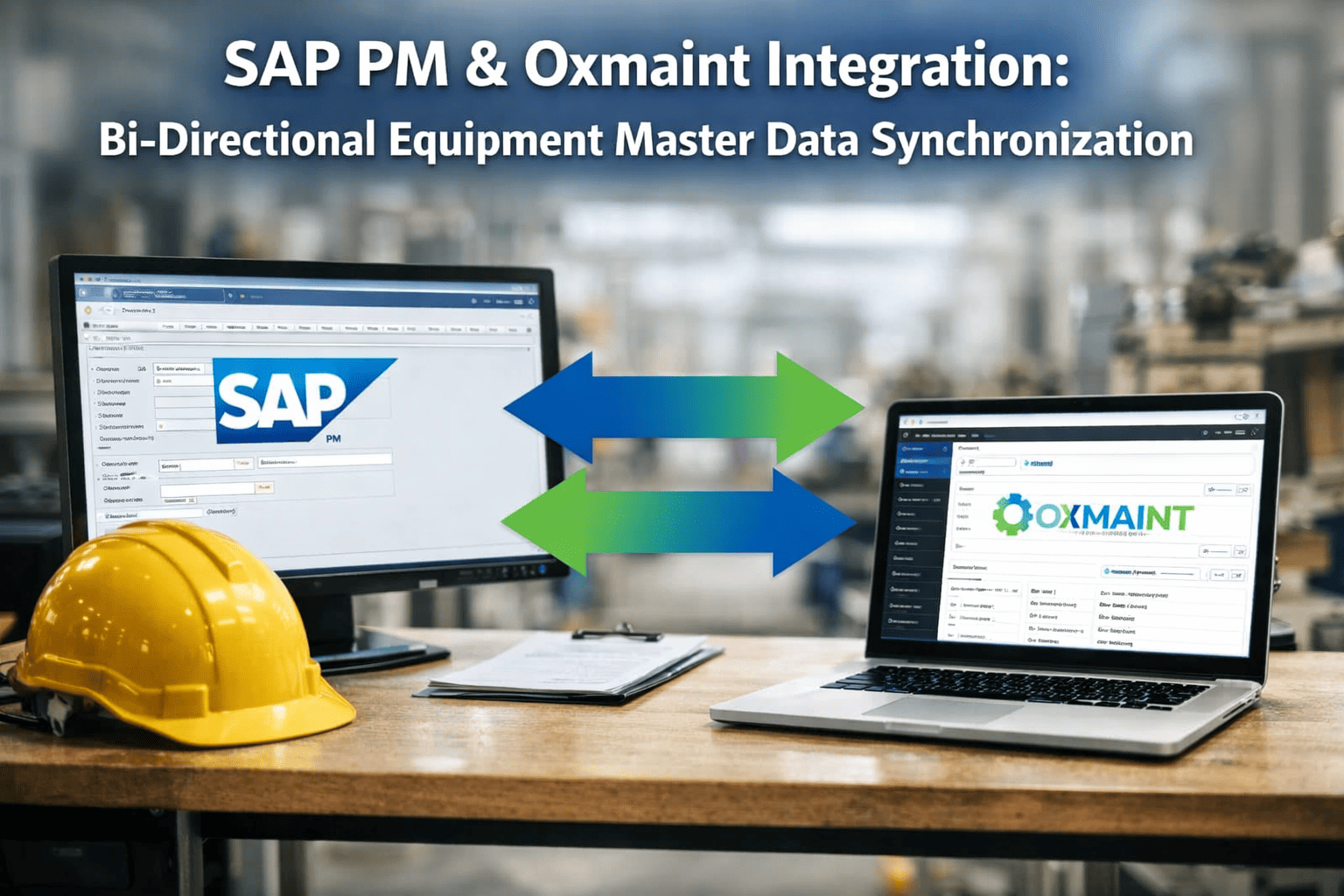
Bi-Directional SAP Sync
Oxmaint's certified SAP connector synchronises equipment masters, work orders, cost postings, and inventory across PM, MM, FI/CO, and QM — ensuring the Knowledge Graph layer has both planned and actual data.
Ground Your AI in Real Maintenance Data
Oxmaint captures the frontline execution intelligence that SAP Knowledge Graph needs to make AI agents operationally accurate. Mobile work orders, condition monitoring, parts tracking, and bi-directional SAP sync — all from one platform.
Frequently Asked Questions
What is SAP Knowledge Graph and why does it matter for AI?
How does Oxmaint relate to SAP Knowledge Graph?
SAP Knowledge Graph captures enterprise-level relationships — master data, finance, procurement, and planning. Oxmaint captures the field execution layer — what technicians actually did, which parts were consumed, what condition readings showed. Through bi-directional SAP sync, Oxmaint feeds real operational data into the enterprise context that AI agents traverse via the Knowledge Graph.
Start your free trial and begin building the operational data layer your AI agents need.
What is the difference between RAG and GraphRAG?
Standard RAG (retrieval-augmented generation) vectorises documents and retrieves relevant text chunks for AI to reference. GraphRAG goes further by combining vector search with structured relationship traversal through a knowledge graph. This means AI can not only find relevant information but reason across the relationships between entities — tracing a failure from a component to a supplier to a budget impact.
Can Oxmaint work with SAP ECC and S/4HANA?
How does this help with maintenance decision-making?
When AI agents can traverse from a vibration anomaly → to the specific equipment → its maintenance history → the supplier batch of the last repair part → other equipment using the same batch → production impact → budget availability, you move from reactive "fix it when it breaks" to proactive, context-aware maintenance intelligence. Oxmaint provides the field execution data that makes this traversal operationally accurate.
Sign up free and start capturing the maintenance context your AI needs today.
Enterprise Intelligence Starts with Operational Reality
SAP Knowledge Graph gives AI agents the enterprise semantic layer. Oxmaint gives them the frontline truth. Together, your AI reasons over what was planned and what actually happened — delivering maintenance decisions you can trust.