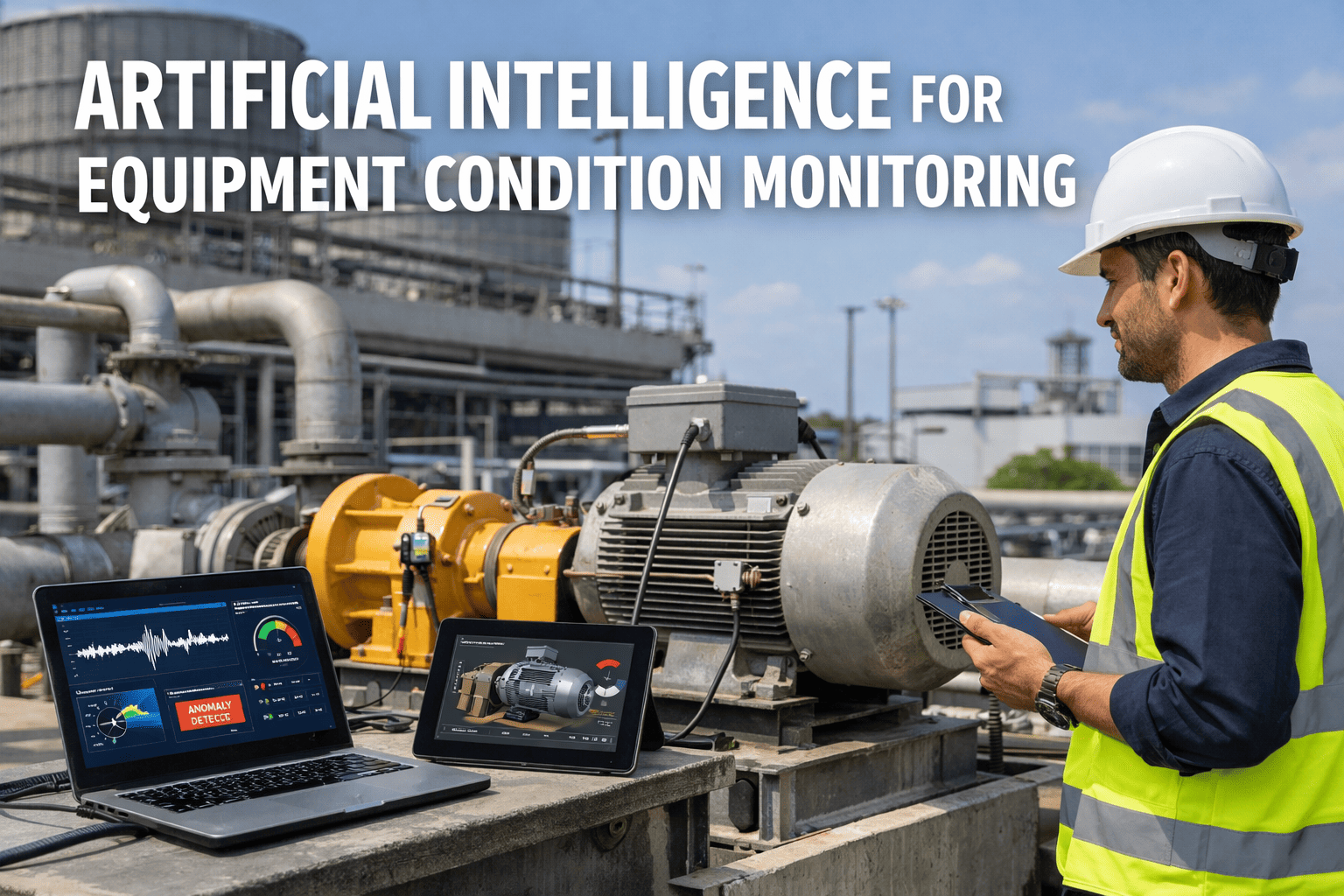
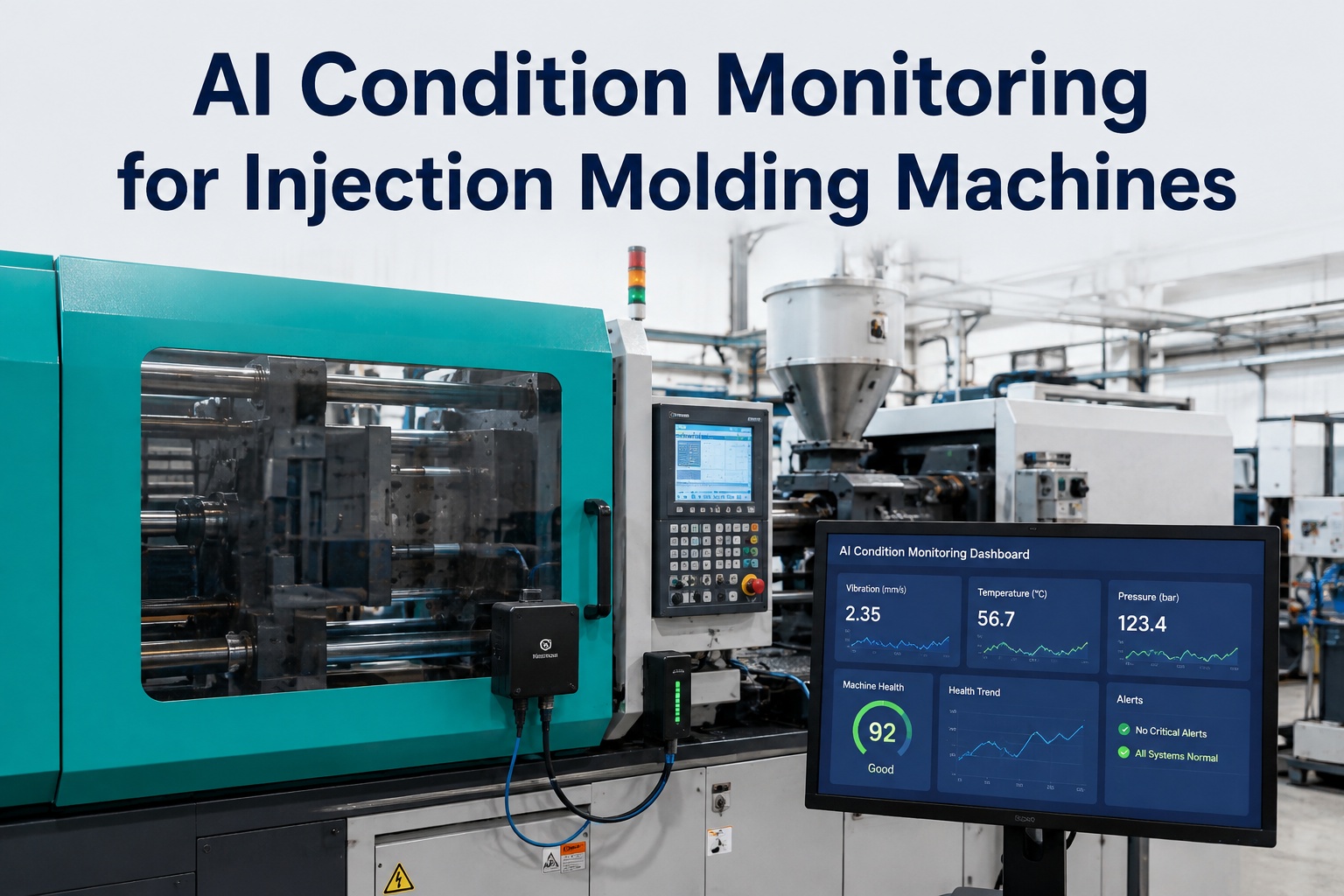
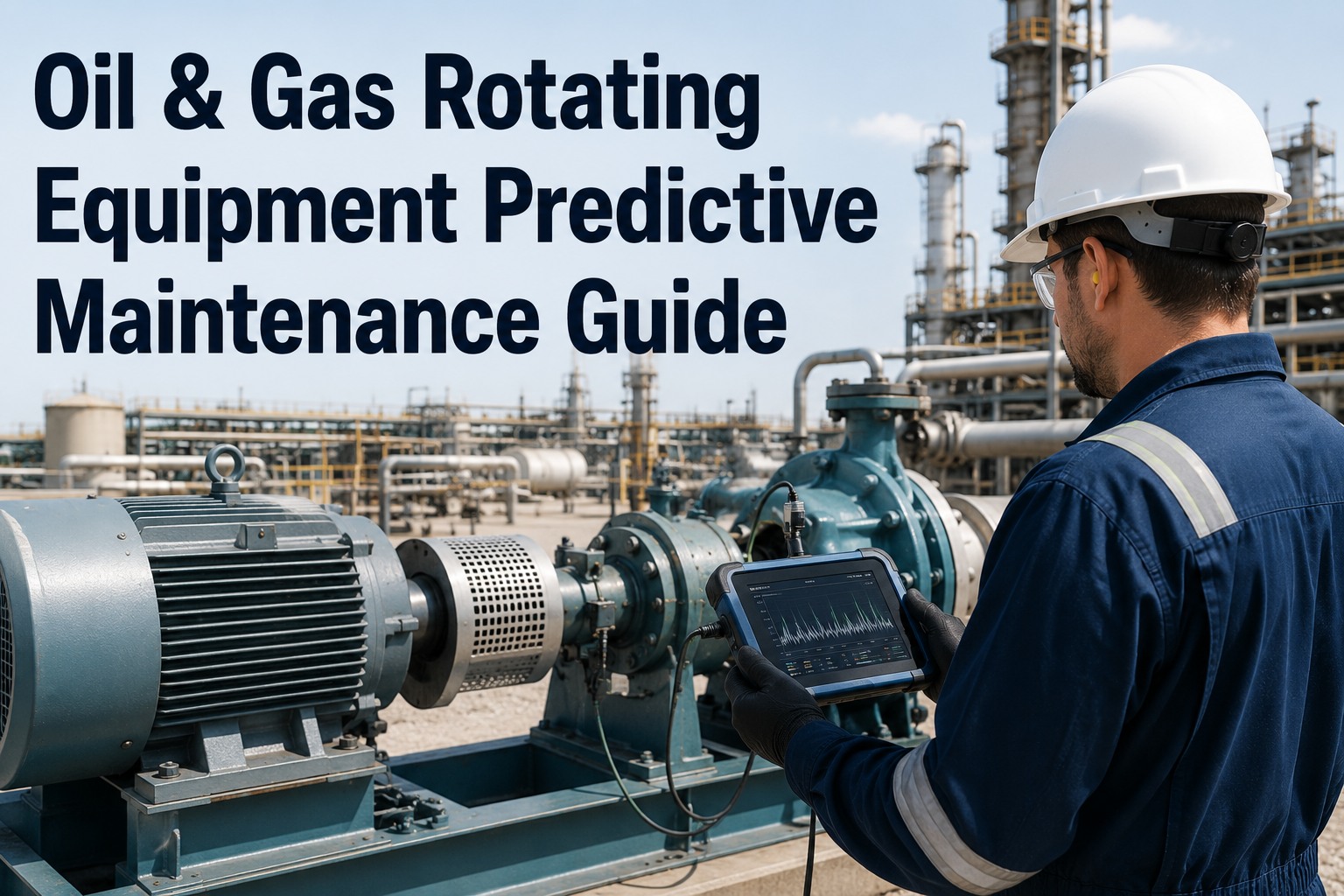
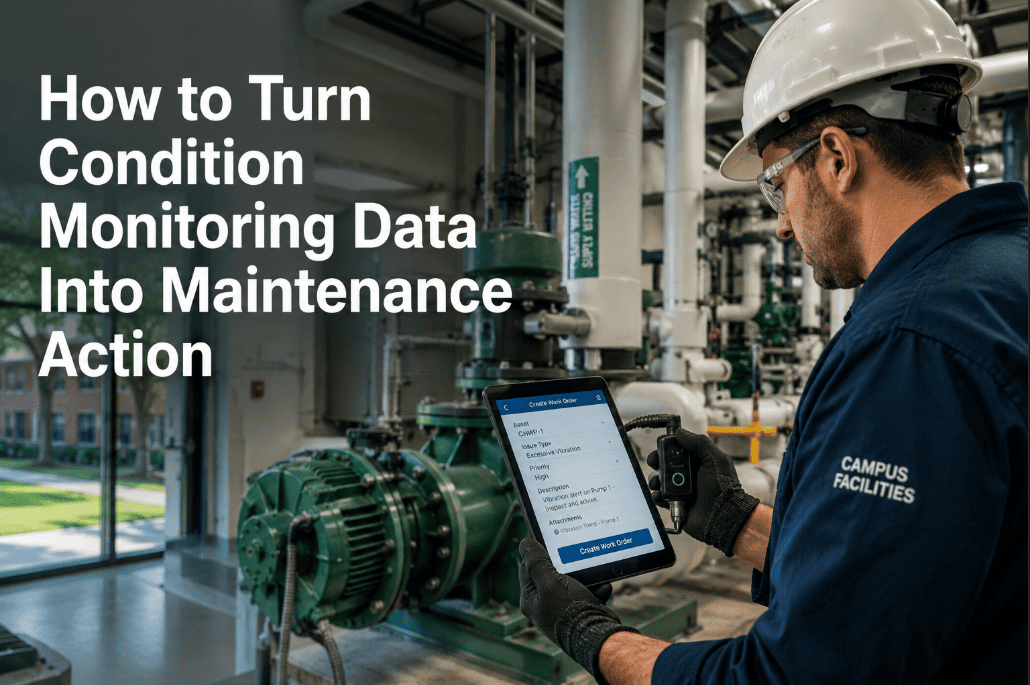
A single minute of unplanned downtime costs manufacturers an average of $22,000, yet traditional condition monitoring catches only 18% of failures before they cause shutdowns. The machine condition monitoring market reached $3.14 billion in 2024 and is projected to grow to $6.58 billion by 2033, driven by one transformative force: artificial intelligence. AI-powered condition monitoring achieves up to 90% failure prediction accuracy, reduces maintenance costs by 25-40%, and extends equipment lifespan by 40%—performance levels impossible with rule-based threshold systems alone.
Over 20 million sensors were integrated into condition monitoring systems globally in 2023, with 45% of new installations utilizing wireless connectivity. Yet only 6,000 facilities in North America have deployed AI-driven monitoring systems despite annual maintenance savings exceeding $10 billion across the region. Organizations still relying on manual inspections and fixed-interval maintenance are falling behind competitors who have embraced intelligent asset health monitoring. Sign up for Oxmaint to deploy AI-powered condition monitoring that detects anomalies before they become failures.
What if your equipment could tell you exactly when it needed maintenance—days or weeks before any failure occurred—eliminating unexpected breakdowns entirely?
Why Traditional Condition Monitoring Falls Short
Traditional monitoring systems rely on fixed thresholds and rule-based alerts—when vibration exceeds X or temperature crosses Y, trigger an alarm. This approach catches obvious failures but misses the subtle pattern changes that precede 82% of equipment breakdowns. AI transforms condition monitoring from reactive alarming to predictive intelligence.
$3.14B
2024 Market Size
The machine condition monitoring market has reached critical mass, with AI integration driving 8.1% annual growth toward $6.58B by 2033.
90%
AI Prediction Accuracy
Machine learning models trained on equipment data achieve up to 90% accuracy in predicting failures—compared to 18% with threshold-based systems.
20M+
Sensors Deployed Globally
Over 20 million sensors now feed condition monitoring systems worldwide, with wireless nodes comprising 45% of new installations.
$10B+
Annual Savings (North America)
Condition monitoring systems save North American manufacturers over $10 billion annually through prevented failures and optimized maintenance.
AI Monitoring Techniques: Capabilities Matrix
AI-powered condition monitoring employs multiple sensing technologies simultaneously, each optimized for specific failure modes and equipment types. Understanding these techniques helps organizations design comprehensive monitoring strategies that cover all critical assets.
Vibration Analysis
Bearing wear, imbalance, misalignment, looseness, gear defects from spectral patterns
Motors, pumps, compressors, turbines, gearboxes
88-95%
Thermography
Hot spots, electrical faults, insulation failure, friction, cooling system issues
Electrical systems, bearings, heat exchangers, switchgear
85-92%
Oil Analysis
Contamination, wear particles, viscosity changes, chemical degradation
Hydraulics, lubricated equipment, engines, gearboxes
82-90%
Acoustic Emission
Crack propagation, leak detection, valve issues, bearing damage
Pressure vessels, piping, slow-speed bearings, valves
80-88%
Motor Current Analysis
Rotor bar defects, stator faults, load anomalies, mechanical issues
Electric motors, pumps, fans, conveyors
85-93%
Ultrasound Detection
Electrical discharge, bearing friction, compressed air leaks, steam traps
Electrical equipment, slow-speed machinery, pneumatics
78-86%
Traditional vs AI-Powered Monitoring Comparison
The difference between rule-based threshold monitoring and AI-powered predictive monitoring represents a fundamental shift in maintenance philosophy—from reacting to conditions to anticipating failures.
Failure Prediction Accuracy
18%
90%
5x better
Lead Time Before Failure
Hours to days
Weeks to months
10-30x longer
False Alarm Rate
30-50%
5-10%
80% reduction
Maintenance Cost Impact
Baseline
25-40% savings
Significant ROI
Equipment Life Extension
Minimal
Up to 40%
Major CapEx savings
Unplanned Downtime Reduction
10-15%
35-50%
3-4x improvement
Deploy AI condition monitoring without a data science team. Oxmaint CMMS integrates sensor data, ML analytics, and automated work orders in one platform designed for maintenance professionals.
How AI Condition Monitoring Works
AI-powered condition monitoring transforms raw sensor data into actionable maintenance intelligence through a multi-stage process that continuously learns and improves from operational experience.
1
Continuous Data Collection
IoT sensors capture vibration, temperature, pressure, current, and acoustic data at sub-second intervals. Wireless sensors now comprise 45% of new installations, enabling flexible deployment across distributed assets.
Output: Real-time sensor streams from all monitored equipment
2
Edge Processing and Filtering
Edge computing nodes process data locally, filtering noise, detecting immediate anomalies, and reducing bandwidth requirements. IDC projects 50% of enterprise data will be processed at the edge by 2025.
Output: Cleaned, normalized data streams and instant alerts
3
Machine Learning Analysis
AI models analyze patterns across multiple parameters simultaneously, detecting subtle anomalies invisible to threshold-based systems. Deep learning identifies complex correlations between sensor readings and failure modes.
Output: Anomaly scores, degradation trends, failure probability
4
Remaining Useful Life Estimation
LSTM neural networks calculate how much operational life remains based on current degradation trajectories. This enables just-in-time maintenance—neither too early nor too late.
Output: RUL predictions with confidence intervals
5
Automated Work Order Generation
When AI detects imminent failure risk, CMMS integration automatically generates work orders with recommended actions, required parts, and optimal scheduling windows.
Output: Prioritized work orders with full context
Industry Applications and ROI
AI condition monitoring delivers measurable returns across asset-intensive industries. The following represents documented performance improvements from enterprise deployments.
Failure Prediction
18% accuracy
Unplanned Downtime
15-25% of operations
Maintenance Approach
Reactive + scheduled PM
False Alarms
30-50% of alerts
Equipment Life
Standard lifespan
Failure Prediction
90% accuracy
Unplanned Downtime
35-50% reduction
Maintenance Approach
Predictive + prescriptive
False Alarms
5-10% of alerts
Equipment Life
Up to 40% extension
95% Report Positive ROI
Organizations implementing AI-powered condition monitoring achieve documented returns with 27% achieving full payback in Year 1
Transform Equipment Monitoring with AI Intelligence
Join the 6,000+ facilities already using AI-driven condition monitoring to prevent failures, reduce costs, and extend asset life. Oxmaint delivers enterprise-grade AI capabilities without requiring data science expertise.
90%
Prediction Accuracy
35-50%
Downtime Reduction
25-40%
Cost Savings
Frequently Asked Questions
What is AI-powered condition monitoring and how does it differ from traditional monitoring?
AI-powered condition monitoring uses machine learning algorithms to analyze sensor data and predict equipment failures before they occur. Unlike traditional threshold-based systems that trigger alerts when values exceed preset limits, AI detects subtle pattern changes that indicate developing problems—often weeks or months before failure. This enables proactive maintenance rather than reactive response, achieving 90% prediction accuracy compared to 18% with conventional approaches.
What types of equipment can AI condition monitoring protect?
AI condition monitoring applies to virtually any mechanical or electrical equipment including motors, pumps, compressors, turbines, gearboxes, bearings, fans, conveyors, hydraulic systems, electrical switchgear, and heat exchangers. The technology is particularly valuable for critical assets where failure causes significant production losses or safety risks, and for equipment operating in harsh environments where traditional inspections are difficult or dangerous.
What sensors are required for AI condition monitoring?
Common sensors include vibration accelerometers, temperature probes, current transformers, pressure transducers, acoustic emission sensors, and oil quality monitors. Wireless sensors now comprise 45% of new installations, offering flexible deployment without extensive cabling. Most modern equipment can be retrofitted with wireless IoT sensors, and many AI platforms can also integrate data from existing control systems (PLC/SCADA) without additional sensor investment.
How long does it take for AI models to become accurate?
AI models begin providing value immediately through anomaly detection against baseline patterns. Full predictive accuracy typically develops within 2-4 weeks as models learn normal operating patterns, with continuous improvement over 2-3 months as they accumulate more operational data. Models trained on similar equipment across multiple facilities can achieve faster accuracy through transfer learning.
What ROI can we expect from AI condition monitoring?
Industry data shows 95% of organizations implementing AI-powered predictive maintenance report positive ROI, with 27% achieving full payback within the first year. Typical results include 35-50% reduction in unplanned downtime, 25-40% reduction in maintenance costs, and up to 40% extension in equipment lifespan. North American manufacturers collectively save over $10 billion annually through condition monitoring systems.
Do we need data scientists to implement AI condition monitoring?
Modern AI condition monitoring platforms are designed for maintenance professionals, not data scientists. Pre-built machine learning models, intuitive dashboards, and automated insights eliminate programming requirements. Platforms like Oxmaint integrate sensor data, AI analytics, and CMMS work order generation in a unified interface that maintenance teams can operate without specialized technical expertise.