Most maintenance teams are sitting on years of valuable data — work orders, failure histories, sensor readings, technician notes — and getting almost nothing actionable out of it. The gap between reactive maintenance and prescriptive operations is not a budget gap. It is an intelligence gap. AI closes it by doing what humans cannot: processing every signal simultaneously, learning from every repair, and telling your team not just what will break, but exactly what to do about it before it does. Start your free Oxmaint trial and see AI-powered analytics from day one.
What Each Maturity Stage Actually Costs You
The maturity level your operation sits at today determines how much of your maintenance budget is waste. Here is what the data shows across manufacturing, facilities, and industrial operations — and why the gap between reactive and prescriptive is measured in millions, not thousands.
Equipment runs until failure. Emergency parts at premium prices, overtime labor, and production losses stack on top of the repair itself. Teams are permanently in crisis mode with no bandwidth to improve the system.
Calendar-based schedules eliminate most catastrophic failures but create a different problem: servicing equipment that does not need it. Resources are consumed on unnecessary work while condition-based issues go undetected between scheduled intervals.
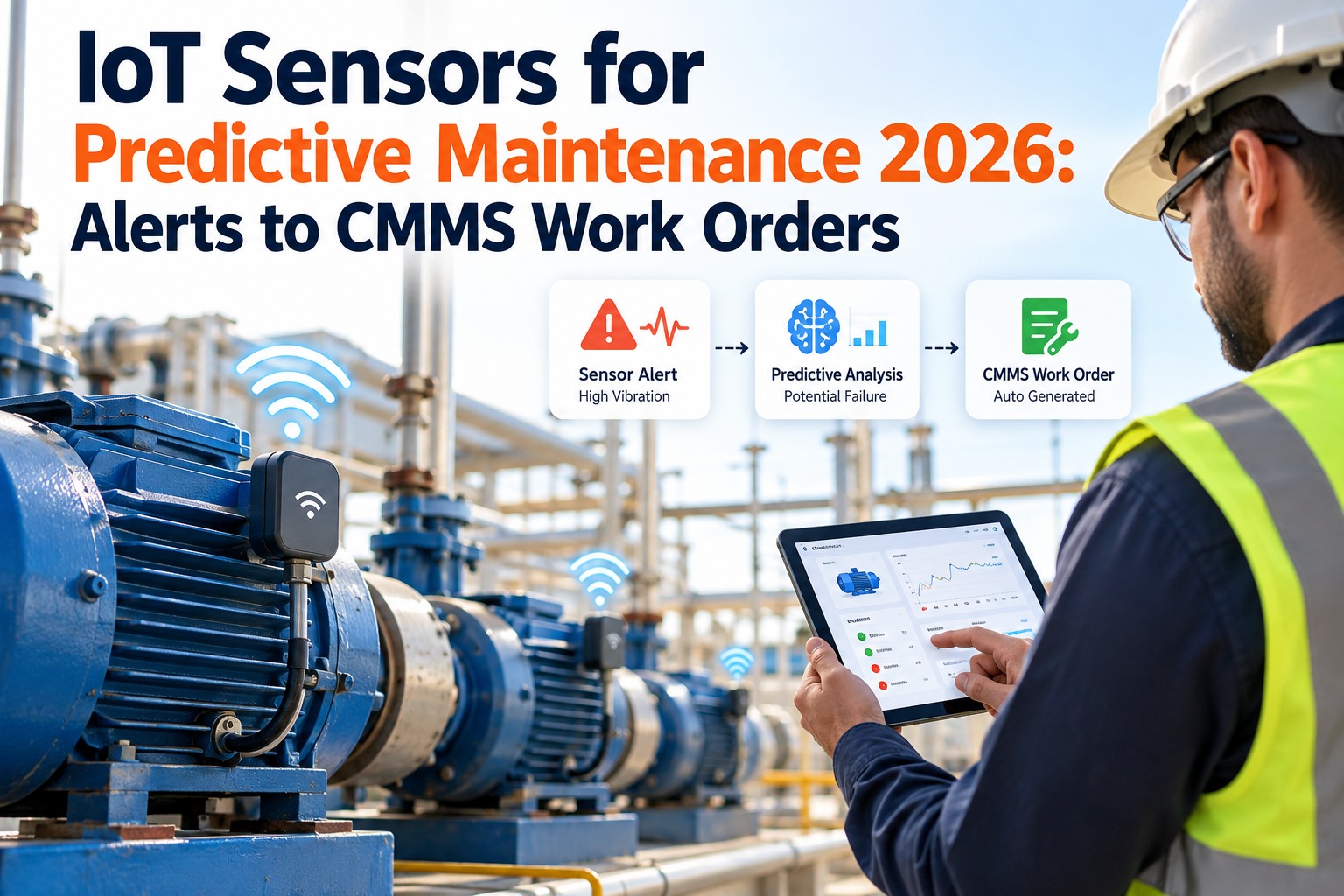
Sensor data drives intervention timing. The right work happens at the right time, not on an arbitrary schedule. Failure is detected weeks in advance. But the system still requires humans to decide what to do with predictions — the intelligence gap narrows but does not close.
The AI does not just detect — it decides and directs. Work orders are auto-generated with the repair procedure, required parts, assigned technician, and optimal timing. The system learns from every outcome and improves continuously. This is where Oxmaint's AI engine operates.
The Four AI Capabilities Powering Prescriptive Maintenance
Prescriptive maintenance is not a single technology. It is the convergence of four AI disciplines, each solving a different layer of the maintenance intelligence problem. Oxmaint integrates all four into a unified platform so teams do not have to assemble disconnected tools.
Machine Learning Failure Prediction
ML models trained on your historical work order data, sensor streams, and failure events develop asset-specific signatures for each failure mode in your fleet. Unlike generic industry models, these models learn the specific way your motors, pumps, and compressors degrade in your operating environment — achieving prediction accuracy above 90% within 60–90 days of data ingestion.
The model output is not a raw probability score. It is a ranked list of assets by failure risk, with estimated days to failure, failure mode, and recommended intervention type. Your team acts on intelligence, not instinct. Sign into Oxmaint to activate ML predictions on your asset fleet.
NLP-Powered Data Entry and Knowledge Extraction
Decades of maintenance knowledge is locked in unstructured text — technician notes, failure descriptions, repair narratives written in shorthand. Natural language processing reads this data and extracts structured intelligence: failure modes, root causes, parts used, time-to-repair, and resolution effectiveness. What was previously unsearchable institutional knowledge becomes queryable training data for the AI.
For new work orders, NLP enables voice-to-text data entry where technicians describe findings conversationally and the system auto-populates structured fields — eliminating paperwork friction and improving data quality simultaneously. Book a demo to see Oxmaint's NLP data entry in action.
Automated Work Order Generation
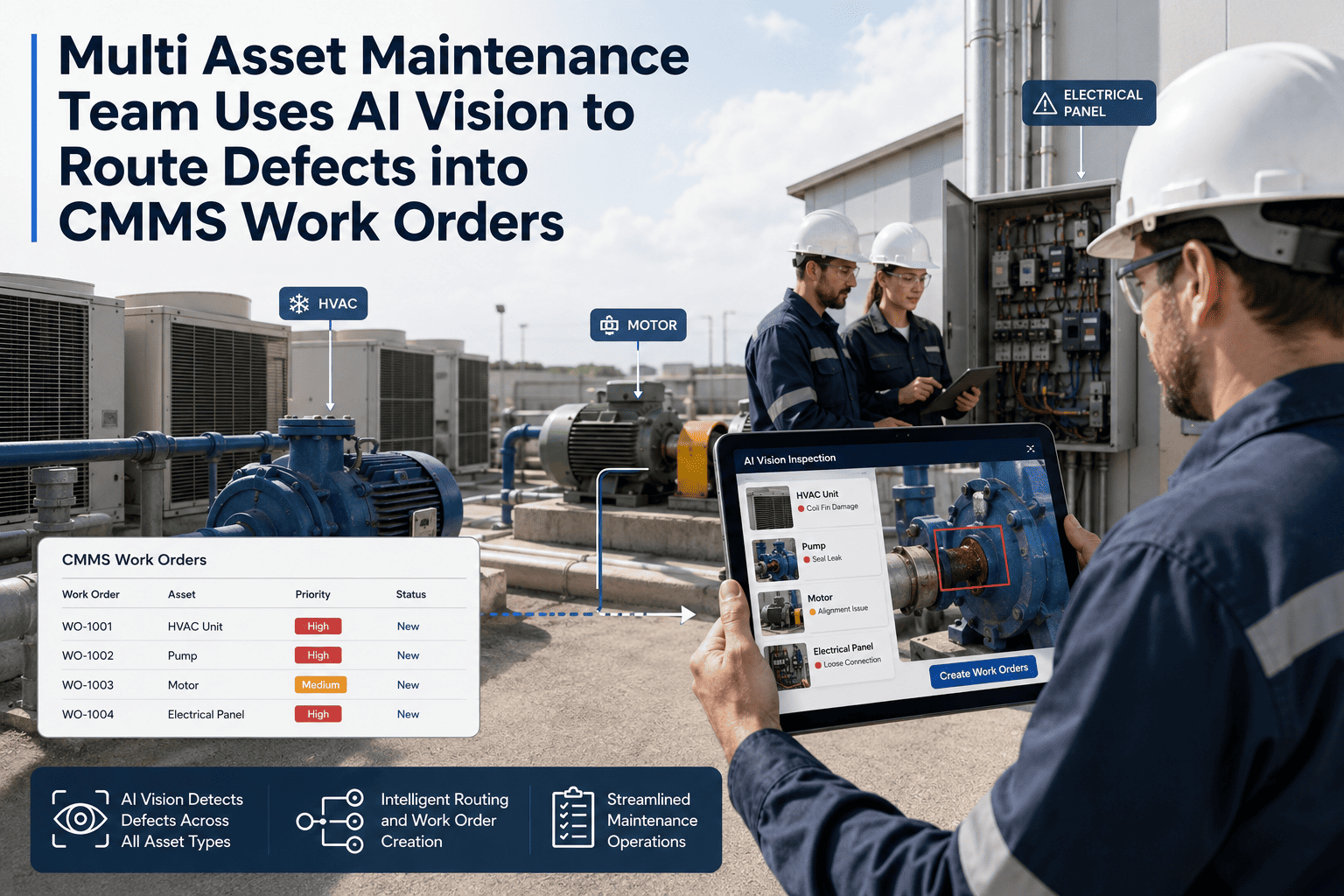
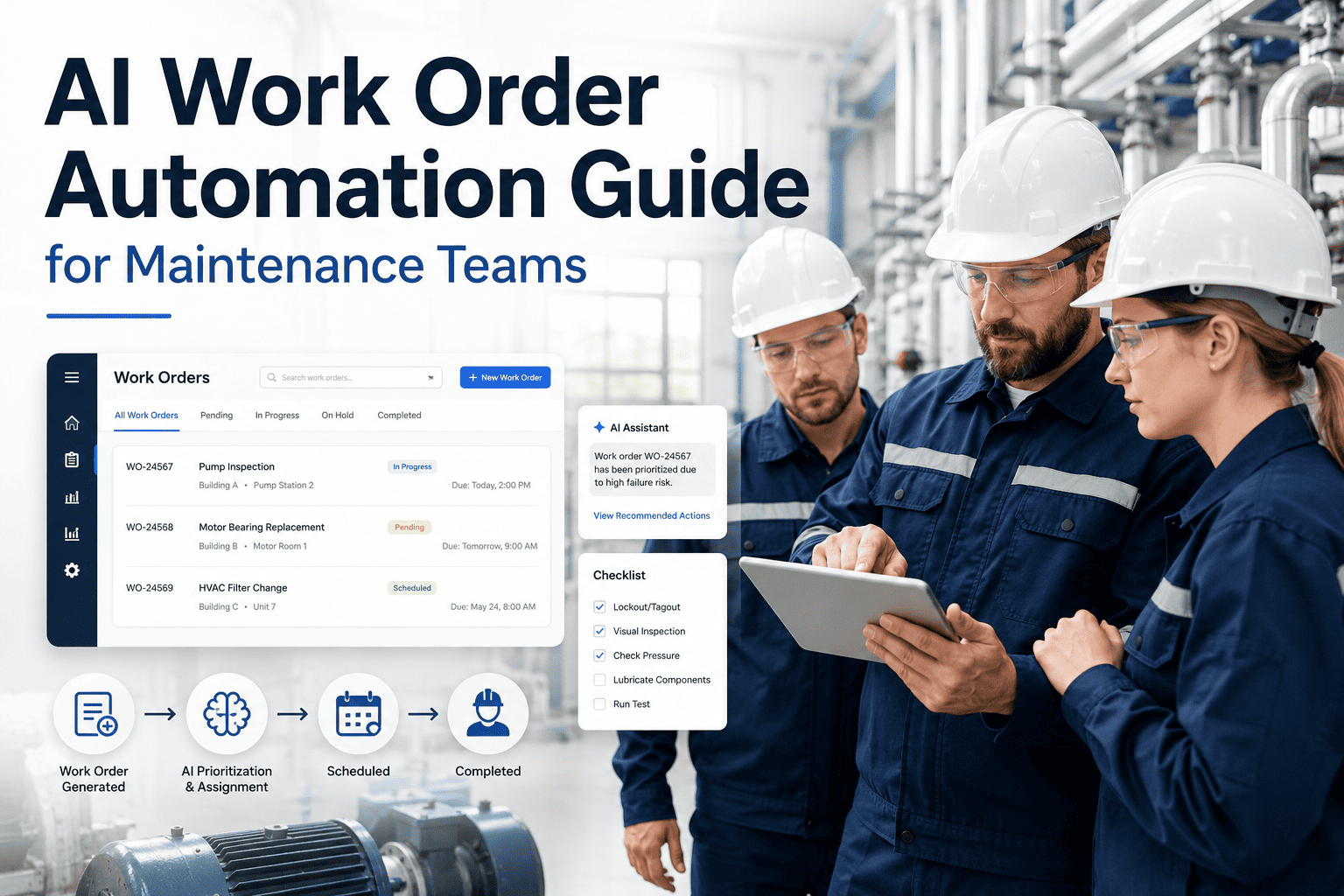
When the AI identifies an actionable risk, it does not just generate an alert — it creates a complete work order. The order includes the asset record with full maintenance history, the predicted failure mode, step-by-step repair procedure drawn from historical successful repairs, required parts pulled from inventory, assigned technician based on skill match and availability, and priority ranking relative to other open work.
The human decision that used to take 20–40 minutes — reading a sensor report, cross-referencing asset history, writing a work order, finding the right technician, checking parts availability — is compressed to zero. Create your free account to see how Oxmaint auto-generates work orders from AI predictions.
Prescriptive Analytics and Continuous Learning
Prescriptive analytics goes beyond predicting what will fail — it optimizes the entire maintenance response. The AI considers parts availability, technician schedules, production impact windows, asset criticality, and budget constraints to recommend not just what to fix, but when, who should do it, and how to sequence it against other open work to maximize fleet reliability per dollar spent.
Every completed work order feeds back into the model as new training data. Every resolved failure confirms or refines the AI's understanding of that failure mode. The system gets measurably smarter with every repair your team completes. Book a demo to see the prescriptive scheduling engine in Oxmaint.
Your maintenance data already contains the intelligence to prevent the next failure. Oxmaint's AI engine surfaces it automatically.
AI-powered analytics, NLP data entry, and automated work orders — all in one platform. No data science team required.
Before vs. After: What AI Changes in Daily Operations
The shift from manual maintenance management to AI-driven prescriptive operations affects every layer of the operation — from how technicians start their day to how maintenance leaders justify budgets. This table shows the concrete operational differences.
| Operation | Manual CMMS | AI-Powered Oxmaint | Time Saved |
|---|---|---|---|
| Failure detection | Technician reports symptom after noticing problem | AI flags anomaly 30–60 days before visible symptoms | 4–8 weeks earlier |
| Work order creation | Supervisor writes order manually, 20–40 min per order | AI auto-generates complete order on threshold breach | 20–40 min per WO |
| Technician assignment | Manual check of schedules and skill lists | Auto-assigned based on skill match and availability | 10–15 min per WO |
| Parts availability check | Walk to storeroom or call storekeeper | Inventory status shown in work order; auto-reorder triggered | 15–30 min per WO |
| Data entry after repair | Paper form, then manual entry into system | Voice-to-text NLP entry on mobile; fields auto-populated | 10–20 min per WO |
| Maintenance reporting | Manual spreadsheet compilation, hours per report | Real-time dashboard, auto-generated reports on schedule | 3–6 hrs per report |
How Oxmaint Delivers AI Maintenance Intelligence
Oxmaint is built specifically for maintenance teams — not data scientists. The AI features are embedded in the workflow, not bolted on as a separate module. Sign up for a free account and experience the platform yourself.
AI-Powered Analytics Dashboard
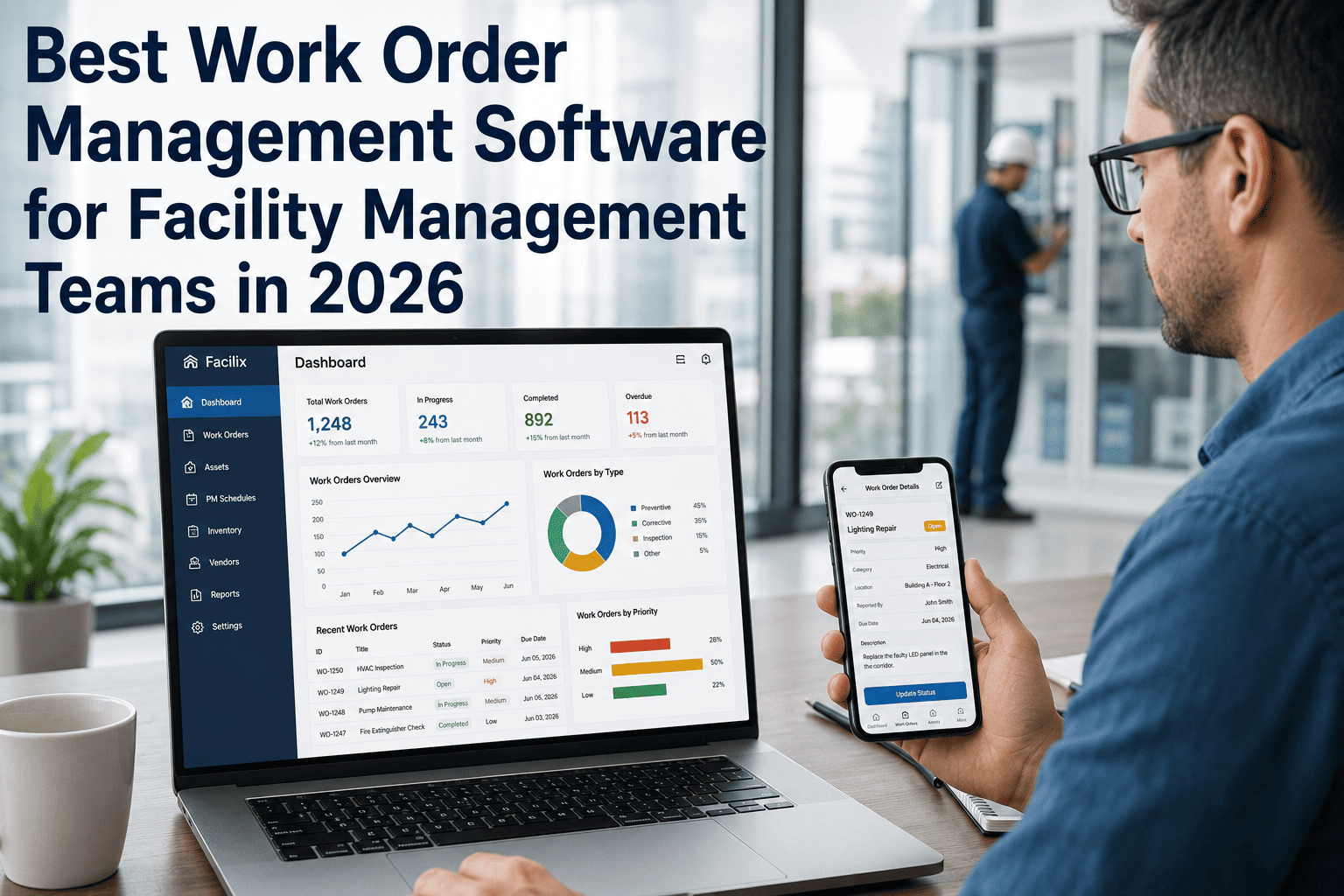
Fleet-level health scores, failure risk rankings, MTBF trends, cost-per-asset analysis, and predictive budget projections — all updated in real time from work order completions and sensor data. Maintenance leaders get a single view of operational intelligence that used to require hours of manual report compilation.
NLP Work Order Entry
Technicians describe findings in plain language — typed or spoken — and Oxmaint's NLP engine structures the data automatically. Failure mode, root cause, parts used, and resolution notes are extracted and filed without manual field-by-field entry.
Prescriptive Work Order Engine
When AI detects a risk condition, Oxmaint generates a work order complete with the recommended repair procedure, parts list, assigned technician, and optimal scheduling window. No manual decision-making required.
Continuous Learning Engine
Every completed work order improves the model. Outcomes confirm or refine failure predictions. The AI becomes measurably more accurate over time, specific to your assets and operating environment — not a generic industry benchmark.
The biggest myth in manufacturing is that you need massive capital investment to cut costs significantly. The truth is, most of your waste is invisible — hidden in reactive maintenance, excess inventory, and manual processes. A good AI-powered CMMS makes it visible, and once you can see it, you can eliminate it.
Getting to Prescriptive: Your Implementation Path
Moving from reactive to prescriptive maintenance does not require a multi-year IT transformation. Oxmaint customers follow a structured ramp that delivers value at every stage — starting with quick wins in week one and reaching full prescriptive capability within 90 days. Sign up free to begin your implementation today.
Your Data Is Ready. Your AI Isn't Activated Yet.
Every work order your team has completed, every failure your equipment has experienced, every repair your technicians have made — that data contains the patterns that predict the next failure. Oxmaint's AI engine extracts those patterns automatically and turns them into prescriptive maintenance intelligence from day one.