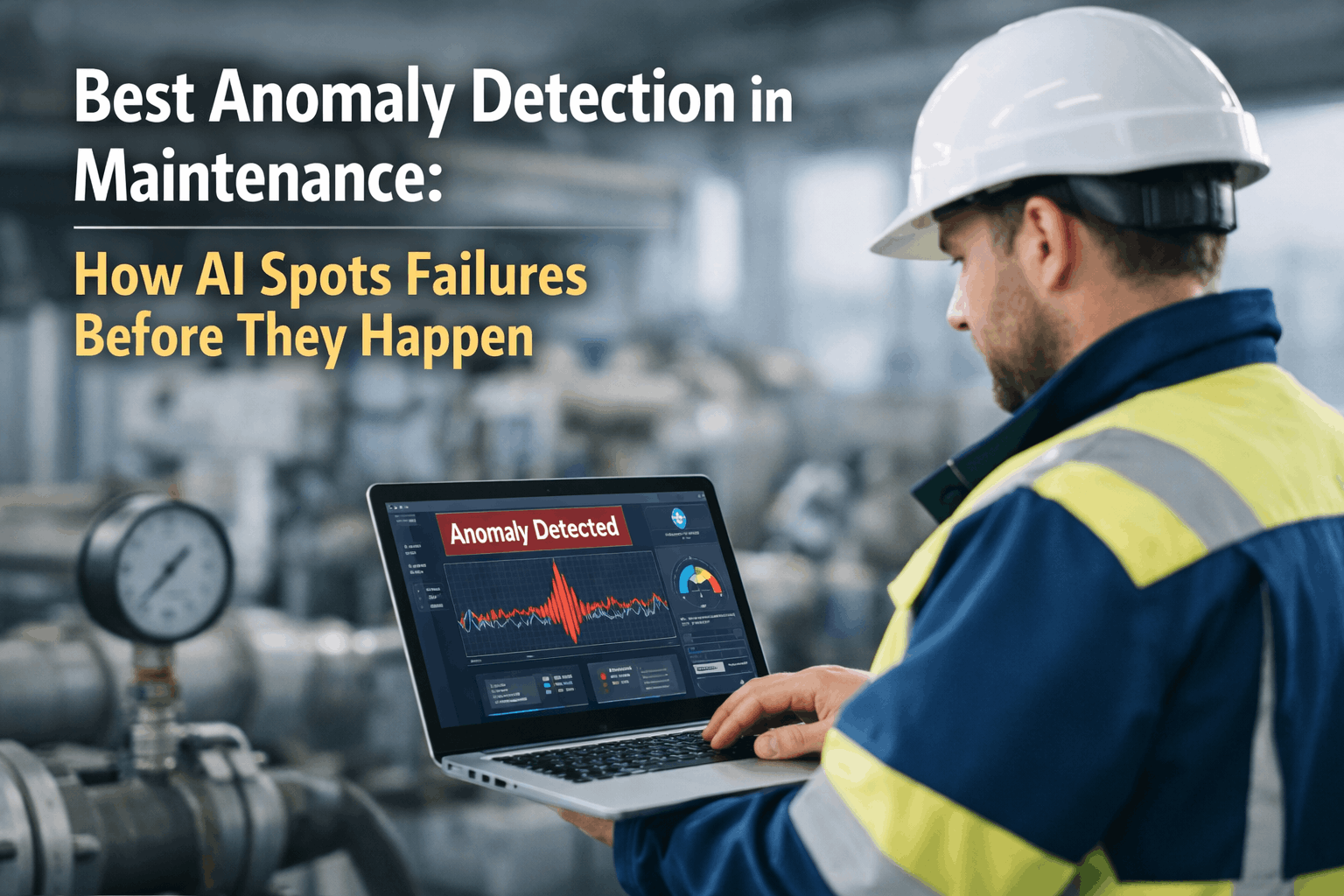
A maintenance manager overseeing 800 assets across two shifts cannot personally spot that a specific pump type has been failing every 47 days, or that emergency work orders on Line 4 always spike after the night shift completes a particular PM sequence. These patterns are real, they are costly, and they are completely invisible to the human eye in a dense work order dataset. AI anomaly detection in a CMMS surfaces them automatically — before the next failure, not after. This page explains how it works and what managers can do with those signals using OxMaint's AI and automation features.
How AI Helps Managers Detect Unusual Maintenance Patterns
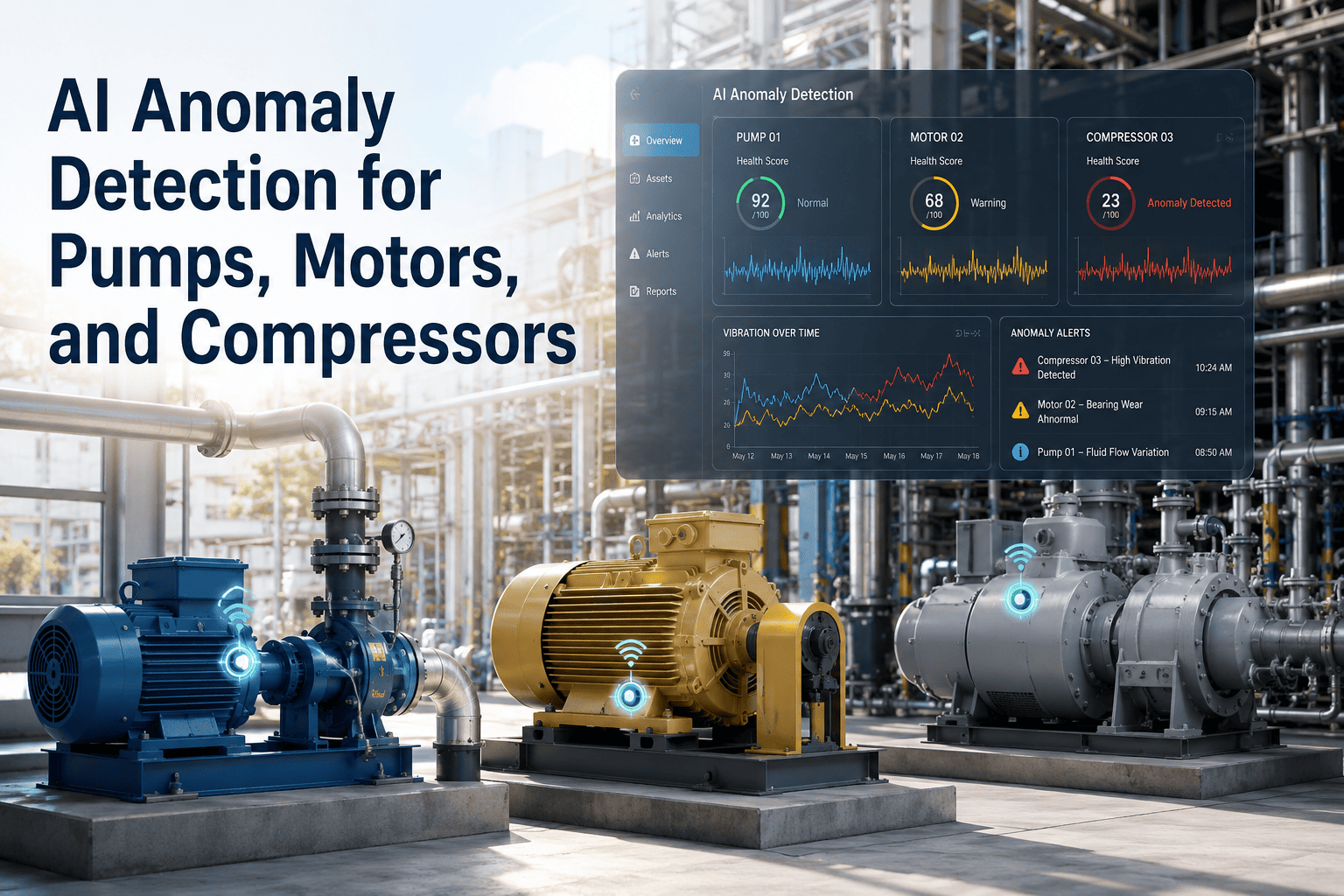
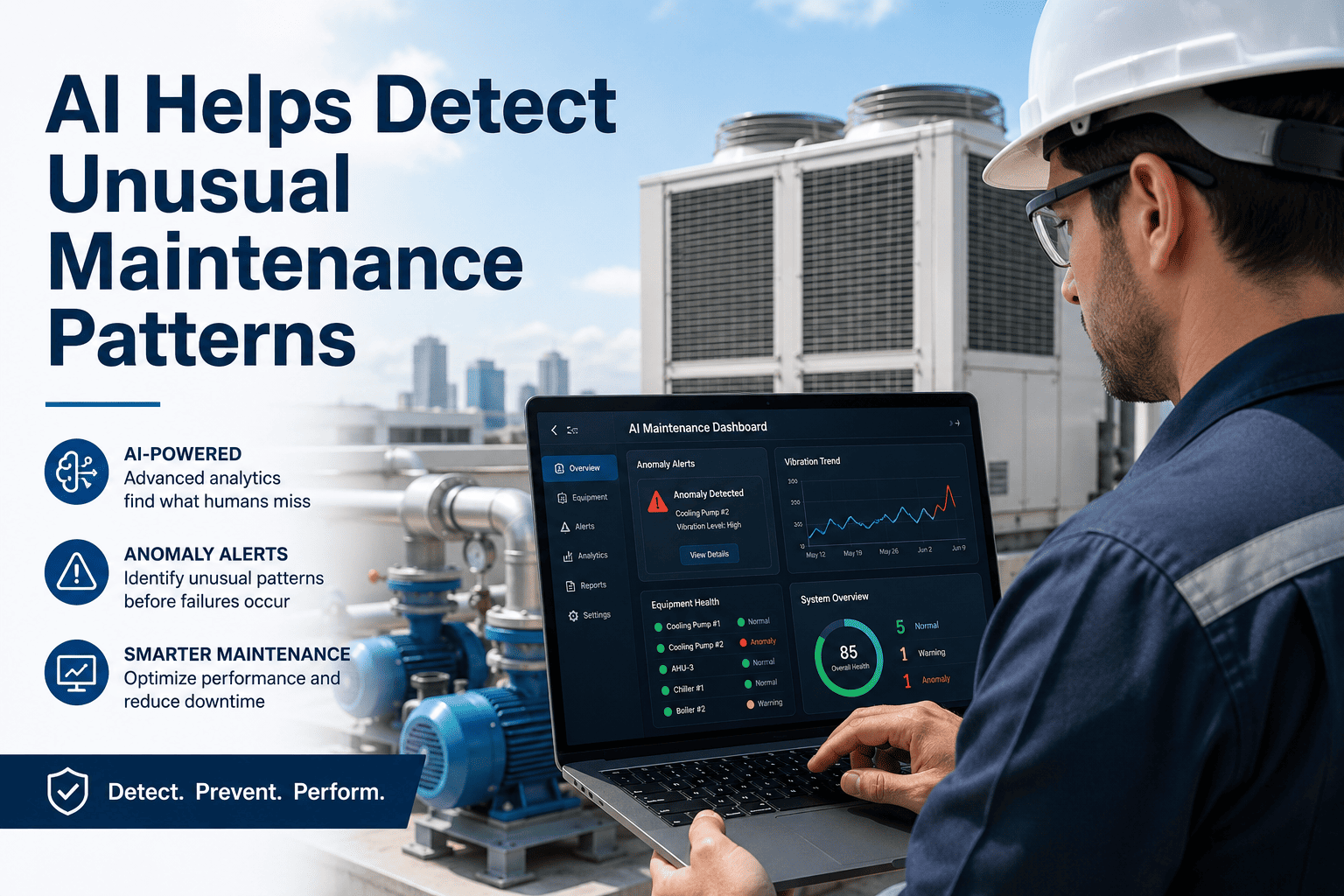
Unusual downtime, repeated failures, rising parts consumption, and overdue work — AI surfaces these patterns automatically, before small anomalies become costly breakdowns.
Five Categories of Maintenance Anomalies AI Finds First
AI monitors historical downtime per asset, per shift, and per zone. When downtime on a specific asset or area exceeds its rolling average by a defined threshold, managers receive an alert before a full-scale failure develops.
When the same fault code or symptom appears on the same asset type across multiple locations within a short window, AI surfaces the cluster as a systemic issue — not a series of isolated incidents to be fixed individually.
A specific part being consumed at 2x its normal rate signals an underlying reliability problem. AI tracks parts usage trends per asset type and alerts when consumption exceeds the rolling baseline — often before the asset itself shows visible symptoms.
Backlog growing in a specific location or for a specific asset class is an early warning of future reactive work spikes. AI tracks overdue work order velocity — how fast the backlog is growing — not just its total size, which is a lagging indicator.
Assets that consistently fail shortly after a PM completion indicate a problem with the PM procedure itself — missing steps, incorrect specifications, or damage introduced during the maintenance task. AI detects this correlation and flags it to the planner.
Book a Demo — Watch OxMaint AI Flag an Anomaly in Live Maintenance Data
OxMaint AI monitors your work order, downtime, and parts data continuously. Anomalies are surfaced as prioritized manager alerts — not buried in a report that someone has to read.
AI Detection vs Manual Review — What You Get and When
| Pattern Type | Manual Detection Timeline | AI Detection Timeline | Cost of the Delay |
|---|---|---|---|
| Repeat failure clustering | Monthly review — 3 to 4 weeks after onset | Real-time — 2nd failure triggers alert | 1 to 2 additional failures and full downtime events |
| Unusual downtime spike | Weekly report — 5 to 7 days after onset | 24 to 48 hours from threshold breach | Unreported asset degradation continues |
| Rising parts consumption | Stock review — monthly at best | Weekly trend flag — before stockout | Emergency parts procurement at premium cost |
| Post-PM failure pattern | Often never detected — attributed to bad luck | Detected after 3rd occurrence in pattern window | PM procedure flaw continues uncorrected indefinitely |
| Backlog accumulation velocity | Monthly — usually visible only after it is critical | Weekly velocity alert — while still recoverable | Reactive spike, overtime, and morale impact |
Under the Hood — How AI Pattern Detection Operates
OxMaint AI continuously monitors incoming work orders, closures, downtime records, and parts transactions across all assets and locations — no manual data preparation required from the maintenance team.
For each asset, the AI establishes rolling baselines for failure frequency, downtime duration, parts consumption, and PM compliance. Baselines update automatically as more data accumulates — the system gets more accurate over time, not less.
When any metric deviates from its baseline beyond a configurable threshold, the AI classifies the deviation by type, severity, and affected asset or location group — and generates a prioritized alert with supporting context.
Alerts reach managers through the OxMaint dashboard and optional email or push notifications. Each alert includes the supporting data, the affected assets, and a suggested next action — reducing the time from alert to decision from hours to minutes.
The value of AI in maintenance is not replacing the reliability engineer — it is handling the pattern surveillance work that a reliability engineer is too busy to do consistently. I have seen plants where 80 percent of recurring failures could have been predicted by looking at the work order data — but nobody had time to look. AI does the looking continuously. The reliability engineer then focuses on acting on the patterns the AI surfaces, rather than searching for them. That is a profound shift in how maintenance intelligence actually works in practice.
Frequently Asked Questions
How much historical data does OxMaint AI need to start detecting patterns?
OxMaint AI begins providing anomaly flags with as little as 4 to 6 weeks of live work order data. Early detections focus on obvious outliers — assets with very high failure frequency or very sharp downtime spikes relative to peers. As data accumulates over 3 to 6 months, the AI refines its baselines and begins detecting subtler trends like post-PM failure correlation and gradual parts consumption increases. Legacy historical data imported during onboarding — even from spreadsheets — accelerates this process significantly. Start your free trial to begin building that data foundation today.
What is the difference between AI anomaly detection and a standard CMMS alert?
A standard CMMS alert is rules-based: a sensor crosses a threshold, a PM due date passes, or a work order sits open beyond its SLA. These are useful but static — they tell you what you already knew would happen. AI anomaly detection is pattern-based: it identifies correlations and deviations that no predefined rule was written to catch. A post-PM failure pattern, a cross-asset repeat failure cluster, or a parts consumption trend that precedes failure by 14 days — none of these can be written as a simple threshold rule. AI detects them by recognizing that the current pattern deviates from what was historically normal for that asset or group. This is why AI detection finds problems that rules-based alerting misses entirely.
Can AI pattern detection reduce after-hours emergency calls?
Yes — and this is one of the most direct business cases for the technology. After-hours emergencies are almost always assets that showed early warning signals that were not acted on during regular hours. AI pattern detection identifies these signals — rising downtime, increasing repair frequency, growing PM backlog — during the workday so that corrective action can be taken before the failure escalates into an out-of-hours emergency. Organizations implementing AI-based pattern monitoring report 20 to 40 percent reductions in after-hours callouts within the first six months. Book a demo to discuss what OxMaint AI can identify in your specific operation.
Let AI Watch Your Maintenance Data So You Can Act on What Matters
OxMaint AI monitors every work order, downtime record, and parts transaction in your system — surfacing the patterns that predict failures before they happen, not after they cost you a shift.