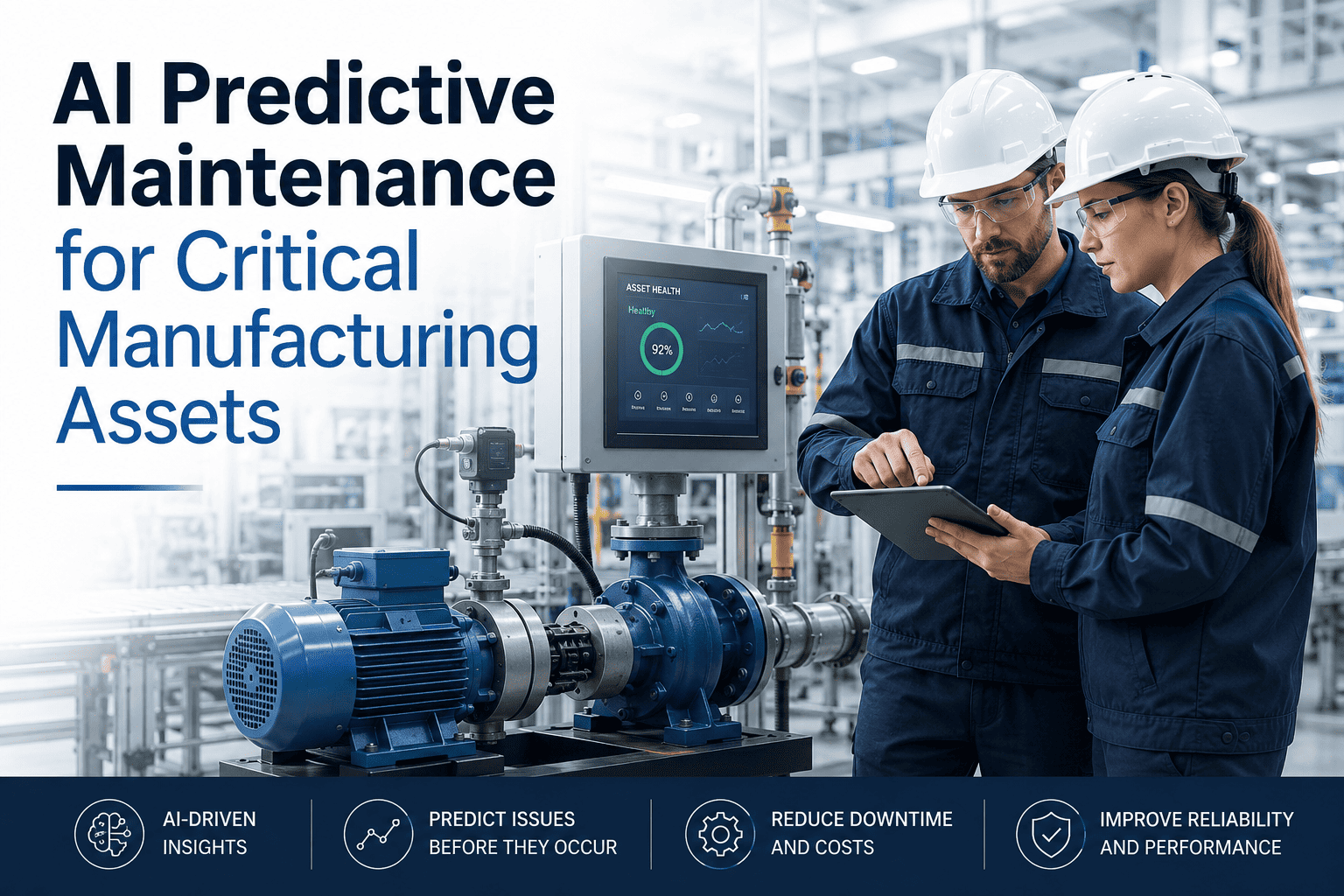
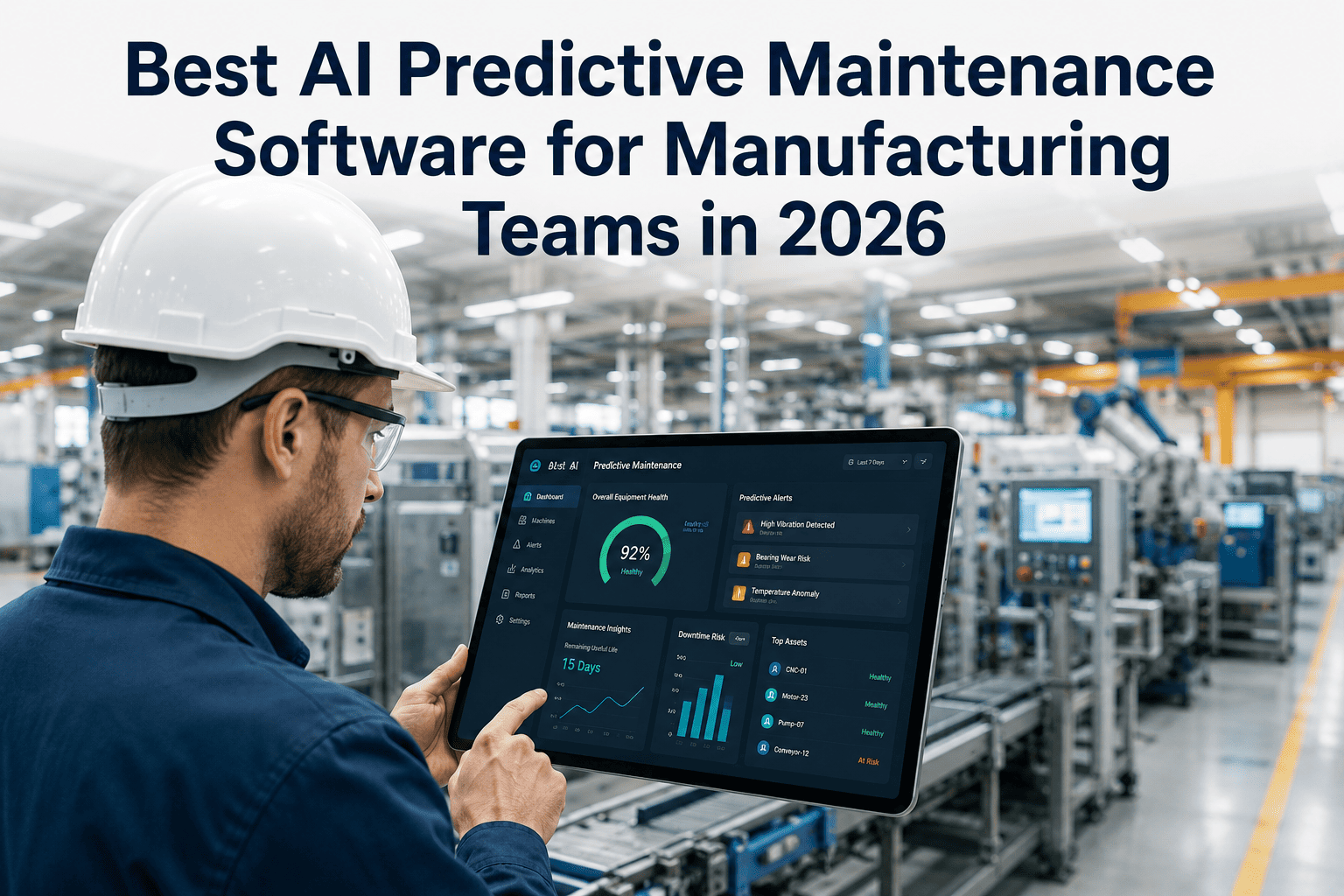
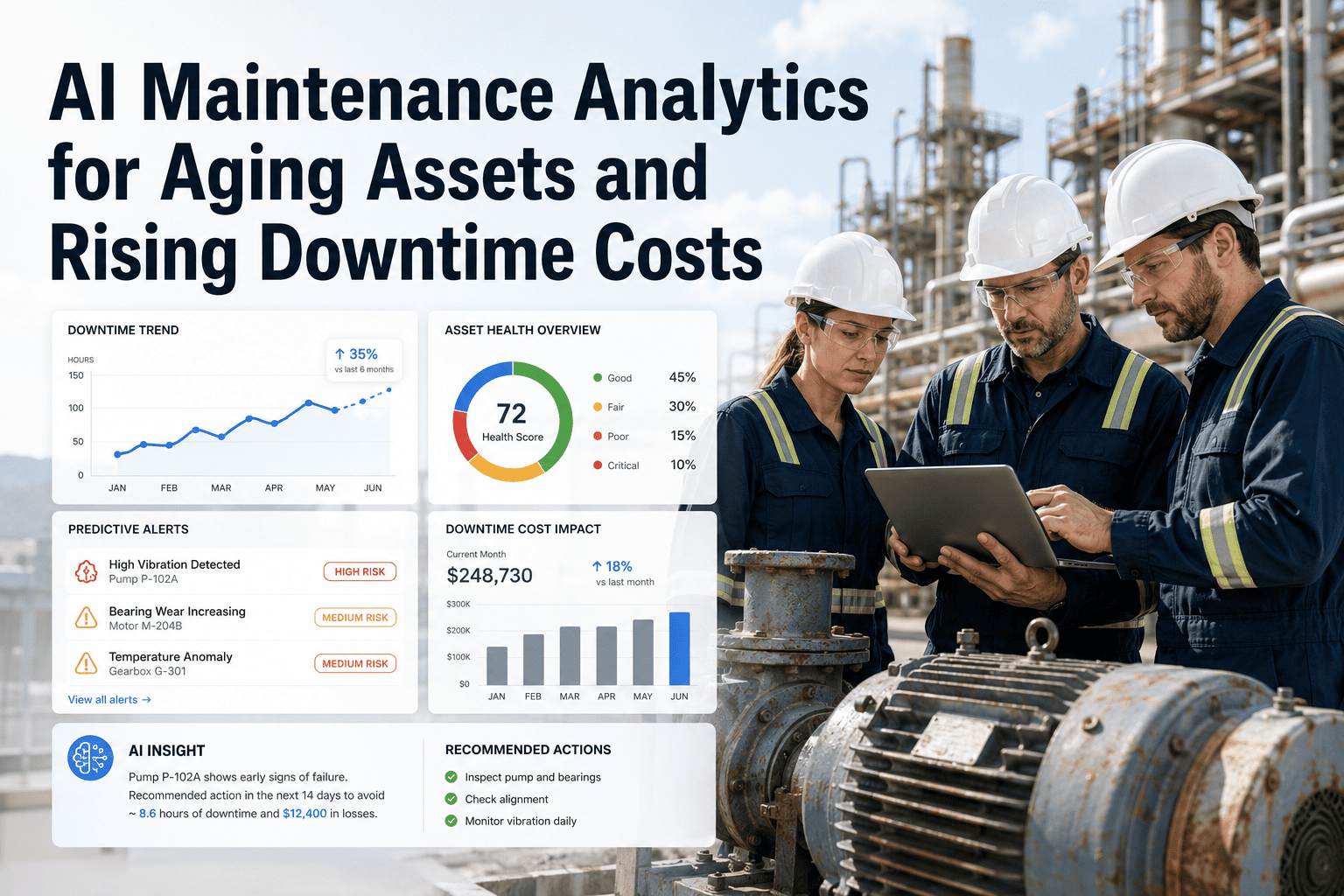
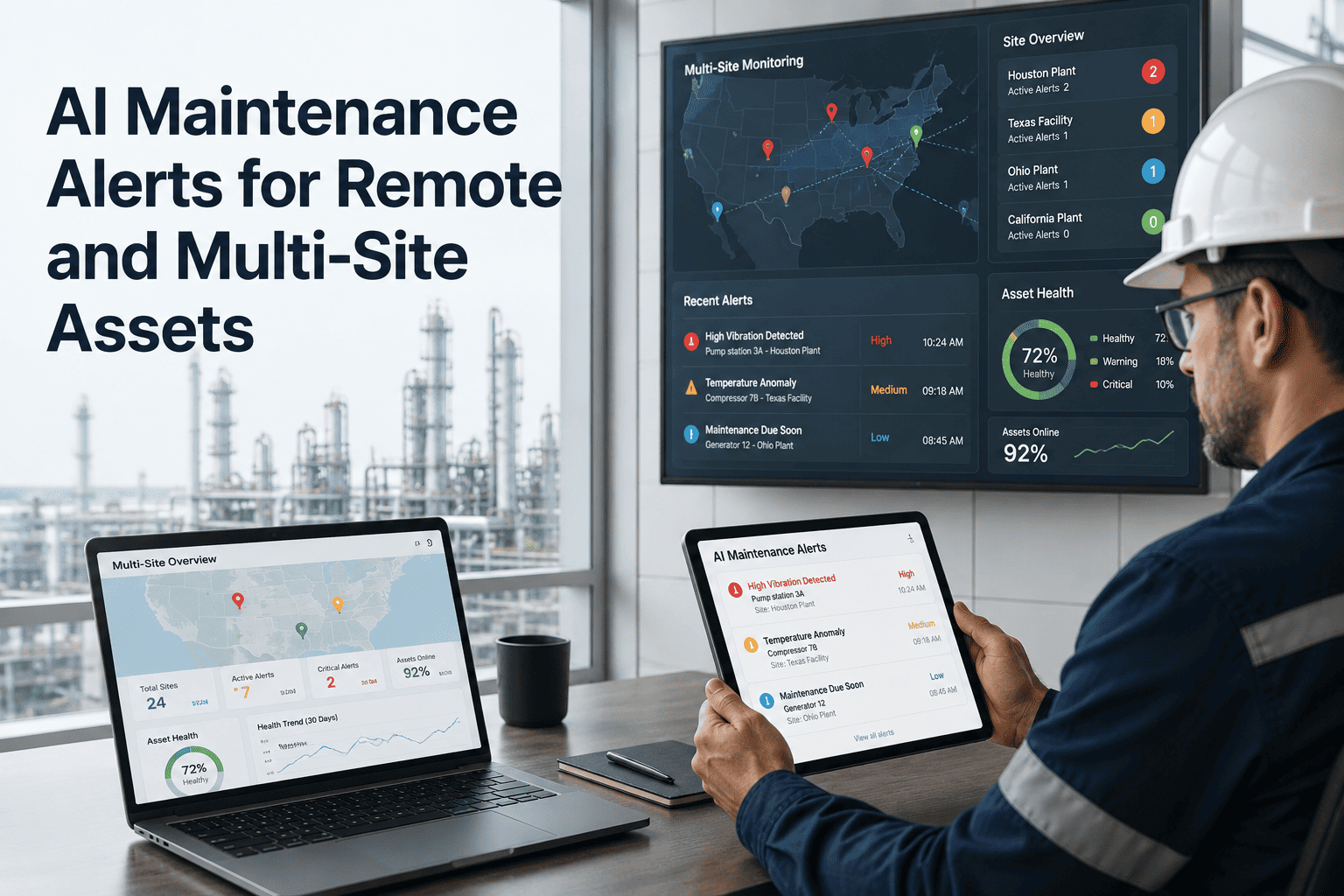
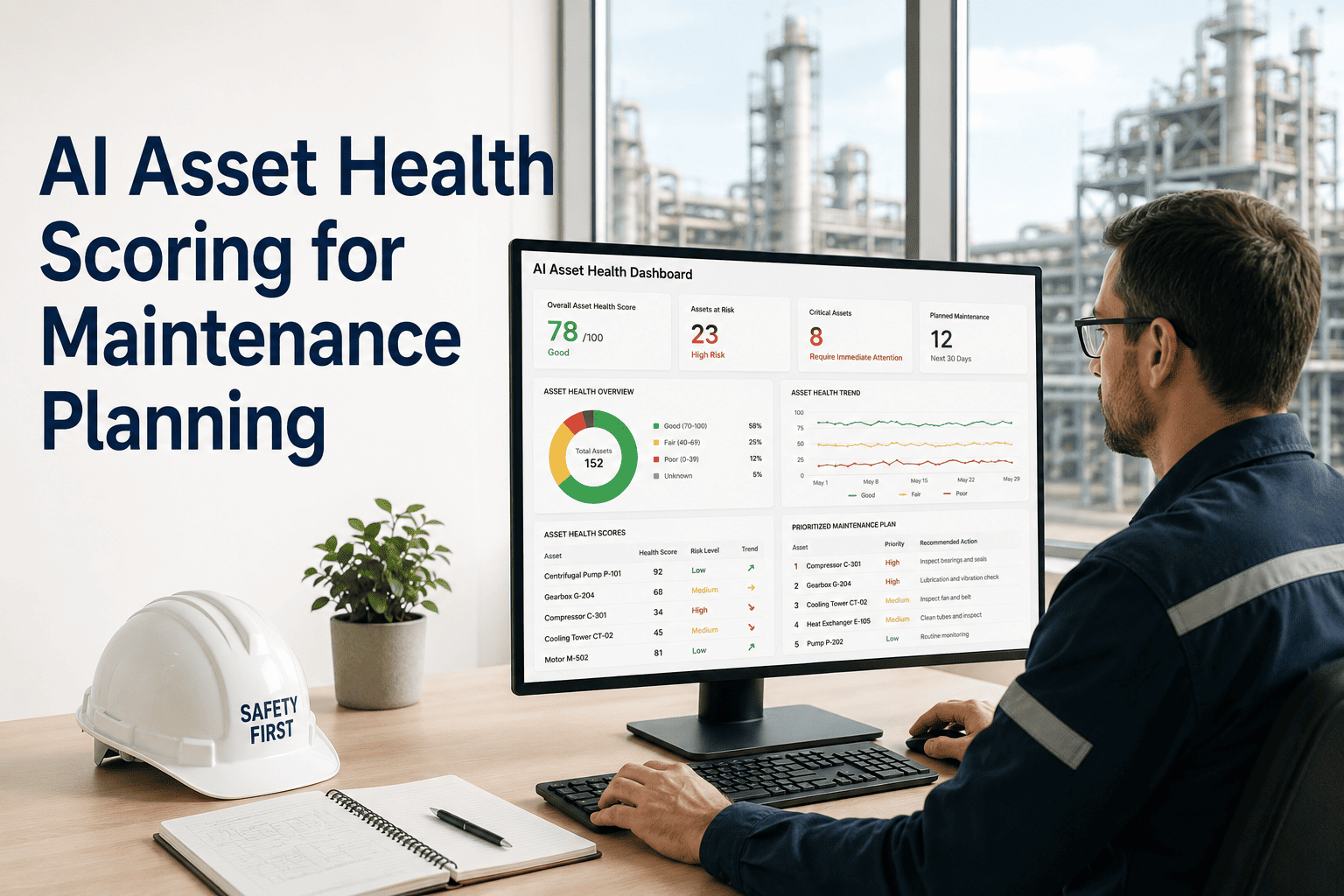
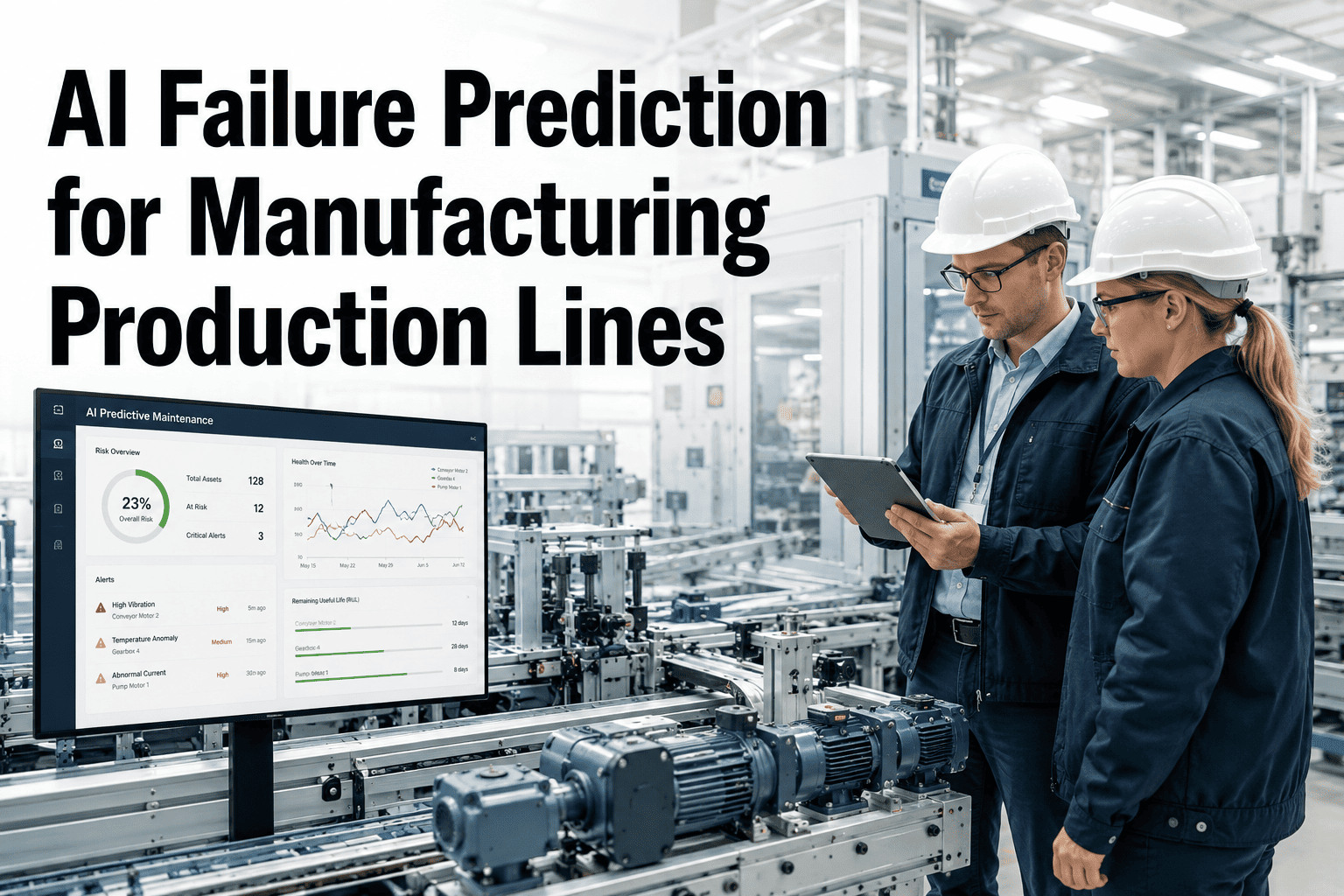
Critical manufacturing assets — the motors, compressors, pumps, presses, and conveyors that production depends on — fail in predictable patterns that traditional scheduled maintenance cannot detect. AI predictive maintenance changes the equation entirely: by continuously analyzing sensor signals, runtime behavior, and historical failure data, AI models identify the specific assets heading toward failure and give maintenance teams 7 to 21 days of advance warning to intervene before production stops. The result is a fundamental shift from reactive firefighting to planned, data-driven reliability engineering that protects your highest-value equipment and your production throughput simultaneously. Start free with Oxmaint and activate AI predictive maintenance on your critical asset fleet today.
7–21
Days Advance Warning Before Failure
45%
Reduction in Unplanned Downtime
30%
Lower Maintenance Costs vs Reactive
10:1
Typical ROI on Predictive Program
AI PREDICTIVE MAINTENANCE
Catch Failures Before They Stop Production
Oxmaint's AI engine monitors asset health continuously, surfaces risk-ranked alerts for your most critical equipment, and automatically generates work orders before failures become emergencies. Your team stops reacting and starts planning.
Asset Risk Dashboard
Compressor C-101
HIGH RISK · Alert Active
Pump Station P-04
MEDIUM · Monitor
Conveyor Belt CB-03
HEALTHY
How AI Predictive Maintenance Works — Step by Step
1
Continuous Data Collection
IoT sensors feed vibration, temperature, pressure, and current draw data to the AI engine in real time. Historical work orders, repair records, and failure events train the initial models and improve accuracy over time.
2
Anomaly Detection & Pattern Recognition
Machine learning algorithms compare live sensor readings against normal operating baselines specific to each asset. Deviations that match known pre-failure signatures trigger risk score updates — even when readings are still within alarm thresholds.
3
Prioritized Alert Generation
AI assigns a risk score to each alert based on asset criticality, estimated time to failure, production impact, and repair lead time. Maintenance managers see a prioritized queue — not a flood of equal-priority notifications.
4
Automated Work Order Creation
High-risk alerts automatically generate work orders with recommended actions, required parts, estimated labor, and a suggested completion window — routed to the right technician based on skill, certification, and availability.
Asset Types That Deliver the Highest Predictive Maintenance ROI
| Asset Type |
Key Failure Modes AI Detects |
Typical Lead Time |
Avg. Failure Cost (Reactive) |
ROI Category |
| Rotating Machinery (Motors, Pumps) |
Bearing wear, imbalance, misalignment, cavitation |
7–21 days |
$15,000–$80,000 |
Very High |
| Compressors & Blowers |
Valve wear, discharge temperature rise, vibration signature change |
5–14 days |
$25,000–$120,000 |
Very High |
| CNC Machines & Spindles |
Spindle bearing degradation, thermal drift, feed axis irregularity |
3–10 days |
$10,000–$50,000 |
High |
| Conveyor Systems |
Belt tension, roller bearing failure, drive motor anomalies |
5–14 days |
$8,000–$35,000 |
High |
| HVAC & Cooling Systems |
Refrigerant leak, coil fouling, compressor wear |
7–21 days |
$5,000–$30,000 |
Medium–High |
| Hydraulic Systems |
Fluid contamination, pressure decay, pump wear |
4–12 days |
$12,000–$60,000 |
High |
EXPERT REVIEW
Marcus Williams, P.E., CRL
Reliability Engineering Lead · Tier 1 Automotive Supplier · 16 Years in Asset Performance Management
The biggest misconception about AI predictive maintenance is that you need a large IoT infrastructure investment before you can start. In reality, the most valuable signal for most manufacturing assets is already available — runtime hours, past repair history, failure codes, and manual inspection results. AI models built on this structured maintenance data outperform rule-based systems immediately and improve rapidly as more operational data accumulates. I recommend starting with your top 15–20 critical assets by production impact, measuring MTBF improvement over 90 days, and expanding from there. The ROI case writes itself after the first prevented failure on a critical asset.
START PREDICTING · NOT REACTING
Protect Your Critical Assets With AI That Learns Your Equipment
Oxmaint's AI predictive maintenance platform is built for manufacturing teams — fast to deploy, deep on analytics, and proven to reduce unplanned downtime on the assets your production depends on most.
Frequently Asked Questions
How much historical maintenance data does AI need before it can generate reliable predictive alerts?
AI predictive models typically require 6–12 months of asset-specific failure history to generate highly accurate failure predictions from historical patterns alone. However, modern platforms like Oxmaint use industry benchmark models to provide meaningful alerts from day one — even for new asset installations with no local failure history. These benchmark models are calibrated against thousands of similar assets across industries and refined continuously as plant-specific data accumulates. In practice, most manufacturing teams see measurable improvement in failure prediction accuracy within the first 90 days as the AI learns the operational patterns specific to their facility.
What sensors are required to implement AI predictive maintenance?
Basic AI predictive maintenance can be implemented with existing data sources — work orders, inspection results, runtime meters, and equipment downtime logs — without any new sensor hardware. Adding vibration sensors, temperature sensors, and current transformers to critical rotating assets significantly improves detection accuracy and lead time for mechanical failures. Cloud-connected IoT gateways allow legacy equipment to feed sensor data to the AI engine without full instrumentation upgrades. Oxmaint integrates with major industrial IoT sensor platforms and supports a phased sensor deployment approach that lets you start with data-driven models and add hardware incrementally where it delivers the most value.
How does AI predictive maintenance differ from condition-based monitoring?
Condition-based monitoring (CBM) triggers maintenance when a measured parameter — vibration amplitude, temperature, oil viscosity — crosses a defined threshold. AI predictive maintenance goes further by detecting subtle multi-parameter patterns that precede failure before any individual threshold is breached. For example, a CBM system might alarm when bearing vibration exceeds 0.3 inches/second, while an AI model detects the characteristic frequency pattern shift that indicates bearing wear 3 weeks before amplitude reaches alarm level. AI also prioritizes alerts by estimated time to failure and production impact, whereas CBM alarms are binary — making AI dramatically more actionable for maintenance scheduling.
Can AI predictive maintenance reduce spare parts inventory costs?
Yes — this is one of the most significant and least discussed benefits of AI predictive maintenance. When you know an asset is likely to fail in 10–14 days rather than discovering the failure during an emergency, you can order parts with standard lead times rather than emergency expediting at 2–4x normal cost. Over time, AI failure predictions also improve spare parts stocking decisions — identifying which parts are truly needed for critical assets based on actual failure rates rather than conservative overstocking. Oxmaint customers typically report 20–30% reduction in emergency parts procurement costs within the first year of predictive maintenance program operation.
Sign up free to see how Oxmaint connects predictive alerts to parts management.