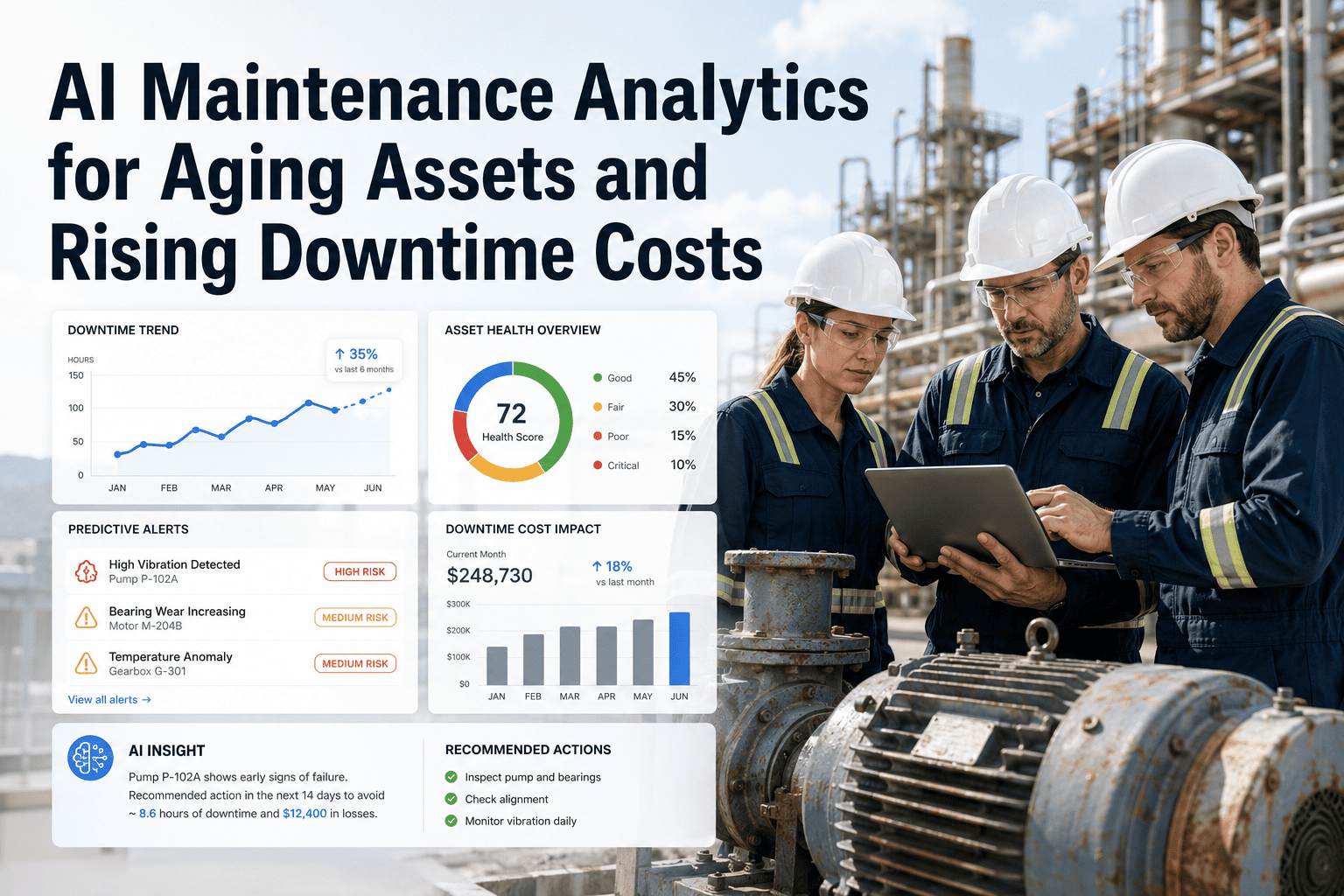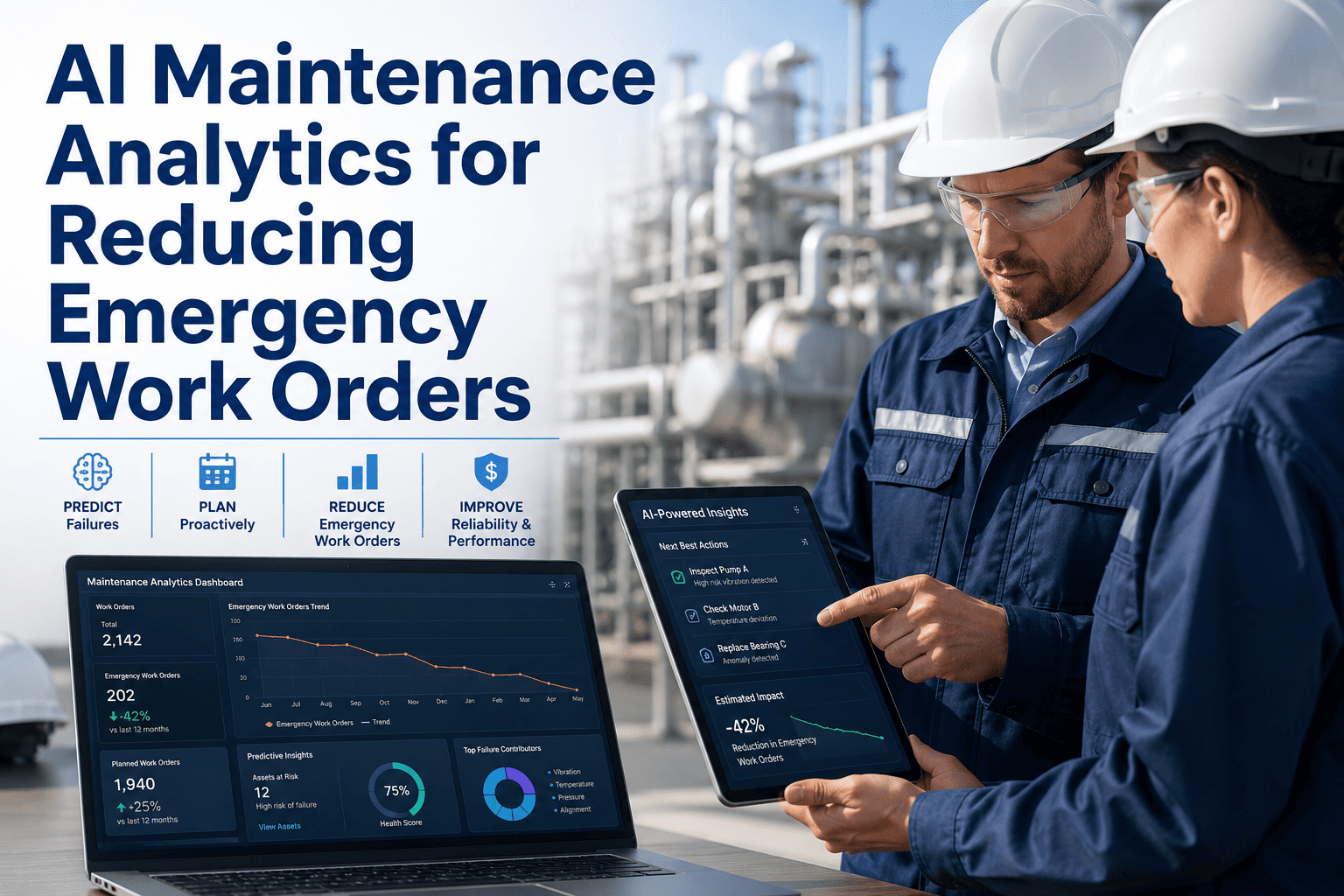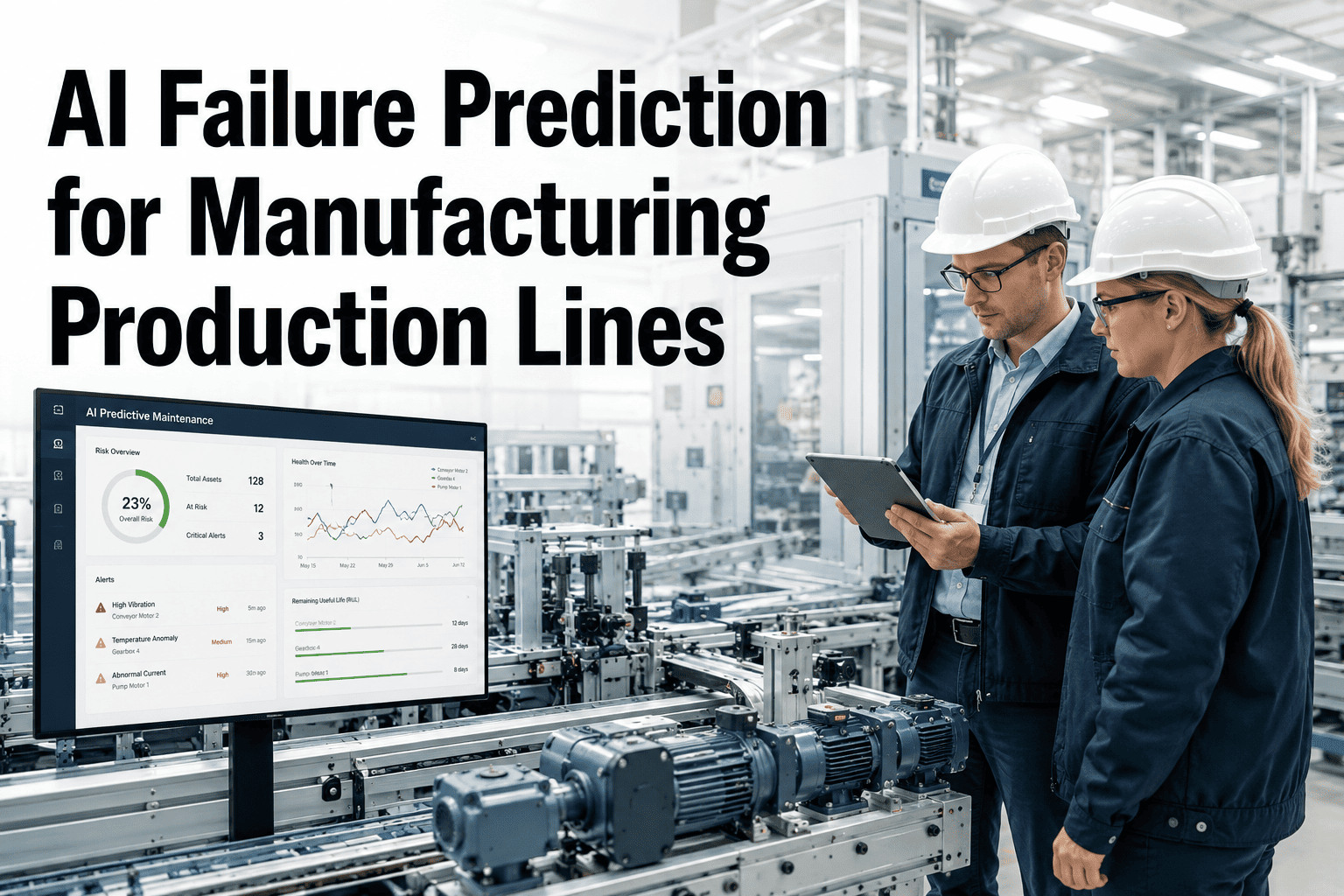
OxMaint helps maintenance teams prevent catastrophic breakdowns on critical equipment before they happen. Across industries, unplanned downtime costs manufacturers an average of $260,000 per hour — yet 82% of equipment failures follow detectable patterns that AI can identify weeks in advance. This guide shows exactly how AI predictive maintenance works, the data behind it, and how your team can act on failure signals before a single production minute is lost.
AI PREDICTIVE MAINTENANCE
Stop Breakdowns Before They Happen
Real-time asset health scoring, failure prediction, and automated work order creation — all in one CMMS built for critical equipment teams.
$260K
Average cost per hour of unplanned downtime
82%
Of failures have detectable early warning patterns
10x
ROI on predictive vs reactive maintenance programs
45%
Reduction in unplanned downtime with AI-driven PM
HOW IT WORKS
01
Sensor Data Ingestion
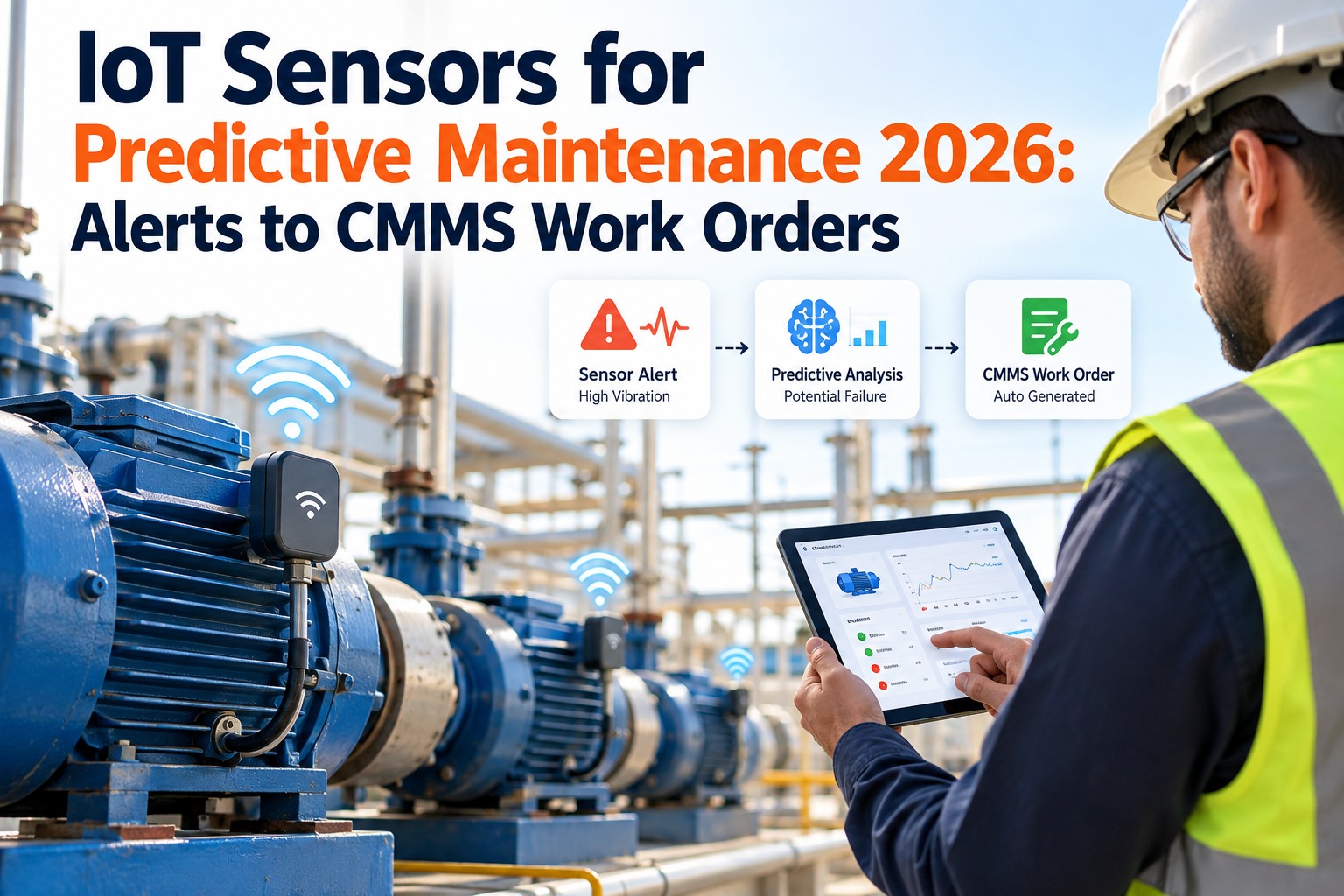
OxMaint connects to vibration, temperature, pressure, and runtime sensors across your critical assets — ingesting real-time readings into a centralized asset health timeline.
02
AI Anomaly Detection
Machine learning models trained on your equipment's baseline behavior flag deviations — a bearing running 8°C above normal, vibration frequency shifting into a failure band — before damage escalates.
03
Failure Risk Scoring
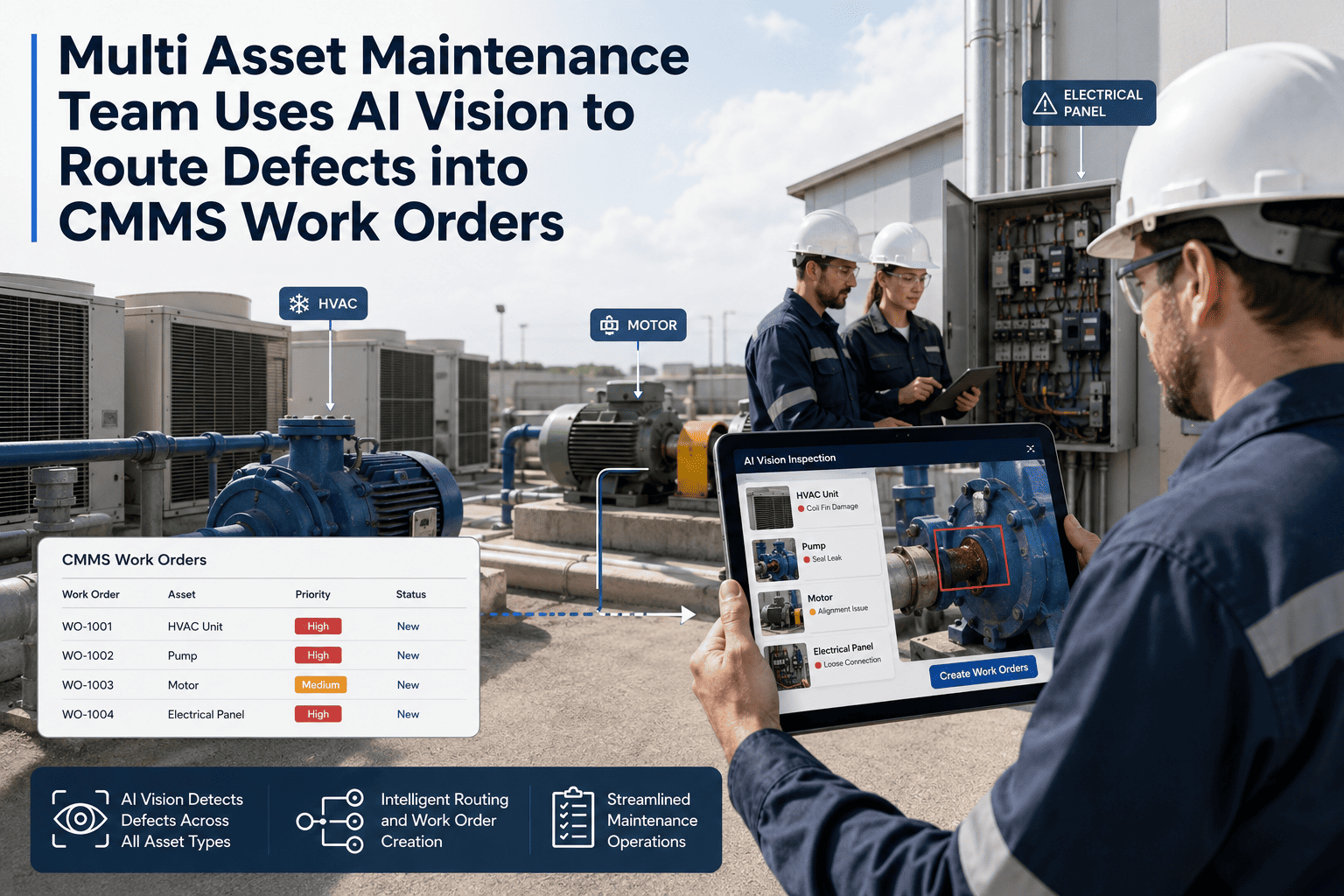
Each asset receives a live health score from 0–100. Assets crossing configurable risk thresholds trigger automated alerts and priority-ranked work orders dispatched to your maintenance team.
04
Technician Action
Technicians receive mobile work orders with failure context, asset history, and recommended corrective actions — resolving issues during a planned maintenance window, not an emergency shutdown.
FAILURE MODE COMPARISON
| Equipment Type | Common Failure Mode | AI Detection Lead Time | Reactive Repair Cost | Predictive Repair Cost |
|---|---|---|---|---|
| Centrifugal Pumps | Bearing wear, cavitation | 3–6 weeks | $18,000–$45,000 | $2,500–$6,000 |
| Air Compressors | Valve failure, seal degradation | 2–4 weeks | $12,000–$30,000 | $1,800–$4,500 |
| Industrial Motors | Insulation breakdown, overheating | 4–8 weeks | $25,000–$80,000 | $3,000–$9,000 |
| Cooling Towers | Fan blade imbalance, drift eliminator | 2–5 weeks | $15,000–$40,000 | $2,000–$5,500 |
| Conveyor Systems | Belt tension, roller bearing failure | 1–3 weeks | $8,000–$22,000 | $900–$3,000 |
Asset Health Score Bands
EXPERT REVIEW
Dr. Sandra Okonkwo
Reliability Engineer — 19 Years in Heavy Industrial & Power Generation
The difference between predictive and reactive programs isn't the sensors — it's what you do with the data. Most plants collect enough condition data to prevent 70% of their unplanned failures but lack the system to connect anomaly signals to work orders automatically. OxMaint closes that gap. When an asset health score drops below threshold, a work order fires immediately with full failure context. Technicians arrive prepared, not guessing. That's what turns a monitoring system into an actual reliability improvement program.
See AI Health Scoring on Your Assets
Book a 30-minute demo and watch OxMaint score your critical equipment in real time.
FREQUENTLY ASKED QUESTIONS
How long does it take for OxMaint's AI to learn an asset's normal behavior?
OxMaint's AI begins establishing baseline behavior within 2–4 weeks of sensor data ingestion, depending on the equipment type and operating cycle variability. During this learning period, the system collects vibration, temperature, and runtime patterns to define what "normal" looks like for your specific asset under your specific load conditions. After the baseline is established, anomaly detection becomes progressively more accurate as the model accumulates more operating history. Sign up free to start the baseline learning process immediately.
Can OxMaint integrate with existing sensors and IoT infrastructure we already have installed?
Yes. OxMaint supports integration with most industrial IoT platforms and sensor protocols including MQTT, OPC-UA, Modbus, and REST API endpoints. If your facility already has vibration sensors, thermal cameras, or PLC-connected equipment streaming data, OxMaint can ingest that data stream without requiring new hardware installations. Our team conducts a connectivity assessment during onboarding to map your existing sensor infrastructure to the OxMaint asset health engine. Book a demo to review your specific sensor setup with our engineering team.
What types of critical equipment does OxMaint's AI predictive maintenance support?
OxMaint supports predictive maintenance for rotating equipment (pumps, motors, compressors, fans), HVAC systems, electrical distribution equipment, production machinery, and facility infrastructure assets. The AI health scoring engine is equipment-agnostic — it learns the unique operating signature of each asset class based on the sensor data connected to it. Industry-specific failure mode libraries are included for manufacturing, oil and gas, food processing, healthcare facilities, and utilities to accelerate initial model configuration.
How does OxMaint handle false positives in predictive maintenance alerts?
OxMaint uses a configurable alert threshold system that lets reliability engineers set sensitivity levels per asset class, reducing false positive rates as the model matures. Technicians can also mark work orders as "no fault found," feeding that feedback directly back into the AI model to refine its anomaly detection accuracy. Most teams see false positive rates drop below 8% within the first 90 days of operation, compared to industry averages of 20–35% for generic condition monitoring systems. Start free and see false positive controls in your dashboard.