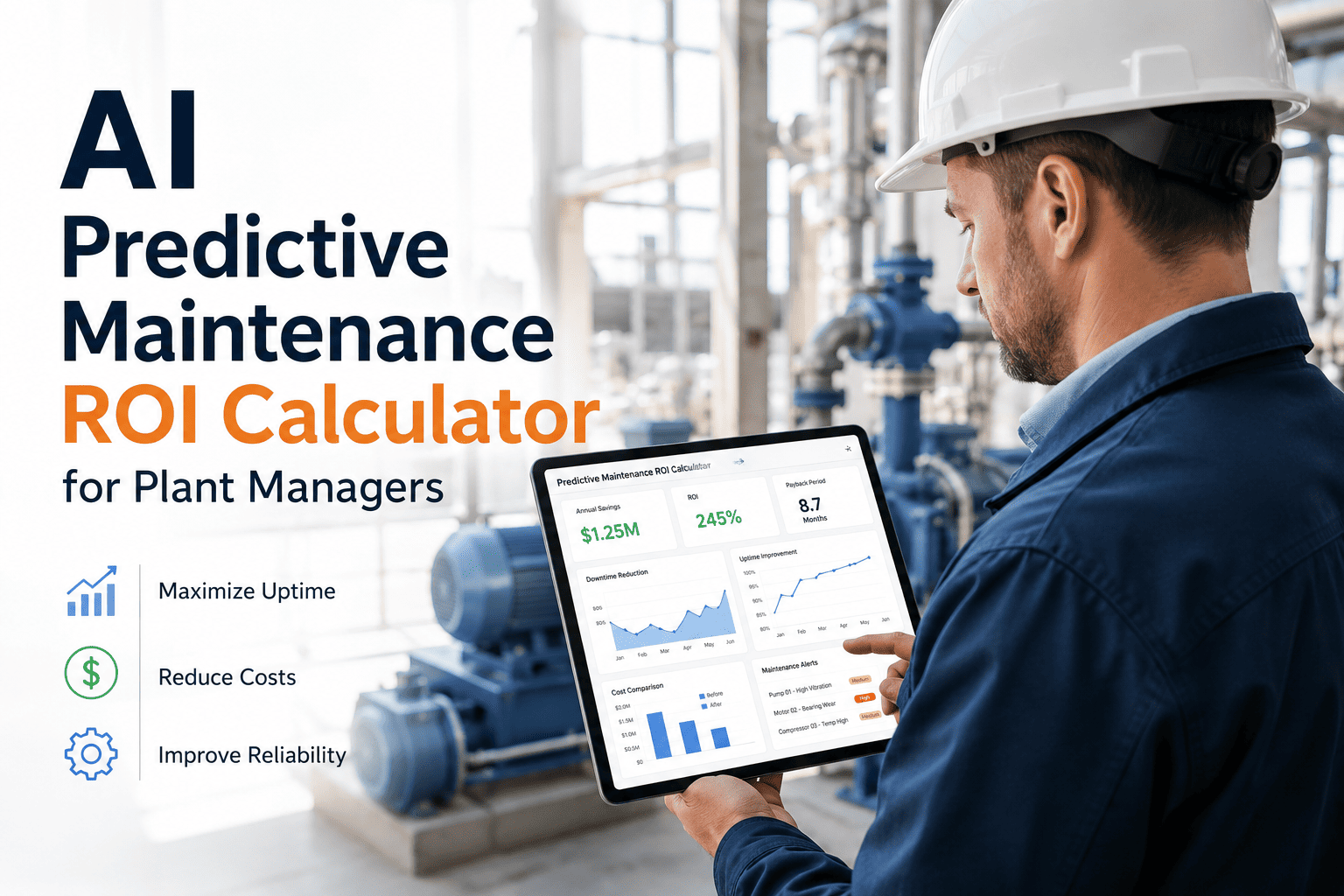
Every hour of unplanned downtime in a manufacturing plant carries a cost that most plant managers know intuitively but struggle to quantify precisely for capital planning conversations. AI predictive maintenance changes that equation — by moving from reactive repair cycles to data-driven intervention windows, plants have documented downtime reductions of 30–50% within the first year. This guide walks plant managers through the ROI model for AI predictive maintenance, the calculation methodology, real benchmark data by industry, and how to use OxMaint's downtime and cost tracking to build a business case that gets budget approved.
ROI Guide — Plant Managers
AI Predictive Maintenance ROI: The Plant Manager's Calculation Guide
Turn downtime hours into a capital justification. Real formulas, real benchmarks, and a calculation framework for your plant floor.
$260K
Average hourly downtime cost — automotive assembly
38%
Average downtime reduction with AI predictive maintenance
9 mo
Median ROI payback period for AI PdM programs
2.8x
Average 3-year ROI multiple across manufacturing sectors
What AI Predictive Maintenance Actually Measures
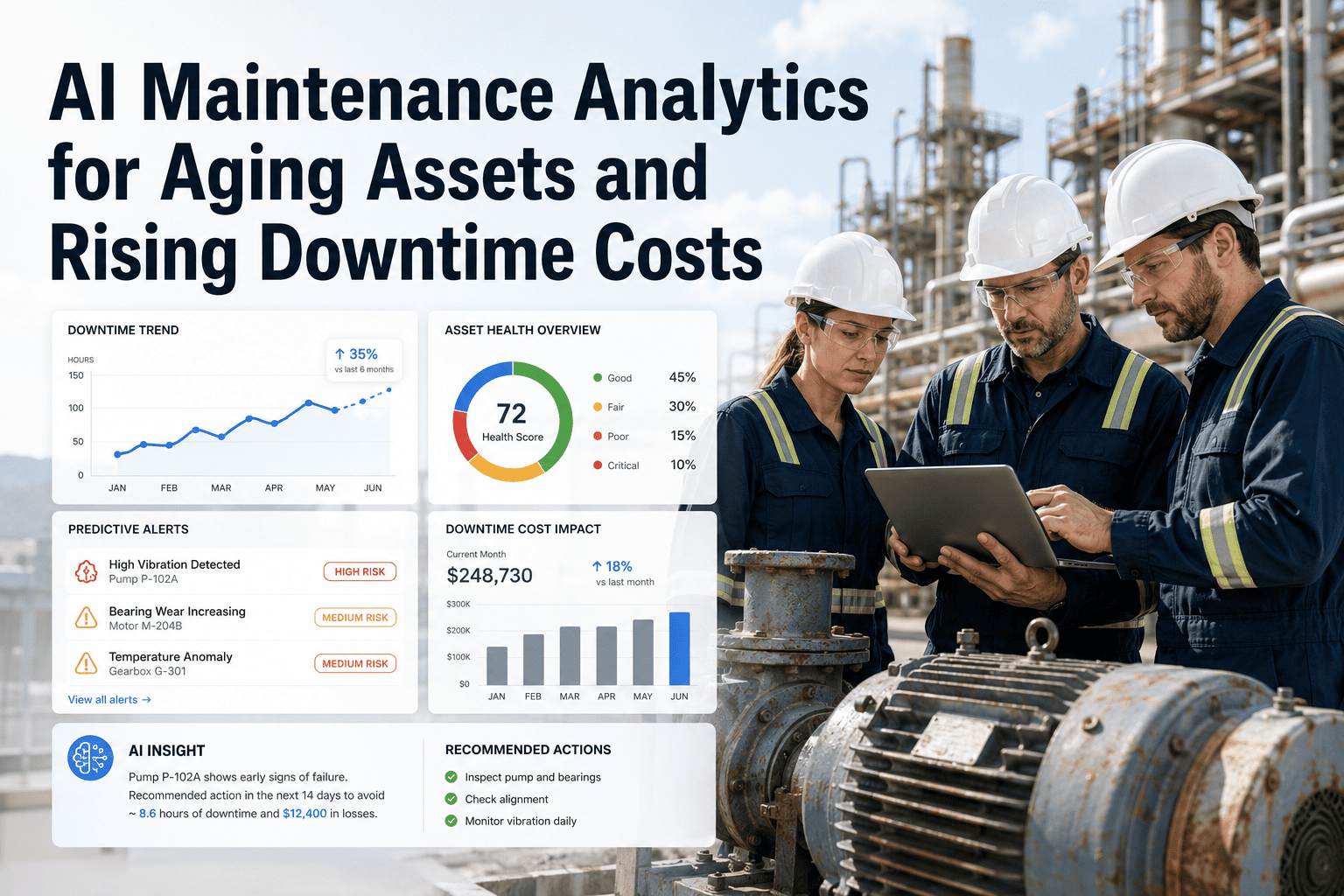
Classical preventive maintenance schedules work on time intervals — change the bearing every 90 days regardless of condition. AI predictive maintenance reads equipment condition in real time: vibration signatures, thermal patterns, current draws, and cycle counts. It intervenes when the data says to, not when the calendar says to. The result is fewer unnecessary PM tasks, fewer surprise failures, and a measurable shift in the ratio of planned to unplanned work.
V
Vibration Analysis
Bearing wear, imbalance, and misalignment detected 2–8 weeks before failure. Most common AI PdM input signal.
T
Thermal Imaging
Electrical faults, overheating motors, and insulation breakdown identified via infrared without stopping equipment.
C
Current Signature
Motor degradation visible in current draw patterns. No additional sensor hardware needed on many drive systems.
U
Ultrasound / Acoustic
Leak detection and early bearing lubrication failure caught before thermal or vibration signals emerge.
The ROI Calculation Framework
ROI for AI predictive maintenance has four input variables. Every plant manager building a business case needs to populate all four — and the first two are almost always underestimated in initial proposals.
| Input Variable |
How to Calculate |
Typical Range |
Common Underestimate |
| Downtime Cost Per Hour |
Lost production value + labor + restart costs |
$15K–$260K/hr |
Excludes restart and quality loss |
| Annual Downtime Hours |
CMMS unplanned downtime records, last 12 months |
80–400 hrs/year |
Excludes partial-stop events |
| PM Labor Hours |
Time-based PM tasks on AI-monitored assets |
20–40% of maintenance hours |
Ignores indirect coordination time |
| Parts Consumption |
Reactive replacement parts vs condition-based |
15–25% reduction |
Excludes emergency freight premium |
Industry Benchmarks: AI PdM ROI by Sector
3-Year ROI Multiple by Industry (Industry Average)
Discrete Manufacturing
2.8x
Build Your Site-Specific ROI Model with OxMaint
OxMaint's downtime and cost tracking captures the exact data you need to populate your ROI calculation — from unplanned event frequency to labor hours per failure mode. Book a session and our team will run the numbers for your plant.
Three-Step Business Case for Plant Managers
01
Quantify Your Current Downtime Cost
Pull unplanned downtime hours from your CMMS for the last 12 months. Multiply by your fully-loaded production rate per hour. Add restart costs and quality-related losses. This single number, stated in annual dollars, is the foundation of the business case — and it almost always surprises the CFO.
02
Apply the Industry Reduction Factor
Based on your sector, apply the documented AI PdM downtime reduction range (typically 30–50% for well-instrumented assets). Apply conservatively — 25% — for the initial proposal. The conservative number still produces a compelling ROI for most plants and avoids overcommitting in year one.
03
Model Payback Against Program Cost
AI PdM program costs range from $40K–$180K in year one for a mid-size plant, including sensors, software, and integration. At a 25% downtime reduction on a $2M annual downtime cost, the first-year savings alone are $500K — a 2.8x return before PM labor and parts savings are added.
How OxMaint Connects AI PdM Data to Work Order Action
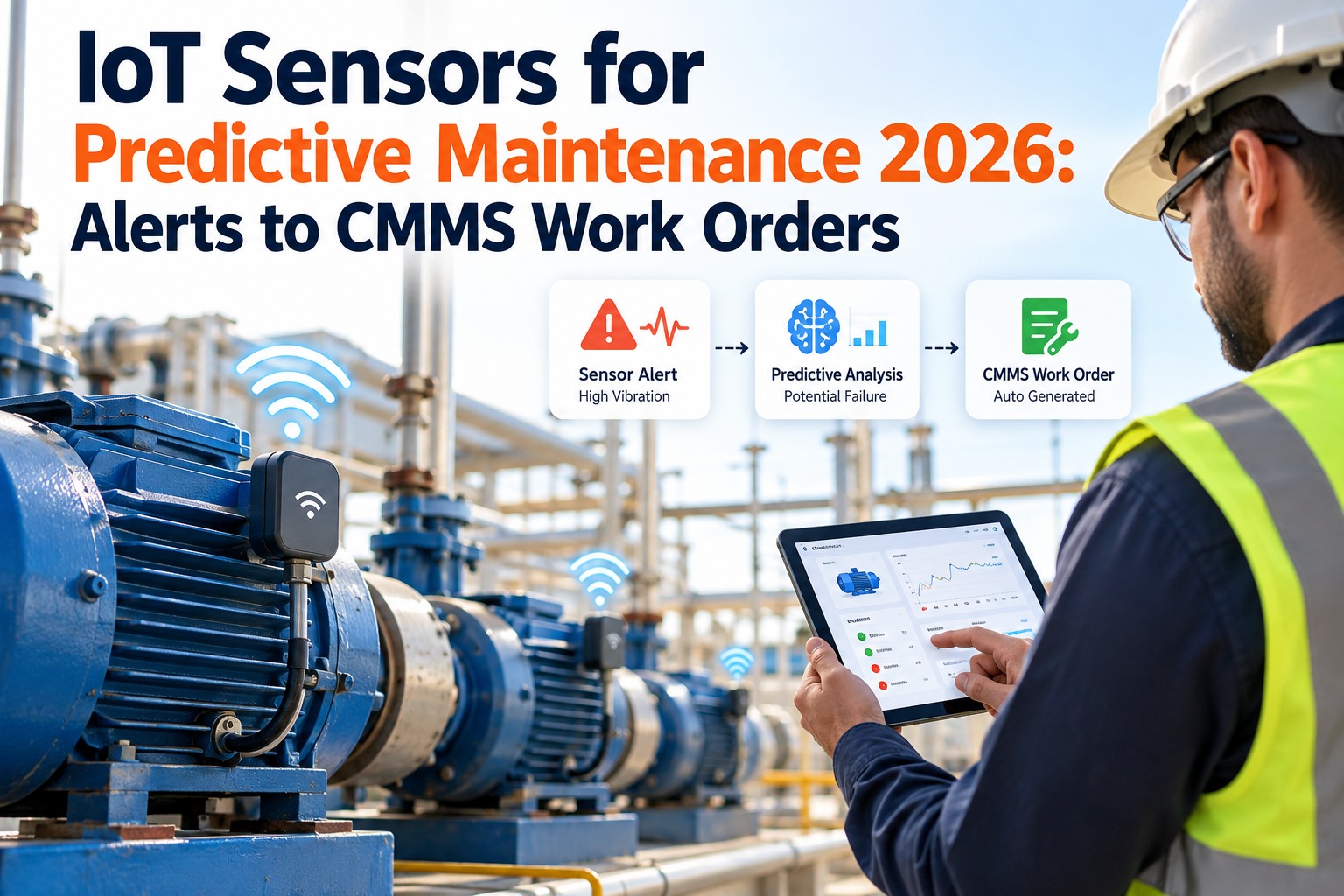
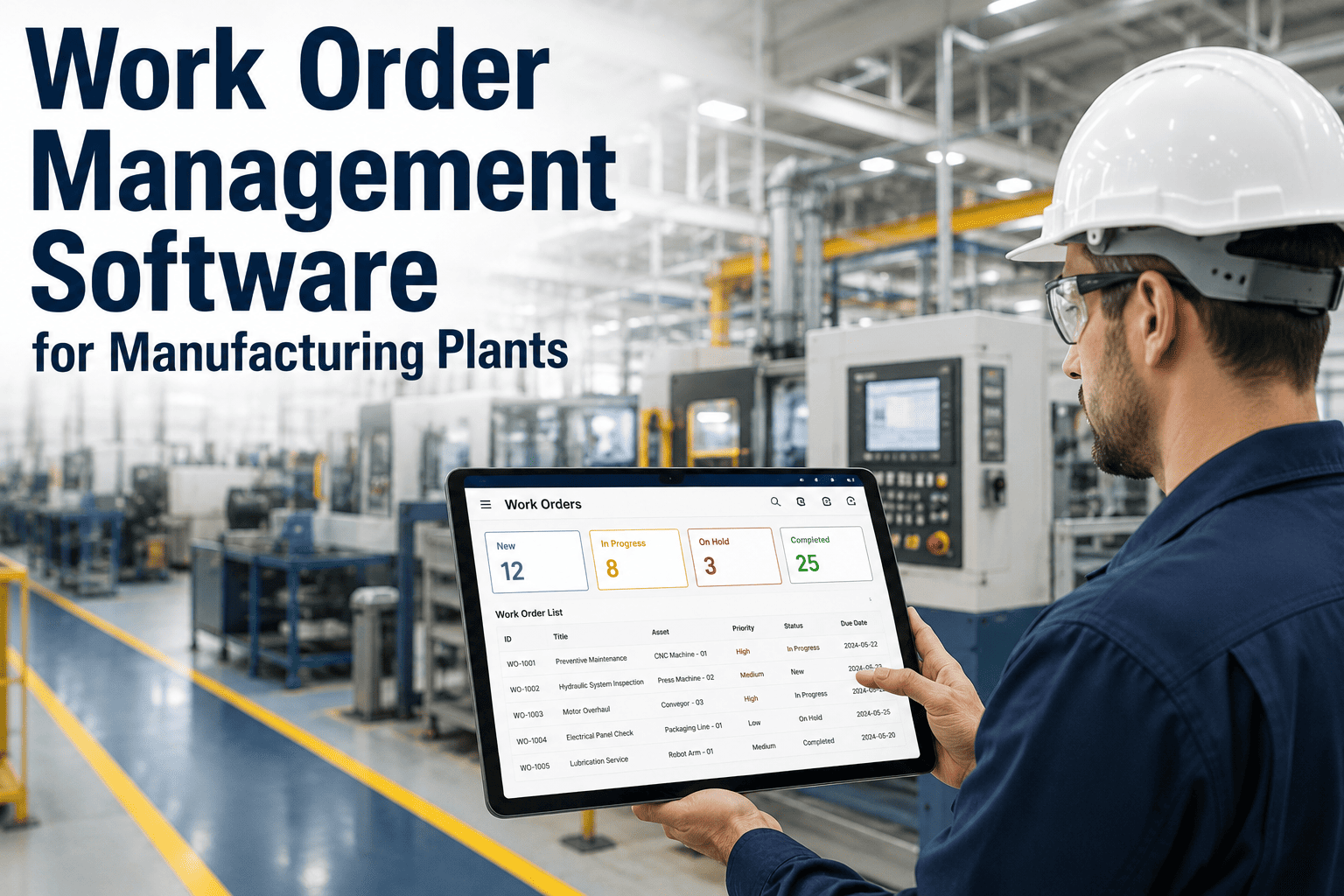
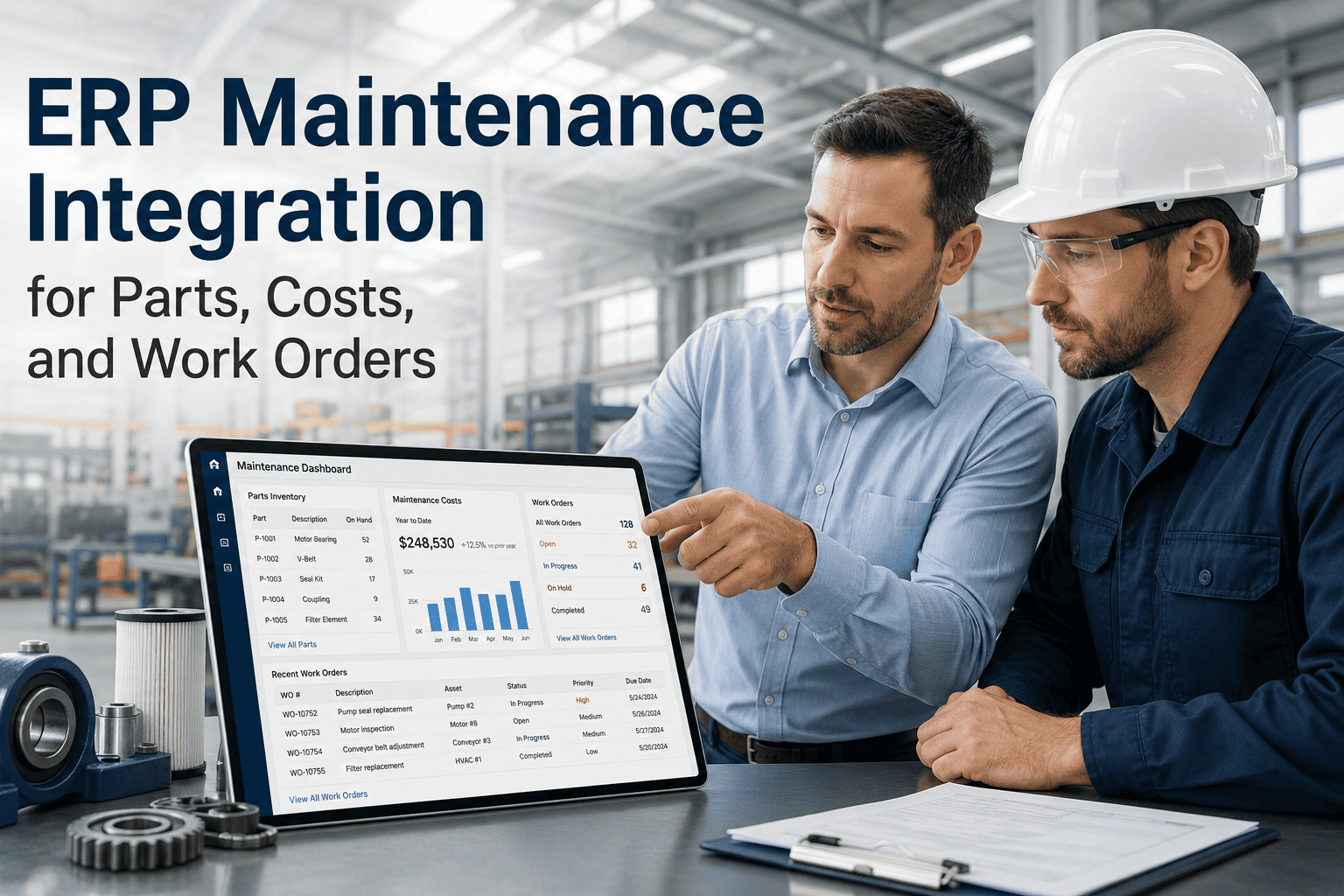
Sensor data without a workflow to act on it is just noise. OxMaint closes the loop by connecting predictive alerts directly to work order creation, assignment, and cost tracking — so every AI-generated maintenance signal becomes a traceable, costed maintenance event.
Signal
Sensor anomaly detected — vibration spike, thermal deviation, or current signature change on monitored asset
→
Alert
OxMaint generates a predictive maintenance alert with severity score, asset ID, and recommended intervention window
→
Work Order
Maintenance planner reviews alert and converts to a scheduled work order — assigned, resourced, and costed before the failure window
→
Analytics
OxMaint records the intervention, its cost, and the failure avoided — feeding the ROI dashboard with real plant data
Expert Review
"
The ROI case for AI predictive maintenance is rarely about technology — it is about data discipline. Plants that win budget approval present a single, credible number: what one hour of their worst bottleneck failure costs, multiplied by how many times it happened last year. Everything else in the proposal is secondary. Once the CFO sees that number, the program funds itself. The platforms that make this case easiest are the ones that already track downtime events with full cost attribution — so the baseline is already in the system before the proposal is written.
Dr. Sandra Morales
Manufacturing Systems Engineer, 22 years — Automotive and Process Industries PdM Programs
Frequently Asked Questions
How long does it take to see measurable ROI from an AI predictive maintenance program?
Most plants document first measurable results within 60–90 days of sensor deployment on critical assets — typically the prevention of a single unplanned failure event that would have cost more than the entire monthly program cost. Full ROI payback periods average 9 months for plants with high downtime cost per hour, and up to 18 months for lower-cost environments.
OxMaint's cost tracking module records every prevented failure event so payback can be demonstrated in real time to leadership.
Which assets should be prioritized for AI predictive maintenance first?
The standard prioritization methodology uses three criteria: downtime cost per hour if the asset fails, failure mode detectability by available sensor types, and current failure frequency. Assets that sit at the intersection of high cost, detectable failure modes, and frequent incidents produce the fastest payback and the clearest business case. OxMaint's asset criticality matrix helps plant managers complete this prioritization in a structured way —
book a demo to see the tool.
Can AI predictive maintenance ROI be calculated before sensors are installed?
Yes — and it should be calculated first. The input data comes from your existing CMMS downtime records, production scheduling data, and parts purchasing history. OxMaint can ingest this historical data and produce a pre-program ROI estimate within days of starting a free trial. This baseline also becomes the benchmark against which actual results are measured after implementation. Start your
free trial to see what your current downtime data reveals.
Does OxMaint work with existing IoT sensors or does it require specific hardware?
OxMaint integrates with existing IoT sensor infrastructure through standard protocols and native connectors for major industrial sensor platforms. It does not require proprietary hardware. For plants starting without sensors, OxMaint's team can recommend sensor packages that integrate directly with the platform — typically deployed on critical assets within 2–3 weeks. The integration process is reviewed in detail during the
demo session.
Get Your AI PdM ROI Estimate — Based on Your Plant's Data
OxMaint's plant managers team will build a site-specific ROI projection using your downtime history, asset criticality, and production cost data. 30 minutes, no generic slides — just your numbers.