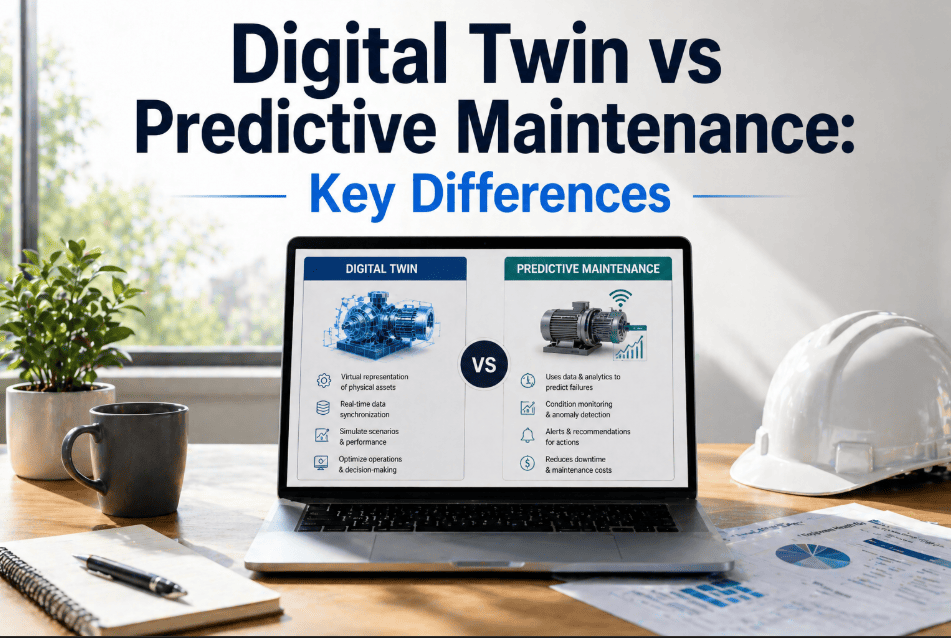
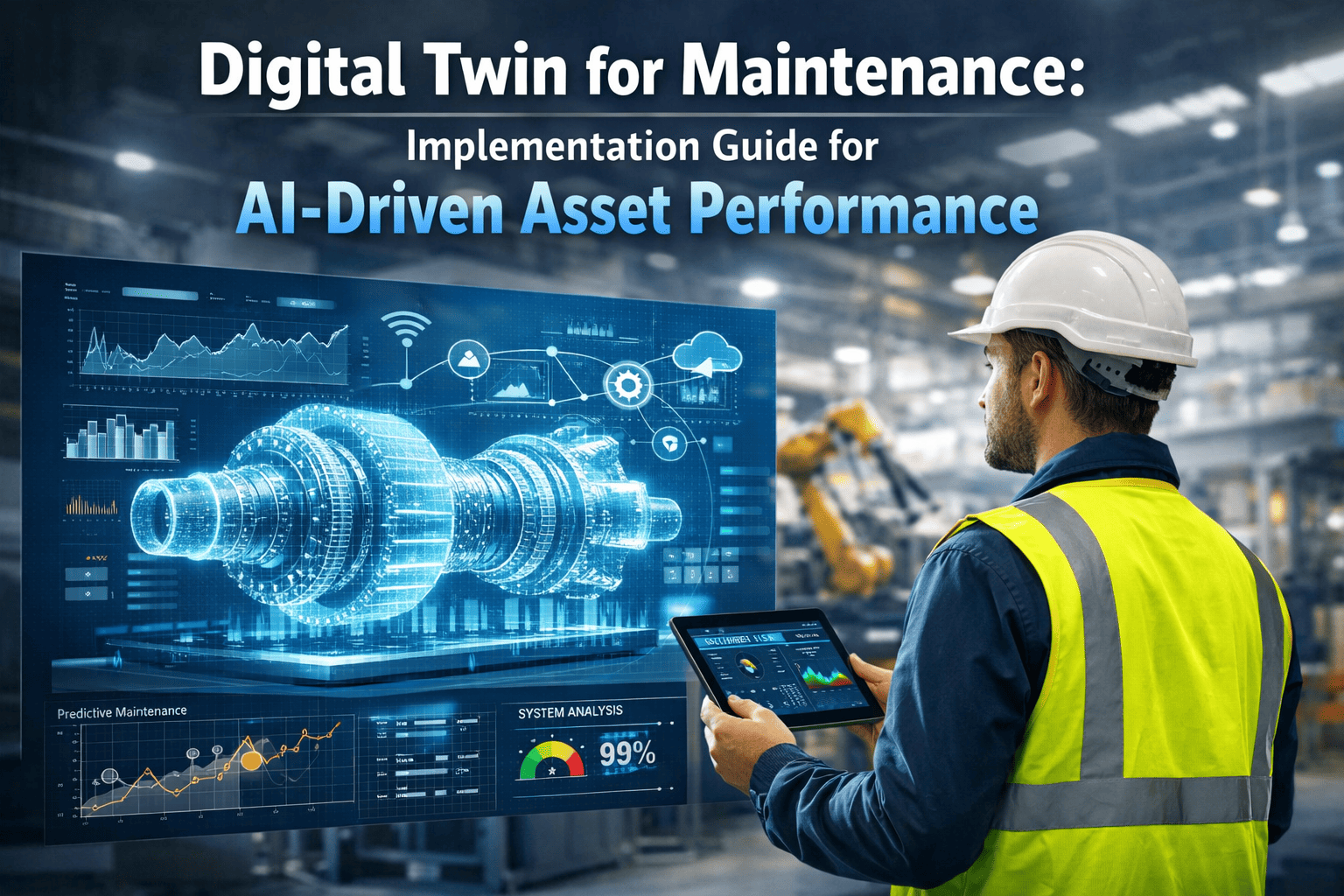
Two terms dominate every Industry 4.0 maintenance conversation in 2026 — Digital Twin and Predictive Maintenance. They are often used interchangeably in vendor marketing, which creates real confusion for plant managers trying to build a business case for either. They are not the same thing. Predictive Maintenance is a strategy — it uses data to forecast when an asset will fail. A Digital Twin is an infrastructure — it creates a living virtual replica of an asset that can simulate, test, and optimize before any physical intervention. The critical insight most operations leaders miss: these two technologies are not competitors, they are complements. A Digital Twin makes Predictive Maintenance dramatically more accurate, and Predictive Maintenance gives a Digital Twin its operational purpose. Understanding where one ends and the other begins is the first step to building a maintenance program that delivers both. If your team is evaluating which to implement first, start a free trial with OxMaint or book a demo to see how the combined platform works.
Comparison Guide 2026 Digital Twin vs PdM Industry 4.0
Digital Twin vs Predictive Maintenance: What They Are, How They Differ, and Why You Need Both
A clear, data-driven breakdown for operations leaders — covering definitions, use cases, ROI, implementation sequencing, and how combining both technologies delivers results neither achieves alone.
70%
Downtime reduction when PdM and Digital Twin operate together
35%
Lower maintenance costs from Digital Twin simulation alone
91%
Predictive accuracy when PdM models trained on Digital Twin data
25%
Asset lifespan extension — combined program benchmark
OxMaint Combines Both — Digital Twin and Predictive Maintenance in One Platform
No need to choose. OxMaint connects live sensor data to virtual asset models and predictive ML engines simultaneously — giving your team simulation capability and failure forecasting from a single dashboard. Free for 30 days, no implementation fees.
Definitions First — What Each Technology Actually Is
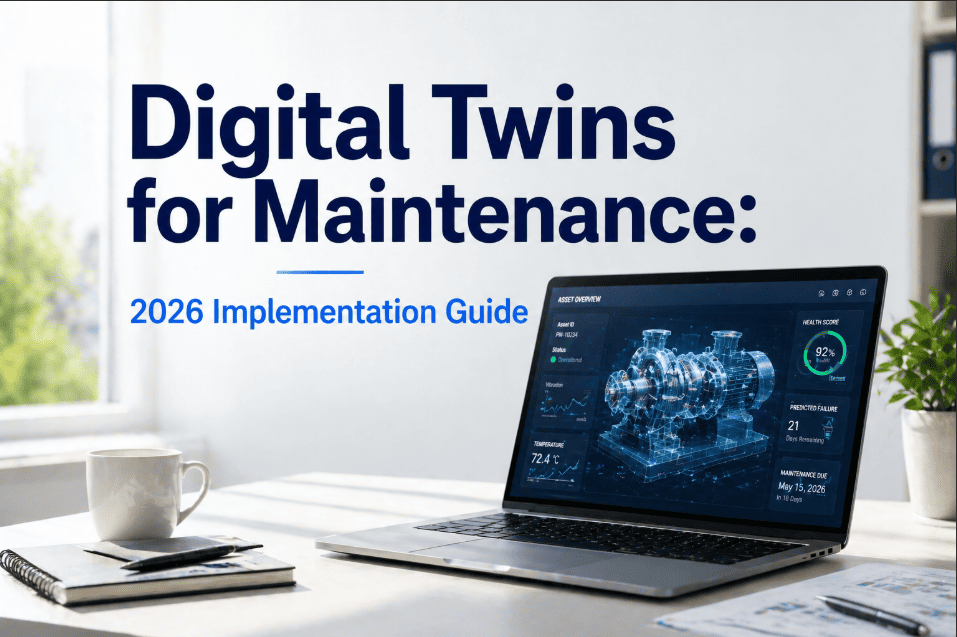
Before comparing them, both terms need a precise, jargon-free definition. In maintenance operations, imprecise language leads to budgets spent on the wrong technology at the wrong stage of maturity. Predictive Maintenance is a data-driven maintenance strategy. It uses machine learning algorithms trained on historical and real-time sensor data to forecast the remaining useful life of an asset and trigger a maintenance intervention before failure occurs. It answers one question: when will this asset fail? A Digital Twin is a synchronized virtual model of a physical asset. It ingests real-time sensor data to mirror the asset's current condition in a virtual environment, then uses physics-based simulation and ML to model how the asset will behave under different operational scenarios. It answers a broader set of questions: what is happening inside this asset right now, what will happen if we change operating conditions, and which intervention produces the best outcome? The operational difference is significant — and it determines which technology your program should prioritize first. Teams ready to implement either should start a free trial or book a demo to map the right sequence.
The Core Differences — Side by Side
These six dimensions reveal where the technologies diverge most significantly for maintenance decision-making. Understanding these differences prevents the most common implementation mistake — deploying a Digital Twin without the predictive layer, or investing in PdM without the simulation capability that makes interventions precise.
Dimension
Predictive Maintenance
Digital Twin
Primary Question Answered
When will this asset fail?
What is happening inside this asset — and what happens if conditions change?
Technology Type
Strategy enabled by ML algorithms and sensor data
Infrastructure — a living virtual model of a physical asset
Data Input
Historical failure data, real-time sensor streams, maintenance records
Real-time IoT data, CAD geometry, physics models, operational parameters
Output Delivered
Failure probability score, RUL estimate, maintenance trigger alert
Visual asset state, simulation results, scenario analysis, optimal intervention recommendation
Implementation Complexity
Moderate — requires sensor data + ML model training (30–90 days)
Higher — requires physics model, sensor integration, and simulation engine
Best Applied To
High-frequency rotating equipment with clear failure signatures
Complex multi-component systems where failure mode interactions matter
Typical ROI Timeline
3–6 months to measurable downtime reduction
6–18 months to full simulation value, with immediate condition visibility
Where Each Technology Delivers Its Strongest Results
Knowing the definitions is step one. Knowing which technology to apply to which asset class and operational scenario is what turns theory into results. The pattern is consistent across manufacturing, facilities, and industrial operations worldwide.
M
Rotating Equipment at Scale
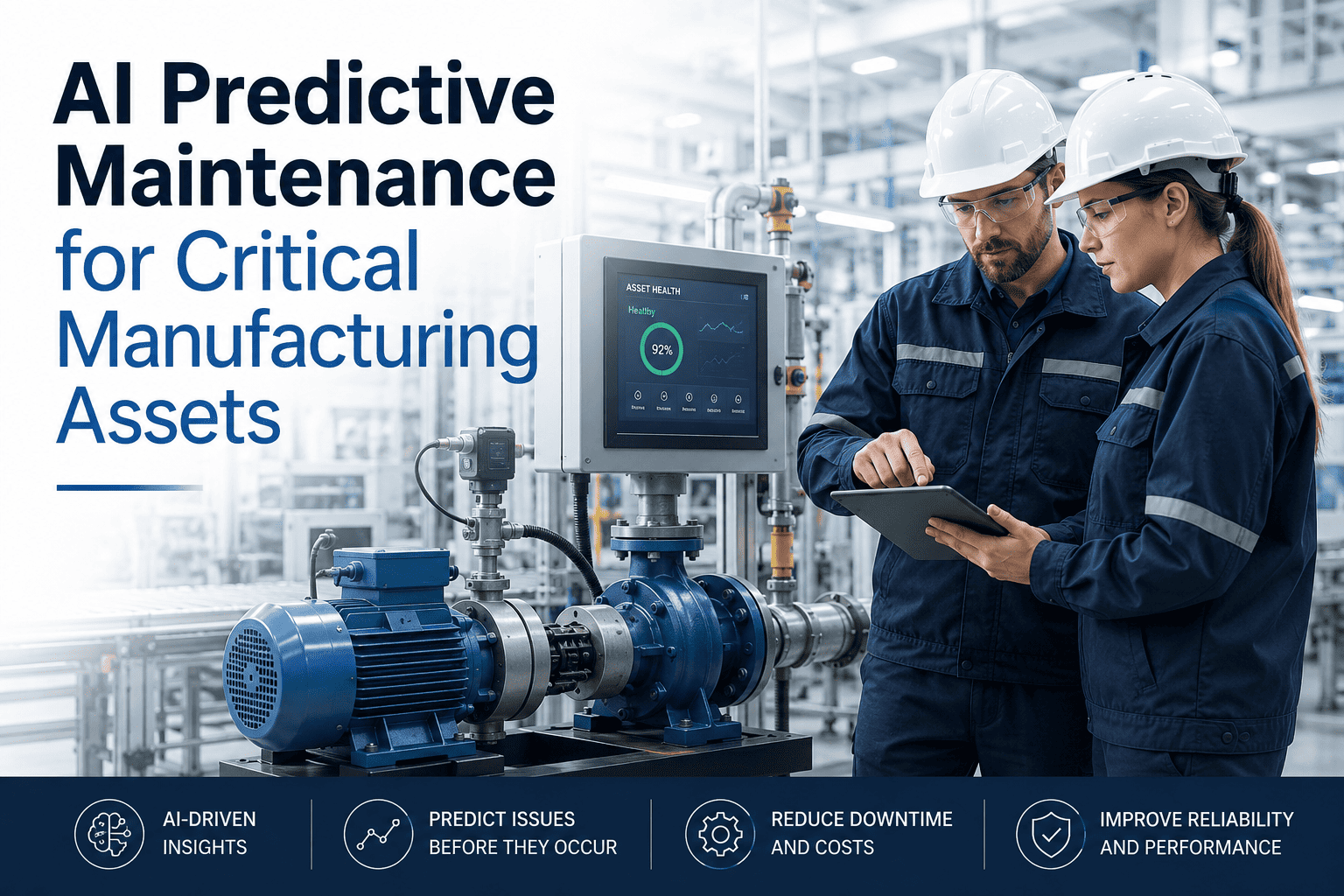
Motors, pumps, compressors, fans — assets with clear vibration and thermal failure signatures. PdM catches bearing wear, misalignment, and imbalance 4–12 weeks before failure. ROI is immediate and measurable.
E
Electrical Systems
Panel hotspots, motor winding degradation, transformer thermal anomalies. Current and thermal sensors + PdM algorithms detect developing faults before fire risk or production stop.
H
HVAC and Utility Assets
Chiller compressors, cooling tower fans, AHU motors. PdM on these assets is the single highest-ROI application in commercial facilities — 48% of facility maintenance cost often concentrated here.
F
High-Throughput Production Lines
Conveyor drives, packaging machinery, filling lines. Every unplanned stop costs $8,000–$22,000 per hour. PdM provides the early warning that makes line-stop decisions planned, not reactive.
C
Complex Multi-Component Systems
Turbines, compressor trains, process vessels — systems where individual component failure modes interact. Digital Twins model the system as a whole, catching failure cascades that single-sensor PdM misses.
S
Safety-Critical Assets
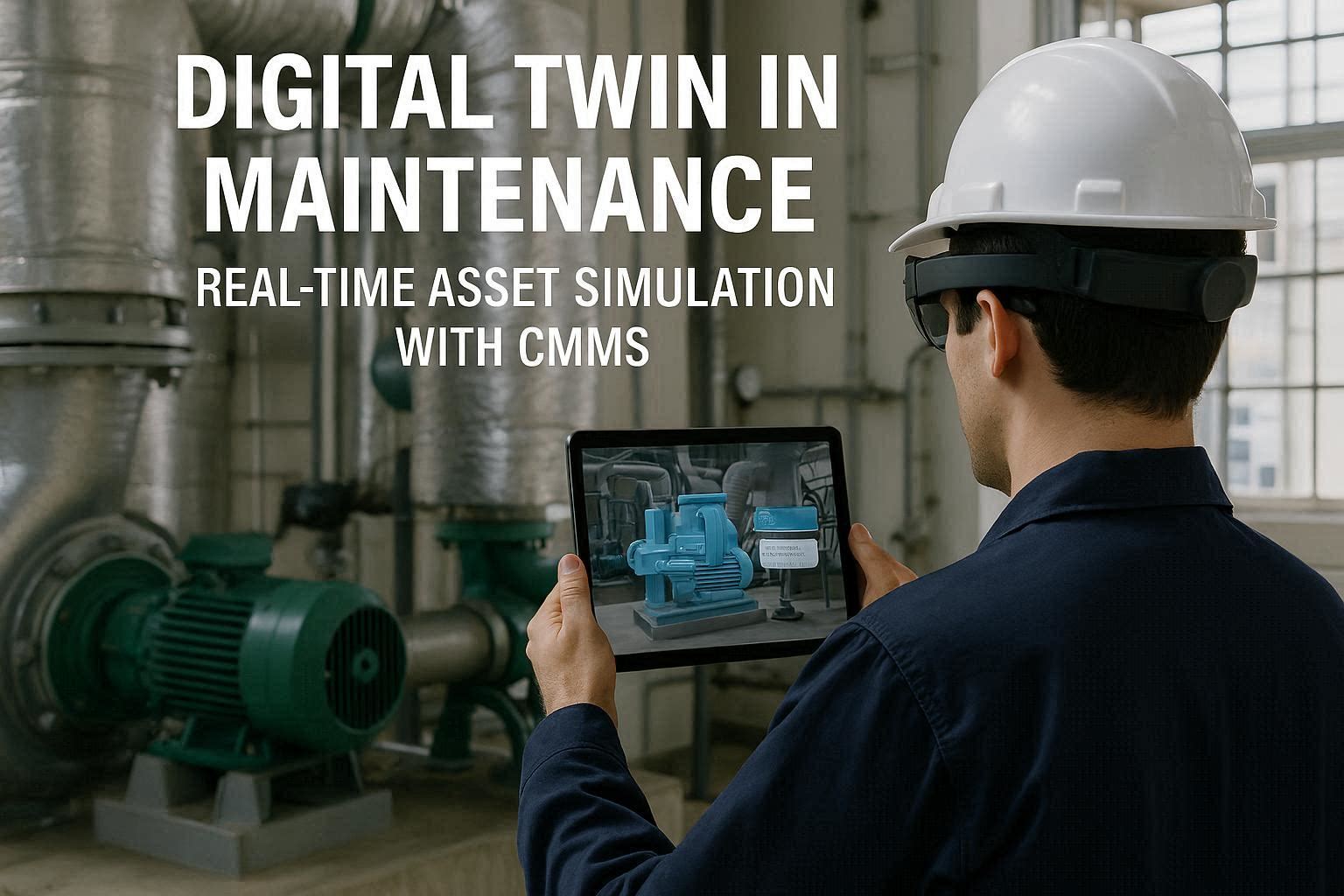
Pressure vessels, lifting equipment, fire suppression systems. Digital Twins allow simulated stress tests and virtual inspections — reducing technician exposure to hazardous environments for diagnostic work.
N
New Equipment Integration
OEM digital twins shipped with new equipment allow simulation from day one — before enough operational history exists to train a PdM model. Digital Twin fills the data gap while PdM models build.
T
Training and Procedure Development
Digital Twins allow technicians to practice complex interventions virtually — reducing first-time repair errors by 40% on critical asset types. Particularly valuable for specialized or dangerous equipment.
Industry Pain Points That Arise When Using Only One Technology
Organizations often implement one technology without the other — and hit a predictable ceiling that limits the value of their investment. These four pain points are the most consistently reported.
01
PdM Without Context — False Confidence
Predictive maintenance alerts tell you a bearing will fail in 14 days. Without a Digital Twin, you do not know whether the root cause is misalignment, lubrication failure, or overloading. The intervention gets planned for the wrong fix — and the asset fails again three weeks later.
Impact: First-time fix rate stays below 70%, negating 40% of PdM ROI
02
Digital Twin Without Prediction — Beautiful Dashboard, No Action
A Digital Twin without ML-powered PdM shows you current asset state in detail. But without failure forecasting, the team still watches the dashboard until something breaks. Visualization without prediction is expensive monitoring.
Impact: High implementation cost with limited measurable downtime reduction
03
Simulation Errors From Insufficient Real Data
Digital Twin simulations are only as accurate as the data feeding them. Without real operational history from PdM sensor streams, simulation models rely on OEM design specs that rarely match actual operating conditions.
Impact: Simulation outputs diverge from reality by 20–40%, undermining decision confidence
04
Siloed Tools Prevent the Maintenance Loop from Closing
Organizations using separate platforms for PdM analytics, Digital Twin visualization, and CMMS work orders create data silos. Insights from the Digital Twin do not automatically generate work orders. PdM alerts do not update the virtual model. The feedback loop never closes.
Impact: 60% of predictive insights never become completed maintenance actions
How the Combined Program Works — The Integrated Maintenance Loop
The most effective maintenance programs in 2026 do not choose between Digital Twin and Predictive Maintenance. They close a continuous loop where each technology feeds the other — with the CMMS work order engine sitting at the center. This is the architecture OxMaint is built around. Teams ready to see this loop in action can start a free trial or book a demo to walk through the architecture.
1
IoT Sensors Capture Real-Time Asset Data
Vibration, temperature, pressure, and current sensors stream data continuously at up to 10,000 samples per second. This is the shared data foundation for both technologies.
2
Digital Twin Updates Its Virtual State
The live sensor stream updates the virtual asset model in real time. The Digital Twin reflects current physical condition — temperature distributions, stress concentrations, and operational load in the virtual environment.
3
PdM Algorithms Score Failure Probability
ML models trained on the combined sensor stream and maintenance history calculate failure probability and remaining useful life. Alert thresholds trigger when confidence exceeds defined risk tolerance.
4
Digital Twin Simulates Intervention Options
When PdM flags an asset, the Digital Twin runs simulations — which component is failing, what the repair window is, and whether production can safely continue for 48 more hours. The team acts on evidence, not alerts.
5
CMMS Auto-Generates the Work Order
OxMaint creates a detailed work order from the combined insight — fault diagnosis from Digital Twin, failure timeline from PdM, parts from inventory check, and technician assignment from skills matrix.
6
Completed Work Feeds Both Models
Technician notes, parts used, actual repair time, and post-repair sensor readings update both the PdM training data and the Digital Twin physics model — improving every future forecast and simulation.
How OxMaint Delivers Both — Without Two Separate Platforms
The traditional barrier to combining Digital Twin and Predictive Maintenance has been cost and complexity — two expensive enterprise platforms that do not talk to each other. OxMaint eliminates this barrier by building the Digital Twin module and PdM analytics layer into the same CMMS platform where work orders are managed and asset records are maintained.
Digital Twin
Asset Data Connected to Simulation Models
OxMaint's Digital Twin module connects your IoT sensor streams to virtual asset models — updating in real time and running simulations when PdM alerts trigger. No separate platform required.
Simulation outputs automatically populate work order context
Predictive AI
ML Failure Forecasting at Every Paid Tier
Anomaly detection, vibration pattern analysis, and thermal degradation modeling included across all OxMaint paid plans — not gated behind enterprise pricing. Pre-trained models on common industrial equipment types.
First actionable failure alerts within 30 days of deployment
Unified
Single Platform — No Integration Tax
Digital Twin insights, PdM alerts, work order generation, technician dispatch, and compliance documentation live in one system. No API middleware, no data reconciliation, no siloed dashboards.
60% fewer hours spent on cross-platform data management
Scalable
Start With PdM, Add Digital Twin as You Grow
OxMaint is designed for progressive deployment. Implement PdM on your 20 highest-criticality assets first — establish ROI within 90 days — then layer Digital Twin simulation as program maturity grows. No migration required.
ROI validated before full Digital Twin investment committed
ROI Comparison — PdM Alone vs. Digital Twin Alone vs. Combined
PdM Alone
50%
Downtime Reduction
30% maintenance cost reduction. 3–6 month payback. Strong on high-frequency failure modes. Limited simulation capability.
Digital Twin Alone
35%
Maintenance Cost Reduction
Strong simulation and root-cause analysis. 6–18 month payback. Limited failure timing precision without PdM layer.
Combined Program
70%
Downtime Reduction
91% fault prediction accuracy. 25% asset lifespan extension. Near-zero unplanned downtime on critical assets. 10x ROI documented on high-criticality equipment.
Implementation Sequencing — Which to Deploy First
The sequencing question is the most practical one for operations leaders with real budgets and real timelines. The answer depends on your current maintenance maturity level and your highest-priority pain point. For most industrial and facilities operations in 2026, the optimal sequence is clear and consistent across industry benchmarks.
Phase 1 — Months 1 to 3
Deploy Predictive Maintenance First
Connect IoT sensors to your 20 highest-criticality assets. Train PdM models on existing maintenance history. Begin capturing real failure data that will feed your Digital Twin simulation models. Expect measurable downtime reduction within 90 days. Establish the ROI proof-point that funds Phase 2.
Phase 2 — Months 4 to 12
Layer Digital Twin on Your Most Critical Assets
With 3 months of real operational data from PdM sensors, build Digital Twin models for your 5–10 most complex or high-value assets. The real data makes simulation outputs significantly more accurate than OEM-spec models. PdM alerts now trigger simulation workflows that provide precise intervention guidance.
Phase 3 — Month 12 and Beyond
Close the Loop — Autonomous Maintenance Operations
The combined system reaches full capability: PdM detects the fault, Digital Twin simulates the cause and optimal repair, CMMS auto-generates the work order, technician executes, outcome data feeds both models. Each cycle improves accuracy. Unplanned downtime on monitored assets approaches zero.
Frequently Asked Questions
Which is better for a plant just starting with predictive technology — Digital Twin or PdM?+
Predictive Maintenance first — consistently. PdM delivers measurable ROI within 90 days on rotating equipment, requires less implementation complexity, and generates the real operational data that makes Digital Twin simulations accurate. Starting with a Digital Twin before PdM is operational means building simulations on OEM specs rather than your actual plant data — reducing simulation accuracy by 20–40%.
Start a free trial to begin the PdM deployment with OxMaint's pre-trained models.
Can we use a Digital Twin without real-time IoT sensors?+
A static Digital Twin — one built from CAD models and OEM specifications without live sensor data — is useful for training and procedure development. It does not deliver predictive or simulation value for maintenance decisions because it reflects design intent, not actual operating condition. Functional Digital Twins for maintenance require real-time sensor data. Modern wireless IoT sensors cost $50–$200 per monitoring point — the hardware barrier is significantly lower in 2026 than it was three years ago.
How much does a combined Digital Twin and PdM program cost to implement?+
With OxMaint, the platform cost starts at $8/user/month — covering both PdM analytics and the Digital Twin module. Hardware (IoT sensors) for a 20-asset PdM deployment typically runs $4,000–$15,000 depending on sensor type and existing SCADA infrastructure. Enterprise standalone Digital Twin platforms alone cost $50,000–$500,000 annually. OxMaint eliminates the platform fragmentation cost entirely — PdM and Digital Twin in one CMMS at SMB-accessible pricing.
Book a demo for a cost-to-value analysis specific to your operation.
Do Digital Twins work for facilities management — not just manufacturing?+
Yes — and adoption is accelerating rapidly in commercial real estate, healthcare facilities, and data centers. HVAC systems, chiller plants, elevator drives, and electrical distribution are the most common Digital Twin applications in facilities. The value proposition mirrors manufacturing: simulation prevents unnecessary shutdowns, condition monitoring catches degradation early, and the virtual model persists institutional knowledge when experienced technicians retire. Downtime cost in commercial facilities runs $8,500–$45,000 per hour depending on asset criticality.
Combined Platform — OxMaint
Stop Choosing Between Prediction and Simulation. Run Both.
OxMaint is the only CMMS that combines Digital Twin simulation, AI predictive maintenance, and automated work order generation in one platform — at pricing accessible to mid-size operations. Deploy PdM in 30 days. Layer Digital Twin as your program matures. Close the maintenance loop that eliminates unplanned downtime on critical assets.
70%
Downtime reduction — combined program
91%
Fault prediction accuracy
$8/u/mo
All-in platform pricing
30 Days
To first actionable PdM alerts