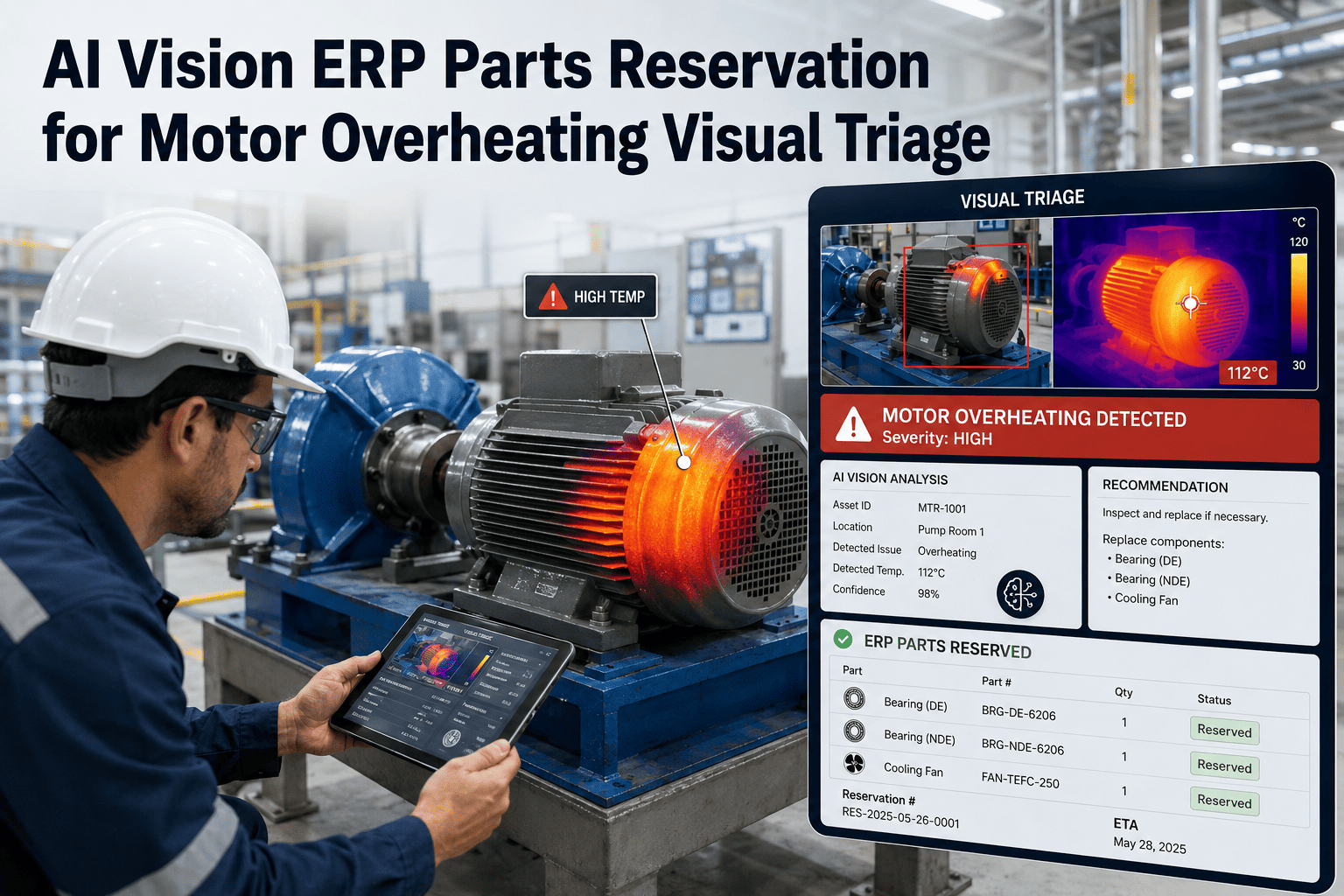
Motor overheating alarms are among the most frequent SCADA events in industrial facilities — yet most teams still treat them as a queue problem, not an evidence problem. When a SCADA alarm fires, a technician is dispatched without visual confirmation of what is actually happening at the motor. OxMaint AI Vision closes that gap by correlating every SCADA alarm with a live camera frame, so the moment an overheating condition is detected, the system captures visual evidence, auto-creates a prioritized work order, and routes it to the right technician with photo context already attached. The result is faster response, fewer unnecessary dispatches, and a documented audit trail from alarm to resolution — all inside one platform. Book a demo to see how visual triage changes motor maintenance.
AI Vision · SCADA Integration · Motor Maintenance
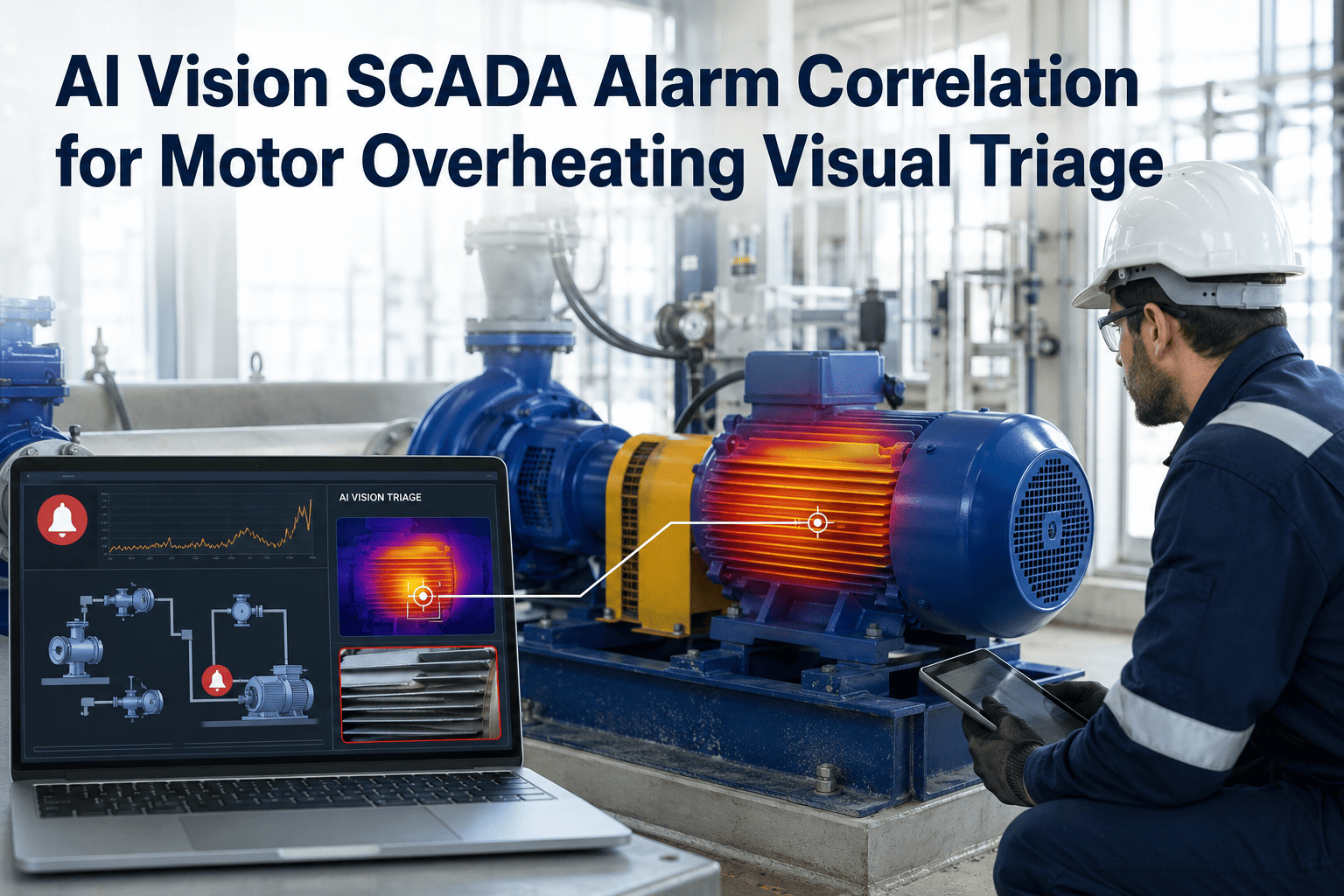
AI Vision SCADA Alarm Correlation for Motor Overheating Visual Triage
When SCADA fires a motor overheat alarm, OxMaint AI Vision captures the frame, correlates the signal, and turns it into a verified, photo-backed work order — before a technician steps foot on the floor.
73%
of motor failures preceded by visual indicators missed in manual checks
4.2×
faster mean time to repair when visual evidence is pre-attached to work orders
100%
alarm-to-photo traceability for every motor overheat event
The Problem
Why SCADA Alarms Alone Are Not Enough
SCADA systems are excellent at detecting when a motor crosses a temperature threshold. They are not designed to tell you why — and that gap costs maintenance teams hours of investigation time per incident.
01
Alarm without context
A SCADA alert tells you a threshold was crossed. It does not show you whether a cooling fan has failed, a belt is slipping, or debris is blocking a vent.
02
Blind dispatches
Technicians arrive at the motor with no visual pre-diagnosis. They must inspect manually, then return for parts — adding 45–90 minutes per incident.
03
No audit evidence
When a motor fails after repeated alarms, maintenance teams cannot prove what was inspected, when, and by whom — creating compliance and insurance exposure.
04
Alert fatigue
High alarm volumes without visual context cause teams to deprioritize or dismiss events — until a failure shuts down a production line.
How It Works
SCADA Alarm to Visual Work Order in 4 Steps
1
SCADA Alarm Fires
Motor temperature exceeds threshold. OxMaint receives the signal via API or native SCADA integration in real time.
2
AI Camera Captures Frame
The nearest AI vision camera pulls a timestamped photo of the motor. The model flags visible anomalies: discoloration, steam, blocked vents, fan failure.
3
Work Order Auto-Created
OxMaint CMMS creates a priority work order with the photo evidence, alarm data, asset ID, and suggested action pre-filled — no manual entry needed.
4
Technician Arrives Prepared
The assigned tech sees the visual triage before walking to the asset. First-time fix rate improves. Every step is logged for compliance.
Every alarm becomes a documented, photo-verified maintenance event — closed-loop from signal to resolution.
Visual Triage Table
What AI Vision Detects vs. What SCADA Reports
| Motor Overheat Scenario | SCADA Reports | AI Vision Detects | Triage Outcome |
| Cooling fan blade broken |
High temp alarm |
Fan blur pattern absent in frame |
Priority 1 — mechanical repair |
| Debris blocking vent |
High temp alarm |
Visible blockage on housing |
Priority 2 — cleaning WO |
| Ambient room overheating |
High temp alarm |
No motor anomaly visible |
HVAC investigation routed |
| Bearing wear / smoke |
High temp alarm |
Smoke plume or discoloration flagged |
Priority 1 — shutdown + replace |
| False alarm (sensor drift) |
High temp alarm |
No visual anomaly confirmed |
Sensor calibration WO created |
Stop Sending Technicians in Blind
OxMaint correlates every SCADA motor overheat alarm with AI visual evidence before a work order is created — so your team knows what they are walking into before they walk in.
Key Capabilities
What OxMaint AI Vision Delivers
A
Real-time SCADA signal ingestionNative integration with major SCADA platforms. Alarm data arrives in OxMaint in under 2 seconds of detection.
B
Frame-accurate visual correlationEach alarm is matched to the closest timestamped camera frame. No manual screenshot hunting.
C
Anomaly classification by modelAI model trained on industrial motor imagery classifies the visible defect type and severity before routing.
D
Auto work order with photo evidenceCMMS work order pre-populated with alarm data, asset history, visual evidence, and suggested priority.
E
Compliance-ready audit logEvery alarm-to-action chain is logged with timestamps, photos, and technician sign-off — ready for audits.
F
Multi-site dashboardView alarm correlation status, open motor issues, and triage outcomes across all facilities in one screen.
Expert Review
What Maintenance Engineers Say
We had motors alarming four or five times a shift. Without visual context, the team was spending more time walking to assets and back than actually fixing them. After deploying AI vision correlation with OxMaint, we cut unnecessary dispatches by over 60 percent and our first-time fix rate on motor issues went from 54 to 89 percent. The photo is there before the technician is.
Senior Maintenance Engineer · Chemical Processing Plant · 14 Years Experience
The compliance piece alone justified the deployment for us. We had two insurance audits in eighteen months where we could not fully document our alarm response history. Now every SCADA motor event has a timestamped photo, a linked work order, and a closed status with technician sign-off. The auditor spent 20 minutes instead of two days.
Reliability Manager · Automotive Assembly Facility · Multi-Site Operations
FAQ
Frequently Asked Questions
Which SCADA platforms does OxMaint integrate with for motor alarm correlation?
OxMaint integrates with all major SCADA platforms including Ignition, WinCC, FactoryTalk, and InTouch via API or direct connector. Alarm signals are ingested in real time and correlated with the nearest AI camera frame automatically.
Book a demo to discuss your specific SCADA environment and confirm compatibility before deployment.
How does visual triage reduce false alarm response costs?
When an AI vision frame shows no visible anomaly at the motor — no smoke, no blocked vents, no fan failure — OxMaint routes the work order to a sensor calibration check rather than an emergency dispatch. Teams using this workflow report eliminating 30 to 50 percent of unnecessary technician walks per month.
Start free to see the triage routing logic in action.
What happens to the visual evidence after a work order is closed?
All correlated photos, alarm timestamps, work order details, and technician sign-offs are stored in OxMaint's asset history. Each motor builds a visual maintenance timeline that is searchable, exportable, and ready for insurance, regulatory, or internal audits at any time.
Book a demo to see the full asset history view with visual evidence chains.
Do I need to replace existing cameras or SCADA hardware?
Not necessarily. OxMaint AI Vision is compatible with most modern IP cameras and edge devices. The platform adds the correlation and classification layer on top of your existing camera infrastructure. A pre-deployment audit confirms compatibility, and where gaps exist, OxMaint recommends targeted hardware additions rather than full replacements.
Start free to begin the compatibility review.
SCADA-Correlated
Photo-Verified
Auto Work Orders
Audit-Ready
Turn Every Motor Overheat Alarm into a Documented, Visual Work Order
OxMaint AI Vision connects your SCADA alarm to a camera frame, classifies the issue, and creates a photo-backed work order — so motor overheating events are resolved faster and never go undocumented.