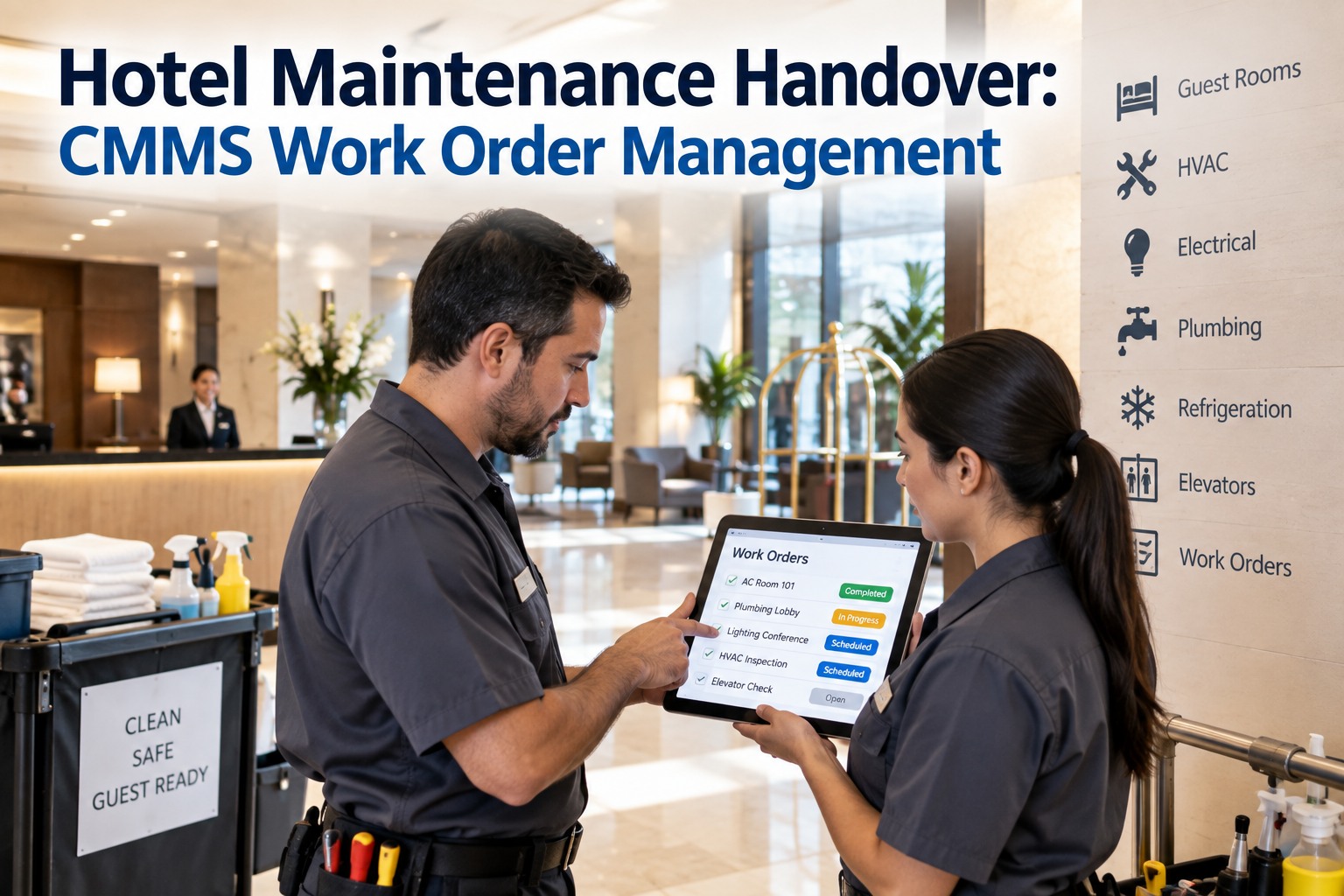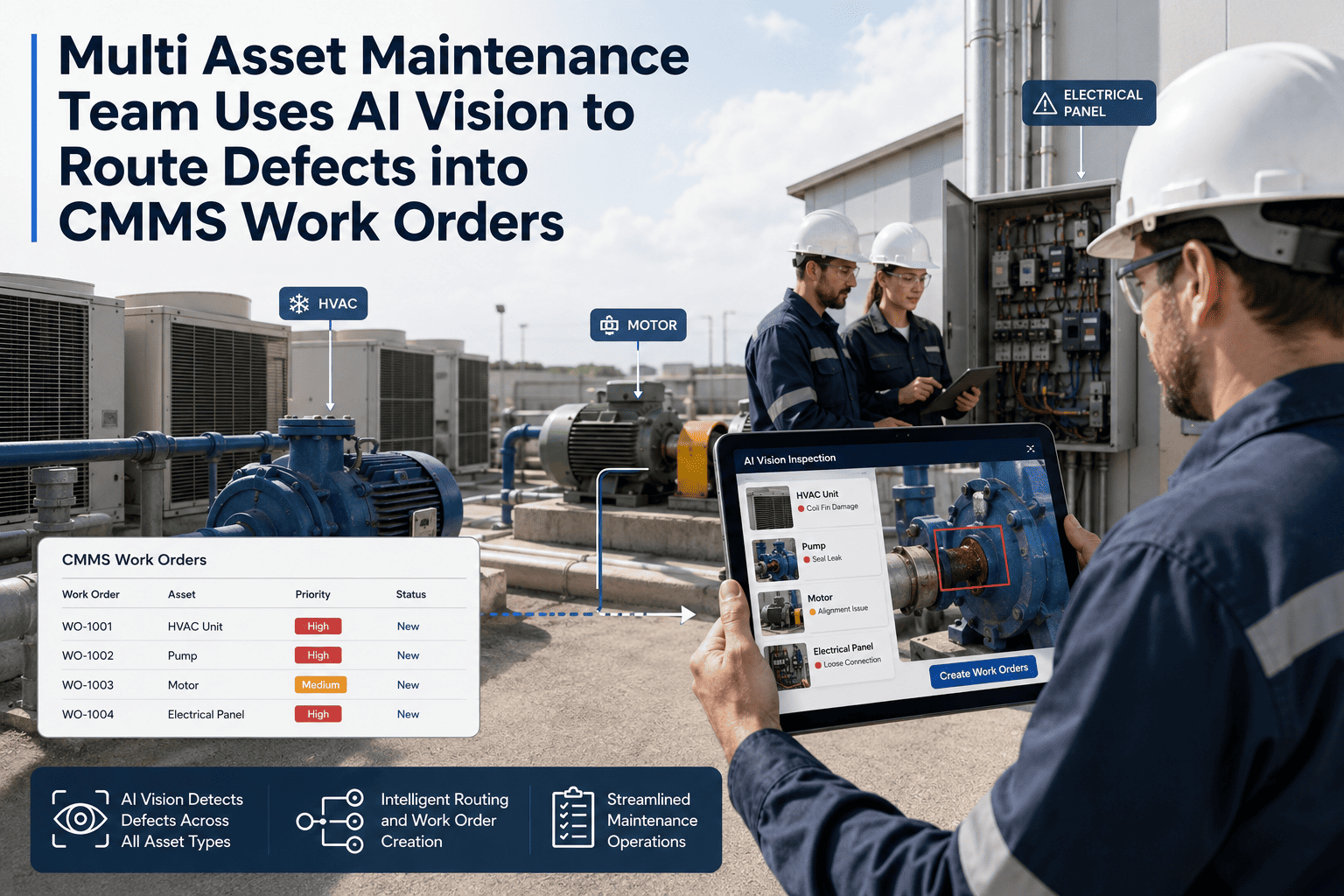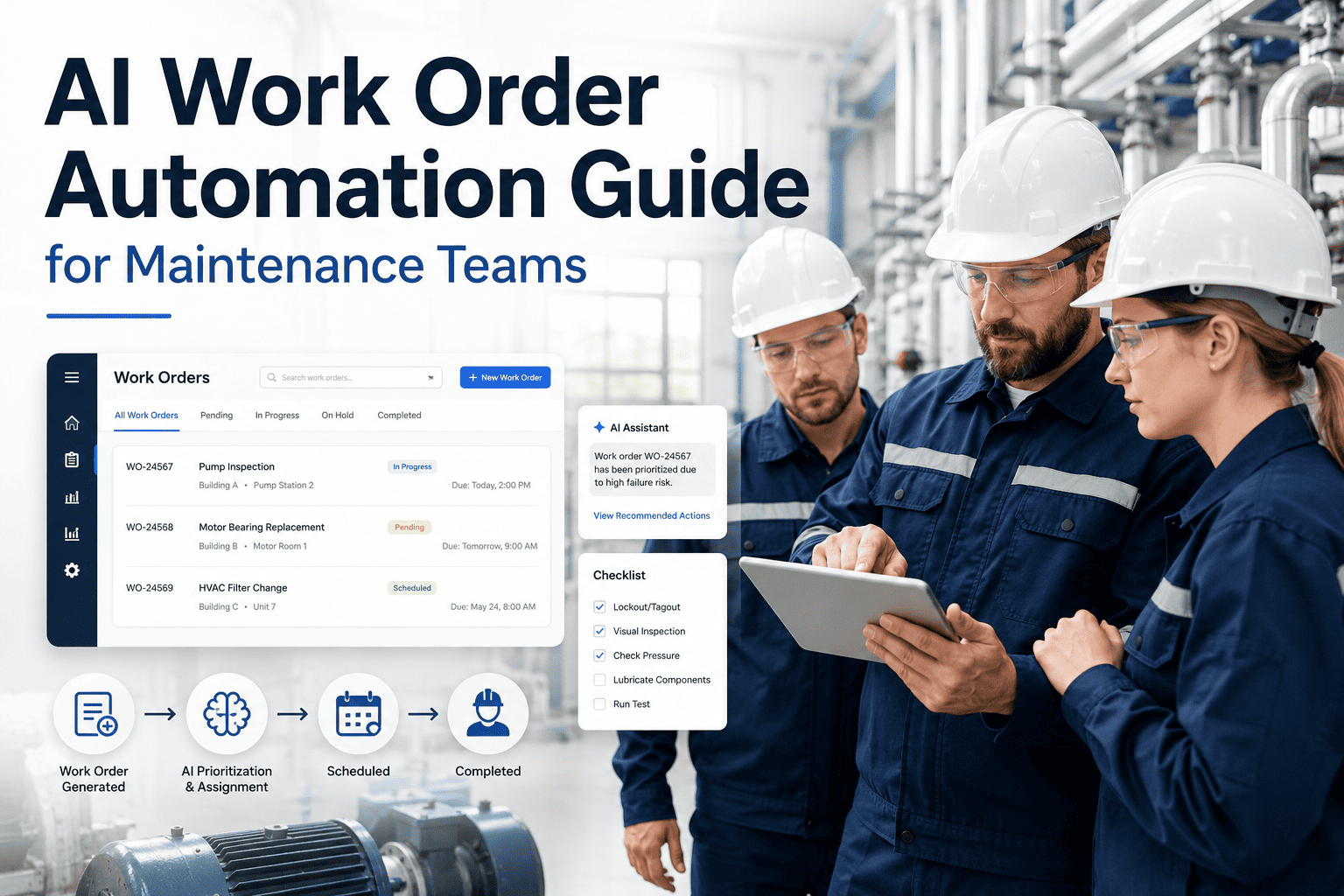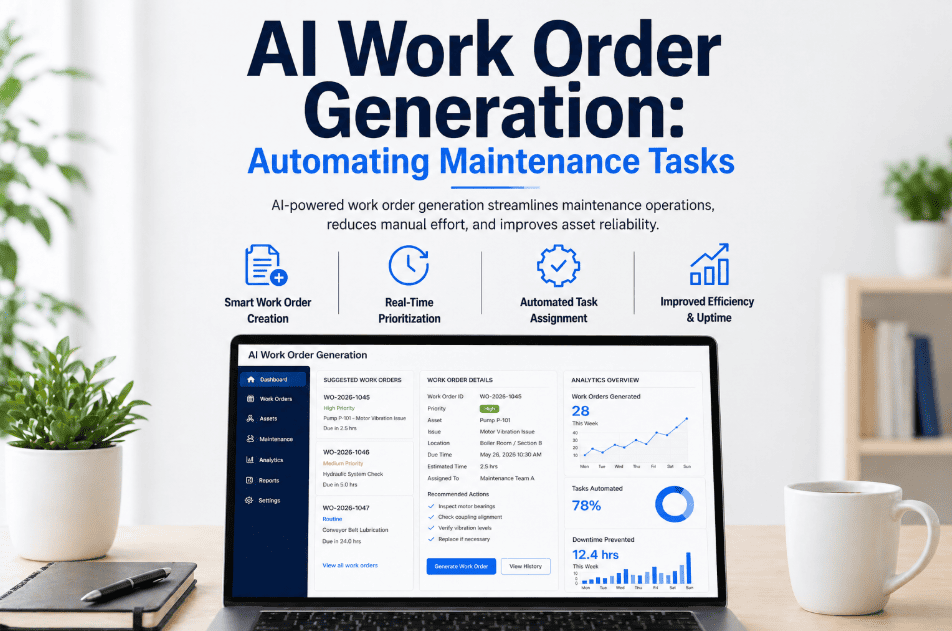
Maintenance administration currently consumes up to 40% of a technician's workday—time spent manually logging faults, searching for equipment manuals, or waiting for work assignments. In 2026, AI Work Order Generation is eliminating this administrative friction by automating the entire lifecycle of a task. By connecting directly to sensor data and asset history, AI doesn't just notify you that something is wrong; it creates the work order, identifies the specific fault, attaches the necessary documentation, and assigns the best-qualified technician. This transition to autonomous maintenance operations is reducing administrative overhead by 80% and increasing wrench time across industrial teams by 25%. If your team is still buried in paperwork and manual dispatching, start a free trial with OxMaint or book a demo to see how AI work order automation eliminates 80% of admin time.
What is AI Work Order Generation?
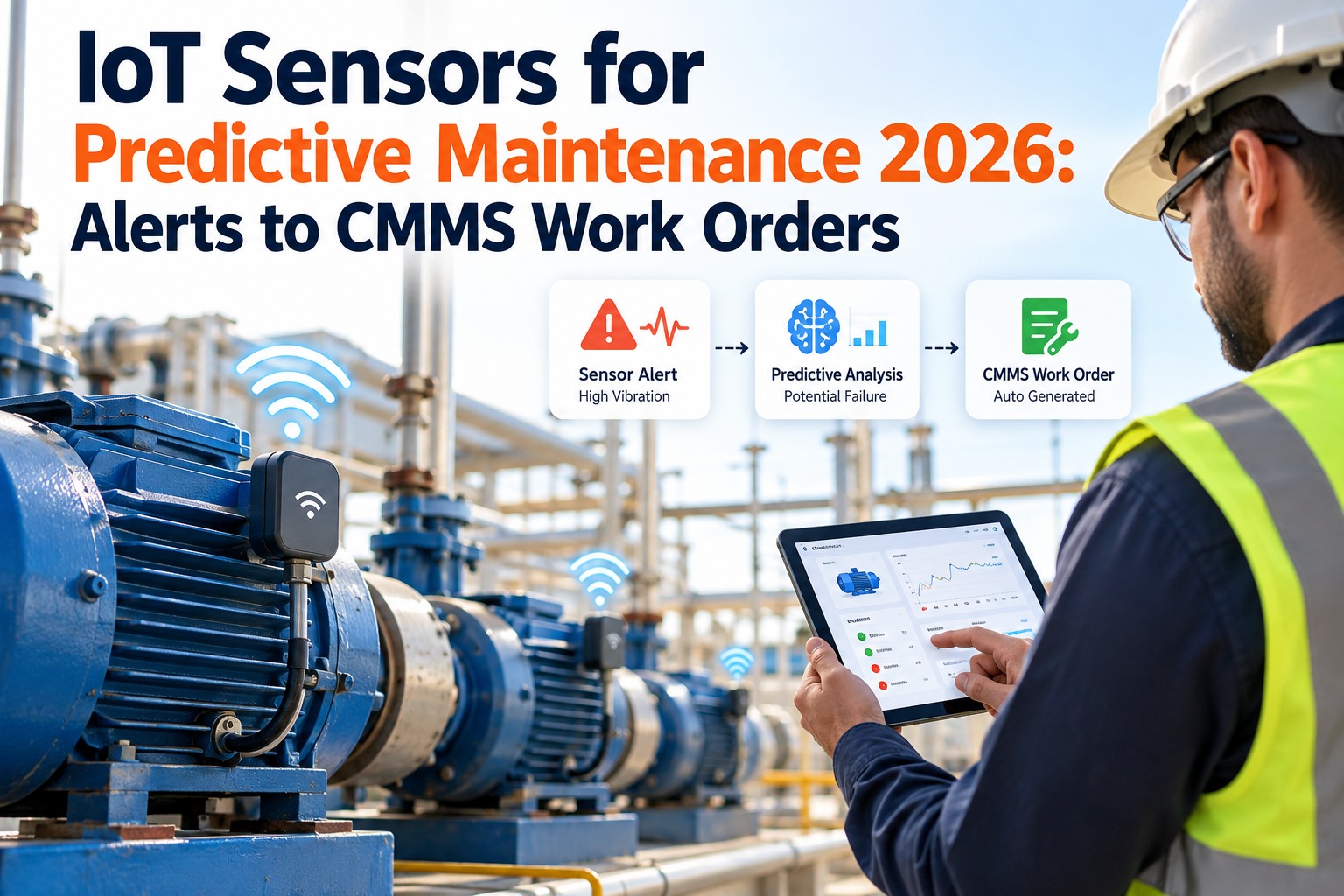
AI Work Order Generation is the process where a CMMS uses machine learning and real-time data integration to trigger, populate, and assign maintenance tasks without human intervention. Instead of a technician noticing a leak or a sensor hitting a simple threshold, the AI analyzes patterns—such as a specific vibration frequency combined with a rise in temperature—to diagnose the root cause. It then pulls from a library of digital procedures to create a "Smart Work Order" that includes the correct parts list, safety protocols, and priority level. This ensures that the maintenance team is always working on the right asset at the right time, with all the information they need to finish the job on the first visit. For those ready to move past manual scheduling, start a free trial or book a demo to see your work order generation automated.
Industry Pain Points: The High Cost of Manual Administration
Comparison: Manual vs. AI-Automated Work Orders
| Process Step | Manual CMMS Workflow | OxMaint AI Workflow |
|---|---|---|
| Task Creation | Manager manually types details after an alert | AI auto-generates from sensor data patterns |
| Documentation | Tech searches for manuals and safety PDFs | AI automatically attaches relevant SOPs and safety info |
| Prioritization | Subjective "gut feel" by the supervisor | Data-driven risk score based on asset criticality |
| Assignment | Phone calls or whiteboard updates | Push notification to mobile based on skill & location |
| Data Quality | Inconsistent and often incomplete | Standardized, rich data for audit compliance |
How OxMaint Solves the Admin Burden
OxMaint maps specific vibration and thermal signatures to defined repair tasks, ensuring the work order matches the actual mechanical problem.
The system identifies required spare parts and checks inventory levels, automatically triggering a purchase request if stock is low.
For regulated industries, AI ensures every automated work order includes mandatory safety checklists and digital signature fields.
Technicians receive AI-generated tasks on their mobile devices, with full capability to document work even in areas without Wi-Fi.
ROI & Operational Results
Frequently Asked Questions
Can AI work order generation handle emergency breakdowns?
Yes. In fact, that's where it shines. While traditional systems wait for a human to flag an emergency, AI recognizes the "pre-failure" signatures of a critical breakdown and escalates the work order to "Priority 1" immediately, alerting the closest available technician via mobile push notification.
How does the system know which technician to assign?
OxMaint maintains a skills matrix within the technician profile. The AI analyzes the task requirements (e.g., "High Voltage Certified") and compares it against active techs, their current location (via GPS), and their existing backlog to find the most efficient path to completion.
Does this work with my existing IoT sensors?
OxMaint is built for integration. Whether you use vibration sensors, PLC data, or SCADA systems, our API-first architecture allows these data streams to trigger work order generation workflows automatically.
Will I lose control over my maintenance schedule?
Not at all. The AI acts as your "digital assistant." You can configure the system to "Auto-Approve" routine tasks while holding high-cost or high-complexity tasks for a manual "one-click" review before they are dispatched.