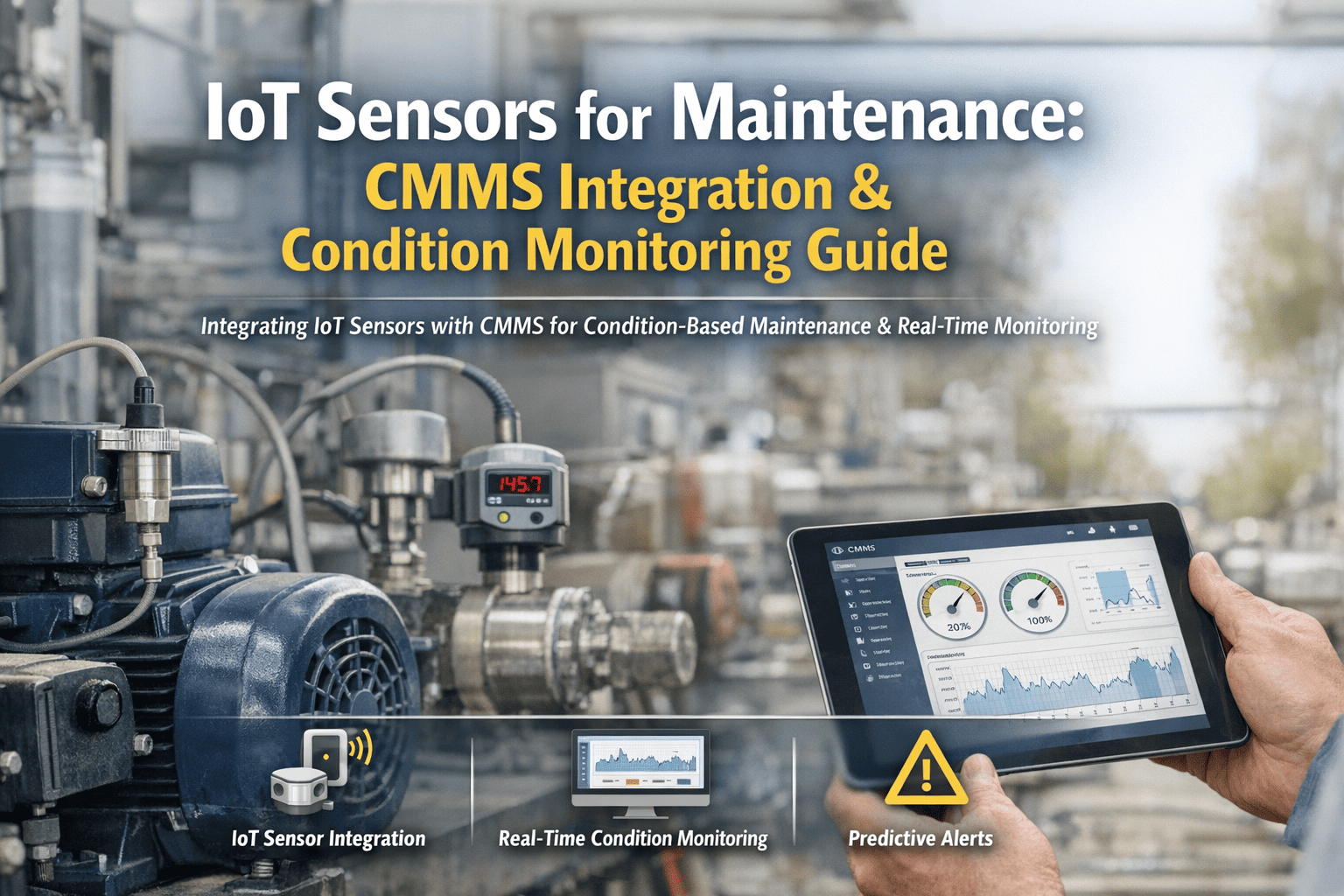
Last November, a high-volume manufacturing plant experienced a catastrophic failure of their primary cooling compressor at 2:00 PM on a Tuesday — not because of a sudden lightning strike, but due to a slow, undetected degradation. Emergency replacement cost $340,000, halted the entire production line for four days, and resulted in $1.2 million in missed delivery penalties. The forensic assessment revealed the compressor had been sending warning signs for over three months — progressive vibration anomalies, a 15% spike in energy consumption, and a technician's note about an "unusual hum" buried in a completed work order. Any modern AI anomaly detection system would have flagged these correlating signals at the earliest stage for a fraction of the downtime cost. The repair work order could have been generated automatically, severity-scored by AI, and scheduled during a planned maintenance window weeks earlier.
Industrial facilities managing thousands of critical assets face an invisible threat hiding within their own data. AI anomaly detection acts as the digital detective, continuously monitoring sensor patterns, work order text, cost anomalies, and performance deviations without human intervention. But raw data without a connected maintenance system is just noise sitting on a server. Oxmaint CMMS transforms AI pattern recognition into prioritised repair work orders with exact fault locations, AI-analysed severity scores, and automated scheduling — ensuring every anomaly moves from detection to resolution before it becomes a failure. Start free trial today.
Predictive Maintenance 2026
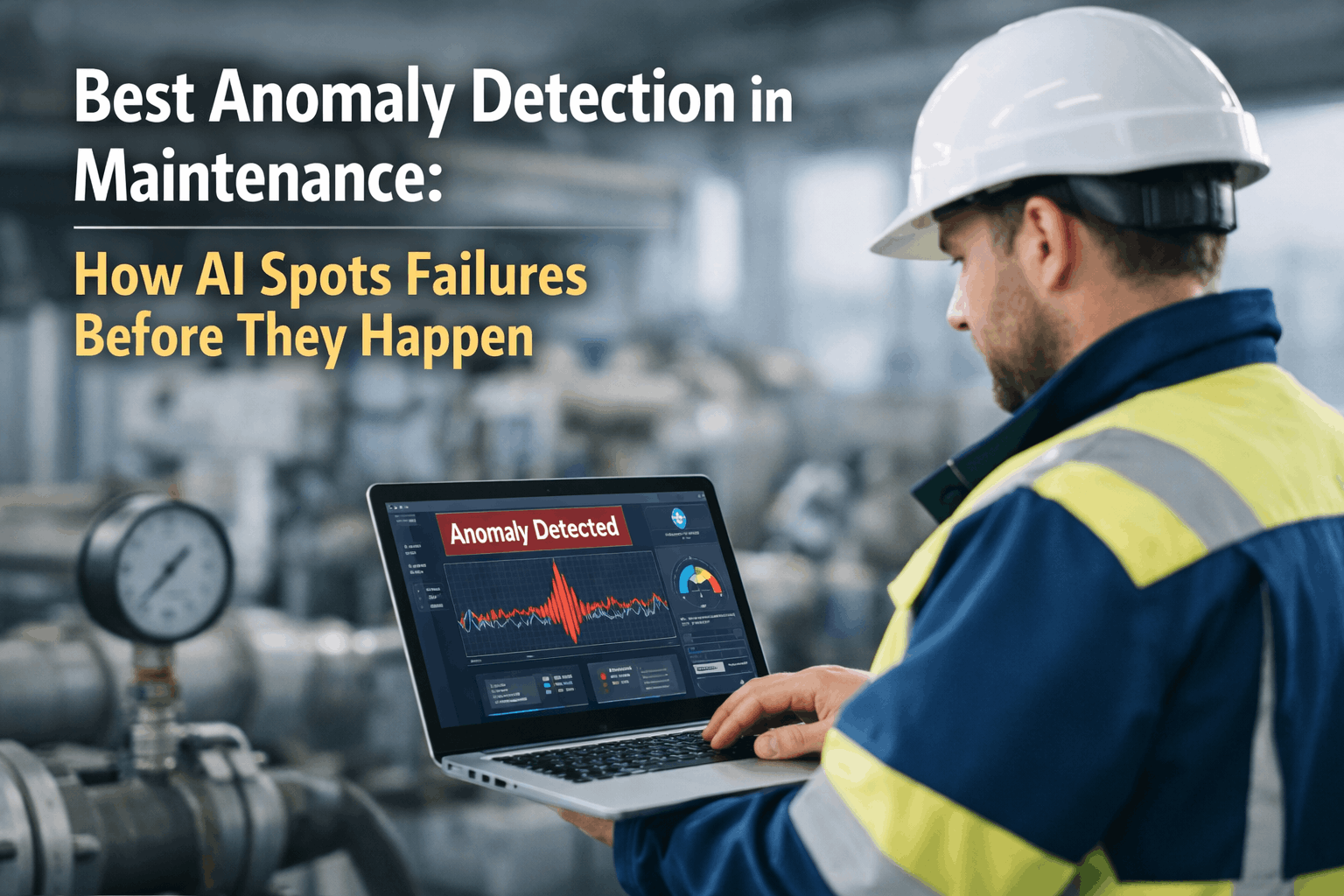
Best Anomaly Detection in Maintenance: How AI Spots Failures Before They Happen
Detect maintenance anomalies before they become failures using AI pattern recognition. This guide equips maintenance leaders with AI detection criteria, CMMS integration frameworks, and automated anomaly prioritisation strategies to transform sensor data, work order text mining, and performance deviations into scheduled repair action.
72%of Asset Failures Preventable with Pattern Recognition
10xROI on Planned Repairs vs. Emergency Replacements
5M+Data Points Analysed by AI Per Facility/Day
94%Failure Prediction Accuracy with AI-Scored Telemetry
The Anomaly Detection Maturity Spectrum
Industrial anomaly detection programmes typically fall into one of three maturity levels. The majority of facilities remain in the "Reactive" or basic "Threshold" category — relying on arbitrary static alarms, reacting only when limits are breached, and missing subtle text-based clues in work orders. Oxmaint helps maintenance teams advance toward an "Autonomous" posture where every dynamic baseline deviation is detected, text-mined, scored, and converted into a prioritised CMMS work order automatically.
Reactive (Run-to-Fail / Static)
60%
Proactive (Basic Threshold Alarms)
25%
Autonomous (CMMS-Integrated AI)
15%
Critical AI Anomaly Detection Pillars
Comprehensive anomaly detection programmes span six interconnected domains — from sensor telemetry and text mining to cost tracking and automated work orders. A comprehensive CMMS acts as the central authority for these inputs, ensuring every data point is analysed, every deviation scored, and every predictive insight linked directly to a maintenance action plan.
AI Anomaly Detection Governance CheckpointsDetection Framework
Telemetry
Sensor Pattern Analysis
Ingest continuous IoT data stream (vibration, temperature, acoustics, pressure). AI maps dynamic baselines and flags subtle pattern deviations that static threshold alarms completely ignore.
Foundation
NLP
Work Order Text Mining
AI natural language processing scans historical technician notes. Automatically flags recurring keywords like "rattling", "hot to touch", or "temporary fix" to predict impending failure.
Intelligence
Financial
Cost & Inventory Anomalies
Monitor parts consumption rates and repair spend per asset. Spike in specific bearing replacements or lubrication costs instantly flags an underlying root cause issue needing investigation.
Financial
Efficiency
Performance Deviations
Correlate energy usage and output metrics against historical norms. A 5% drop in pump flow rate paired with a 10% increase in power draw triggers an immediate inspection work order.
Operational
Action
CMMS Work Order Generation
Auto-generate repair work orders from AI-scored anomalies. Attach the exact data charts, historical text snippets, and suggested diagnostic pathways to equip technicians before they turn a wrench.
Execution
Strategy
Predictive Capital Planning
Aggregate anomaly data to build condition-based replacement models. Prioritise major overhauls or asset retirement based on chronic deviation frequency and remaining useful life predictions.
Strategic
Anomaly Severity & Escalation Matrix
Not all anomalies carry equal urgency. A minor shift in energy consumption is a monitoring item; a sudden spike in high-frequency vibration coupled with heat is an emergency that risks catastrophic asset destruction. The severity matrix below helps maintenance managers prioritise AI findings based on failure probability, operational impact, and cost consequence — ensuring the most dangerous anomalies get addressed first.
5
Critical / Imminent Failure
Severe multi-sensor pattern deviation or extreme spike. 99% failure probability. Emergency shutdown and repair required within 24 hours.
4
Severe Anomaly
High deviation from dynamic baseline or multiple text-mined warning signs. High failure risk. Schedule repair within 7 days.
3
Moderate Deviation
Early warning signs. Noticeable shift in energy consumption or minor acoustic changes. Plan maintenance intervention within 30 days.
2
Minor Drift
Slight variance from optimal operating parameters. Minor cost anomaly in parts usage. Monitor closely and schedule standard inspection.
1
Baseline Normal
Asset operating completely within AI-learned parameters. No text or telemetry anomalies. Proceed with standard lifecycle management.
Turn AI Insights into Repair Action
Oxmaint transforms complex anomaly alerts into prioritised, actionable repair work orders — automatically scoring pattern deviations, text-mining historical technician notes, tracking cost outliers, and scheduling preventive maintenance from one unified CMMS platform.
AI Detection Models & Capabilities
A comprehensive anomaly detection programme deploys multiple AI models matched to different data streams. From time-series telemetry processing to natural language models parsing technician notes, each algorithmic approach generates distinct insights that must flow into the CMMS for root cause diagnosis and asset condition tracking.
Primary
Time-Series Telemetry AI
Vibration, Temp & Pressure
Machine learning models that ingest continuous high-frequency IoT data. They learn the "normal" dynamic operating state of an asset and instantly flag micro-deviations in vibration harmonics or temperature curves.
IoT SensorsDynamic BaselineHarmonicsMicro-shifts
Advanced
NLP Text Mining Engine
Work Orders & Technician Notes
Natural Language Processing (NLP) models read through years of unstructured work order text. They identify semantic patterns like recurring complaints of "noise", "smell", or "overheating" long before a sensor trips.
NLP AlgorithmsSemantic SearchText PatternsHidden Clues
Precision
Energy & Output Modeling
Amperage, Flow & Production Rates
Regression models compare energy consumed against output produced. Detects insidious efficiency losses — like a pump consuming 20% more amperage to deliver the same fluid volume, signalling internal wear.
Efficiency LossPower DrawOutput RatioWear Detection
Financial
Cost & Inventory Outlier AI
Spare Parts & Labour Spend
Financial anomaly tracking that flags sudden spikes in specific part consumption. If an asset suddenly requires three belt replacements in a month instead of one, the AI triggers a root alignment investigation.
Part ConsumptionSpend SpikesLabour HoursCost Outliers
Diagnostic
Root Cause Correlation
Multi-Variate Signal Analysis
Advanced neural networks that tie weak signals together. A slight temperature rise alone means nothing; combined with a specific vibration frequency and a spike in amperage, the AI diagnoses a failing inner bearing race.
Multi-VariatePattern MatchRCA DiagnosisWeak Signals
Autonomous
Computer Vision Anomaly
Visual Inspection & Thermal
Image recognition AI processing thermal camera feeds or automated visual inspections. Detects hotspots in electrical panels, fluid puddles under machinery, or visible belt fraying without human intervention.
Thermal ImagingVisual DefectFluid LeaksAuto-vision
Asset-Specific Anomaly Profiles
Different classes of industrial equipment exhibit fundamentally different anomaly patterns. A high-speed rotating motor degrades differently than a thermal HVAC chiller. Mobile fleet assets generate distinct fault codes compared to stationary robotics. The AI anomaly detection programme and CMMS mapping must adapt to the asset class — tuning algorithms to look for specific failure signatures.
Rotating Equipment (Motors/Pumps)
High-frequency vibration harmonics (bearings)
Sudden thermal spikes in motor casings
Amperage draw anomalies during startup
Text mentions of "grinding" or "squealing"
Increased consumption of lubrication/grease
HVAC & Thermal Systems
Unexplained pressure drops in chilled water loops
Compressor short-cycling pattern detection
Deteriorating delta-T (temperature differential)
Spikes in specific HVAC filter replacements
Text records of "inconsistent cooling" over time
Mobile & Fleet Assets
Unexpected spikes in fuel or oil consumption
Recurring, intermittent OBD fault code clusters
Hydraulic pressure loss during heavy load
Accelerated tire or brake pad wear rates
Text notes indicating "sluggish response"
The Cost of Ignored Anomalies: Failure Escalation Pyramid
For every catastrophic equipment failure, there are weeks or months of progressive degradation that an AI model would have detected. The failure escalation pyramid shows how ignoring early anomalies compounds — from a minor vibration shift that costs $1,500 to fix, through secondary damage requiring $30,000 in expedited repairs, to a catastrophic asset seizure that costs hundreds of thousands in replacement, downtime, and lost production.
$500–$2K
Early AI Detection
AI detects subtle harmonic anomaly or flags text pattern. CMMS generates preventive work order. Minor bearing replacement scheduled during planned downtime. No production loss. Full reliability restored.
Frequency: High
$10K–$50K
Secondary Damage
Anomaly ignored. Failing bearing scores the shaft and damages seals. Reactive repair required mid-shift. Line down for hours. Expedited shipping for heavy replacement components.
Frequency: Medium
$100K–$1M+
Catastrophic Failure
Total asset seizure. Motor destroys itself, causing collateral damage to connected infrastructure. Days of unplanned downtime, missed shipments, safety hazards, and massive capital replacement cost.
Frequency: Low (But Devastating)
Stop Reacting to Breakdowns
Every unanalysed data point is a hidden liability. Oxmaint converts sensor telemetry, historical work order text, and cost anomalies into AI-scored repair work orders — prioritising risks, predicting failure dates, and scheduling rehabilitation automatically from one unified platform.
CMMS Features for AI Anomaly Detection
A modern, AI-enabled CMMS is the command centre that transforms raw data into maintenance action. It links asset telemetry with historical text, converts machine learning findings into prioritised work orders, tracks root cause resolution, and validates predictive ROI — ensuring every anomaly moves smoothly from detection to correction.
A
Real-Time Telemetry Dashboard
Live ingestion of IoT sensor data (vibration, temp, pressure) across the facility. Visualises dynamic operating baselines and instantly highlights statistical outliers before they trigger traditional SCADA alarms.
B
NLP Text Mining Module
AI scans thousands of completed work orders to find semantic trends. Highlights when technicians repeatedly use words like "loose", "hot", or "noisy" on specific assets, turning qualitative notes into quantitative predictive alerts.
C
Auto Work Order Generation
Automatic work order creation when a multi-variate anomaly crosses a risk threshold. Includes the triggering data charts, relevant text snippets, recommended diagnostic steps, and required parts list for the technician.
D
Cost & Inventory Outlier Alerts
Financial analytics that monitor consumption rates. Automatically notifies reliability engineers if a specific asset begins consuming abnormal amounts of lubricants, filters, or electrical components compared to its baseline.
E
Dynamic Baseline Learning
Machine learning algorithms that adapt to changing seasonal conditions or production loads. Instead of static limits, the AI understands that a motor runs hotter in July under heavy load, preventing false positive alerts.
F
Root Cause Recommendations
When an anomaly is detected, the AI compares the signature against a global database of failure modes to suggest the most likely root cause (e.g., "78% probability of inner race bearing wear"), dramatically reducing troubleshooting time.
Frequently Asked Questions
Q. How does Oxmaint use AI for anomaly detection?
Oxmaint acts as the central brain for your maintenance data. It ingests time-series telemetry from your IoT sensors, scans the text of historical work orders using NLP, and tracks parts consumption. When its machine learning algorithms detect a deviation from the established dynamic baseline, it auto-generates a prioritised work order equipped with diagnostic context.
Sign up for Oxmaint to see predictive anomaly detection in action.
Q. Do we need expensive new sensors to start using anomaly detection?
Not necessarily. While high-frequency vibration sensors provide deep insights, incredible value can be unlocked using data you already have. Oxmaint's NLP engine can text-mine your existing work order history for warning signs, and cost-tracking AI can spot anomalies in your spare parts usage. You can start with text and cost anomalies, then layer in affordable wireless IoT sensors on your most critical assets.
Q. What is the difference between static threshold alarms and AI anomaly detection?
Static alarms act like a speed limit sign — they only trigger when a hard number is crossed (e.g., Temp > 180°F). They cannot adapt to varying production speeds or ambient weather, leading to false alarms or missed early degradation. AI anomaly detection learns the "normal" dynamic behaviour of the machine under various conditions. It can flag a problem even if the temperature is 160°F, because it knows that under the current light load, it *should* only be 140°F.
Schedule a demo to understand dynamic baselining.
Q. How does work order text mining actually predict failures?
Technicians frequently document early warning signs without formally escalating them. A note might say, "Tightened loose housing, bearing sounded a bit loud." An NLP (Natural Language Processing) engine scans thousands of these notes across your entire asset history. If it detects a clustering of semantic terms related to heat, noise, or vibration over a short period on a specific machine, it alerts management that a hidden failure is actively developing.
Q. What is the ROI of implementing AI anomaly detection in our CMMS?
The ROI is achieved through three main pillars. First, eliminating catastrophic failures and secondary damage reduces emergency repair costs by up to 90%. Second, avoiding unplanned downtime preserves production revenue and delivery schedules. Third, it eliminates unnecessary "calendar-based" maintenance; you only replace parts when the AI detects true degradation, extending the useful life of components. Most industrial facilities see full ROI within 6 to 12 months of deployment.