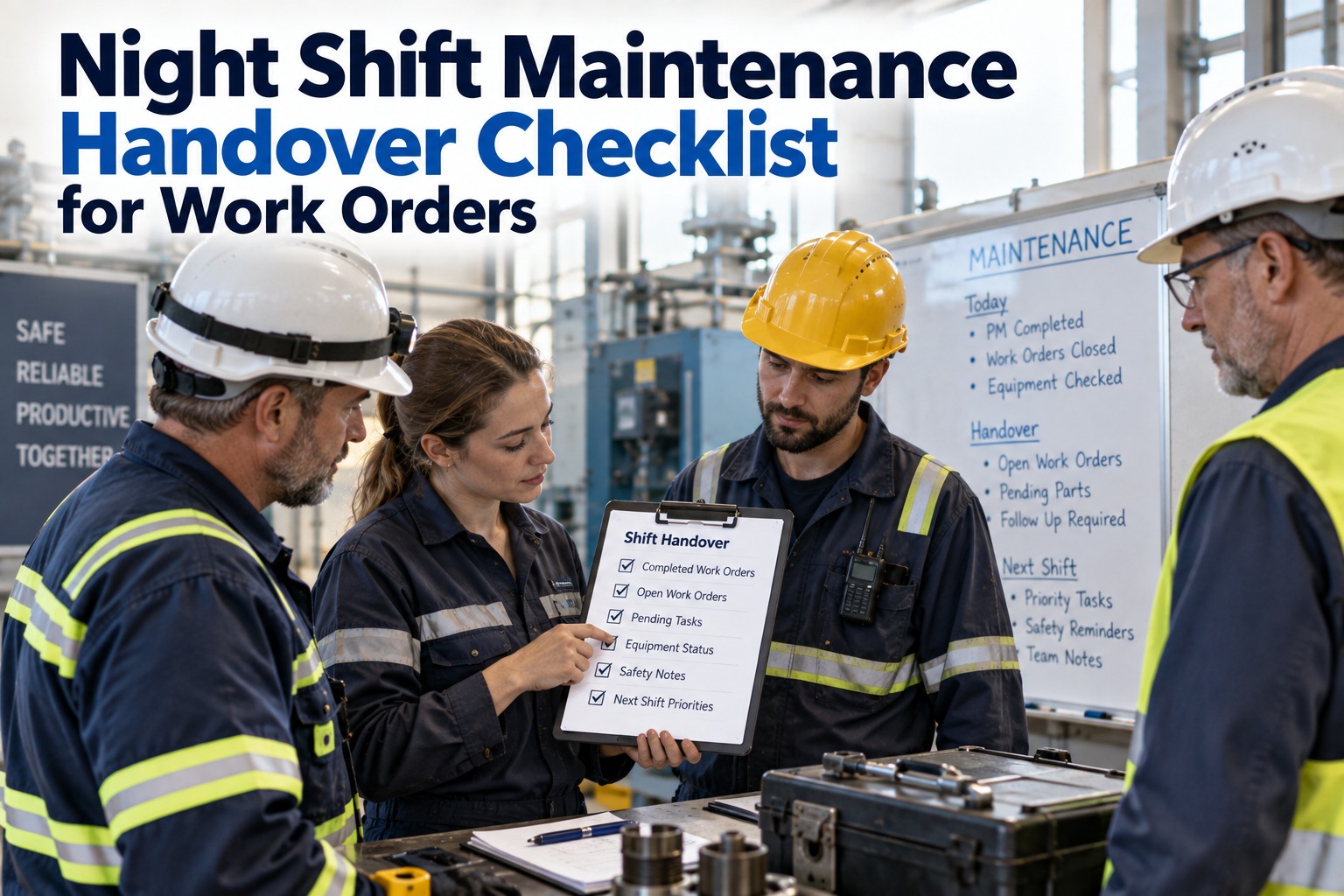
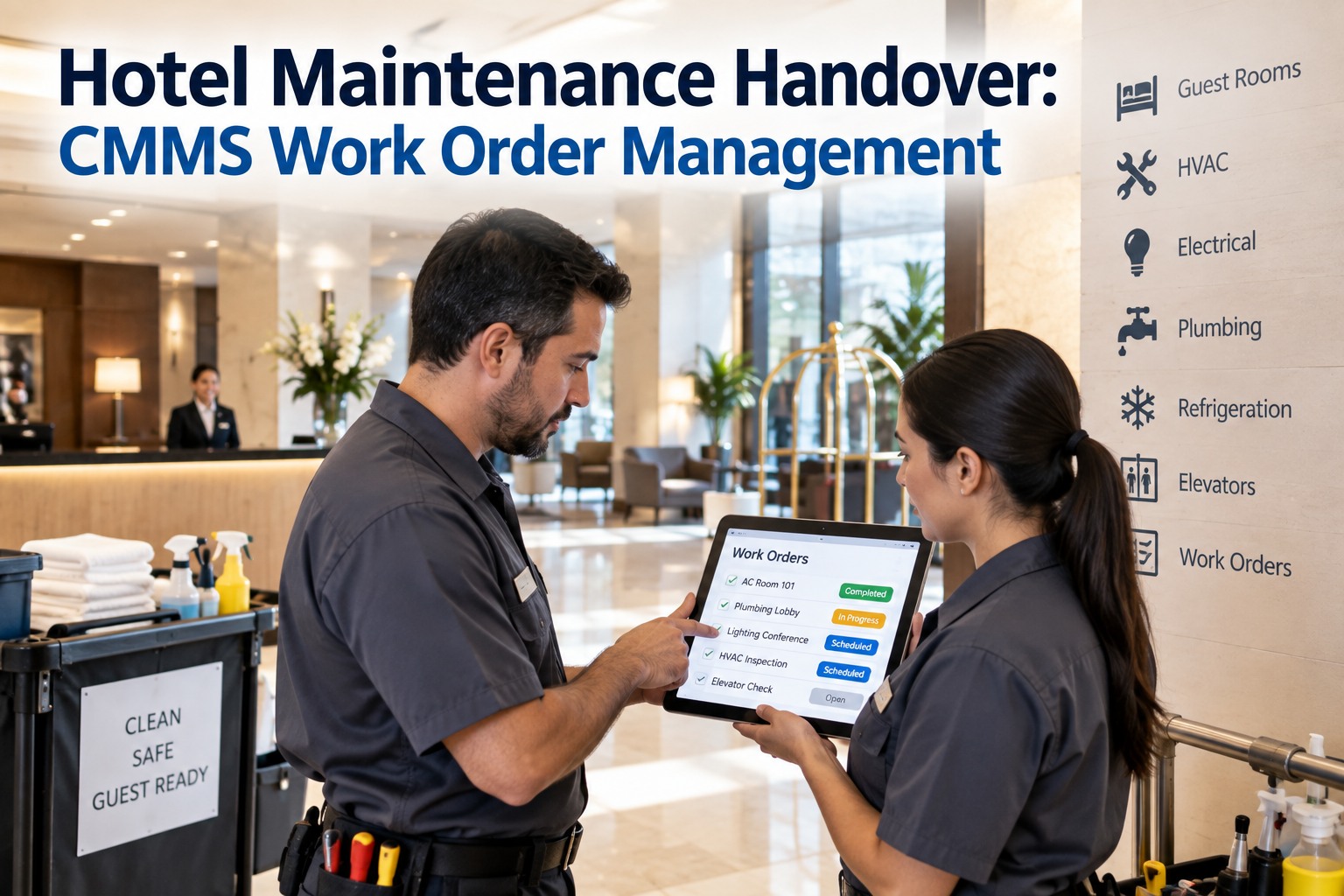
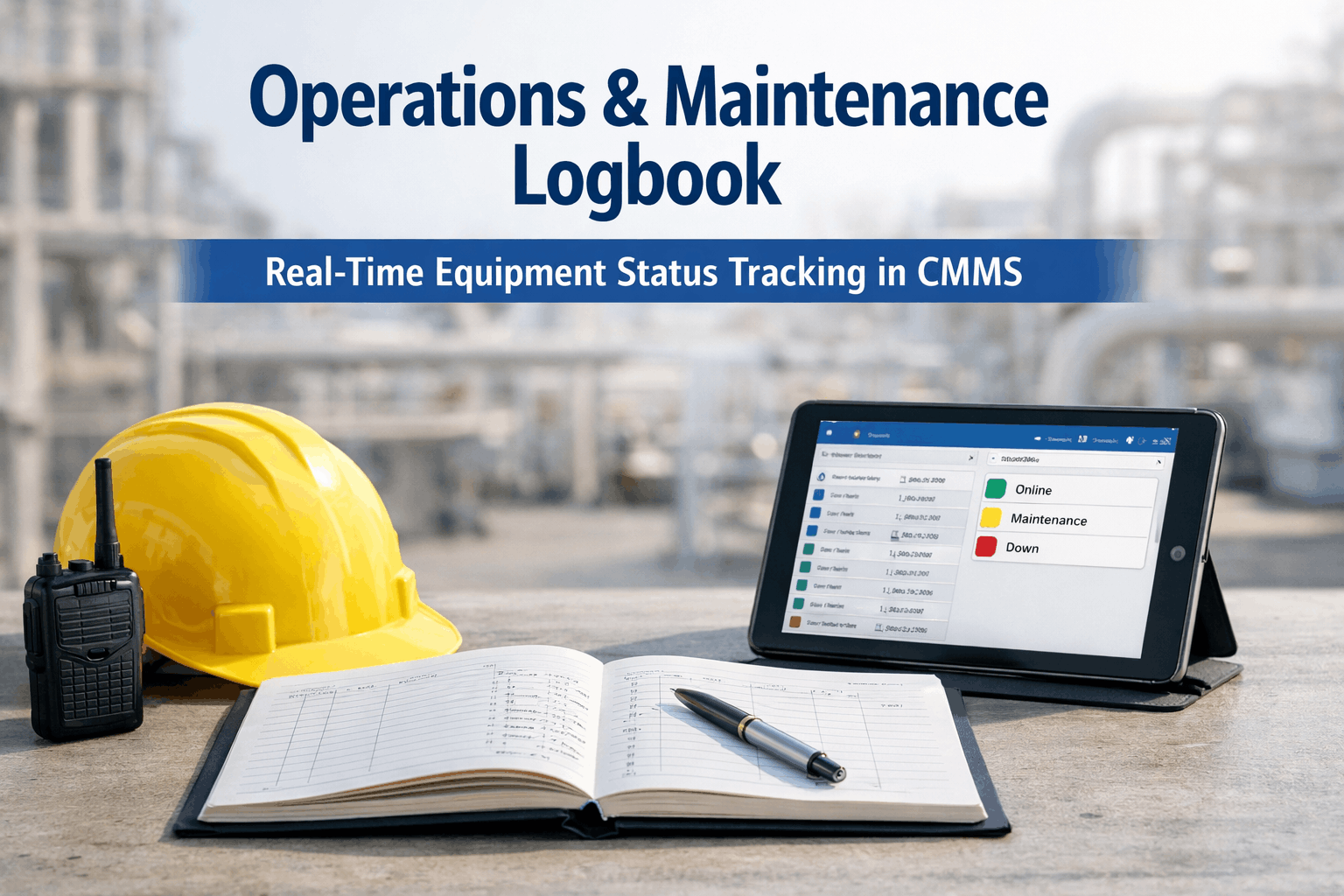
Last month, a high-volume food packaging facility experienced a catastrophic drive failure on their primary conveyor line at 11:00 AM. The forensic breakdown analysis revealed that the night shift technician had noticed abnormal vibrations and an elevated temperature on the motor bearing at 4:30 AM. He noted it on a paper logbook sitting on the maintenance desk, but didn't verbally pass the information on during the shift change because the morning crew was late. The day shift missed the handwritten note entirely. The resulting motor seizure cost $140,000 in lost production, ruined 12 pallets of temperature-sensitive inventory, and forced the team into a 14-hour emergency overtime repair. The warning signs were detected early, but the communication protocol failed entirely.
Shift changes are the most vulnerable moments in plant operations. When maintenance teams rely on verbal pass-downs, disjointed text messages, or fragmented paper logs, critical asset intelligence walks out the door every eight hours. Information loss leads to repeated diagnostic work, severe safety hazards, and reactive firefighting. A structured maintenance shift handover protocol, supported by a clear escalation matrix, bridges this gap. Oxmaint CMMS digitises the shift handover process—transforming fragmented updates into mandatory digital logs, routing abnormal conditions to the right supervisors automatically, and ensuring every pending work order transitions seamlessly from one shift to the next. Start free trial today.
Maintenance Operations 2026
Maintenance Shift Handover: Communication Protocols & Escalation Matrix Guide
Improve maintenance team communication with structured shift handover protocols, escalation matrices, and daily briefing meetings. This guide equips maintenance managers with the frameworks needed to eliminate information silos, standardise cross-shift communication, and ensure critical asset risks are escalated and resolved before they cause downtime.
74%of Breakdowns Linked to Poor Shift Communication
45 MinAvg Time Wasted Re-Diagnosing Issues Per Shift
100%Traceability with Digital Handover Dashboards
3xFaster Resolution of Critical Safety Escalations
The Shift Handover Maturity Spectrum
Industrial maintenance teams typically operate within one of three maturity levels regarding shift transitions. The majority remain in the "Reactive" category—relying heavily on unstructured verbal chats or physical logbooks that offer no accountability or searchability. Oxmaint helps facilities advance toward "Proactive" and "Autonomous" postures, where every pending task, safety isolation, and operational anomaly is digitally tracked and automatically surfaced to the incoming crew.
Reactive (Verbal / Paper Logs)
62%
Proactive (Standardised Briefings)
28%
Autonomous (CMMS-Integrated)
10%
Critical Handover & Communication Domain Pillars
A world-class shift handover programme spans six interconnected domains—from structured daily meetings and SBAR communication to safety continuity and automated escalations. A comprehensive CMMS acts as the single source of truth for these obligations, ensuring that the incoming team has total visibility into the plant's real-time condition the moment they step onto the floor.
Shift Handover Governance CheckpointsOperational Framework
Data Capture
Digital Shift Logs
Eliminate paper binders. Require technicians to input a structured end-of-shift summary directly into the CMMS, capturing completed tasks, pending work, and abnormal machine conditions.
Foundation
Structure
SBAR Communication Protocol
Implement the SBAR framework (Situation, Background, Assessment, Recommendation) for concise, action-oriented communication during shift overlaps to prevent ambiguity.
Standardisation
Meetings
Daily Stand-Up Briefings
Mandate a 10-minute overlap huddle where the outgoing shift lead briefs the incoming team using a visual CMMS dashboard displaying open critical work orders and safety alerts.
Alignment
Accountability
Escalation Matrix Enforcement
Define explicit rules for when a delayed repair, missing spare part, or production impact must be escalated from a technician to a shift lead, supervisor, or plant manager.
Resolution
Safety
LOTO & Permit Continuity
Strict protocols for transferring active Lockout/Tagout (LOTO) isolations, confined space permits, and hot work permits between shifts without compromising worker safety.
Critical Risk
Continuity
Pending Work Order Handoff
Seamlessly reassign incomplete PMs or reactive breakdowns to the incoming crew within the CMMS, preserving all diagnostic notes, parts used, and current machine status.
Efficiency
The Maintenance Escalation Matrix
Not all equipment issues carry equal urgency. A minor oil drip is a monitoring item; a failed critical cooling pump on a continuous process line is an emergency that risks total plant shutdown. The escalation matrix below helps maintenance teams define precisely who needs to be notified, and when, based on the severity and duration of the fault—ensuring no critical issue is left unresolved during a shift change.
5
Plant Manager
Total facility shutdown, severe safety incident, or environmental breach. Immediate notification via phone/CMMS alert required 24/7.
4
Maintenance Manager
Primary production line down, critical utility failure, or repair exceeding 4 hours. Escalate if unresolvable by shift end.
3
Maintenance Supervisor
Imminent failure risk, missing critical spare parts, or safety bypass required. Escalate within 1 hour of initial diagnosis.
2
Shift Lead / Foreperson
Abnormal machine condition, minor production bottleneck, or cross-department coordination needed. Address during shift overlap.
1
Technician Level
Routine anomalies, minor leaks, standard PM findings. Document in digital shift log for incoming technician to monitor.
Turn Fragmented Communication into Seamless Transitions
Oxmaint transforms messy shift handovers into structured, accountable processes—mandating digital log entries, automatically routing escalations based on priority, and ensuring every incoming technician knows exactly where the outgoing crew left off. Say goodbye to the communication black hole.
Key Handover Formats & Protocols
A robust shift handover relies on overlapping formats. It is not just about writing a note; it is about conveying the right context using the right medium. From structured stand-ups to Gemba walks, employing these protocols ensures that complex troubleshooting steps, safety isolations, and operational priorities are fully understood by the relieving crew.
Structural
The SBAR Method
Verbal & Written Protocol
Standardise the transfer of complex issues using Situation, Background, Assessment, and Recommendation. Eliminates storytelling and focuses on actionable intelligence for the next shift.
SituationBackgroundAssessmentRecommendation
Interactive
Daily Stand-Up Meetings
Shift Overlap (10-15 mins)
A brief, focused huddle between outgoing and incoming teams. Review the CMMS dashboard for major breakdowns, safety alerts, and production goals for the next 8-12 hours.
Cross-shiftVisual DashboardSafety FocusPriority Alignment
Physical
Gemba Walks
At the Machine / Asset
For critical ongoing repairs, the outgoing technician walks the incoming technician directly to the machine to point out diagnostic progress, disassembled components, and staging areas.
On-SiteVisual ContextParts TransferDiagnostic Proof
System of Record
Digital CMMS Logbooks
Continuous Documentation
Replacing paper diaries with mandatory end-of-shift entries in the CMMS. Highly searchable, permanent records that supervisors can audit to ensure compliance and track recurring issues.
SearchableAuditableTimestampedPermanent
Visual Management
Status Boards & Kanban
Maintenance Shop Floor
Large digital or physical boards displaying active work orders, parts waiting, and equipment down status. Provides a glanceable state-of-the-plant for anyone walking into the maintenance shop.
GlanceableWIP LimitsParts StatusPlant Overview
Critical Risk
Emergency Handoff Protocol
Major Incidents Only
A rigid sequence required when handing over an active critical breakdown or safety incident. Involves direct supervisor sign-off, LOTO lock exchanges, and verified risk assessments.
LOTO ExchangeSupervisor Sign-offRisk VerifiedZero Ambiguity
Domain-Specific Handover Focus Areas
Different maintenance disciplines require distinct handover focus areas. A mechanical technician needs to know about temperature trends and lubrication routes, while an automation engineer needs details on forced PLC tags and sensor bypasses. Categorising shift logs by domain ensures critical nuance isn't lost in a generic summary.
Mechanical & Reliability
Abnormal vibration or temperature trends observed
Fluid leaks, pressure drops, or topped-up reservoirs
Lubrication routes completed or pending
Condition of temporary or band-aid repairs
Staged parts ready for next shift's PMs
Electrical & Automation
Tripped breakers, blown fuses, or power anomalies
Active PLC faults or network communication drops
Sensors or safety switches temporarily bypassed
VFD parameter adjustments made during shift
Software backups performed or code alterations
Safety & Compliance
Active Lockout/Tagout (LOTO) isolations in place
Open hot work or confined space permits
Spill hazards, chemical leaks, or slip risks
Fire system impairments or bypasses
Near-miss incidents reported during the shift
The Cost of Handover Failures: Escalation Pyramid
For every catastrophic equipment failure, there are often subtle warning signs that were observed but never communicated. The failure escalation pyramid shows how communication neglect compounds—from a forgotten observation that costs $1,500 in wasted diagnostic time, to ignored abnormal conditions leading to major component failure, up to full production halts resulting from uncommunicated safety bypasses.
$500–$2K
Minor Information Loss
A technician forgets to log that a specific sensor requires realignment. The incoming shift spends two hours re-troubleshooting the same fault line, wasting labour and minor materials.
Frequency: High
$10K–$50K
Escalated Equipment Damage
A night shift observation of severe gearbox vibration is written on paper but ignored. The gearbox shreds its internals mid-day, requiring expedited shipping of heavy parts and 8 hours of downtime.
Frequency: Medium
$100K–$1M+
Catastrophic Incident
A safety interlock is bypassed for testing but not handed over or logged. A machine crashes spectacularly, causing severe injury or total destruction of a vital asset. Mass production loss.
Frequency: Low (But Devastating)
Don't Let Critical Data Walk Out the Door
Every uncommunicated anomaly is a hidden liability waiting to break down on the next shift. Oxmaint secures your shift transitions with mandatory digital logs, automated escalation routing, and pending work order transfers—ensuring your team starts every shift fully informed.
CMMS Features for Shift Handover Mastery
A specialised CMMS acts as the digital baton passed between shifts. It enforces protocol compliance, securely transfers ownership of open tasks, and provides supervisors with the visibility needed to ensure that the plant operates smoothly, regardless of whose name is on the roster.
A
Digital Shift Dashboards
A unified view designed specifically for shift stand-ups. Displays critical breakdowns from the last 12 hours, high-priority pending work, and safety alerts in a highly visual format.
B
Automated Escalation Routing
Configure logic-based rules that automatically ping shift leads, supervisors, or plant managers via mobile alerts when a task exceeds its maximum downtime or crosses a severity threshold.
C
Pending Work Order Transfer
Allow outgoing technicians to pause their timer, input extensive diagnostic notes, and directly reassign an open, mid-repair work order to an incoming technician with zero data loss.
D
LOTO & Permit Tracking
Digitally track all active equipment isolations and work permits. Require incoming shifts to digitally acknowledge active LOTOs before they are allowed to engage with the equipment.
E
Mandatory Read-and-Sign Logs
Enforce compliance by requiring the incoming shift to click "Acknowledge" on the previous shift's log entries, creating an auditable trail that critical information was received.
F
Spare Parts Handover
Document when parts are staged at a machine for the next shift, or when an emergency part has been ordered and is pending delivery, preventing the incoming team from duplicating orders.
Frequently Asked Questions
Q. How does Oxmaint improve shift handovers compared to paper logs?
Oxmaint replaces easily lost, illegible paper logs with a searchable digital database. It mandates structured inputs (so technicians can't skip critical details), allows photo and video attachments of current machine states, and automatically carries over unresolved issues to the next shift's dashboard so nothing falls through the cracks.
Sign up for Oxmaint to digitise your shift handovers today.
Q. What should be included in a daily shift briefing meeting?
A daily 10-minute briefing should follow a strict agenda: 1) Safety incidents or active hazards/LOTOs, 2) Review of the top 3 downtime events from the previous shift, 3) Current status of critical production assets, 4) Any parts constraints or pending deliveries, and 5) Alignment on the top priorities for the incoming shift. Keep it concise, standing up, and visually guided by a CMMS dashboard.
Q. How do you design an effective escalation matrix?
An effective escalation matrix is built on clear, objective triggers rather than subjective feelings. Define thresholds based on downtime duration (e.g., >2 hours = Supervisor), safety risk (Any bypassed guard = Manager), or production impact (Main line down = Plant Manager). Ensure the matrix clearly lists *who* to contact, *how* to contact them (text, call, CMMS alert), and the *timeframe* expected for a response.
Q. Why are paper logs failing modern maintenance teams?
Paper logs are siloed data. They cannot be searched to find historical trends, they cannot send push notifications for critical escalations, they cannot enforce mandatory fields (like requiring a root cause entry), and they are frequently rendered useless by bad handwriting or physical damage. In a fast-paced environment, relying on paper guarantees that crucial context will eventually be lost.
Q. How do we ensure technicians actually read the digital handover logs?
The best approach is a combination of software enforcement and cultural routine. Within a CMMS, you can utilise "Read and Acknowledge" features that require a digital signature before a technician can start their first work order. Culturally, incorporating the digital log review into the mandatory verbal stand-up meeting ensures that the reading of the log becomes an unavoidable part of the shift start routine.
Schedule a demo to see how to implement this workflow.