Most plants don't fail at AI maintenance because the model is wrong. They fail because nobody wrote down the sequence: which historian tags to pull first, how much history the model actually needs, who validates the first predictions before they're trusted, and when to let the system create work orders without a human checking first. Without that sequence, a historian AI pilot either stalls in a data-cleaning phase that never ends, or it ships too fast and erodes trust the first time it's wrong. A playbook fixes the order of operations so the rollout compounds instead of restarting. Start your historian AI rollout in Oxmaint free and follow a sequence that's already been run.
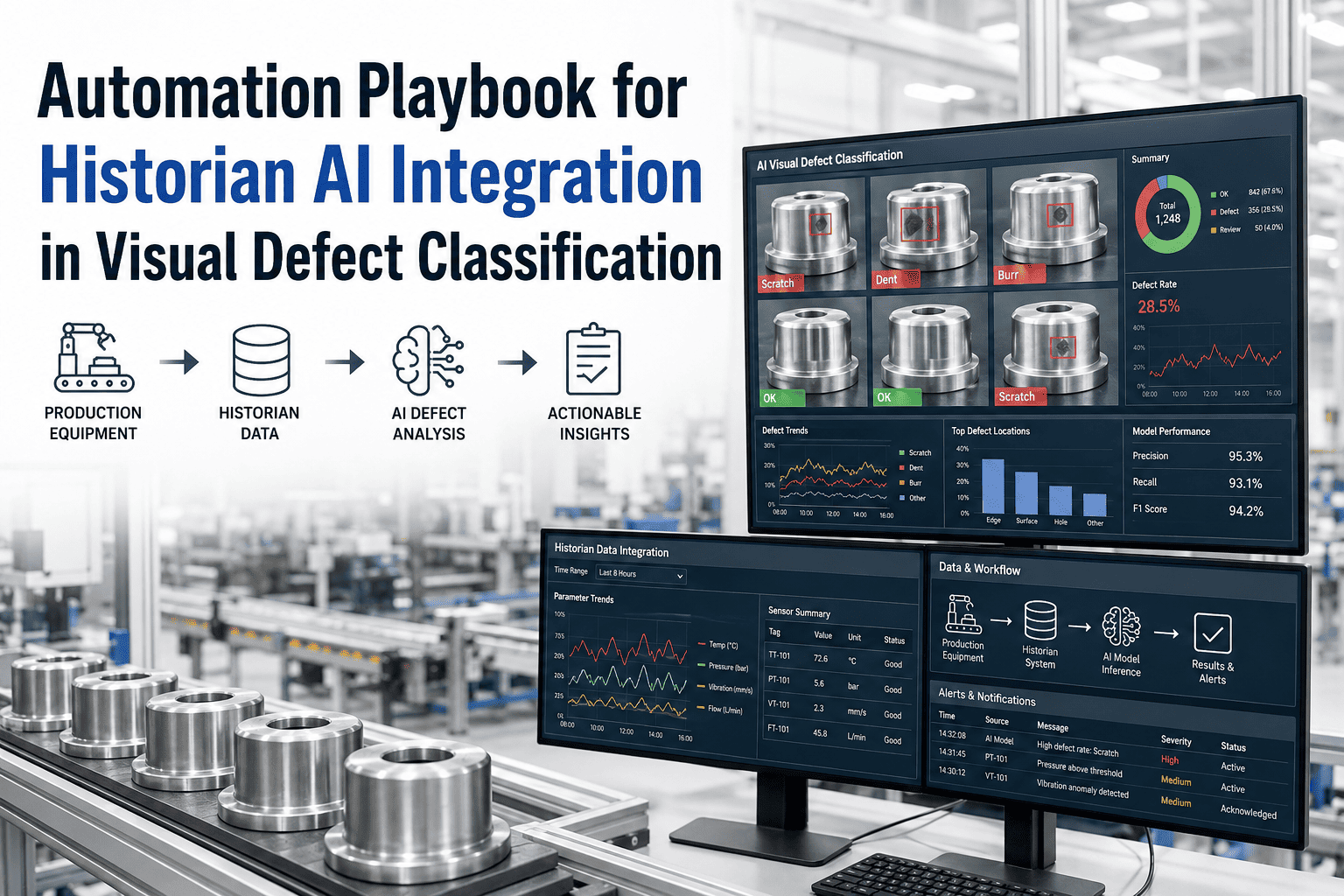
Automation Playbook for Historian AI Integration
The phased sequence for turning stored historian tags into a trusted, automated maintenance workflow — without stalling in data cleanup or shipping predictions nobody trusts yet.
The Playbook
Four Phases from Stored Tags to Automated Action
Phase 1Scope and Extract
Identify the highest-value asset class with the deepest failure history, then pull years of relevant tags from the historian via OPC-UA or REST.
Phase 2Train and Validate
Train the model against documented past failures, then validate predictions against a holdout period before anyone acts on them.
Phase 3Shadow Mode
Let the model generate predictions alongside the existing process without creating work orders, so the team builds trust against real outcomes.
Phase 4Controlled Automation
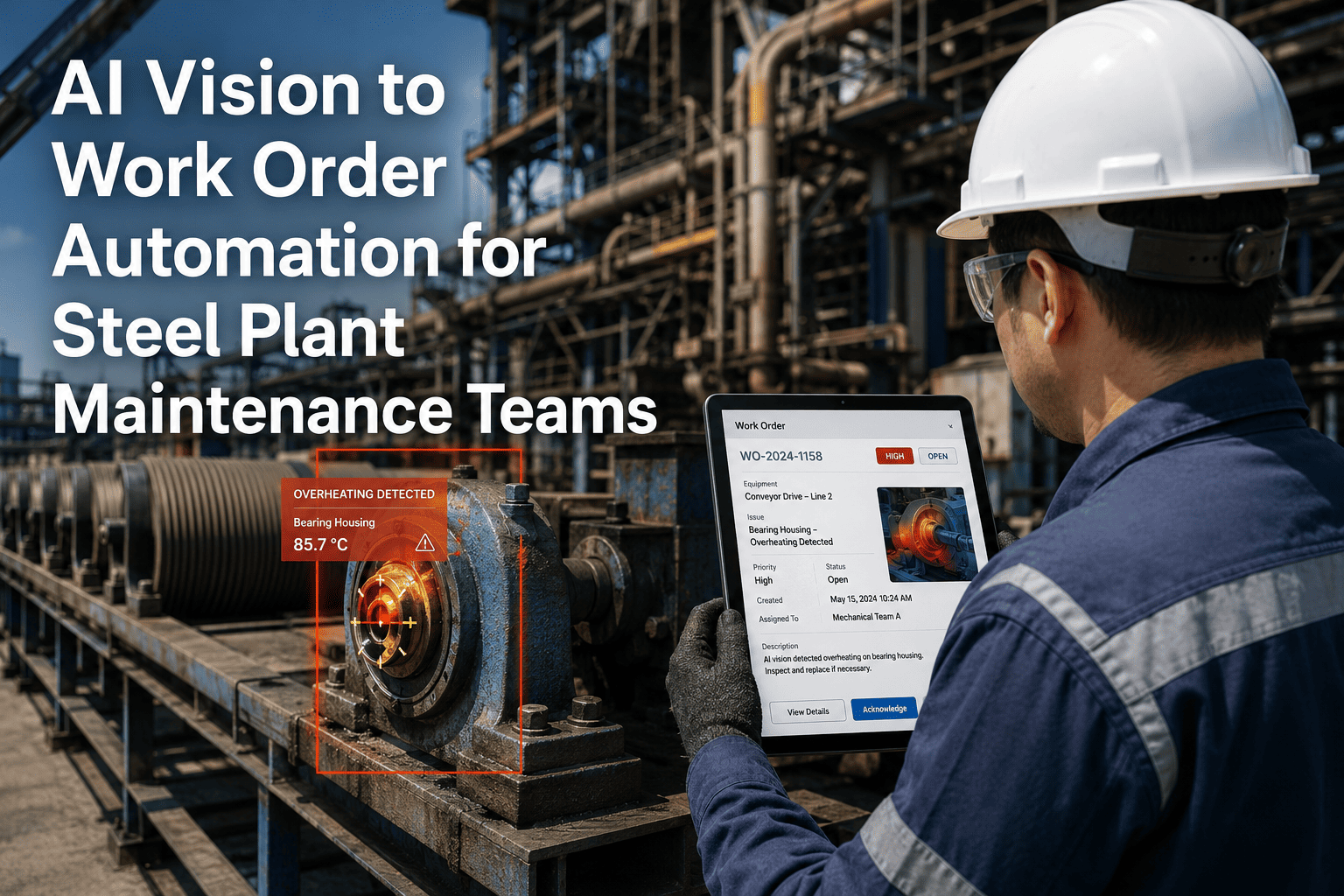
High-confidence predictions begin auto-creating work orders, while lower-confidence cases still route to a human reviewer.
3–5 yrs
of historian data generally needed before a model reaches stable accuracy
15%
downtime reduction used as a typical pilot success metric
One asset class
is the recommended scope for a first pilot, not a plant-wide rollout
Run a rollout that's already been validated
Oxmaint structures your historian AI pilot through scoping, shadow mode, and controlled automation, so trust builds before anything fires automatically.
Common Mistakes
Where Historian AI Pilots Typically Stall
Trying to train on every asset at once instead of the single highest-value class with the cleanest history
Skipping shadow mode and letting the model create work orders before anyone has checked its predictions
Treating data cleansing as a one-time task instead of an ongoing step in the rollout
No defined success metric, so the pilot has no clear point at which it's considered validated
Expert Review
The plants that get historian AI right almost always run a shadow phase longer than they originally planned. It feels slow in the moment, but it's the step that turns "the model said so" into "the model has been right eleven times in a row on this exact failure mode." Skip it, and the first wrong prediction undoes months of credibility.
Reviewed by Oxmaint's Maintenance Reliability Advisory Team
Comparison
Rushed Rollout vs Phased Playbook
| Rollout Decision | Rushed Approach | Phased Playbook |
|---|
| Scope of first pilot | All assets simultaneously | Single highest-value asset class |
| First automated action | Immediate work order creation | Shadow mode before any automation |
| Trust building | Assumed from day one | Earned through validated predictions |
| Success criteria | Undefined or vague | Specific metric set before rollout starts |
FAQ
Frequently Asked Questions
How long should shadow mode run before enabling automation?
Most teams run shadow mode for one to two full failure cycles on the target asset class, so predictions can be checked against real outcomes before anything fires automatically.
Which historian platforms can feed this playbook?
Oxmaint connects to PI System, Wonderware, Ignition, and other OPC-UA or REST-accessible historians.
Book a demo to map your specific historian into the rollout.
What if we don't have a full year of clean historian data?
A shorter history can still start the pilot, but expect lower initial accuracy and a longer shadow mode phase while the model accumulates more failure cycles.
Who should own the rollout internally?
Most plants assign a reliability engineer to own scoping and validation, with sign-off from operations before any phase moves to automated work order creation.
Can we run this playbook on more than one asset class at once?
It's possible, but most successful rollouts validate one asset class fully before expanding scope.
Start free to begin scoping your first pilot.
Follow the sequence, not just the model
Oxmaint structures your historian AI rollout from scoping through controlled automation, so every phase builds the trust the next one depends on.