Utility infrastructure does not tolerate maintenance failures quietly. When a substation transformer fails without warning in a distribution network, the consequence is not a delayed shipment or a closed conference room — it is thousands of residential and commercial customers losing power, regulatory reporting obligations triggered within hours, and repair costs that dwarf what a structured preventive maintenance program would have cost over five years. Water utilities face the same reality: a neglected pump station that fails during a drought emergency does not just interrupt service — it creates a public health emergency. Gas utilities that miss cathodic protection inspection cycles face pipeline corrosion risk, regulatory sanctions, and potential liability exposure that no maintenance budget can absorb after the fact. The utility and energy sector operates critical infrastructure under increasingly strict regulatory frameworks — NERC CIP for electric utilities, AWIA for water systems, DOT PHMSA for gas pipelines — and the maintenance documentation requirements are not suggestions. In 2026, the best CMMS platforms for utilities and energy companies combine comprehensive asset lifecycle management with audit-ready compliance documentation, condition monitoring integration, and the operational scale to manage thousands of distributed assets across transmission, distribution, and generation environments. If your utility is managing asset maintenance on spreadsheets or a CMMS that was not built for regulated infrastructure, the compliance and reliability risks compound with every missed inspection. Start a free trial with OxMaint to see utility-grade asset management in action — or book a demo to walk through compliance documentation workflows specific to your utility type.
Utility CMMS · NERC CIP · Asset Lifecycle · Critical Infrastructure
Best CMMS for Utilities and Energy Companies 2026
Critical infrastructure cannot tolerate reactive maintenance. Electric, water, and gas utilities require CMMS built for distributed asset management, regulatory compliance documentation, and condition monitoring integration — not adapted from general facility tools.
$2.4M
average cost of an unplanned outage event in the US utility sector
68%
of utility infrastructure in the US is past its design life
$1M+
NERC CIP violation penalties per incident per day
41%
of utility outages are attributable to aging equipment failures
The Utility Maintenance Challenge
Why Utility Maintenance Is Uniquely Complex — and Uniquely Consequential
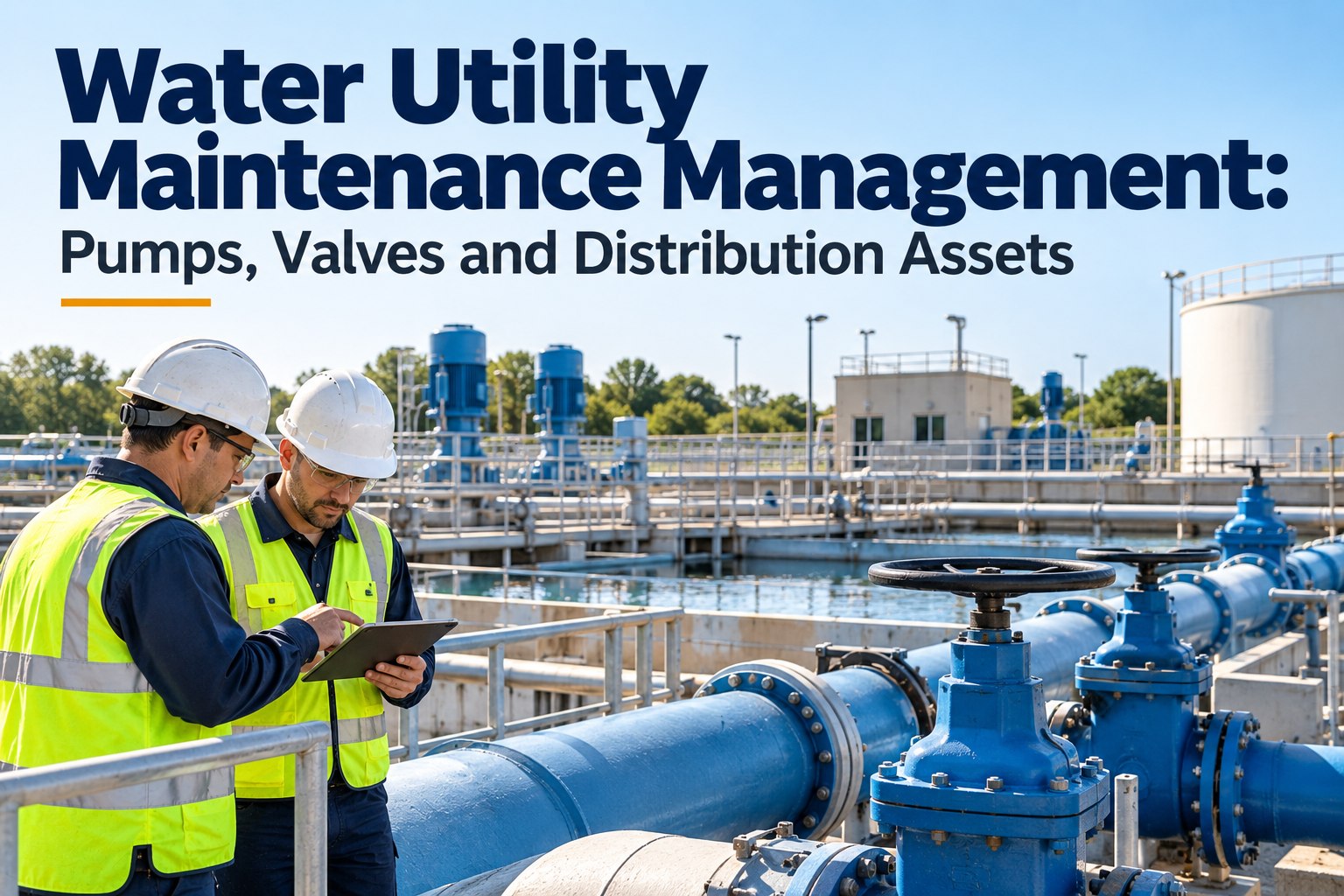
Utilities manage thousands of assets distributed across vast geographic areas — substations separated by 50 miles of transmission line, pump stations scattered across a watershed, gas regulator stations embedded in urban infrastructure that has not been fully mapped in 30 years. Unlike a manufacturing plant where every critical asset is within a defined perimeter, utility assets are often in remote locations, underground, or in public rights-of-way where access requires coordination with municipal authorities, traffic management, and safety protocols.
The regulatory environment adds another layer of complexity that general CMMS platforms are not designed to handle. Electric utilities operating bulk electric system assets must comply with NERC CIP reliability standards — with documentation requirements, inspection frequencies, and corrective action timelines that are legally mandated and subject to audit. Water utilities face AWIA risk and resilience assessments, EPA compliance reporting, and increasingly stringent lead service line replacement documentation requirements. Gas utilities operate under PHMSA 49 CFR Part 192 pipeline integrity management rules that mandate inspection intervals, pressure testing records, and leak survey documentation. None of these compliance regimes can be managed with a general-purpose CMMS — they require a platform that understands the regulatory context of each asset and builds compliance documentation into every maintenance workflow. To see how OxMaint handles utility-grade compliance, book a demo and bring your specific regulatory requirements.
Essential Capabilities
8 CMMS Capabilities That Utility and Energy Companies Cannot Operate Without
These eight capabilities define the difference between a CMMS that works for utilities and one that creates more administrative burden than it eliminates.
01
Distributed Asset Registry
Complete asset hierarchy for geographically dispersed infrastructure — transmission lines, substations, distribution feeders, pump stations, regulator stations. Each asset carries location coordinates, installation date, condition score, inspection history, and regulatory classification. GIS integration maps assets to physical locations.
02
Regulatory Compliance Scheduling
NERC CIP, PHMSA, EPA, and state regulatory inspection requirements built into PM schedules as mandatory intervals — not optional recommendations. Compliance calendar shows every upcoming regulatory deadline across the entire asset portfolio, with escalating alerts and automatic work order generation.
03
Audit-Ready Documentation
Every inspection, test, and maintenance action completed with digital signatures, timestamps, technician credentials, and measurement results stored in a tamper-evident audit trail. Regulatory audit packages generated in one click — not assembled over weeks from multiple systems and paper files.
04
Condition Monitoring Integration
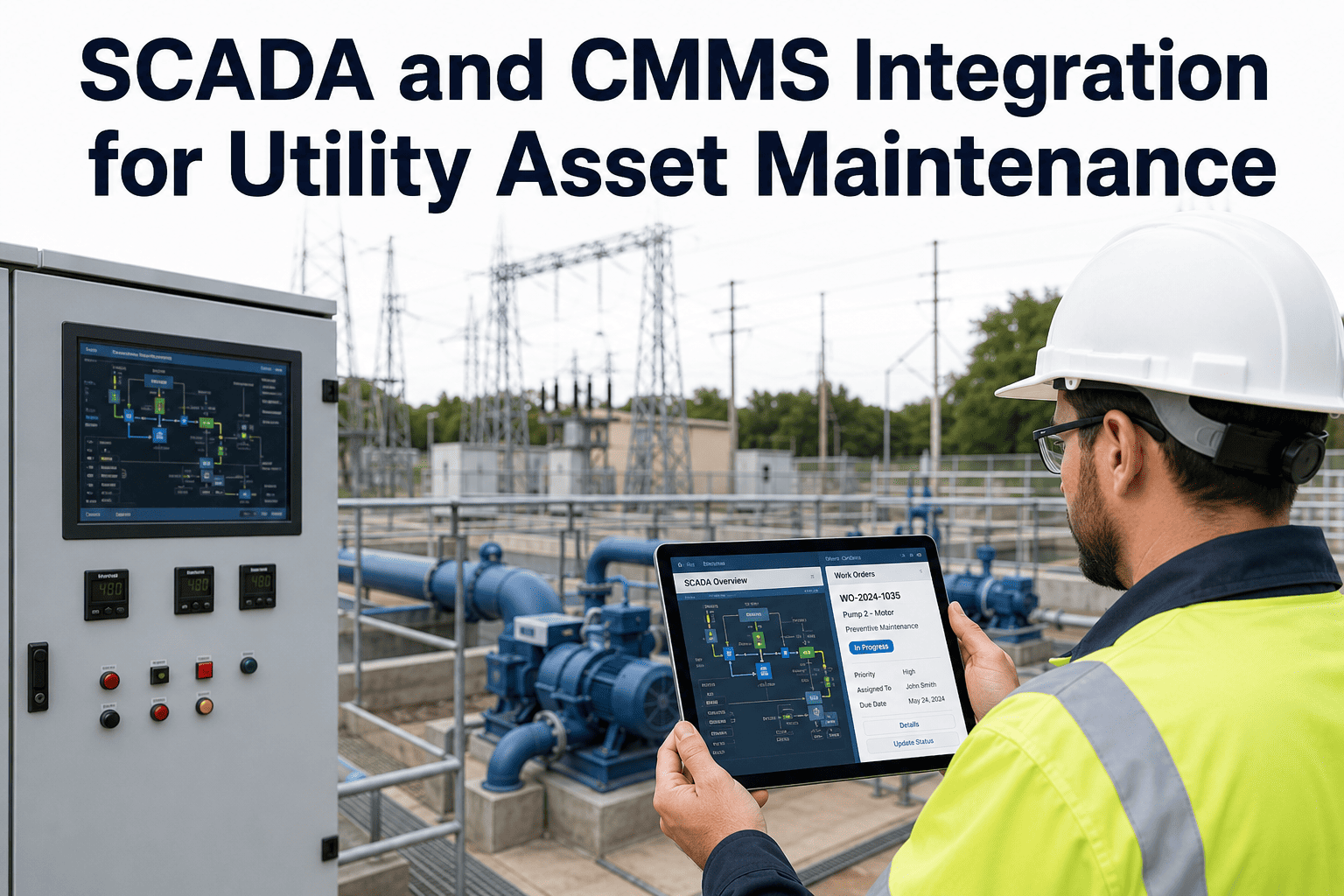
SCADA, DCS, and IoT sensor integration feeds real-time condition data — transformer oil temperature, insulation resistance trends, pump vibration signatures, pipeline pressure — directly into asset records. Condition-based PM triggers supplement calendar intervals with data-driven intelligence.
05
Contractor and Crew Management
Utility maintenance relies heavily on contractor crews for specialized work — line crews, diving crews for underwater infrastructure, directional boring contractors. CMMS manages contractor credentials, insurance verification, safety certifications, and work authorization — ensuring only qualified, approved contractors access critical infrastructure.
06
Emergency Work Order Management
Outage and emergency response work orders with escalation paths, mutual aid tracking, and real-time crew deployment status. When a transmission line trips, CMMS activates the emergency workflow — crew dispatch, equipment mobilization, regulatory notification timelines, and restoration documentation all managed in one system.
07
Asset Lifecycle and CapEx Planning
Rolling 5-10 year capital replacement forecasts built from actual asset condition data and remaining useful life estimates. Utilities managing aging infrastructure need to prioritize replacement spending across thousands of assets — OxMaint provides the data-driven prioritization that grid modernization and rate case filings require.
08
Mobile Field Operations
Field technicians at remote substations, pump stations, and pipeline rights-of-way access work orders, asset history, and inspection forms on mobile devices — with offline capability for areas without cellular coverage. Completed inspections sync when connectivity is restored, maintaining the audit trail without manual re-entry.
NERC CIP Violations Can Cost $1M+ Per Day — Automated Compliance Scheduling Costs Far Less
OxMaint delivers utility-grade asset management with regulatory compliance scheduling, audit-ready documentation, SCADA integration, and distributed asset visibility — built for the operational scale and compliance intensity of electric, water, and gas utilities.
Utility Sector Coverage
How OxMaint Addresses Each Utility Sector's Specific Needs
The maintenance and compliance requirements of electric, water, and gas utilities differ significantly. OxMaint configures to each sector's specific regulatory framework and operational model.
Key Assets
Transformers, switchgear, circuit breakers, transmission lines, substations, generation units, distribution feeders
Regulatory Framework
NERC CIP reliability standards, FERC reporting, state PUC requirements, NEC compliance, IEEE maintenance standards
OxMaint Approach
CIP maintenance schedule enforcement, protection relay test records, transformer oil analysis integration, outage management workflow, relay coordination documentation
68% of US transformer fleet is past its 40-year design life
Key Assets
Pump stations, treatment plant equipment, storage tanks, transmission mains, distribution piping, SCADA systems, metering infrastructure
Regulatory Framework
EPA Safe Drinking Water Act, AWIA risk and resilience, state health department permits, lead service line replacement tracking, cross-connection control
OxMaint Approach
Pump vibration monitoring integration, treatment chemical dosing records, SCADA alarm work order triggering, lead service line inventory and replacement tracking, hydrant flow test documentation
Water main breaks cost US utilities $2.6B annually in repairs and water loss
Key Assets
Transmission pipelines, regulator stations, compressor stations, metering and pressure regulation, cathodic protection systems, valves, storage facilities
Regulatory Framework
PHMSA 49 CFR Parts 191/192, state PUC pipeline safety, leak survey requirements, cathodic protection monitoring, IMP (Integrity Management Program) documentation
OxMaint Approach
Cathodic protection survey record management, leak survey scheduling and documentation, IMP milestone tracking, pipeline pressure test records, emergency response plan activation workflow
PHMSA fines for pipeline safety violations average $220,000 per violation per day
Before vs After
Utility Maintenance: Disconnected Records vs OxMaint Unified Platform
| Operational Dimension |
Disconnected Systems |
OxMaint Unified Platform |
| Regulatory inspection scheduling |
Manual calendar — missed intervals common |
Automated mandatory PM with compliance calendar |
| Audit documentation assembly |
Weeks of manual record compilation |
One-click audit package generation |
| Field inspection records |
Paper forms — transcribed later, if at all |
Digital with signatures, timestamps, photos |
| SCADA/condition data use |
Separate system — not linked to maintenance |
Condition data triggers work orders automatically |
| Asset condition visibility |
Unknown until failure or scheduled visit |
Real-time condition scoring per asset |
| CapEx planning |
Age-based estimates — often inaccurate |
Condition-based lifecycle models |
| Emergency response coordination |
Phone calls and radio — no digital trail |
Emergency WO workflow with full documentation |
| Contractor compliance verification |
Paper certificates in filing cabinets |
Digital credential tracking with expiration alerts |
Pain Points
The Maintenance Gaps That Put Utility Operations at Risk
Aging Infrastructure
No Visibility Into Asset Condition Across Distributed Networks
68% of US utility infrastructure is past its design life — but age alone does not determine failure risk. A well-maintained 50-year-old transformer may be more reliable than a poorly maintained 20-year-old unit. Without condition-based asset management, utilities prioritize replacement by age, not by actual deterioration — misallocating capital spending and missing real failure risks.
Condition-based replacement prioritization reduces capital waste by 28-35% versus age-based models
Compliance Risk
Regulatory Inspection Records Scattered Across Multiple Systems
NERC CIP evidence, PHMSA inspection records, EPA compliance documentation — each regulatory framework has its own filing system, its own spreadsheet, its own paper binder. When a NERC auditor requests maintenance records for bulk electric system assets going back five years, the scramble to assemble documentation from multiple sources can take weeks and still produce incomplete records that trigger findings.
NERC CIP violations carry penalties of $1M+ per day per violation in the most severe category
Field Execution Gap
Inspections Completed but Not Documented in Time
Field technicians completing cathodic protection surveys, transformer oil sampling, or substation inspections at remote locations carry paper forms that get transcribed into systems days or weeks later. During that lag, the maintenance record shows the inspection as incomplete. If a regulatory deadline passes during the transcription lag, the utility has a compliance gap that paper forms cannot retroactively close.
Digital field inspection eliminates the transcription lag entirely — records are live when the inspector submits
CapEx Underplanning
Capital Replacement Plans Built on Incomplete Asset Data
Rate case filings, grid modernization plans, and infrastructure bond issuances require defensible capital replacement forecasts. When asset condition data lives in disconnected systems or does not exist, utilities submit CapEx requests based on engineering estimates and political priorities — not actual asset condition. The result is systematic underfunding of the assets that matter most and overfunding of assets that could run longer.
Data-driven CapEx prioritization reduces total 10-year capital spend by 18-24%
Measurable Results
What Utilities Achieve With OxMaint Asset Management
41%
fewer unplanned outages
Condition-based PM scheduling versus calendar-only maintenance intervals for critical infrastructure
Zero
missed regulatory inspection deadlines
Automated compliance calendar with mandatory PM intervals and multi-level escalation alerts
28%
reduction in capital waste
Condition-based replacement prioritization versus age-based capital planning models
One click
audit package generation
Complete regulatory documentation assembled automatically — weeks of manual compilation eliminated
FAQs
Utility CMMS — Questions from Operations and Compliance Teams
Does OxMaint support NERC CIP maintenance documentation requirements?
OxMaint supports NERC CIP documentation by building mandatory maintenance intervals into PM schedules for BES (Bulk Electric System) assets, storing completed maintenance records with digital signatures and technician credentials, and generating compliance reports that map directly to NERC CIP evidence requirements. When a NERC auditor requests maintenance evidence for FAC-003 transmission line inspections or PRC-005 protection system maintenance, records are retrievable by asset, by date range, and by standard — not assembled from multiple sources.
Book a demo to walk through NERC CIP documentation workflows.
Can OxMaint integrate with SCADA systems commonly used in utility operations?
Yes. OxMaint integrates with SCADA and DCS systems via OPC-UA, MQTT, and REST API connections. Real-time data from SCADA — transformer temperatures, breaker status, pump discharge pressure, pipeline pressure readings — flows into asset records and triggers work orders when condition thresholds are exceeded. This eliminates the gap between the operations center that sees SCADA alarms and the maintenance team that needs to respond to them.
Start a free trial to explore SCADA integration configuration.
How does OxMaint handle assets in remote locations without reliable cellular coverage?
The OxMaint mobile app operates in offline mode for field technicians at remote substations, pipeline rights-of-way, and pump stations without cellular coverage. Technicians access work orders, asset history, and inspection forms offline. Completed inspections, measurement data, and digital signatures store locally and sync automatically when connectivity is restored. No data is lost, and the audit trail remains continuous and timestamped.
Can OxMaint support both transmission/distribution and generation asset management in one system?
Yes. OxMaint's hierarchical asset structure — Portfolio, Property, System, Asset, Component — accommodates both transmission and distribution assets managed at the network level alongside generation assets managed at the plant level. Maintenance managers for each segment see their operational view while executive dashboards show portfolio-wide reliability and compliance metrics across all asset classes.
Book a demo to see how the hierarchy maps to your utility's operational structure.
Critical Infrastructure Deserves Maintenance Management Built for Its Complexity
OxMaint delivers utility-grade asset management with regulatory compliance scheduling, SCADA integration, audit-ready documentation, and condition-based lifecycle planning — for electric, water, and gas utilities managing infrastructure that communities depend on every day. See it in 30 minutes.