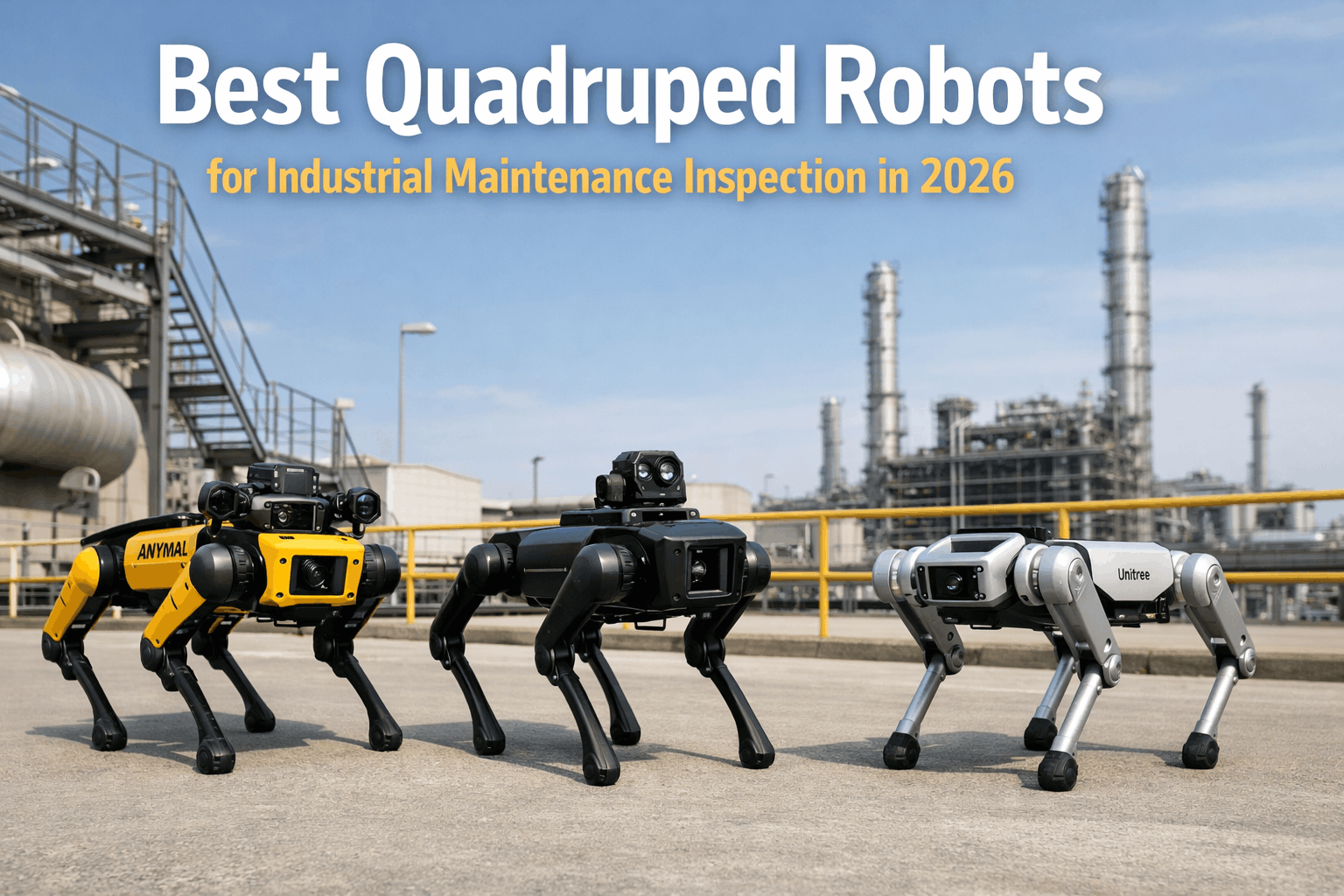
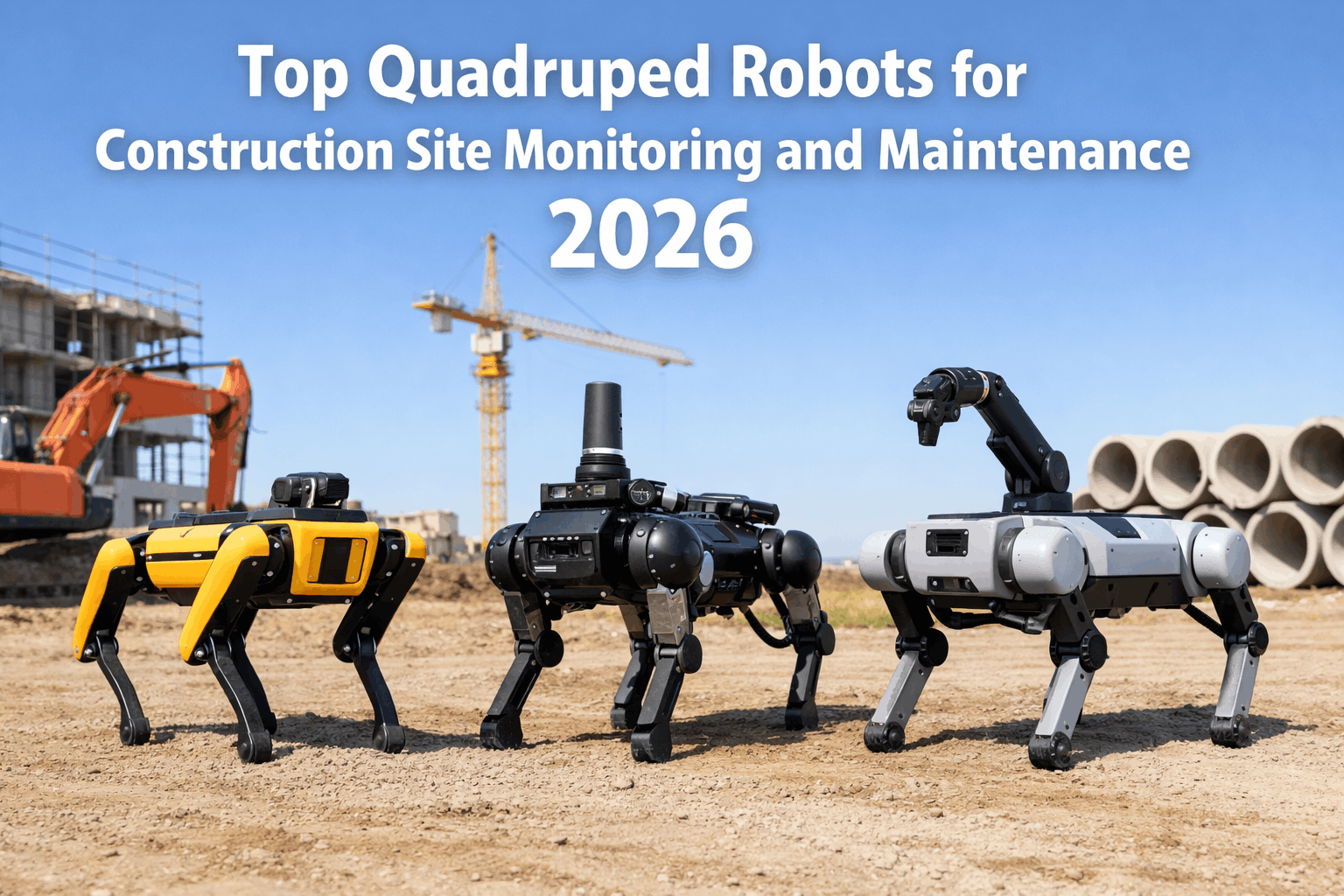
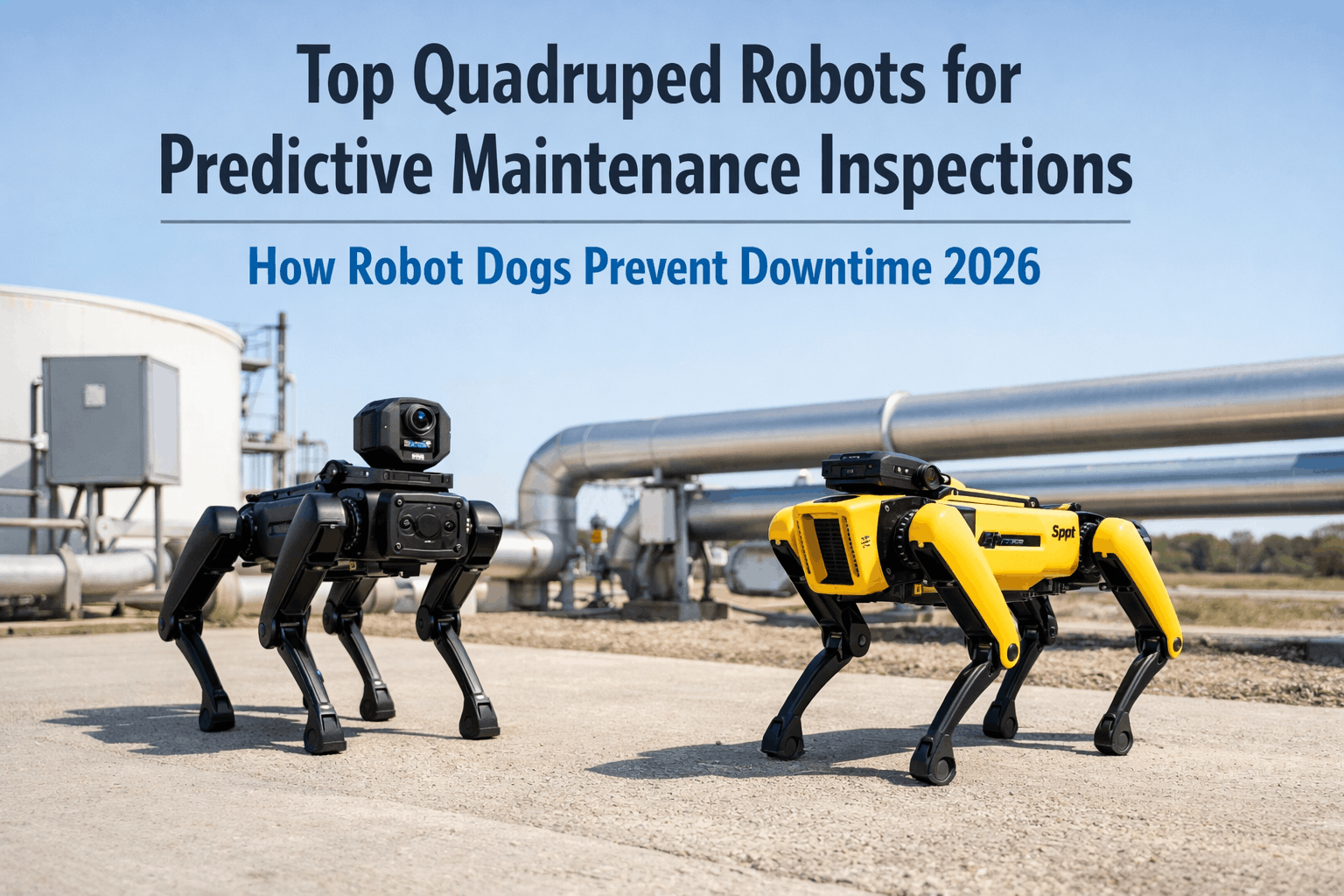
Best Quadruped Robots for Industrial Maintenance Inspection in 2026
When a Gulf Coast LNG terminal sent a two-person crew into a live compressor hall for a routine thermal walkdown—navigating around 180°F steam lines, 95 dB ambient noise, and H₂S monitors alarming at 8 ppm—the 45-minute inspection yielded six thermal images and a handwritten note that read "bearing looks hot on K-4102." Three weeks later, that bearing seized catastrophically, destroying a $1.2 million compressor and triggering a 14-day unplanned shutdown that cost the facility $6.8 million in lost production. The post-mortem revealed the "hot bearing" notation never became a work order because the inspector's clipboard notes were transcribed into a spreadsheet that the maintenance planner checked biweekly. The thermal data existed. The human observed the anomaly. But the gap between observation and action swallowed $8 million. This is the gap that quadruped robots with CMMS integration eliminate entirely.
In 2026, quadruped robots have moved from pilot curiosities to production-grade inspection platforms deployed across refineries, power stations, chemical plants, and mining operations worldwide. Boston Dynamics Spot, ANYbotics ANYmal, and Unitree B2 each bring distinct capabilities to the industrial inspection challenge—but the robot is only half the solution. Without a CMMS that converts robotic sensor data into prioritized, actionable work orders, these machines remain expensive data collectors. This guide evaluates the top platforms, compares their capabilities head-to-head, and shows how Oxmaint CMMS closes the loop from robot patrol to completed repair. Talk to our team about integrating quadruped inspections into your maintenance program.
Industrial Robotics Report — 2026
The Business Case for Quadruped Robot Inspections
80%
fewer confined-space entries after quadruped deployment
5x
faster inspection coverage vs manual walkdown crews
70%
lower per-inspection cost after first-year deployment payback
Source: ABI Research, Industrial Robotics Market Analysis 2025–2026
The quadruped form factor solves the fundamental problem that wheeled and tracked robots cannot: real-world industrial terrain. Stairs, catwalks, grated flooring, cable trays, pipe racks, and rubble fields are standard obstacles in every refinery and power plant. Four-legged robots traverse these environments autonomously while carrying thermal cameras, acoustic sensors, gas detectors, and LiDAR—replacing four separate manual inspection disciplines in a single patrol.
The Top 3 Quadruped Platforms for 2026
Selecting the right quadruped robot depends on your facility's hazard classification, payload requirements, autonomy needs, and integration ecosystem. Below is a comprehensive comparison of the three platforms dominating industrial inspection deployments in 2026. Each has distinct strengths—and each feeds inspection data into Oxmaint CMMS for automated work order generation.
Platform Selection Decision Framework
Match your facility profile to the right quadruped
STEP 01
Classify Your Hazard Zone
ATEX Zone 1 (refineries, chemical) requires ANYmal X. Zone 2 allows Spot Enterprise. Non-hazardous suits all platforms including Unitree B2.
STEP 02
Define Payload Needs
Thermal + acoustic = standard (all platforms). Heavy sensors or manipulators = Unitree B2 (40 kg payload). Integrated multi-sensor = ANYmal X.
STEP 03
Evaluate Autonomy Level
Full autonomous with self-docking = ANYmal X. Autowalk missions with fleet management = Spot. SDK-driven custom autonomy = Unitree B2.
STEP 04
Integrate with CMMS
Connect robot output to Oxmaint via REST API. Anomalies auto-generate work orders with thermal images, GPS coordinates, and severity grades.
Head-to-Head: Spot vs ANYmal X vs Unitree B2
Most Deployed
S
Boston Dynamics Spot
Weight: 32 kg | Payload: 14 kg
Runtime: 90 min (with full payload)
Autonomy: Autowalk missions, GraphNav SLAM
Sensors: Spot CAM+, FLIR, acoustic, LiDAR
Ex-Rating: Zone 1/2 (Enterprise EAP add-on)
API: Open SDK (Python/gRPC), Scout fleet mgmt
Ecosystem: Largest 3rd-party payload library
Price: $120K–$180K (Enterprise config)
Best For
Multi-purpose inspections, broadest ecosystem, facilities needing maximum payload variety
Best Ex-Rated
A
ANYbotics ANYmal X
Weight: 50 kg | Payload: 10 kg
Runtime: 120 min (with full payload)
Autonomy: Full autonomous, self-docking charge
Sensors: Integrated PTZ, thermal, acoustic, LiDAR
Ex-Rating: ATEX Zone 1 certified (native)
API: ANYmal API, ROS-compatible, OPC UA
Ecosystem: Purpose-built for industrial inspection
Price: $250K–$400K (full configuration)
Best For
ATEX Zone 1 facilities, fully autonomous 24/7 patrols, oil & gas and chemical plants
Best Value
U
Unitree B2
Weight: 60 kg | Payload: 40 kg
Runtime: 120+ min (standard battery)
Autonomy: SDK-driven, growing nav stack
Sensors: Open mounting, 3rd-party integration
Ex-Rating: Not certified (non-hazardous use)
API: ROS2, Unitree SDK, open architecture
Ecosystem: Fastest-growing R&D community
Price: $30K–$60K (base platform)
Best For
Non-hazardous manufacturing, warehouses, R&D labs, highest payload-to-cost ratio
For hazardous environments—refineries, chemical plants, offshore platforms—ANYmal X leads with native ATEX Zone 1 certification. For the broadest payload ecosystem and most mature fleet management, Spot remains the industry standard. Unitree B2 is the disruptor—offering the highest payload capacity at a fraction of the cost for non-classified facilities. All three platforms feed inspection data into Oxmaint CMMS for automated work order generation. Book a Demo.
Proven Impact: Quadruped Robot Inspections at Scale
Production deployment metrics from industrial facilities worldwide
80%
Fewer Hazard Entries
Confined Space Elimination
5x
Faster Coverage
Autonomous Route Execution
95%
Detection Accuracy
AI Thermal + Acoustic Analysis
12 mo
Typical ROI Payback
vs. Manual Inspection Cost
CMMS Integration: Closing the Robot-to-Repair Loop
A quadruped robot without CMMS integration is an expensive camera on legs. The transformative value is unlocked when robotic sensor data flows directly into your maintenance management system—triggering condition-based work orders without human data entry. Here's how the end-to-end pipeline works with Oxmaint.
Robot-to-Work-Order Pipeline in Oxmaint
1. Autonomous Patrol
Robot executes scheduled route—thermal scans at every motor, acoustic sweeps at every valve, visual checks at every gauge. Data uploaded in real time.
2. AI Anomaly Detection
Edge or cloud AI classifies thermal anomalies, ultrasonic leak signatures, and visual defects against baseline thresholds for each asset.
3. CMMS Work Order
Oxmaint auto-generates prioritized work order with anomaly image, GPS location, asset tag, severity grade, and recommended repair action.
4. Repair & Verify
Crew executes repair with full context. Next robot patrol re-scans the asset—verifying correction and closing the maintenance loop automatically.
Connect Your Robots to Your Maintenance Workflow
Oxmaint CMMS ingests inspection data from Spot, ANYmal, and Unitree—auto-generating work orders with thermal images, GPS coordinates, and severity grades. Stop collecting data in silos. Start converting robot patrols into maintenance actions.
Sensor Payload Capabilities: What Each Robot Detects
The power of quadruped inspection lies in multi-sensor simultaneous data capture. A single patrol replaces four separate manual disciplines—thermography, acoustic monitoring, visual inspection, and atmospheric monitoring. Choosing the right payload configuration depends on your asset types, failure modes, and regulatory requirements.
Multi-Sensor Inspection vs Traditional Manual Methods
M
Manual Inspection (Traditional)
Separate thermographer, vibration analyst, operator walkdown
4 discipline-specific trips to cover same equipment
Weekly or monthly frequency limited by labor availability
Handwritten notes or PDF reports emailed to planner
Subjective severity assessment varies by inspector
Confined space entry required for enclosed areas
Data entry lag: 1–14 days from observation to work order
Slow · Risky · Inconsistent
R
Quadruped Robot + Oxmaint CMMS
Thermal, acoustic, visual, and gas sensors in single patrol
One autonomous route covers all disciplines simultaneously
Daily or shift-level frequency—no labor constraint
Structured data auto-pushed to CMMS via API
AI-consistent severity grading against calibrated thresholds
Zero confined space entries—robot enters hazardous areas
Real-time: anomaly detected → work order created in minutes
Fast · Safe · Data-Driven
ROI Analysis: Quadruped Robot vs Manual Inspection
The financial case for quadruped robots is compelling for any facility running more than 50 inspection points per week. Primary savings come from eliminated confined-space entries, reduced inspection labor, faster anomaly detection preventing catastrophic failures, and extended intervals between turnarounds. Book a Demo.
ROI Calculator: Quadruped Robot Deployment
Based on mid-sized refinery / chemical plant (200+ inspection points)
Manual Inspection Program
Inspection Labor (Annual)$480,000
Confined Space Safety Costs$120,000
Missed Defect Failures (Avg)$350,000
Data Entry / Reporting Labor$65,000
Annual Cost: $1,015,000
VS
Quadruped Robot + Oxmaint
Robot Lease / Amortization$150,000
Oxmaint CMMS Platform$18,000
Operator / Analyst (0.5 FTE)$55,000
Robot Maintenance & Calibration$25,000
Annual Cost: $248,000
Deployment Maturity: Pilot to Fleet Operations
Deploying quadruped robots follows a predictable maturity curve. Organizations that rush to full autonomous deployment without building foundational capabilities waste money and erode operator trust. The phased approach below reflects lessons learned from the most successful industrial deployments worldwide.
Quadruped Deployment Maturity Model
Phase 1
Teleoperated Pilot (Months 1–3)
Single robot, operator-controlled2–3 inspection routes mappedCMMS integration configuredBaseline thermal data collected
Phase 2
Supervised Autonomy (Months 4–8)
Autonomous missions with remote oversightAI anomaly detection activeAuto work order generation liveExpanded route library (10+)
Phase 3
Fleet Operations (Month 9+)
Multi-robot fleet managementSelf-docking & chargingPredictive analytics from trend dataRobot fleet PM in same CMMS
Industry Applications: Where Quadrupeds Excel
Quadruped robots are deployed across every heavy industry sector where hazardous, hard-to-access, or repetitive inspection environments make human walkdowns slow, dangerous, or inconsistent. A unified CMMS like Oxmaint ensures inspection data from every facility type flows into the same maintenance workflow, enabling portfolio-wide asset health visibility.
Quadruped Robot Deployment by Industry
Proven applications across hazardous and complex facilities
Oil & Gas Refineries
Chemical Processing
Power Generation
Mining & Extraction
Pharmaceutical / GMP
Data Centers
Steel & Heavy Mfg
Offshore Platforms
Cross-Facility Standardization
Same inspection protocols, same data format, same CMMS workflows across every plant in your portfolio.
Shift-Level Frequency
Daily or per-shift robot patrols replace weekly human rounds—catching anomalies days before they escalate to failures.
Robot Fleet Health in CMMS
Oxmaint tracks robot battery cycles, joint wear, sensor calibration, and firmware updates alongside your plant assets.
Bring robotic inspections to your facilityGet Started →
Expert Perspective: Lessons from Early Adopters
The organizations seeing the highest ROI from quadruped robots share one trait: they integrated robot data into their CMMS from day one. The robot isn't a standalone gadget—it's a sensor platform feeding a maintenance decision engine.
"
We deployed Spot in our ethylene cracker unit 18 months ago. The first lesson: robot data is only as valuable as the system it feeds. When thermal anomalies generated PDFs in an email inbox, nothing changed. When we connected Spot to Oxmaint and anomalies auto-generated work orders with severity grades, GPS tags, and comparison images—our mean time to repair dropped 40%. The second lesson: the robot itself needs maintenance. Battery health, joint calibration, camera cleaning, tether integrity—we track all of it in the same CMMS. The robot is an asset that inspects assets. Treat it like one.
The quadruped revolution in industrial inspection isn't coming—it's here. Facilities that deploy these platforms today with integrated CMMS workflows will operate safer, find defects earlier, and spend maintenance budgets on prevention instead of emergency repairs. Those that wait will continue sending humans into hazardous environments to collect data that sits in inboxes. Start your free trial and close the gap between inspection and action.
Make Your Robots Work for Your Maintenance Team
Oxmaint connects Spot, ANYmal, and Unitree inspection data to maintenance workflows. Auto-generate work orders from thermal anomalies, track robot fleet health, and build the condition-based maintenance program your facility deserves.
Which quadruped robot is best for ATEX / Ex-rated hazardous environments?
ANYbotics ANYmal X is the only quadruped with native ATEX Zone 1 / IECEx certification, making it the safest choice for explosive atmospheres in refineries, chemical plants, and offshore platforms. Boston Dynamics Spot can operate in Zone 1/2 environments via the Enterprise EAP (Explosion-Proof Accessory Package), but this is an add-on rather than a ground-up design. Unitree B2 does not hold ATEX or IECEx certification and is best suited for non-hazardous manufacturing, warehouse, and data center environments.
How does Oxmaint receive and process inspection data from these robots?
Oxmaint integrates with robot fleet management systems via REST APIs. For Spot, data flows through Boston Dynamics' Scout platform. For ANYmal, the ANYmal API delivers structured inspection reports. Each inspection waypoint maps to an Oxmaint asset ID, so thermal images, acoustic signatures, and visual anomalies are automatically attached to the correct equipment record. When AI flags an anomaly exceeding your threshold, Oxmaint auto-generates a prioritized work order with the anomaly data, severity grade, GPS coordinates, and recommended repair—zero manual data entry required.
What does it cost to deploy a quadruped robot for industrial inspection?
Total cost varies significantly by platform. Spot Enterprise with Spot CAM+ and thermal payload runs $120K–$180K hardware plus $15K–$30K annual software licensing. ANYmal X with native Ex-certification ranges from $250K–$400K depending on configuration. Unitree B2 is the most affordable at $30K–$60K base, plus sensor payload costs. All platforms require ongoing investment in operator training, CMMS integration, and robot maintenance. Typical ROI payback is 8–14 months for facilities with 50+ weekly inspection points.
Can quadruped robots fully replace human inspectors?
No—and that isn't the goal. Quadrupeds excel at routine, repetitive data collection where they deliver consistent, high-frequency sensor data that humans cannot match. They eliminate dangerous confined-space entries and enable daily patrols instead of weekly rounds. However, human inspectors remain essential for complex judgment, hands-on interventions, and inspections requiring physical manipulation. The optimal model uses robots for 70–80% of routine data collection and frees skilled inspectors to focus on the 20–30% of tasks that require human expertise and decision-making.
How do you maintain the inspection robots themselves?
Quadruped robots are industrial assets requiring their own maintenance program—managed in the same CMMS as your plant equipment. Key items include: battery health monitoring and replacement cycles (500–800 charge cycles typical), joint actuator calibration and wear tracking, camera lens cleaning and sensor calibration verification, software/firmware updates, communication system checks, and foot pad replacement for terrain wear. Oxmaint provides robot-specific PM templates so pre-patrol checklists, post-patrol inspections, and quarterly calibrations are automated and tracked with the same rigor as any critical process asset.