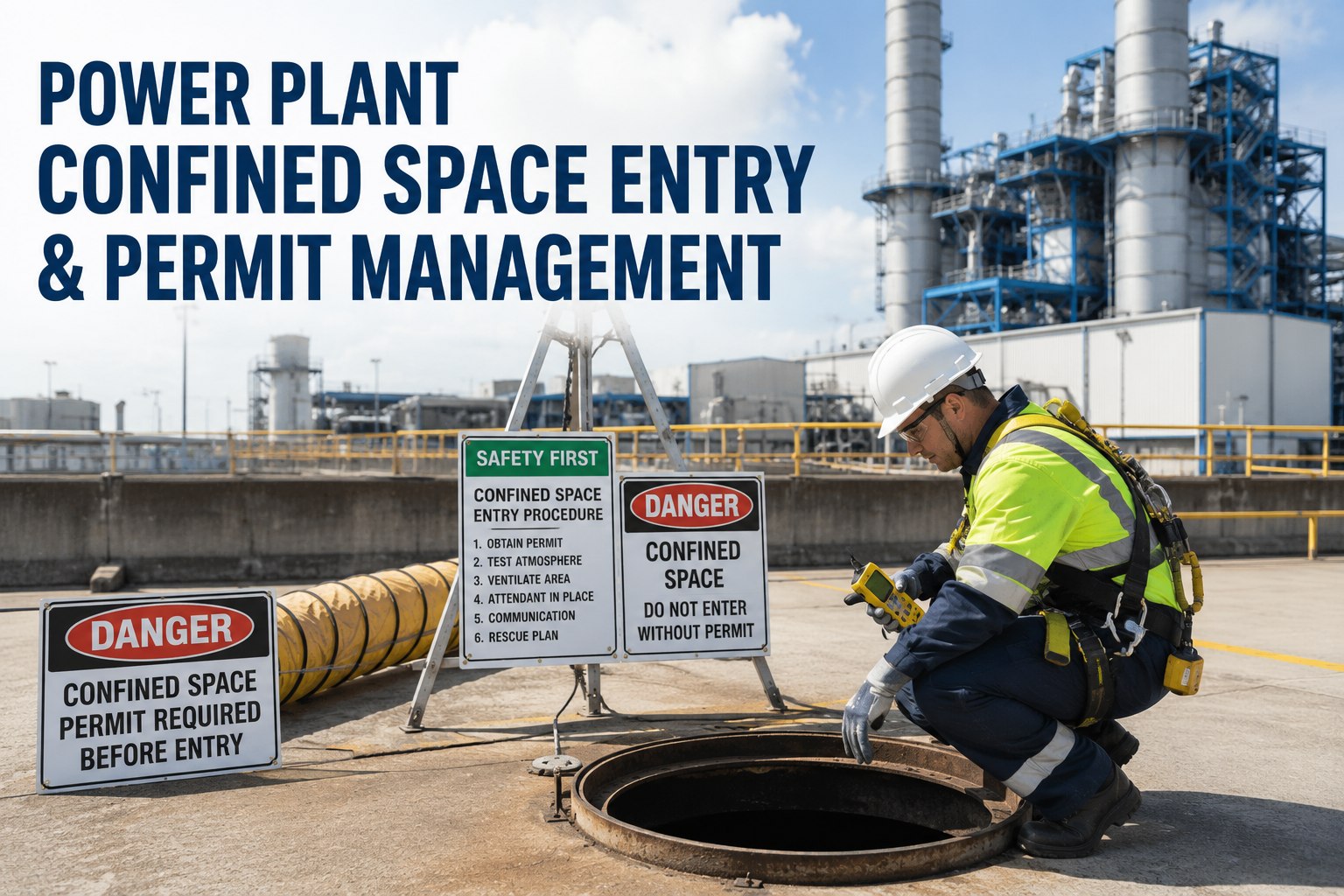
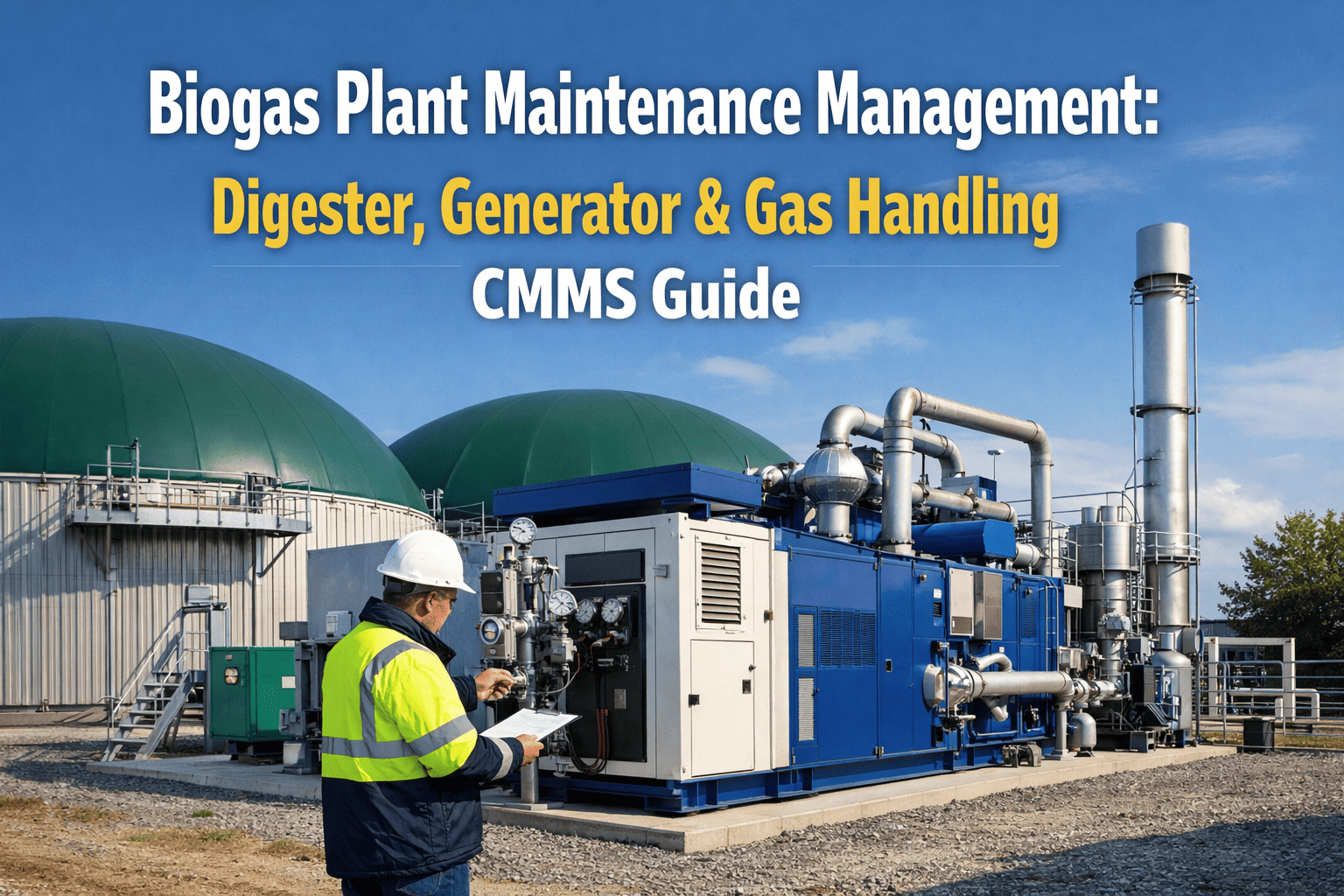
Biogas plants operate with four simultaneous hazards that are each capable of killing personnel independently — and that frequently co-exist in the same confined space at the same time. Hydrogen sulfide at 1,000 ppm causes instant collapse and death within seconds; a biogas atmosphere at 6–12% methane in air is within the explosive range; CO₂ accumulation in a digester inspection pit can displace oxygen below the 19.5% threshold for safe entry before any instrument alarm triggers; and the combination of H₂S and methane creates an environment where a single ignition source — a non-ATEX tool, a mobile phone, a static discharge — can cause a fatality-level explosion. The statutory framework for managing these hazards — ATEX equipment selection, gas detection calibration, permit-to-work for confined space entry, and emergency response procedures — requires documented evidence of every check, every calibration, and every entry. OxMaint manages every safety PM task, gas detector calibration record, and confined space permit in one platform — so your biogas plant is always inspection-ready and your team is always protected.
82% of biogas plant safety incidents occur during non-routine activities — confined space entry, maintenance work on live gas systems, and emergency response to alarms. In the majority of these incidents, gas detection equipment was either uncalibrated, not deployed, or not functioning. OxMaint tracks every gas detector calibration, every confined space permit, and every ATEX inspection — so when your team enters a digester, the instruments they carry have been proven to work.
Every gas detector calibrated. Every confined space permit tracked.
Safety PM records and digital permits — active from day one in OxMaint.
Four Biogas Hazards — Detection Requirements & PM Tasks
Each of the four primary biogas hazards requires its own detection technology, calibration schedule, and emergency response procedure. A single missed calibration on any one creates a compliance gap and a personnel risk. OxMaint manages all four detection systems with individual instrument records and calibration tracking.
H₂S — Hydrogen Sulfide
EN 60079-29-1 · OSHA 1910.1000
Electrochemical cell sensor, 0–200 ppm or 0–1000 ppm range, bump test before every confined space entry, 6-monthly full calibration with certified reference gas, sensor replacement per OEM cell life.
10 ppmTWA alarm — OSHA PEL
50 ppmIDLH — immediate evacuation
1,000 ppmFatal — instantaneous
Bump test before every CSE
6-monthly full calibration
Annual sensor cell replacement
CH₄ — Methane LEL
ATEX Directive · EN 60079-29-1
Catalytic bead (pellistor) or infrared sensor, 0–100% LEL range, ATEX-certified detector required in Zone 1/2 classified areas, bump test before entry, 6-monthly calibration with certified methane reference gas.
10% LELFirst alarm — increase ventilation
20% LELEvacuation alarm — hot work stop
100% LEL6% CH₄ in air — explosive
Bump test before every site entry
6-monthly calibration — certified gas
ATEX certification review — annual
O₂ — Oxygen Deficiency
OSHA 1910.146 · EN 60079-29-1
Galvanic cell oxygen sensor, 0–25% v/v range, mandatory for all confined space entry monitoring alongside H₂S and LEL in multi-gas instrument, 6-monthly calibration, sensor replacement per OEM schedule.
19.5%Minimum — alarm at or below this
17%Impaired judgement — evacuate
<6%Fatal within minutes
Pre-entry atmosphere test — every CSE
6-monthly O₂ sensor calibration
Annual multi-gas instrument service
CO₂ — Carbon Dioxide
OSHA PEL · EN 60079-29-1
NDIR infrared CO₂ sensor, 0–5% v/v range, particularly critical in inspection pits and digester base areas where CO₂ accumulates below gas level due to higher density — often present alongside H₂S and LEL hazards.
0.5%OSHA PEL — 8-hour TWA
3%Breathing distress — evacuate
>10%Unconsciousness — fatal
Low-point atmosphere test before CSE
6-monthly CO₂ sensor calibration
Annual NDIR sensor verification
Confined Space Entry — Digital Permit Workflow
Every biogas plant confined space entry requires a permit-to-work that documents the atmosphere test results, the equipment deployed, the standby person assigned, the rescue equipment staged, and the authorising manager signature. A paper permit stored in a site office binder is not retrievable in a post-incident investigation. OxMaint issues, tracks, and stores every confined space permit digitally — with the instrument calibration record linked to the permit at the point of issue.
1
Permit Raised
Work scope, entry team, standby person, and rescue equipment listed. OxMaint checks all gas detectors are within calibration period.
2
Atmosphere Test
H₂S, LEL, O₂, and CO₂ readings logged in OxMaint at entry point. Instrument ID and calibration date auto-linked to permit record.
3
Authorisation
Authorising manager digitally signs permit in OxMaint. Permit activates with time limit — auto-expires and requires reauthorisation if exceeded.
4
Active Entry
Continuous gas monitoring during entry. Standby person records 15-minute atmosphere check readings in OxMaint via mobile — automatic alert if readings not updated.
5
Close-Out
Exit confirmed, permit closed in OxMaint. All readings, personnel, and equipment log stored permanently. Audit pack generated on demand.
Safety PM Compliance Matrix — What OxMaint Tracks
Eight safety compliance obligations govern biogas plant operations — each with a mandatory test interval and documented evidence requirement. A single gap in any one creates a statutory non-compliance and an unacceptable personnel risk. OxMaint tracks every obligation with 14-day advance alerts and compliance packages ready for HSE, Environment Agency, or insurance review.
Safety Activity
Equipment / Area
Interval
Documentation Required
OxMaint
Gas Detector Bump Test
All portable H₂S / LEL / O₂ instruments
Before every CSE
Instrument ID, test gas, pass/fail, technician
Pre-entry log
Gas Detector Full Calibration
All portable and fixed detectors
6-monthly max — EN 60079-29
Reference gas cert, span result, zero drift, instrument ID
Technology That Strengthens Biogas Safety Management
Four technology integrations connect continuous gas monitoring to immediate maintenance response — from fixed detector networks that auto-create work orders on alarm, to AI analytics that detect developing sensor drift before the next calibration interval. Connect your gas detection infrastructure through OxMaint.
Fixed Gas Detection Network
24/7 auto
Fixed H₂S, LEL, and CO₂ sensors — plant-wide
Every fixed detector alarm auto-creates a prioritised OxMaint work order — sensor location, gas type, reading, and threshold exceeded pre-populated at creation.
AI Predictive Sensor Analytics
Weeks earlier
Sensor drift detection before calibration interval
AI analyses fixed detector response patterns — identifying sensors drifting out of calibration 4–8 weeks before the next scheduled calibration, so the gap never opens.
AI Camera Vision
Real-time
PPE compliance and perimeter breach detection
Camera systems verify PPE compliance in gas hazard zones and detect perimeter access without gas detection equipment — raising safety alerts before entry proceeds.
SCADA Integration
Auto trigger
Every SCADA gas alarm creates an OxMaint work order
Plant SCADA gas alarm outputs feed OxMaint — every threshold breach generates a work order with alarm tag, reading, deviation, and escalation path pre-populated.
Full safety compliance packages — under 15 minutes.
Gas detector calibration records, confined space permits, ATEX inspection logs — formatted for HSE or insurance review from one platform.
"We had a near-miss when a technician entered a digestate inspection pit with a gas detector that hadn't been bump-tested in 11 weeks — the sensor had failed and was reading zero for everything. After OxMaint, every detector bump test is logged before every entry. The system won't issue a confined space permit if the assigned instrument is overdue. That one change is the most important safety decision we have ever made."
Q1Can OxMaint block a confined space permit if the assigned gas detector is overdue for calibration?▼
Yes — OxMaint links every confined space permit to the instrument calibration record of the assigned detector. If the instrument calibration has expired, the permit cannot be authorised until a valid calibration record is confirmed.
Q2Does OxMaint support ATEX equipment inspection records for Zone 1 and Zone 2 classified areas?▼
Yes — each ATEX-rated item is configured as an individual asset in OxMaint with its ATEX marking, certificate reference, and annual inspection schedule — generating compliance packages for IEC 60079-17 review.
Q3How does OxMaint integrate with fixed gas detection systems to auto-generate work orders?▼
OxMaint connects via API or SCADA integration — every fixed detector threshold alarm auto-creates a prioritised work order with the sensor identity, reading, threshold exceeded, and assigned response technician.
Q4Can OxMaint generate safety compliance evidence for HSE or insurance engineering inspections?▼
Yes — OxMaint compiles all gas detector calibration records, confined space permits, ATEX inspection logs, and emergency drill records into a formatted compliance package ready for HSE or insurer review in under 15 minutes.
Q5How quickly can a biogas plant configure OxMaint for full safety management coverage?▼
Most biogas plants complete full safety PM configuration — all gas detectors registered, confined space inventory loaded, and ATEX equipment catalogued — within 14 days using OxMaint's biogas safety asset templates.