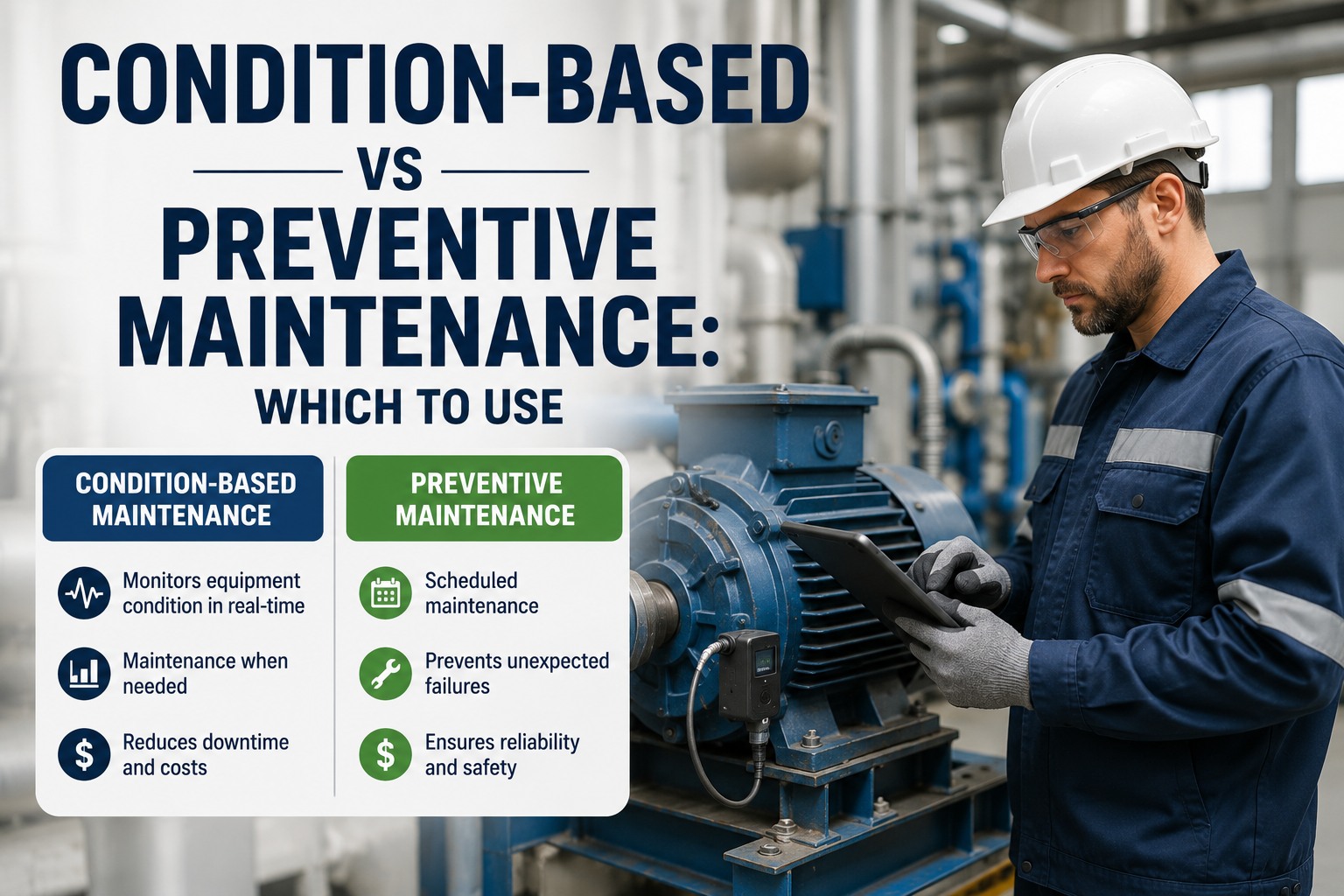
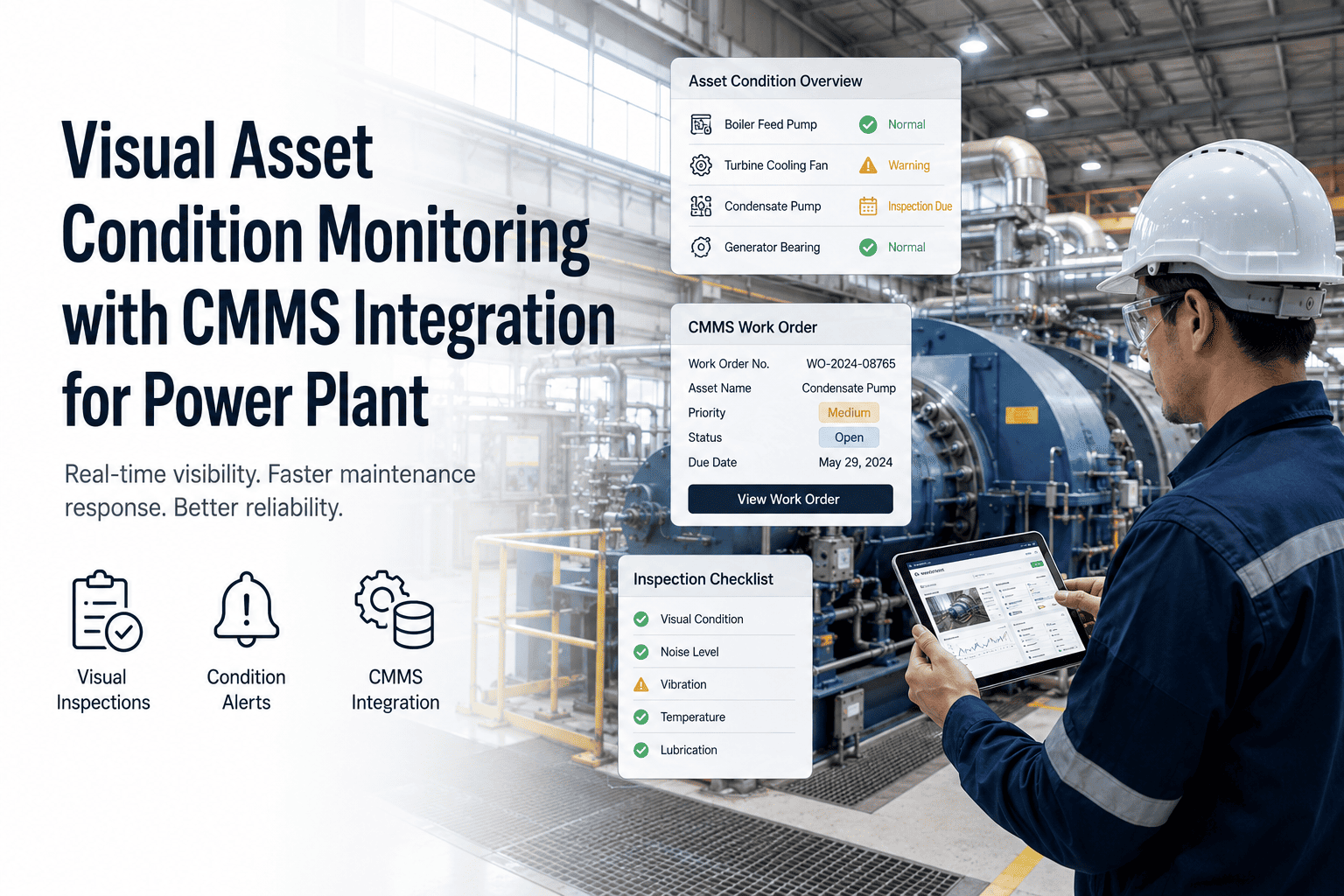
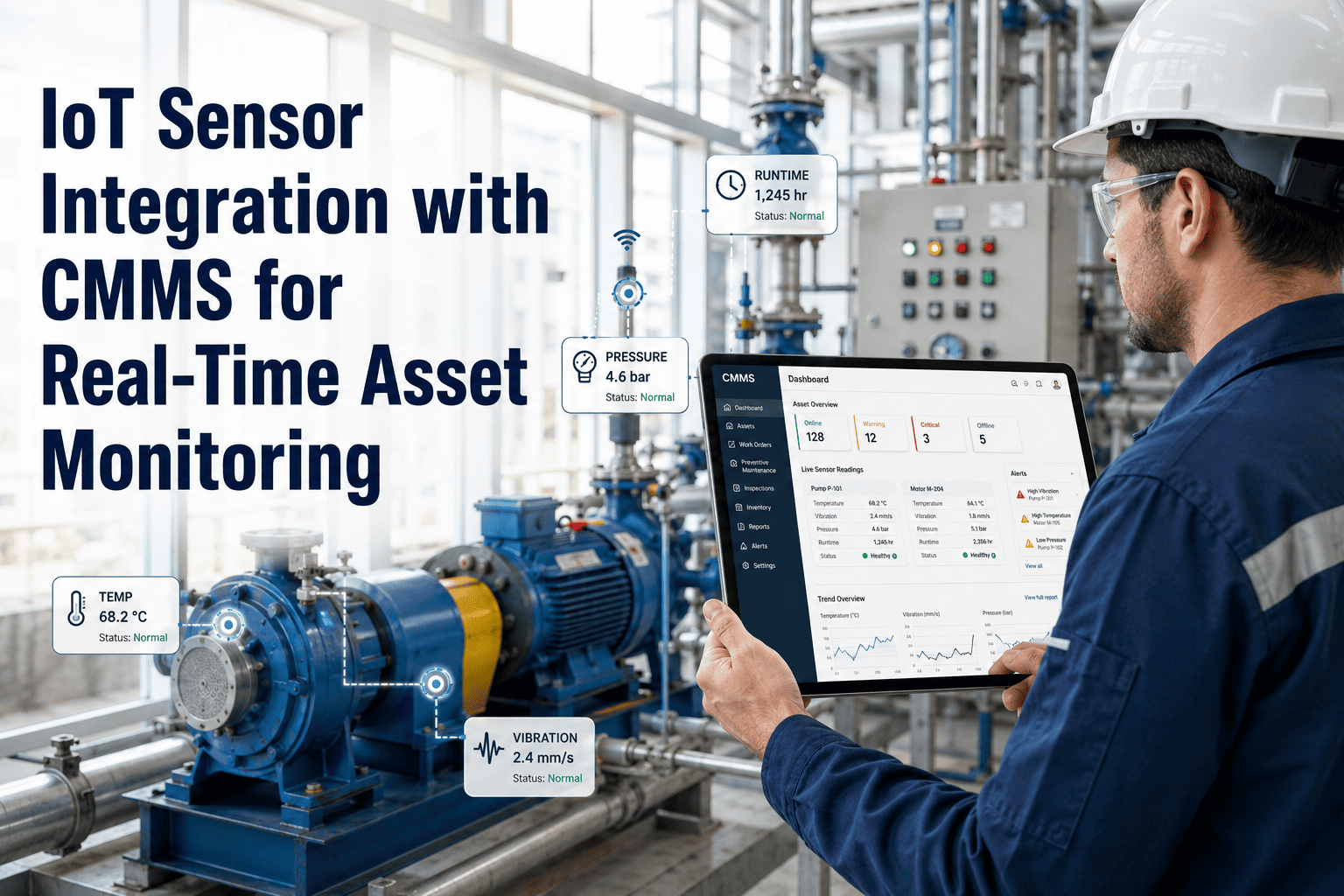
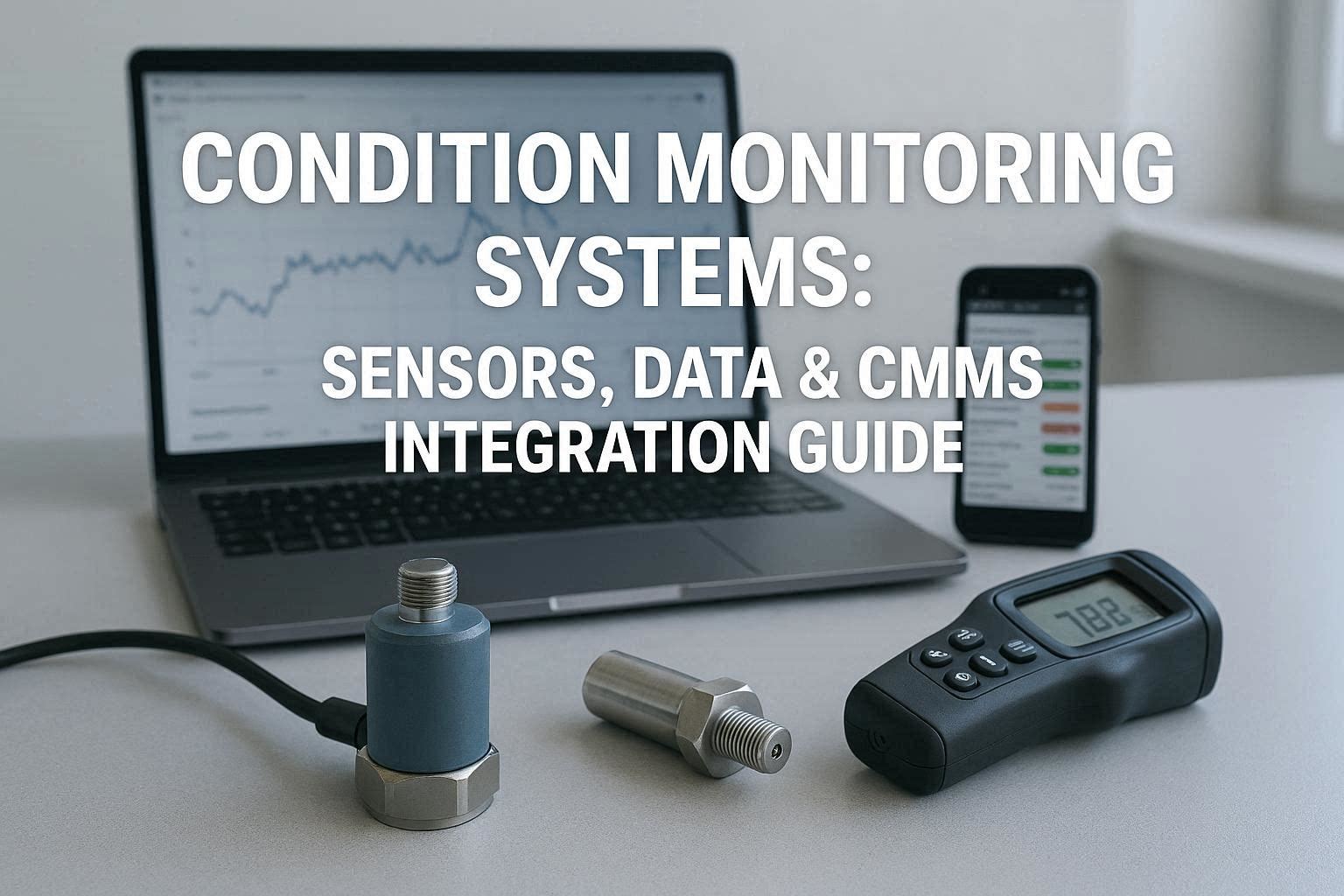
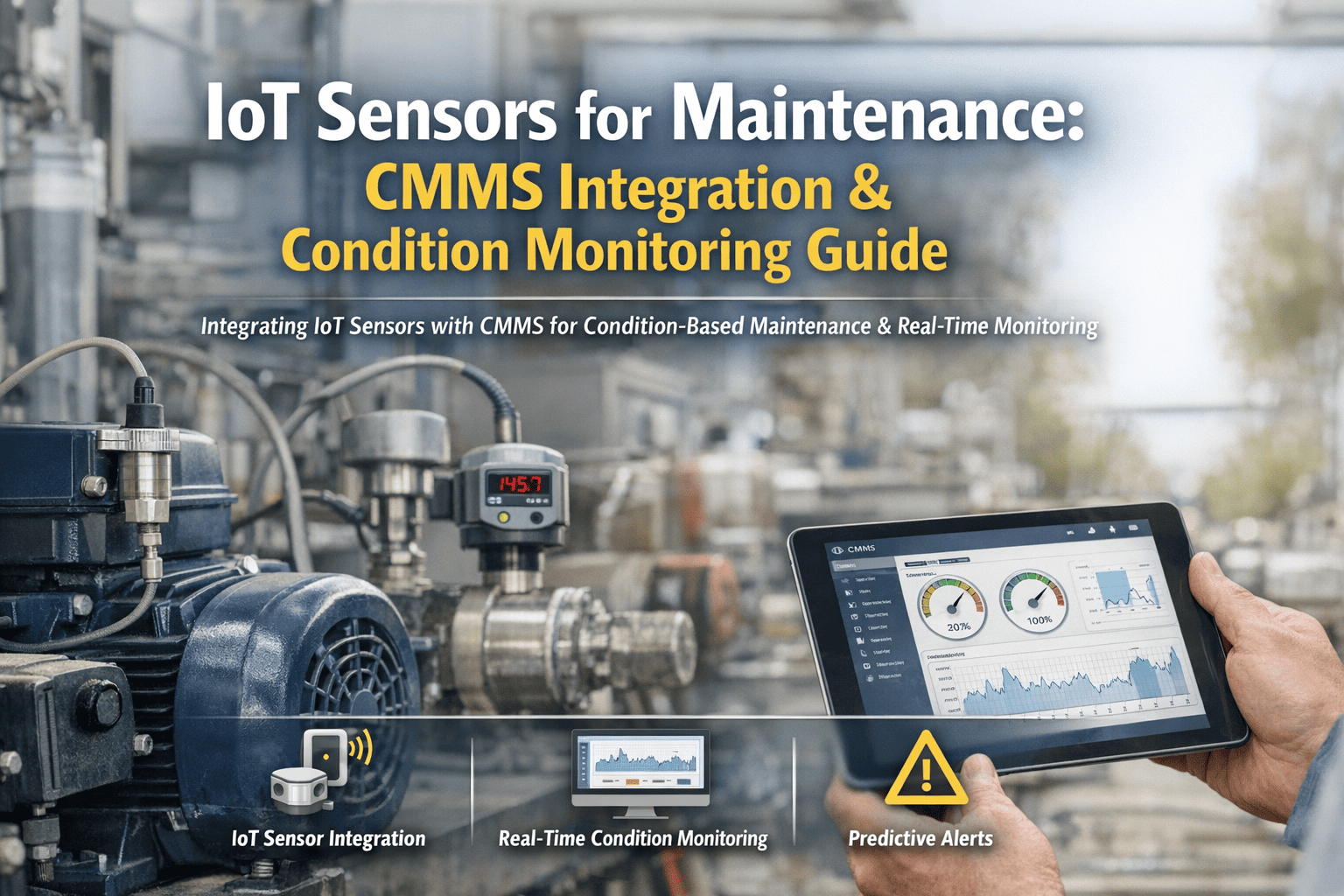
Calendar-based preventive maintenance has a fundamental flaw that most maintenance managers are aware of but cannot easily escape without new infrastructure: it services equipment based on time elapsed, not on equipment condition. The assumption embedded in every fixed-interval PM schedule is that an asset that has been operating for 1,000 hours — or 90 days, or 3 months — needs service, regardless of what it actually experienced during that period. An electric motor that ran lightly loaded in a temperature-controlled environment for 1,000 hours is in a categorically different condition than the same motor model that ran at 95% load in a dusty, high-ambient-temperature environment for the same duration. Condition-based maintenance replaces the time-elapsed trigger with a condition trigger: the asset receives maintenance when its monitored parameters indicate that maintenance is needed — not before, and critically, not after. The "not after" distinction is what separates CBM from reactive maintenance. The condition indicators that CBM monitors — vibration signatures, temperature trends, oil particle counts, efficiency degradation — all precede failure. Oxmaint's AI processes these indicators continuously and generates the work order at the right moment: early enough to plan a repair, late enough that no unnecessary maintenance is performed on an asset that is still in specification. Sign up for Oxmaint to activate condition-based maintenance across your asset register today.
Reactive, Preventive, and Condition-Based Maintenance — What Each Strategy Costs You
Every maintenance programme sits within one of three strategy tiers. Understanding where yours sits — and what it costs relative to condition-based maintenance — is the starting point for a CBM business case. Sign up for Oxmaint to move your operation into the CBM tier today.
What CBM Monitors — Six Industrial Sensor Types and What Each Detects
Condition-based maintenance is only as good as the condition data it monitors. Each sensor type below contributes different failure mode detection capability. Comprehensive CBM deploys the sensor types whose failure modes are most consequential for each specific asset class. Book a demo to see Oxmaint's IoT sensor integration configured for your equipment types.
Vibration frequency spectra from bearing housings detect inner race, outer race, rolling element, and cage defect frequencies (BPFO, BPFI, BSF, FTF) weeks before audible noise develops. Gearbox tooth mesh frequency monitoring detects tooth pitting and wear. The highest-information-density condition monitoring method for rotating equipment.
Temperature elevation is one of the most reliable early-warning signals for mechanical and electrical degradation. A bearing losing its oil film, a motor winding developing insulation breakdown, an electrical connection increasing in resistance — all produce heat before visible failure. Infrared cameras enable non-contact monitoring of high-temperature surfaces inaccessible to contact sensors.
Stress wave energy released by microscopic crack propagation, friction, and material deformation is captured at frequencies far above human hearing range — preceding detectable vibration changes by days to weeks. Also the definitive method for compressed air, steam, and gas leak detection. Particularly valuable in high-ambient-noise environments where lower-frequency signals are masked.
The current waveform of an electric motor contains a detailed signature of the mechanical load it is driving. Pump cavitation, conveyor belt misalignment, and compressor valve wear all produce characteristic current modulation patterns extractable from the motor supply cable — requiring only a current transformer clipped around the supply conductor, with no physical access to the rotating equipment needed.
Oil samples from gearboxes and hydraulic systems provide a direct chemical record of internal wear. Ferrous particle count trending — the rate of iron particle accumulation per operating hour — is one of the highest-confidence indicators of gear or bearing failure. Viscosity degradation indicates oil breakdown from thermal or oxidative stress. AI trend analysis produces remaining useful life estimates with specific confidence intervals.
Process efficiency parameters — pump differential head at rated flow, compressor discharge temperature at rated pressure ratio, heat exchanger approach temperature — degrade measurably as equipment condition deteriorates. A pump producing 8% below rated head at measured flow indicates impeller wear that vibration sensors would not detect at this stage. The longest advance warning window of any sensing method for process equipment. Sign up to configure process parameter monitoring.
How Oxmaint AI Converts Raw Sensor Readings into Condition-Based Work Orders
Collecting sensor data is necessary but not sufficient for CBM. The value comes from what the AI does with that data — converting a continuous stream of readings into a health score per asset, and generating a work order at exactly the right point in the asset's condition trend. Book a demo to see the AI pipeline running on your asset types.
What Condition-Based Maintenance Changes About How Your Maintenance Team Works
CBM does not just change what triggers maintenance — it changes the entire rhythm of how maintenance is planned, resourced, and executed. Sign up for Oxmaint to activate CBM workflows for your operation.
From Firefighting to Forward Planning
A maintenance team running a reactive programme spends its time responding to failures that have already occurred. A team running a CBM programme spends its time responding to health score trends — acting 14–42 days before any failure occurs, with full information about which asset is degrading, which specific fault mode is developing, and which parts to pre-stage before the repair.
- Planners receive work orders with the correct parts requirements and fault classification attached — no parts-unknown repairs
- Supervisors see the full portfolio health score dashboard — which assets are healthy, which are in caution, which have open work orders
- Technicians arrive at repairs with the correct parts already staged and the AI-guided procedure linked to the work order
- Operations managers schedule planned maintenance windows around production requirements — not around unplanned emergencies
The operational cadence shifts from reactive crisis management to proactive schedule management. Most teams that implement CBM through Oxmaint describe the change as replacing a pager with a calendar. Book a demo to see the CBM dashboard configured for your operation.
How to Deploy Condition-Based Maintenance with Oxmaint — Five Steps from Sensors to Live CBM
CBM deployment does not require a two-year transformation programme. The most effective path deploys IoT sensors on critical assets first, connects to Oxmaint within the first month, and extends coverage incrementally as each deployment proves its value. Sign up for Oxmaint to begin today.
Before deploying any sensors, rank your assets by failure consequence: estimated downtime cost per failure, secondary damage risk, parts lead time, and safety impact. The top 10–20 assets on this ranking are the CBM pilot targets. These are the assets where a 14-day advance warning converts the most dollar value — often a single prevented failure on a top-ranked asset pays for the entire first-year CBM deployment.
Output: prioritised sensor deployment list ranked by failure consequence valueSelect sensor types based on the failure modes that matter most for each asset class. Rotating equipment gets vibration accelerometers and temperature sensors. Pumps and compressors get process parameter monitoring. Gearboxes get oil analysis and vibration. Electrical switchgear gets thermal imaging. Wireless sensors minimise installation cost and disruption — most critical assets can be fully instrumented in a half-day installation with no equipment downtime. Book a demo to see sensor selection guidance for your asset types.
Output: sensors installed on top 10–20 critical assets, streaming to OxmaintOxmaint's AI anomaly detection requires a baseline learning period — typically 30–60 days of normal operation data across different load conditions, speeds, and ambient temperatures — before it can reliably distinguish degradation signals from normal operating variation. During this period, the system accumulates the historical data needed to define "normal" for each specific asset in its specific operating environment. This plant-specific baseline is what allows the AI to detect subtle changes that a generic model calibrated on similar equipment types would miss.
Output: AI baseline established, health scoring active, first anomalies flaggedConfigure Oxmaint alert thresholds for each asset — the health score level at which a Caution notification is sent to the maintenance supervisor, and the Alarm level that auto-generates a predictive work order. The correct thresholds balance advance warning time (lower threshold = more warning) against false positive rate (too low = too many alerts). Start with conservative thresholds and tighten based on the first 90 days of alert outcomes. For Alarm-level alerts, configure auto-generation of a work order with the fault classification evidence and parts requirement list attached. Sign up to configure alert thresholds.
Output: automated work orders generating from health score alarmsWhen a technician completes a CBM-triggered work order, they record whether the AI's fault prediction was confirmed — did the bearing actually show the inner race defect the model predicted? This confirmation or disconfirmation feeds back to the model, improving its accuracy for that specific asset type in that specific environment. After 6–12 months of feedback accumulation, the model produces predictions that are significantly more specific and accurate than at initial deployment. CBM improves continuously as long as the feedback loop is maintained.
Output: continuously improving model — prediction accuracy increases each repair cycleCondition-Based vs Calendar-Based Preventive Maintenance — Head-to-Head Comparison
Understanding exactly where CBM outperforms calendar PM — and where the two approaches are equivalent — helps maintenance managers build an accurate business case for the investment required. Book a demo to discuss the CBM business case for your specific asset portfolio.
| Dimension | Calendar-Based PM | AI Condition-Based Maintenance |
|---|---|---|
| Maintenance trigger | Time elapsed (hours, days, months) | Equipment condition from IoT sensors |
| Advance warning before failure | None — failure can occur between PM intervals | 14–42 days — failure never occurs if alert is acted on |
| Over-maintenance risk | High — lightly loaded assets serviced on same schedule as heavily loaded | Eliminated — assets serviced when condition requires it |
| Parts staging | Not possible — failure mode unknown until inspection | AI fault classification enables pre-staging before repair |
| Emergency procurement | Frequent — between-interval failures trigger expedited orders | Eliminated — AI advance warning enables standard procurement |
| Maintenance cost vs reactive | 15–25% lower than reactive | 30–50% lower than reactive baseline |
| Implementation complexity | Low — schedule and CMMS only | Medium — requires IoT sensors + AI configuration + 30–60d baseline |
| Appropriate for | Assets with predictable degradation rates, low-cost sensors not justified | Critical assets where failure cost justifies sensor investment |
Swipe to view full table
A single unplanned failure on a critical production asset — bearing seizure on a main drive, pump failure on a critical cooling circuit, compressor breakdown during peak production — typically costs $50,000–$300,000 in combined emergency repair, downtime, and secondary damage costs. The IoT sensor and CMMS investment required to monitor that asset with CBM is typically $2,000–$10,000 in sensors and subscription cost. The payback ratio makes CBM one of the highest-confidence industrial investments available. Sign up for Oxmaint to protect your critical assets from this cost.
What Condition-Based Maintenance Looks Like When It Is Working
We had a rolling mill main drive bearing that the AI flagged at a health score of 58 — Caution level, with a vibration signature consistent with outer race fatigue. That was on a Tuesday. We ordered the bearing on Thursday, standard delivery, $340. Scheduled the repair for the following Sunday maintenance window. The technician replaced it in three hours. Found the outer race defect exactly as the AI predicted — starting to spall, probably two to three weeks from seizure. The repair cost us $340 plus three hours of planned labour. Before CBM, that repair would have been an emergency call at 2am, $2,200 for the expedited bearing, six hours of overtime at 1.5x rate, and four hours of unplanned production downtime. The AI paid for itself on that one bearing.
Your Critical Assets Are Already Generating the Condition Data CBM Needs. Connect It to Oxmaint.
Every vibration, temperature, and current reading your instrumented assets generate right now contains the early-warning signals of their next failure — if an AI model is processing them. Oxmaint connects your sensor data to the health scoring, alert generation, and work order automation that converts those readings into prevented failures.
Condition-Based Maintenance with AI — Common Questions
The terms are often used interchangeably but have a technical distinction. Condition-based maintenance (CBM) is the strategy of performing maintenance when monitored condition parameters indicate it is needed — the trigger is condition, not time. Predictive maintenance (PdM) is a specific implementation approach within CBM that uses AI and statistical models to predict when a specific failure will occur and what failure mode is developing. All predictive maintenance is condition-based, but not all CBM is predictive in the AI sense — simpler CBM approaches use fixed thresholds on single parameters (e.g., "replace bearing when temperature exceeds 80°C") rather than AI pattern recognition. Oxmaint's implementation is AI-driven predictive maintenance, which provides not just a threshold alarm but a health score trend, a fault classification, and a remaining useful life estimate. Sign up for Oxmaint to activate AI-driven CBM.
CBM delivers highest value on assets where the combination of failure consequence and failure predictability is highest. The ideal CBM candidate is an asset where failure causes significant downtime or safety risk, where the failure mode develops gradually rather than suddenly (progressive bearing fatigue, pump impeller wear, motor insulation degradation), and where the failure mode produces detectable sensor signatures weeks before the failure event. Rotating equipment — motors, pumps, compressors, gearboxes, fans — meets all three criteria and represents the majority of CBM deployments. Assets with sudden failure modes (electrical short circuits, fastener failures, operator errors) are better addressed through redundancy or rapid response than through CBM. Book a demo to discuss CBM candidate selection for your asset portfolio.
Oxmaint's CBM can be deployed as a greenfield installation using wireless IoT sensors — no existing sensor infrastructure or process historian required. Wireless accelerometers, temperature sensors, and current transformers connect directly to Oxmaint via cellular or WiFi edge devices, beginning data collection and model training from day one of installation. For plants with existing instrumentation connected to a SCADA or historian, Oxmaint can read historical sensor data from the historian via OPC-UA or API connection, beginning AI model training immediately on existing data rather than waiting for new data accumulation. Both paths lead to active CBM within 60–90 days of deployment start. Sign up for Oxmaint to discuss your specific sensor architecture.
When an asset health score drops below the configured Alarm threshold in Oxmaint, the system simultaneously: generates a push notification to the maintenance supervisor and maintenance manager on mobile; creates a predictive work order linked to the alert, pre-populated with the AI fault classification, recommended maintenance action, and parts requirement list; and flags the asset on the maintenance dashboard for supervisor review and approval. The supervisor reviews the work order, approves and schedules it, and the automated parts pre-staging begins. If the health score continues deteriorating toward the Critical threshold (below 25), the system escalates to an urgent notification to the operations manager. The entire sequence from health score alarm to approved scheduled work order typically takes under 30 minutes during normal business hours.
Every Day Without CBM Is a Day Your Critical Assets Are Degrading Without Detection.
The sensor data that would identify your next bearing failure, your next pump wear event, your next efficiency degradation is being generated right now by your equipment. Oxmaint connects that data to the AI models, health scoring, and automated work order generation that converts undetected degradation into a planned repair — before the failure, at a fraction of the reactive cost.