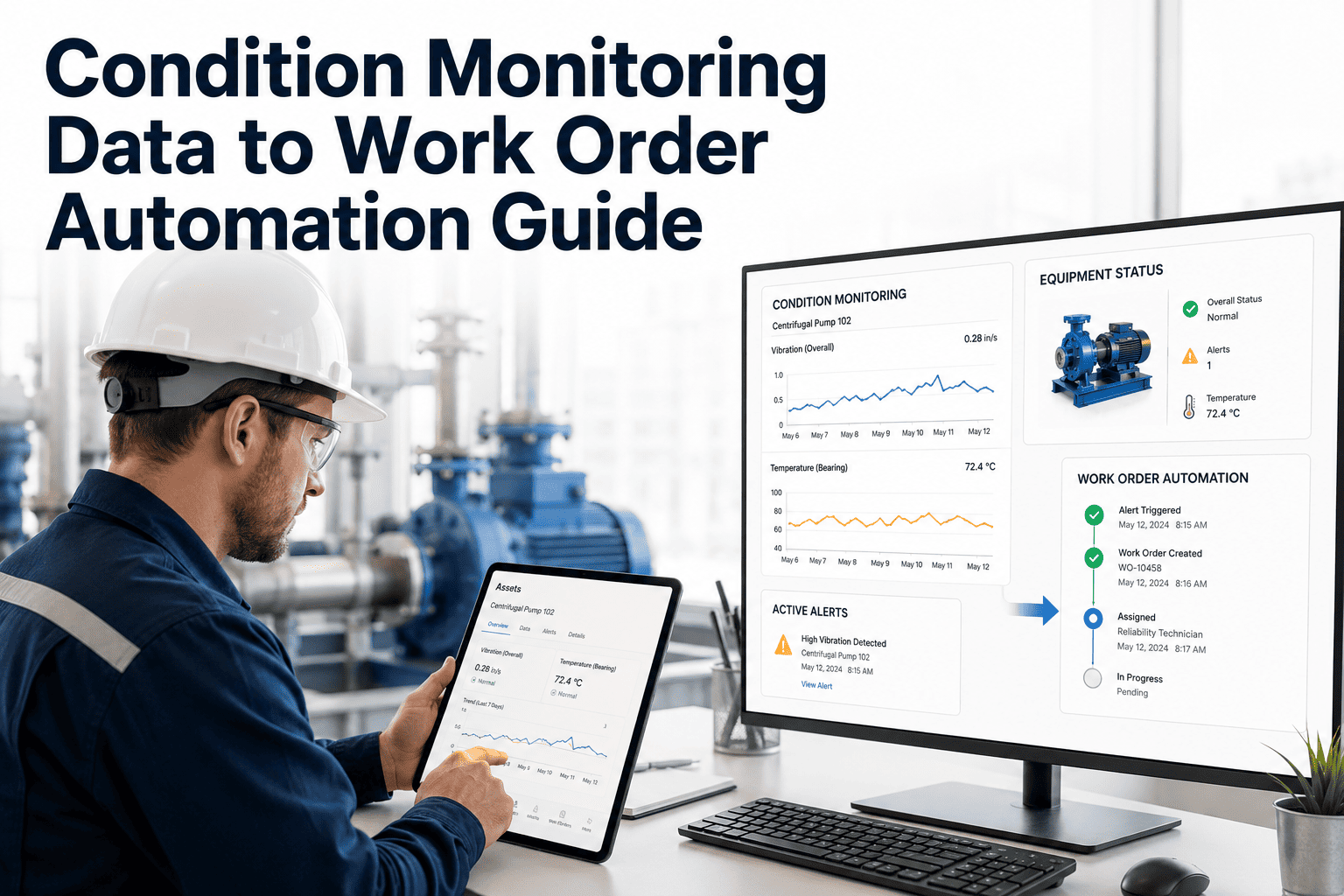
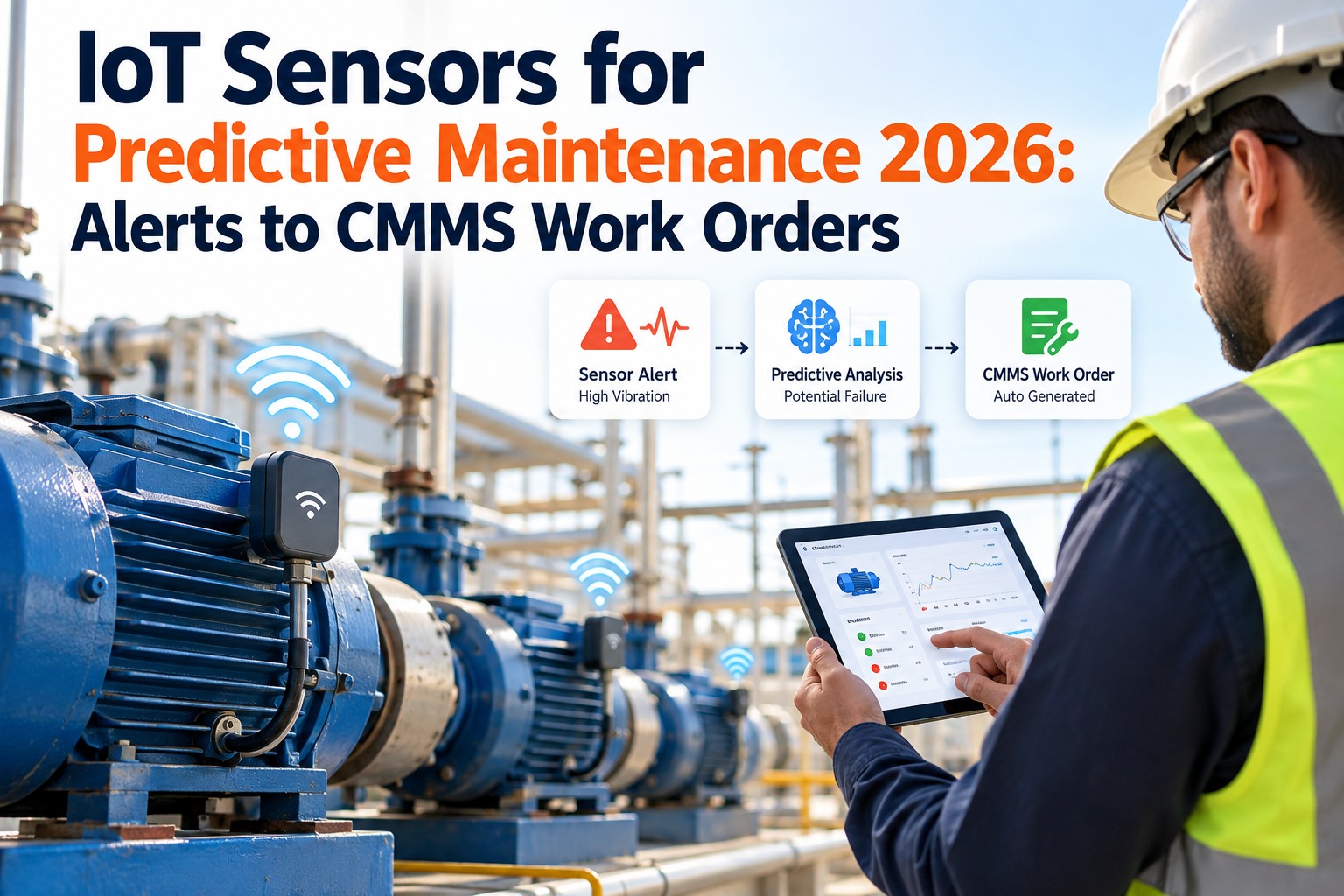
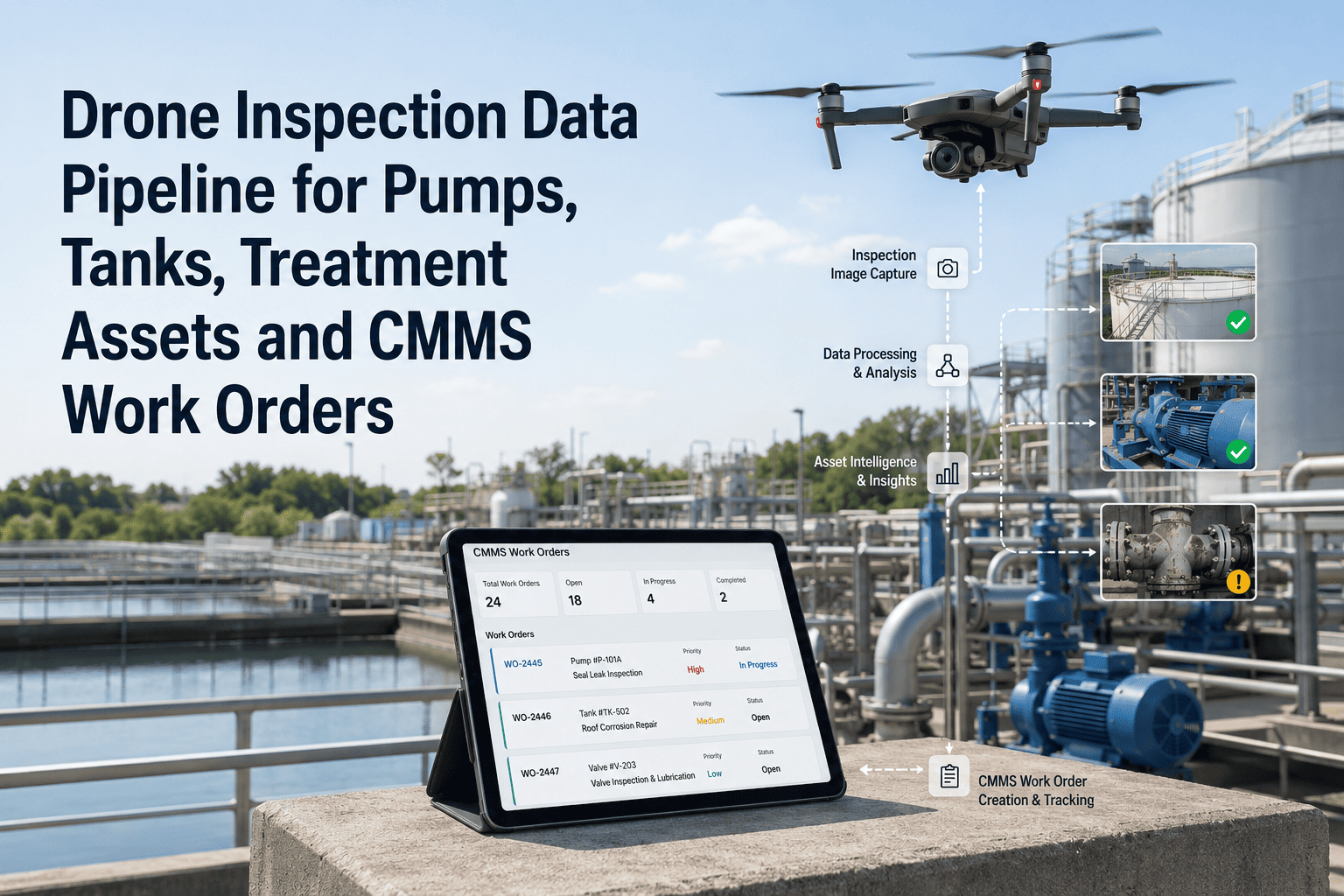
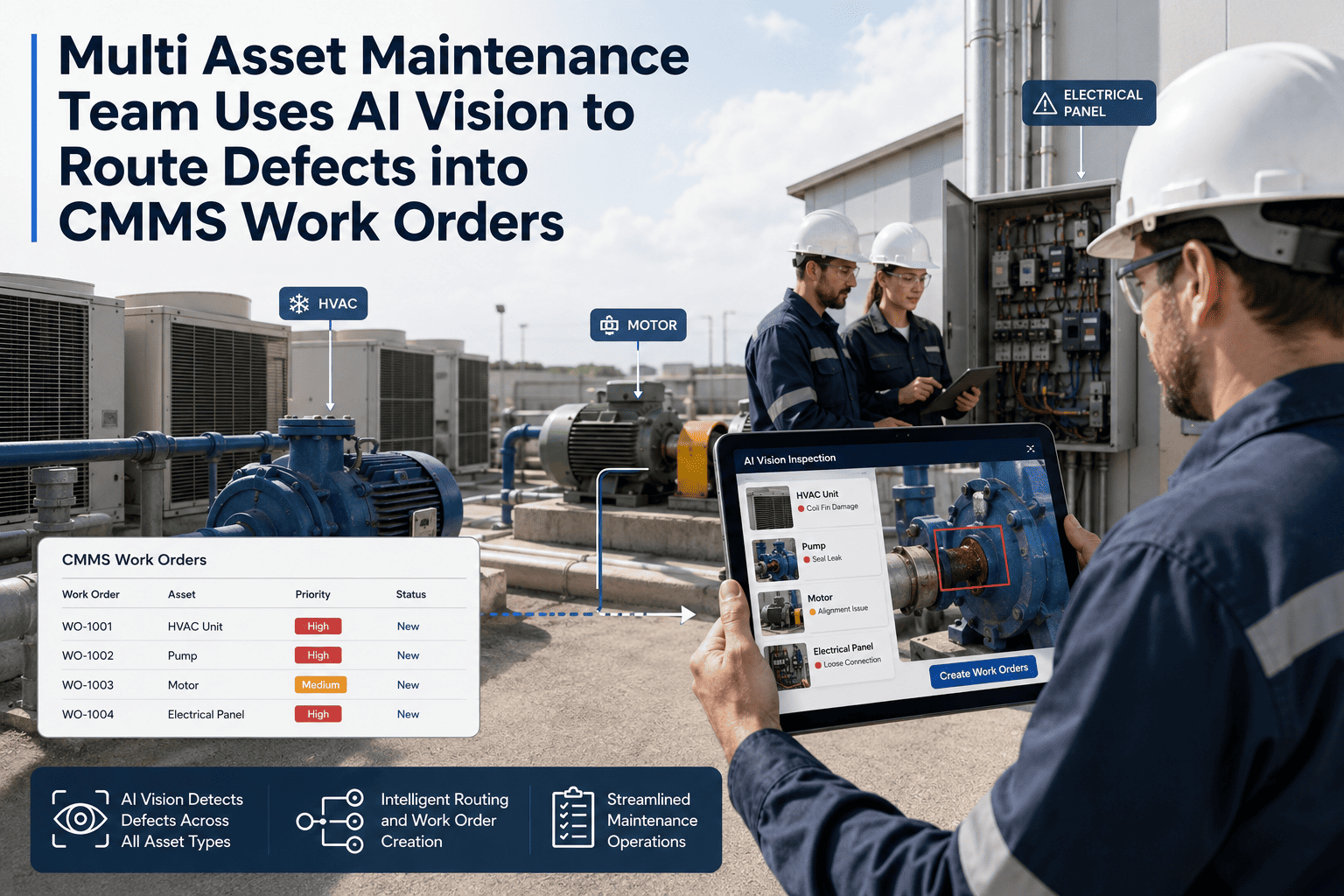
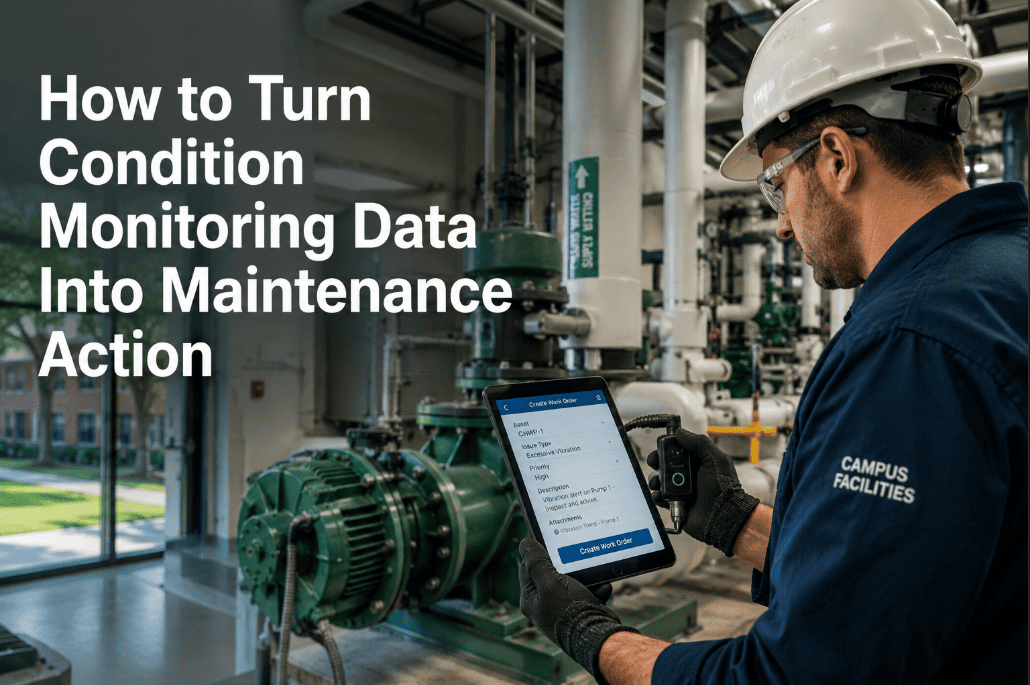
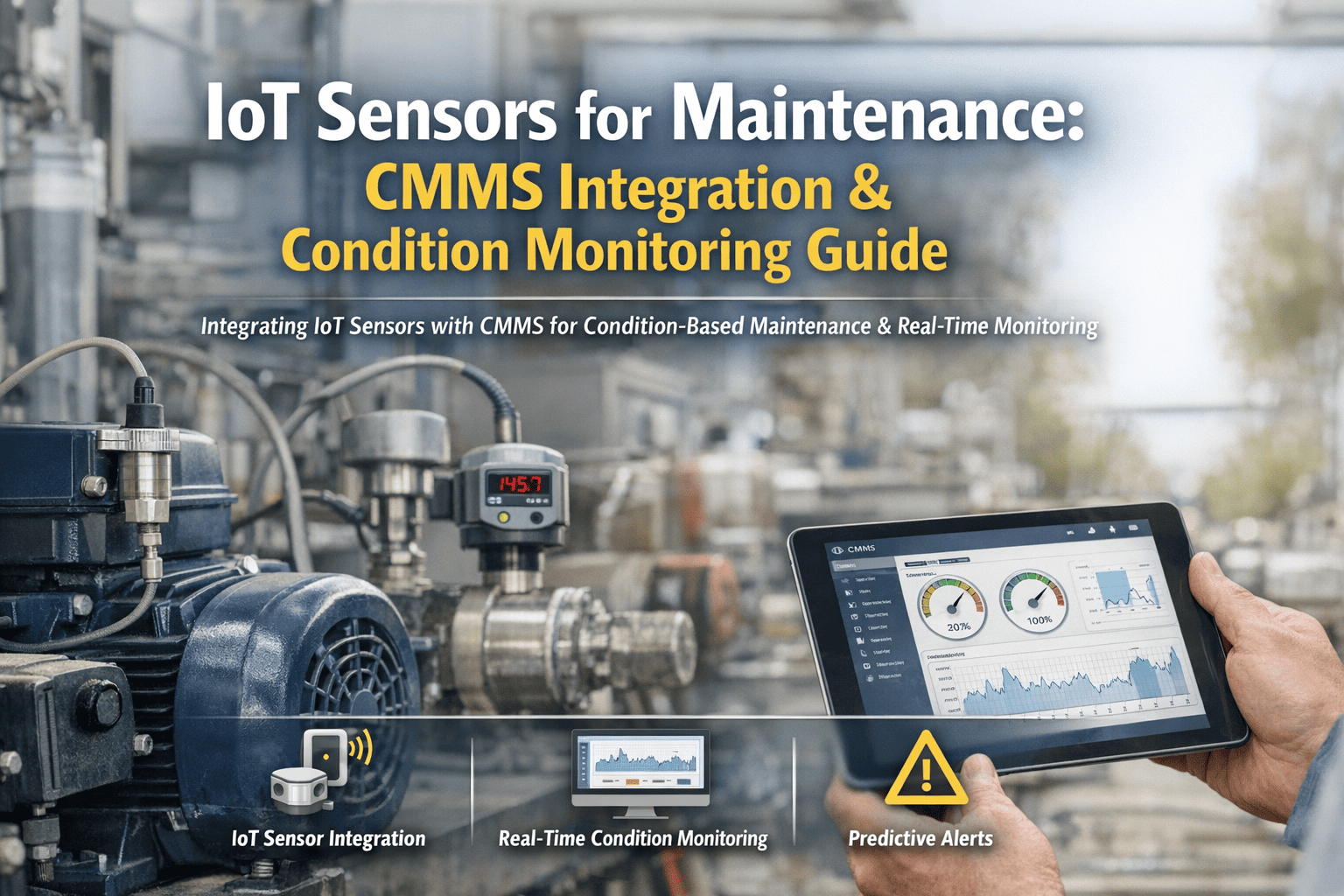
Condition monitoring sensors generate alerts every few seconds. The real challenge is not collecting the data — it is turning that data into a structured, assigned, and actionable work order before the window for intervention closes. Most plants still have a human in the loop at every step, introducing delays of 30 minutes to several hours between alert and action. OxMaint's IoT and sensor integration closes that gap by connecting vibration, temperature, pressure, and runtime signals directly to automated work order generation — with failure type, severity, and recommended action already populated when the technician receives it.
Predictive Maintenance · IoT · Work Order Automation
Condition Monitoring Data to Work Order Automation Guide
Stop manually translating sensor alerts into maintenance actions. This guide shows how vibration, temperature, pressure, and runtime data flows from your sensors into prioritized, technician-ready work orders — automatically.
68 min
Average delay from sensor alert to work order creation — manual process
<90 sec
Alert to work order with OxMaint automated sensor integration
76%
Of condition-based failures are detectable 2+ weeks before threshold breach
55%
Reduction in emergency work orders after sensor-to-WO automation is deployed
Signal Types
The 4 Condition Monitoring Signals That Drive Work Order Automation
Each signal type detects a different class of failure. Effective work order automation maps specific signal thresholds and trend patterns to specific failure modes — not generic "anomaly detected" alerts that technicians learn to ignore.
Vibration
Accelerometers, velocity transducers, proximity probes
Detects
- Bearing outer/inner race faults
- Rotor imbalance and misalignment
- Gear mesh degradation
- Looseness and structural resonance
Trigger: RMS velocity >2× baseline or BPFO sideband emergence in FFT
Temperature
RTDs, thermocouples, infrared sensors, thermal cameras
Detects
- Bearing thermal runaway (4–8 hrs early)
- Winding hotspot development
- Cooling system fouling
- Friction from misalignment or lubrication loss
Trigger: Gradient >3°C/hr or absolute reading >15°C above load-normalized baseline
Pressure
Pressure transmitters, differential pressure sensors, flow meters
Detects
- Filter/strainer fouling
- Pump cavitation and impeller wear
- Valve seat degradation
- System leak development
Trigger: Differential pressure deviation >12% from clean baseline at same flow rate
Runtime Hours
Hour meters, PLC counters, SCADA runtime registers
Triggers
- Runtime-based PM scheduling
- Lubrication interval tracking
- Wear-part replacement scheduling
- Overhaul window planning
Trigger: Accumulated runtime reaches configured interval threshold in OxMaint
Automation Pipeline
How Sensor Data Becomes a Work Order — Step by Step
The automation pipeline has six stages. Each stage removes a manual step that previously required a person to receive, interpret, and act on data. OxMaint handles stages 3 through 6 automatically once sensor connections are configured.
01
Sensor Reads Signal
Accelerometer, RTD, pressure transmitter, or hour meter captures raw data at configured sampling rate
→
02
Gateway Transmits
Edge gateway (Modbus, OPC-UA, MQTT) or direct API sends reading to OxMaint IoT endpoint
→
03
Threshold Evaluation
OxMaint evaluates reading against configured thresholds, trend rules, and multi-signal correlation logic
→
04
Failure Classification
Alert is mapped to a specific failure mode from the asset's failure mode library — not a generic alarm
→
05
Work Order Generated
OxMaint creates a work order with asset, failure type, severity tier, recommended action, and linked parts pre-populated
→
06
Assigned and Notified
Work order is assigned to the qualified technician on shift and notification sent via mobile app, SMS, or email
Alert Configuration
Threshold vs Trend-Based Alert Rules — Which to Use When
Threshold-based alerts fire when a value crosses a fixed limit. Trend-based alerts fire when a value is moving toward a limit at a rate that predicts a future breach. Both are needed — the table below maps failure types to the appropriate alert strategy.
| Failure Mode |
Signal |
Alert Strategy |
Lead Time |
False Alarm Risk |
| Bearing Outer Race Fault |
Vibration FFT |
Trend-based (BPFO amplitude growth) |
2–4 weeks |
Low |
| Bearing Thermal Runaway |
Temperature gradient |
Trend-based (°C/hr rate) |
4–8 hours |
Low |
| Filter Fouling |
Differential pressure |
Threshold (ΔP % above clean) |
Days to weeks |
Low |
| Pump Cavitation |
Acoustic + pressure |
Multi-signal correlation |
Hours to days |
Medium |
| Winding Insulation Degradation |
Partial discharge |
Trend-based (event rate growth) |
3–6 weeks |
Low |
| Overtemperature (Electrical) |
Absolute temperature |
Threshold (absolute °C limit) |
Minutes to hours |
Medium |
| Runtime PM Due |
Hour meter |
Threshold (hours accumulated) |
Configurable (e.g. 50-hr pre-warning) |
None |
Turn Your Sensor Alerts Into Structured Work Orders
OxMaint connects to your existing sensor infrastructure via Modbus, OPC-UA, MQTT, or REST API — and converts alert events into fully populated, assigned work orders in under 90 seconds. No custom development required.
Integration Protocols
Sensor and Gateway Protocols Supported by OxMaint
OxMaint connects to industrial sensor networks through standard industrial protocols — no proprietary hardware required. If your sensor outputs data on any of the following protocols, you can automate work orders directly from its readings.
Modbus TCP/RTU
Direct connection to PLCs, drives, and sensor gateways. Supports register mapping for multi-point sensor arrays. Most widely deployed in legacy plant environments.
OPC-UA
Secure, standards-compliant protocol for modern industrial systems. Preferred for Siemens, Rockwell, and ABB platforms. Supports structured data models and security certificates.
MQTT
Lightweight pub-sub protocol ideal for IoT sensor networks with high device counts. Supported via MQTT broker integration (Mosquitto, HiveMQ, AWS IoT).
REST API
HTTP-based integration for cloud-connected sensor platforms, condition monitoring vendors, and custom data pipelines. Supports JSON payloads with configurable field mapping.
CSV / File Import
For teams without live connectivity — schedule-based CSV imports from historian exports, data loggers, or manual readings trigger rule evaluation on the imported values.
Webhook
Push-based integration from third-party condition monitoring platforms (SKF, Emerson, Fluke) that can send alert payloads to OxMaint's inbound webhook endpoint.
Expert Review
What Maintenance Engineers Say About Sensor-to-Work Order Automation
★★★★★
"Before automation, our vibration analyst reviewed sensor dashboards each morning and manually created work orders for anything concerning. That meant the earliest anyone acted on an alert was the next business day — and weekends were completely uncovered. With OxMaint's sensor integration, the work order is in the technician's queue within minutes of the alert, regardless of time of day. We caught two bearing failures on night shift in the first month alone."
TN
Thomas N.
Plant Reliability Engineer — Paper and Pulp Manufacturing, Finland
★★★★★
"The failure classification step was what sold our team. We had tried simpler alert-to-email setups before, but technicians did not trust generic alarms and response rates were poor. When the work order arrives with the failure mode already identified — 'bearing outer race fault, severity high, inspect within 48 hours' — technicians show up with the right tools and the right spare. Our first-time fix rate improved from 61% to 84% in six months after deploying OxMaint's sensor-to-WO pipeline."
AL
Amara L.
Maintenance Superintendent — Mining Operations, Western Australia
FAQs
Frequently Asked Questions
Do we need to replace our existing sensors to use OxMaint's condition monitoring integration?
No. OxMaint integrates with your existing sensor infrastructure through standard industrial protocols — Modbus, OPC-UA, MQTT, REST API, and inbound webhooks. If your sensors are already transmitting data to a PLC, SCADA, historian, or third-party monitoring platform, OxMaint can receive that data without hardware changes. The only requirement is that your data source can output readings in a machine-readable format on a supported protocol.
Book a demo to walk through your specific sensor setup and confirm compatibility.
How do we prevent alert fatigue from too many automated work orders?
Alert fatigue is the most common failure mode for condition monitoring programs. OxMaint prevents it through three mechanisms: confirmation windows (an alert must persist for a configurable duration before triggering a WO), multi-signal correlation (vibration alerts can require a correlated temperature deviation before generating a WO), and severity tiering (low-severity alerts create informational notifications rather than work orders). Most teams start with conservative thresholds and widen them based on false positive rates in the first 90 days. The goal is a signal-to-noise ratio where technicians trust every work order they receive.
What information is automatically included in a sensor-triggered work order?
OxMaint populates sensor-triggered work orders with: the asset name and location, the sensor reading and threshold that triggered the alert, the classified failure mode and severity tier, the recommended maintenance action from the asset's failure mode library, a list of linked spare parts that should be brought to the job, the asset's maintenance history summary (last PM date, recent failures), and the assigned technician based on shift schedule and skill tags. Technicians receive everything they need to respond effectively without calling a supervisor or visiting the office first.
See the work order format in OxMaint for your asset types.
Can condition monitoring alerts integrate with our existing SCADA or DCS system?
OxMaint is designed to complement your SCADA and DCS — not replace them. Sensor data can flow into OxMaint directly from field sensors or from your existing SCADA historian via OPC-UA or REST API. OxMaint does not send control commands to your DCS; it operates in the maintenance management layer, generating work orders based on the data your control system is already collecting. This means there is no OT network integration risk and no interference with your control architecture. The two systems see the same sensor data and handle their respective responsibilities: SCADA for real-time control, OxMaint for maintenance action generation.
Close the Gap Between Alert and Action
From Sensor Reading to Technician Work Order in Under 90 Seconds
OxMaint connects your vibration, temperature, pressure, and runtime signals to automated work order generation — with failure classification, severity scoring, and parts pre-population built in. No manual translation required.