A DOT inspection checklist is the structured list of vehicle inspection points that commercial motor vehicles must pass during roadside and annual inspections enforced by the FMCSA and CVSA. In 2026, roadside enforcement continues to tighten under the Compliance, Safety, Accountability (CSA) program, meaning a single out-of-service violation can instantly park a truck, trigger steep fines, and damage a fleet's safety score. Fleets that replace paper DVIRs with digital, CMMS-driven tracking catch defects early and maintain continuous DOT compliance. See how OxMaint makes inspections defensible when you Start Free Trial today.
Pass every roadside stop without a single out-of-service violation
CVSA Levels 1 through 5 each have specific pass-fail inspection points. OxMaint digitizes your pre-trip inspection checklist, tracks out-of-service defects, and keeps every truck in your fleet DOT-defensible across every roadside inspection.
What are the DOT inspection levels for 2026?
The Commercial Vehicle Safety Alliance (CVSA) defines five primary inspection levels. Each carries specific DOT inspection requirements that drivers and fleet managers must understand to avoid violations during a DOT roadside stop.
North American Standard
The most thorough roadside inspection. Covers driver documentation and a full 37-point vehicle inspection — brakes, steering, suspension, tires, lights, and cargo securement.
Walk-Around Driver/Vehicle
A less invasive check that does not require the driver or inspector to get under the vehicle. Still covers major external safety systems and all driver credentials.
Driver-Only Inspection
Focuses exclusively on the driver: CDL, medical certificate, hours-of-service logs, seat belt usage, and alcohol/drug impairment screening.
Special Inspections
A targeted one-item examination such as a specific brake component, cargo securement method, or a new regulatory compliance focus area.
Vehicle-Only Inspection
Identical vehicle inspection points as Level I but performed without the driver present — typically done at a terminal or fleet facility.
Transuranic Waste
A specialized radiological and safety inspection for vehicles transporting transuranic waste, required for specific DOE route compliance.
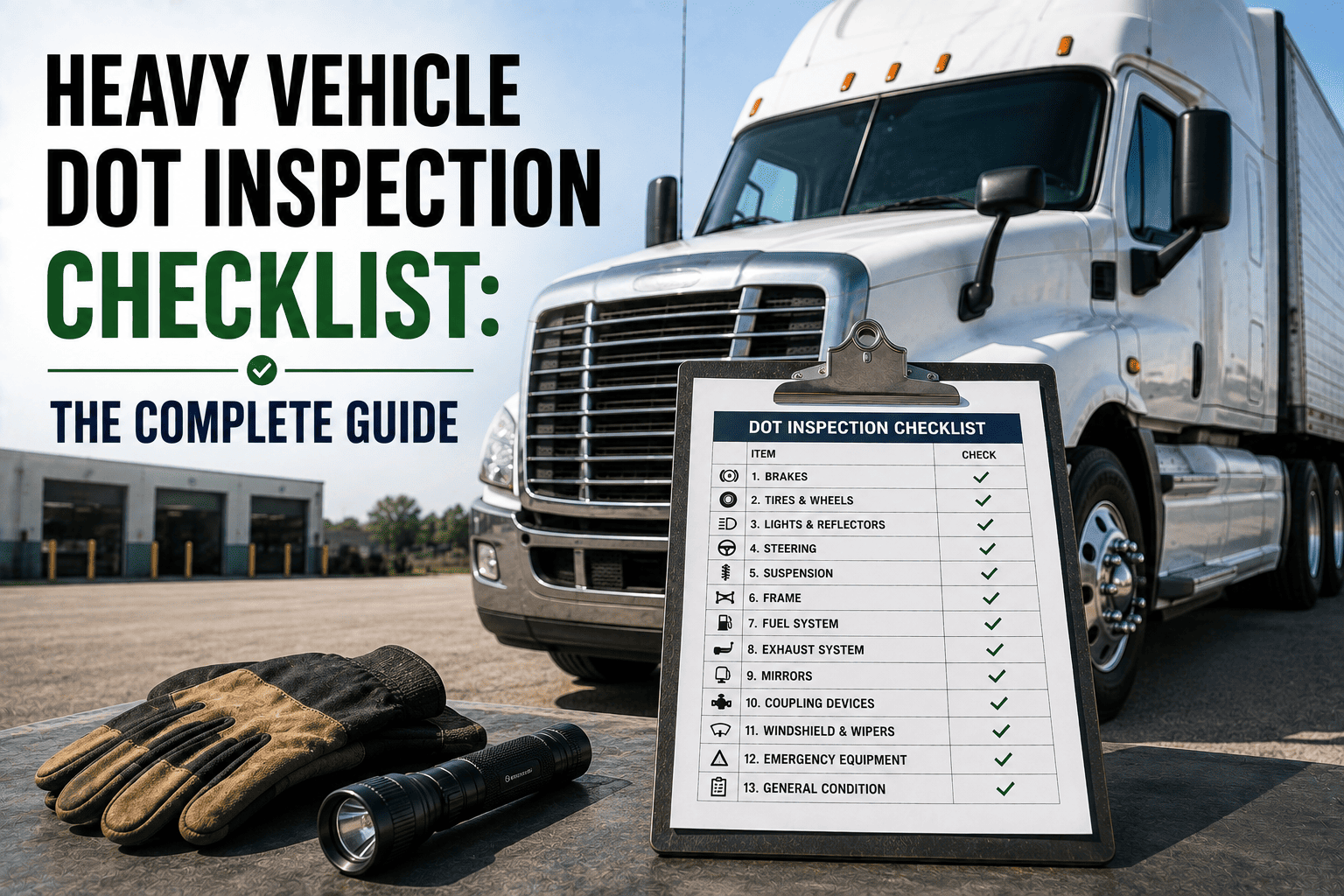
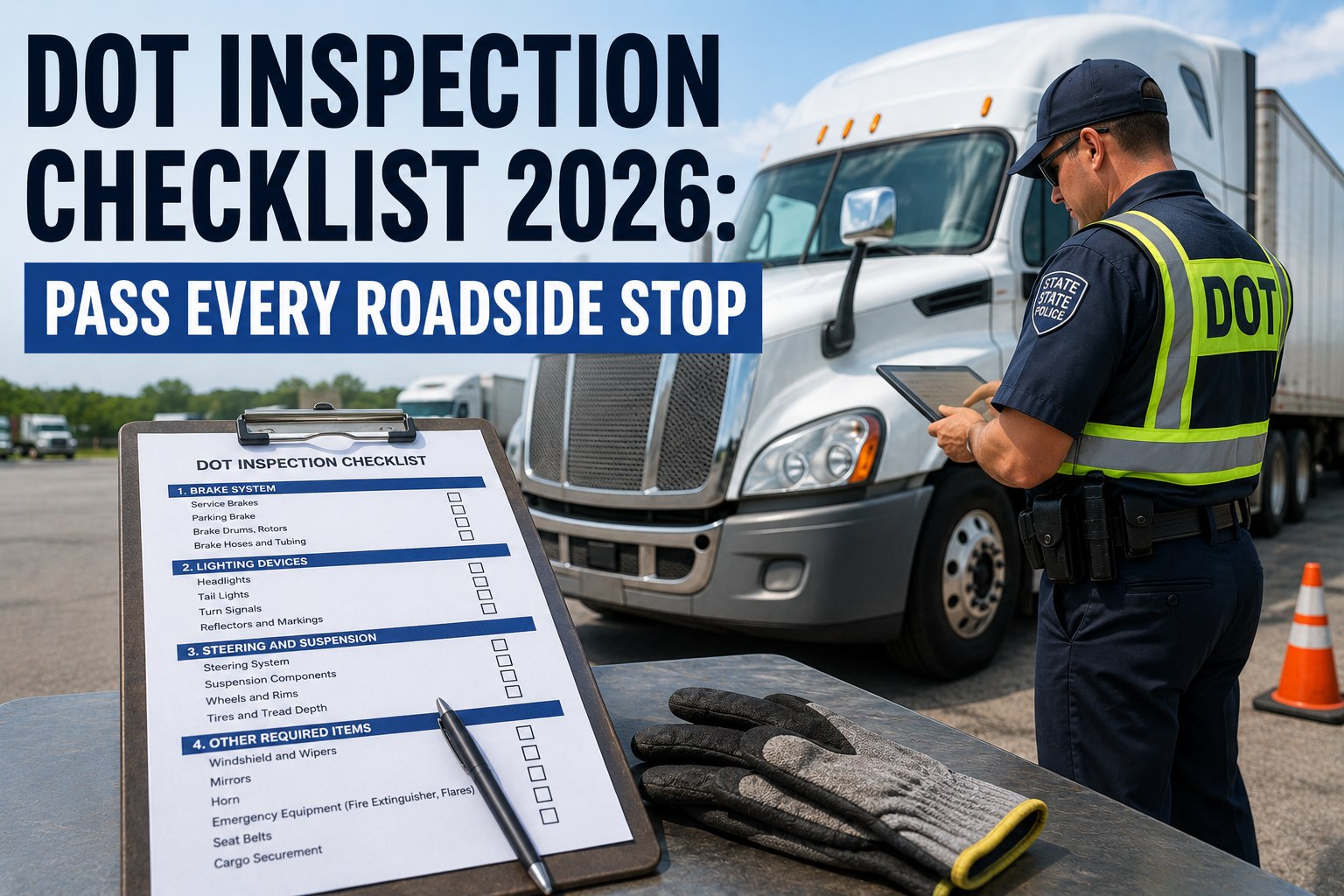
Complete vehicle inspection checklist for DOT compliance
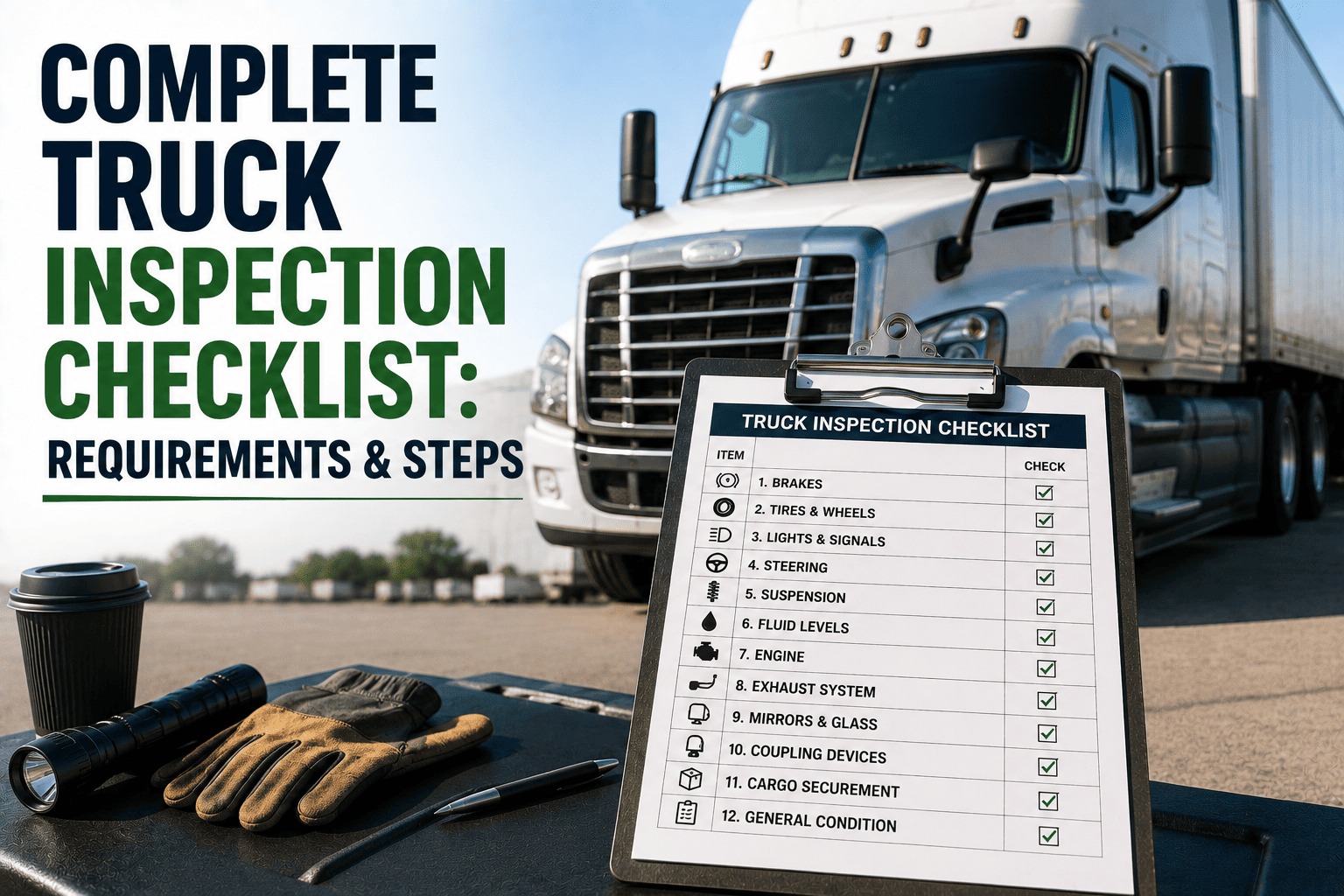
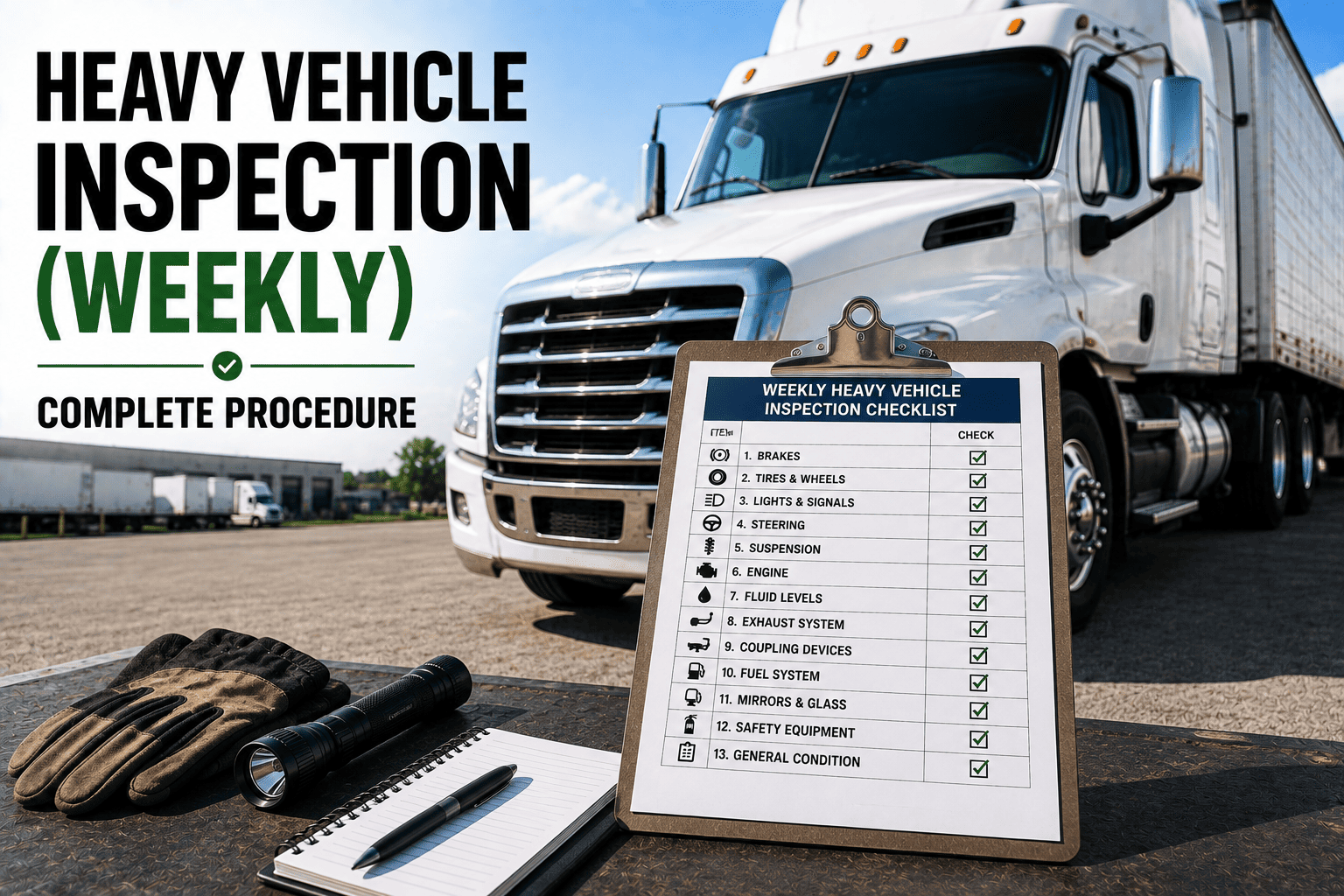
A comprehensive DOT inspection checklist covers every system an inspector will evaluate. Share these grids with drivers and maintenance teams to ensure zero defects before a wheel turns.
Driver Pre-Trip Inspection Checklist
- CDL, medical certificate, and daily logbook current
- Brake system: air pressure build, hoses, chambers, ABS
- Steering mechanism: play, linkage, fluid levels
- Tires: minimum 4/32" tread depth, proper inflation
- Lighting: headlights, taillights, turn signals, brake lights
- Windshield, mirrors, and wipers unobstructed
- Seat belt functional and securely mounted
- Cargo securement: straps, chains, load binders
- Emergency equipment: triangles, fire extinguisher, spare fuses
- Coupling devices: fifth wheel, kingpin, locking jaw
DOT Annual Inspection Requirements
- Brake components: pushrod travel, slack adjusters, drums
- Exhaust system: leaks, mounting, routing under cab
- Fuel system: tank securement, caps, line integrity
- Suspension: springs, U-bolts, air bags, shock absorbers
- Frame: cracks, corrosion, weld integrity
- Wheels and rims: cracks, stud torque, spacer wear
- Windshield glazing: no cracks in critical vision area
- Body components: doors, floor, mud flaps secure
- Horn audible from 200 feet
- Decals and annual inspection sticker affixed
Most common DOT roadside violations and how to prevent them
FMCSA data consistently shows that lighting, brake, and tire violations account for the majority of out-of-service orders. A proactive CMMS flags these exact failure points before a DOT roadside stop ever happens.
| Violation Category | % of All OOS Orders | Root Cause | Prevention Strategy |
|---|---|---|---|
| Lighting & Lamps | ~14% | Burned-out bulbs, corroded sockets | Weekly circuit testing in CMMS PM schedule |
| Brake System | ~26% | Out-of-adjustment, air leaks | Automatic slack adjuster checks every 90 days |
| Tires | ~9% | Sub-4/32" tread, sidewall damage | Pre-trip DVIR with tread depth logging |
| Cargo Securement | ~7% | Worn straps, improper tie-down count | Driver securement checklist app before dispatch |
| Hours of Service | ~12% | Log form/manner errors, ELD malfunctions | Automated HOS alerts and ELD sync checks |
The cost of failing a DOT roadside inspection
A 45-truck regional fleet relying on paper DVIRs was flagged for 18 out-of-service violations in a single quarter during DOT roadside stops. The financial impact was immediate and severe.
18 violations resulted in $57,600 in immediate FMCSA fines within 90 days.
Out-of-service trucks sat idle waiting for mobile repair, costing $1,200/day in lost revenue.
The fleet's CSA score plummeted, triggering a DOT audit and loss of a major shipper contract.
After implementing OxMaint's digital DVIR and automated PM scheduling, the same fleet reduced out-of-service violations to zero within two quarters and recovered their CSA score — saving an estimated $94,000 in fines, downtime, and retained contracts.
How OxMaint keeps your fleet DOT-defensible
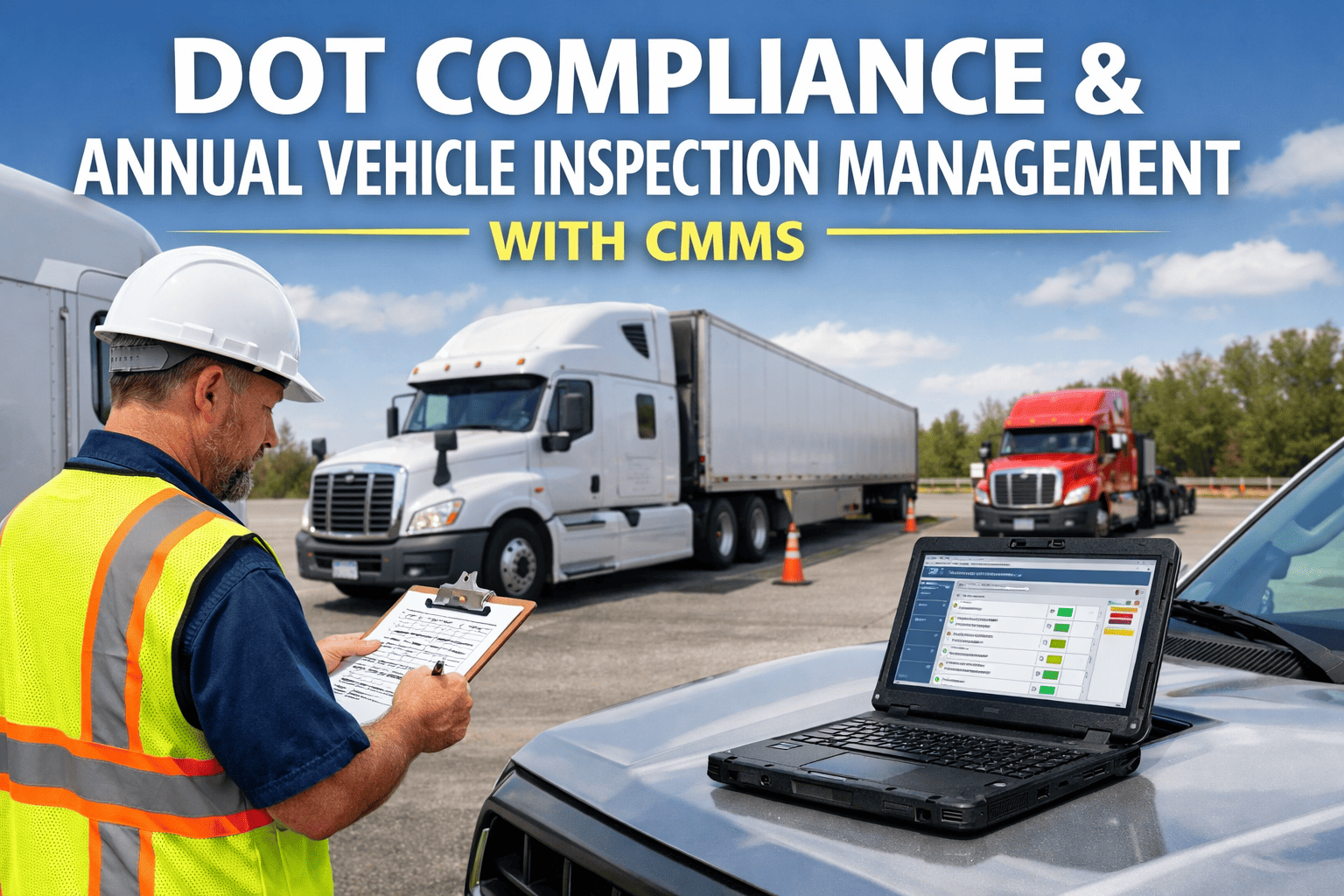
OxMaint is an AI-powered CMMS and EAM platform that transforms DOT compliance from a reactive scramble into a continuous, defensible workflow. Here is how specific OxMaint capabilities map directly to passing roadside inspections.
Digital DVIR Workflow
Drivers complete pre-trip and post-trip inspection checklists on a mobile app. Defects instantly generate work orders routed to the shop — eliminating lost paper and delayed repairs.
Automated PM Scheduling
OxMaint schedules preventive maintenance based on mileage, engine hours, or calendar days — ensuring brakes, lights, and tires are inspected before they fail at a roadside stop.
Out-of-Service Defect Tracking
When a defect is flagged as OOS, OxMaint automatically quarantines the asset, prioritizes the repair, and logs the corrective action with full parts and labor traceability for FMCSA audits.
Maintenance Analytics & Predictions
AI-driven analytics identify which assets are trending toward repeat violations, allowing fleet managers to target training and maintenance spend where it prevents the next OOS order.
How to prepare your fleet for a DOT annual inspection
Passing a DOT annual inspection requires structured preparation, not luck. Follow this timeline to ensure every commercial vehicle in your fleet is audit-ready year-round.
Audit Current Compliance Baseline
Pull the last 12 months of DVIRs, repair orders, and roadside inspection reports. Identify recurring defect patterns and vehicles with open maintenance items. OxMaint generates this report in seconds.
Close All Open Defect Work Orders
Prioritize and clear every outstanding repair flagged in your CMMS. Ensure parts inventory is stocked for high-failure components like brake chambers and lighting assemblies.
Conduct a Level I Self-Inspection
Run a full 37-point Level I inspection internally using the same criteria an inspector will apply. Log results digitally in OxMaint with photos and corrective actions.
Verify Documentation & Stickers
Confirm annual inspection decals are affixed, driver qualification files are complete, and maintenance records are organized for immediate retrieval during a DOT audit.
See OxMaint on your fleet — book a 30-min demo
Discover how OxMaint's digital DVIR, automated PM scheduling, and out-of-service defect tracking keep every truck DOT-compliant and every roadside stop violation-free.
DOT inspection checklist FAQs
What is included in a DOT Level I inspection checklist?
A DOT Level I inspection includes a 37-point vehicle check covering brakes, steering, suspension, tires, wheels, lighting, exhaust, frame, and cargo securement, plus a full driver credential review including CDL, medical card, and hours-of-service logs. It is the most comprehensive roadside inspection and the standard for DOT compliance enforcement.
How often is a DOT annual inspection required for commercial vehicles?
A DOT annual inspection is required once every 12 months for commercial motor vehicles operating in interstate commerce with a GVWR over 10,000 lbs. The inspection must be performed by a qualified inspector and documented with a decal and inspection report. You can automate annual inspection reminders and documentation by starting your OxMaint free trial.
What happens if a truck fails a DOT roadside inspection?
If a truck fails with an out-of-service violation, it must be parked immediately until the defect is repaired. The driver receives a violation report, the carrier is fined, and the violation negatively impacts the fleet's CSA safety score. Repeat violations can trigger a full DOT compliance audit and potential loss of operating authority.
Can a DOT inspection checklist be digital instead of paper?
Yes, the FMCSA accepts electronic Driver Vehicle Inspection Reports (eDVIRs) as long as they meet specific data retention and accessibility requirements. Digital checklists through a CMMS like OxMaint actually improve compliance by ensuring legible records, instant defect routing, and timestamped audit trails that are immediately available during any DOT audit.
What are the most common reasons trucks fail DOT inspections?
The most common out-of-service violations are brake system defects (out-of-adjustment brakes, air leaks), lighting failures (burned-out lamps), and tire issues (tread depth below 4/32"). These account for over 50% of all OOS orders. Implementing a preventive maintenance schedule with OxMaint catches these exact defects before a roadside inspection occurs — book a demo to see the workflow.
Keep every truck violation-free with OxMaint
Replace paper DVIRs and reactive maintenance with an AI-powered CMMS that makes DOT compliance continuous, defensible, and effortless.
Free 14-day trial · No credit card