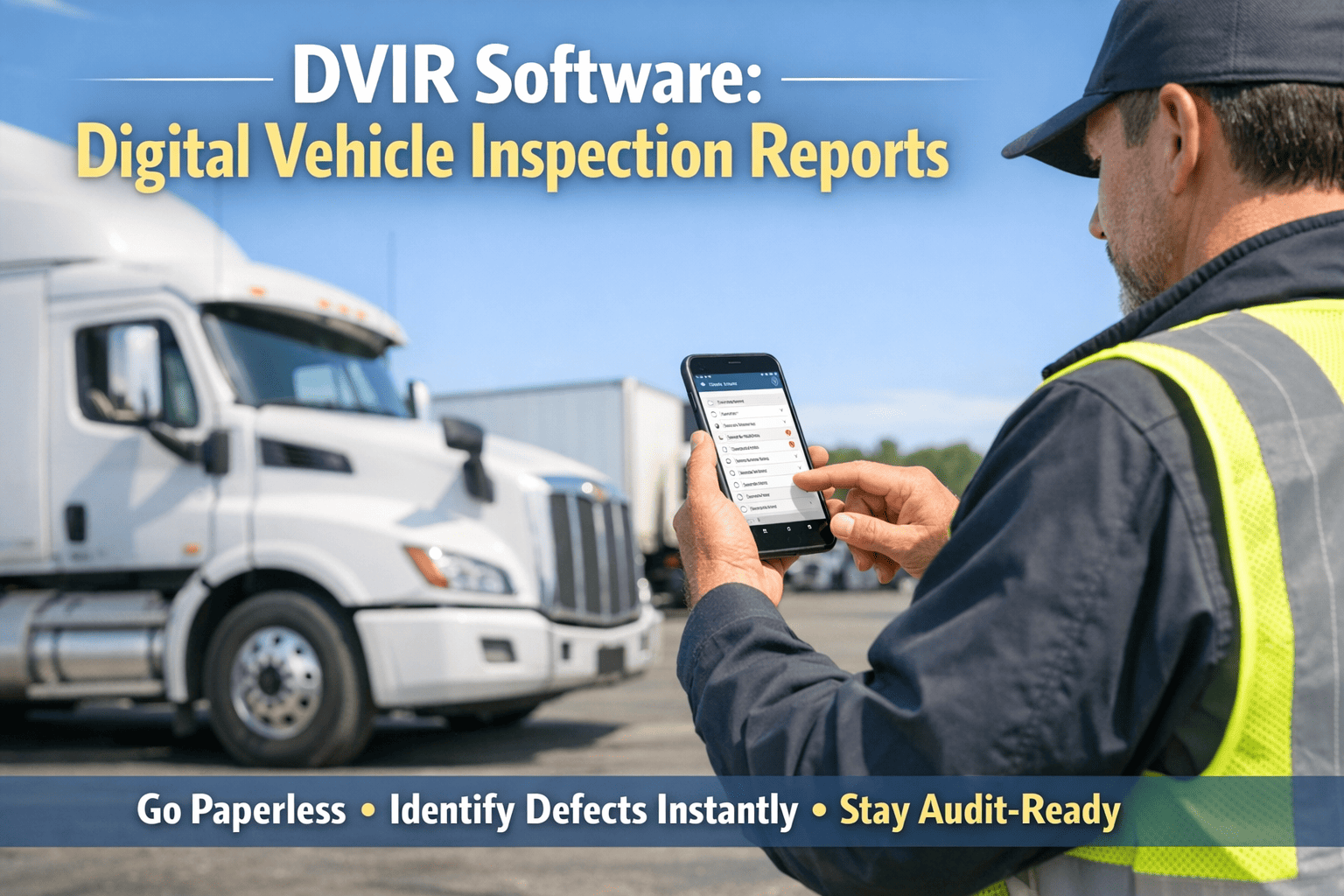
A driver hazard report program looks fine right up until an auditor asks for proof. Not proof that a checklist exists somewhere, proof that a specific truck was checked on a specific date, by a specific driver, with a specific defect photographed and closed out. That gap between having a form and having a defensible record is where most fleet safety programs actually fail. Sign up to start capturing hazard reports digitally, with the audit trail already built in.
What A Driver Hazard Report Actually Covers
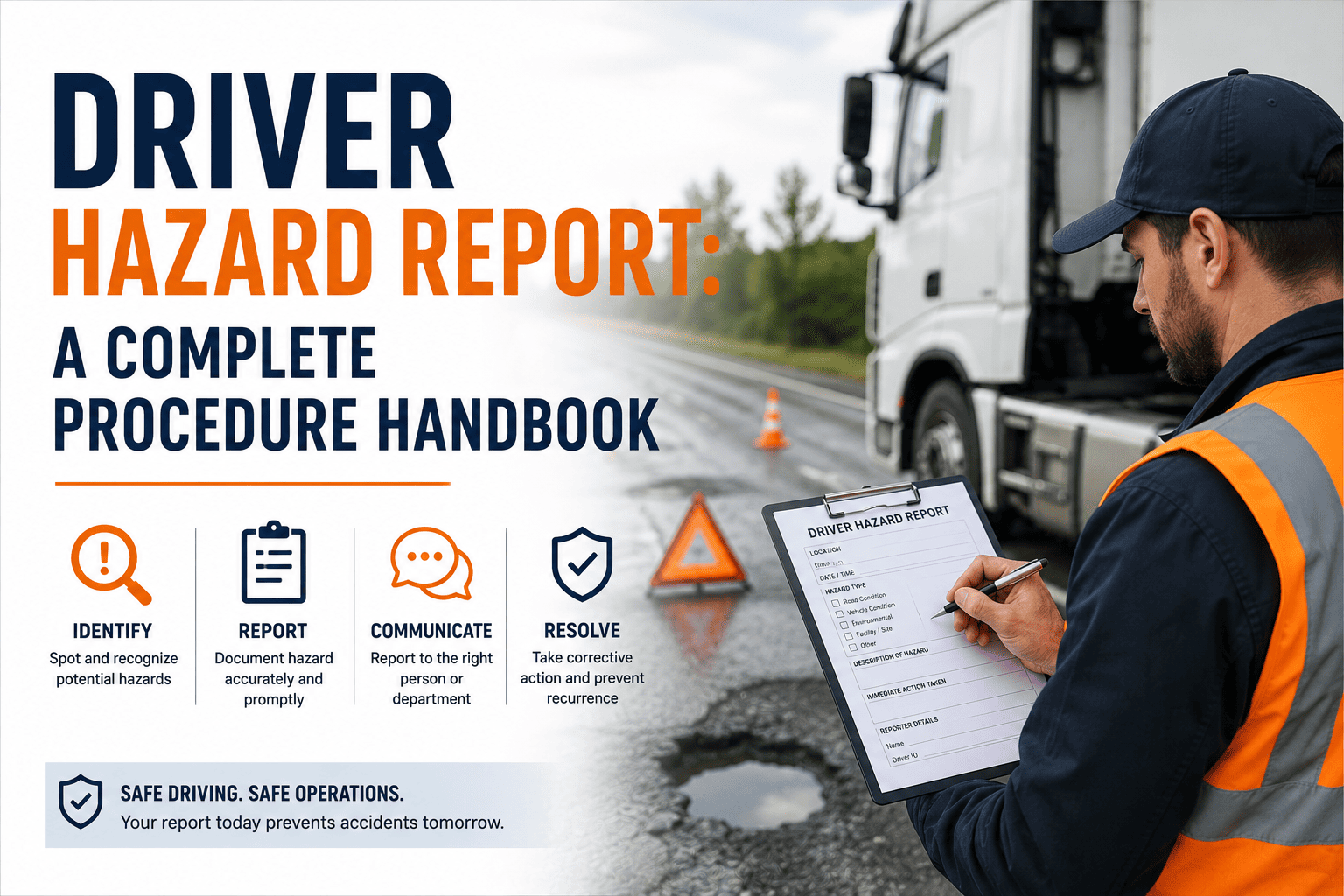
A driver hazard report is a structured check a driver completes before, during, or after a trip to flag anything that could turn into a safety incident: mechanical defects, cargo issues, or road and site hazards. It only works as a compliance tool when every check has a clear pass or fail outcome, and every fail triggers a documented follow-up.
When Reports Are Required
| Report Type |
Cadence |
| Pre-trip inspection |
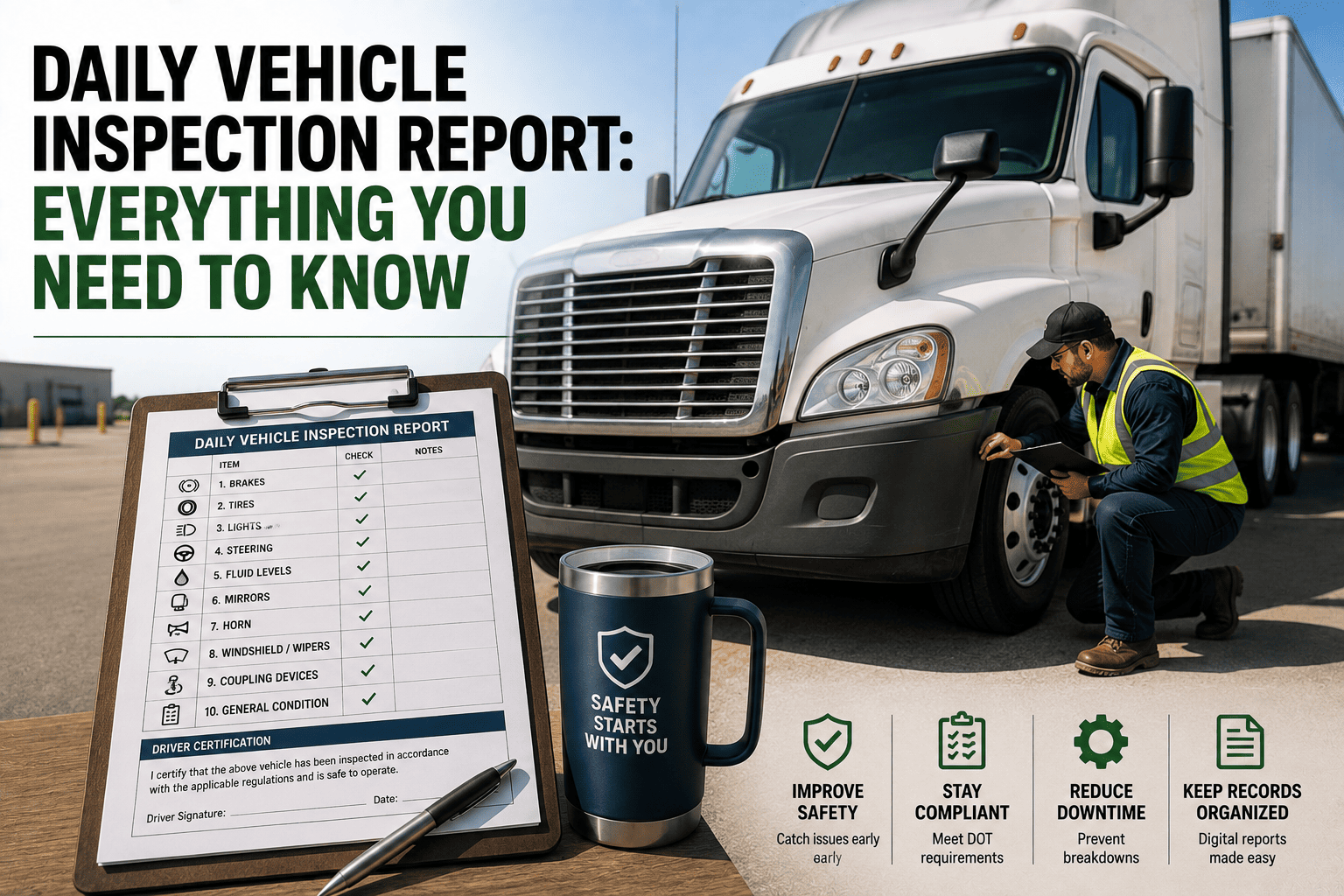
Before every trip, without exception, regardless of how recently the vehicle was last checked |
| Post-trip inspection |
At the end of every trip, to catch anything that developed while the vehicle was in use |
| As-needed hazard report |
The moment a driver notices something abnormal mid-route, no waiting for the next scheduled check |
The Core Categories Every Checklist Needs
Brakes And Tires
Tread depth, visible damage, air pressure, and brake response are the most safety-critical checks and the ones auditors look at first
Lights And Signals
Headlights, brake lights, and turn signals are quick to check but among the most common citation points in roadside inspections
Cargo Securement
Straps, chains, and load distribution need verification before every trip, since a shifted load is a hazard for everyone on the road
Fluid Leaks And Warning Lights
A new leak or an illuminated dash warning is exactly the kind of change an as-needed report exists to catch mid-route
Turn Every Report Into Defensible Proof
OxMaint captures every hazard report digitally with photo evidence, e-signatures, and a full audit trail linked directly to the asset. Sign up for a free trial to start digitizing your driver hazard reports, or book a demo to see the compliance workflow built for audit day.
From Hazard Spotted To Issue Closed
1
Driver Completes The Checklist
Each item is marked pass or fail against a clear standard, so there's no ambiguity about what counts as a defect
2
A Failed Item Gets Photographed And Logged
Photo evidence attached at the point of inspection removes any doubt later about the condition that was actually found
3
A Corrective-Action Work Order Is Created
The defect routes automatically to the maintenance team as a work order tied to that specific vehicle, not a note that gets lost
4
Closure Is Signed And Recorded
An e-signature at closeout confirms the fix was verified, completing an audit trail from hazard to resolution
Why Paper Checklists Fail Under Audit
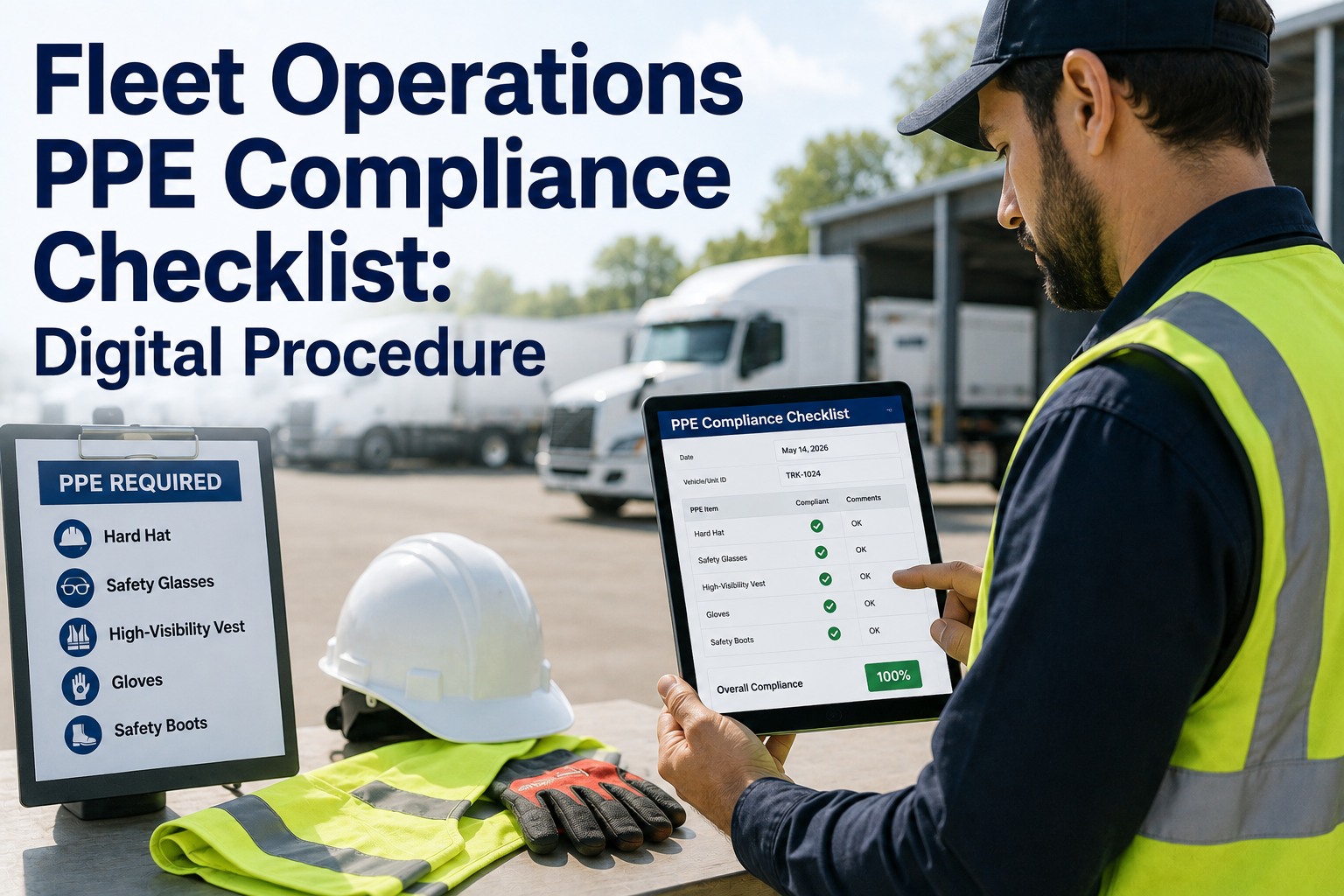
A paper form proves a box was checked, not that the check happened, what was found, or whether the defect was ever fixed. Digital capture with photo evidence, e-signatures, and inspection records tied directly to the asset is what gives an EHS team real-time, defensible proof instead of a scramble to reconstruct history the week before an audit.
Frequently Asked Questions
Q
What makes a driver hazard report audit-ready?
A clear pass or fail on every item, photo evidence for anything that fails, and a documented corrective action tied to that specific vehicle and date. Missing any one of those three is usually where audits find gaps.
Q
Does an as-needed report replace the scheduled pre-trip and post-trip checks?
No, it supplements them. Scheduled checks catch predictable wear, while an as-needed report exists specifically for anything abnormal a driver notices between those scheduled points.
Q
Who should have access to closed-out hazard reports?
At minimum, the maintenance team and EHS staff, both able to pull the full history for any vehicle on demand rather than requesting it from a driver or a filing cabinet when an auditor asks.
Build A Hazard Report Program That Holds Up Under Audit
OxMaint captures every driver hazard report digitally, with photo evidence, e-signatures, and a full audit trail linked to each vehicle. Sign up for a free trial to start building defensible records today, or book a demo to see the full compliance workflow.