The maintenance management landscape has undergone a dramatic transformation over the past century, evolving from simple reactive approaches to sophisticated predictive strategies that revolutionize equipment reliability and operational efficiency. Modern maintenance management represents a fundamental shift in how organizations approach asset care, moving beyond emergency repairs to embrace data-driven strategies that prevent failures before they occur. This evolution from reactive to predictive maintenance delivers 75% reduction in unplanned downtime, 60% decrease in maintenance costs and 40% improvement in equipment lifespan while transforming maintenance from a cost center into a strategic competitive advantage.
The Historical Foundation: Understanding Reactive Maintenance Legacy
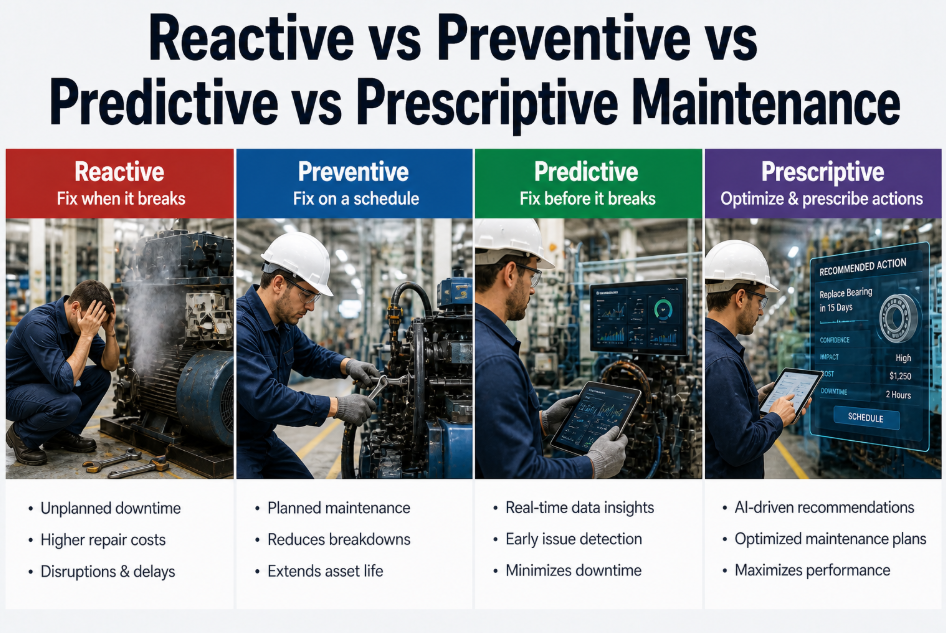
Traditional reactive maintenance dominated industrial operations for decades, operating on the fundamental principle of "fix it when it breaks" that created cycles of emergency repairs, unpredictable downtime, and escalating costs. Reactive maintenance approaches emerged from necessity in early industrial settings where equipment monitoring capabilities were limited and failure patterns were poorly understood.
Transform your maintenance strategy with advanced predictive solutions
Start Your Evolution Schedule ConsultationEmergency Response Culture
Reactive maintenance fostered crisis-driven operational cultures where 80% of maintenance activities occurred under emergency conditions, creating stress, safety risks, and suboptimal repair quality.
Unpredictable Cost Structures
Emergency repair requirements generated volatile maintenance budgets with premium labor costs, expedited parts procurement, and secondary damage expenses averaging 300-400% above planned maintenance costs.
Limited Planning Capabilities
Reactive approaches prevented systematic maintenance planning, resource optimization, and performance improvement initiatives that could enhance operational efficiency and asset reliability.
Equipment Degradation Acceleration
Delayed interventions allowed minor issues to escalate into major failures, accelerating equipment wear patterns and reducing asset lifespan by 35-50% compared to proactive maintenance strategies.
The Financial Impact of Reactive Maintenance Limitations
Before implementing systematic maintenance evolution strategies, industrial operations experience significant inefficiencies that impact both operational performance and financial sustainability:
- Emergency repair premiums consuming 65% of maintenance budgets while providing minimal asset life extension or reliability improvement
- Unplanned downtime averaging 15-25% of production capacity due to reactive failure responses and inadequate preventive measures
- Secondary damage costs with 45% of major failures causing collateral equipment damage requiring additional repairs and replacements
- Safety incident escalation from equipment malfunctions creating liability exposures and regulatory compliance challenges
- Inventory management inefficiencies requiring excessive spare parts stocks to support emergency repair capabilities
The Preventive Maintenance Revolution: Systematic Intervention Strategies
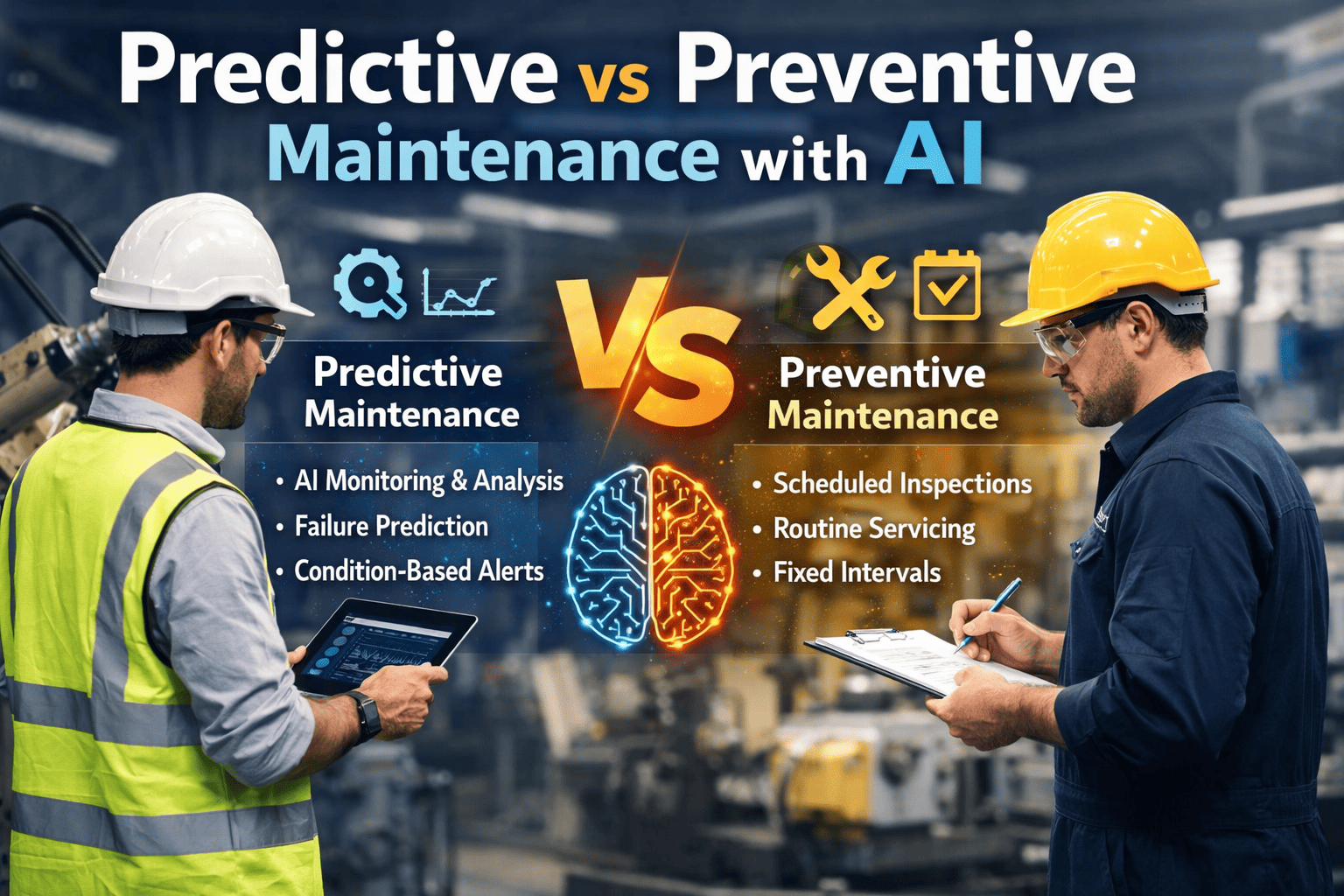
Preventive maintenance emergence marked the first major evolution in maintenance philosophy, introducing scheduled interventions based on time intervals, operating hours, and usage cycles that reduced emergency repairs while extending equipment life through systematic care protocols.
Preventive Maintenance Framework Development
Systematic preventive maintenance programs established maintenance scheduling, documentation standards, and resource planning capabilities that transformed maintenance from reactive crisis management into organized operational discipline.
Scheduled Maintenance Protocols
Time-based and usage-based maintenance schedules ensuring regular equipment care through systematic inspections, lubrication, adjustments, and component replacements.
Documentation and Record Systems
Comprehensive maintenance history tracking, performance monitoring, and compliance documentation supporting warranty protection and regulatory requirements.
Resource Planning and Inventory Management
Planned maintenance enabling optimal parts inventory, scheduled technician allocation, and coordinated maintenance activities that reduce costs and improve efficiency.
Performance Measurement and Analysis
Maintenance KPI tracking including equipment availability, maintenance costs, and failure rates that enable continuous improvement and optimization strategies.
Condition-Based Maintenance: Data-Driven Equipment Monitoring
Advanced Monitoring Integration and Real-Time Assessment
Condition-based maintenance represents the next evolutionary step, utilizing sensor technologies, diagnostic tools and real-time monitoring systems that enable maintenance decisions based on actual equipment condition rather than predetermined schedules.
Vibration Analysis Systems
Advanced vibration monitoring detecting bearing failures, alignment issues, and mechanical wear patterns weeks before traditional inspection methods identify problems.
Thermal Imaging Diagnostics
Infrared temperature monitoring identifying electrical hot spots, insulation failures, and thermal efficiency degradation in electrical and mechanical systems.
Oil Analysis Programs
Systematic lubricant analysis revealing contamination, wear particles, and additive depletion that indicate internal component condition and optimal change intervals.
Performance Parameter Monitoring
Continuous tracking of pressure, flow, temperature, and efficiency metrics providing early warning indicators of equipment degradation and performance decline.
Predictive Maintenance: The Future of Asset Management
Artificial Intelligence and Machine Learning Integration
Predictive maintenance strategies represent the pinnacle of maintenance evolution, combining IoT sensors, artificial intelligence, and advanced analytics to predict equipment failures weeks or months before occurrence, enabling optimal intervention timing, and resource allocation.
Machine Learning Algorithms
AI-powered analysis of equipment data patterns, operational history, and environmental factors to predict optimal maintenance timing and prevent unexpected failures.
IoT Sensor Integration
Internet of Things technologies providing continuous equipment monitoring, real-time data collection, and automated alert generation for proactive maintenance intervention.
Digital Twin Technology
Virtual equipment replicas enabling simulation-based maintenance planning, failure scenario analysis, and optimization strategies based on real-world operational data.
Integrated Analytics Platforms
Comprehensive data analytics combining equipment sensors, maintenance history, and operational metrics into unified predictive models for enhanced decision making.
Implementation Strategies for Maintenance Evolution
Successful maintenance transformation requires systematic implementation approaches that address technology integration, organizational change management, and performance optimization across diverse operational environments and equipment types.
Technology Integration Planning
Strategic deployment of monitoring systems, software platforms, and analytics tools that integrate with existing operations while providing scalable growth capabilities.
Training and Development Programs
Comprehensive skill development for maintenance teams covering new technologies, analytical techniques, and data-driven decision making processes.
Change Management Support
Organizational transformation assistance addressing cultural shifts, process redesign, and performance measurement systems that support advanced maintenance strategies.
Performance Optimization Services
Ongoing system refinement, algorithm tuning, and process improvement support ensuring maximum value realization from predictive maintenance investments.
Comparative Analysis: Maintenance Strategy Evolution Benefits
Performance Metrics and Financial Impact Assessment
Maintenance strategy evolution delivers measurable improvements across multiple operational dimensions, with advanced predictive approaches providing superior financial returns and operational reliability compared to traditional reactive methods.
Operational Excellence and Competitive Advantages
Advanced maintenance strategies create sustainable competitive advantages through improved equipment reliability, optimized resource utilization, and enhanced operational efficiency that directly impact profitability and market positioning.
- Improved production reliability with predictable equipment availability and minimal unplanned interruptions affecting production schedules
- Enhanced safety performance through proactive hazard identification and systematic risk mitigation reducing incident rates by 70%
- Optimized inventory management with data-driven parts procurement and reduced emergency stock requirements improving cash flow
- Better regulatory compliance through systematic documentation and proactive maintenance programs meeting industry standards
- Increased asset values with documented maintenance history and proven reliability enhancing equipment resale potential
Industry-Specific Evolution Applications
Maintenance evolution strategies adapt to specific industry requirements and operational challenges, with tailored approaches for manufacturing, energy, transportation, and infrastructure sectors that address unique equipment types and performance demands.
Manufacturing Operations
Production line optimization through predictive maintenance reducing unplanned downtime by 80% and improving overall equipment effectiveness (OEE) to 95%+ levels.
Energy and Utilities
Critical infrastructure protection through advanced monitoring systems preventing power outages, distribution failures, and safety incidents that affect thousands of customers.
Transportation Systems
Fleet reliability enhancement through predictive analytics reducing vehicle breakdowns by 75% and improving schedule adherence while extending asset lifespan.
Process Industries
Continuous operation support through condition monitoring preventing process disruptions, quality issues, and safety hazards in chemical and pharmaceutical facilities.
Technology Integration and Digital Transformation
The future of maintenance management relies on seamless technology integration that combines artificial intelligence, Internet of Things, and cloud computing platforms to create comprehensive asset management ecosystems supporting data-driven decision making and automated maintenance optimization.
Cloud-Based Analytics Platforms
Scalable computing infrastructure enabling advanced analytics, machine learning model deployment, and real-time monitoring across distributed operational environments.
Mobile Integration Solutions
Smartphone and tablet applications providing field technicians with real-time equipment data, maintenance instructions, and diagnostic support for improved efficiency.
Enterprise System Integration
Seamless connectivity with ERP, CMMS, and business intelligence systems enabling unified data management and comprehensive operational visibility.
Augmented Reality Support
AR-enabled maintenance procedures providing technicians with visual guidance, real-time information overlay, and expert system support for complex repair tasks.
Frequently Asked Questions
Ready to evolve your maintenance strategy from reactive to predictive excellence?
Begin Transformation Expert Consultation