Poor maintenance documentation isn't just an inconvenience — it's a direct liability. Incomplete records, missing signatures, and outdated checklists expose your facility to failed audits, regulatory fines, and avoidable downtime. OxMaint helps maintenance teams eliminate these risks with digital, audit-ready records. If you're preparing for a compliance review or simply want to avoid a surprise audit failure, book a 30-minute walkthrough with a compliance specialist today.
Compliance Management · Audit Risk · Maintenance Records
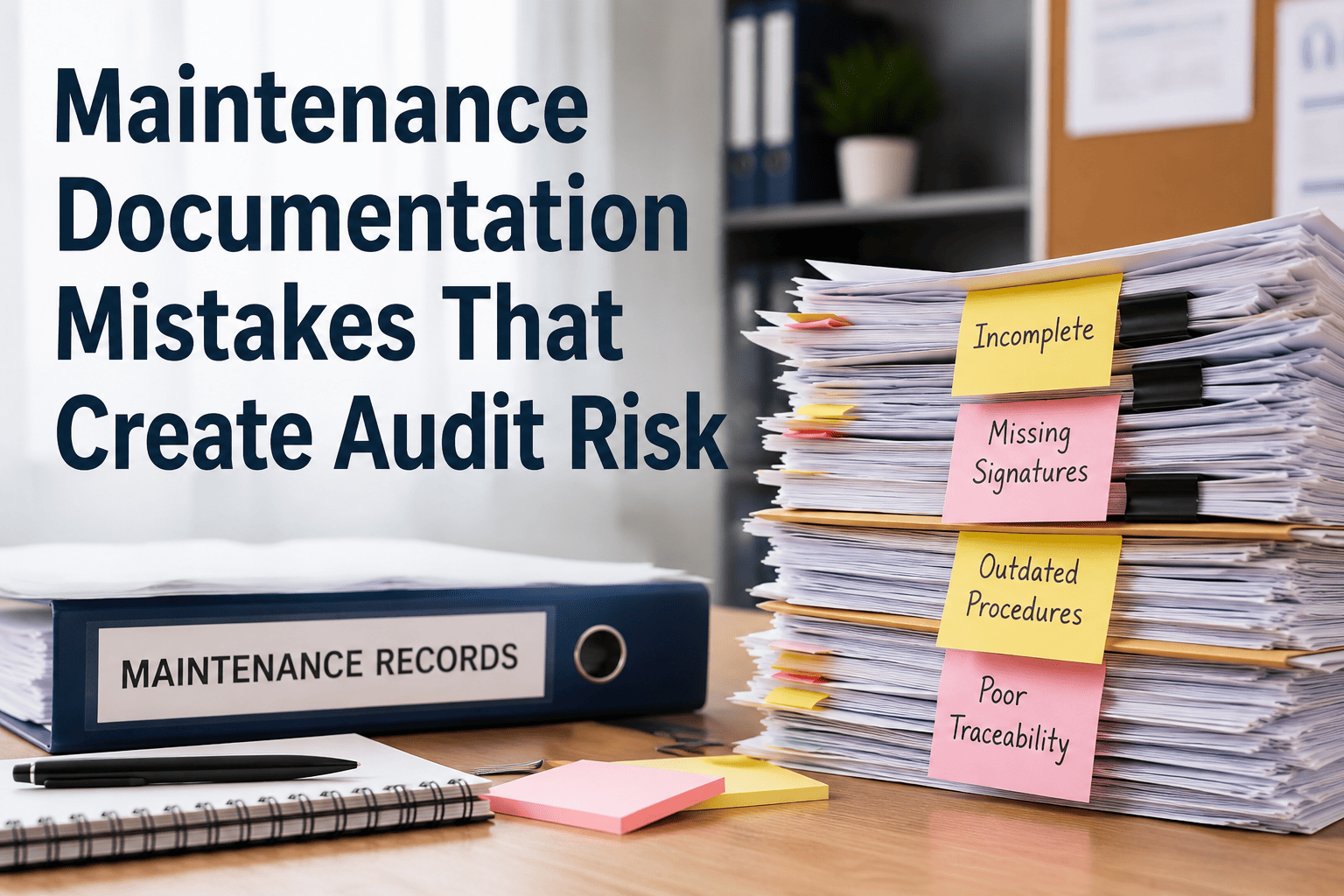
Maintenance Documentation Mistakes That Create Audit Risk
Missing records, incomplete checklists, late approvals, and unclear work history are silently building your audit liability. Here's what goes wrong — and how to fix it before inspectors arrive.
43%
of audit failures trace back to documentation gaps
$165K
OSHA willful violation penalty per incident
2026
OSHA electronic recordkeeping rule effective year
The 6 Documentation Mistakes Auditors Flag Most
Each mistake below is a real audit finding. They are ordered by frequency of citation in OSHA and NERC compliance reviews.
01
Missing Work Order Completion Records
Work orders closed verbally or via group chat leave zero audit trail. Inspectors require timestamped, signed digital proof that every PM task was executed — not just scheduled.
Fix: Auto-close work orders only when a technician submits completion data, photos, and a digital signature on mobile.
02
Incomplete Safety Inspection Checklists
Partially completed checklists — skipped fields, unanswered safety questions — are treated the same as no record at all. Auditors view partial completion as evidence of a skipped procedure.
Fix: Enforce mandatory fields on safety checklists so technicians cannot submit incomplete inspections.
03
No Photo Evidence for Condition Findings
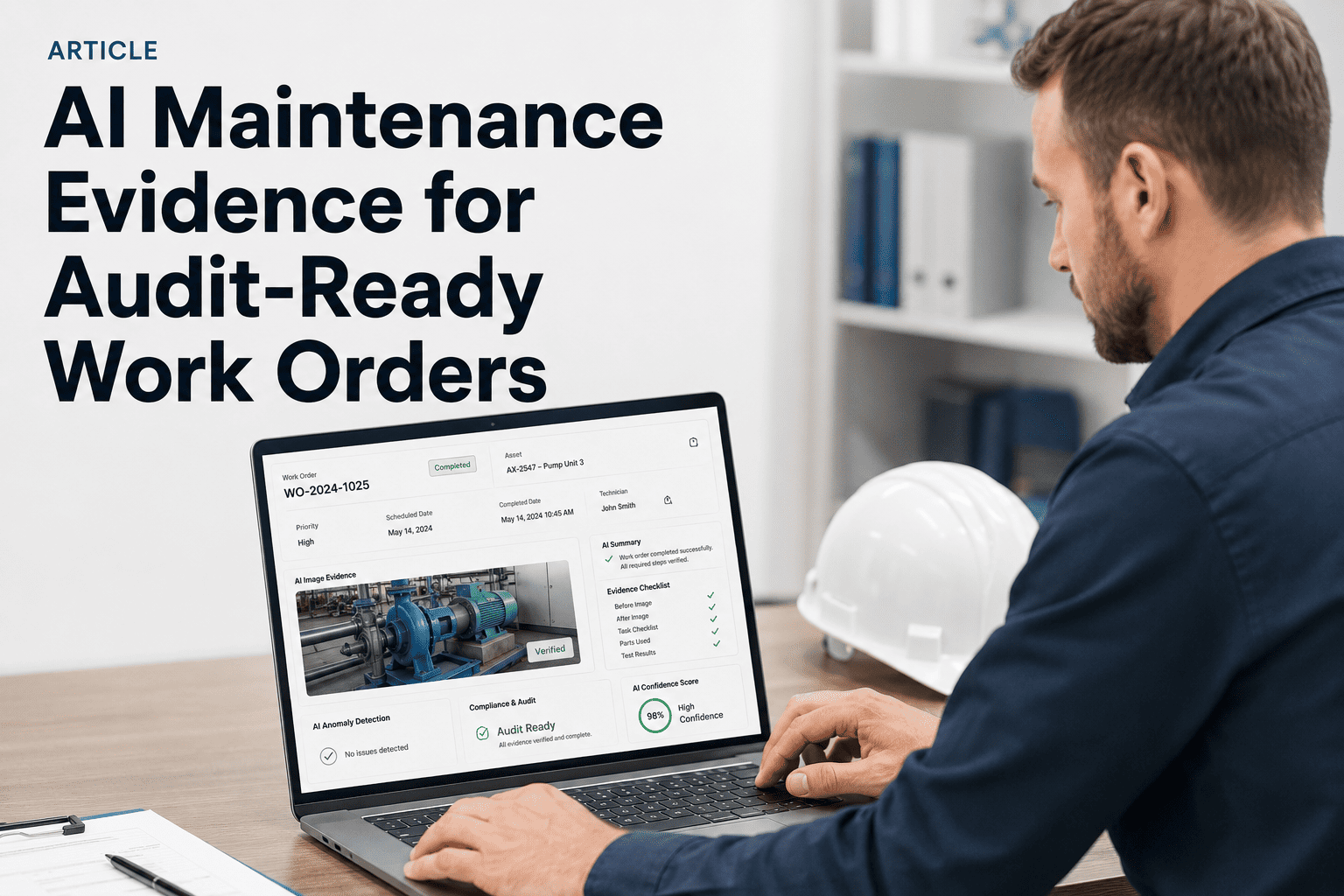
When a technician reports a cracked component or fluid leak, text-only records are routinely challenged. Without photo evidence tied to the work order, you cannot prove the finding was real or that corrective action was taken.
Fix: Require photo capture as part of the work order workflow, attached and timestamped automatically.
04
Late or Missing Supervisor Approvals
Regulations like OSHA 1910.147 (Lockout/Tagout) require supervisor sign-off on specific work. When approvals happen days after the task — or never — the entire work record becomes non-compliant.
Fix: Automated approval routing sends sign-off requests immediately and escalates if not actioned within defined windows.
05
Scattered Records Across Paper and Systems
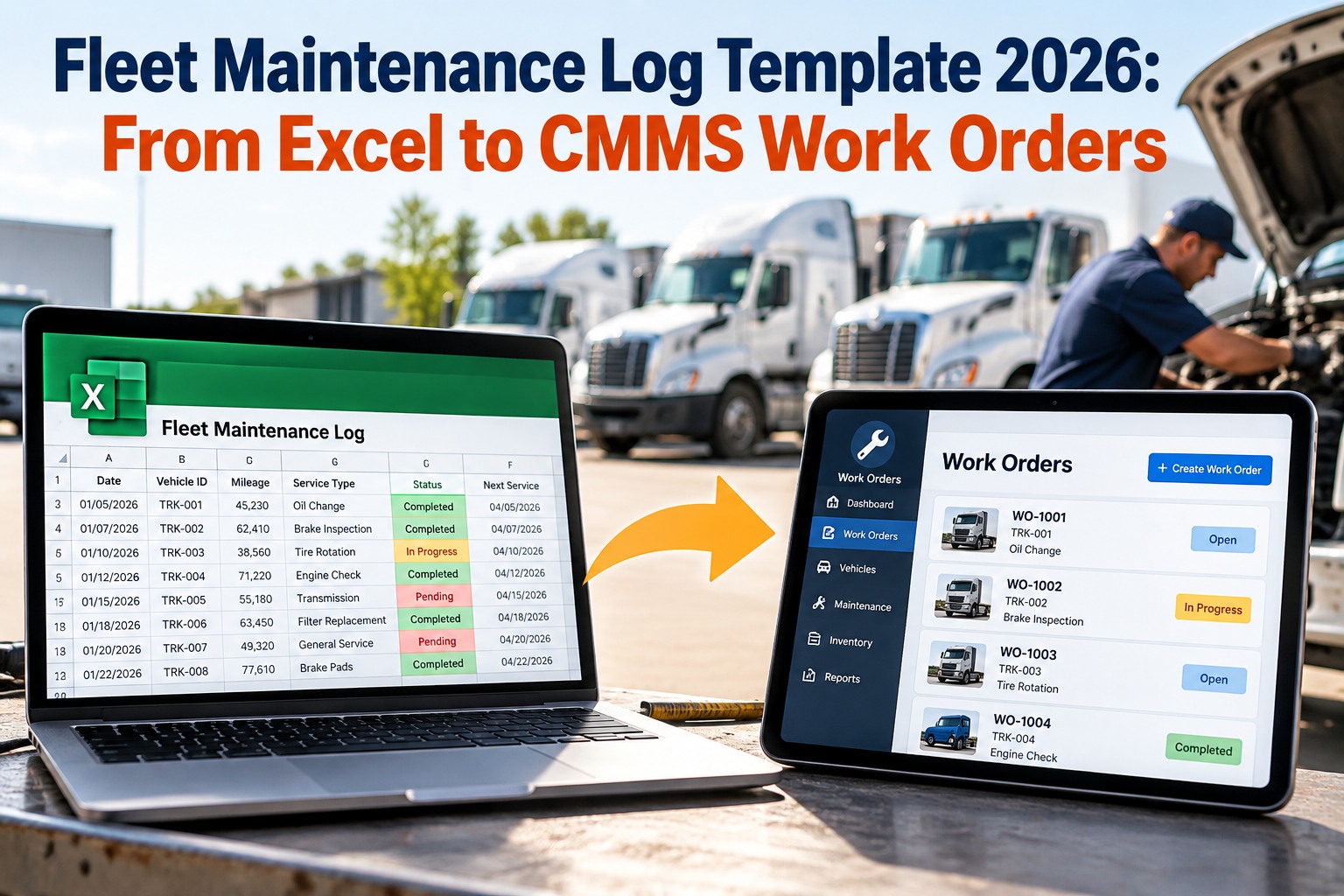
When maintenance history lives in three spreadsheets, a paper binder, and someone's inbox, producing a clean audit trail is impossible. Auditors expect a single retrievable source for all records.
Fix: Consolidate all records in a centralized CMMS with searchable history by asset, technician, and date range.
06
No Calibration or Training Record Links
Auditors increasingly cross-reference maintenance records with technician certifications and equipment calibration logs. A valid work order performed by an uncertified or untrained technician is still a finding.
Fix: Link technician credentials and equipment calibration records directly to work orders in your CMMS.
Audit Risk by Documentation Gap
| Documentation Gap |
Regulatory Risk |
Penalty Exposure |
Audit Outcome |
| Missing WO completion records |
OSHA 1910.217 |
Up to $15,625/day |
High Risk |
| Incomplete safety checklists |
OSHA 1910.147 |
Up to $15,625/day |
High Risk |
| No photo evidence |
State/local mandates |
Varies by state |
Medium Risk |
| Late supervisor approvals |
OSHA 1910.147 |
Up to $165,514 willful |
High Risk |
| Scattered paper records |
NERC CIP, ISO 55001 |
$1.29M/violation/day (NERC) |
Critical |
| Missing calibration links |
ISO 9001, FDA 21 CFR |
License suspension risk |
High Risk |
Pre-Audit Documentation Checklist
Run through this checklist 30 days before any scheduled inspection. Every gap found here is a gap you can close before it becomes a finding.
Work Order Records
All WOs have a closed timestamp and technician ID
No open WOs older than your SLA threshold
Photos attached to every condition finding
Parts used recorded with lot numbers
Safety & Compliance
LOTO procedures linked to relevant WOs
Supervisor sign-offs present on regulated tasks
Technician certifications current and linked
Incident reports filed within 24-hour window
Asset & PM Records
PM compliance rate above 95% for critical assets
Calibration records current for instrumentation
Asset downtime history exportable as PDF
All records in single retrievable system
Close Every Documentation Gap Before Your Next Audit
OxMaint gives your team mobile-first work order capture, mandatory checklist enforcement, photo evidence, and one-click audit exports — all in a platform that deploys in days.
Expert Review
SR
Sarah Reinhart
Certified Maintenance & Reliability Professional (CMRP) · 18 Years EHS Compliance
The single most preventable audit failure I see is incomplete work order closure. Teams do the physical work correctly but never close the digital loop. When an inspector asks to see proof of PM execution on a critical asset from 14 months ago, "we did it, I just can't find the record" is not a defensible answer. A CMMS that enforces completion data at the point of work — not after — is the only reliable fix. Photo capture and mandatory fields aren't optional features; they are your audit defense.
Frequently Asked Questions
What does OSHA's 2026 electronic recordkeeping rule actually require?
OSHA's 2026 updates expand electronic submission requirements to more establishment sizes and industries, requiring digital records for injuries, illnesses, inspections, and certain maintenance safety events. Paper-only systems are no longer acceptable in covered categories — records must be digitally captured, stored, and retrievable on demand. The rule specifically creates audit exposure for facilities where safety-related maintenance records exist only on paper or in spreadsheets.
OxMaint captures all required fields digitally at the point of work, keeping your facility compliant from day one.
How long does an organization typically take to close documentation gaps before an audit?
Most facilities that identify gaps at least 30–60 days before an inspection can remediate the most critical issues — primarily missing signatures, incomplete checklists, and unsynchronized records. However, organizations without a centralized CMMS often find that data reconstruction from spreadsheets and paper is simply impossible for older records. The recommended approach is to stop the bleeding immediately with a cloud-native CMMS and then document forward. Retroactive fixes for records older than 90 days are rarely accepted by auditors.
Book a demo to see how fast OxMaint can be operational.
Can OxMaint generate audit-ready reports for OSHA or NERC CIP inspections?
Yes. OxMaint generates one-click compliance reports filtered by asset, date range, technician, and work type — formatted for OSHA recordkeeping, NERC CIP, and ISO 55001 audits. Every work order record includes a full activity log: who did what, when, what parts were used, what photos were captured, and which supervisor approved the work. Audit preparation that previously took a maintenance manager a full week can typically be completed in under an hour. The export formats are compatible with standard submission requirements.
What's the difference between a documentation gap and a compliance violation?
A documentation gap is a missing record — an inspection that happened but was never captured digitally. A compliance violation is when a required action either didn't happen or can't be proven to have happened. The legal standard in most regulatory frameworks is that if it's not documented, it didn't occur. This means a documentation gap functionally equals a compliance violation in an audit context, even if the physical work was performed correctly. Organizations with strong CMMS enforcement of documentation requirements essentially eliminate this risk category entirely.