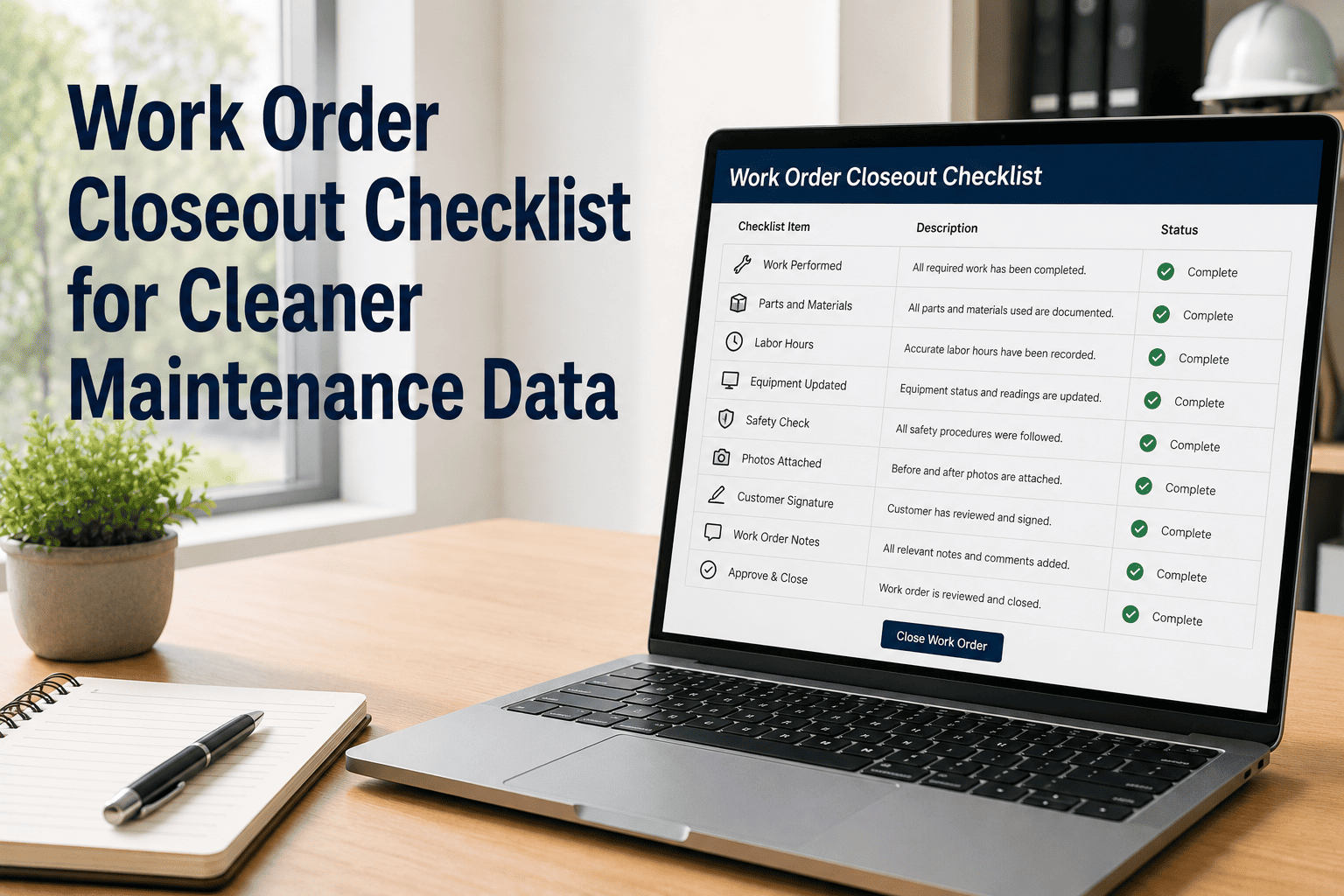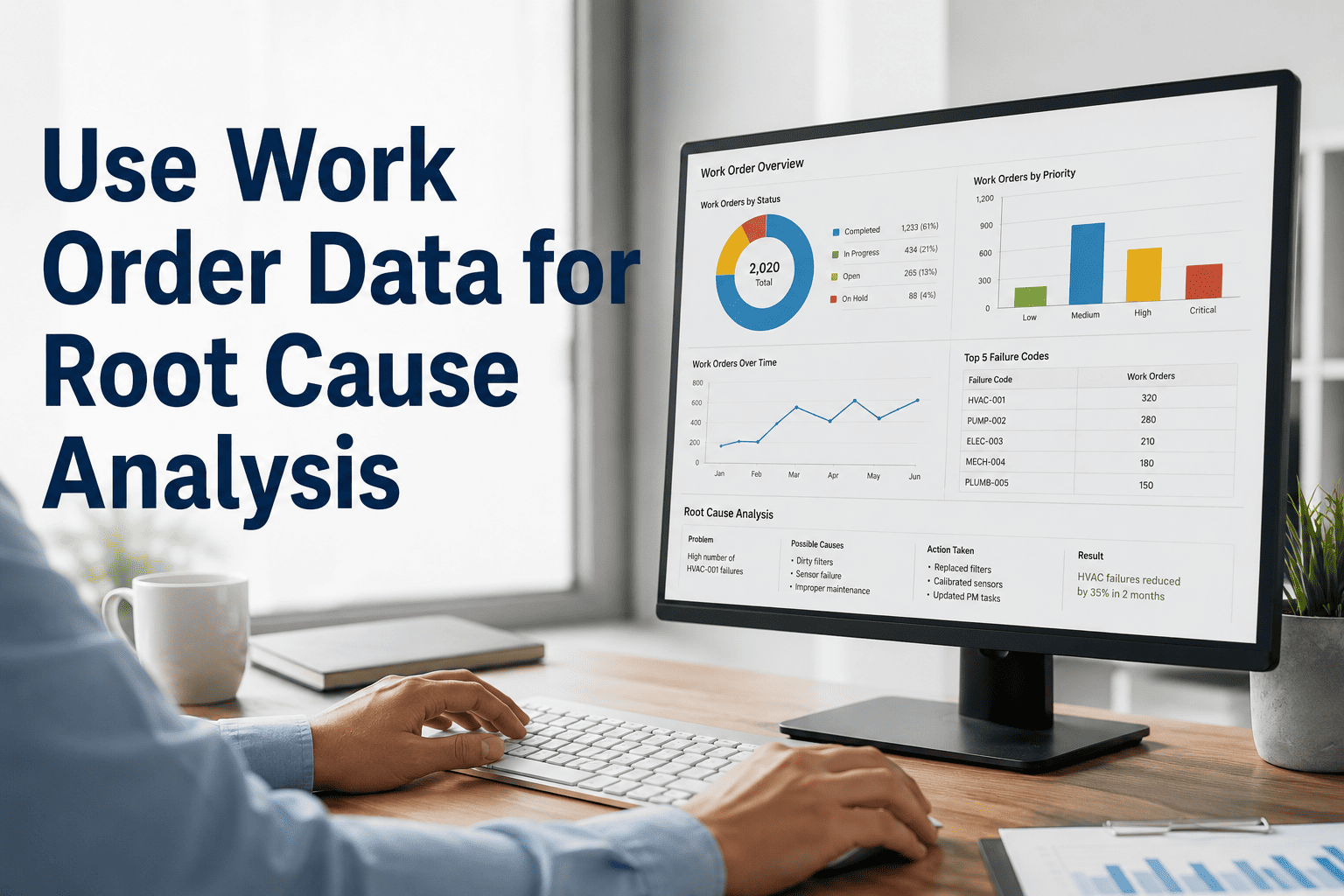
Every work order your team closes is a data point — but most maintenance teams never connect those dots. Recurring failures, rising repair costs, and unexplained downtime spikes almost always have a pattern buried in your work order history. OxMaint's analytics surface those patterns automatically, turning raw maintenance data into actionable root cause insights. If your team is still investigating failures reactively, book a 30-minute session to see how structured work order data can change that.
How to Use Work Order Data for Root Cause Analysis
Your CMMS already contains the clues to your most expensive failures. Here's how to turn recurring work orders, downtime trends, parts usage, and technician notes into a structured RCA that prevents the next breakdown.
Why Most RCA Efforts Fail
Work orders, downtime logs, and parts history live in separate systems. Without a unified view, analysts miss the correlation between a parts spike and a preceding PM skip.
Technician notes written as free text — "fixed it," "running fine" — carry no searchable failure codes, making pattern detection across hundreds of work orders impossible.
Without a standardized failure mode library per asset type, each analyst categorizes the same failure differently. Data becomes inconsistent and trends disappear into noise.
Most RCA is triggered only after a major incident. By then, the early-warning data — work orders from 3–6 months prior — has been archived or is too fragmented to reconstruct.
5-Step Framework: Work Order Data to RCA
This framework works with any CMMS that stores structured work order history. The more fields your team captures, the more powerful each step becomes.
Filter your work orders by asset ID and count corrective maintenance frequency over 12 months. Any asset with more than 3 unplanned corrective WOs in a year is a RCA candidate. Sort by downtime hours, not just WO count.
Pull every WO on that asset in chronological order. Include PM completions, inspection findings, parts replacements, and corrective events. Look for gaps where scheduled PMs were skipped or delayed — these gaps often precede failures by 4–8 weeks.
Cross-reference parts consumed on that asset against the failure timeline. Recurring replacement of the same component — bearings, seals, belts — points to an underlying cause: improper alignment, lubrication gaps, or design limitation. This is often the fastest path to root cause.
Search notes on that asset for terms that recur across multiple WOs: "vibration," "hot," "leaking," "unusual noise." Even free-text patterns point to a consistent condition. If your CMMS uses failure codes, aggregate them by category to identify which failure modes dominate.
Use the work order evidence as your first "why." Each subsequent why should be answerable with a data point from your CMMS history. If a why cannot be answered with data, it exposes a documentation gap — which is also a finding worth fixing. Document the final root cause and link it to a corrective PM or design change WO.
Work Order Fields That Power Better RCA
| WO Field | RCA Value | Without It | OxMaint Support |
|---|---|---|---|
| Failure Code | Classify failure type for trend analysis | Cannot aggregate patterns across WOs | Native |
| Downtime Start/End | Calculate MTBF and MTTR per asset | Downtime trends are invisible | Native |
| Parts Used + Lot# | Detect recurring component failure | Cannot correlate parts to failures | Native |
| Technician Notes | Surface qualitative early warning signals | Condition observations lost at job close | Native + Voice |
| Photo Evidence | Visual confirmation of failure mode | Disputed findings, no visual timeline | Native Mobile |
| PM History Link | Connect corrective events to PM gaps | Cannot trace failures to skipped PMs | Native |
Expert Review
I've run RCA investigations where the root cause was visible in work order data from six months prior — the pattern was there, nobody looked. The 5-Why method is only as strong as the evidence you bring into it. When your first "why" is based on anecdote or memory rather than timestamped work order history, the entire RCA becomes a guessing exercise. Teams that invest in structured WO data capture — failure codes, parts records, technician observations — consistently identify root causes in hours rather than days, and their corrective actions actually stick because they're evidence-based.
OxMaint structures every work order with failure codes, parts tracking, photo capture, and downtime timestamps — giving your reliability team the data foundation RCA requires.