Every emergency repair was once a routine maintenance request that nobody prioritized in time. The cost difference is significant — emergency repairs run 3–9x more than planned work for identical scope. OxMaint's request triage workflow gives your team a structured way to evaluate, categorize, and act on requests before they escalate. If your team regularly gets caught by surprise breakdowns, book a 30-minute walkthrough to see how a structured intake process changes that.
Request Maintenance · Workflow · Facility Operations
How to Triage Maintenance Requests Before They Become Emergencies
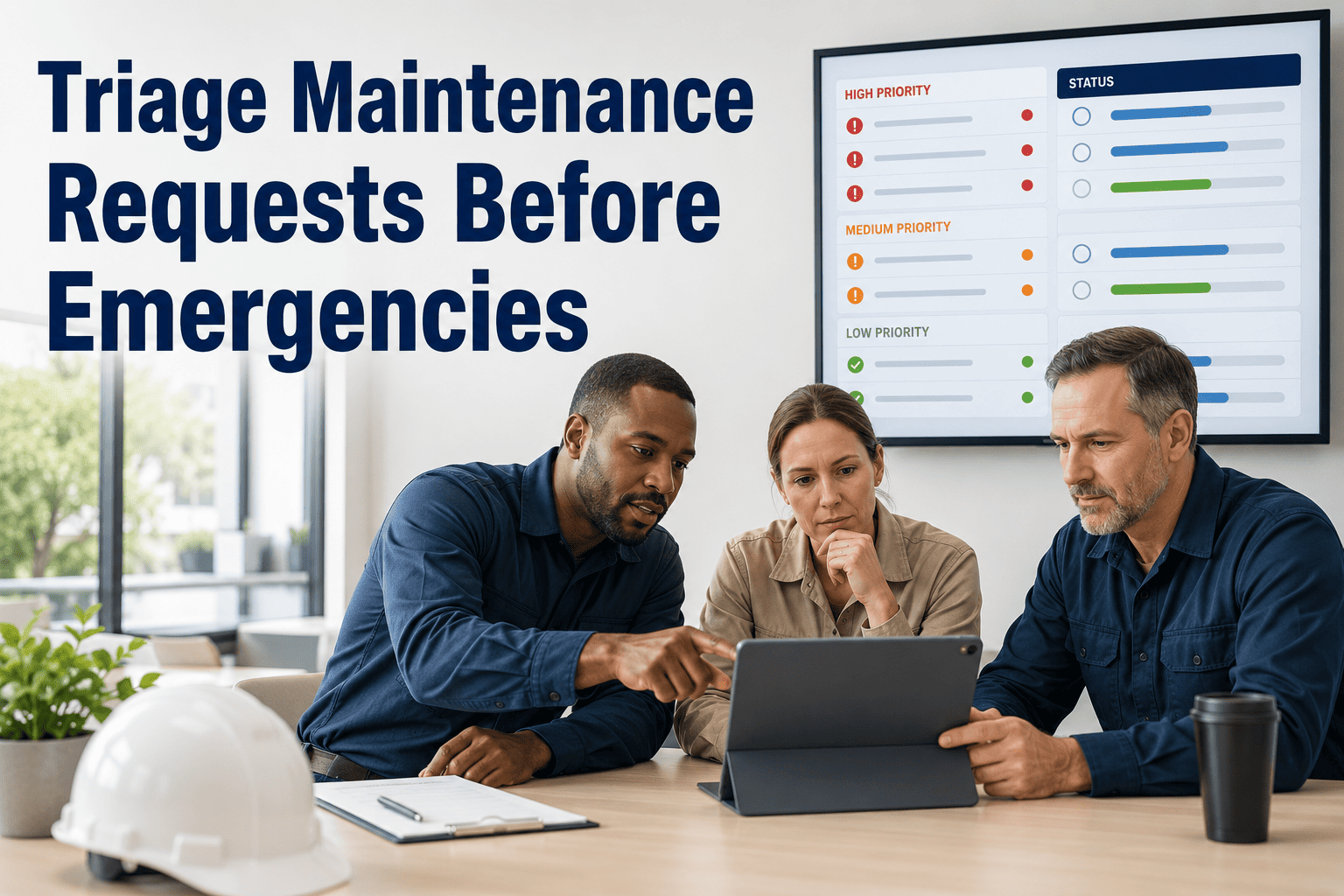
A maintenance request without a triage process is just a list. The difference between a well-run facility and a reactive one is a consistent system for sorting, prioritizing, and acting on requests before they escalate. Here's how to build that system.
Cost of Reactive vs Planned Maintenance
Emergency Repair
9x
Corrective (Planned)
3x
Preventive Maintenance
1x
Relative cost index — PM = 1x baseline
The Priority Matrix: How to Classify Every Request
Not all maintenance requests are equal. A structured classification system ensures your team works on the right things in the right order — every time.
P1
Critical — Safety or Production Stop
Response within: 1 hour
Any request where failure has occurred or is imminent, with direct risk to personnel safety or total production loss. Examples: gas leak, electrical fault, conveyor failure on active line.
Action: Dispatch immediately, create emergency WO on mobile, notify supervisor in parallel.
P2
Urgent — Degraded Operation
Response within: 4–8 hours
Equipment running but at reduced capacity or reliability. Risk of escalation to P1 without prompt action. Examples: unusual vibration, fluid levels at limit, one of two redundant systems down.
Action: Assign to next available technician, add to same-day schedule, document condition with photo.
P3
Standard — Scheduled Corrective
Response within: 24–72 hours
Equipment operating normally but a condition needs correction before the next PM cycle. Examples: worn seal, minor fluid seep, lighting fault in non-critical area.
Action: Add to work order queue, assign in next scheduling window, confirm with requester.
P4
Routine — Planned Improvement
Response within: 1–2 weeks
No current fault — cosmetic, comfort, or efficiency improvement request. Examples: painting, office HVAC adjustment, non-urgent labeling, minor housekeeping items.
Action: Log in backlog, group with similar work for batch scheduling, communicate expected timing to requester.
The 5-Question Triage Protocol
Apply these five questions to every request as it comes in. The answers determine the priority classification automatically.
Q1
Is there an immediate safety risk to personnel?
Yes → P1 regardless of other factors. No → continue to Q2.
Q2
Has the asset failed or stopped production?
Yes → P1. Partially degraded → P2. No → continue to Q3.
Q3
Will it escalate to failure without action in the next 24 hours?
Yes → P2. Unlikely → continue to Q4.
Q4
Is the asset critical to core operations or regulatory compliance?
Yes → P2 or P3 depending on severity. No → P3 or P4.
Q5
Is there photo or location data attached to the request?
No → request requester to add it before dispatch. Visual evidence cuts diagnostic time by 40% on first visit.
What Every Maintenance Request Should Capture
| Field |
Why It Matters for Triage |
Without It |
| Asset ID / QR Scan |
Links request to maintenance history instantly |
Technician arrives without context — repeat diagnosis of known issue |
| Location / Area |
Enables geographic dispatching and risk zoning |
Dispatcher cannot route efficiently or assess impact on adjacent assets |
| Photo of Condition |
Reduces first-visit diagnosis time by 30–40% |
Technician brings wrong parts; additional trip required |
| Reported by + Timestamp |
Accountability and SLA tracking |
Cannot measure response time or identify patterns in report sources |
| Priority Selection |
Forces requester to self-classify; manager validates |
All requests treated as equal urgency — critical work delayed |
| Description of Symptom |
Guides initial diagnostic approach and parts prep |
Technician walks in blind; diagnostic time doubles |
Expert Review
LM
Linda Morrow
Facilities Director · IFMA Certified Facility Manager (CFM) · Healthcare and Industrial Sectors
The facilities teams I've seen run most effectively have one thing in common: they treat every maintenance request as information, not just a task. The photo that a requester submits on their phone tells a technician whether they need a wrench or a seal kit before they've left the shop. The priority classification tells the dispatcher whether this is a "drop everything" or "schedule it Thursday" situation. When that intake discipline is built into the request system rather than relying on individual judgment, response times drop and emergency escalations almost disappear. The data also starts telling you which requesters over-classify everything as P1 — that's a training insight you can act on.
Build a Triage-First Maintenance Workflow in Days
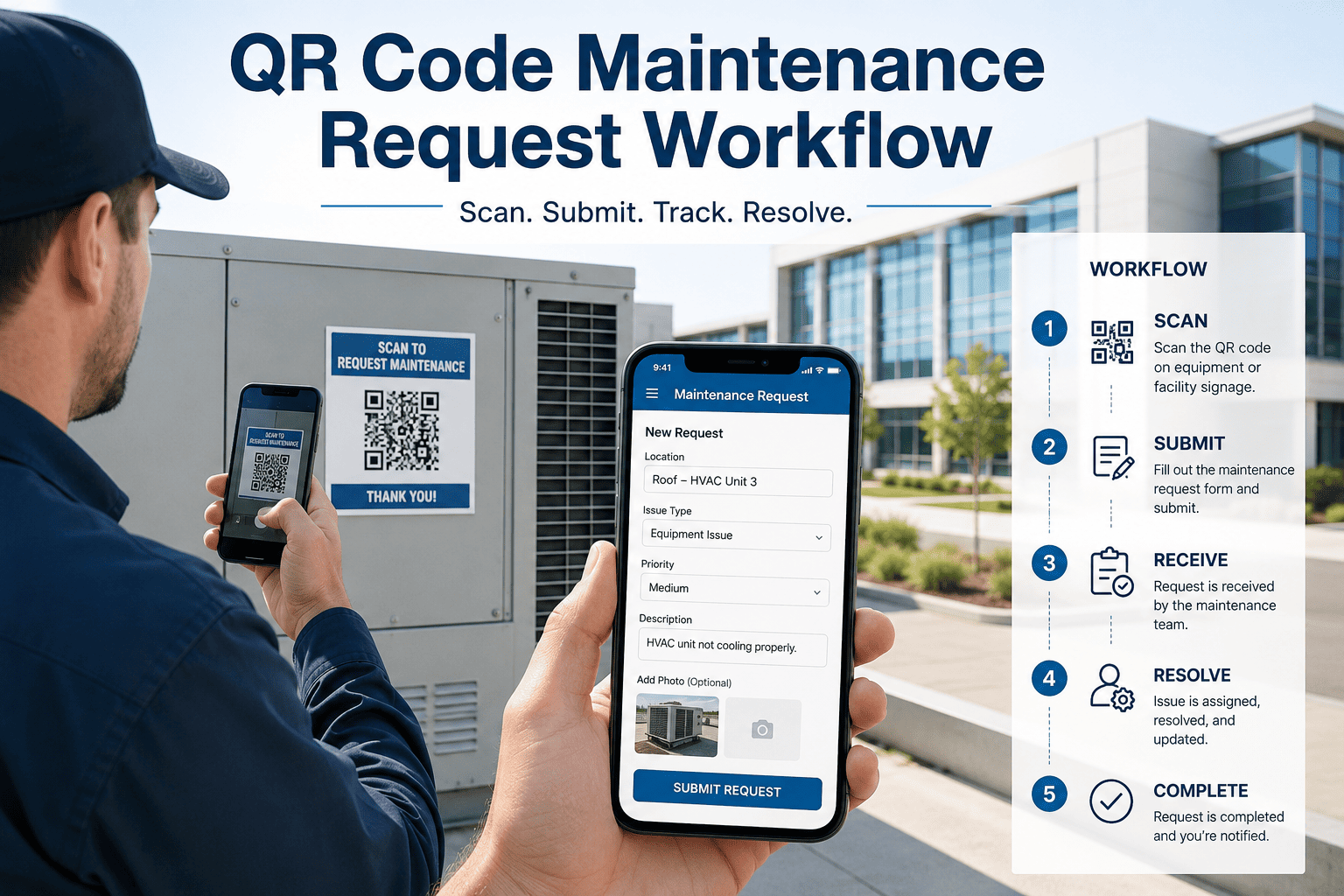
OxMaint's request module captures photo, location, priority, and asset ID from any device — giving your team the intake data to triage accurately and dispatch confidently, every time.
Frequently Asked Questions
How do you prevent requester priority inflation — everyone marking their request as critical?
Priority inflation is extremely common when requesters self-classify without structure or accountability. The most effective fix is a two-step system: requesters select their perceived priority using clear plain-language descriptions (not just "P1–P4"), and a maintenance supervisor validates or adjusts the classification before dispatch. Over time, publishing response time data by priority level — so requesters see that P1 requests get 1-hour response and P4 gets 1–2 weeks — naturally calibrates expectations.
OxMaint supports both requester intake and supervisor override workflows, with full audit trail of classification changes.
Should external staff (non-maintenance) be able to submit maintenance requests directly?
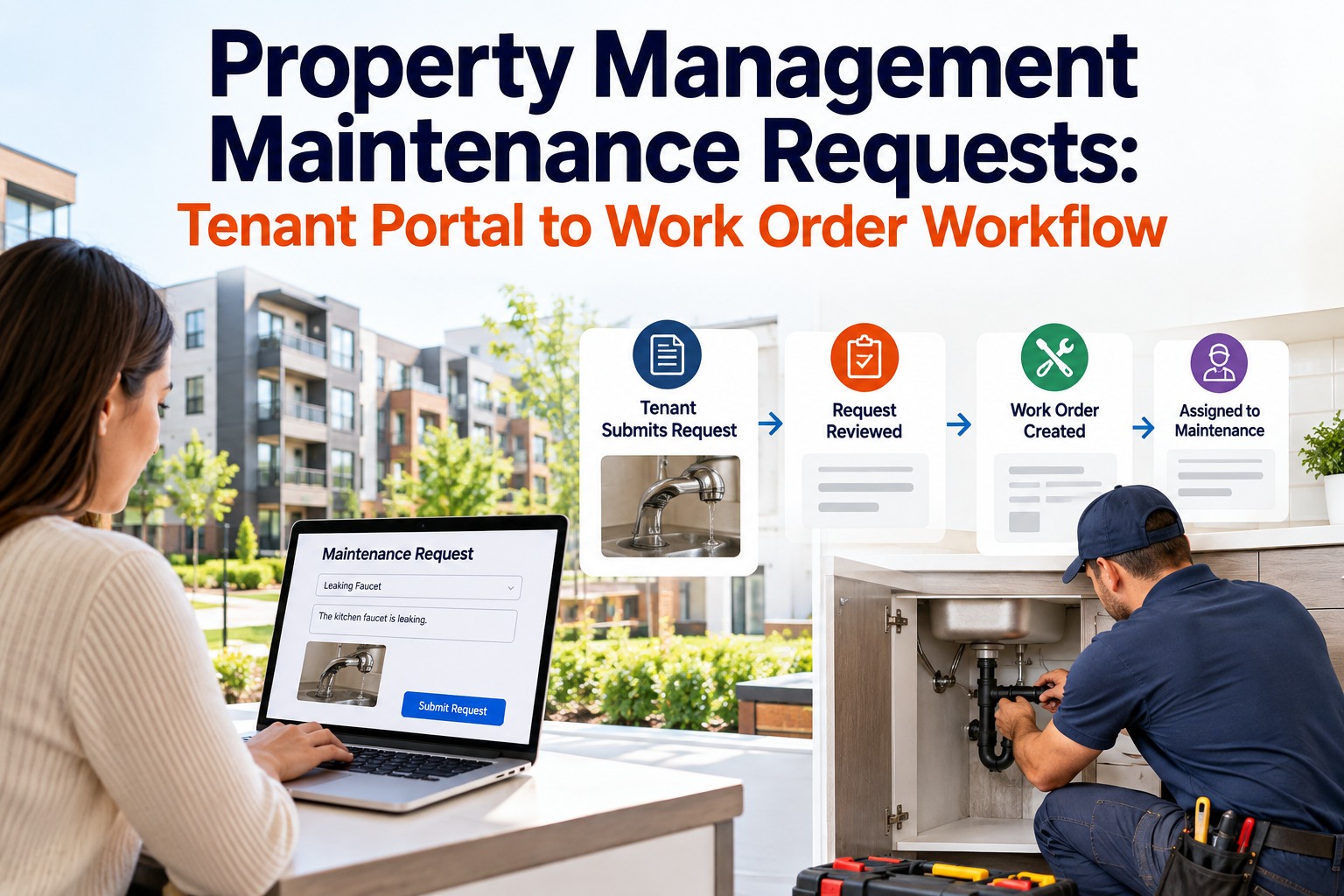
Yes — and it dramatically improves early detection of issues. The best performing facilities allow any employee to submit a request via mobile in under 60 seconds, typically through a QR code on the asset or area. The key is that external requesters see a simplified intake form — symptom description, photo, location — while the priority classification and work order creation happen on the maintenance side after triage. This prevents unapproved work while capturing more early-warning observations from the people who work with the equipment daily. OxMaint supports requester-only access profiles for this exact use case.
Book a demo to see it in practice.
What is a reasonable maintenance request response time target by priority level?
Industry benchmarks for response time targets vary by sector, but common standards for industrial and commercial facilities are: P1 (safety/production stop) — dispatch within 1 hour, work started within 2 hours; P2 (degraded operation) — assigned within 4 hours, scheduled same day; P3 (standard corrective) — scheduled within 24–72 hours; P4 (routine) — scheduled within 5–10 business days. Your SLA targets should be reviewed quarterly against actual performance data from your CMMS. Targets that are consistently missed signal either under-resourcing or miscalibrated priority classification — both of which are addressable with better data.
How do you track whether maintenance requests are actually preventing emergencies over time?
The primary metric is the emergency-to-planned work ratio trend over time. A well-functioning triage system should reduce emergency work orders as a percentage of total work orders month-over-month. You can also track "escalated requests" — P3 or P4 requests that became P1 events before they were resolved — as a direct measure of triage effectiveness. This data exists in your work order history and can be reported monthly. Organizations using OxMaint typically see emergency work order rates decline 25–35% within the first 6 months of structured request triage, primarily because early-warning observations are now captured and acted on before escalation.