Fuel is the single largest variable operating cost in any commercial fleet — typically 35 to 40 cents of every dollar spent on fleet operations. Yet most fleet managers have almost no real-time visibility into where that fuel money goes: which vehicles are burning 20% more diesel than their class average, which drivers idle through $400 in fuel each month, and which fuel card transactions do not match any vehicle's recorded GPS route. The American Transportation Research Institute reports that diesel costs alone average $0.52 per mile for Class 8 operations — fleets using systematic fuel tracking and telematics-integrated CMMS consistently run at $0.36 to $0.41 per mile, a gap worth $18,000 per vehicle annually at 100,000 miles. Start tracking fuel cost per vehicle in OxMaint — free trial, no credit card.
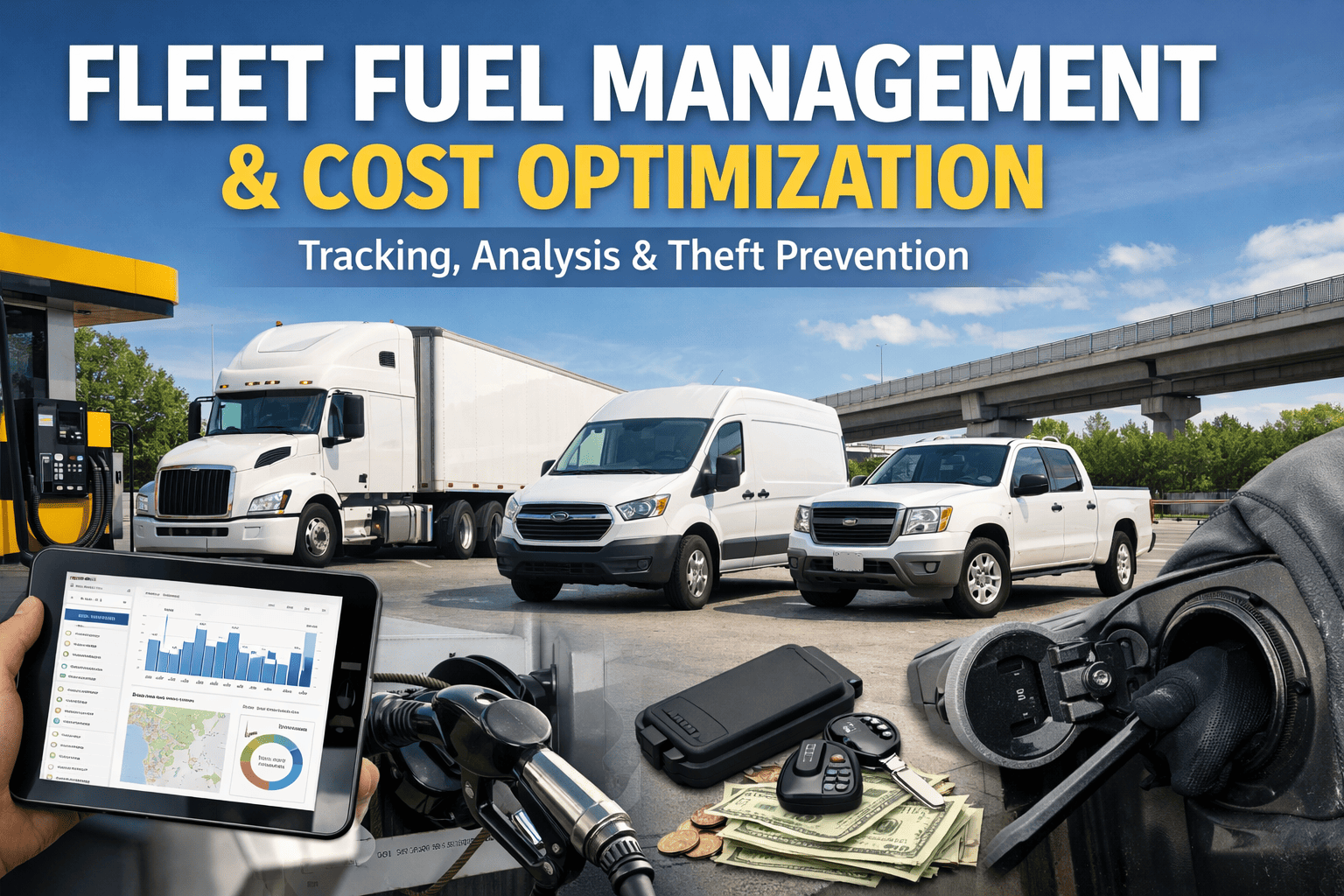
Fleet Fuel Management & Cost Optimization: Tracking, Analysis & Theft Prevention
Reduce fleet fuel costs 10–15% with digital fuel tracking per vehicle, MPG trend analysis, idle time reporting, and fuel theft detection — all connected to OxMaint PM scheduling and work order history.
Why Fleet Fuel Costs Spiral Without Tracking
The four biggest fuel cost leaks — idle time, MPG deviation, unauthorized fill-ups, and deferred engine PM — all share one thing: they are invisible without per-vehicle digital tracking. ATRI data shows idle time alone adds $0.08 per mile to operating cost on routes where drivers idle 20%+ of engine-on time. OxMaint connects fuel purchase records, telematics idle reports, and engine PM history in one platform so fleet managers see — and act on — the actual cost per mile per vehicle, not a fleet average that masks problem units.
Live Fuel Cost Analytics — KPI Dashboard
OxMaint tracks every fuel dollar automatically — per vehicle, per driver, per route. The six KPIs below are live in the OxMaint dashboard from day one, surfacing the problem vehicles and cost leaks that fleet-wide averages always hide. Start tracking these KPIs free in OxMaint.
Fuel Theft Prevention & Detection
The American Trucking Associations estimates fleet fuel theft costs US carriers $3.1 billion annually — with the majority going undetected for months because fuel purchases are reconciled against paper logs rather than GPS data. OxMaint cross-references every fuel card transaction against the vehicle's GPS position, engine runtime, and tank capacity to surface suspicious fill-ups automatically, without manual audit. See OxMaint's fuel theft detection configured for your fleet.
Every fuel card transaction is checked against the vehicle's GPS position at time of purchase. A fill-up 12 miles from the vehicle's logged position triggers an automatic alert to the fleet manager.
OxMaint calculates theoretical tank fill based on the vehicle's last fuel level and miles driven. A transaction that exceeds tank capacity by more than 5% is flagged as a potential double-swipe or skimmer event.
Fuel purchases outside the vehicle's scheduled operational window — nights, weekends, and non-route locations — are flagged automatically. 73% of confirmed fleet fuel theft occurs off-hours.
We discovered $26,000 in unaccounted fuel spend in the first 60 days of OxMaint deployment — three drivers were fueling personal vehicles on company cards. The GPS cross-reference caught what three years of manual audits missed completely.
Frequently Asked Questions
Know Exactly Where Every Fuel Dollar Goes.
Per-vehicle fuel tracking, theft detection, and MPG analytics — live in under 2 weeks.