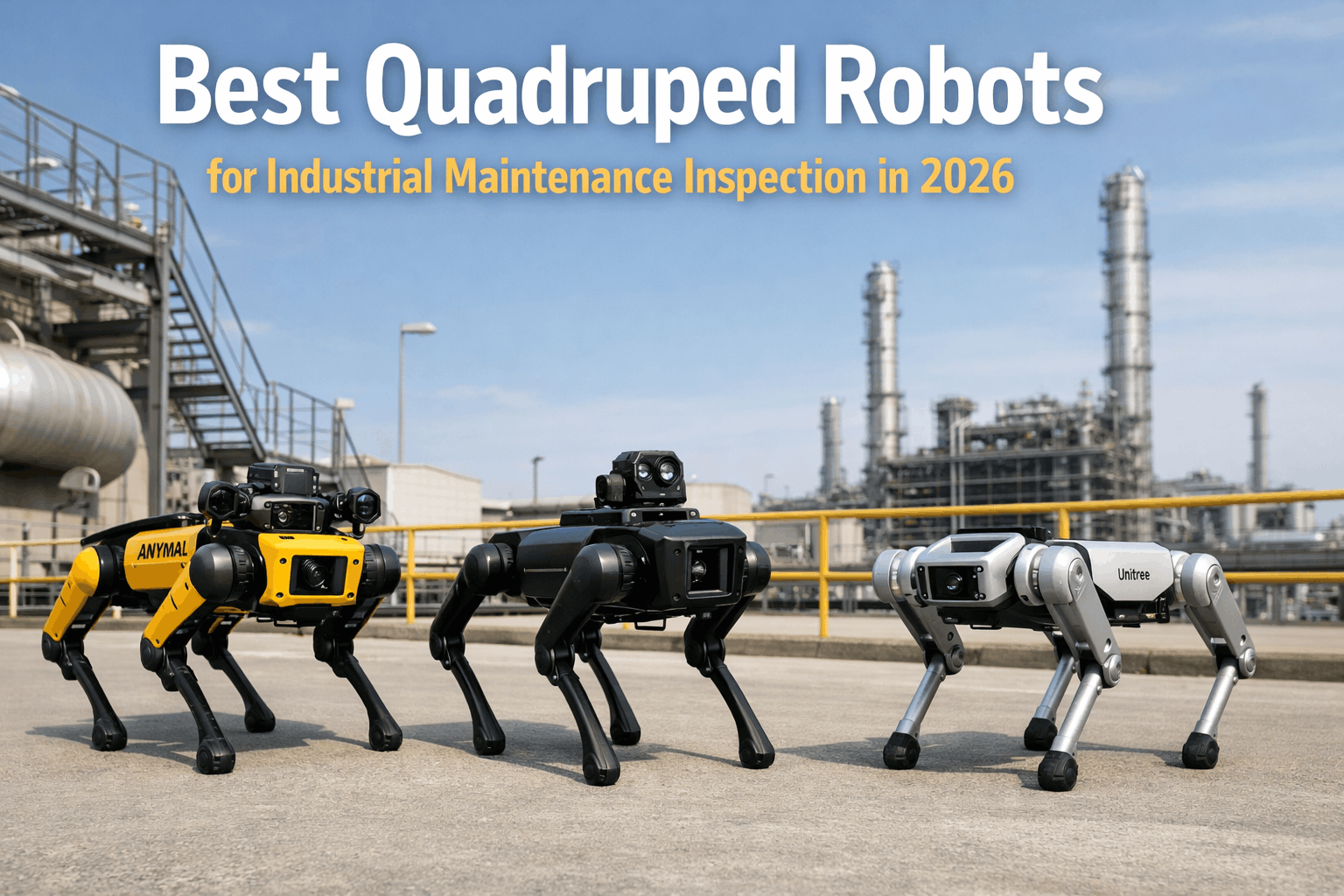
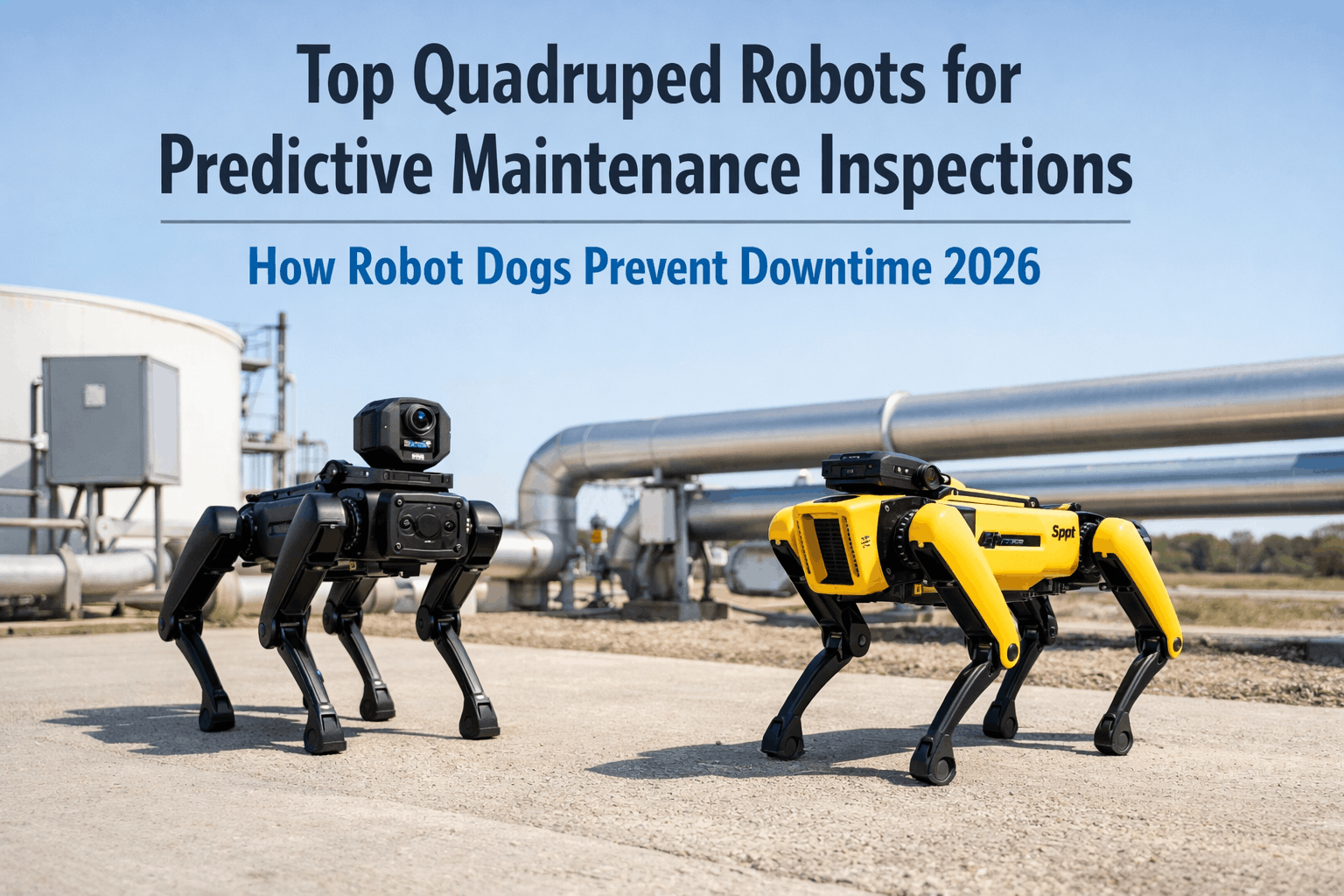
Quadruped robots — from Boston Dynamics' Spot to ANYbotics' ANYmal — are transforming industrial inspection across energy plants, mining operations, construction sites, and manufacturing floors. Unlike wheeled or tracked platforms, these four-legged machines navigate stairs, uneven terrain, confined spaces, and hazardous zones that previously required human entry. But as deployments scale from a single pilot unit to multi-site fleets of 10, 50, or 100+ robots, the operational challenge shifts dramatically: how do you centrally manage patrol schedules, triage thousands of daily alerts, maintain the robots themselves, and convert every inspection finding into a completed repair? The answer lies in combining fleet orchestration software like Orbit with a robust CMMS platform like Oxmaint — creating an end-to-end system where robotic findings automatically become tracked, prioritised maintenance work orders.
Managing a fleet of quadruped inspection robots without integrated software is like running a delivery company without dispatch — robots generate mountains of thermal images, gas readings, vibration data, and anomaly reports, but without centralised dashboards and automated workflows, critical findings get buried, response times balloon, and the ROI of your robotics investment erodes. Oxmaint's CMMS platform bridges this gap by ingesting structured inspection data from Orbit-managed robot fleets and instantly generating work orders — complete with severity ratings, asset locations, supporting media, and assigned technicians — ensuring every defect detected by a quadruped robot is resolved, verified, and documented.
Centrally Manage Multi-Site Robot Fleets. Automate Alert Triage. Close Every Work Order.
Why Multi-Site Quadruped Fleets Need Centralised Management
A single quadruped robot on a pilot site is manageable. A fleet of 20+ robots across 5 facilities generates operational complexity that demands purpose-built orchestration. Here are the key challenges driving adoption of fleet management software:
Multi-Site Coordination Complexity
Each facility has unique patrol routes, hazard zones, and inspection priorities. Without a centralised platform, site managers independently configure robots, creating inconsistent inspection quality, duplicated effort, and zero cross-site visibility. Orbit provides a single pane of glass for scheduling, monitoring, and comparing fleet performance across every location.
Alert Overload and Triage Bottlenecks
A single quadruped running three daily patrols generates 500-2,000 data captures per day. Multiply that across a fleet of 30 robots, and maintenance teams face 15,000-60,000 data points daily. Without AI-powered alert triage, critical findings — a gas leak, a thermal anomaly on a critical bearing — get lost in noise. Orbit's alert classification combined with Oxmaint's automated work order creation ensures high-severity findings surface immediately.
Robot Uptime and Self-Maintenance
Quadruped robots are complex electromechanical systems — actuators, LIDAR modules, thermal cameras, batteries, and joint assemblies all require preventive maintenance. A robot sitting idle due to a failed joint actuator is lost inspection capacity. Oxmaint tracks each robot as a maintainable asset with its own PM schedule, spare parts inventory, and maintenance history.
Regulatory Compliance and Audit Trails
Industries like oil & gas, nuclear, and pharmaceuticals require documented proof that inspections occurred on schedule and findings were resolved. Fleet management software creates timestamped, GPS-tagged, media-rich inspection records that satisfy regulatory auditors — replacing paper-based compliance with automated digital trails.
Scaling ROI Beyond Pilot Phase
Most quadruped deployments stall at the pilot stage because organisations lack the workflow infrastructure to scale. Connecting Orbit fleet orchestration with Oxmaint's CMMS creates the operational backbone that turns a single-site experiment into an enterprise-wide inspection programme with measurable, compounding ROI.
Quadruped Robot Platforms for Industrial Fleet Deployment
The quadruped robot market has matured rapidly. Several platforms now offer fleet-ready capabilities with standardised APIs for integration with orchestration and CMMS software:
Boston Dynamics Spot
The most widely deployed quadruped robot in industrial settings. Spot navigates stairs, rough terrain, and confined spaces autonomously. Integrated with Orbit for fleet scheduling, mission design, and data management. Modular payload system supports thermal, acoustic, gas, and visual inspection sensors.
ANYbotics ANYmal
Purpose-built for hazardous industrial environments including ATEX-rated explosive atmospheres. ANYmal features IP67 weatherproofing, integrated thermal and optical cameras, acoustic sensors, and gas detection. Fleet management through ANYmal's own platform with API connectivity to external CMMS systems.
Unitree B2 / Go2
Cost-effective quadruped platforms gaining traction for high-volume fleet deployments. The B2 industrial model supports third-party sensor payloads and autonomous navigation. Lower per-unit cost enables larger fleet sizes at equivalent budgets, making wide-area coverage economically viable for the first time.
Ghost Robotics Vision 60
Ruggedised quadruped designed for extreme environments — desert heat, arctic cold, muddy terrain, and coastal salt exposure. Extended battery options and modular sensor bays support long-duration autonomous patrols in remote facilities where other platforms struggle with environmental conditions.
Every Robot Finding Should Become a Tracked Work Order. Automatically.
Oxmaint receives inspection data from quadruped robot fleets managed by Orbit and instantly generates prioritised maintenance work orders — complete with thermal images, location data, and severity classification.
Core Fleet Management Capabilities: Orbit + Oxmaint
Centralised Fleet Dashboard
AI-Powered Alert Triage
Automated Work Order Generation
Predictive Maintenance Analytics
End-to-End Workflow: From Robot Patrol to Completed Repair
The power of combining Orbit fleet management with Oxmaint CMMS is the fully closed-loop workflow — no manual data entry, no findings lost in email threads, no untracked repairs:
Mission Scheduled in Orbit
Fleet manager configures patrol routes, inspection waypoints, and sensor actions for each robot across all sites. Missions are scheduled automatically based on inspection frequency requirements and robot availability.
Quadruped Executes Autonomous Patrol
Robot navigates facility autonomously — climbing stairs, traversing corridors, entering confined areas. At each waypoint, it captures thermal images, visual scans, acoustic readings, gas measurements, and vibration data per mission configuration.
Orbit Processes and Triages Alerts
Orbit's AI engine processes captured data, classifies anomalies by type and severity, filters false positives against historical baselines, and surfaces prioritised alerts on the centralised fleet dashboard for operator review.
Findings Pushed to Oxmaint CMMS
Classified findings are automatically transmitted to Oxmaint via REST API integration — each finding packaged with thermal images, location data, equipment identifier, severity rating, and recommended maintenance action.
Work Order Created, Dispatched, and Tracked
Oxmaint generates a prioritised work order, assigns it to the responsible maintenance technician, attaches all supporting inspection media, and tracks the repair through completion — creating a verified audit trail from detection to resolution.
Feedback Loop and Continuous Improvement
Completed work orders feed back into Orbit's analytics, refining AI models, updating asset health profiles, and optimising future patrol routes and inspection frequencies based on actual maintenance outcomes.
ROI of Fleet-Managed Quadruped Inspection
Turn Fleet-Scale Robotic Data Into Completed Repairs — Automatically
Oxmaint's CMMS integrates with Orbit-managed quadruped fleets to create, prioritise, dispatch, and track every work order from robotic detection to verified completion across all your sites.
Implementation Roadmap: From Pilot to Enterprise Fleet
Single-Site Pilot
Deploy 1-2 quadruped robots at your highest-priority facility. Configure patrol routes in Orbit with supervised autonomy. Connect to Oxmaint CMMS for automated work order generation. Establish baseline metrics for inspection coverage, defect detection rates, and response times.
Full Autonomy and Second Site
Transition to fully autonomous patrol schedules with AI-powered alert triage. Expand to a second facility using standardised mission templates. Build historical trend data for predictive maintenance models. Document ROI metrics to support enterprise expansion business case.
Enterprise Fleet Deployment
Scale to 5-10+ sites with centralised Orbit fleet management and unified Oxmaint CMMS. Implement cross-site benchmarking dashboards. Deploy predictive maintenance algorithms trained on accumulated fleet inspection data. Most organisations achieve full payback and begin compounding ROI in this phase.
Frequently Asked Questions
What is Orbit and how does it manage quadruped robot fleets?
Orbit is Boston Dynamics' fleet management and data processing platform designed for Spot robots but increasingly supporting multi-vendor quadruped deployments. It provides centralised mission scheduling, real-time robot monitoring, autonomous patrol configuration, and inspection data processing with AI-powered anomaly detection. Orbit allows fleet managers to design inspection routes, schedule recurring missions, monitor robot health and battery status, and review inspection findings from a single web-based dashboard — across multiple sites and multiple robots simultaneously.
How does Oxmaint integrate with Orbit?
Oxmaint provides REST API endpoints that receive structured inspection data from Orbit. When Orbit's AI classifies an anomaly — for example, a thermal hot spot on a motor bearing rated as "high severity" — Orbit packages the finding with the thermal image, GPS coordinates, equipment identifier, and recommended action, then posts it to Oxmaint's API. Oxmaint automatically creates a prioritised work order, attaches all supporting media, assigns it to the appropriate maintenance technician based on asset ownership rules, and tracks it through to completion and verification. Typical time from robotic detection to dispatched work order is under 5 minutes.
Can I manage non-Spot quadruped robots through this workflow?
Yes. While Orbit is natively designed for Spot, Oxmaint's CMMS is robot-platform agnostic. Any quadruped robot system that can output structured inspection data via API — including ANYmal, Unitree B2, Ghost Robotics Vision 60, or custom platforms — can push findings into Oxmaint for automated work order generation. For non-Spot platforms, the robot's own fleet management software serves the orchestration role that Orbit provides for Spot, while Oxmaint handles the maintenance workflow downstream. The key requirement is a structured API output with anomaly type, severity, location, and supporting media.
How do you maintain the robots themselves?
Quadruped robots require their own preventive maintenance programme — they are high-value electromechanical assets. Daily checks include sensor lens cleaning, battery health verification, and joint actuator inspection. Weekly maintenance covers LIDAR calibration, communication system testing, and firmware updates. Monthly service includes full gait analysis, motor/gearbox inspection, and environmental seal verification. Oxmaint manages robot maintenance alongside your facility assets — each robot has its own asset record, PM schedule, and spare parts inventory within the same CMMS platform that receives their inspection findings.
What is the typical ROI timeline for a fleet deployment?
Most organisations see payback within 8-16 months based on a combination of avoided unplanned downtime costs ($500K-$5M per year depending on industry), reduced manual inspection labour (60-80% reduction), eliminated confined space and hazardous zone entries (90%+ reduction), and improved regulatory compliance. Organisations that start with a 1-2 robot pilot typically expand to 5-10+ sites within 18 months once ROI documentation is complete. The compounding value of historical fleet inspection data — enabling predictive maintenance that prevents failures rather than just detecting them — continues to grow ROI year over year as the AI models improve with more data.
Ready to Scale Your Quadruped Inspection Fleet?
Join leading industrial organisations using Oxmaint and Orbit to bridge the gap between quadruped robot fleets and maintenance execution. Every finding becomes a tracked, completed, verified repair.