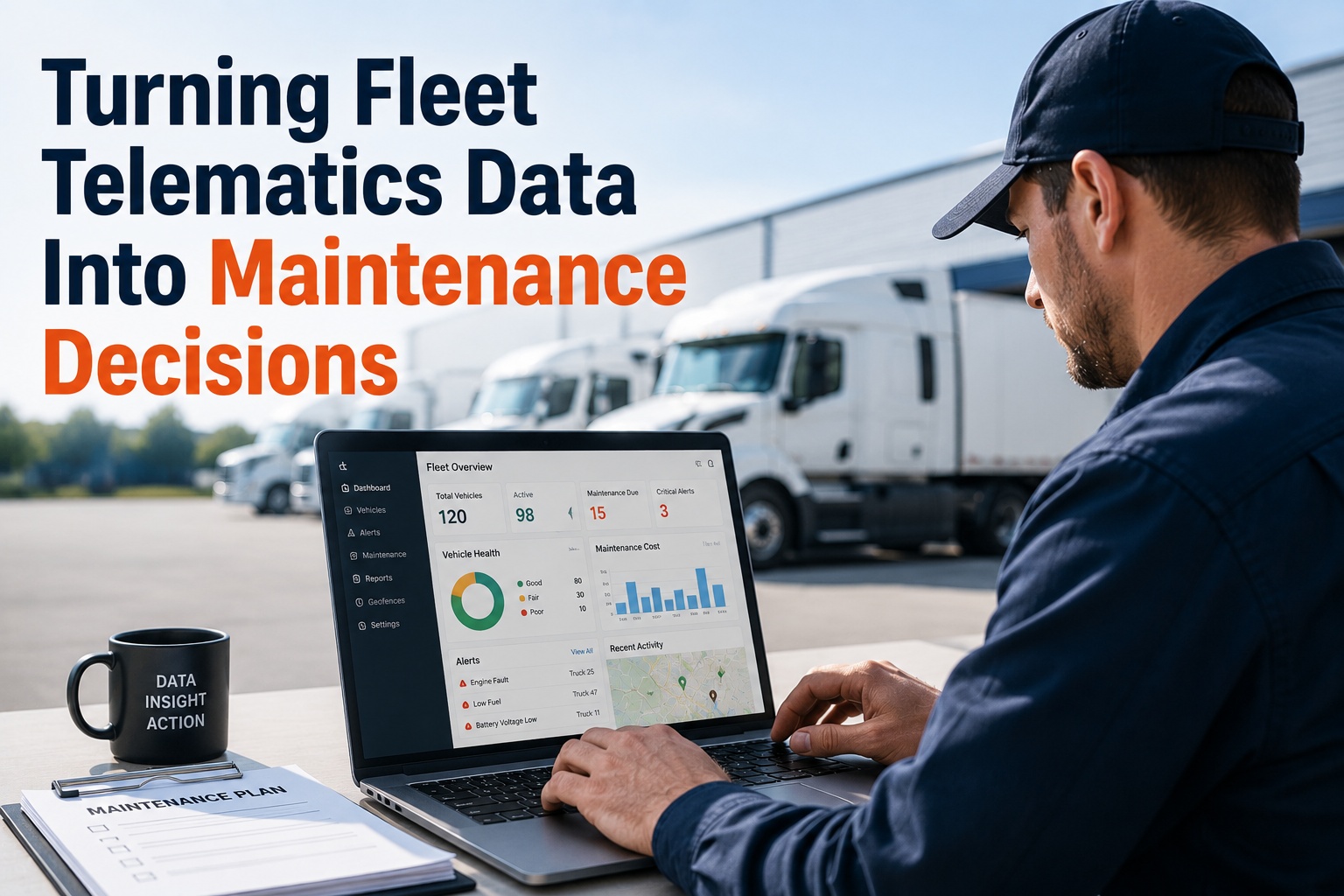
Fleet telematics systems generate millions of data points every day, but the true ROI is only realized when that vehicle data is converted into proactive maintenance actions. By integrating connected fleet maintenance signals—like DTCs, engine hours, and mileage—with a CMMS, maintenance teams can automatically trigger work orders before a minor fault code escalates into a catastrophic roadside failure. Turning telematics data into predictive fleet maintenance reduces unplanned downtime by up to 30% and eliminates the blind spots of reactive scheduling. See how OxMaint bridges the gap between raw diagnostics and automated action when you Start Free Trial today.
Are Your Fleet Fault Codes Turning Into Maintenance Action — Or Just Dashboard Noise?
Telematics integration generates oceans of vehicle data, but without a CMMS to automate the workflow, critical DTCs are missed. Connect your connected fleet maintenance data to automated work orders and stop failures before they happen.
Why Most Fleet Telematics Data Never Becomes a Maintenance Decision
Modern vehicle telematics maintenance platforms capture thousands of data points per hour—engine temperature, RPM, harsh braking, and Diagnostic Trouble Codes (DTCs). Yet, a recent industry analysis shows most maintenance teams only use telematics for route tracking and fuel monitoring, leaving valuable fleet diagnostics on the table.
When fleet fault codes are trapped in the telematics dashboard and disconnected from the maintenance shop's workflow, a $50 sensor replacement predictably becomes a $4,000 tow and roadside repair.
How to Convert Fleet Fault Codes Into Predictive Maintenance
Bridging the gap between telematics fleet management and shop floor execution requires a structured approach to data translation. Here is the step-by-step process for turning raw fleet data into maintenance decisions.
Capture and Standardize Telematics Data
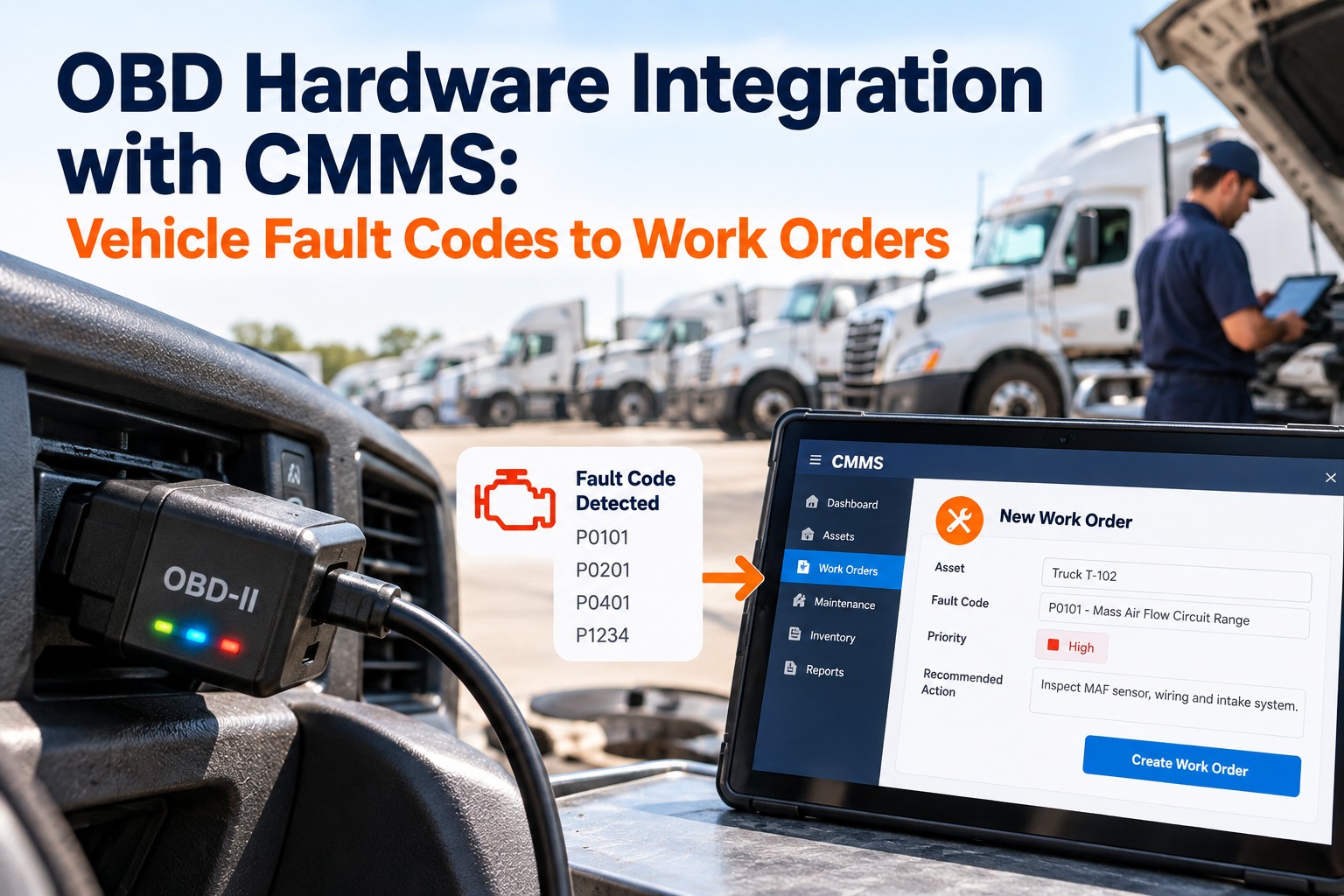
Pull real-time mileage, engine hours, and DTC fleet signals from your telematics provider via API. Standardizing this data ensures that a P-code from a Freightliner and a Peterbilt are interpreted uniformly by your maintenance system.
Apply Severity Rules to Fault Codes
Not every fault code requires immediate action. Map DTCs to a severity matrix—such as SPN/FMI combinations—so that critical alerts (e.g., high coolant temperature) trigger immediate work orders, while informational alerts are queued for the next preventive visit.
Automate Work Order Generation
When a threshold is breached, the system should automatically generate a work order, assign it to the correct technician, attach repair history, and check spare-parts inventory—eliminating manual data entry and dispatch delays.
Validate and Close the Loop
Once the repair is complete, update the asset history. The CMMS feeds the resolution back into the analytics engine, refining the predictive maintenance algorithms for future fleet vehicle data analysis.
Calculating the ROI of Telematics Predictive Maintenance
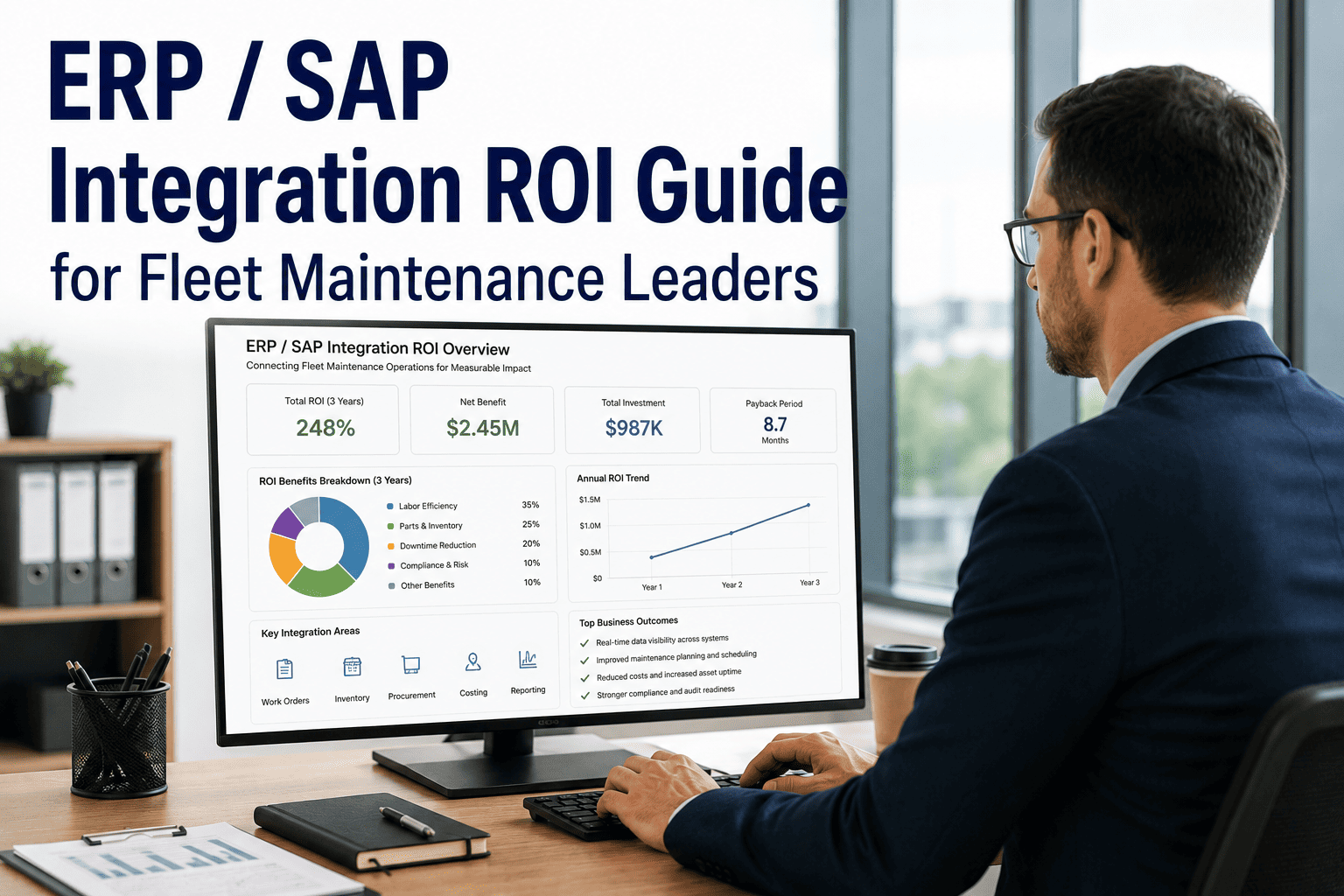
Converting connected fleet maintenance data into automated workflows isn't just a technical upgrade—it's a measurable financial win. Use this formula to model your own payback.
A 180-Vehicle Regional Haul Fleet
Consider a 180-asset fleet spending roughly $48,000 annually on reactive tows and roadside labor. By mapping telematics fault codes to automated preventive triggers, they reduce catastrophic failures by 35%, saving $16,800 in direct repair costs. They also reclaim 120 hours of unplanned downtime, valued at $250/hr, adding $30,000 in recovered revenue.
| Maintenance Metric | Before Telematics Integration | With OxMaint CMMS Integration |
|---|---|---|
| Fault Code Response Time | 12–24 hours (manual review) | Instant (automated work order) |
| Preventive Maintenance Compliance | 68% | 96% |
| Unplanned Downtime per Vehicle | 14 hrs/month | 4 hrs/month |
| Parts Stockouts for Critical Repairs | Frequent | Rare (auto-replenishment) |
Stop Letting Valuable Fleet Diagnostics Sit Idle
See how OxMaint automatically converts your telematics data into preventive work orders. Book a 30-minute demo and we'll map your exact fault-code-to-work-order workflow live.
How OxMaint Turns Telematics Data Into Maintenance Action
OxMaint is an AI-powered CMMS and EAM platform built to ingest raw fleet telematics data and output structured, prioritized maintenance workflows. Here is how our connected fleet maintenance capabilities solve the data-to-action gap.
Automated Fault-to-Work-Order Triggers
OxMaint integrates directly with major telematics providers. When a DTC fires, the system instantly generates a prioritized work order, assigns it to a technician, and alerts the maintenance manager—reducing response time from hours to seconds.
Condition-Based PM Scheduling
Move beyond static calendar schedules. OxMaint uses real-time engine hours and mileage from your vehicle telematics maintenance system to automatically adjust preventive maintenance intervals, ensuring compliance without over-maintaining assets.
Predictive Fleet Maintenance Analytics
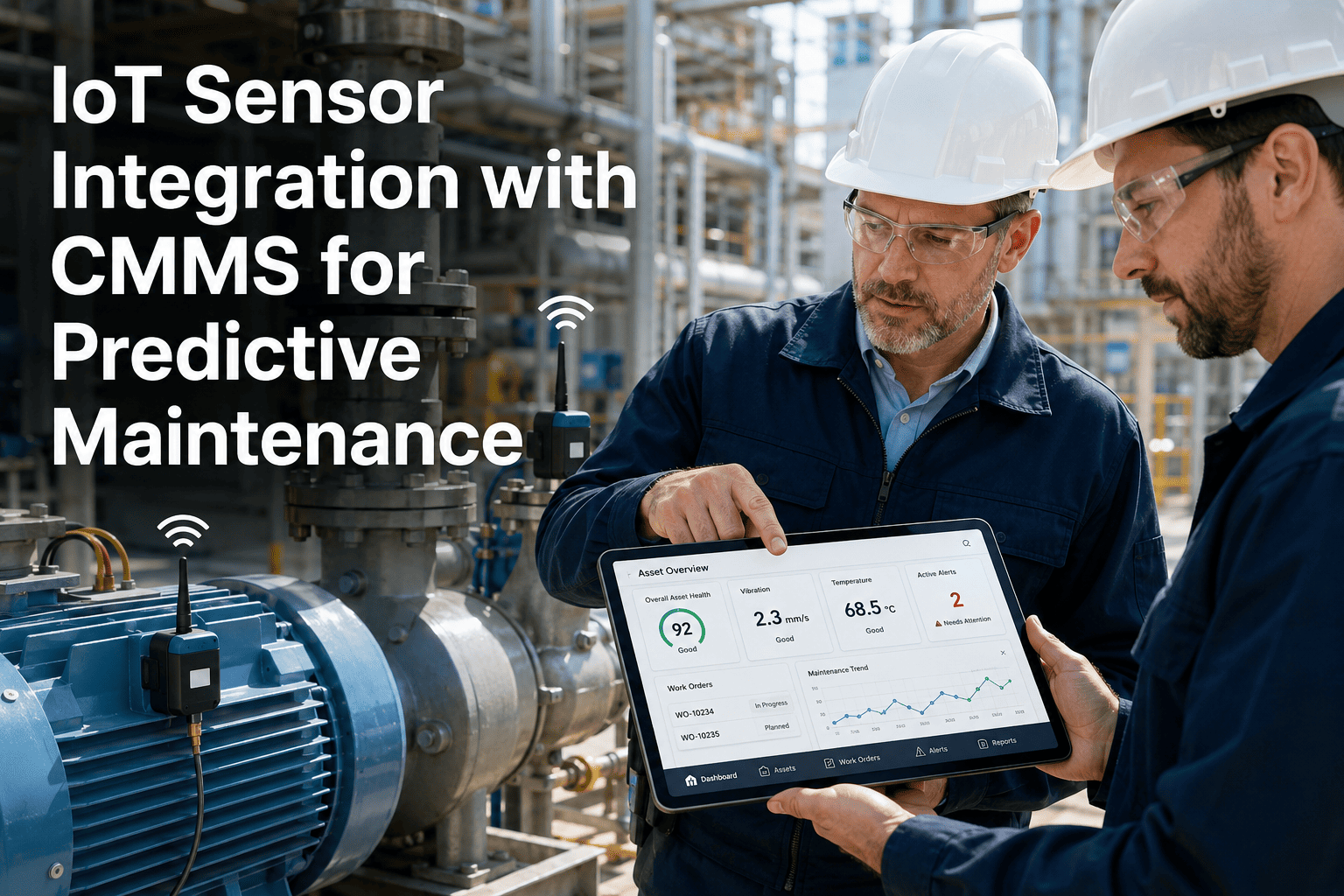
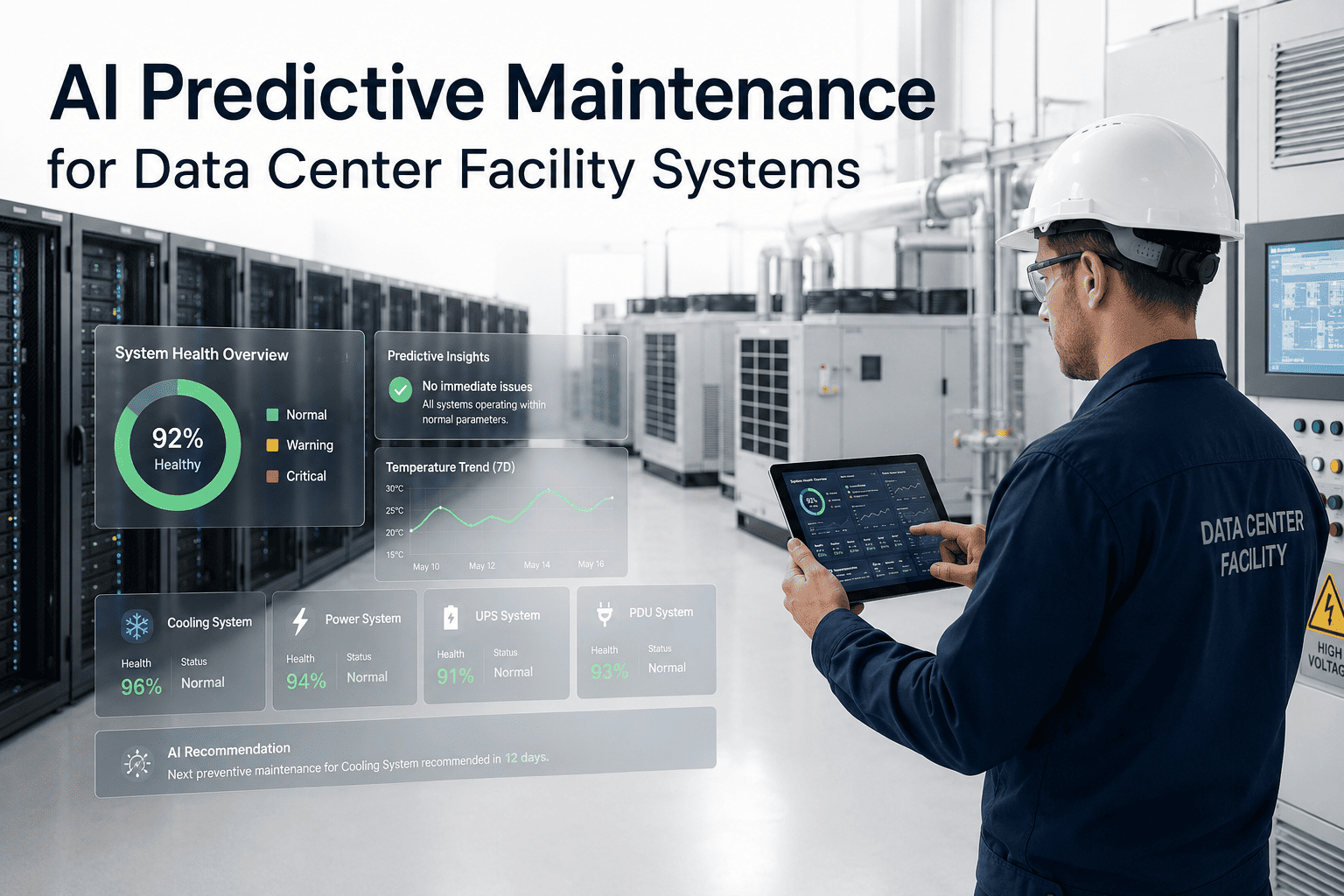
Our AI engine analyzes historical repair data alongside live telematics data to predict component failures before they happen. If a specific fault code pattern historically leads to water pump failure, OxMaint flags the asset for inspection immediately.
Parts Inventory Pre-Allocation
When a telematics-triggered work order is created, OxMaint automatically checks spare-parts inventory and reserves the required filters, belts, or sensors. If stock is low, the system generates a purchase order instantly.
Fleet Telematics Maintenance Integration FAQs
What is telematics predictive maintenance?
Telematics predictive maintenance uses real-time data transmitted from vehicle hardware—such as engine hours, mileage, and DTCs—to predict and prevent equipment failures. By feeding this data into a CMMS like OxMaint, the system automatically triggers inspection and repair work orders before a breakdown occurs, rather than relying on static mileage intervals.
How does telematics integration work with a CMMS?
Telematics integration works by connecting your vehicle telematics provider's API directly to your CMMS. As fault codes or usage thresholds are breached, the telematics system sends a payload to the CMMS, which automatically decodes the severity, generates a work order, checks parts inventory, and notifies the assigned technician. You can see this automated workflow in action when you Book a Demo.
What are the most common fault codes in fleet vehicles?
The most common DTCs in fleet management relate to emissions systems (DPF, EGR), exhaust gas temperature, coolant levels, and ABS modules. While not all fault codes indicate imminent failure, leaving them unaddressed decreases fuel efficiency and can lead to DOT violations during inspections. A connected CMMS prioritizes these codes based on severity and historical failure patterns.
How much does telematics maintenance software cost?
The cost of telematics maintenance software varies based on fleet size and integration complexity, but most CMMS platforms charge a per-asset, per-month fee. However, the ROI typically pays for the software within the first 3 months by eliminating just one catastrophic roadside failure per year. OxMaint offers a flexible pricing model—start a Start Free Trial to explore the platform.
Can telematics data improve DOT compliance?
Yes. Telematics data fed into a CMMS ensures that preventive maintenance is performed exactly when required based on actual vehicle usage, not guesswork. This creates a digital, time-stamped audit trail of repairs and PMs, which is essential for passing DOT inspections and maintaining compliance with FMCSA regulations.
Turn Your Fleet Data Into Downtime Prevention
OxMaint connects your telematics to your maintenance team, automating work orders and predicting failures before they sideline your assets. Get a personalized walkthrough of your fleet's workflow today.
Free 14-day trial · No credit card required