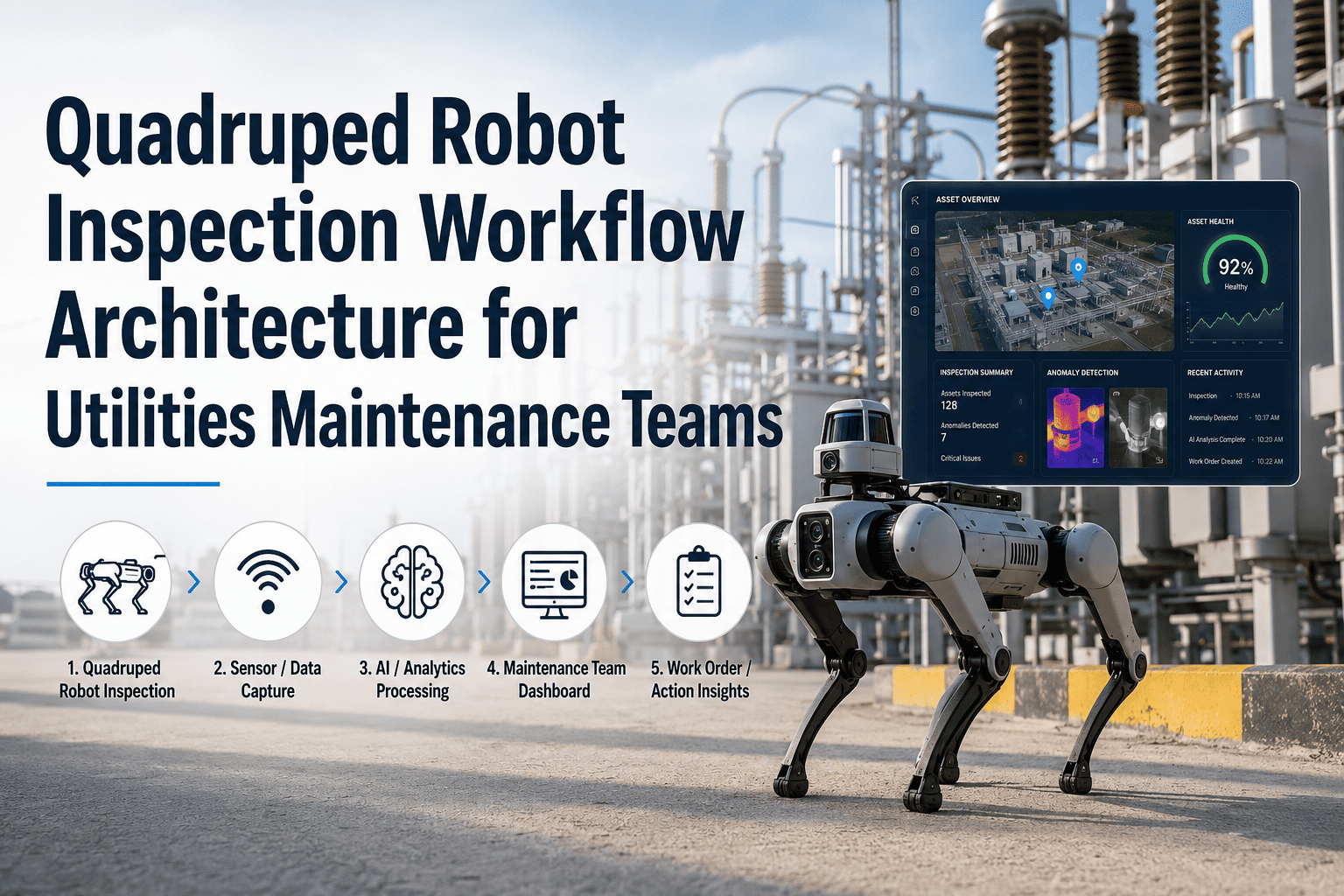
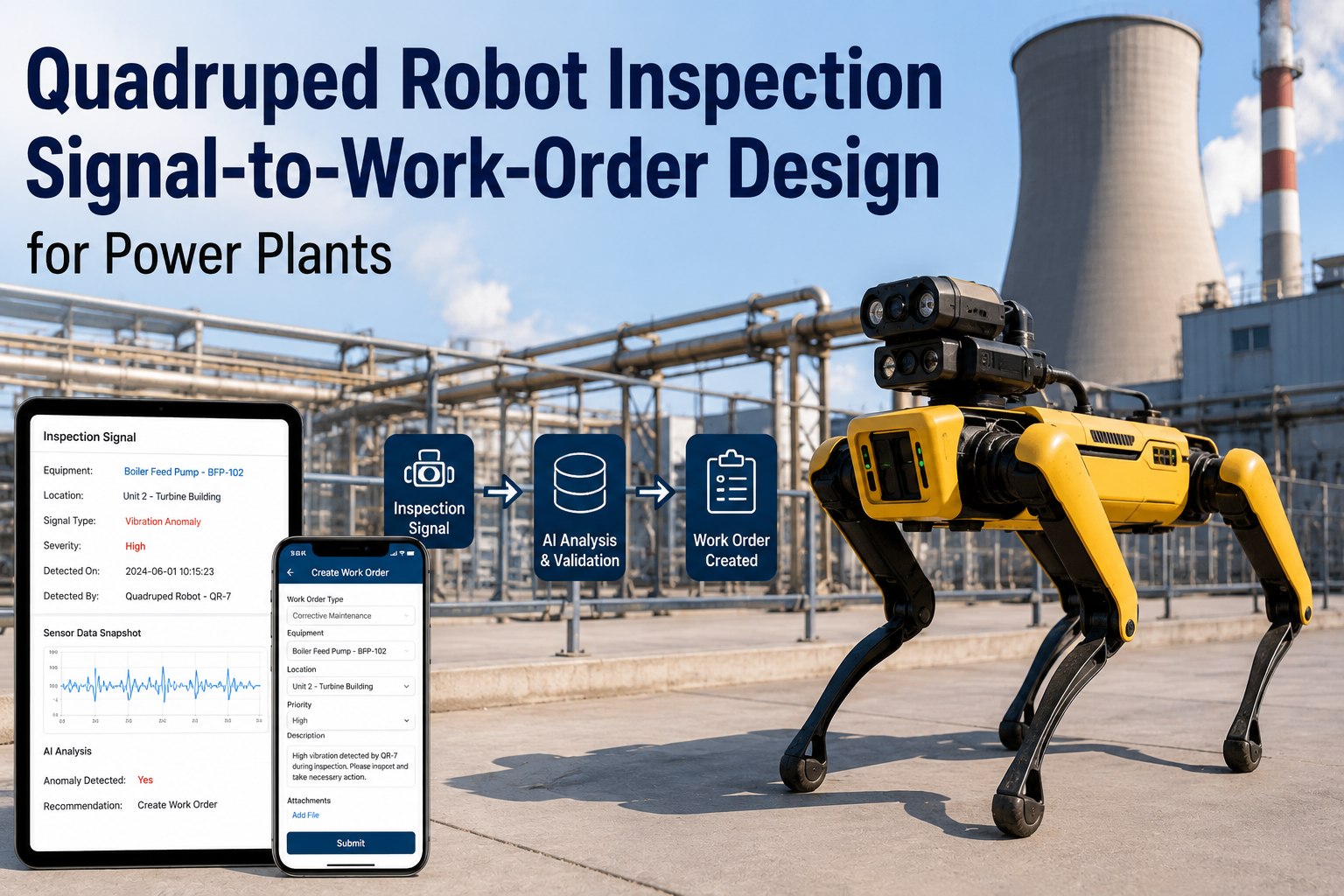
Quadruped robots like Boston Dynamics Spot and ANYmal are being deployed across chemical plants, offshore platforms, and data centers to inspect environments too hazardous for human entry. The robots patrol reliably — but the inspection data they generate rarely flows into a structured maintenance workflow without manual intervention. This governance framework establishes how robot inspection programs should define patrol zones, classify findings, route evidence to the right work order, and maintain audit-ready documentation of every inspection cycle. Organizations following this framework reduce the human review burden on robot inspection programs by over 70% while improving the traceability of findings from patrol to closed repair. To implement this framework with OxMaint, start a free trial or book a 30-minute robot inspection integration walkthrough.
Quadruped Robots · Inspection Governance
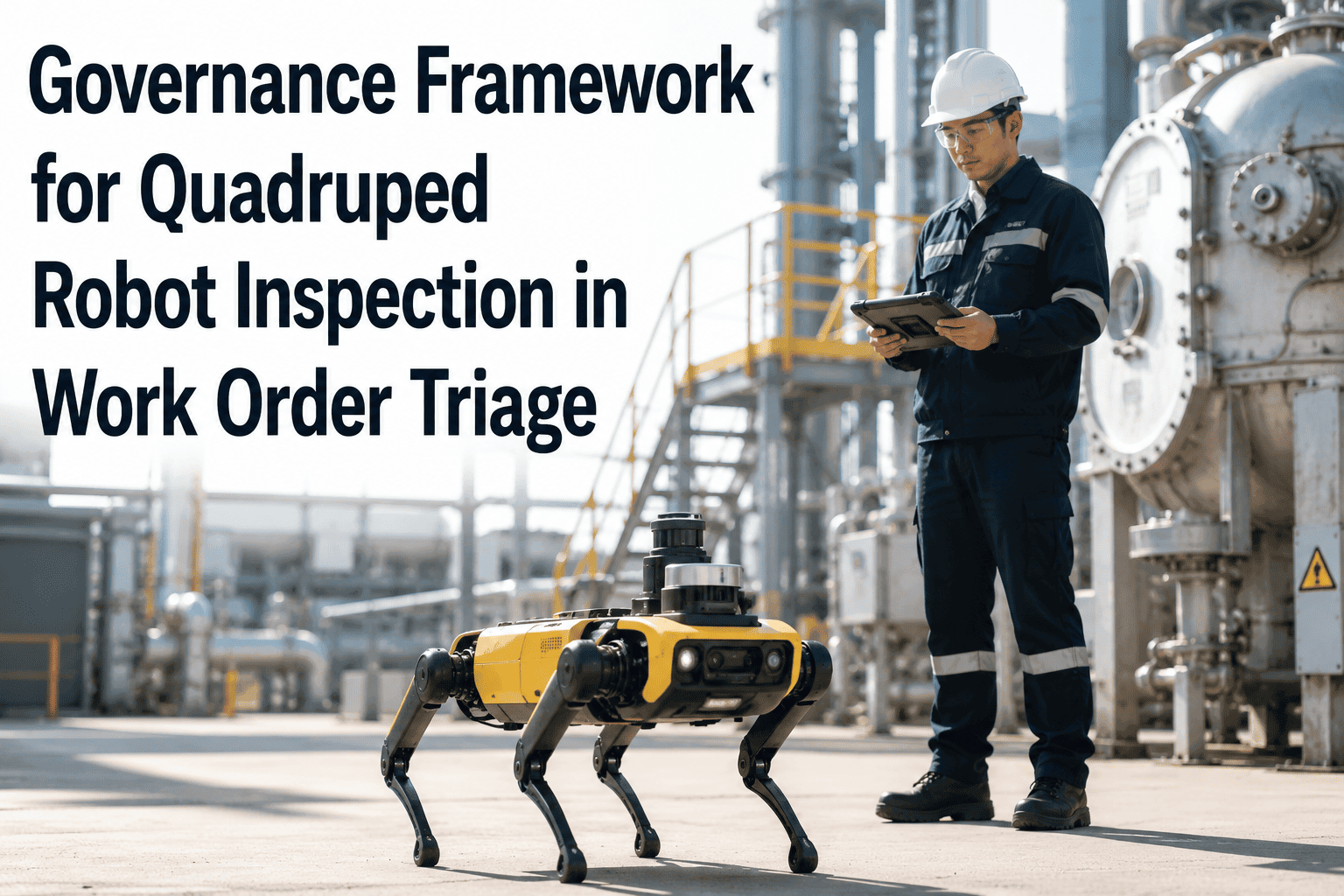
Governance Framework: Quadruped Robot Inspection in Work Order Triage
A robot that patrols without a governance layer is just an expensive camera. This framework gives every robot finding a structured path from detection to documented repair.
Five Governance Pillars
Pillar 1
Patrol Zone Definition
Each robot patrol route is mapped to one or more OxMaint asset zones. Findings from any zone are automatically attributed to the assets within that boundary, eliminating manual location tagging.
Pillar 2
Finding Classification Standards
A standardized taxonomy of finding types — thermal anomaly, fluid leak, structural crack, gas detection, equipment status change — ensures consistent work order templates regardless of which robot or operator generates the finding.
Pillar 3
Evidence Chain of Custody
Every robot finding carries a cryptographically timestamped evidence package: sensor readings, camera frames, robot ID, patrol mission ID, and GPS or zone coordinates. This chain cannot be altered after creation.
Pillar 4
Triage Authority Matrix
Defines which finding types trigger automatic work orders, which require human review before dispatch, and which are logged as observations only. The matrix is configurable by zone, finding type, and shift schedule.
Pillar 5
Compliance Reporting
Monthly inspection coverage reports document patrol frequency, finding rates by zone, work order conversion rates, and open-finding aging — providing the audit trail required by process safety management standards.
70%+
Reduction in manual review hours required per robot patrol cycle under this governance framework
4x
Higher finding traceability compared to unstructured robot inspection programs without governance
24/7
Continuous patrol coverage enabled when robot inspection connects directly to automated triage
Give Your Robot Inspection Program a Governance Layer
OxMaint connects to Boston Dynamics, ANYmal, and other major quadruped platforms. Define patrol zones, configure the triage authority matrix, and start generating structured work orders from robot findings.
Triage Authority Matrix: Default Configuration
| Finding Type |
Severity |
Auto Work Order |
Human Review Required |
Response Target |
| Gas detection above threshold |
Critical |
Yes |
No |
Immediate |
| Thermal anomaly >30°C above baseline |
High |
Yes |
No |
2 hours |
| Visible fluid leak |
High |
Yes |
No |
2 hours |
| Structural crack detected |
Medium |
Yes |
Optional review |
Next shift |
| Thermal anomaly 10–30°C above baseline |
Medium |
Review queue |
Yes |
4 hours |
| Equipment status change |
Low |
No |
Yes |
24 hours |
| No finding |
— |
No |
No |
Log only |
Supported Robot Platforms
Boston Dynamics Spot
SDK + REST API · Thermal, gas, visual payloads · Pre-built OxMaint connector
ANYbotics ANYmal
ROS 2 + REST · Thermal, acoustic, visual · Webhook integration
Unitree B2
REST API · Visual + LiDAR payloads · Custom mapping
Custom / ROS-based
MQTT or REST · Any sensor payload via OxMaint schema · Schema mapping session
Expert Review
Reviewed by a Process Safety & Autonomous Inspection Engineer
The governance gap in most robot inspection deployments sits between the finding and the work order. Organizations invest heavily in the robot and the payload but design no structured pathway for what happens when the robot sees something. A triage authority matrix — defining which findings auto-dispatch, which queue for human review, and which are simply logged — is the single most important governance artifact a program can have. Without it, robot inspection depends on individual judgment calls rather than a repeatable, auditable process.
Frequently Asked Questions
How does OxMaint receive inspection data from a quadruped robot?
OxMaint receives robot inspection data via REST API webhook triggered at the end of each patrol mission. The payload includes annotated findings, sensor readings, robot telemetry, and media references. For robots running ROS 2, a lightweight OxMaint bridge node handles the ROS-to-REST translation on the robot's edge computer.
Book a walkthrough and we'll review your specific robot platform's data output format.
Can the triage authority matrix be different for different patrol zones?
Yes. OxMaint's governance configuration supports zone-specific triage rules. A gas finding in a confined space zone can trigger an immediate critical work order and emergency notification, while the same finding type in an open yard zone follows a different escalation path. Shift schedules can also adjust the matrix — after-hours findings may have different auto-dispatch thresholds than daytime ones.
Start a free trial to configure zone-based triage rules for your facility.
How are robot inspection findings stored for compliance and insurance purposes?
Each robot finding is stored in OxMaint as an immutable inspection event linked to the patrol mission, the asset, and any resulting work order. Finding records include the raw sensor data, the AI classification, and the triage decision made at the time of the event. These records support process safety management (PSM) documentation requirements and can be exported in structured formats for insurance or regulatory review. Retention is configurable up to seven years.
What happens when a robot patrol is interrupted or the robot goes offline?
OxMaint monitors patrol mission completion times against configured schedules. If a mission does not complete or the robot goes offline mid-patrol, OxMaint generates a patrol failure alert and can create a work order for the robot or its operator. Partially completed missions are stored with their findings intact and flagged as incomplete. This ensures that missing patrol data is visible rather than silently absent from the inspection record.
Your Robot Patrols. OxMaint Governs the Findings.
Connect your quadruped inspection program to a structured triage and compliance framework — and make every patrol audit-ready from the moment the robot returns.