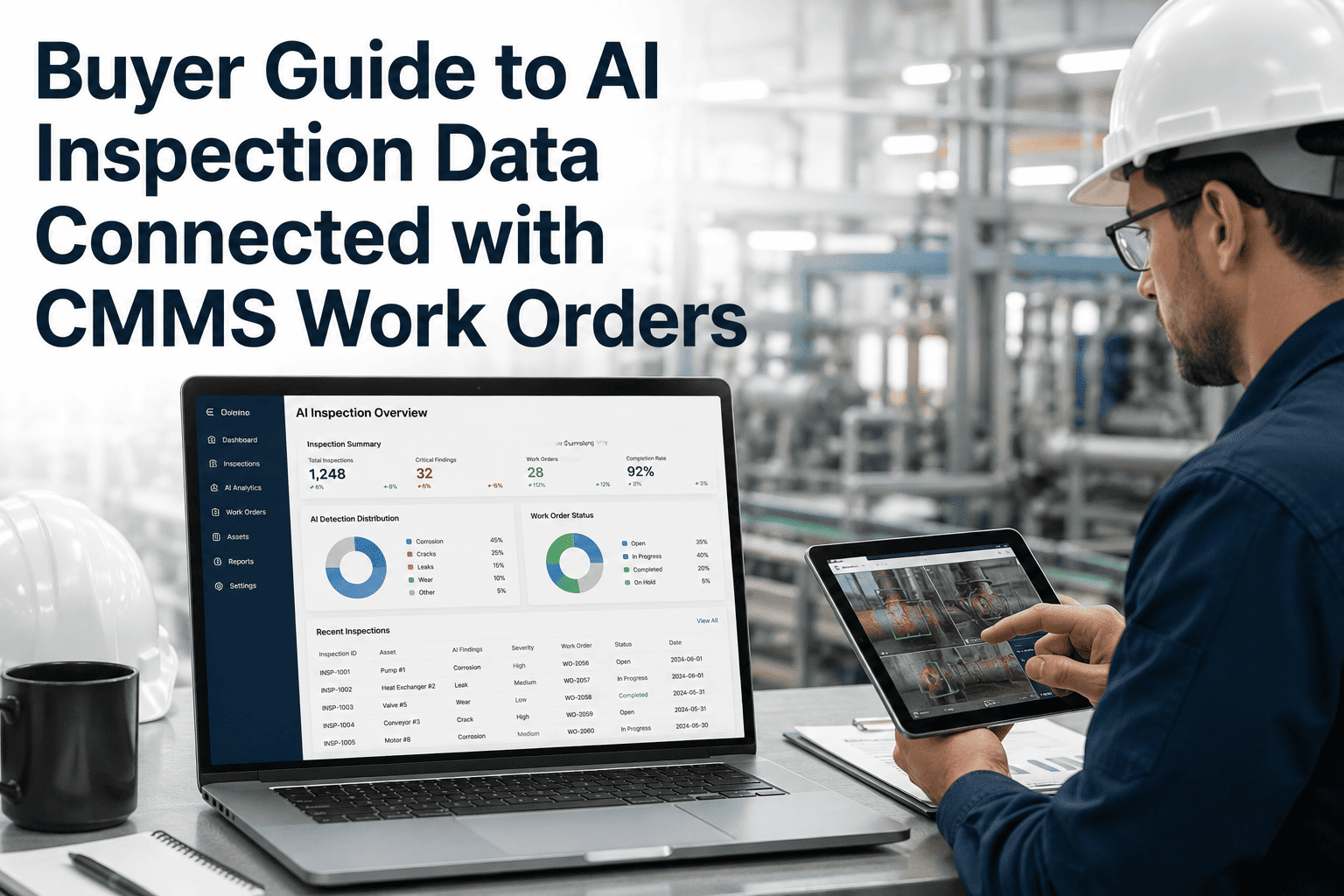
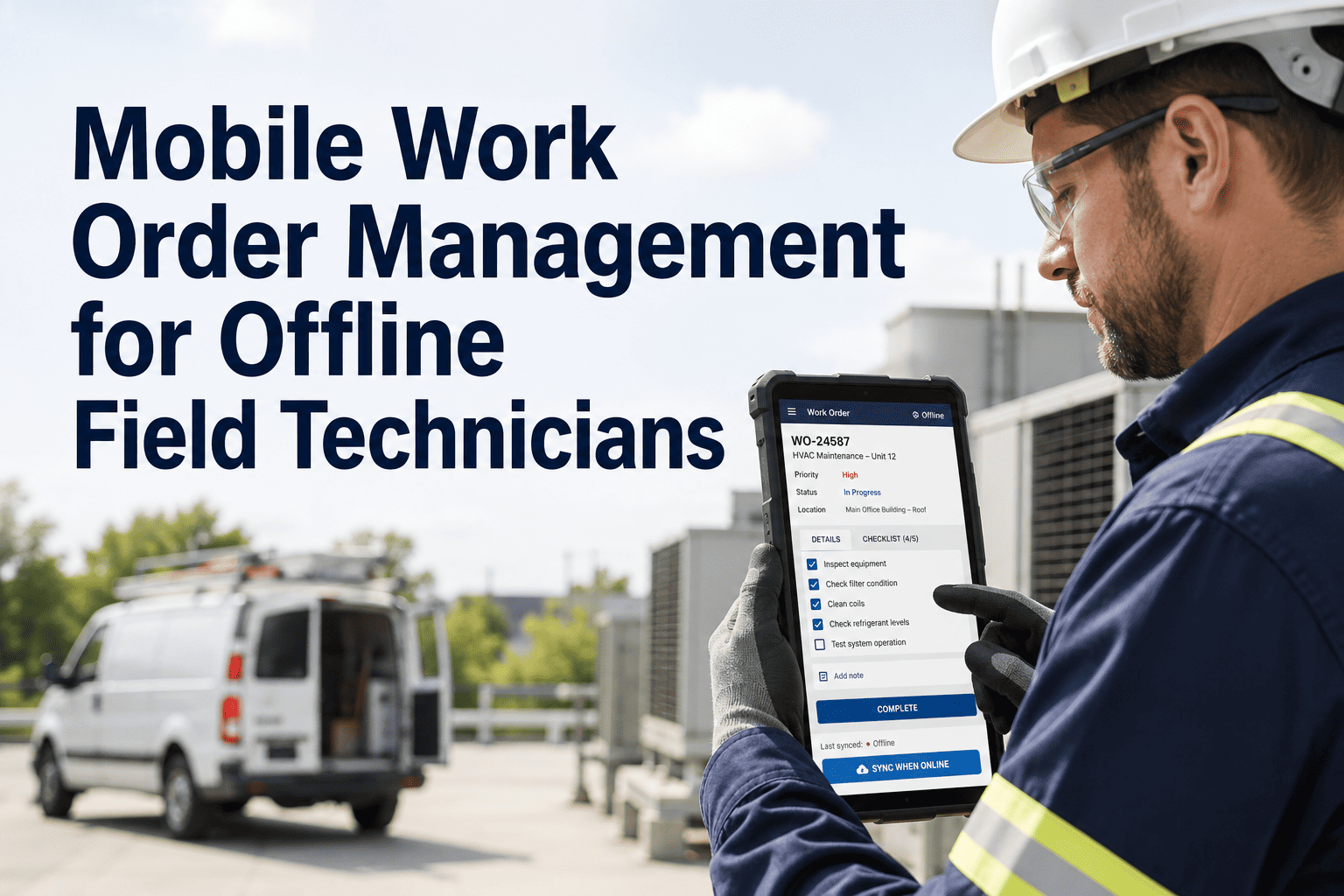
Mobile AI inspection is transforming how field technicians capture, classify, and act on equipment findings — but operational readiness determines whether that transformation reaches the work order queue or stalls at the photo gallery. A technician who captures a perfect thermal image in the field has accomplished nothing if the image is not linked to an asset record, tagged with a fault type, and converted into a tracked work order before the shift ends. Start a free Oxmaint account and connect your mobile inspection workflow to automated work order triage today, or book a demo to walk through the full readiness checklist with an Oxmaint solutions engineer.
Operational Readiness — What It Actually Means
Operationally Ready
Mobile app works offline in dead zones
Inspection findings auto-link to asset records
AI classifies fault type at capture
Work order generated within seconds
Evidence syncs to CMMS on reconnect
Technician receives routed task on device
Not Operationally Ready
Findings stored in personal phone camera roll
Asset ID entered manually by technician
Fault type determined hours later in office
Work order created manually from notes
Evidence emailed or WhatsApp'd to supervisor
No record of who found what and when
The Readiness Checklist — Six Dimensions
01
Device and Connectivity Readiness
Mobile app supports full offline work order capture
QR or barcode scanning linked to asset registry
Background sync on reconnect — no manual upload
02
Asset Registry Readiness
Every inspectable asset has a CMMS record with criticality tier
Location hierarchy populated to equipment level
QR tags or NFC labels deployed at asset location
03
AI Inspection Configuration
Fault type taxonomy defined per asset class
AI confidence thresholds set per anomaly type
Evidence capture standards documented for technicians
04
Triage Rule Configuration
P1–P4 routing rules mapped to fault type and asset tier
Escalation alerts configured for critical findings
Auto work order creation enabled for qualifying findings
05
Technician Training Readiness
All field staff trained on mobile capture standards
Closure proof requirements (photo, sign-off) understood
Work order status tracking on mobile confirmed
06
Analytics and Reporting Readiness
KPI dashboards configured: MTTR, MTBF, open WO age
Compliance evidence export enabled for audit
Asset health trend reporting activated
Check Your Mobile Inspection Readiness Score
Book a readiness assessment with an Oxmaint solutions engineer — 30 minutes maps your current inspection workflow against all six readiness dimensions and produces a prioritized gap report.
Readiness Score by Team Size
| Team Size | Avg. Readiness Score (without CMMS integration) | Avg. Readiness Score (with Oxmaint) | Key Gap Closed |
|---|---|---|---|
| 1–10 technicians | 38% | 92% | Asset linkage and evidence capture |
| 11–50 technicians | 31% | 89% | Triage rules and routing consistency |
| 51–200 technicians | 24% | 87% | Multi-site standardization |
| 200+ technicians | 19% | 84% | Analytics and audit readiness |
Mobile AI Inspection Workflow — How Oxmaint Connects Every Step
1
Scan Asset QR
Links inspection to exact asset record instantly
2
Capture Evidence
Photo, video, or thermal — AI classifies fault type
3
Triage Fires
Severity score triggers work order creation rule
4
WO Routed
Right technician receives task on mobile, same shift
5
Close with Proof
Repair photo and sign-off attached, audit trail complete
Expert Review
"Operational readiness for mobile AI inspection is a systems problem, not a technology problem. We have seen teams with excellent hardware produce zero improvement in MTTR because the asset registry was incomplete, the triage rules were never configured, and technicians had no standard for what a valid closure looked like. The checklist is not optional — it is the entire ROI argument."
Frequently Asked Questions
What does operational readiness mean for mobile AI inspection programs?
Operational readiness means every component of the mobile inspection workflow — device capability, asset registry quality, AI configuration, triage rules, technician training, and analytics — is set up and validated before inspections begin at scale. Teams that skip readiness assessment typically see high evidence capture rates but low work order conversion rates, which produces data volume without maintenance improvement. Run a free readiness check with Oxmaint before your next mobile inspection rollout.
How does mobile AI inspection work offline in facilities with poor connectivity?
A properly configured mobile CMMS app stores the full asset registry and triage rule set locally on the device, allowing technicians to scan assets, capture evidence, classify findings, and queue work orders entirely offline — with all data syncing automatically to the CMMS the moment connectivity is restored. Offline capability is non-negotiable for facilities with underground areas, shielded rooms, or remote equipment. Book a demo to see Oxmaint's offline capture and sync workflow.
How long does it take to reach full operational readiness with Oxmaint?
Most teams reach core operational readiness — asset registry linked, triage rules configured, technicians trained on capture standards — within two to four weeks of account setup, with the timeline driven primarily by the quality and completeness of the existing asset registry rather than the CMMS configuration itself. Teams with clean asset data go live in days; teams with legacy registries benefit from Oxmaint's import validation layer that flags gaps before go-live. Phase 2 readiness covering analytics and multi-site standardization typically follows within 60 days.
What evidence standards should mobile inspection technicians follow for audit compliance?
Audit-ready mobile inspection evidence requires a minimum of: one image showing the full asset context, one close-up of the anomaly or finding, a timestamped and geotagged capture record, AI-generated fault classification, and technician sign-off at closure — all automatically attached to the work order record and searchable by asset, date, and fault type. Start a free Oxmaint account to configure evidence standards for your compliance framework.
Get Your Mobile Inspection Program Ready for Production
Oxmaint connects mobile AI inspection evidence to automated work order triage, technician routing, asset history, and repair accountability — closing every finding in a documented, audit-ready loop.