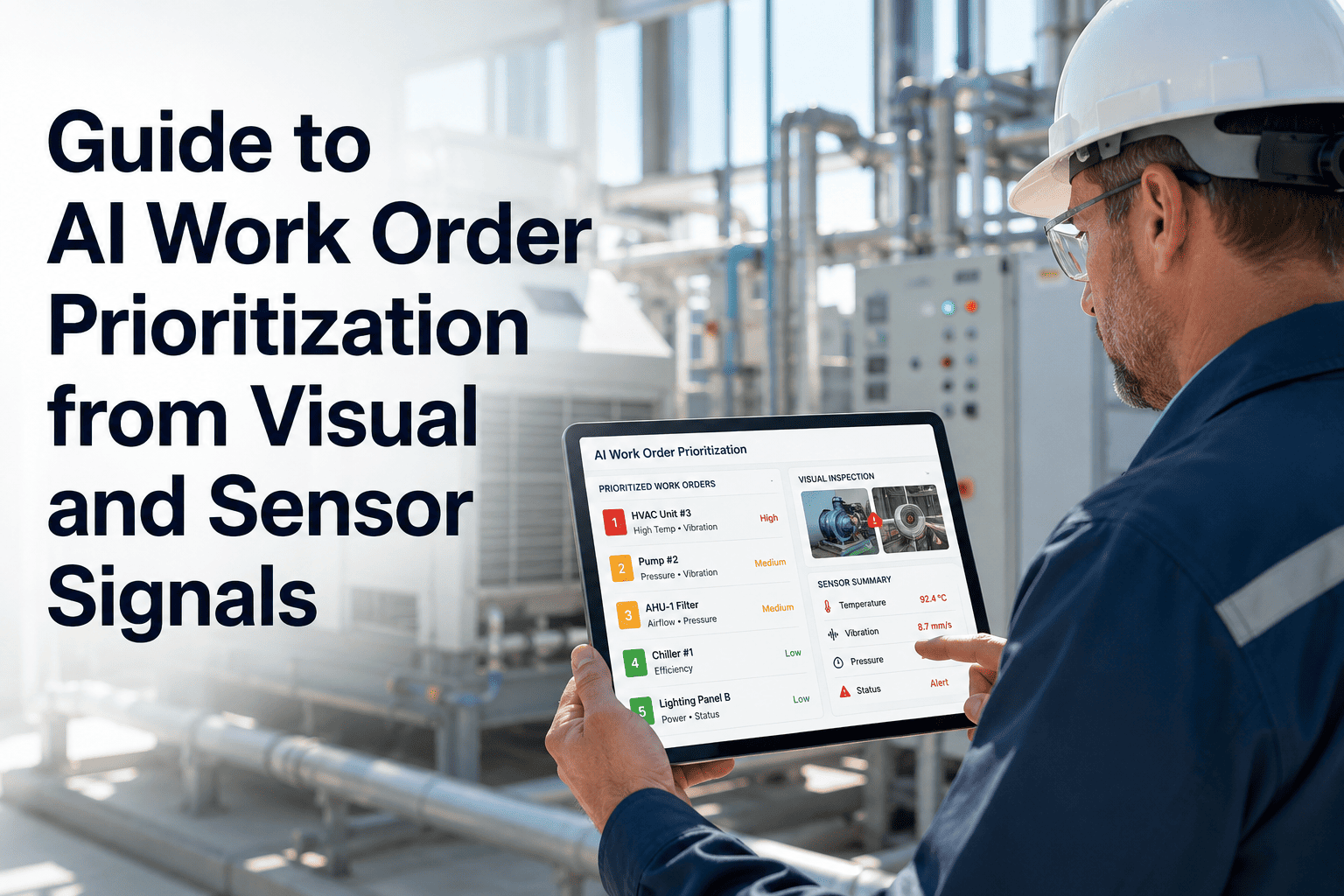
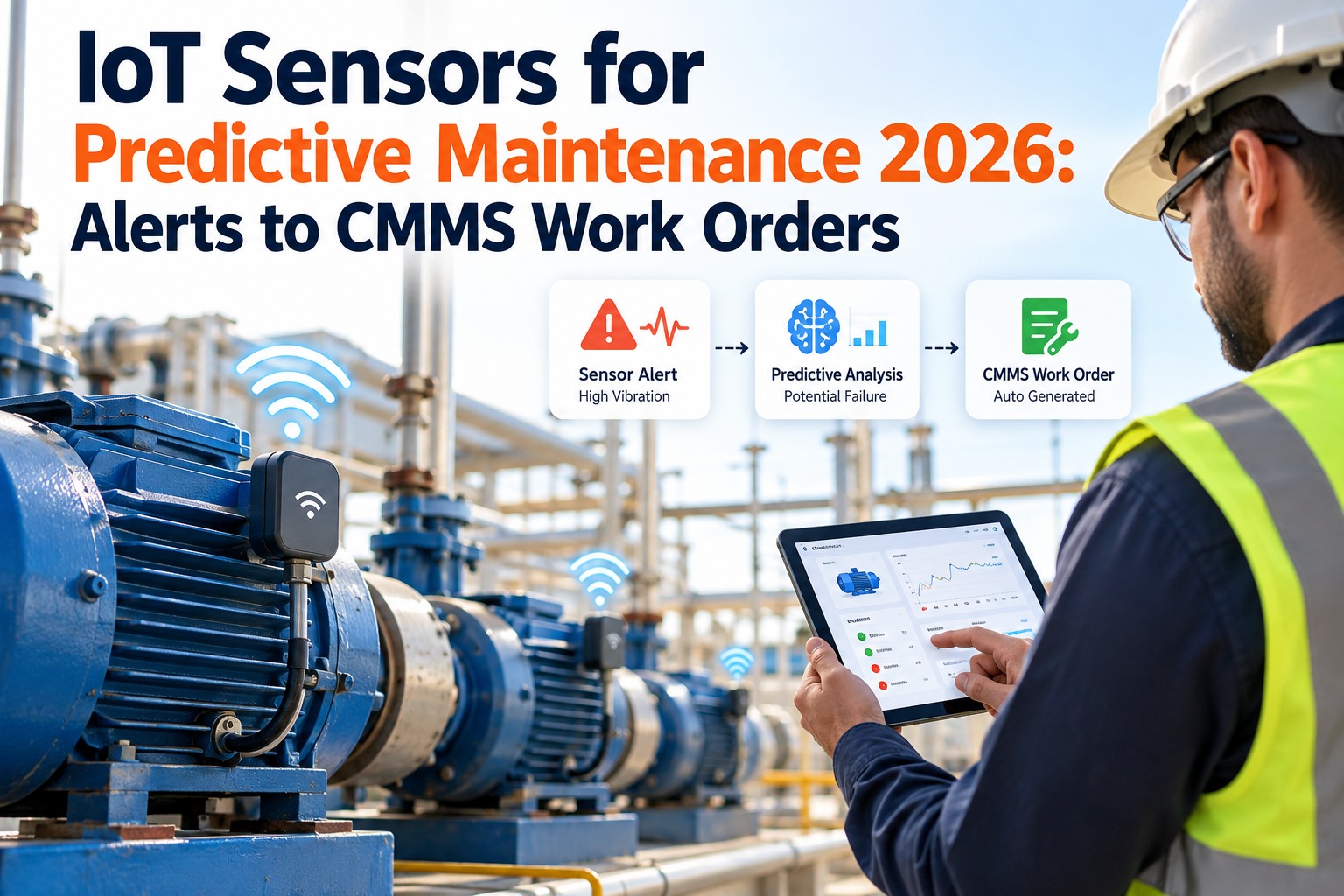
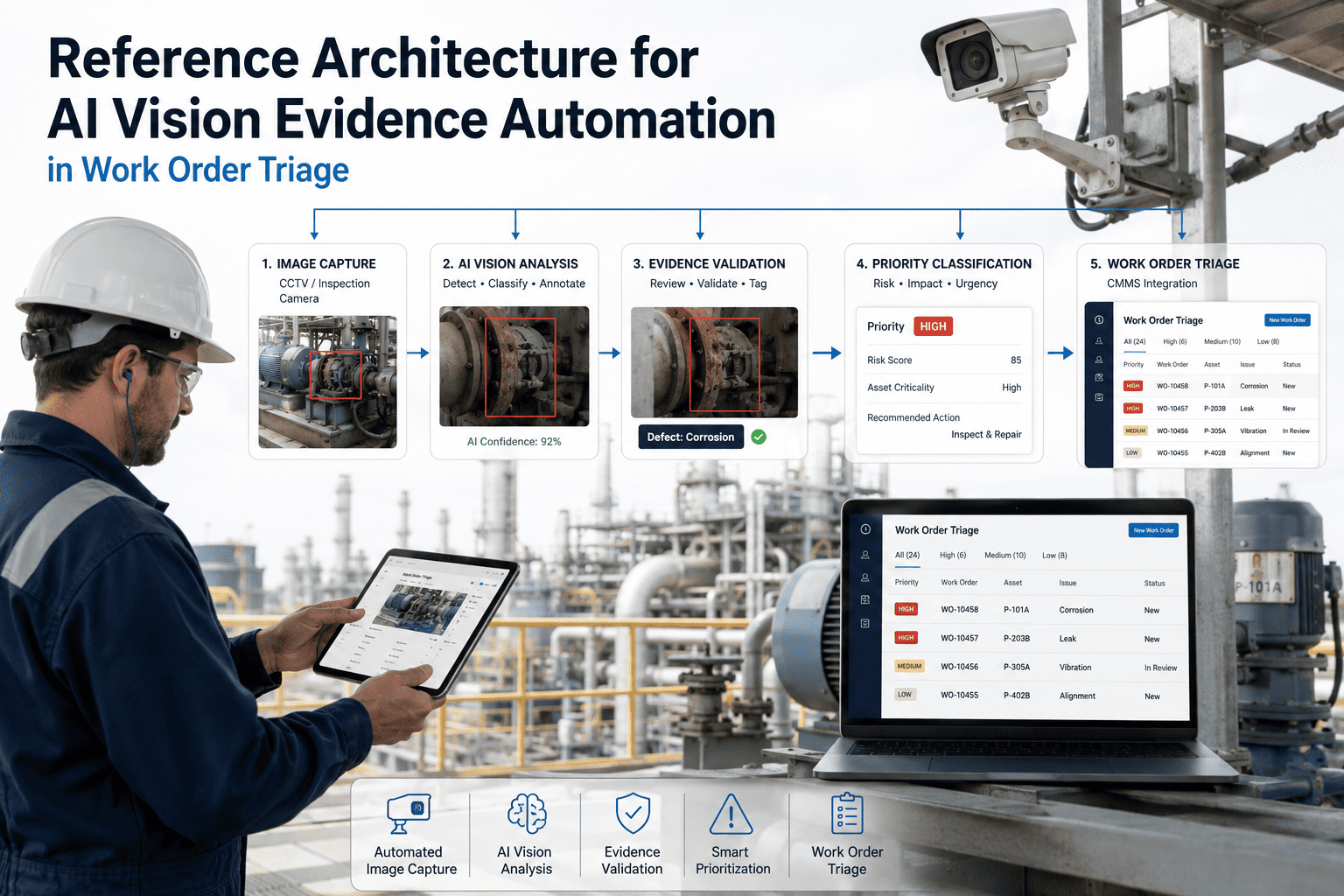
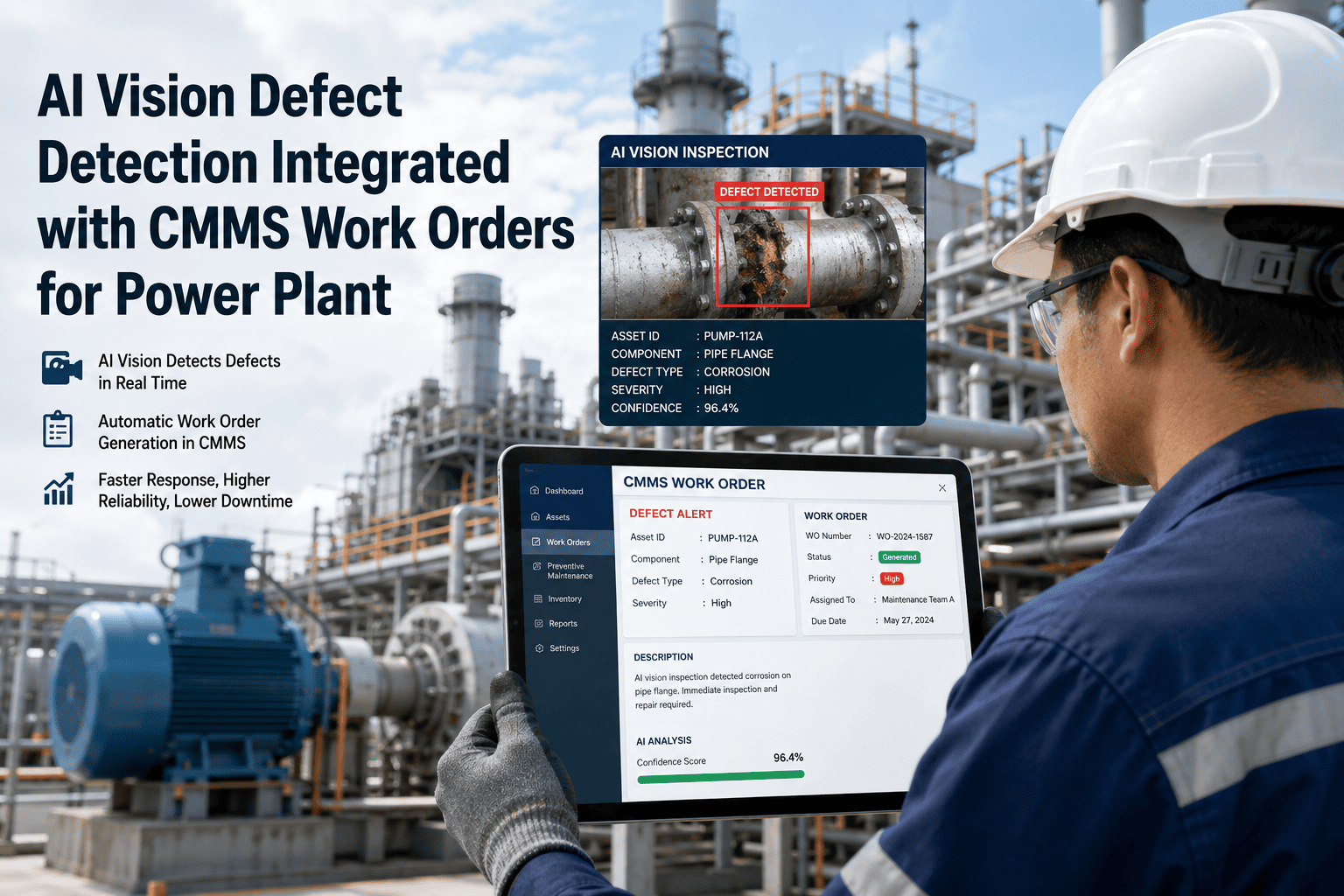
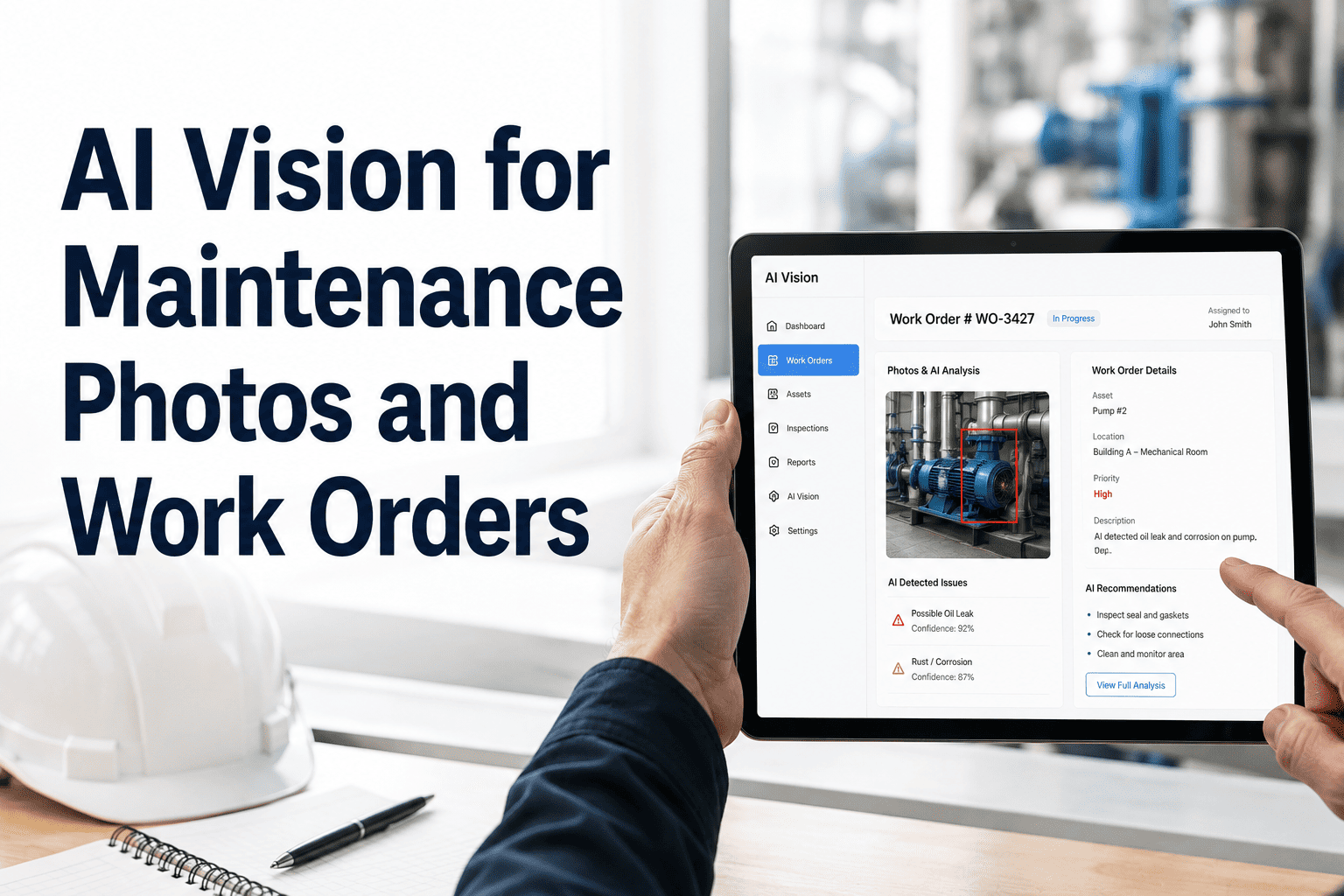
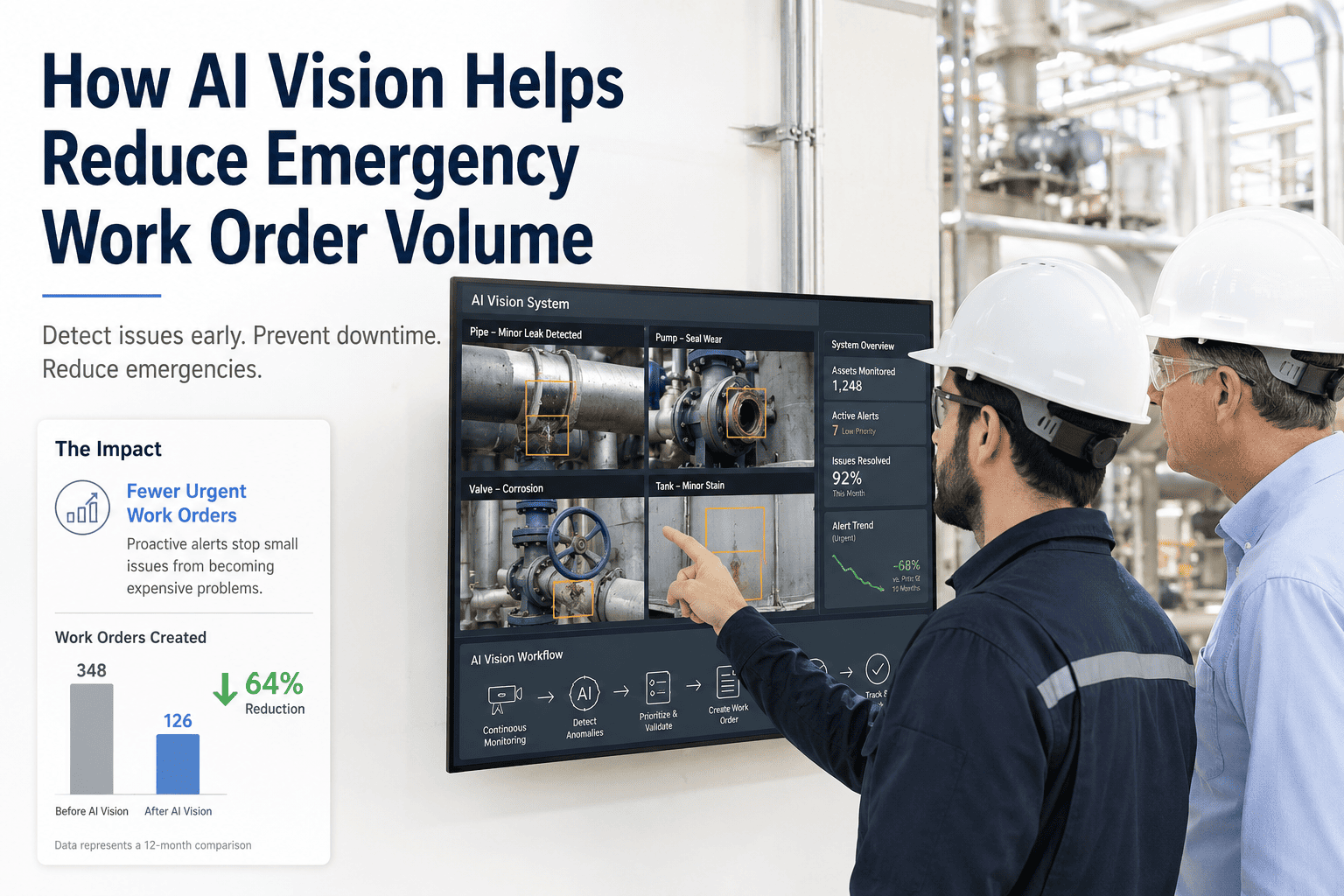
Every maintenance team has more work orders than technician hours. The question is never whether to prioritize — it is whether you are prioritizing based on actual asset risk or based on whoever raises the loudest complaint. AI work order prioritization changes the calculus entirely: instead of a supervisor deciding priority by instinct or seniority, a model scores every incoming work order using visual defect severity, sensor trend data, asset criticality, production impact, and historical failure cost — and routes it accordingly. This guide to AI work order prioritization from visual and sensor signals explains exactly how that scoring works, what inputs the model uses, and how the prioritized queue changes technician behavior across shifts. If your work order backlog is growing and your highest-value assets are not always getting first attention, start your free OxMaint trial to see prioritization in action, or book a live demo and walk through a real backlog scenario with your asset classes.
Guide · Maintenance Analytics · AI Work Order Prioritization
AI Work Order Prioritization from Visual and Sensor Signals
How AI scores and routes every maintenance work order based on defect severity, sensor trends, and asset criticality — so your highest-risk assets are always addressed first.
76%
of manufacturers plan to implement AI-assisted maintenance prioritization within 18 months
40%
faster ROI when structured prioritization replaces manual triage in maintenance operations
300%+
documented ROI over three years for AI-prioritized maintenance programs
The 5 Inputs That Drive AI Priority Scoring
AI work order prioritization is only as good as its inputs. A model that scores based on defect severity alone will misroute work orders for assets where a small defect has catastrophic consequences. These five inputs together produce a priority score that reflects actual operational risk.
Priority Tier Definitions: What Each Level Triggers in OxMaint
P1 — Critical
Score 80–100
Immediate work order, on-shift technician assigned within 30 minutes, supervisor notified, emergency parts check triggered
Example: AI detects 87% confidence bearing crack on primary production pump with no redundancy, vibration sensor at +38% above baseline
P2 — High
Score 60–79
Work order created, assigned to next available skilled technician, target resolution within current shift or next
Example: AI detects conveyor belt surface fraying on secondary line, sensor temperature +12% above baseline, standby redundancy available
P3 — Planned
Score 35–59
Work order created, scheduled in next planned PM window, parts reserved in advance
Example: Surface corrosion on non-critical asset, sensor within normal range, redundancy available, next PM window in 10 days
P4 — Monitor
Score 0–34
Condition note logged, sensor trend watched, no immediate work order generated — reviewed at next inspection cycle
Example: Minor surface discoloration, sensor at 5% above baseline, low-criticality utility asset, multiple redundancies in place
See how OxMaint prioritizes your work order backlog using AI scoring — not supervisor guesswork.
OxMaint combines visual defect severity, sensor trends, and asset criticality into a real-time priority score for every work order — routing the right repair to the right crew at the right time.
Prioritization Impact: Before and After AI Scoring
| Metric |
Manual Priority (Supervisor Triage) |
AI Priority Scoring (OxMaint) |
| Time to assign P1 work order |
30–120 min (supervisor availability) |
Under 2 minutes (automatic) |
| Priority accuracy (risk-aligned) |
~60% (experience-dependent) |
85–92% (model-validated) |
| Repeat failures on same asset |
High (no pattern visibility) |
Low (history-weighted scoring) |
| Technician overtime from late-priority emergencies |
Frequent |
Significantly reduced |
| Audit trail for priority decisions |
None (verbal or informal) |
Full score log with input weights |
Expert Review
NJ
Neeraj Joshi
Maintenance Analytics Lead, 12 years — Multi-site Manufacturing Operations
Manual priority triage has a structural weakness most managers don't acknowledge: it optimizes for the loudest voice, not the highest risk. I've watched high-criticality rotating equipment wait two days for repair while a visible cosmetic issue on a low-criticality line got addressed in hours because a production manager walked past it. AI priority scoring removes the human bias — it doesn't know which asset is closest to the supervisor's office. The biggest behavioral change I see after AI prioritization goes live is that technicians stop negotiating priority. The score is the score. It's auditable, explainable, and consistent across every shift.
Frequently Asked Questions
Can we customise the priority scoring weights for our specific asset types and industry?
Yes. OxMaint's priority model allows weight adjustment per asset class and criticality tier. A pharmaceutical manufacturer might weight compliance impact higher; a utility operator might weight production impact and safety consequence highest. Weights are configurable without code changes and can be tuned as the model accumulates failure history.
Book a demo and walk through the scoring configuration for your specific industry.
What happens when the AI priority score conflicts with a supervisor's manual override?
OxMaint allows supervisor override at any time — with a mandatory override reason logged against the work order. The override does not change the AI score; it creates a separate priority record. This preserves the audit trail and feeds the model's learning loop: repeated overrides on a specific asset-defect pattern signal that the weighting needs review.
Start free to test the override workflow.
Does AI prioritization work for preventive maintenance work orders, or only reactive ones?
It works for both. Preventive maintenance work orders are scored based on asset criticality, time-to-next-PM, and sensor condition at scheduling time. If a PM is due on an asset showing early sensor degradation, its priority is elevated above a PM due on a healthy asset — ensuring the highest-risk PMs are completed first when capacity is limited.
Book a demo to see PM priority integration with your current PM schedule.
How does the model handle newly added assets with no failure history?
New assets are scored using industry-standard criticality defaults and defect type risk weights from OxMaint's training data — covering the most common failure modes across equipment categories. As the asset accumulates inspection and repair history in OxMaint, the scoring progressively shifts from defaults to asset-specific learned weights.
Start free to add your asset list and see the initial scoring applied.
Can we export the priority score log for management reporting or compliance purposes?
Yes. OxMaint exports the full priority score history per work order — including all five input values, the composite score, the assigned tier, and any supervisor overrides — as CSV or PDF. This is particularly useful for demonstrating risk-based maintenance decisions during ISO 55000 or insurance audits.
Book a demo to see the reporting dashboard.
Your highest-risk asset shouldn't have to wait for a supervisor to notice it.
OxMaint scores every work order automatically — visual defect, sensor trend, asset criticality, failure history — and routes the right repair to the right crew in real time. Stop triaging. Start resolving.