Hangar Maintenance Operations: Tool Control, FOD Prevention & Safety Management
A single missing torque wrench in a hangar bay does not sound like a crisis — until it is found inside a repaired engine nacelle during the next scheduled inspection. Foreign Object Damage (FOD) events cost the aviation industry over $4 billion annually, and the majority trace back to tool accountability failures during routine hangar maintenance operations. Hangar safety is not a cultural initiative — it is a documented, auditable system: every tool issued and returned, every chemical stored and disposed, every work-in-progress job tracked, and every FOD walk completed and signed off. OxMaint connects every hangar maintenance safety requirement to a structured work order, so nothing is assumed and nothing is lost.
OxMaint · Hangar Maintenance · Tool Control · FOD Prevention · Safety
Tool accountability. FOD prevention. Chemical safety. Work-in-progress control. All documented, tracked, and audit-ready from your first hangar configuration in OxMaint.
Tool issue and return · calibration tracking · FOD walk records · chemical inventory · WIP job control · safety inspection logs — connected through OxMaint.
annual FOD-related losses across commercial and military aviation worldwide
78%
of FOD incidents in MRO environments involve an unaccounted tool or hardware item
91%
FOD event reduction at hangars using structured digital tool control vs manual shadow boards
$280K
average cost of a single FOD-related engine removal event — repair, inspection, and downtime combined
3 in 4
hangar safety audit findings cite process failures — not equipment failures. The tool was there. The FOD walk happened. The chemical was stored. None of it was documented. OxMaint makes the record inseparable from the hangar task that generated it.
Tool control. FOD prevention. Chemical safety. WIP tracking.
Every hangar safety requirement — documented, tracked, and audit-ready from day one.
Hangar maintenance safety spans six operational domains — each with its own regulatory basis, documentation obligation, and audit evidence standard. OxMaint manages all six from one platform. Configure your hangar safety programme in OxMaint.
TCL
Tool Control & Accountability
EASA Part-145 · FAA AC 120-72
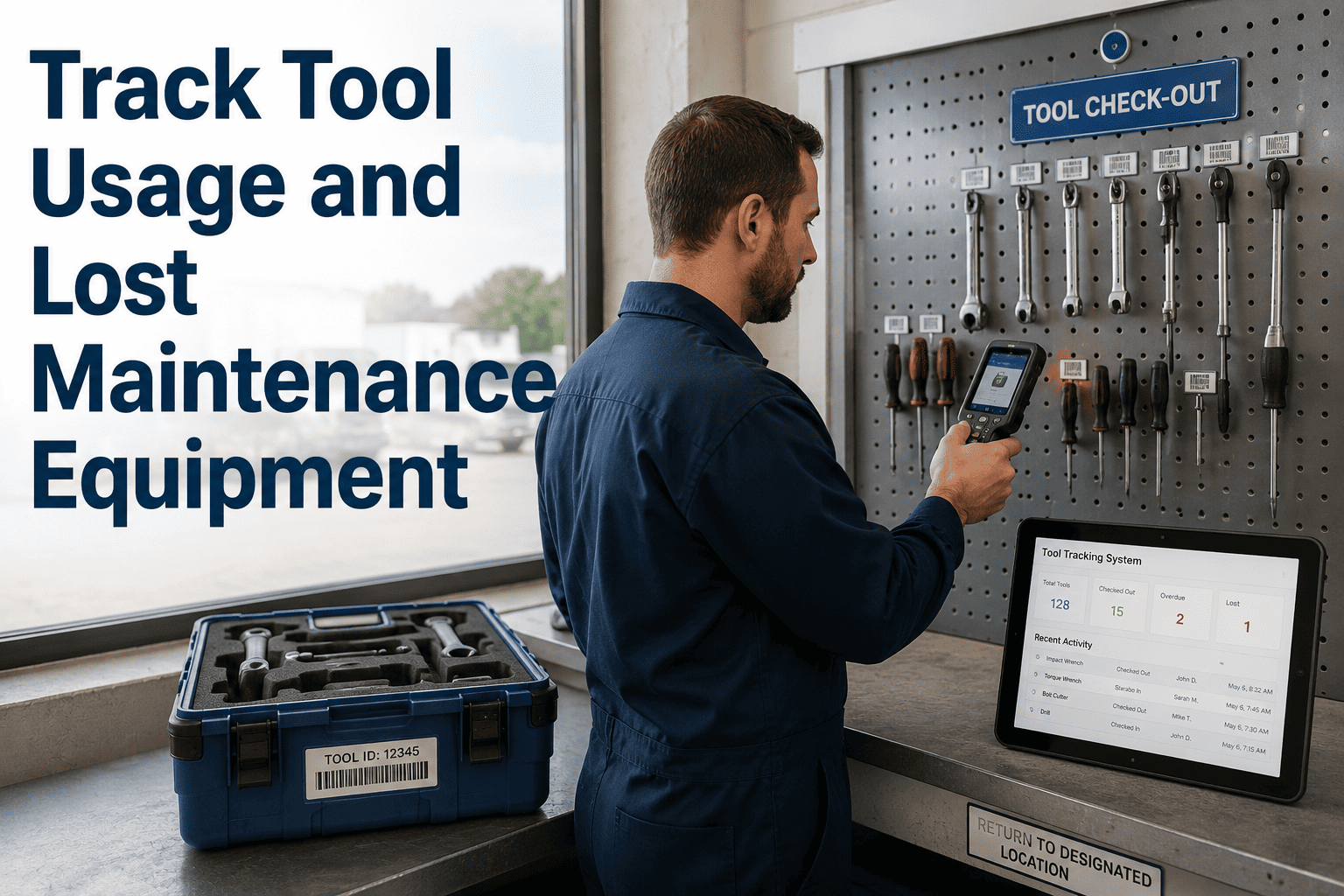
Every tool issued from the crib logged against a technician and a work order. Return confirmed before job closure. Missing tool triggers a mandatory FOD search before the aircraft is released. Digital shadow boards replace physical foam cutouts.
Tool issue and return log per work order
Missing tool FOD search workflow — mandatory closure
Calibration due date per precision instrument
Tool issue records · Calibration certificates per item
FOD
FOD Prevention Programme
ATA 10 · IOSA GRH 3.4
Structured FOD walk records per shift — area, inspector, findings, and disposition. Pre- and post-maintenance FOD checks per aircraft position documented in OxMaint. FOD finding trend analysis identifies repeat zones for process investigation.
FOD walk record per shift — signed and timestamped
Pre/post-maintenance aircraft position check
FOD finding log with location heat mapping
FOD walk records · Finding log per area per month
CHM
Chemical & Hazmat Management
OSHA HazCom · REACH · GHS
Chemical inventory tracked by product, storage location, quantity, and expiry date. SDS documents linked per chemical. Exposure records maintained per technician. Disposal records comply with environmental authority requirements by jurisdiction.
Chemical register — product, location, expiry, SDS
Technician exposure log per chemical per task
Disposal records — volume, method, authority reference
Chemical inventory records · SDS library · Disposal log
WIP
Work-in-Progress Control
Part-145 MOE · FAA Order 8300
Every open maintenance job tracked by status — open, in-work, awaiting parts, quality inspection, or closed. No work order can be closed without sign-off confirmation. Overnight open-job list generated automatically for shift handover.
Job status board — real-time per aircraft per bay
Shift handover open-job list — auto-generated
Quality inspection gate — mandatory before closure
WIP status records · Shift handover log
GSE
Hangar Equipment & GSE PM
OEM PM schedule · Safety inspection
Hangar equipment — jacks, docking systems, power carts, ground cooling units, and support stands — maintained on structured PM schedules. Pre-use serviceability checks logged before each deployment to an aircraft position.
PM schedule per hangar equipment unit
Pre-use serviceability check per aircraft deployment
Defect log — equipment removed from service until cleared
Equipment PM records · Pre-use inspection log
SAF
Hangar Safety Inspections
IATA SMS · Part-145 SMS · OSHA
Monthly hangar safety inspection — fire suppression, emergency exits, eyewash stations, fall protection equipment, electrical safety, and bay cleanliness. Findings generate corrective work orders with responsible party and closure deadline.
Monthly safety inspection checklist per hangar bay
Finding work order with closure deadline
SMS event reports linked to safety inspection outcomes
Safety inspection records · SMS event register
Where Hangar Safety Failures Originate
Four process failure patterns account for over 85% of hangar safety audit findings and FOD incidents. All four are preventable with structured CMMS documentation. OxMaint closes all four failure modes from day one.
Hangar Risk by Process Domain
92% Tool Control — highest audit finding rate
78% FOD Walk Gaps — missing records, not missing walks
65% Chemical Records — expiry and disposal non-compliance
54% WIP Handover — open jobs unsigned at shift change
41% Equipment PM — overdue hangar jack and GSE service
Severity Routing — How OxMaint Handles Every Hangar Safety Event
A missing torque wrench is not the same urgency as an overdue safety inspection finding. OxMaint routes every hangar safety event through a three-tier priority system. Book a demo to see event routing for your hangar.
P1
Immediate — Aircraft or Personnel Risk
Missing tool unaccounted at job closure, FOD found in aircraft system, or hazmat spill. Aircraft hold until resolved. No release permitted.
Examples
Unaccounted tool · FOD in engine bay · Fuel/chemical spill · Fall protection failure · Fire system fault
ResponseImmediate hold
EscalationQuality + Safety Manager
P2
Approaching — Plan Before Next Shift
Tool calibration overdue, chemical expiry within 30 days, GSE PM overdue. Requires scheduled action — deferral increases audit and safety risk.
Examples
Calibration due in 7 days · Chemical near expiry · Equipment PM overdue · WIP job unsigned at shift end
ResponseNext shift plan
EscalationMaintenance Supervisor
P3
Monitor — Schedule at Next Interval
Safety inspection finding with sufficient lead time, optional equipment service due, or advisory item. Tracked and visible — no immediate action required.
Examples
Safety finding with 30+ day closure · Equipment 80% of PM interval · Minor chemical stock low
Eight compliance obligations define hangar operations across EASA, FAA, OSHA, and IATA frameworks. OxMaint manages all eight from a single platform. Configure hangar compliance tracking in OxMaint.
Safety Activity
Scope
Regulatory Basis
Documentation Required
OxMaint Status
Tool Issue & Return Control
All tooling per work order
EASA Part-145 · FAA AC 120-72
Issue log, return confirmation, missing tool search record
Auto tracking
Tool Calibration Programme
All precision instruments
ISO 17025 · OEM specification
Calibration certificate, due date, out-of-tolerance action
Cal schedule
FOD Walk Records
All hangar bays — per shift
IOSA GRH 3.4 · ATA 10
Area, inspector, time, findings, disposition per walk
Walk log
Chemical Inventory & SDS
All chemicals per location
OSHA HazCom · REACH · GHS
Product register, SDS links, expiry dates, disposal records
Inventory mgmt
WIP Job Status Control
All open maintenance jobs
Part-145 MOE · FAA Order 8300
Job status board, shift handover list, quality gate sign-off
WIP board
Hangar Equipment PM
Jacks, docking, power carts
OEM schedule · Safety regs
PM completion, pre-use checks, defect removal records
PM schedule
Monthly Safety Inspection
All hangar bays
IATA SMS · OSHA 1910
Checklist per bay, findings, corrective work order, closure
AI cameras scan hangar floor and aircraft bays continuously — detecting tools, hardware, and debris before aircraft departure. Findings feed directly into OxMaint FOD log.
Digital Twin
Predictive
Hangar equipment degradation modelled ahead of failure
Digital twin models jacking systems, docking structures, and ground power unit condition — predicting PM requirements before failure grounds an aircraft in work.
SAP / ERP Integration
Auto
Chemical and tool procurement from OxMaint trigger
Chemical stock below minimum and calibration tool replacement scope from OxMaint generates SAP purchase orders automatically — ordered before the need, not after the shortage.
RFID Tool Tracking
100%
Automated tool accountability without manual scanning
RFID-tagged tools log issue and return automatically through smart crib readers — eliminating manual shadow board management and ensuring 100% tool accountability at job closure.
Predictive PM
3.2x
Better equipment uptime vs reactive-only maintenance
Condition-based PM intervals replace fixed calendar schedules for hangar jacks, power carts, and docking systems — reducing both over-maintenance cost and unplanned equipment outages.
Safety Analytics
Fleet-wide
Safety risk visible across all hangar bays and shifts
Hangar safety dashboard shows FOD walk compliance, tool accountability rate, open safety findings, and chemical expiry status across all bays simultaneously — enabling proactive risk management.
Complete hangar safety documentation packages in under 15 minutes.
Tool records, FOD logs, chemical inventory, and safety inspection history — formatted for EASA, FAA, and IOSA auditors.
"Our last EASA Part-145 surveillance audit produced zero tool control findings for the first time in six years. The auditor specifically noted our FOD walk records as best-practice documentation. We had loaded three years of hangar records into OxMaint in the six months prior — the package took 18 minutes to generate."
Q1How does OxMaint enforce tool accountability at job closure?
Every tool issued against a work order must be returned and confirmed before the job can close. A missing tool triggers a mandatory FOD search workflow — the aircraft cannot be released until the tool is located or the search is documented. Configure tool control in OxMaint.
Q2What FOD documentation does OxMaint generate for an IOSA audit?
OxMaint generates FOD walk records per shift — area, inspector, time, findings, and disposition — plus a FOD finding trend report by location and frequency. Both are formatted for IOSA GRH 3.4 evidence requirements.
Q3How does OxMaint track chemical expiry and disposal?
Each chemical in the OxMaint register has an expiry date with advance alerts at 60 and 30 days. Disposal records capture volume, waste classification, disposal method, and authority reference — satisfying EPA, Environment Agency, and TDG requirements by jurisdiction.
Q4Can OxMaint generate a shift handover open-job list automatically?
Yes — OxMaint generates an open-job list at shift end showing every WIP item with status, assigned technician, outstanding sign-off requirements, and parts-awaiting status. The list is timestamped and signed by the outgoing supervisor for regulatory compliance.
Q5Does OxMaint support multiple regulatory frameworks — EASA, FAA, and OSHA — simultaneously?
Yes — OxMaint supports multi-framework hangar configuration. Documentation is formatted to the evidence standard required by each authority — EASA Part-145, FAA AC 120-72, OSHA, and IATA SMS — from the same platform. Book a demo for your specific regulatory scope.
OxMaint · Hangar Maintenance · Tool Control · FOD · Safety
Every tool accounted. Every FOD walk recorded. Every bay audit-ready.
Active from first hangar configuration — across EASA, FAA, and IOSA operations.