how-ai-vision-adds-context-to-predictive-maintenance-alerts

How AI Vision Adds Context to Predictive Maintenance Alerts


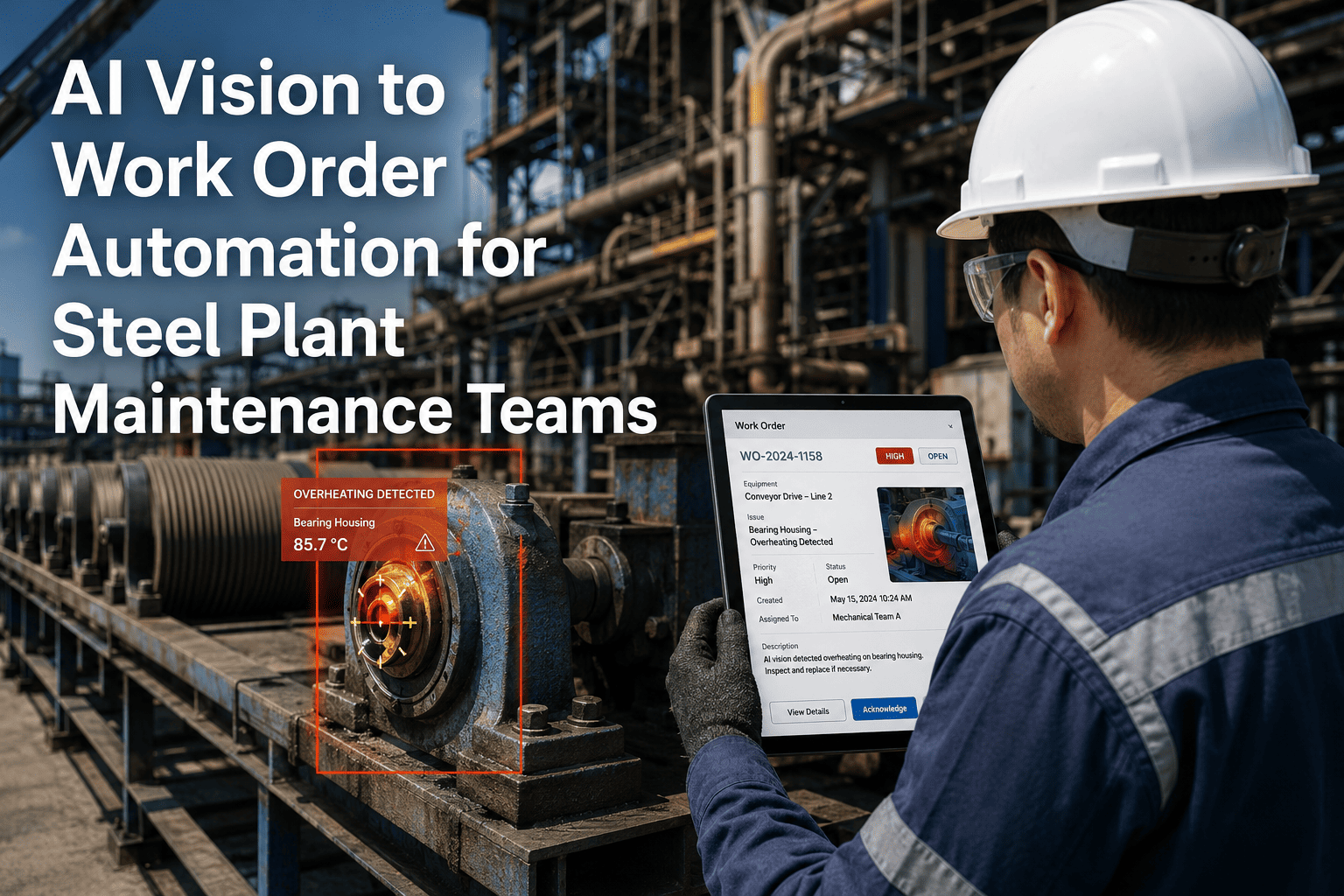
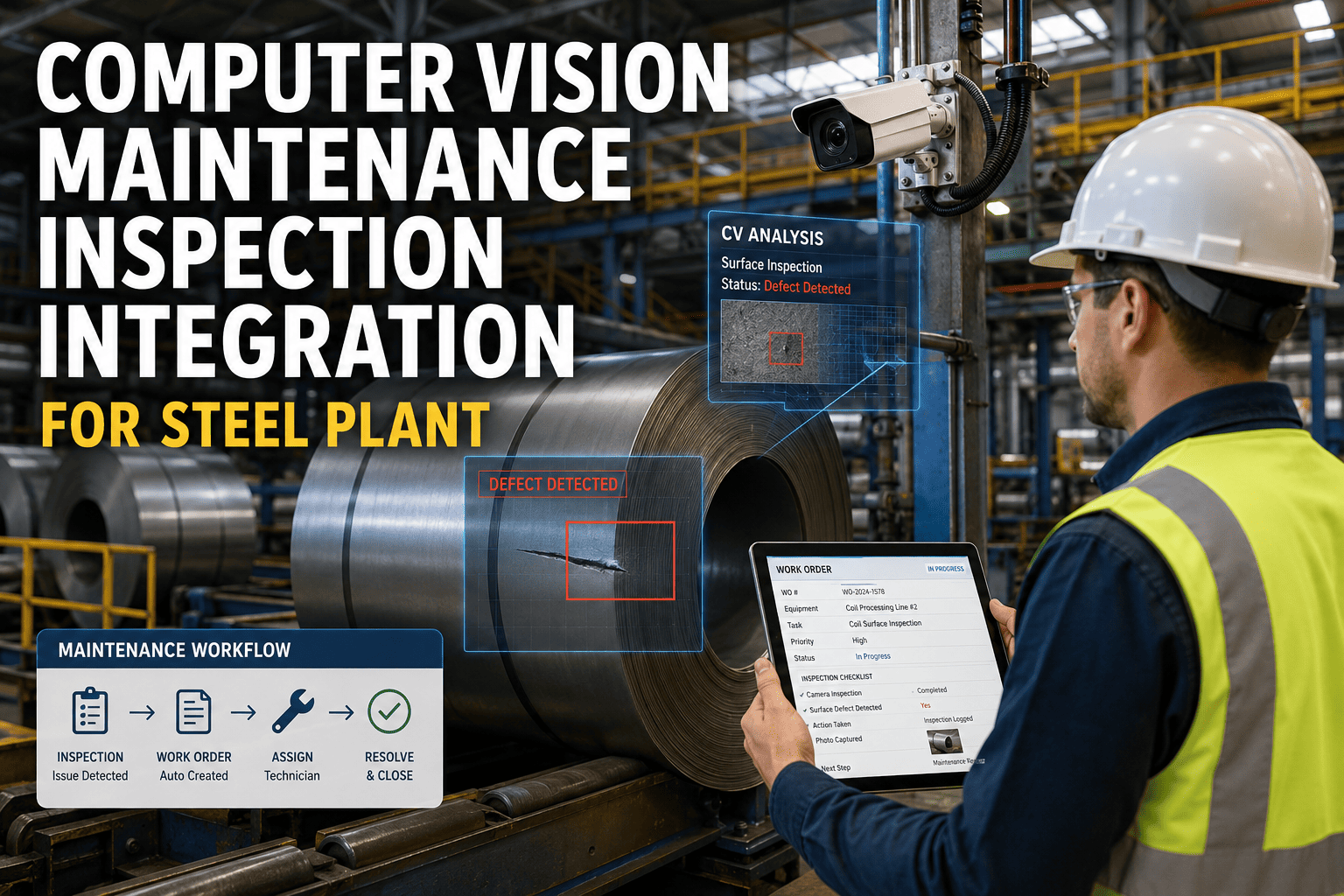
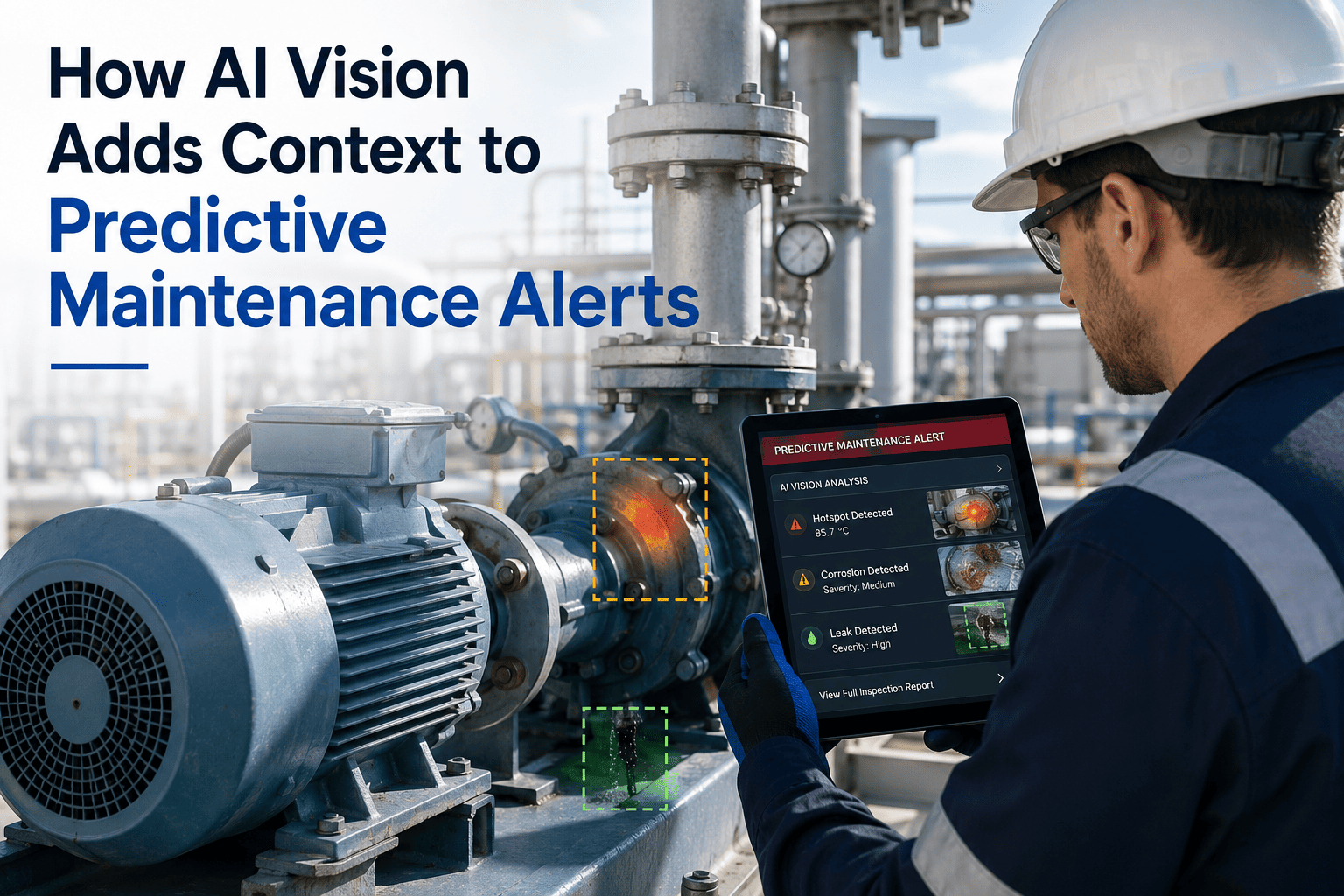
Predictive maintenance alerts are only as useful as the context behind them. A vibration sensor flagging abnormal bearing readings tells a maintenance planner that something is wrong — but not what the damage looks like, how far it has progressed, or whether the repair needs to happen today or next week. AI vision fills that gap by delivering a timestamped photograph of the exact asset condition at the moment the alert fires, attached directly to the work order in OxMaint CMMS. Maintenance teams that combine sensor-based predictive alerts with AI visual evidence stop treating every alert as an urgent callout and instead make faster, better-informed decisions about repair scheduling, part procurement, and technician dispatch. Book a demo to see how OxMaint pairs AI vision with your predictive alert stack.

AI Vision · Predictive Maintenance · Alert Context · CMMS

Predictive Alerts Tell You When. AI Vision Shows You What.

OxMaint links AI camera evidence directly to your predictive maintenance alerts — so every sensor trigger arrives with a photo, an asset history snapshot, and the context your team needs to act decisively.

Alert Without Vision
Vibration anomaly on Pump P-07
Threshold exceeded: 8.4 mm/s
No photo
No visual context
No damage stage
Result: Planner dispatches technician without knowing if it is a bearing issue or seal leak
Alert With OxMaint Vision
Vibration anomaly on Pump P-07
Threshold exceeded: 8.4 mm/s
Photo: early-stage seal weep visible
Context: No bearing damage, no fluid pooling
Stage: Early — plan for next maintenance window
Result: Planner schedules seal replacement in 5 days — zero unplanned downtime
Why Context Matters

What Predictive Alerts Cannot Tell You on Their Own

01
Damage Stage
A sensor threshold breach could mean early-stage surface wear or active component failure. Without a photo, the planner cannot distinguish a 3-day repair from a same-day shutdown — and defaults to conservative (expensive) dispatching.
02
Root Cause Clues
Visual evidence often reveals the cause alongside the symptom — a loose guard causing belt misalignment, a clogged drain accelerating corrosion. Arriving on-site without that context means technicians diagnose from scratch, adding 30 to 90 minutes per callout.
03
Repair Scheduling Confidence
Planners who receive a photo with the alert can make an informed scheduling decision — next shift, next maintenance window, or immediate. Without it, every alert defaults to urgent, which burns technician capacity on non-critical responses.
04
Parts and Labour Prep
Identifying the defect type from a photo before dispatch allows the right parts to be staged, the right skill set to be booked, and the job to be completed in a single visit — not two trips. First-time fix rates improve by 38% when visual context accompanies the alert.
OxMaint · Predictive Maintenance · AI Vision Context

Turn Every Alert Into a Decision — Not a Question

OxMaint attaches AI vision evidence to your predictive alerts automatically. Your planners see what is happening before they dispatch anyone.

Impact Data

What Happens When Visual Context Accompanies Predictive Alerts

38%
Higher first-time fix rate
When technicians arrive with visual context pre-loaded vs. no photo
52%
Fewer false-urgent dispatches
Planners who can see the damage stage defer correctly 52% more often
41 min
Average diagnostic time saved
Per callout, when visual context is available at dispatch
2.3×
More alerts acted on correctly
vs. sensor-only alert programs with no visual layer
Integration Comparison

Sensor Alerts vs AI Vision-Enriched Alerts in OxMaint

Alert Element Sensor Alert Only AI Vision-Enriched Alert
Defect identification Threshold value only — type unknown until on-site Photo + AI classification: bearing wear / seal leak / misalignment
Damage progression stage Not available — technician assesses on arrival Visible in photo — early, mid, or advanced stage flagged
Parts pre-staging Often deferred — technician confirms type before ordering Parts staged before dispatch based on visual defect class
Repair urgency classification Defaults to urgent — planner lacks evidence to defer Correctly classified urgent / planned / monitor based on photo
Asset history context Planner must open CMMS separately to review prior WOs Prior defect history and last inspection date attached to alert
Audit trail Sensor log only — no visual record of condition at alert time Timestamped photo locked to work order — full evidence trail
SR
"Predictive maintenance programs that run without visual context are operating at roughly half their potential. The sensor tells you something changed — the camera tells you what changed and how bad it is. That second layer is what converts a good maintenance program into a great one."
Sunita Rajan
Condition Monitoring Specialist · 18 years in petrochemical and manufacturing maintenance · Certified Machinery Analyst (CMRP)
Frequently Asked Questions

AI Vision and Predictive Alert Context — Common Questions

Which predictive maintenance sensor systems does OxMaint AI Vision integrate with?
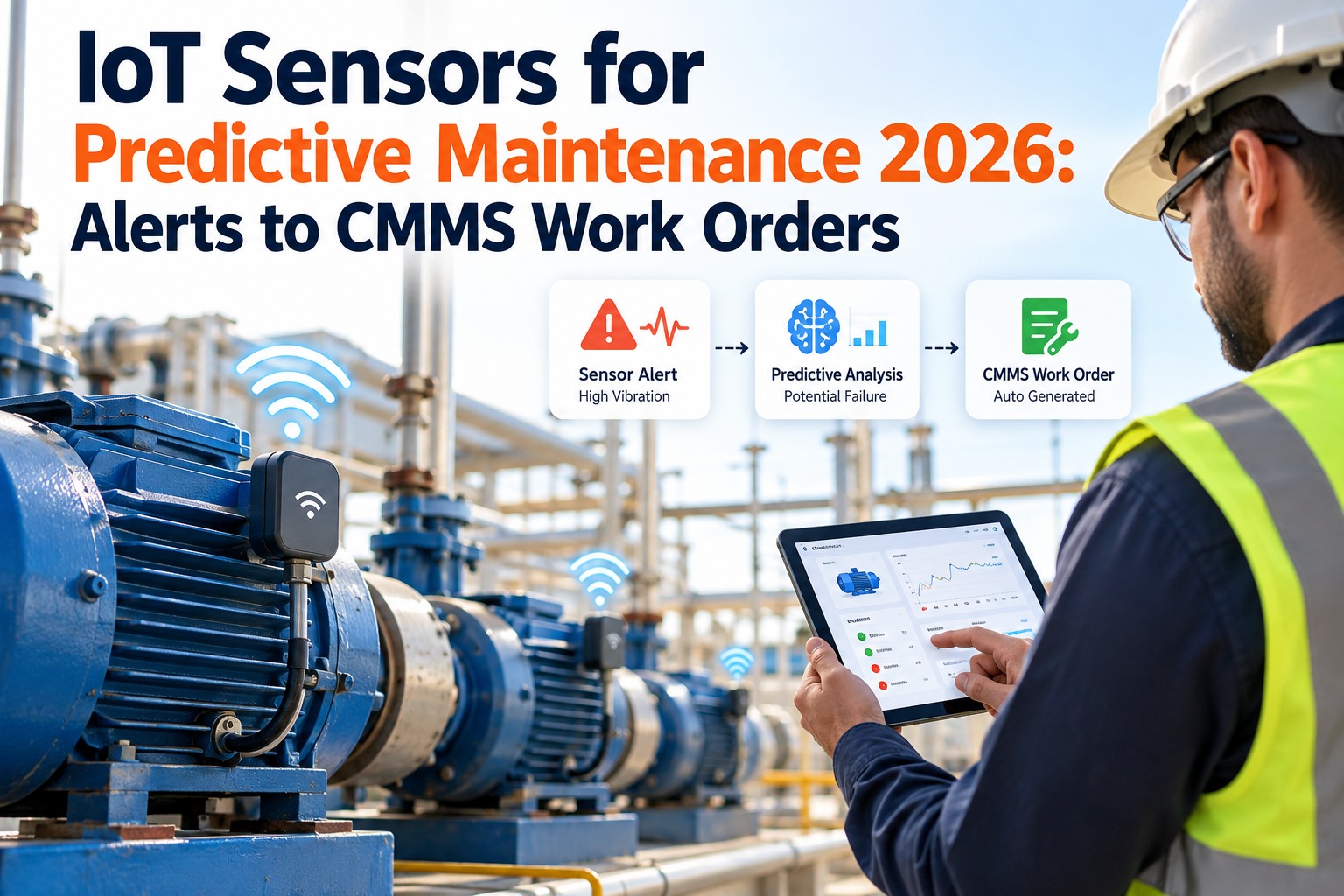
OxMaint connects with vibration monitoring platforms, thermal imaging feeds, IoT sensor gateways, and BMS event streams via API and webhook integrations. When a sensor threshold fires, OxMaint triggers the nearest linked camera to capture the asset condition at that moment and attaches the image to the auto-generated work order. Book a demo to map your existing sensor stack to OxMaint Vision.
Does AI vision replace predictive maintenance sensors or work alongside them?
AI vision works alongside sensors — it enriches alerts rather than replacing them. Sensors detect the anomaly; cameras document it visually. Together, they give maintenance teams both the trigger and the context, which is what drives better scheduling decisions, faster first-time fixes, and reduced unnecessary dispatches. Start a free trial to build your combined alert workflow.
How is the photo evidence stored and linked to the maintenance record in OxMaint?
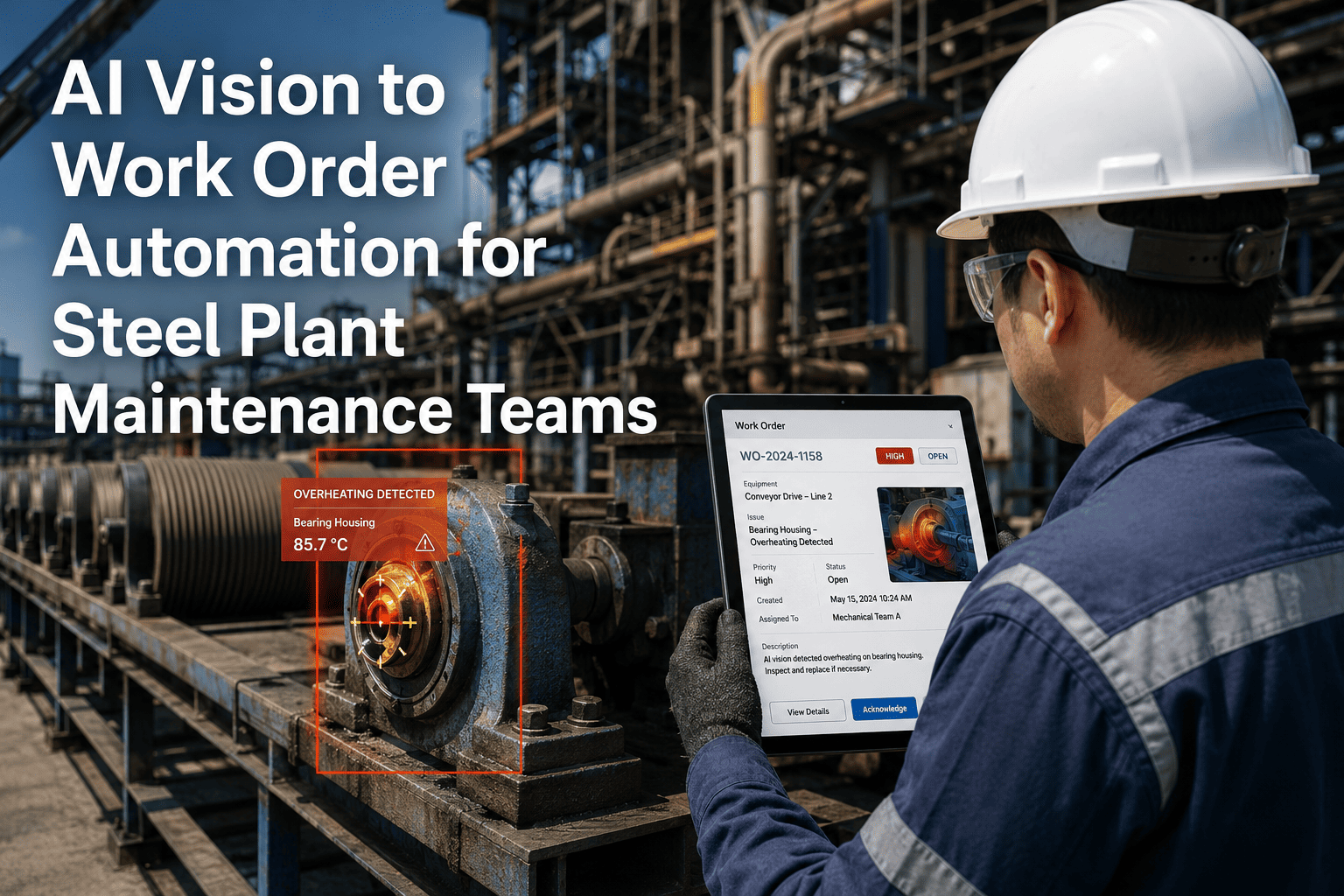
Each AI vision capture is stored against the asset record in OxMaint with a UTC timestamp, camera ID, and alert source reference. The image is automatically attached to the work order it triggered and remains accessible in the asset history indefinitely. Compliance exports include the visual evidence alongside completion records, technician attribution, and corrective action notes.
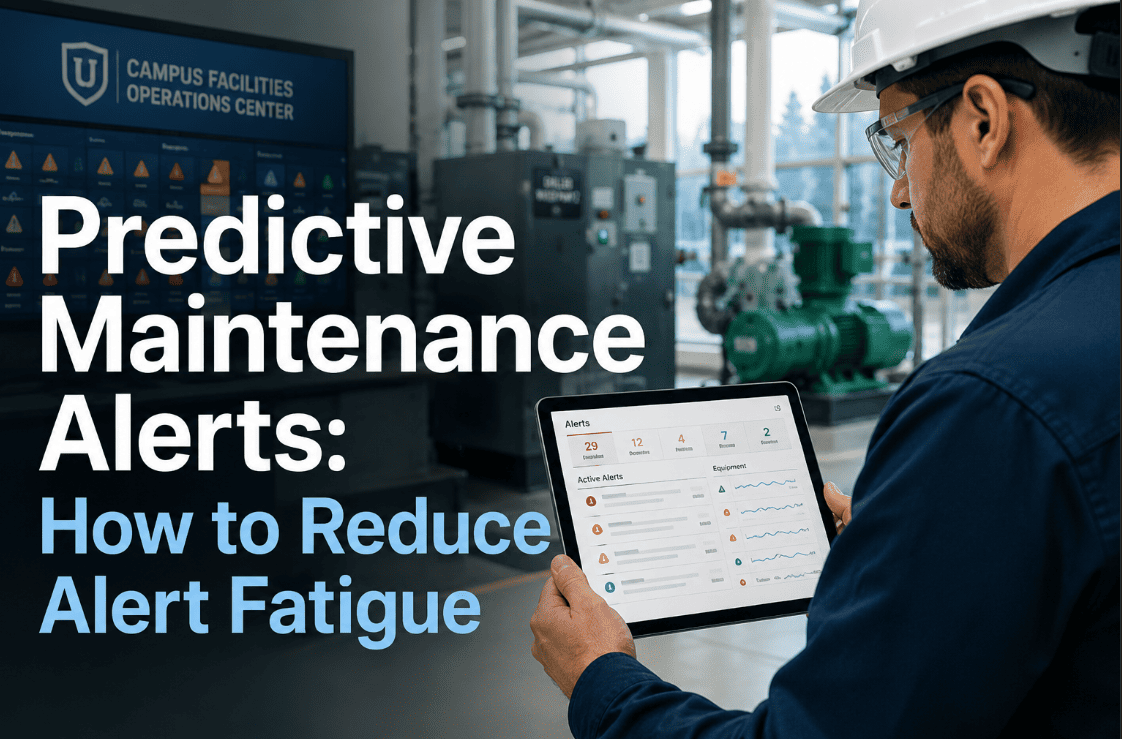
Can OxMaint AI Vision help reduce alert fatigue in teams already receiving too many sensor notifications?
Yes. One of the key outcomes of adding visual context to alerts is that planners can confidently triage rather than escalate everything. When the photo shows early-stage wear that does not require immediate action, the alert can be scheduled rather than dispatched — which directly reduces the volume of urgent-but-unnecessary technician responses that drive alert fatigue. See how OxMaint handles alert triage in a live demo.
OxMaint AI Vision · Predictive Maintenance · Free to Start

Give Your Predictive Alerts the Visual Evidence They Have Been Missing

Connect OxMaint AI Vision to your sensor stack. Every alert arrives with a photo, an asset history snapshot, and a planned work order — ready for your team to act on, not guess about.

Share This Story, Choose Your Platform!