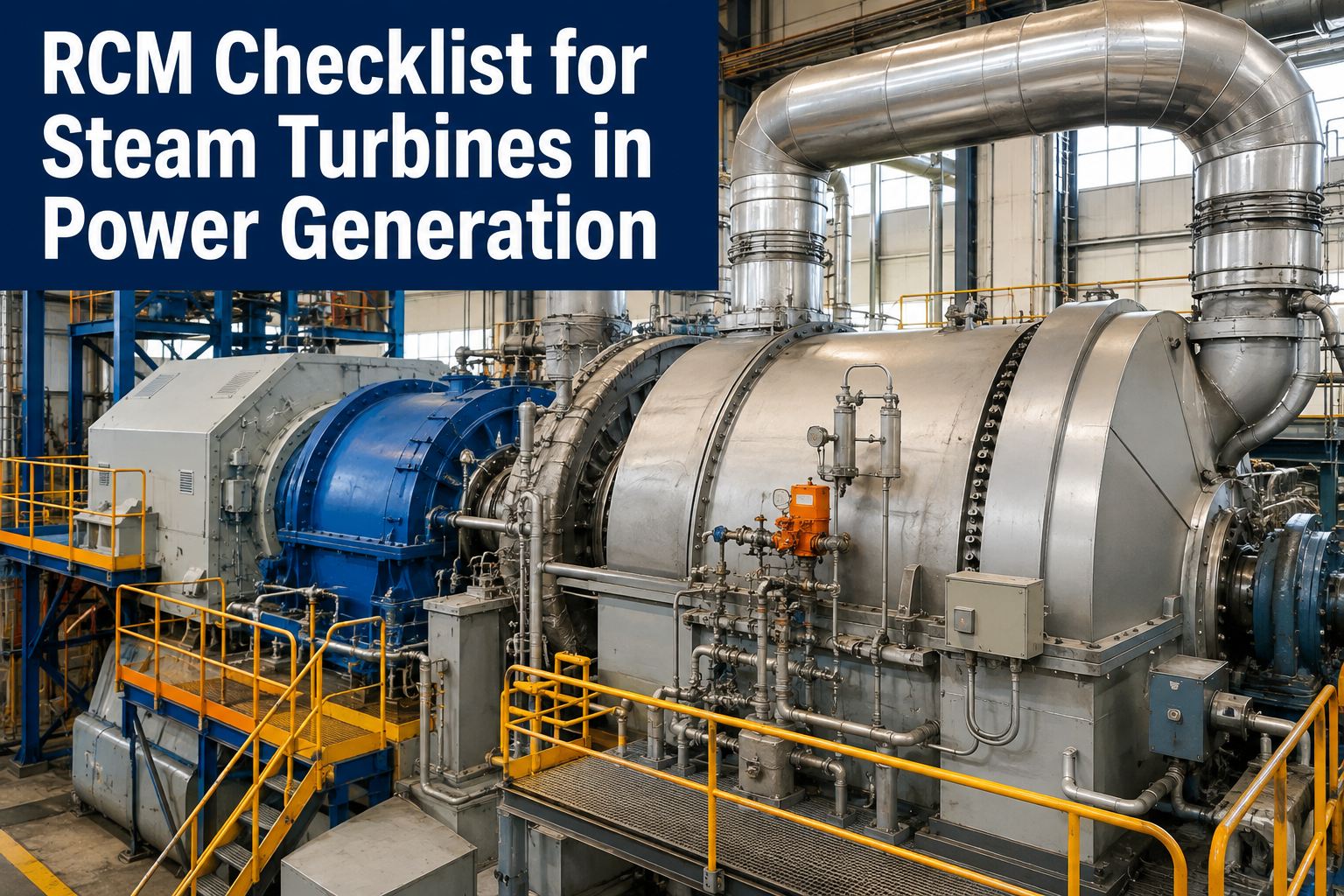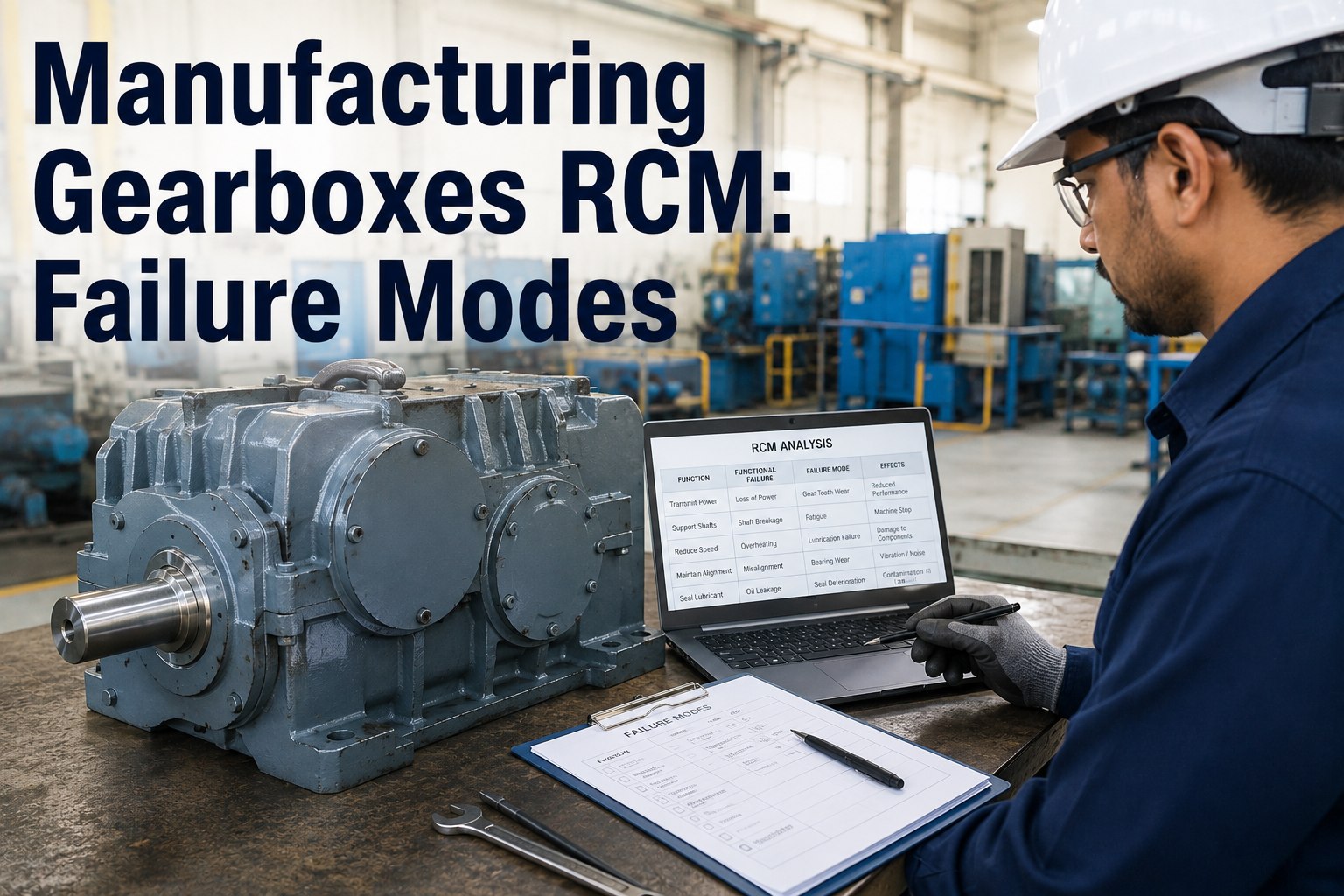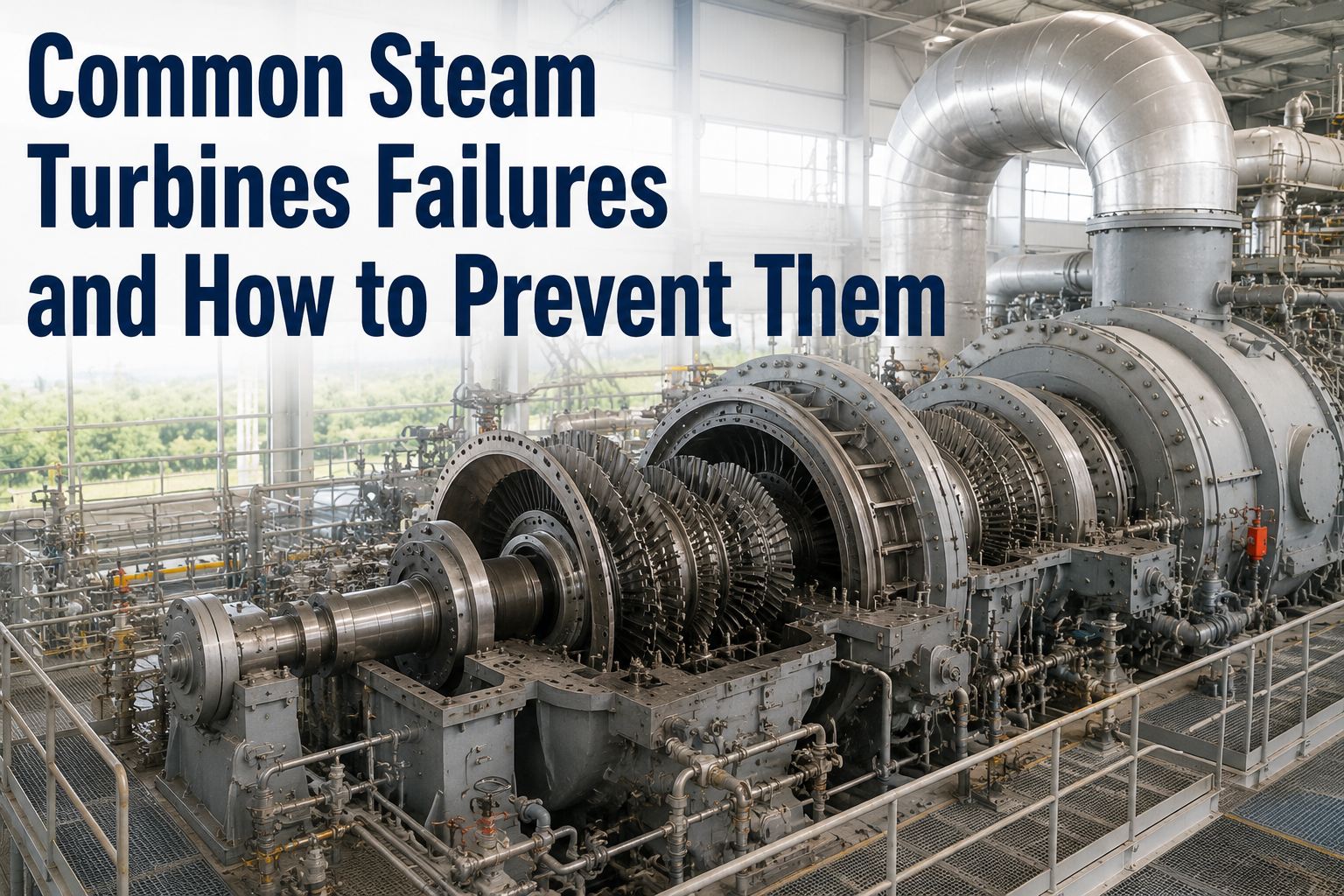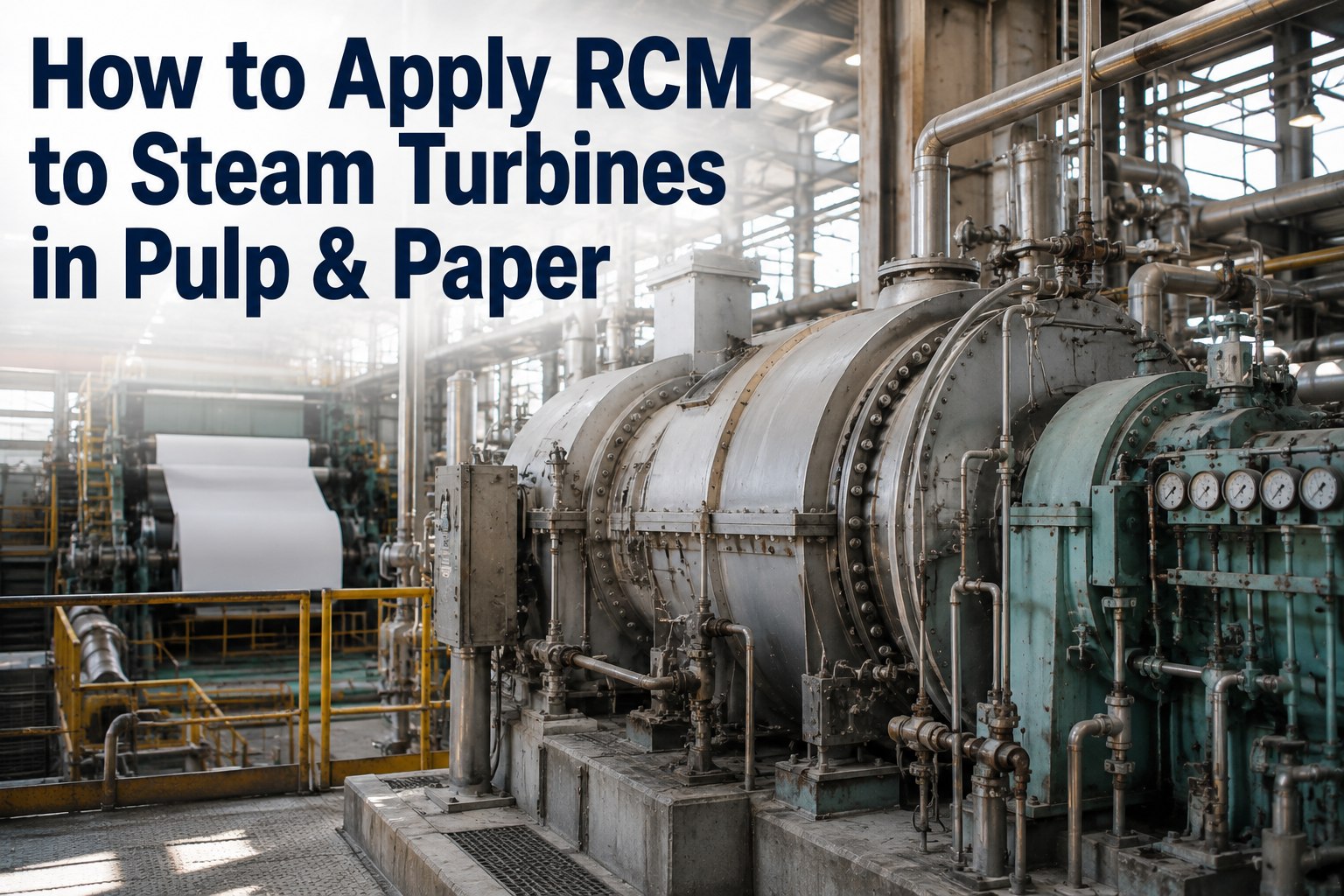
Reliability-Centered Maintenance (RCM) applied to steam turbines in pulp and paper mills is the systematic process of identifying critical failure modes—like blade erosion, rotor bow, and seal degradation—and matching them with the most effective predictive and preventive maintenance strategies. Pulp and paper steam turbines reliability directly dictates a mill's energy costs, throughput, and bottom-line profitability, making a structured RCM strategy essential rather than optional. By transitioning from reactive firefighting to condition-based monitoring, maintenance teams can prevent catastrophic outages and extend the operational life of critical rotating equipment. OxMaint's AI-powered CMMS and EAM platform is built to operationalize this exact transition, turning complex RCM frameworks into automated work orders, asset tracking, and actionable analytics. You can Start Free Trial today to see how quickly you can map your turbine hierarchy and start eliminating unplanned downtime.
RCM Strategy Guide
Is a Single Steam Turbine Failure Costing Your Mill $200K Per Day in Lost Production?
In high-demand pulp and paper operations, steam turbines are the heartbeat of power generation and process steam. Applying a rigorous RCM strategy ensures you catch failure modes like blade fouling and journal bearing wear weeks before they escalate into catastrophic, multi-million-dollar outages.
Critical Analysis
Steam Turbines Failure Modes in Pulp and Paper Mills
Understanding steam turbines failure modes in pulp and paper facilities begins with mapping the specific operating stresses unique to the industry. Black liquor recovery, saturated steam impurities, and continuous heavy-load operations accelerate wear on critical turbine components. A robust RCM strategy demands identifying these failure modes, determining their effects on overall mill operations, and selecting the right maintenance tasks to mitigate them.
Rotor and Blade Degradation
Steam contamination from boiler carryover introduces dissolved solids that deposit on turbine blades. This fouling alters the aerodynamic profile, reducing efficiency by up to 5% and causing severe rotor imbalance. Over time, silica and sodium deposits lead to stress corrosion cracking, a leading cause of blade liberation.
Bearing and Seal Wear
Journal and thrust bearings in pulp paper steam turbines suffer from oil contamination and prolonged high-temperature exposure. Degradation of Babbitt metal and labyrinth seal wear result in oil leaks, increased vibration, and loss of vacuum pressure—ultimately forcing turbine trips if not caught by condition monitoring.
Step-by-Step Framework
How to Build an RCM Strategy for Pulp and Paper Steam Turbines
Building a successful RCM steam turbines pulp and paper strategy requires following the SAE JA1011 standard. This seven-step framework ensures every maintenance task is both technically feasible and worth doing. Here is how reliability teams can implement this framework over a typical 6-month deployment cycle.
System Definition & Boundary Identification
Map the turbine's physical and functional boundaries—from the main stop valve to the exhaust hood and condenser. OxMaint's EAM platform allows you to build this exact asset hierarchy, linking child components to parent systems for complete traceability.
Functional Failure Analysis
Document primary and secondary functions. A functional failure isn't just a trip; it includes the inability to maintain target RPMs or deliver required steam pressure to the paper machine dryer section.
Failure Mode and Effects Analysis (FMEA)
Identify specific failure modes like thrust bearing failure or blade fatigue. Assign severity, occurrence, and detection rankings to prioritize which failure modes require immediate condition monitoring interventions.
Proactive Task Selection
Apply the RCM decision logic tree. Assign on-condition tasks (vibration analysis, oil analysis), scheduled restoration, or run-to-failure for non-critical components. OxMaint automates these PM schedules directly into technician work queues.
Condition Monitoring
Steam Turbines Monitoring in Pulp and Paper: Techniques That Work
Effective steam turbines monitoring in pulp and paper facilities bridges the gap between theoretical RCM analysis and daily maintenance execution. Implementing the right condition monitoring technologies can provide up to 60 days of advance warning before a critical failure occurs, transforming maintenance from reactive to predictive.
| Monitoring Technique | Failure Mode Detected | Detection Window | RCM Task Type |
|---|---|---|---|
| Vibration Analysis | Rotor unbalance, misalignment, bearing wear | 30–60 days advance warning | On-Condition (Predictive) |
| Lube Oil Analysis | Babbitt degradation, gear wear, contamination | 45–90 days advance warning | On-Condition (Predictive) |
| Performance Testing | Blade fouling, steam path degradation | Efficiency drop tracking over weeks | Scheduled Restoration |
| Borescope Inspection | Erosion, stress corrosion cracking | Visual confirmation during outages | Scheduled Inspection |
The Cost of Inaction
A Single Unplanned Turbine Outage Can Cost $1.2M in Lost Production
Consider a mid-sized mill operating a 25 MW extraction-condensing turbine. A failure in the thrust bearing due to poor oil monitoring causes an unplanned 5-day outage. At $8,000 per hour in lost production and energy purchase costs, that single event costs $960,000. The cost of a predictive vibration sensor and an OxMaint CMMS subscription is a fraction of that figure. Stop risking your mill's profitability on reactive maintenance.
Software Solution
How OxMaint Powers Pulp and Paper Steam Turbines Reliability
Executing an RCM strategy on paper requires a robust digital backbone. OxMaint's AI-powered CMMS and EAM platform translates complex reliability frameworks into daily maintenance actions. By mapping OxMaint capabilities directly to your turbine's failure modes, your team can cut unplanned downtime by 30–50% and eliminate paper work orders.
Predictive Analytics Integration
OxMaint ingests real-time vibration and oil data, using AI to predict steam turbine bearing failures before they happen. This shifts your maintenance from time-based PMs to true condition-based execution, eliminating unnecessary maintenance and catching hidden defects.
Automated PM Scheduling
Automate your entire steam turbines PM schedule for pulp and paper operations. OxMaint triggers work orders automatically based on operating hours, steam throughput, or calendar intervals—ensuring your critical inspections and borescope checks are never missed or delayed.
Enterprise Asset Hierarchy
Build a complete parent-child asset hierarchy for every turbine component—from the main stop valve down to the governor and turning gear. Track full maintenance histories, spare-parts inventory, and failure codes at the component level for total asset visibility.
Mobile Technician Workflows
Empower mechanics with mobile work orders, digital checklists, and photo capture directly from the turbine floor. Eliminate clipboard-based reporting and ensure accurate, real-time data flows back into your RCM analysis for continuous reliability improvement.
Frequently Asked Questions
Pulp and Paper Steam Turbines Maintenance & RCM FAQs
RCM for steam turbines in pulp and paper is a structured methodology used to identify the most critical failure modes of turbine components and apply the most effective maintenance tasks—whether predictive, preventive, or corrective—to mitigate them. It ensures that maintenance efforts are focused on systems that impact mill safety, production, and energy efficiency, rather than wasting resources on non-critical components.
Major steam turbines in pulp mills should undergo a comprehensive borescope inspection every 12 to 18 months, with a full major overhaul every 5 to 7 years depending on operating hours and steam purity. However, condition monitoring via vibration and oil analysis should be continuous, with automated alerts configured to flag anomalies long before the next scheduled inspection.
The most common failure modes include blade fouling and erosion from boiler carryover, stress corrosion cracking, journal and thrust bearing failure due to oil contamination, and labyrinth seal degradation. These issues frequently stem from poor steam quality and are the primary targets of a robust pulp paper steam turbines reliability program. To see how to automate monitoring for these, Book a Demo with our team.
A CMMS improves maintenance by centralizing asset data, automating PM schedules, and standardizing work order workflows. It ensures that condition monitoring data triggers immediate work orders, tracks spare parts inventory for critical turbine components, and provides analytics to measure OEE and downtime trends across your rotating equipment.
Yes, transitioning from spreadsheets to an AI-powered CMMS like OxMaint is designed to be seamless. You can import your existing asset lists, PM schedules, and historical work orders during onboarding. The platform immediately provides structure to your RCM strategy, replacing manual tracking with automated work flows and real-time analytics.
Start Your Reliability Transformation
See OxMaint on Your Assets — Book a 30-Min Demo
Join the pulp and paper mills that have eliminated unplanned turbine outages, automated their PM schedules, and taken full control of their maintenance data. Our reliability experts will show you exactly how to map your RCM strategy into OxMaint.
Free 14-day trial · No credit card