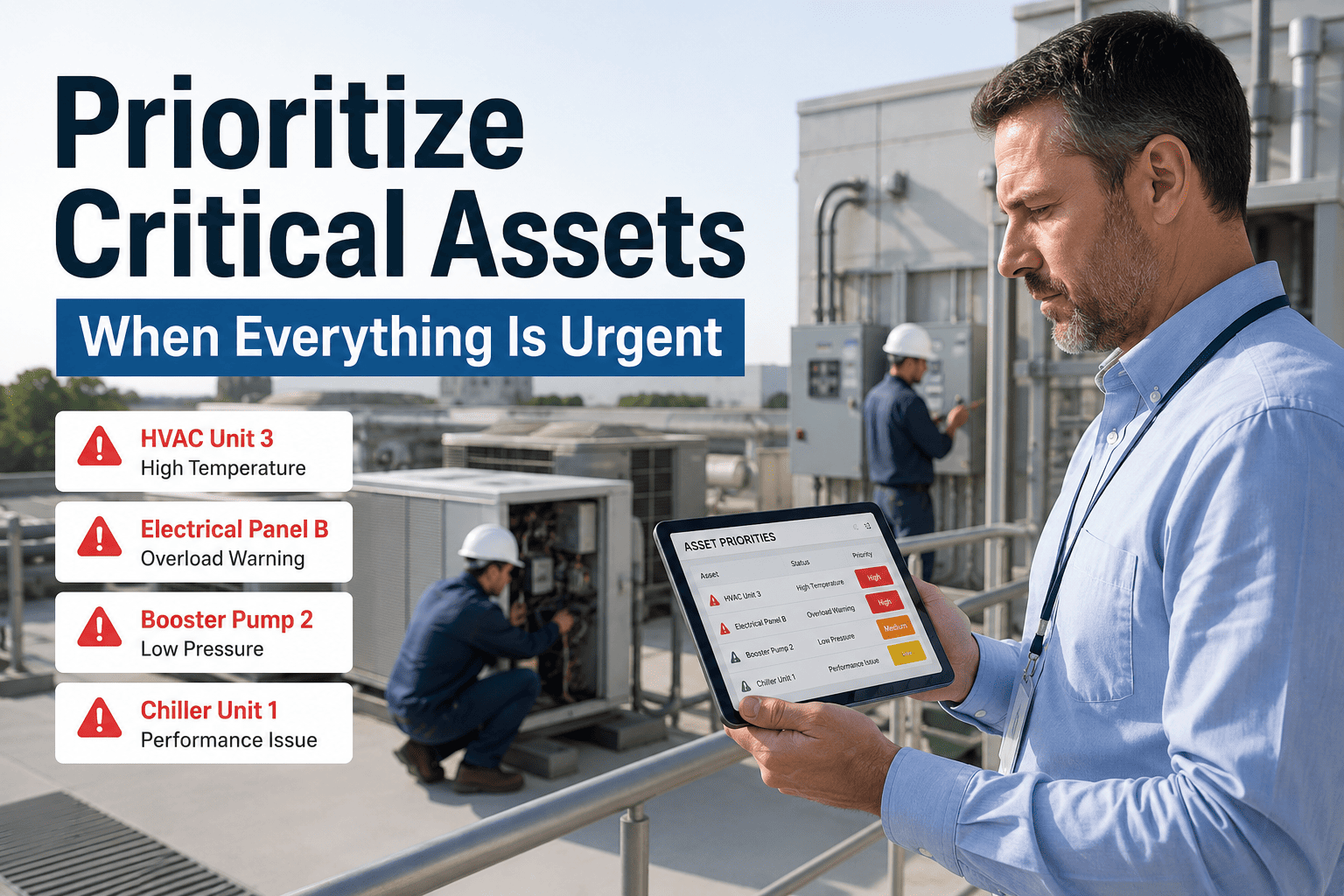
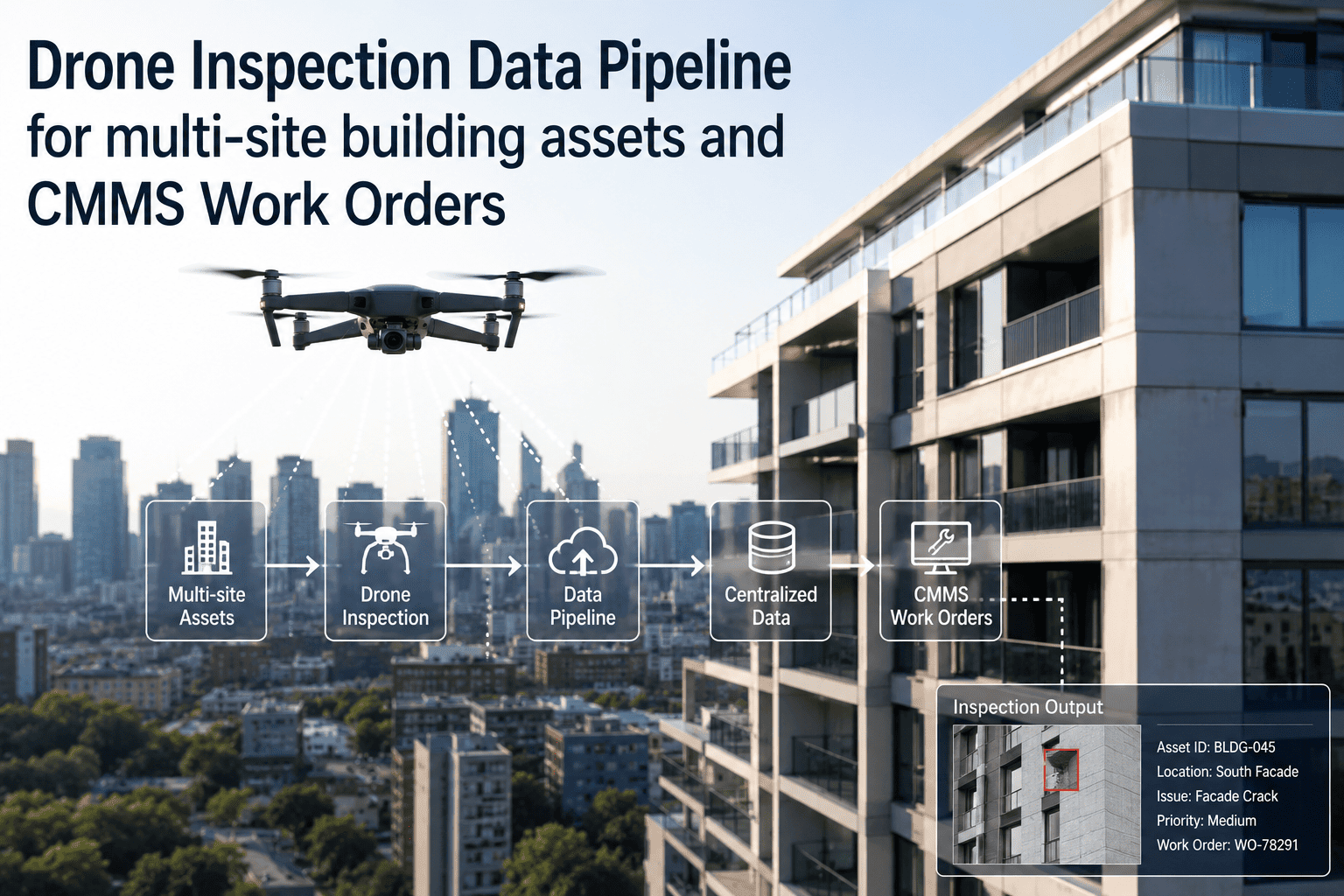
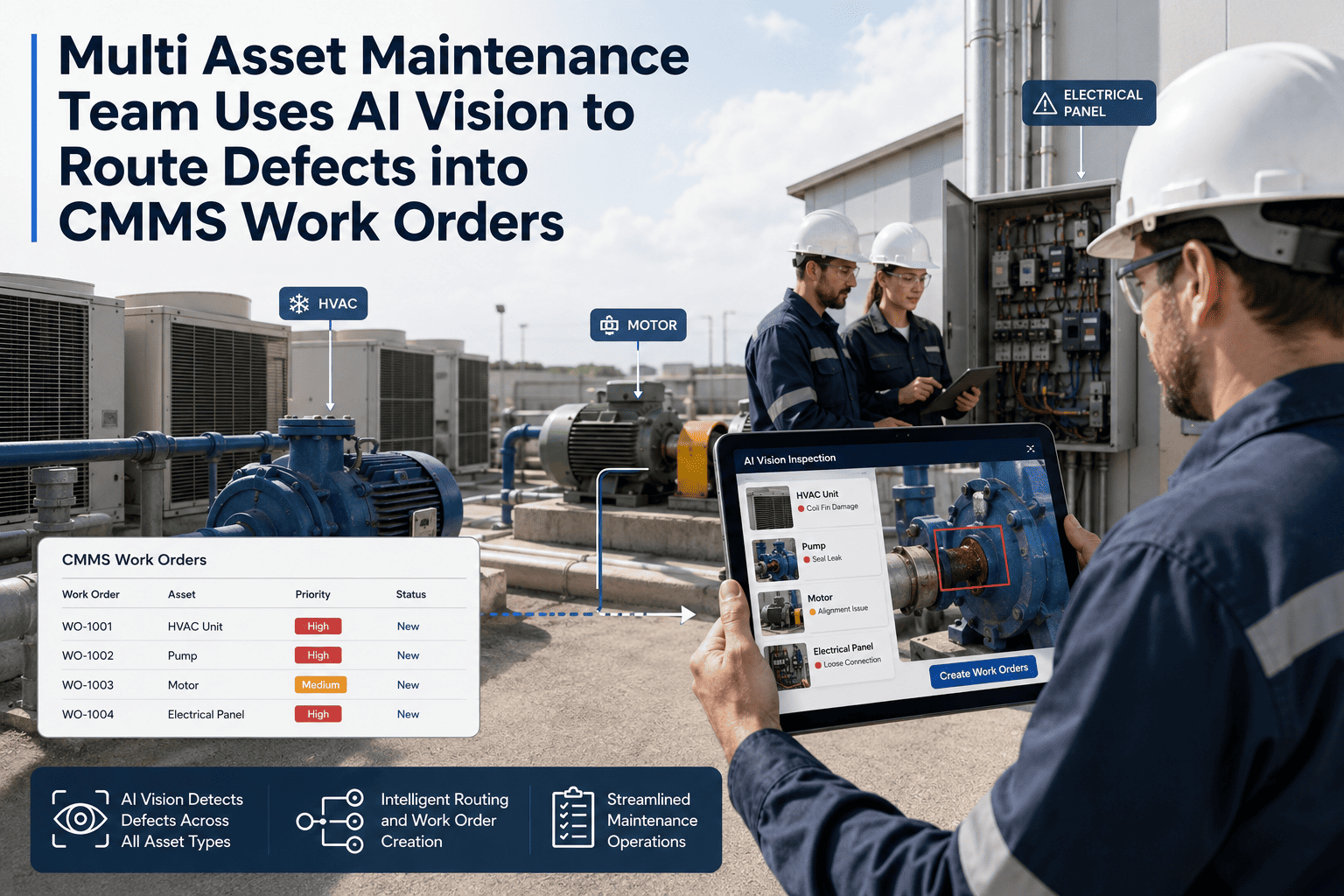
Every maintenance team knows the feeling — three machines down, five work orders overdue, and a supervisor asking which one to fix first. Without a scoring system, priority becomes whoever shouts loudest. OxMaint's Asset Management module gives your team a single, data-backed answer every time.
Asset Reliability · Prioritization Guide · 2026
How to Prioritize Critical Assets When Everything Feels Urgent
A practical scoring framework that helps maintenance teams rank assets by real impact — safety, downtime cost, failure history — and stop guessing under pressure.
The Core Problem
When everything is "Priority 1," nothing gets fixed right
Reactive maintenance teams spend up to 60% of their labor hours on unplanned repairs. The root cause is almost never a lack of skilled technicians — it is the absence of a structured system to rank which asset matters most before the failure cascades into a production halt or a safety incident.
60%
of labor hours wasted on unplanned reactive repairs in facilities without asset criticality scoring
3x
higher downtime cost when assets fail without a PM program versus scheduled maintenance
40%
reduction in critical failures reported by facilities using structured criticality ranking systems
The Framework
4 factors that turn guesswork into a ranked list
A reliable criticality score combines four dimensions. Each asset gets a weighted score across all four — and the ranked output tells your team exactly where to send the next technician.
01
Production Impact
Does this asset stop the line completely, reduce output partially, or run in parallel with a backup? Assets with no redundancy score highest.
Score weight: 35%
02
Safety & Environmental Risk
Would failure injure personnel, trigger a regulatory violation, or release a hazardous material? Safety-critical assets are always top tier regardless of cost.
Score weight: 30%
03
Repair Cost & MTTR
High repair costs and long mean-time-to-repair multiply the damage of every failure event. Include both parts and labor when scoring this dimension.
Score weight: 20%
04
Failure Frequency (MTBF)
An asset that breaks every six weeks demands more attention than one that fails every three years, even if each individual repair is low cost.
Score weight: 15%
Scoring in Practice
Sample asset criticality scoring table
Below is a practical example of how three common assets score across the four dimensions. Your CMMS should calculate and surface this automatically — not require a spreadsheet session every Monday morning.
| Asset |
Production Impact |
Safety Risk |
Repair Cost |
Failure Frequency |
Total Score |
Priority |
| Main Conveyor Drive |
10 / 10 |
7 / 10 |
8 / 10 |
6 / 10 |
82 |
Critical |
| Cooling Tower Pump |
6 / 10 |
5 / 10 |
7 / 10 |
8 / 10 |
64 |
High |
| Office HVAC Unit |
2 / 10 |
2 / 10 |
4 / 10 |
3 / 10 |
26 |
Standard |
Step-by-Step
Building your criticality program in 5 steps
1
List every asset in your facility
Start with your top 50 highest-cost or most-used assets. Import them into your CMMS with location, OEM, and install date.
2
Define your scoring criteria as a team
Maintenance managers, operations leads, and safety officers should agree on weights before scoring begins. Disagreement at this stage prevents conflict later.
3
Score each asset and tier your list
Group into Critical (score 70+), High (50–69), and Standard (below 50). Most facilities find 10–15% of assets fall into the Critical tier.
4
Assign PM frequency by tier
Critical assets get monthly or condition-based PMs. High-tier assets get quarterly. Standard assets get semi-annual or annual schedules.
5
Review scores every 6 months
Asset criticality changes as production lines shift, equipment ages, and repair histories accumulate. A static score is outdated data.
OxMaint Asset Management
Score, tier, and schedule — all inside one platform
OxMaint lets you attach criticality scores directly to asset records, auto-prioritize work orders by score, and view your entire fleet ranked by risk — without spreadsheets.
Expert Perspective
What reliability engineers say
RP
R. Palmer, CMRP — Reliability Engineer, Manufacturing Sector
Most teams already know which assets scare them at night. A criticality scoring system just makes that knowledge visible, defensible, and usable for budget conversations. The moment you tie asset scores to work order priority in your CMMS, you stop having arguments about what to fix first and start having conversations about what to prevent altogether. That is when you have moved from a reactive maintenance culture to a reliability culture.
Common Questions
Asset criticality — what teams ask most
How many assets should be in the Critical tier?
Industry benchmarks suggest that between 10 and 20 percent of a facility's assets typically fall into the Critical tier. If your scoring returns more than 30 percent as Critical, your scoring weights are likely too broad or too generous — revisit the production impact criteria and tighten the threshold so your team's attention stays on the true top tier.
OxMaint's asset dashboard shows tier distribution across your entire fleet automatically.
Should safety-critical assets always outrank production-critical assets?
In most regulatory environments, yes — a failed asset that creates a safety hazard must be addressed before a failed asset that only costs money. However, the scoring framework accommodates both by weighting safety at 30 percent and production at 35 percent, which means a highly safety-critical but rarely failing asset will still score below a safety-and-production-critical asset that also fails frequently. The composite score makes the ranking defensible across departments without requiring manual overrides.
Book a demo to see how to configure safety rules in OxMaint.
Can we use criticality scoring if we don't have full failure history data?
Yes. Many teams start with qualitative scoring based on operational knowledge — senior technicians and operators often have accurate mental models of failure frequency even without formal MTBF records. You score what you know, flag the gaps, and let your CMMS fill in the history as work orders accumulate. Within six to twelve months, the data will validate or adjust your initial scores automatically as patterns emerge from your repair records.
How does OxMaint use criticality scores to prioritize work orders?
OxMaint links each work order to the asset's criticality tier and surfaces the tier in the work order queue. Technicians and supervisors see a ranked list that reflects both the urgency of the work request and the underlying criticality of the asset involved. You can also configure automatic escalation rules that trigger manager alerts when a Critical-tier asset work order sits unacknowledged beyond a set time window, so nothing slips through the cracks during busy shift transitions.
Start free to see it in action.
Free Trial · No Credit Card · Live in 60 Minutes
Stop deciding by gut feel. Let asset data make the call.
OxMaint gives every asset a score, every work order a rank, and every technician a clear next step — so your team moves faster and your managers stop fielding "what do we fix first" calls.