PLC fault alarms fire hundreds of times per shift in a typical plant — but most of them either get acknowledged and ignored, or trigger a flood of reactive work orders that bury the one alarm that actually matters. PLC alert intelligence in work order triage changes that equation by adding context, priority logic, and machine-learning filters between the PLC output and the technician's queue. This implementation guide covers how OxMaint connects to your PLC layer via OPC-UA or direct signal mapping, applies alert intelligence rules, and routes only actionable work orders to the right person at the right time. Plants using this approach cut mean-time-to-acknowledge on critical faults by 71% in the first quarter. To implement this in your facility, start a free trial or book a 30-minute PLC integration walkthrough.
PLC Integration · Alert Intelligence
Implementation Guide: PLC Alert Intelligence in Work Order Triage
Not every PLC fault is a work order. Alert intelligence filters, prioritizes, and routes — so technicians act on what matters instead of sorting through noise.
The Alert Noise Problem by Numbers
73%
Of PLC alarms in typical plants are nuisance alarms that require no action
8 min
Average time lost per shift per technician sorting alarm queues manually
71%
Drop in MTTA on critical faults after PLC alert intelligence is implemented
3x
More preventive work orders created vs. reactive when alert context is applied
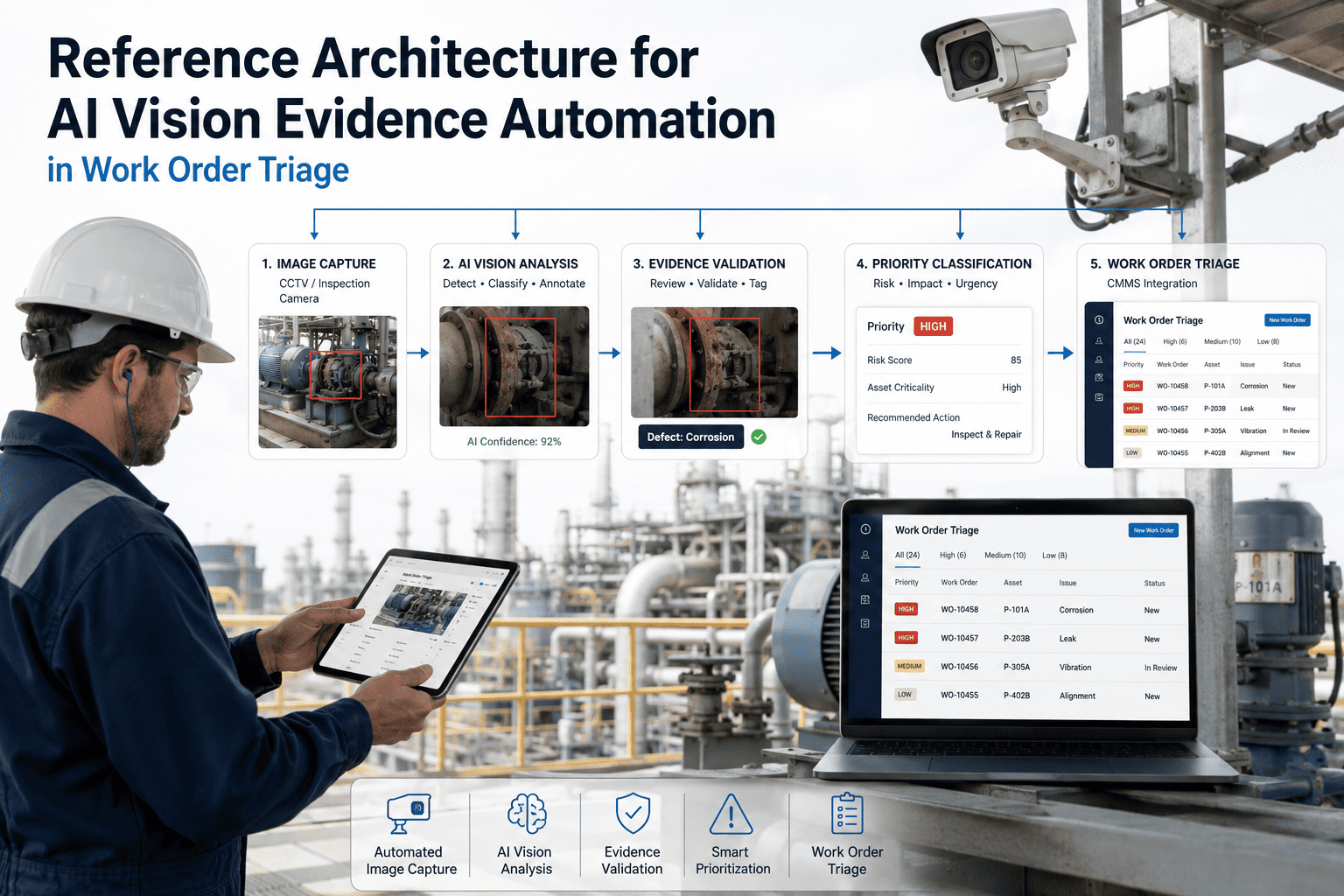
Implementation Phases
Protocol: OPC-UA, Modbus TCP, or direct API via PLC gateway
Data mapped: Fault codes, tag values, alarm timestamps, line ID
Timeline: 1–3 days per PLC type with pre-built connectors
↓
Nuisance filtering: Suppress known chattering faults below duration threshold
Context enrichment: Asset record, last maintenance date, failure history attached
Severity scoring: Each alarm scored 1–10 by fault type + asset criticality matrix
↓
Auto-create: Work orders fire for alarms above severity threshold
Routing logic: Skill-based assignment to qualified technicians or teams
Escalation: SLA timers start at WO creation; manager notified on breach
↓
Closure data: Root cause and resolution feed back to alert rule engine
Pattern detection: Recurring fault patterns trigger predictive work orders
Dashboard: Alert-to-WO conversion rate, false positive rate, MTTA tracked weekly
Eliminate PLC Alarm Noise From Your Technician Queues
OxMaint's PLC alert intelligence ships with pre-configured rules for the 50 most common fault codes across major PLC brands. Start filtering noise on day one.
Supported PLC Platforms & Protocols
| PLC Brand / Platform |
Protocol Supported |
Connection Method |
Setup Time |
| Siemens S7 Series |
OPC-UA, S7 Protocol |
Direct or via gateway |
1 day |
| Allen-Bradley / Rockwell |
OPC-UA, EtherNet/IP |
RSLinx or FactoryTalk |
1–2 days |
| Mitsubishi MELSEC |
Modbus TCP, MC Protocol |
OxMaint gateway agent |
2 days |
| Schneider Modicon |
Modbus TCP, OPC-UA |
Direct API |
1 day |
| ABB AC500 |
OPC-UA |
Direct or Automation Builder |
2 days |
| Generic SCADA / HMI |
REST API, MQTT |
OxMaint API endpoint |
1–3 days |
Expert Review
Reviewed by a Plant Automation & Reliability Engineer
The mistake most teams make is treating every PLC fault as equally urgent. On a busy production line, that floods the maintenance queue and trains technicians to treat every alarm as low priority — which is how critical faults get missed. Implementing a severity scoring layer that weighs fault type against asset criticality and recent maintenance history is what separates alert intelligence from simple alarm forwarding. The feedback loop from work order closure back to the scoring model is what makes the system smarter over time, not just faster.
Frequently Asked Questions
Does OxMaint require replacing existing SCADA or HMI systems?
No. OxMaint connects alongside your existing SCADA and HMI infrastructure, reading alarm and tag data through standard protocols. Your operators continue working in the same HMI environment while OxMaint handles the maintenance work order layer independently.
Book a walkthrough to see how OxMaint maps to your current control architecture without disruption.
How does the alert intelligence engine learn which alarms are nuisance alarms?
OxMaint ships with pre-configured nuisance suppression rules based on industry fault code databases. The system also learns from technician closure data — when a work order is closed with a "no fault found" resolution, that fault code's nuisance weighting increases automatically. Over 4–8 weeks, the filter becomes tuned to your specific plant's alarm behavior.
Start a free trial to see the default rules for your PLC brand.
Can OxMaint correlate alarms across multiple PLCs to detect cascade failures?
Yes. OxMaint's multi-PLC correlation engine detects when alarms across connected PLCs share a common root — for example, a power quality event triggering faults on three separate lines within 30 seconds. In these cases, a single coordinated work order is created rather than three separate ones, with all related alarms linked as context. This capability requires the multi-site or enterprise plan.
Book a demo to see cascade correlation demonstrated live.
Is PLC data stored securely within OxMaint's platform?
OxMaint ingests only the alarm and tag data required for work order triage — not raw process values or IP-sensitive production parameters. All data is encrypted in transit and at rest. On-premise deployment options are available for facilities with strict data residency requirements. Detailed security documentation is provided to enterprise customers during onboarding.
Turn PLC Alarms Into Actionable Work Orders
Stop letting alarm noise decide which faults get fixed. Implement alert intelligence and let the right work orders reach the right technician every time.