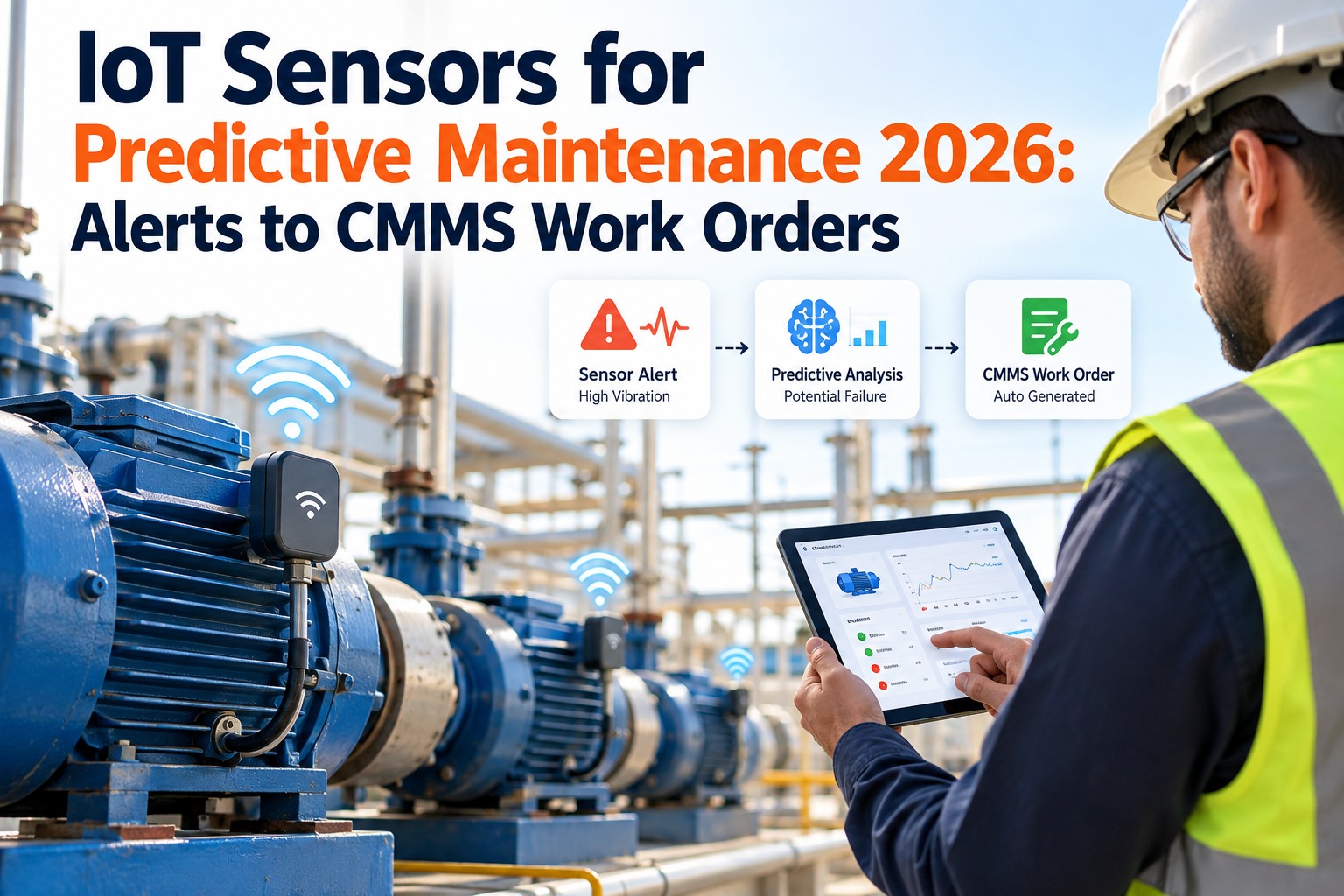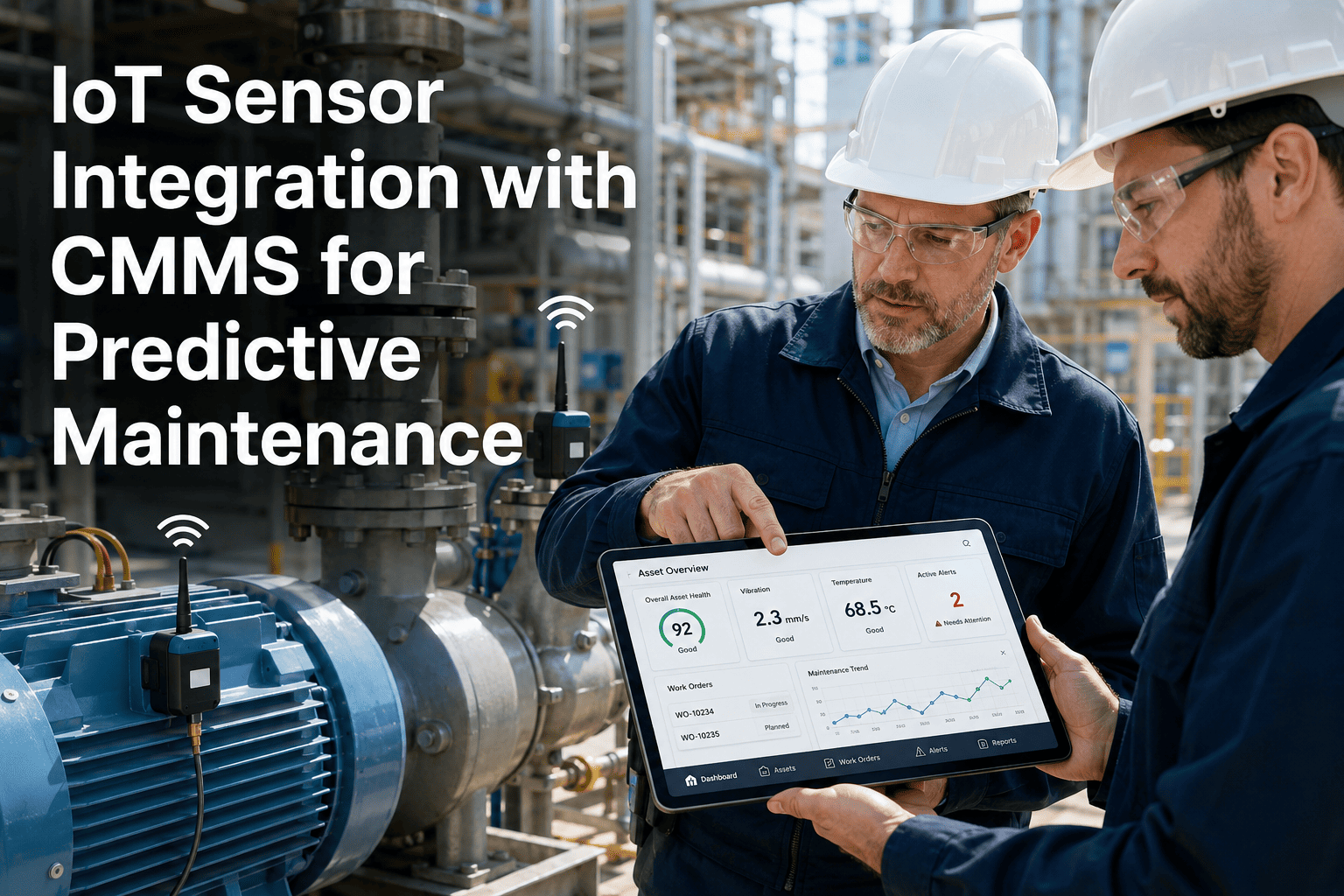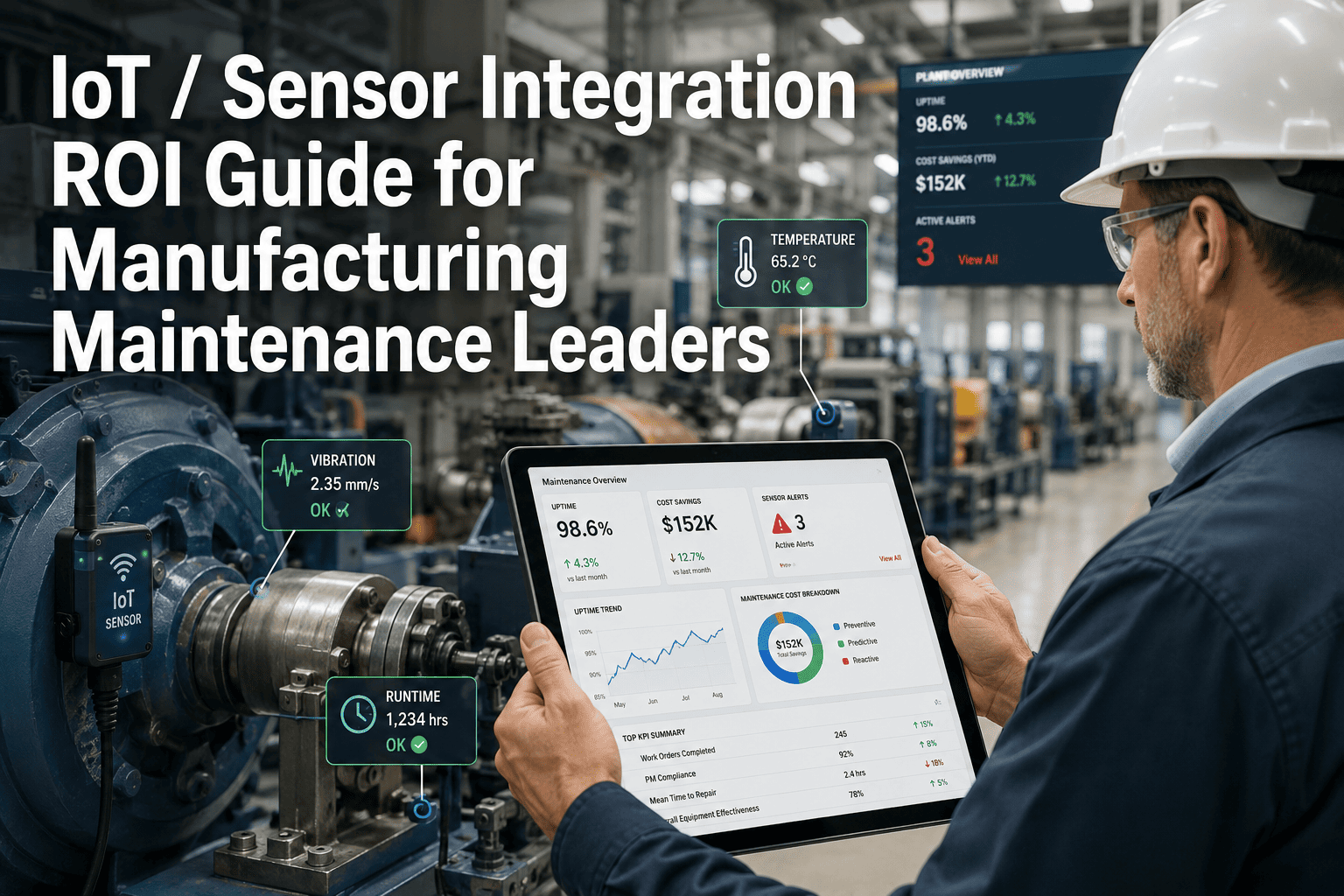
Manufacturing maintenance leaders face a quantifiable problem: spare parts stockouts cost the average mid-size plant $240,000 per year in unplanned downtime, rush procurement premiums, and production schedule disruptions — yet most plants cannot predict which parts will be needed next month with more than 60% accuracy. IoT sensor integration changes this equation fundamentally. When sensors continuously report the actual condition of motors, pumps, compressors, and drive systems, the maintenance team gains an early warning window of three to six weeks before failure — enough time to order the right parts at standard pricing, schedule the intervention during planned downtime, and avoid the stockout-driven emergency entirely. OxMaint CMMS with IoT sensor integration connects that sensor data directly to your work order system, parts inventory, and KPI dashboard — so condition-based maintenance becomes operational, not experimental. This ROI guide covers the numbers manufacturing teams should expect and how to build the business case for IoT integration at your plant.
IoT Integration ROI at a Glance
How Spare Parts Stockouts Happen Without IoT
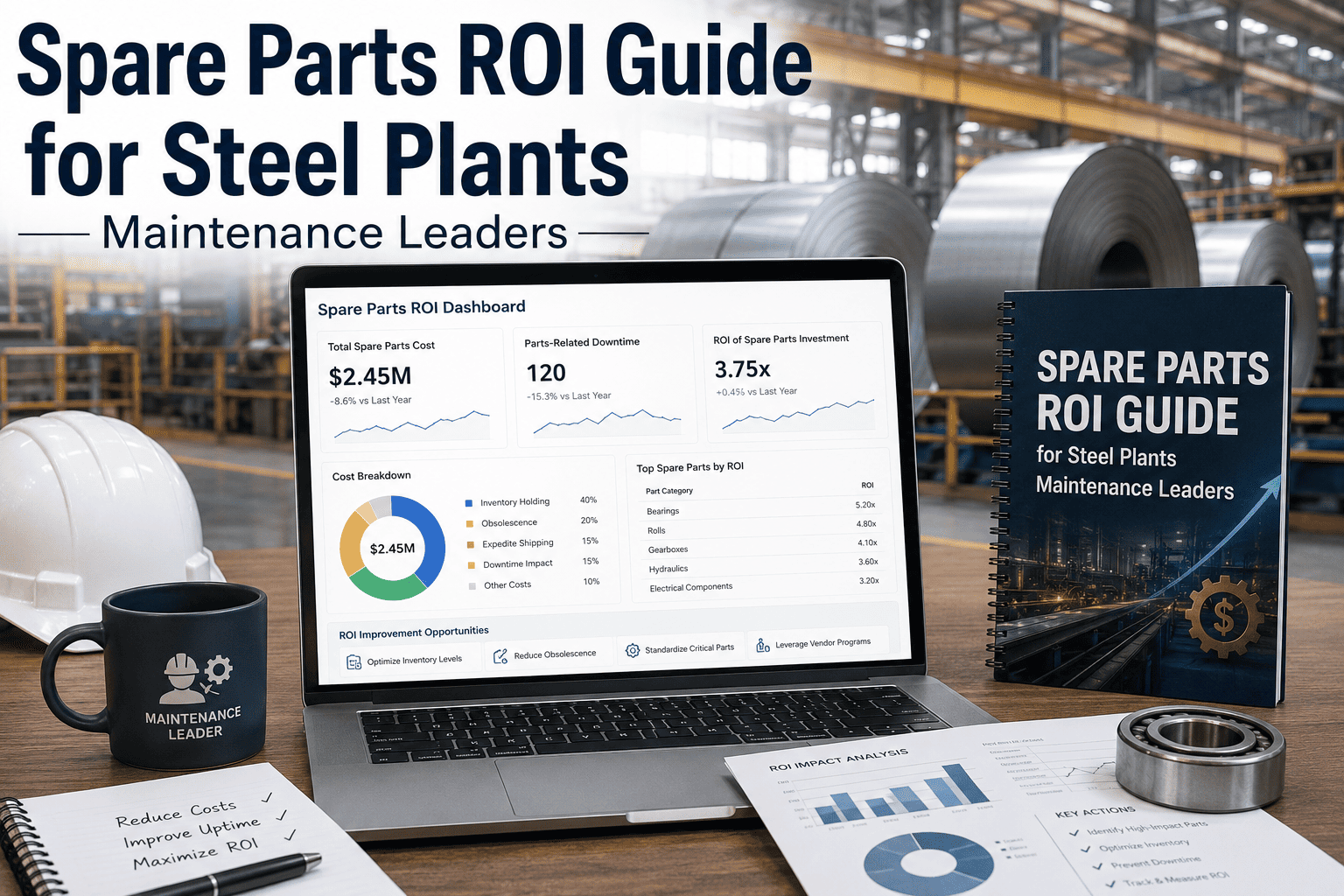
IoT Integration ROI Model: 3-Year Projection
| Cost Category | Year 1 (Pre-Integration) | Year 2 (Post-Integration) | Year 3 | 3-Year Saving |
|---|---|---|---|---|
| Stockout-Related Downtime | $238,000 | $82,000 | $61,000 | $332,000 |
| Rush Parts Premium Cost | $41,000 | $12,000 | $8,500 | $61,000 |
| Emergency Labor (Overtime) | $55,000 | $18,000 | $13,000 | $79,000 |
| Excess Inventory Carrying Cost | $28,000 | $16,000 | $12,000 | $28,000 |
| IoT Integration + OxMaint Cost | — | $38,000 (setup) | $18,000 (annual) | -$74,000 |
| Net Annual Position | -$362,000 | +$92,000 | +$148,000 | +$426,000 |
Calculate Your Plant's IoT Integration ROI
OxMaint's implementation team can run a facility-specific ROI model using your current downtime data and parts cost history — typically in the first demo call. No commitment required.
What OxMaint IoT Integration Monitors in Manufacturing
From Sensor Alert to Parts Order: The OxMaint Workflow
Expert Review
The ROI conversation for IoT integration in manufacturing almost always stalls on the sensor investment — and that is the wrong place to focus. The sensor cost is a one-time capital item. The value is in what the sensor data enables: predictive parts ordering, condition-based PM scheduling, and the elimination of the emergency response cost that currently inflates every maintenance budget I have audited. The facilities that achieve the fastest payback are not the ones with the most sensors — they are the ones whose CMMS can act on sensor data automatically, generating work orders and parts requests without human interpretation in the loop. OxMaint's IoT integration is the closest I have seen any platform get to a closed-loop predictive maintenance system that actually runs without a data scientist maintaining it.
Your Next Stockout Is Predictable — Start Preventing It Now
OxMaint IoT integration gives manufacturing maintenance teams the early warning window to order the right parts, schedule the right window, and prevent the next unplanned outage entirely. Book a demo built for manufacturing environments.
Frequently Asked Questions
How does IoT sensor integration in OxMaint prevent spare parts stockouts in manufacturing?
OxMaint uses real-time sensor data to predict component failure 3–6 weeks in advance — enough lead time to verify parts availability and place orders at standard pricing before emergency procurement becomes necessary. When the system detects a failure signature on a motor or pump, it automatically checks the parts inventory in OxMaint, generates a purchase request if the required component is below reorder threshold, and creates a scheduled work order with the correct parts list attached. This eliminates the reactive parts ordering pattern that drives stockout costs. OxMaint customers report 60–68% reductions in stockout-related downtime events within the first year of IoT integration.
What is the typical ROI timeline for IoT sensor integration in a manufacturing plant?
The average payback period across OxMaint manufacturing deployments is 12–16 months, depending on current downtime frequency and plant size. Plants with higher baseline reactive maintenance costs — typically those at 35%+ reactive work ratio — tend to see faster payback because the cost avoidance from even a few prevented unplanned outages exceeds the integration cost quickly. The ROI model is straightforward: avoided stockout downtime plus rush procurement premium savings minus integration and annual platform cost. Book a demo and OxMaint's team will run a facility-specific model using your current maintenance cost data at no obligation.
Does OxMaint IoT integration work with existing sensors on our production equipment?
Yes. OxMaint supports integration with most industrial IoT sensor platforms, including Siemens MindSphere, Rockwell FactoryTalk, Honeywell Connected Plant, and generic MQTT and OPC-UA protocols. For equipment that does not yet have sensors, OxMaint recommends a phased deployment approach — instrumenting the highest-criticality assets first to generate the fastest ROI, then expanding coverage as the program matures. A full sensor audit of your existing plant is a standard part of the OxMaint onboarding process, ensuring no duplicate investment in sensor infrastructure.
How does OxMaint handle IoT sensor data for multi-line or multi-plant manufacturing operations?
OxMaint's portfolio architecture aggregates sensor data and predictive alerts across all production lines and plant locations into a single dashboard. Maintenance managers at each site see their own asset condition view, while the reliability director sees a cross-plant comparison of MTBF, predictive alert frequency, and parts procurement status simultaneously. Custom escalation rules ensure that a critical asset alert at any plant reaches the right engineer within minutes, regardless of site. For multi-plant operations, this centralized visibility is particularly valuable for benchmarking reliability performance across facilities and identifying which plants would benefit most from accelerated IoT deployment.