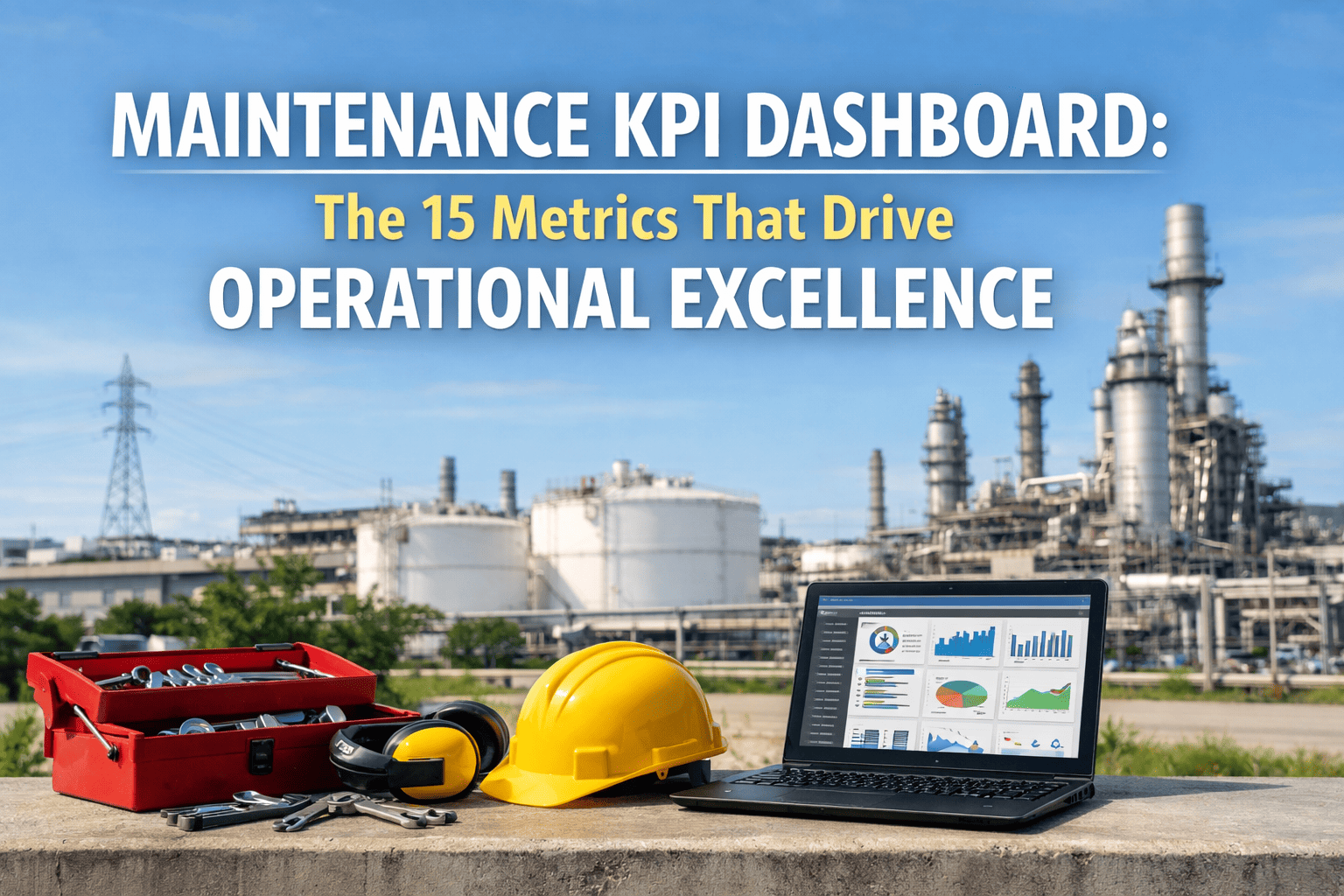
Maintenance Key Performance Indicators (KPIs) represent the foundational metrics that distinguish operational excellence from reactive maintenance approaches, with organizations tracking comprehensive performance data experiencing 45% higher equipment reliability and $850,000+ annual savings through strategic metric-driven decision making. Industry research demonstrates that companies implementing systematic KPI monitoring achieve 60% reduction in unplanned downtime, 35% improvement in maintenance efficiency and 50% better resource allocation compared to organizations relying on intuitive maintenance management approaches.
The Strategic Foundation: Essential Maintenance KPIs for Operational Excellence
Modern maintenance operations require sophisticated performance measurement systems that provide actionable insights into equipment health, maintenance effectiveness, and operational efficiency. Maintenance KPI implementation transforms reactive maintenance cultures into proactive, data-driven organizations that optimize asset performance while minimizing operational disruptions, and maintenance costs.
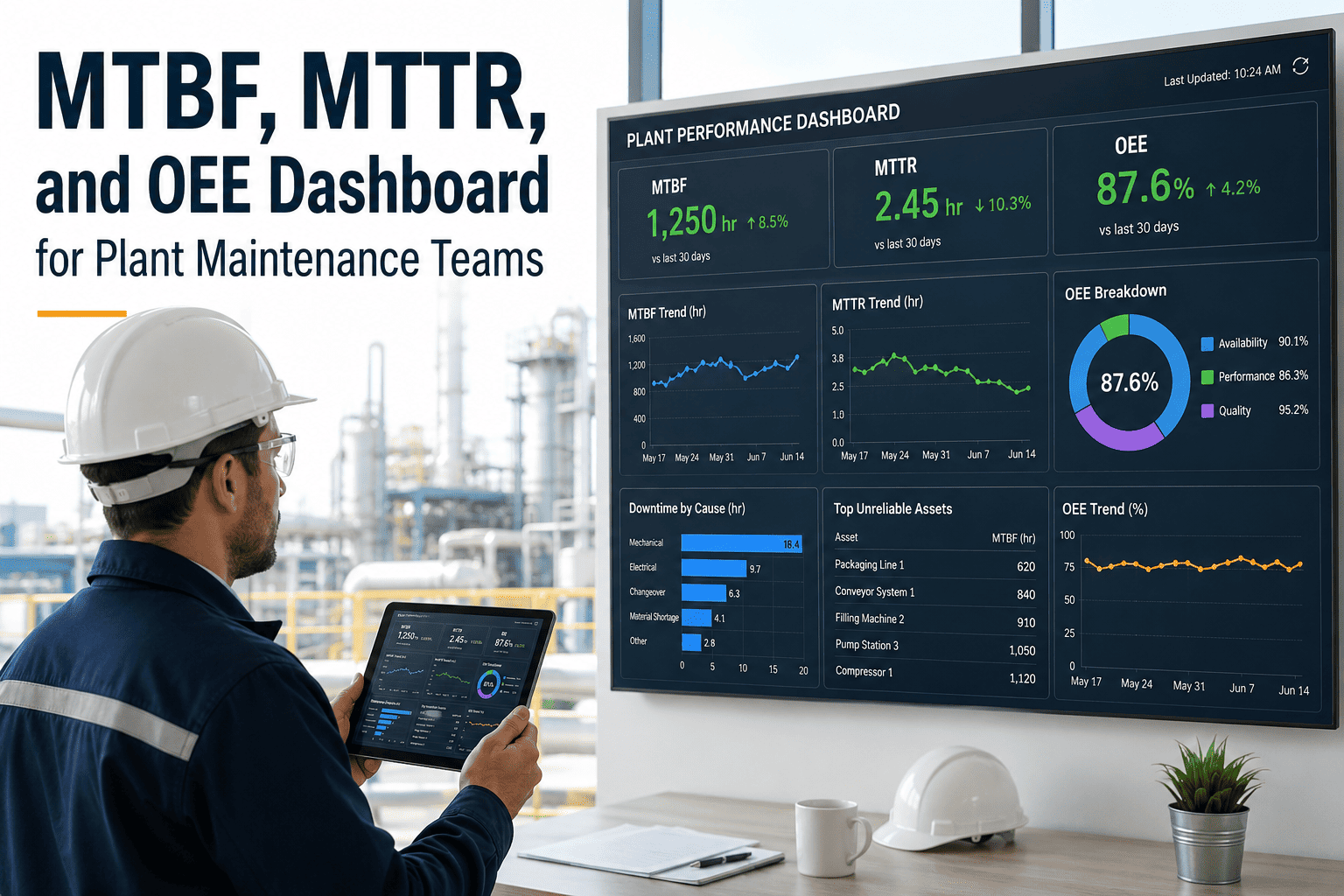
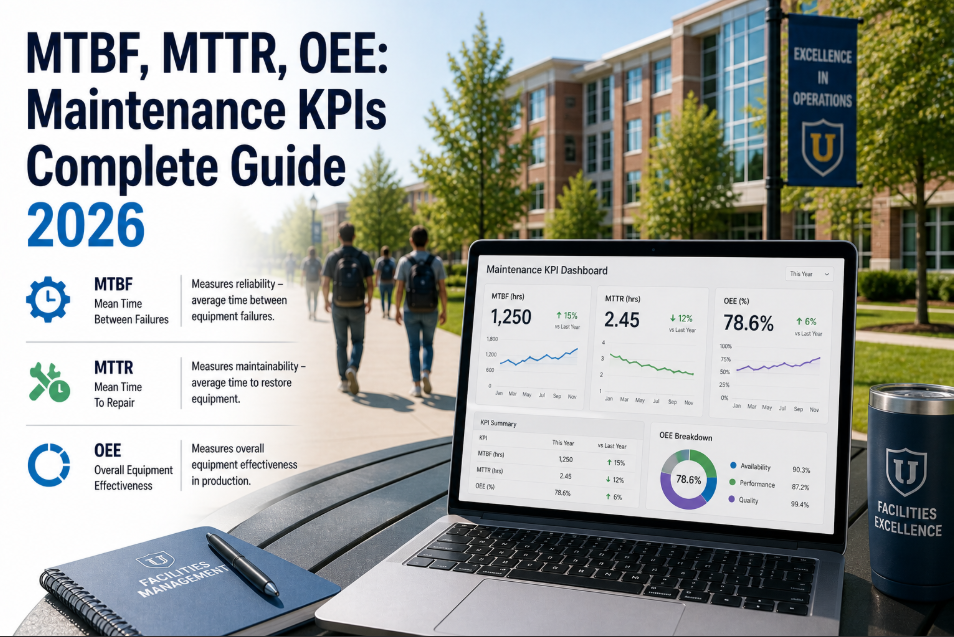
Mean Time To Repair (MTTR)
Average repair duration measuring maintenance team efficiency, with industry leaders achieving sub-4 hour MTTR through optimized processes, skilled technicians, and strategic parts management.
Mean Time Between Failures (MTBF)
Equipment reliability indicator measuring average operational time between failures, with systematic maintenance programs extending MTBF by 65% through predictive interventions.
Overall Equipment Effectiveness (OEE)
Comprehensive productivity metric combining availability, performance, and quality factors, with world-class facilities achieving 85%+ OEE through integrated maintenance excellence.
Maintenance Cost Per Unit
Financial efficiency indicator measuring maintenance spending relative to production output, enabling cost optimization and budget planning with precision accuracy.
Planned Maintenance Percentage
Proactive maintenance ratio measuring scheduled versus reactive work, with leading organizations achieving 80%+ planned maintenance through strategic scheduling optimization.
Work Order Completion Rate
Execution efficiency metric tracking completed maintenance tasks against planned activities, indicating resource adequacy and workflow effectiveness across maintenance operations.
Transform your maintenance performance with professional KPI tracking systems
Start KPI Tracking Schedule Analytics DemoThe Operational Impact of Poor KPI Management
Before implementing systematic KPI tracking, maintenance operations experience significant performance gaps that compound operational inefficiencies and increase total cost of ownership:
- Invisible performance deterioration with gradual efficiency losses going undetected until major breakdowns occur
- Resource misallocation averaging 35% of maintenance budgets spent on non-critical activities while critical needs remain unaddressed
- Reactive maintenance dominance with 70-80% of maintenance work occurring in emergency response mode
- Inconsistent performance measurement preventing accurate benchmarking, improvement tracking, and strategic planning
- Limited accountability frameworks with maintenance teams lacking clear performance targets and improvement objectives
Core KPI Categories: Comprehensive Performance Measurement Framework
Professional maintenance KPI systems encompass multiple measurement categories that provide holistic visibility into maintenance performance, asset health, and operational effectiveness across diverse equipment types and operational environments.
Equipment Reliability and Availability Metrics
Equipment reliability KPIs measure asset performance consistency and availability, providing critical insights into maintenance strategy effectiveness and equipment health trends.
Mean Time Between Failures (MTBF)
Reliability measurement calculating average operational time between equipment failures, enabling failure prediction and maintenance interval optimization for maximum asset utilization.
Mean Time To Repair (MTTR)
Efficiency indicator measuring average repair duration from failure detection to equipment restoration, reflecting maintenance team capability and process effectiveness.
Equipment Availability
Operational readiness metric calculating percentage of time equipment remains available for production, incorporating both planned and unplanned maintenance impacts.
Failure Rate Analysis
Statistical measurement tracking failure frequency patterns across equipment types, operating conditions, and maintenance strategies to identify improvement opportunities.
Advanced Performance Analytics and Trending Capabilities
Predictive KPI Modeling and Trend Analysis
Modern maintenance KPI systems incorporate advanced analytics capabilities that transform historical performance data into predictive insights, enabling proactive maintenance strategies and performance optimization.
Trend Analysis and Forecasting
Advanced algorithms analyzing historical KPI data to predict future performance trends, equipment degradation patterns, and maintenance resource requirements.
Comparative Benchmarking
Industry standard comparisons and internal benchmarking capabilities that identify performance gaps and improvement opportunities across equipment and facility segments.
Real-Time Performance Monitoring
Continuous KPI tracking with automated alerts when performance thresholds are exceeded, enabling immediate corrective action and performance optimization.
Cost-Benefit Analysis Integration
Financial impact analysis connecting KPI performance to operational costs, ROI measurement, and maintenance investment justification with quantifiable results.
Implementation Strategy and Best Practices
Systematic KPI Deployment and Change Management
Successful KPI implementation requires structured deployment approaches that ensure data accuracy, user adoption, and sustainable performance improvement across maintenance organizations and operational environments.
Phase 1: KPI Framework Design
Custom KPI selection based on organizational objectives, equipment types, operational priorities, and industry benchmarks to ensure relevant and actionable performance measurement.
Phase 2: Data Infrastructure Development
CMMS integration, data collection automation, validation procedures, and reporting system configuration to ensure accurate and timely KPI calculation and distribution.
Phase 3: User Training and Adoption
Comprehensive training programs for maintenance teams, supervisors, and management covering KPI interpretation, performance improvement strategies, and accountability frameworks.
Phase 4: Continuous Optimization
Regular KPI review cycles, threshold adjustments, metric refinement, and expansion planning based on organizational maturity and performance improvement results.
Technology Integration and Automation Strategies
KPI system effectiveness depends heavily on technology integration that automates data collection, ensures accuracy, and provides intuitive dashboards for decision-making and performance management.
CMMS Integration and Data Automation
Seamless integration with maintenance management systems ensuring automatic KPI calculation, real-time updates, and historical trend tracking without manual data entry.
Dashboard Development and Visualization
Executive and operational dashboards providing immediate KPI visibility, trend analysis, and exception reporting for all organizational levels and functional roles.
Mobile Access and Field Integration
Mobile-enabled KPI access allowing field technicians and supervisors to view performance metrics, update work status, and track improvement progress in real-time.
Alert Systems and Exception Management
Automated notification systems triggering alerts when KPI thresholds are exceeded, ensuring immediate attention to performance deviations and corrective action implementation.
Financial Impact and ROI Measurement
Quantifiable Business Benefits and Cost Optimization
Systematic maintenance KPI tracking delivers measurable financial returns through multiple value streams that extend beyond direct cost savings to encompass operational efficiency, asset optimization, and strategic planning benefits.
Operational Excellence and Competitive Advantages
Comprehensive KPI implementation creates sustainable operational advantages that enhance competitive positioning through improved asset reliability, optimized maintenance strategies, and data-driven decision making capabilities.
- Enhanced equipment reliability averaging 40% improvement in MTBF and 25% reduction in failure rates through systematic performance monitoring
- Optimized maintenance scheduling with 80%+ planned maintenance ratios and improved resource allocation based on performance data
- Improved budget predictability through accurate cost forecasting and performance-based maintenance planning strategies
- Accelerated continuous improvement with data-driven identification of improvement opportunities and performance optimization initiatives
- Enhanced regulatory compliance through documented performance tracking and systematic maintenance execution verification
Advanced Analytics and Performance Optimization
Next-generation KPI systems incorporate advanced analytics capabilities that transform maintenance performance data into strategic insights, enabling predictive maintenance strategies and operational excellence achievement.
Predictive Analytics Integration
Machine learning algorithms analyzing KPI trends to predict equipment failures, optimize maintenance intervals, and prevent performance degradation before it impacts operations.
Root Cause Analysis Capabilities
Statistical analysis tools identifying underlying causes of KPI deviations, enabling targeted corrective actions and systematic performance improvement initiatives.
Benchmarking and Best Practice Identification
Comparative analysis capabilities identifying high-performing equipment, processes, and strategies that can be replicated across operations for maximum efficiency gains.
Resource Optimization Modeling
Advanced algorithms optimizing maintenance resource allocation based on KPI performance data, ensuring maximum impact from available personnel, parts, and budget resources.
Future Outlook and Innovation Roadmap
The maintenance KPI landscape continues evolving with emerging technologies that promise enhanced accuracy, real-time insights, and predictive capabilities that will further improve maintenance effectiveness and operational performance.
Artificial Intelligence Enhancement
AI-powered KPI analysis providing deeper insights into performance patterns, automated optimization recommendations, and intelligent maintenance strategy development.
IoT Sensor Integration
Internet of Things technologies enabling continuous equipment monitoring and real-time KPI calculation based on actual operating conditions and performance data.
Augmented Reality Dashboards
AR-enabled KPI visualization providing technicians with real-time performance data overlay during maintenance activities and equipment inspections.
Blockchain Performance Verification
Immutable KPI records ensuring data integrity, audit compliance, and performance verification for regulatory requirements and quality assurance programs.
Frequently Asked Questions
Ready to implement comprehensive maintenance KPIs for operational excellence?
Start Performance Tracking Book KPI Consultation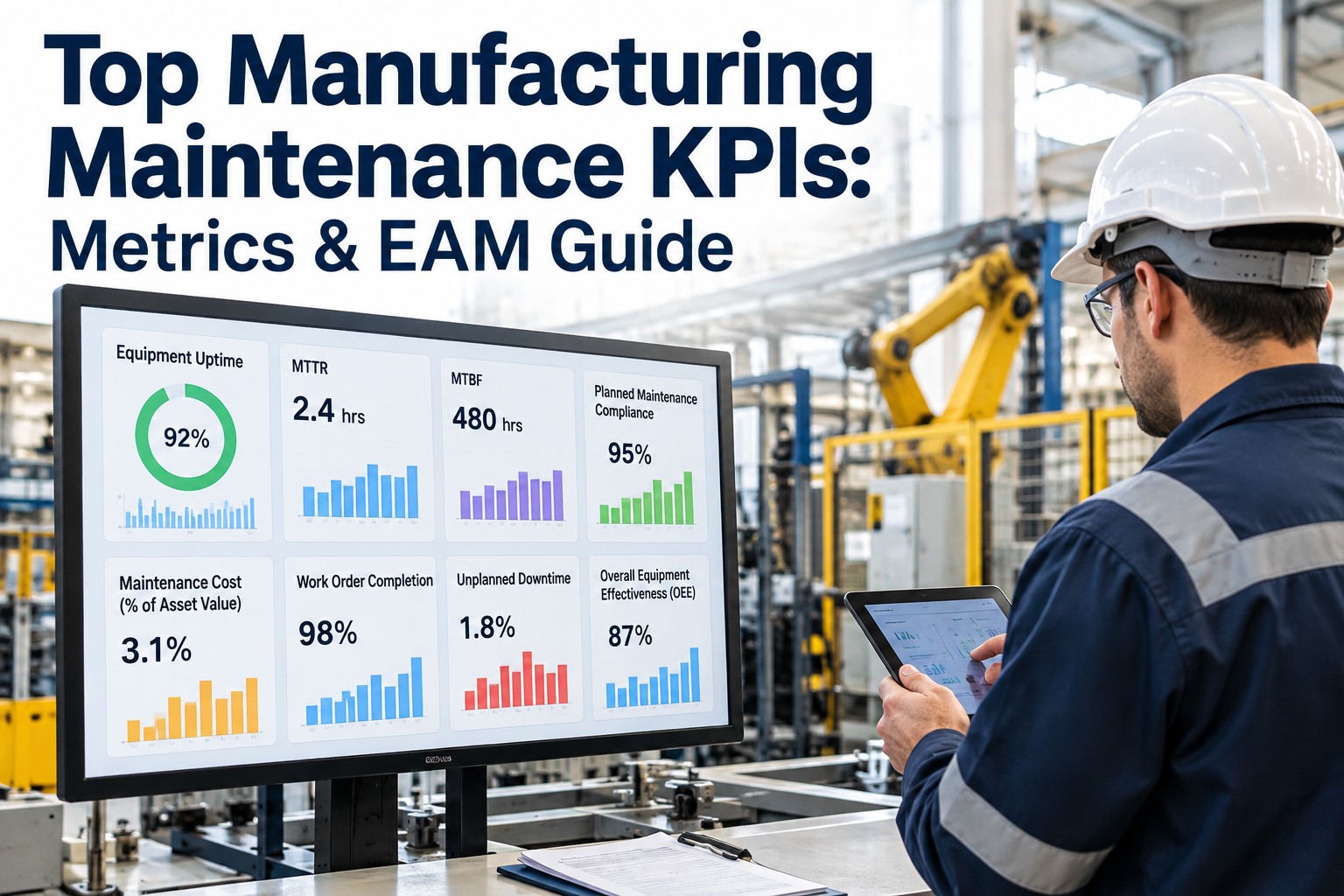

.png)