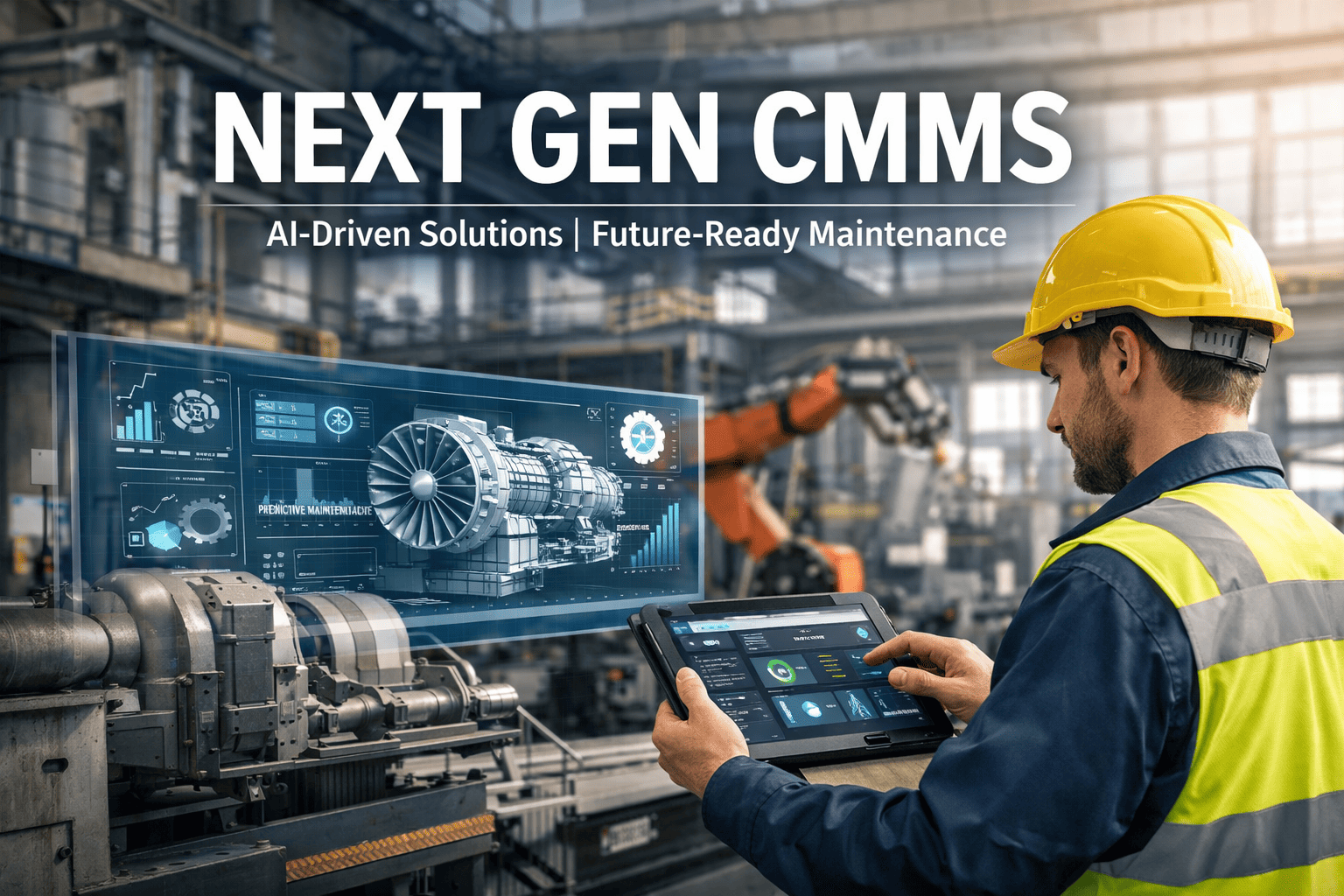
The era of manual data entry and reactive work orders is over. As industrial operations become more complex, traditional Computerized Maintenance Management Systems (CMMS) are struggling to keep pace. Next-Gen CMMS powered by Artificial Intelligence (AI) is transforming how organizations manage their assets—shifting from static, calendar-based schedules to dynamic, predictive, and autonomous maintenance ecosystems. Studies show that early adopters of AI-driven CMMS experience a 50% faster issue resolution rate and up to a 35% increase in total asset uptime. This guide explores how AI is reshaping maintenance and how you can prepare your facility for the future.
Why Next-Gen CMMS is Non-Negotiable
Relying on legacy systems that merely act as digital filing cabinets leaves your maintenance team constantly playing catch-up. An AI-driven CMMS doesn't just store data; it actively analyzes it. By leveraging machine learning algorithms to process historical failure codes, sensor data, and technician notes, the system anticipates breakdowns before they occur. It intelligently routes labor, auto-orders spare parts, and optimizes schedules in real time. You can sign up for our maintenance platform to experience the power of AI-driven asset management today.
The Reactive Trap
Legacy systems only tell you what already broke. AI tells you what is about to break, saving thousands in catastrophic failure costs.
Tribal Knowledge Loss
As veteran technicians retire, AI captures their diagnostic logic and standardizes troubleshooting for the next generation.
Data Overload
Without AI, thousands of IoT data points create noise. AI filters the noise into actionable, prioritized alerts.
Inventory Inefficiency
Static reorder points lead to overstocking or stockouts. AI adjusts inventory dynamically based on predictive usage trends.
The Core Features of AI-Driven CMMS
Building a future-ready maintenance program requires tools that adapt to your operations. Next-Gen CMMS platforms leverage AI to automate administrative tasks and enhance technical decision-making. Most successful organizations create a free account to digitize and automate their workflows instantly.
1. AI-Powered Core Features
2. Connectivity & Integration
3. Technician Empowerment
The Maintenance Maturity Curve
Transitioning to an AI-driven CMMS is a journey from reactive firefighting to prescriptive intelligence. Understanding where your organization currently stands helps chart the path forward. To map your facility's operational maturity, you can book a demo with our technical experts.
AI Maintenance Maturity Model
Future-Proof Your Maintenance Operations
Stop fighting yesterday's breakdowns. Oxmaint uses advanced AI to automate your workflows, predict equipment failures, and empower your technicians.
The Real Cost of Legacy Systems
Frequently Asked Questions
What makes a CMMS "Next-Gen" or AI-driven?
A Next-Gen CMMS goes beyond storing data; it uses artificial intelligence and machine learning to actively analyze trends, predict asset failures, automate administrative workflows, and provide prescriptive solutions to technicians.
Will AI replace my maintenance technicians?
No. AI is designed to augment technicians, not replace them. It eliminates tedious data entry, pinpoints exactly where problems are occurring, and provides smart diagnostic guides, allowing your team to focus on high-value, hands-on repair work.
How difficult is it to migrate from a legacy CMMS?
Modern Next-Gen platforms are built with cloud-native architectures and open APIs, making data migration highly automated. Most organizations can transition their asset hierarchies and historical data in a matter of weeks, not months.
Do we need IoT sensors to use an AI CMMS?
While IoT sensors maximize the predictive capabilities of an AI CMMS, they are not strictly required to start. The AI can still optimize your scheduling, automate inventory forecasting, and route work orders efficiently using basic historical data and manual meter readings.
What is the typical ROI timeline for an AI CMMS?
Because Next-Gen systems reduce emergency overtime and immediately streamline inventory purchasing, most facilities see a positive return on investment within 6 to 9 months of full deployment.
Step Into the Future of Maintenance Today
Join thousands of forward-thinking organizations using Oxmaint to transition from reactive repairs to autonomous, AI-driven reliability.
.png)


