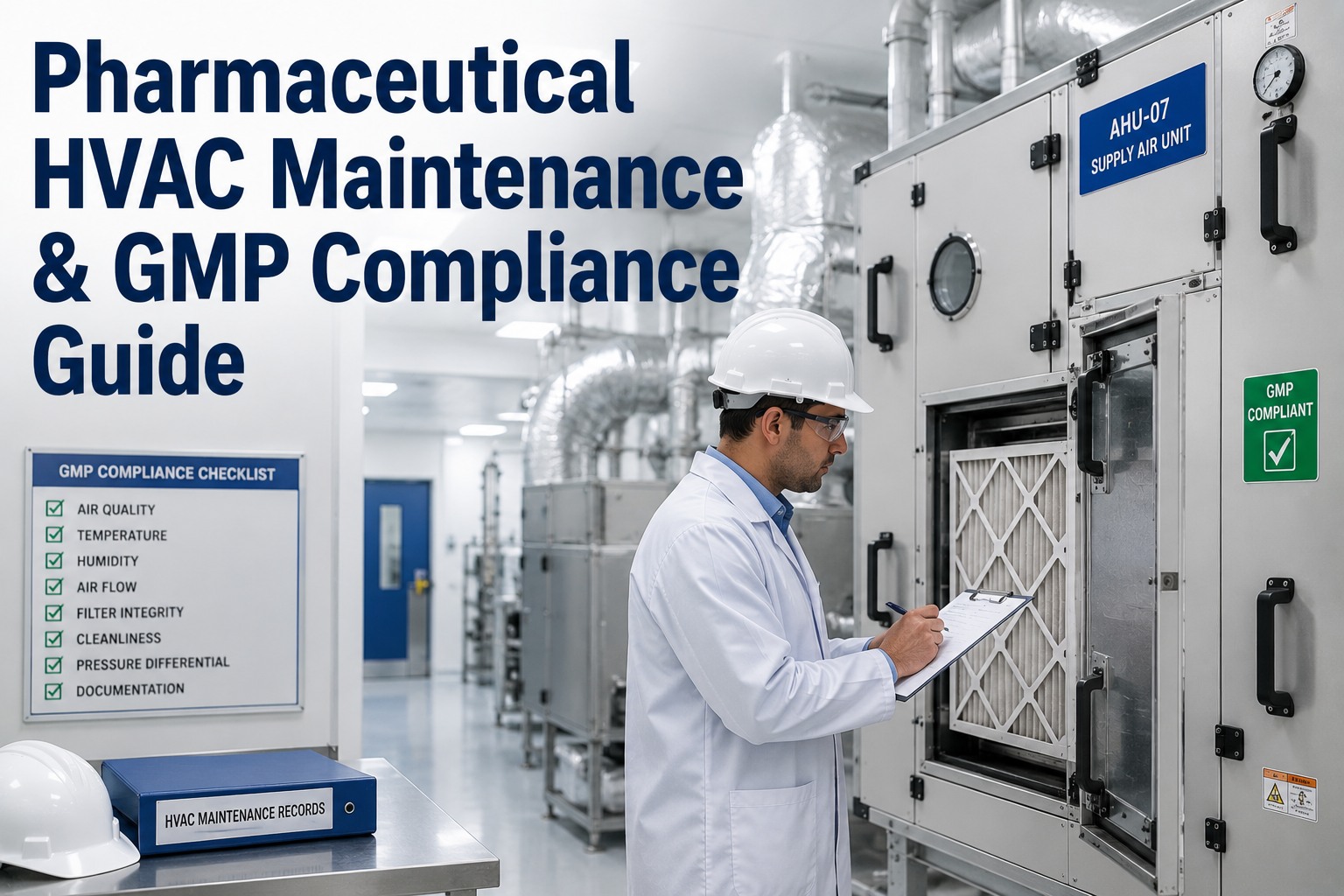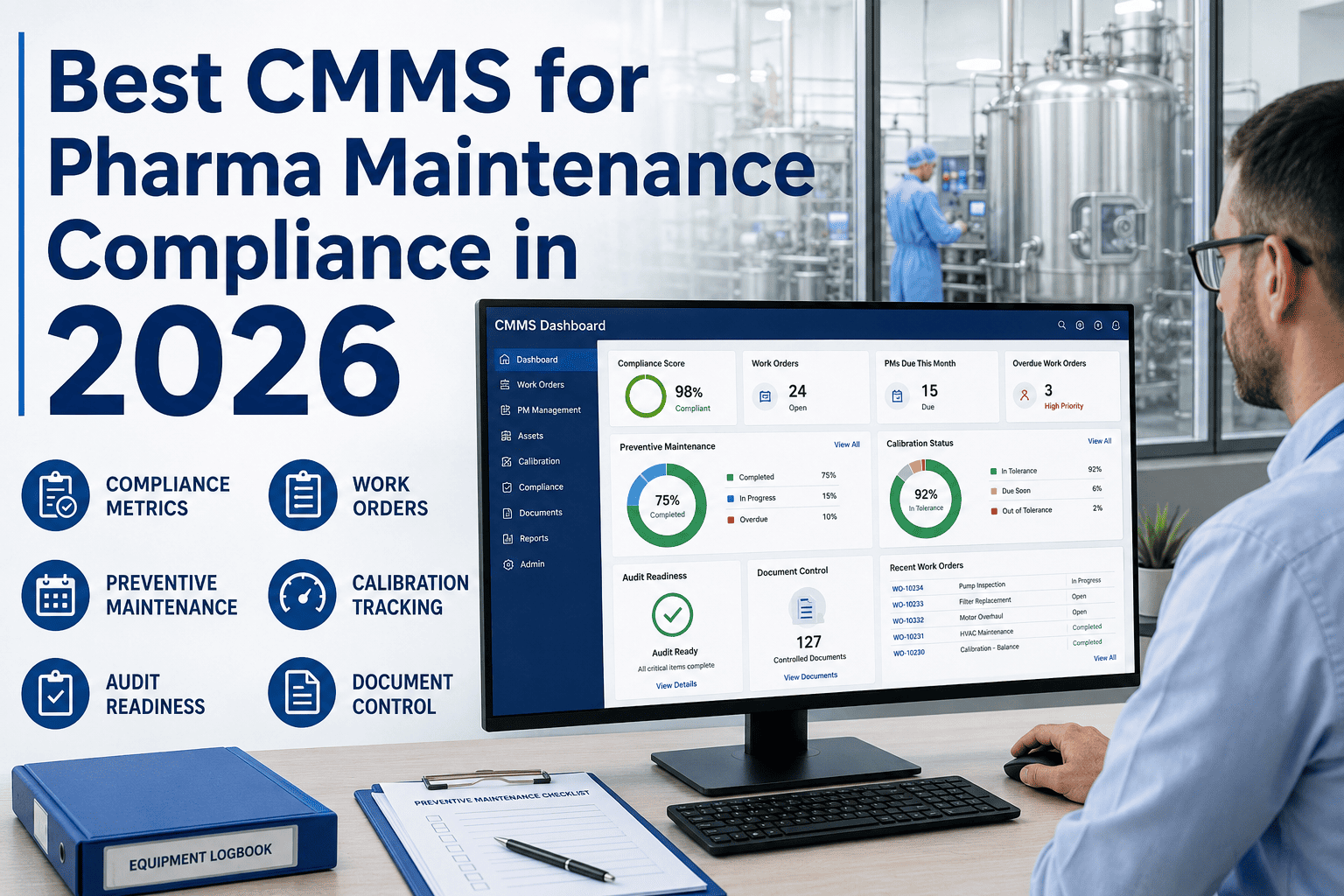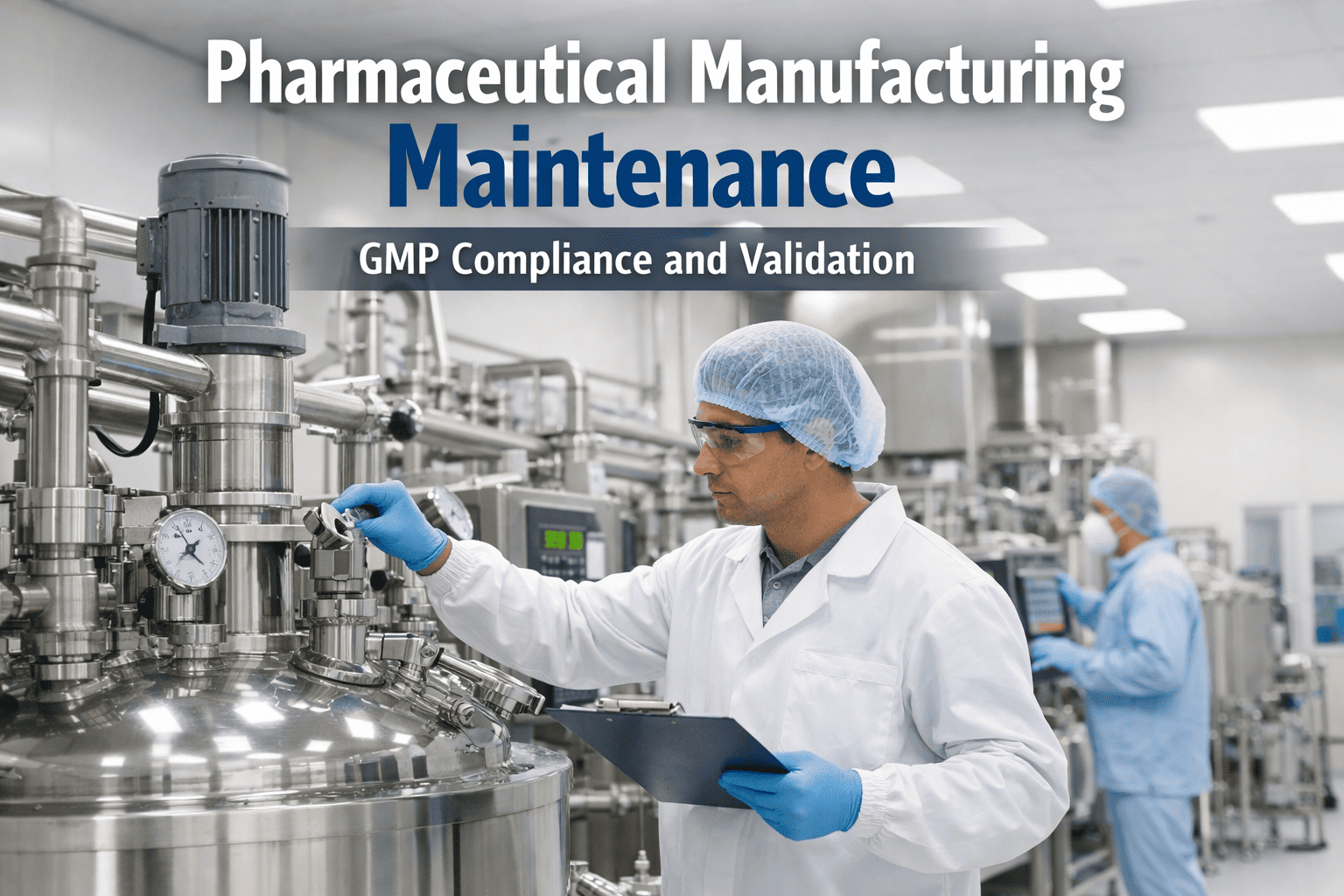
In pharmaceutical manufacturing, a missed calibration on a tablet press does not just cause downtime — it can invalidate an entire production batch worth $500,000 to $2 million, trigger an FDA 483 observation, and set off a chain of corrective actions that consumes your quality team for months. The FDA issued over 4,000 cGMP-related observations in recent inspection cycles, with equipment maintenance deficiencies consistently ranking among the top findings. Non-compliance consequences escalate fast: warning letters, consent decrees, import alerts, and in severe cases, complete facility shutdowns that halt drug supply to patients who depend on your products. This is not an industry where "good enough" maintenance exists. Every work order, every calibration record, every preventive maintenance completion must be documented, traceable, and audit-ready at all times. Oxmaint's CMMS platform provides the validated, 21 CFR Part 11-compliant digital infrastructure that pharmaceutical maintenance teams need — automated PM scheduling, electronic signatures, complete audit trails, and seamless integration with quality management systems.
The cGMP Framework for Equipment Maintenance
The FDA's Current Good Manufacturing Practice regulations, codified in 21 CFR Parts 210 and 211, establish non-negotiable expectations for how pharmaceutical manufacturers maintain production equipment. These are not guidelines or recommendations — they are legally enforceable requirements where violations carry consequences ranging from warning letters to criminal prosecution. Understanding how each regulation maps to specific maintenance activities is the foundation of a compliant program.
The Equipment Validation Lifecycle: DQ → IQ → OQ → PQ
Every piece of GMP-critical equipment must pass through a structured validation lifecycle before it touches product — and that validated state must be maintained throughout the equipment's operational life. This is where maintenance and quality converge: a CMMS that tracks qualification status, manages revalidation triggers, and documents every intervention that could affect validated state is not optional, it is essential.
Design Qualification
Verifies that equipment design meets User Requirement Specifications (URS) and GMP requirements before purchase. CMMS stores DQ documentation, URS, and functional requirement specifications (FRS) as permanent asset records accessible throughout the equipment lifecycle.
Installation Qualification
Confirms equipment is installed per manufacturer specifications and design intent — utilities connections, environmental conditions, and physical placement. CMMS creates the baseline asset record with installation date, serial numbers, utility connections, and initial calibration certificates.
Operational Qualification
Proves equipment operates correctly under defined conditions across its full operating range — temperature, pressure, speed, and control parameters. CMMS records OQ test results, acceptance criteria, and deviation resolutions as part of the qualification master record.
Performance Qualification
Demonstrates equipment consistently performs as intended under actual production conditions with real product. After PQ approval, the CMMS activates the full preventive maintenance program, calibration schedule, and cleaning validation protocols — maintaining validated state through ongoing operation.
Ongoing Validated State Maintenance
Validation is not a one-time event. Every maintenance intervention, calibration adjustment, software update, and component replacement must be evaluated through change control to determine if revalidation is required. CMMS manages this continuous lifecycle — flagging maintenance activities that trigger requalification and documenting the rationale when revalidation is not needed.
Equipment evaluation typically follows a validation master plan with reassessment every three to five years, but any significant maintenance intervention can trigger ad-hoc requalification. Your CMMS must flag these triggers automatically. Book a demo to see how Oxmaint manages the complete equipment qualification lifecycle from DQ through ongoing validated state maintenance.
GMP-Critical Equipment Categories
Pharmaceutical manufacturing equipment operates in controlled environments where any variance in performance can affect product quality, patient safety, and regulatory compliance. Equipment is classified by its proximity to product and criticality to process control — CMMS must assign maintenance priority accordingly.
Tablet Presses & Encapsulators
Compression force monitoring, punch and die inspection, weight variation testing, automated in-process controls. A single misaligned punch can produce tablets outside specification, requiring batch rejection.
Mixing & Blending Equipment
Granulators, fluid bed dryers, V-blenders, and high-shear mixers. Blend uniformity depends on precise speed, temperature, and time control. Bearing wear, seal degradation, and control system drift are primary failure modes.
Filling & Packaging Lines
Liquid fill stations, blister packaging, labeling systems, and serialization equipment. Fill accuracy, container closure integrity, and label placement are all GMP-critical parameters affected by maintenance condition.
HVAC & Cleanroom Systems
Air handling units, HEPA filtration, pressure differential controls, temperature and humidity regulation. Cleanroom classification (ISO 5–8) depends on HVAC performance — a failed HEPA filter can contaminate entire production areas.
Purified Water Systems
WFI (Water for Injection) and PW (Purified Water) generation, storage, and distribution. Biofilm prevention requires continuous loop circulation and scheduled sanitization. Conductivity and TOC monitoring must remain within USP specifications.
Steam, Compressed Air & Gases
Clean steam generators, oil-free compressors, and nitrogen supply systems. Product-contact compressed air and gases require point-of-use quality testing. Steam quality affects sterilization effectiveness and equipment cleaning.
Building Management & Environmental Monitoring
BMS controlling cleanroom environments, particle counters, viable monitoring systems, and data loggers. Environmental excursions require investigation and documentation — CMMS tracks the maintenance status of every monitoring instrument.
Companies implementing CMMS-driven predictive maintenance have reduced equipment downtime by 30% and improved production efficiency, while digital twin simulations have cut validation time by 25%. Sign up for Oxmaint to build equipment-specific PM programs with qualification status tracking and automated revalidation triggers.
21 CFR Part 11: Electronic Records and Signatures in Maintenance
Any CMMS used in pharmaceutical manufacturing must comply with 21 CFR Part 11 — the FDA regulation governing electronic records and electronic signatures. This is not a feature wish list; it is a legal requirement for any digital system that creates, modifies, maintains, or transmits records required by FDA regulations. A non-compliant CMMS is worse than paper because it creates a false sense of documentation security while leaving your facility legally exposed.
Access Controls
Role-based permissions ensuring only authorized personnel can create, modify, or approve maintenance records. System administrators control access levels, and every login is tracked with timestamps. Unauthorized access attempts are logged and flagged.
Audit Trails
Every record creation, modification, and deletion is captured with user identity, timestamp, previous value, and new value — creating an immutable history that cannot be altered. Audit trail data must be available for regulatory review without additional processing.
Electronic Signatures
Legally binding e-signatures that include the signer's printed name, date/time of signing, and meaning of the signature (approval, review, verification). E-signatures must be linked to their respective electronic records and cannot be reused or reassigned.
System Validation
The CMMS itself must be validated per GAMP 5 guidelines — installation qualification, operational qualification, and performance qualification of the software system. Validation documentation must be maintained and updated with each system upgrade or configuration change.
21 CFR Part 11 Compliant. Validated. Audit-Ready.
Oxmaint delivers electronic signatures, immutable audit trails, role-based access controls, and GAMP 5 validation documentation — everything pharmaceutical maintenance teams need for FDA compliance.
CMMS Capabilities for Pharmaceutical Maintenance
A pharmaceutical CMMS is not a generic work order system with a compliance checkbox added. It must be purpose-built for environments where documentation is the product as much as the drug itself — where a missing signature invalidates an entire batch record, and a late calibration puts your manufacturing license at risk. Start your free Oxmaint trial and experience pharmaceutical-grade maintenance management firsthand.
Validated PM Scheduling with Deviation Management
Preventive maintenance schedules tied to equipment qualification status. When a PM is missed or completed late, the system automatically generates a deviation record requiring quality review and investigation before the equipment returns to production. This closed-loop process prevents unqualified equipment from touching product.
Calibration Management with Certificate Tracking
Instrument calibration scheduling against traceable standards with as-found/as-left data recording, tolerance verification, and automatic out-of-tolerance escalation. Calibration certificates are stored digitally against each instrument record. Past-due calibrations flag affected equipment as "hold for quality review" — preventing use in production.
Change Control Integration
Every maintenance activity that could affect validated state — component replacement, software update, parameter adjustment — flows through integrated change control. The CMMS evaluates impact classification (minor/major), routes for appropriate approval, and documents the revalidation assessment. This prevents well-intentioned maintenance from silently invalidating qualified equipment.
Cleaning Validation Documentation
Equipment cleaning between product campaigns requires validated cleaning procedures with documented residue limits, sampling methods, and analytical results. CMMS manages cleaning work orders with attached SOPs, records execution details, and stores swab/rinse test results as permanent records against the equipment cleaning history.
Training & Qualification Management
Maintenance personnel must be trained and qualified before performing GMP-critical tasks. CMMS tracks training records per individual, manages competency assessments, restricts work order assignment to qualified technicians, and automatically flags when retraining is due — ensuring only qualified people work on qualified equipment.
QMS & ERP Integration
Seamless connection with Quality Management Systems (QMS) for deviation management, CAPA tracking, and batch record integration. ERP integration syncs spare parts procurement, cost allocation, and inventory management. LIMS integration ensures laboratory instrument maintenance is centrally managed alongside production equipment.
Audit Readiness: The CMMS Scorecard
FDA inspections can arrive with minimal notice. The difference between a smooth inspection and an enforcement action often comes down to whether your documentation is instantly accessible, complete, and trustworthy. A well-configured CMMS turns audit readiness from a scramble into a default state.
Complete PM History for Any Equipment — Instantly
When an inspector asks "show me the maintenance history for Tablet Press #3," the response time should be seconds, not hours. CMMS provides searchable, filterable maintenance histories with every work order, part replacement, and calibration record linked to the specific asset.
Calibration Certificates On-Demand
Every calibrated instrument's current and historical certificates are stored digitally, searchable by instrument ID, date range, or calibration status. Out-of-tolerance events are documented with impact assessments and corrective actions — exactly what auditors look for.
Training Records with Competency Evidence
Each maintenance technician's training history, SOP acknowledgments, and competency assessment results are centrally managed. Auditors can verify that the person who performed a specific maintenance activity was qualified to do so at the time they performed it.
Change Control Documentation Trail
Every equipment modification — from a replacement gasket to a firmware update — has a documented change control record with impact assessment, approval signatures, and revalidation determination. No undocumented changes exist because the CMMS enforces the change control workflow before work can be closed.
Deviation Reports with CAPA Linkage
Missed PMs, late calibrations, and out-of-spec findings automatically generate deviation records routed to quality for investigation. Each deviation links to corrective and preventive actions (CAPAs) tracked to completion — demonstrating to auditors that your system is self-correcting.
Implementation: Deploying Validated CMMS in Pharma
Deploying a CMMS in a GMP environment requires a structured approach that includes system validation, user qualification, and documented evidence that the system performs as intended. This is not a typical IT rollout — every step must be documented for regulatory defensibility. Book a demo to see how Oxmaint's validated deployment framework accelerates pharma CMMS implementation.
Requirements & Validation Planning (Week 1–3)
Define User Requirement Specifications (URS) for the CMMS. Develop the Validation Master Plan (VMP) covering system scope, validation approach, acceptance criteria, and traceability matrix. Classify the system per GAMP 5 categories and establish the validation documentation structure before any configuration begins.
Configuration & System Validation (Week 3–6)
Configure the CMMS: asset hierarchy, PM schedules, calibration programs, user roles, e-signature workflows, and change control routing. Execute IQ (installation verification), OQ (functional testing against specifications), and PQ (performance testing with real maintenance scenarios). Document all test results with formal acceptance signatures.
Data Migration & User Qualification (Week 6–8)
Migrate equipment records, maintenance histories, calibration data, and training records from legacy systems. Verify data integrity post-migration. Train and qualify all users — maintenance technicians, supervisors, quality reviewers, and administrators — with documented competency assessments before granting production system access.
Go-Live & Continuous Compliance (Week 8+)
Transition to the validated CMMS as the system of record for all GMP maintenance activities. Establish periodic system review cadence (quarterly recommended) to assess system performance, audit trail integrity, and user compliance. Maintain the validated state through documented change control for every system modification — configuration changes, updates, and user additions.
Your Validated CMMS, Audit-Ready from Day One
Oxmaint provides GAMP 5 validation documentation, 21 CFR Part 11 compliance, and pharmaceutical-specific maintenance workflows — deployed with full validation evidence in 6–8 weeks.