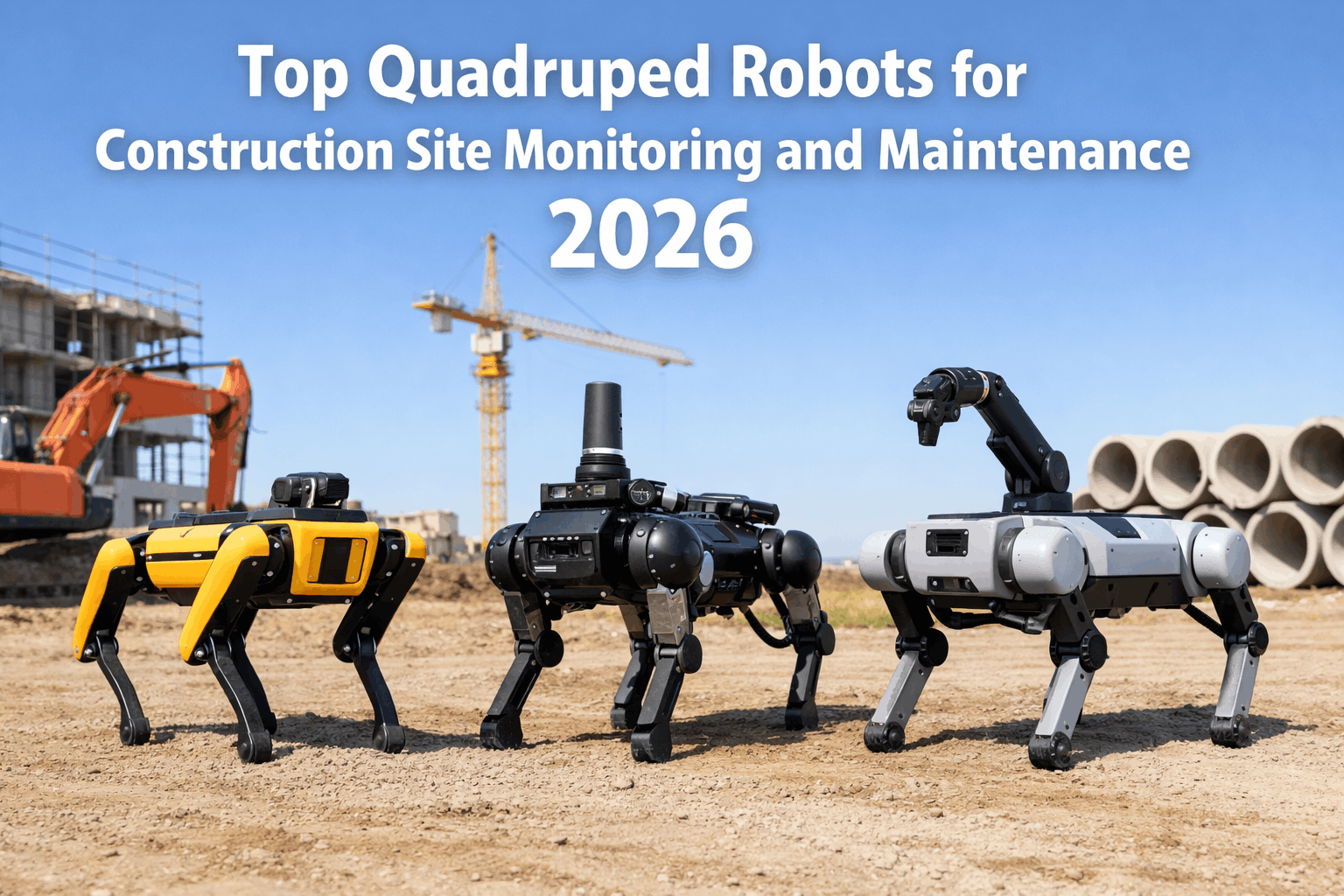
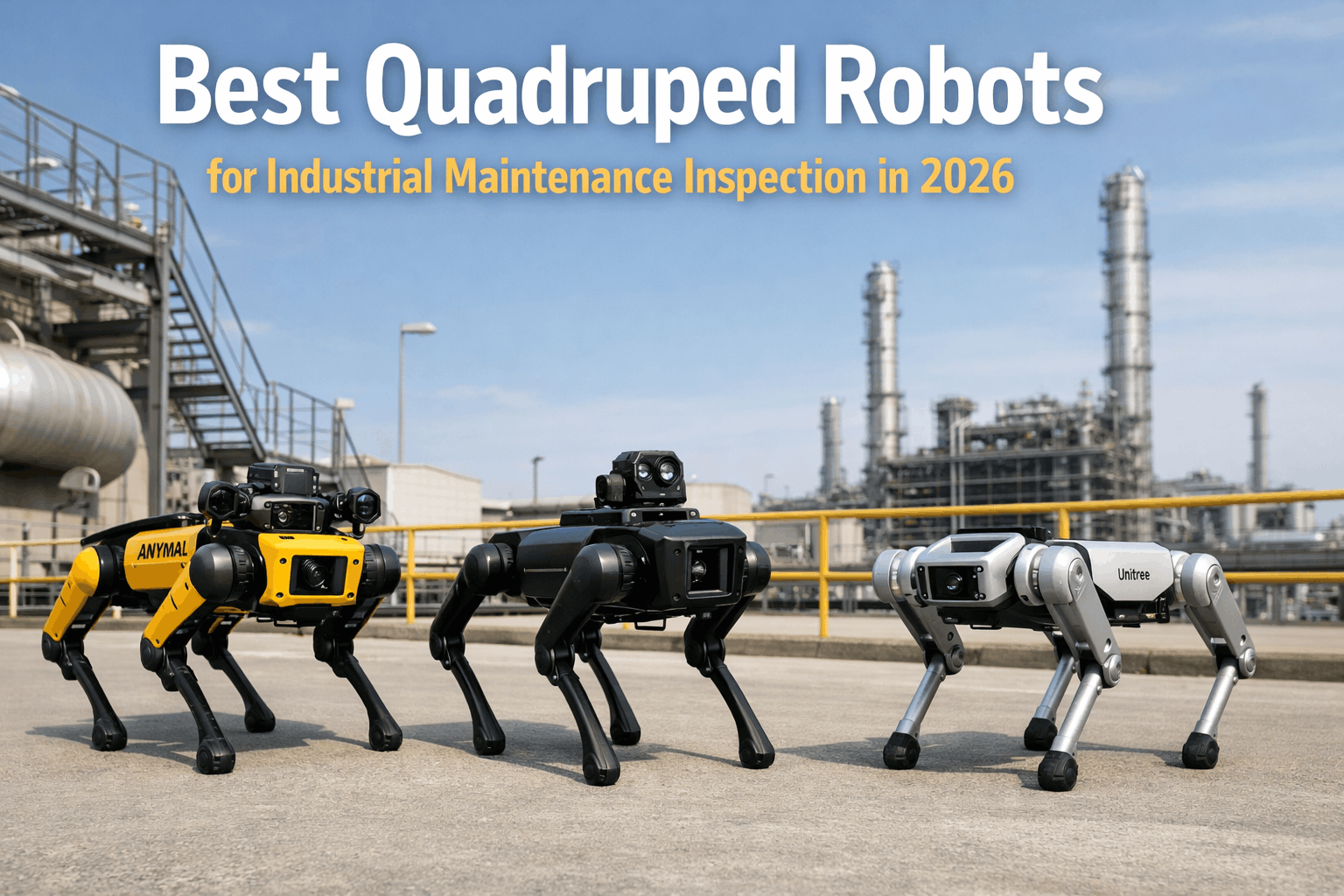
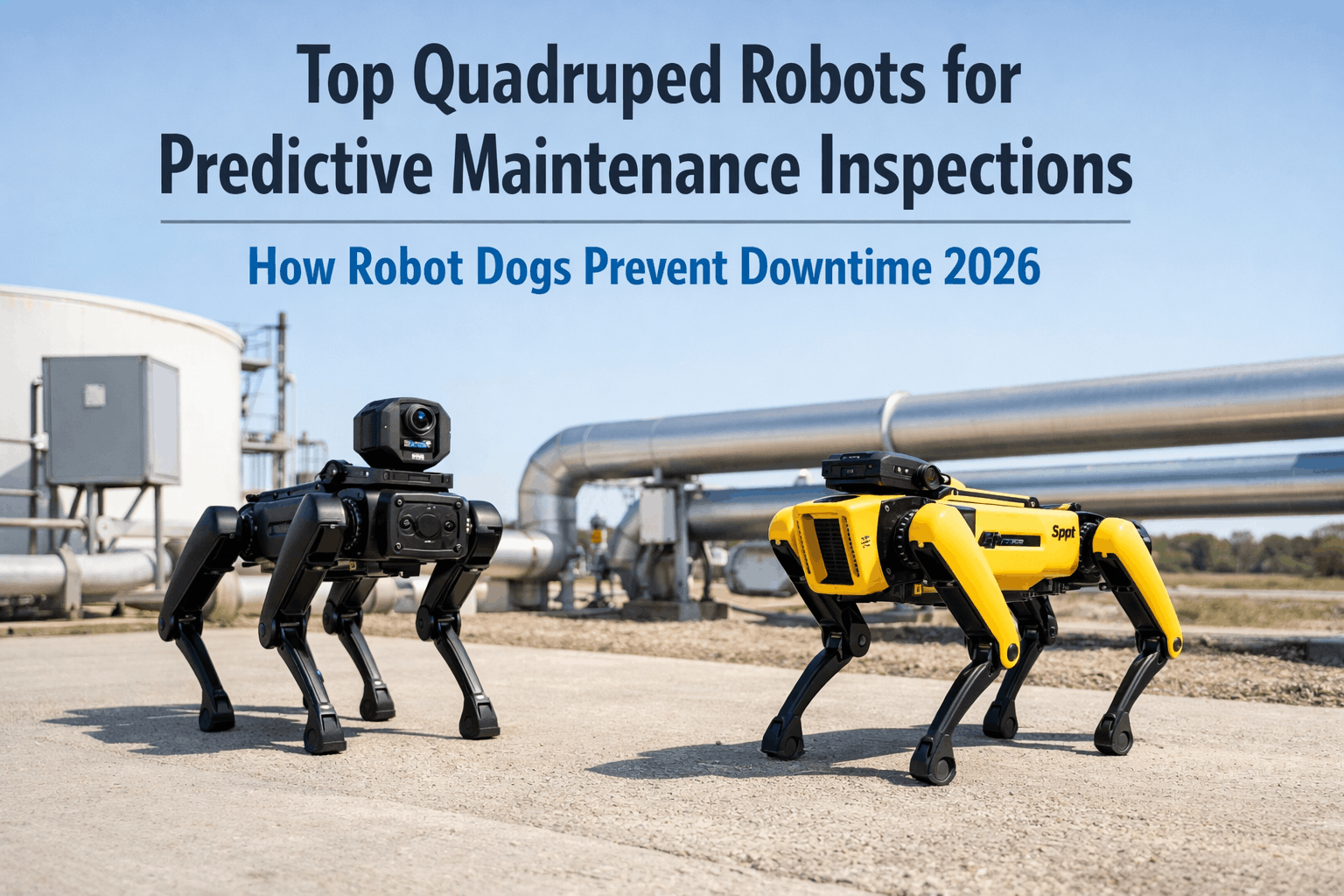
Construction sites are among the most hazardous and logistically complex environments in any industry, accounting for over 1,000 fatalities and 170,000 non-fatal injuries annually in the United States alone. In 2026, the difference between projects delivered on time and those plagued by delays, rework, and safety incidents often comes down to one capability: real-time site visibility. Manual walkthroughs cannot keep pace with the scale of modern construction, evolving OSHA regulations, or the demand for daily progress documentation across sprawling multi-acre jobsites. Quadruped robots (robot dogs) have emerged as the definitive solution—autonomously navigating rough terrain, scaffolding, and active work zones to perform progress tracking, safety compliance audits, and equipment inspections with full CMMS logging. This complete guide compares the top quadruped platforms, their construction-specific capabilities, and how CMMS integration transforms raw site data into actionable maintenance and compliance workflows. Schedule a free consultation to discover which robot dog strategy fits your project's unique requirements.
The True Cost of Poor Site Visibility in Construction
Before evaluating robot platforms, it is worth understanding what is actually at stake. The financial and human toll of inadequate monitoring on construction sites goes far beyond OSHA fines. These numbers reveal why autonomous site monitoring has become a boardroom priority for general contractors and project owners alike.
$31B
Annual Cost of Rework in U.S. Construction
Caused by missed defects, undocumented deviations, and delayed progress tracking that manual inspections fail to catch
$165K+
Maximum OSHA Fine Per Willful Violation
Construction leads all industries in OSHA citations, with fall protection, scaffolding, and housekeeping topping the list every year
5x
More Ground Covered Per Shift by a Robot Dog
Compared to a human inspector, quadrupeds deliver consistent sensor-grade data across multi-acre jobsites around the clock
Industry research shows that autonomous site monitoring reduces construction rework costs by 25-40% and safety incidents by up to 55%. The question is no longer whether to deploy robot dogs—it is how fast you can integrate them into your workflows.
Sign Up Free
What Separates Great Construction Robot Dogs from the Rest
Dozens of robotic platforms claim construction capability, but most were designed for flat factory floors and later marketed for jobsite use. That difference shows up immediately on uneven terrain, in active work zones, and during multi-trade coordination. Here is what actually matters when your robot must navigate rebar, mud, stairs, and scaffolding while delivering reliable inspection data.
Built for Rubble, Not Carpet
True all-terrain mobility with dynamic balancing across gravel, mud, rebar mats, temporary ramps, and steel decking. If the robot cannot self-right after a stumble or navigate a 35-degree slope on a partially completed structure, it is not construction-grade. The best quadrupeds handle weather, dust, and vibration without mission failure.
Real-Time Progress Capture and BIM Comparison
360-degree cameras and LiDAR scanning generate as-built documentation that automatically compares against BIM models. Deviations are flagged before they become costly rework. Photo and point-cloud evidence is geo-tagged, time-stamped, and linked to specific project milestones for dispute-proof progress verification.
Sign up for Oxmaint to see how autonomous progress data flows into maintenance and compliance workflows.
Safety Compliance Auditing on Every Patrol
AI-powered visual inspection detects missing guardrails, unsecured excavations, absent fire extinguishers, improper PPE usage, and housekeeping violations. Every finding is classified by OSHA standard, severity, and location—generating compliance records that hold up during regulatory inspections without relying on subjective human checklists.
Equipment Inspection with CMMS Logging
Thermal imaging, acoustic sensing, and visual AI inspect cranes, generators, compressors, pumps, and temporary power systems. Anomalies are pushed directly to Oxmaint CMMS with asset ID, fault type, severity, and sensor evidence—auto-generating work orders so equipment issues are repaired before they delay the schedule or endanger workers.
Dashboards That Drive Project Decisions
Real-time analytics showing progress percentage vs. schedule, safety violation trends by zone and trade, equipment health status, and inspection completion rates. The best platforms let you drill down by floor, zone, subcontractor, or date to find root causes—not just count problems after the project is over budget.
See These Capabilities in Action
Walk through Oxmaint's construction equipment inspection, safety compliance logging, and automated work order generation with a product specialist who understands jobsite operations.
2026 Top Quadruped Robots for Construction: Head-to-Head Comparison
We evaluated the most capable quadruped platforms across the criteria that matter most to construction site operations. This is not a list of every robot on the market—it is a focused comparison of the solutions that construction teams actually deploy on active jobsites in 2026.
Industry Leader
Boston Dynamics Spot
Large-scale commercial and infrastructure projects
Autowalk for repeatable autonomous patrol routes
Spot ARM for contact-based vibration and valve manipulation
Modular payloads: thermal, acoustic, LiDAR, 360° cameras
Proven track record on 500+ construction deployments globally
Integrates with Oxmaint CMMS for auto work order generation
Start Free with Oxmaint
ANYbotics ANYmal
Hazardous zones and heavy civil projects
IP67 rated for rain, dust, and extreme temperatures
ATEX/IECEx certification for explosive atmospheres
Self-charging docking for multi-day autonomous operations
Integrated thermal, acoustic, and visual inspection sensors
Unitree B2
Mid-size contractors and cost-effective fleet deployment
High speed and payload capacity at competitive pricing
Open SDK for third-party sensor and software integration
Robust dynamic balancing on rough construction terrain
Fleet deployment financially viable for multi-site operations
Ghost Robotics Vision 60
Outdoor infrastructure and perimeter monitoring
Ruggedized for extreme weather and outdoor operations
Open architecture for deep payload customization
Extended battery life for large perimeter coverage
Proven in energy, defense, and remote infrastructure sectors
Deep Robotics Lite3
Confined spaces and dense interior inspections
Compact and lightweight for navigating tight corridors
Advanced dynamic balancing for narrow walkways
Rapid deployment for supplementary patrol coverage
Cost-effective for pilot programs and proof-of-concept deployments
Xiaomi CyberDog 2
R&D, pilot programs, and indoor monitoring
ROS2 compatible for custom inspection workflows
AI-driven navigation with modular sensor attachments
Most affordable entry point for quadruped inspection
Best suited for indoor areas and controlled environments
OSHA's Top Construction Violations—and How Robot Dogs Prevent Them
Understanding where OSHA focuses its enforcement helps you prioritize which inspection missions to configure for your robot dog fleet. These are the standards that appear year after year in construction citations, and the specific quadruped capabilities that address each one.
Missing guardrails at open edges, unprotected floor openings, absent safety nets, workers without harnesses at elevation
AI visual inspection detects missing guardrails, open holes, and absent fall protection on every patrol—flagging violations with geo-tagged photos and auto-generating CMMS corrective actions
Incomplete scaffold erection, missing planking, absent guardrails, scaffold overloading, no daily inspection records
Robot dogs inspect scaffolding from ground level and elevated positions, documenting structural completeness and generating timestamped compliance records for every inspection cycle
Damaged ladder rungs, improper setup angles, ladders not extending 3 feet above landing, missing non-slip feet
Visual AI identifies ladder defects, improper placement, and missing safety features during automated site patrols, logging findings directly into the CMMS for immediate corrective action
1926.1200
Hazard Communication
Unlabeled chemical containers, missing SDS at storage locations, no signage at hazardous material zones
Robot dogs verify signage presence and label compliance at chemical storage areas during every patrol, documenting conditions with photos and flagging missing or damaged labels
Workers without hard hats, missing high-visibility vests, absent eye protection in designated zones
AI-powered PPE detection identifies non-compliant workers by zone in real-time, generating safety alerts and compliance reports by subcontractor and trade for accountability tracking
Construction leads all industries in OSHA citations. A single serious violation costs over $16,000 and willful violations exceed $165,000. Robot dog patrols ensure your safety documentation is always audit-ready and violations are caught before an inspector arrives.
Schedule a compliance assessment to identify gaps in your current site safety monitoring.
Construction Sectors and Their Unique Monitoring Demands
A high-rise tower project and a highway bridge expansion face fundamentally different hazards and monitoring needs, yet both require robust autonomous inspection. The right robot dog strategy adapts to your sector rather than forcing a one-size-fits-all approach.
Commercial Building
Multi-story fall hazards, MEP coordination conflicts, concrete placement defects, elevator shaft openings
Floor-by-floor progress tracking, BIM deviation detection, fall protection auditing, elevator pit inspections, trade coordination documentation
Heavy Civil and Infrastructure
Excavation cave-ins, crane operations, traffic exposure, underground utility conflicts, environmental compliance
Earthwork progress volumetrics, excavation protection audits, crane proximity monitoring, environmental boundary verification, equipment health inspections
Industrial and Process Plants
Confined spaces, hot work zones, pipe rack elevation work, chemical exposure, heavy lift operations
Permit-to-work zone verification, thermal monitoring of hot work areas, pipe installation progress tracking, equipment pre-commissioning inspections
Residential Multi-Family
Repetitive framing hazards, stair opening falls, electrical rough-in exposure, roofing edge work
Unit-by-unit completion tracking, fire-stopping inspections, rough-in verification before drywall, roofing edge protection compliance checks
Energy and Renewables
Remote locations, extreme weather, high-voltage systems, turbine installation heights, solar field scale
Perimeter and equipment security patrols, thermal inspection of electrical systems, turbine foundation progress tracking, solar tracker installation verification
Bridge and Tunnel
Over-water work, confined tunnel environments, temporary support structures, vibration from traffic
Structural element inspection, formwork condition monitoring, confined space environmental sensing, temporary works compliance verification
Your Project Type. Your Site Challenges. One Platform.
Oxmaint adapts to the specific hazards, equipment, and compliance requirements of your construction sector. Get a personalized walkthrough for your operation.
Measurable Impact: What Robot Dog Monitoring Actually Delivers
The return on quadruped robot deployment is not theoretical. Construction projects that transition from manual walkthroughs to autonomous robot dog monitoring consistently report improvements across every measurable project metric within the first six months of deployment.
55%
Reduction in safety violations caught during regulatory inspections within 6 months
38%
Decrease in construction rework costs through early defect and deviation detection
70%
Faster equipment issue identification compared to weekly manual inspection rounds
3x
More site documentation captured per day enabling dispute-proof progress verification
"
The robot does not get tired, does not skip zones because it is raining, and does not forget to check the third floor before lunch. Every patrol delivers the same quality of data as the first one. That consistency is what changes a jobsite from reactive to proactive—and it is what keeps projects on schedule and workers safe.
— Senior Project Manager, Top-20 U.S. General Contractor
From First Patrol to Full Deployment: How Fast Can You Scale
One of the biggest myths about construction robotics is that deployment takes months of preparation. Modern quadruped platforms can be running autonomous patrols within two weeks of arriving on site. Here is what a realistic deployment looks like. Book a demo to get a customized timeline for your project.
Week 1
Site Mapping and Route Programming
Walk the robot through priority zones to record patrol routes. Map inspection checkpoints to equipment assets in Oxmaint CMMS. Configure safety compliance detection parameters for your project's specific OSHA requirements.
Week 2-3
Pilot Patrol on Critical Zones
Launch autonomous patrols on the highest-risk area. Calibrate thermal, acoustic, and visual sensors against known site conditions. Establish baseline readings and tune AI anomaly detection thresholds to minimize false positives.
Week 4-6
Full Site Integration and CMMS Automation
Expand patrol routes to cover all active zones. Activate automated work order generation in Oxmaint for equipment anomalies and safety findings. Connect progress tracking data to project management dashboards for real-time schedule verification.
Ongoing
Optimize, Scale, and Replicate Across Projects
Use trend data to refine patrol missions and AI detection models. Update routes as construction progresses and new areas become accessible. Scale proven configurations to additional projects across your portfolio.
No complex IT integration. No six-month pilots. No waiting for perfect conditions. Create your free Oxmaint account and start logging robot dog inspection data today.
Sign Up Free
Your Clipboards Cannot Monitor a Jobsite. Robot Dogs with Oxmaint Can.
Manual walkthroughs do not capture consistent data across shifts. Paper checklists do not track safety trends by zone and trade. Spreadsheets do not auto-generate maintenance work orders when a generator overheats. Oxmaint connects your quadruped robot fleet's progress tracking, safety compliance auditing, and equipment inspection data into one platform your project team will actually use—from the construction trailer to the top floor.
Frequently Asked Questions
Can robot dogs actually navigate active construction sites with debris and uneven terrain?
Yes. Construction-grade quadrupeds like Boston Dynamics Spot and ANYbotics ANYmal are specifically designed for unstructured environments. They navigate gravel, mud, rebar, temporary ramps, stairs, and steel decking using dynamic balancing and real-time obstacle avoidance. They self-right after stumbles and adapt to changing site conditions between patrols—capabilities that wheeled robots simply cannot match on active jobsites.
How does robot dog data integrate with our CMMS and project management tools?
Robot dogs export inspection data—thermal maps, progress photos, acoustic alerts, safety findings—via APIs. Oxmaint ingests this data, matches it to equipment asset records and site zones, applies anomaly detection thresholds, and auto-generates work orders when issues are found. Progress tracking data can be linked to project schedules for real-time percent-complete verification.
Schedule a demo to see the full integration workflow for your project type.
Will our field crews and superintendents actually trust robot-generated reports?
Adoption depends on presentation. Oxmaint translates raw sensor data into plain-language findings like "Generator #3 — Thermal Anomaly Detected — Coolant System Check Required" with supporting photos and thermal images. When superintendents see that the robot catches issues they would have missed on a busy day, trust builds quickly. The key is positioning the robot as a tool that eliminates tedious walkthroughs so field teams can focus on managing work, not documenting it.
How does robot dog safety monitoring help during an actual OSHA inspection?
Every patrol generates timestamped, geo-tagged, unalterable documentation of site conditions. During an OSHA inspection, you can produce safety compliance records—guardrail presence, PPE observations, housekeeping conditions, equipment inspection logs—for any date and zone in minutes instead of hours. This demonstrates systematic good-faith compliance, which OSHA considers when determining penalty severity and whether to issue citations.
What is the ROI timeline for deploying robot dogs on construction projects?
Most projects see measurable returns within 60-90 days. The earliest wins come from catching construction defects before they require rework, identifying equipment issues before they cause schedule delays, and documenting safety compliance that prevents citations. When you factor in reduced inspection labor, avoided rework costs, and prevented safety incidents, most deployments achieve full payback within a single project phase.
Sign up for Oxmaint to start tracking your project savings from day one.