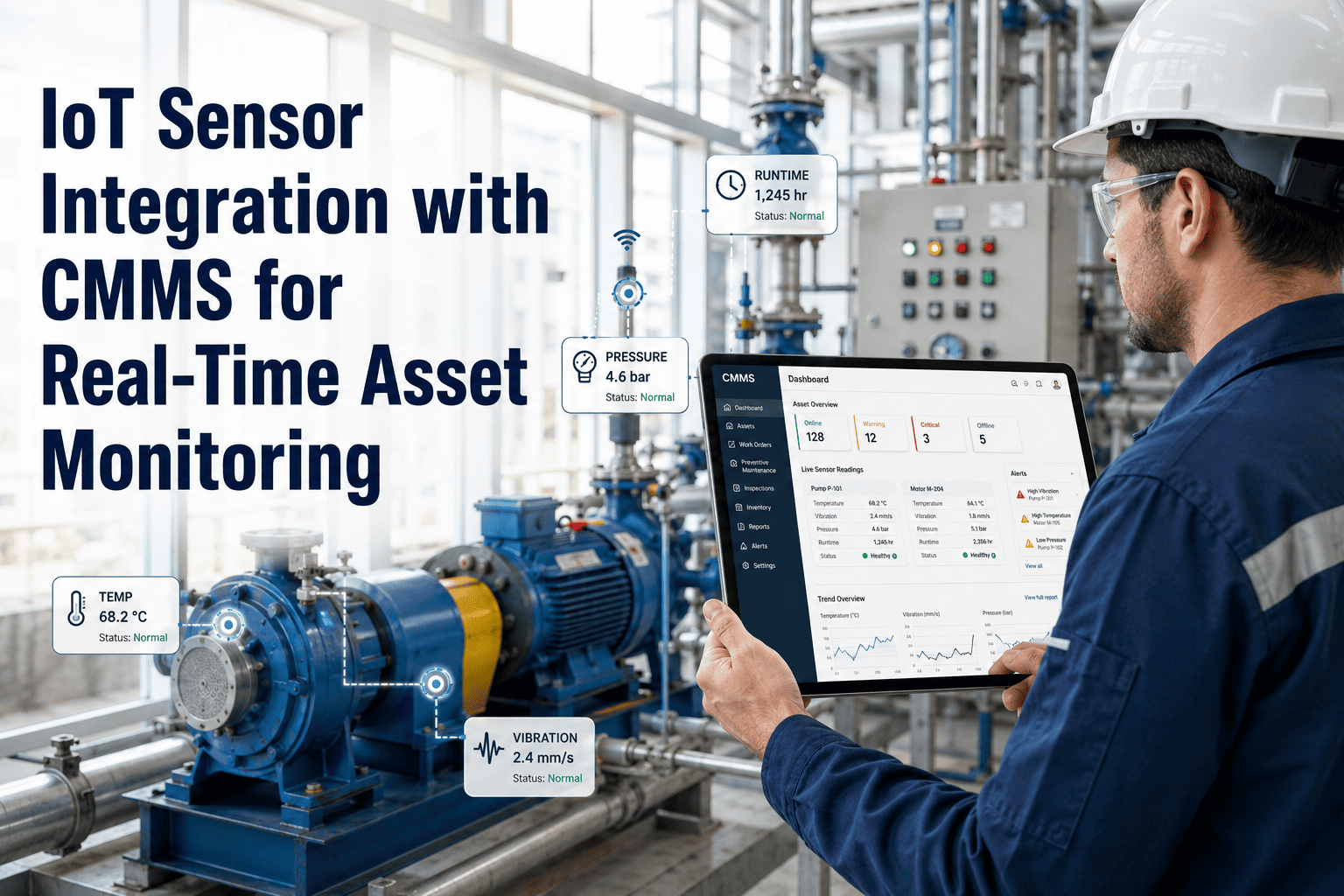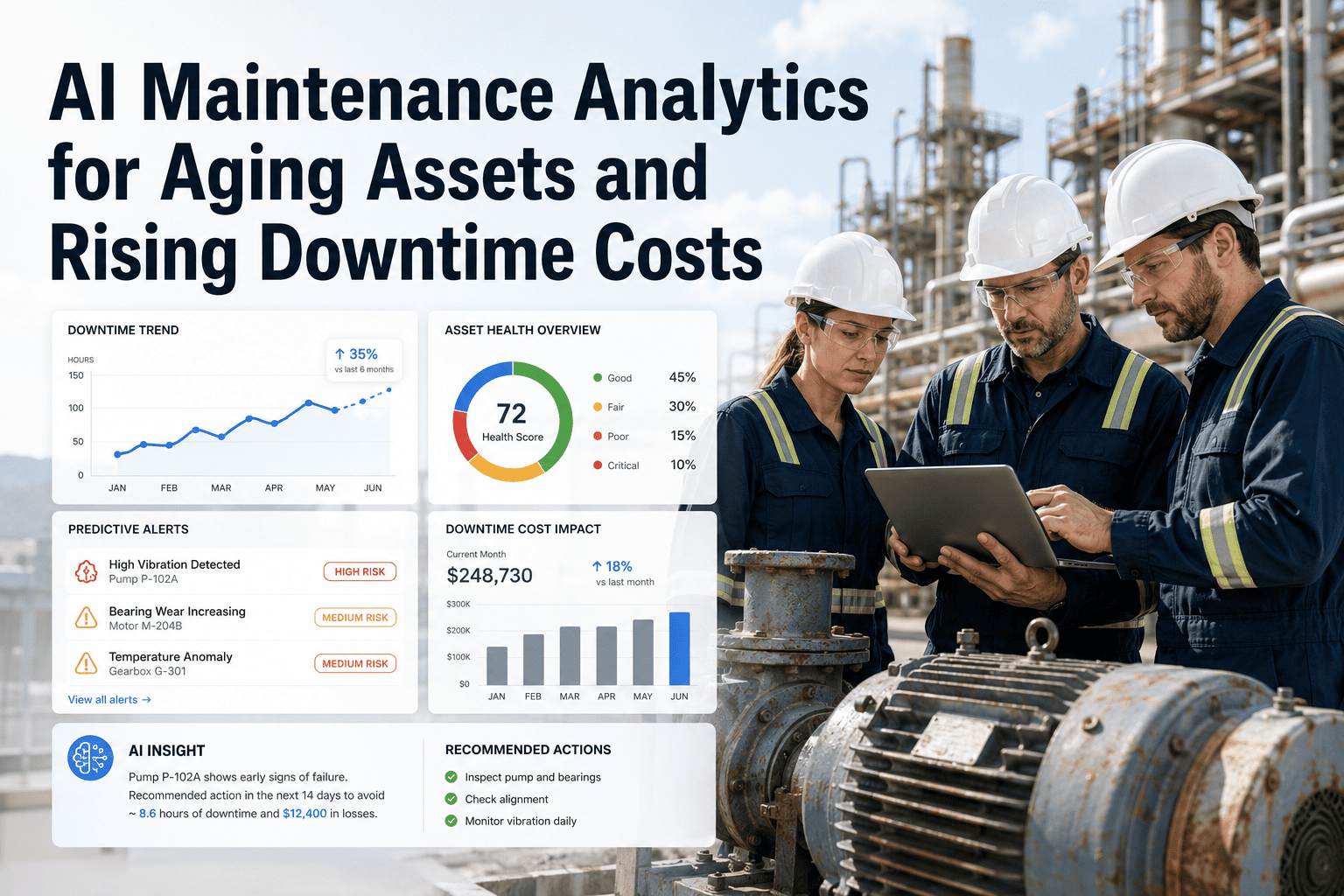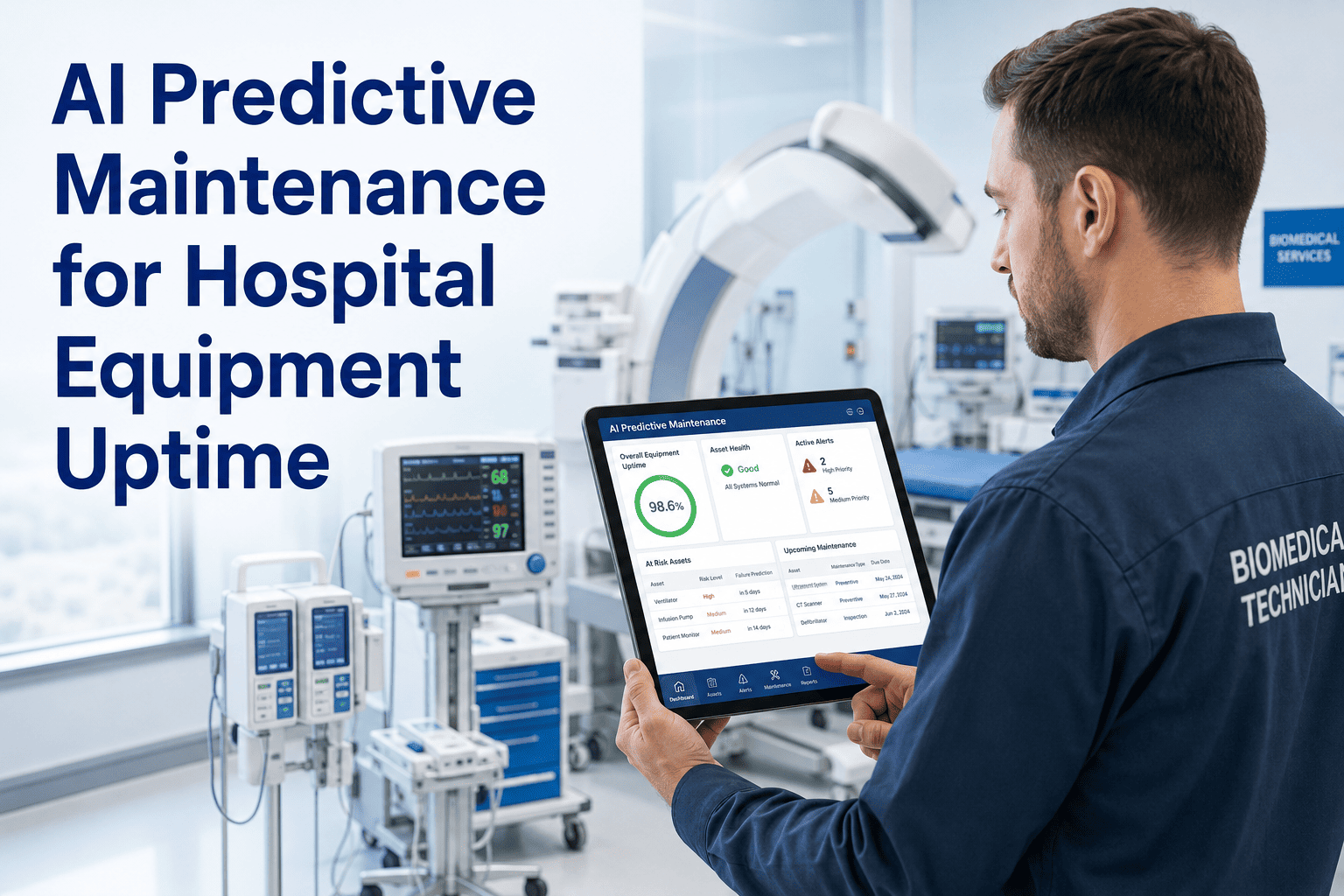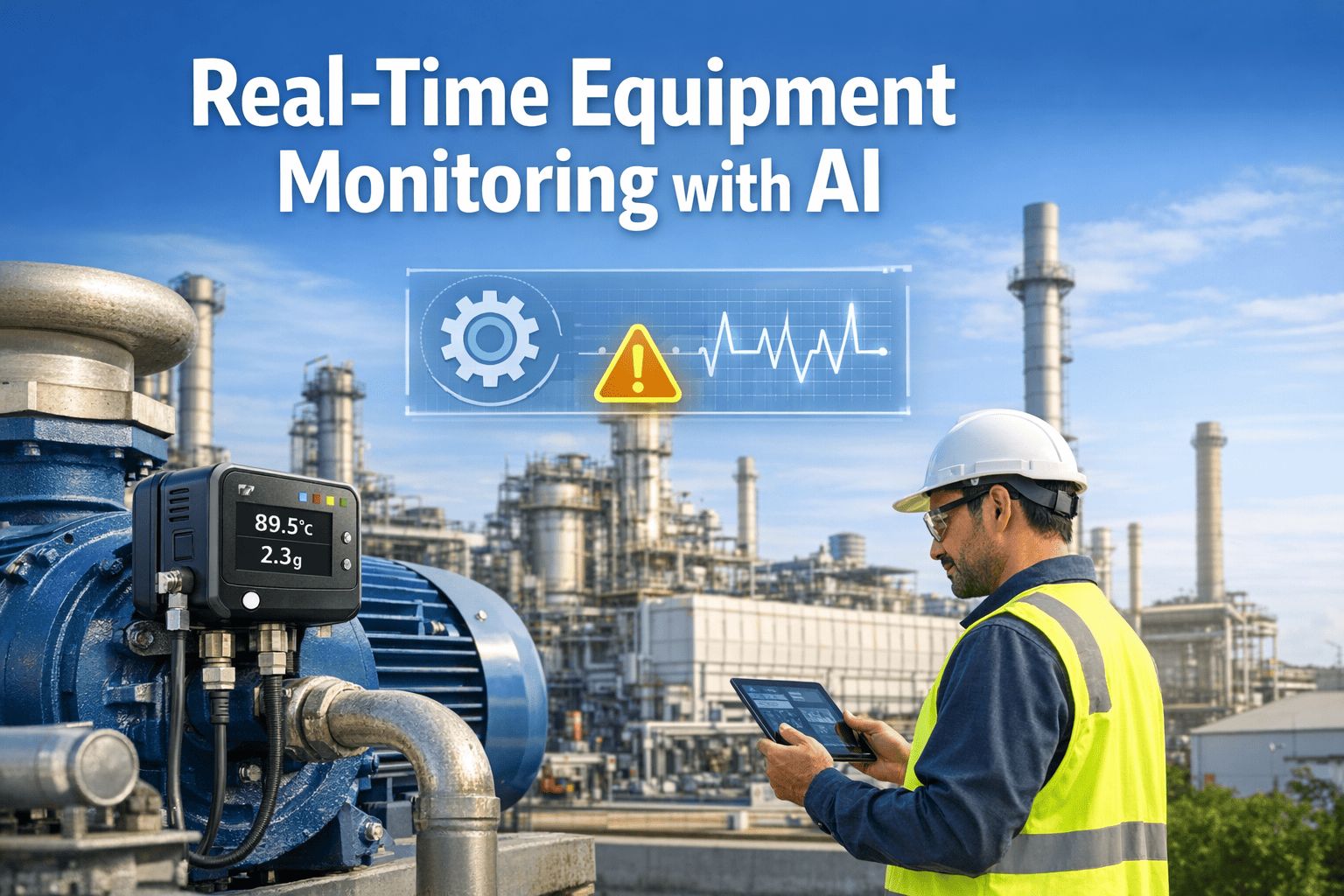
The industrial maintenance model built on scheduled inspections and time-based service intervals contains a structural blind spot that no amount of process improvement can eliminate: the interval between the last inspection and the current moment. A bearing that begins developing an inner race defect on the Monday after a Friday inspection will not be discovered until the following Friday's round — or, more likely, until it fails at 2am on a Wednesday and stops the production line. Real-time equipment monitoring closes that blind spot entirely. When IoT sensors stream vibration, temperature, pressure, and current data continuously to an AI monitoring platform, the interval between when a fault begins and when the maintenance team knows about it is measured in minutes rather than days. The equipment's condition is known at every moment — not sampled once a week by a technician with a clipboard. Oxmaint's real-time monitoring platform connects IoT sensor data to AI anomaly detection, automated alerts, and work order generation in a continuous loop that converts the reactive maintenance pattern into a managed, predictable programme. Sign up for Oxmaint to activate real-time monitoring across your asset register today.
Real-Time Monitoring vs. Scheduled Inspection — The Operational Difference
The simulated live dashboard below shows what Oxmaint's real-time monitoring display looks like for a facility with 6 critical assets under continuous IoT monitoring. Every row reflects sensor readings updated in real time — not last Friday's inspection round. Sign up for Oxmaint to see your own asset portfolio in this view.
A scheduled inspection programme samples equipment condition once a week, or once a month. Real-time monitoring samples it thousands of times per second. Gearbox GB-04 in the dashboard above — currently at health score 38 with a work order already raised — would not have been detected until the next scheduled oil analysis. By then, the tooth mesh damage would have progressed from correctable to component replacement. Book a demo to see this detection capability on your equipment types.
A health score of 61 on Feed Pump P-07 is not the same as a health score that was 90 last week and has been dropping 6 points per day. Real-time monitoring tracks the rate of change as well as the current value — an asset with a stable score of 55 is a different priority than one trending from 80 to 55 in 72 hours. Oxmaint's trend display shows the direction and velocity of each asset's health trajectory so the maintenance team acts on the right asset at the right urgency. Sign up for Oxmaint to activate health score trending.
When Gearbox GB-04 crossed the Alarm threshold (score 38), Oxmaint automatically generated a work order — pre-populated with the AI fault classification (tooth mesh degradation), recommended action (gearbox inspection and oil analysis), parts requirement (scheduled oil sample kit), and due date based on the remaining useful life estimate. The maintenance supervisor received a push notification and approved the work order in two taps. No manual alert monitoring. No risk of the alert being seen too late. Book a demo to see automatic work order generation.
The Real-Time Monitoring Alert Flow — From Sensor Signal to Completed Repair
Real-time monitoring's value is only realised when the alert chain functions end-to-end — from sensor signal through AI analysis through work order to verified repair. Each step below is automated in Oxmaint, with human decision points placed only where human judgement adds value. Sign up for Oxmaint to configure this flow for your operation.
Accelerometers, thermocouples, current transformers, pressure transmitters, and acoustic sensors stream readings at configured sample rates (vibration at 25.6 kHz, temperature at 1 Hz, current at 10 kHz) to the edge device co-located with the asset. The edge device performs signal processing — FFT spectrum computation, feature extraction, envelope analysis for bearing defect frequencies — before transmitting compressed diagnostic features to the Oxmaint cloud platform. This edge processing reduces data transmission volume by 95% while preserving the diagnostic information content the AI model needs.
Data transmission: milliseconds from event to platformExtracted sensor features are scored against the trained AI model in real time. The anomaly detection model produces a health score (0–100) updated at each scoring interval. When the health score drops below the Caution threshold (75), the fault classification model activates — comparing the current vibration/thermal/current pattern against the failure signature library to identify the most probable fault mode. When the Alarm threshold (50) is crossed, the remaining useful life regression model generates a time-to-failure estimate with confidence interval, which becomes the work order due date. Book a demo to see the AI health scoring live.
Health score updated continuously — fault type identified within minutes of threshold crossingCaution-level alerts generate a push notification to the maintenance supervisor's mobile device with the asset ID, current health score, trend direction, and fault classification probabilities. Alarm-level alerts simultaneously notify the supervisor, maintenance manager, and production manager. Each alert contains a direct link to the asset's health score trend, the sensor data excerpt that triggered the alert, and the auto-generated work order awaiting approval. The complete alert-to-awareness time is under 60 seconds from the sensor reading that crossed the threshold. Sign up for Oxmaint to configure alert routing for your team.
Alert-to-awareness: under 60 seconds anywhere in the worldFor Alarm-level alerts, Oxmaint creates a predictive maintenance work order automatically — pre-populated with the AI fault classification, recommended maintenance action, parts requirement list from the asset's bill of materials for the predicted fault mode, and due date based on the remaining useful life estimate. The maintenance supervisor reviews, adjusts priority if needed, and approves in one tap. Parts availability is checked against current inventory automatically — if the required part is not in stock, a procurement alert generates simultaneously with the work order. Planned repair begins with correct parts on hand.
Work order approved and scheduled within 30 minutes of alertAfter the technician closes the work order, Oxmaint continues monitoring the repaired asset in real time — watching for the health score to return to the normal operating range as a verification that the repair resolved the fault condition. If the health score does not recover as expected within a configured window, the system generates a follow-up inspection alert. This post-repair monitoring converts the completed work order from an administrative close-out event into a verified engineering confirmation that the asset has returned to specification. The outcome is recorded and fed back to the AI model to improve prediction accuracy for future events on this asset type.
Repair verified by sensor data — not by technician self-certificationSix Real-Time Monitoring Capabilities in Oxmaint
Oxmaint's real-time monitoring platform is built around the operational requirements of maintenance teams who need to act on alerts, not just receive them. Book a demo to see all six capabilities configured for your asset types.
A single health score (0–100) per asset synthesises vibration, thermal, current, and process parameter data into one actionable number. The score updates continuously, trends are visualised over configurable time windows (24h / 7d / 30d), and the contributing sensor with the highest anomaly contribution is displayed alongside the score to guide the maintenance response.
Alert thresholds are configured per asset based on failure consequence — a critical production asset that cannot stop might have a Caution threshold of 80 and an Alarm at 60, while a non-critical utility asset might trigger Caution at 60 and Alarm at 40. This prevents alert fatigue from low-consequence assets while ensuring critical assets receive maximum early warning time. Sign up to configure thresholds.
Alerts reach maintenance supervisors and managers on their mobile devices regardless of whether they are on the plant floor, in a meeting, or off-site. Each alert contains the full context needed to make a maintenance decision — health score, trend, fault classification, parts availability, and work order draft — without requiring access to a desktop dashboard. Approve a predictive work order from a phone in under two minutes.
Energy meters connected to Oxmaint monitor per-asset power consumption in real time against a learned baseline. Equipment consuming 8–15% more energy than its baseline operating point is flagged for maintenance — the efficiency degradation is often detectable weeks before any mechanical failure signal appears in the vibration or thermal data. The maintenance team receives the energy deviation alert alongside the health score trend. Book a demo to see energy monitoring.
The Oxmaint fleet dashboard shows the health score of every monitored asset in a single view — colour-coded by status (green/amber/red by score), sortable by health score, alert age, or asset criticality. The maintenance manager's first action each morning is a 30-second review of this dashboard — identifying which assets need attention today, which have open work orders, and which have recovered since yesterday's check. No hunting across individual asset pages.
Every alert, work order, repair outcome, and post-repair health score recovery is recorded automatically in Oxmaint — creating a complete, timestamped maintenance record without any manual data entry by the technician or supervisor. The asset's history shows every alert it has ever generated, every work order raised, and whether the AI prediction was confirmed by the repair finding — building the outcome feedback loop that continuously improves model accuracy. Sign up to activate automated records.
Real-Time Monitoring Performance — Before and After Deployment
The following metrics are drawn from documented industrial deployments of real-time AI monitoring across manufacturing, energy, and heavy industry. Book a demo to discuss which metrics apply to your specific operation.
| Performance Metric | Scheduled Inspection Only | Real-Time AI Monitoring | Improvement |
|---|---|---|---|
| Fault detection timing | Days after next scheduled round | Minutes from signal emergence | Days → Minutes |
| Unplanned downtime events/month | 15+ hrs/week average | 2–3 hrs/week | ↓ 85% |
| Emergency repair cost per event | $18,000 average (emergency rate) | $4,200 average (planned rate) | ↓ 77% |
| Maintenance advance warning | 0 days (failure = first warning) | 14–42 days typical window | Weeks of planning time |
| False alarm rate (tuned system) | N/A — no alerts generated | Under 5% after 90-day calibration | High accuracy |
| Equipment lifespan extension | Standard OEM estimate | +25% average asset life | ↑ 25% |
| Energy monitoring | Monthly utility bill — no asset detail | Per-asset real-time consumption trend | Immediate visibility |
Swipe to view full table
We had a bearing on a critical cooling fan that the real-time monitoring flagged on a Tuesday morning at 7:14am — outer race frequency elevation, health score dropped from 82 to 58 overnight. By 9am we had a work order approved and the bearing on order. We replaced it on Thursday during a planned 90-minute window. The bearing came out with early-stage spalling exactly where the vibration data said it would be. Without real-time monitoring, the next inspection round was Friday. The bearing would have failed sometime Wednesday night, during production, with a 6-hour unplanned stop minimum. That one detection event saved more than the annual platform subscription.
Your Equipment Is Generating Health Data Right Now. Is Anyone Processing It?
Every sensor reading your instrumented assets generate contains the early warning signals of their next failure — if an AI model is watching in real time. Oxmaint connects your sensor streams to continuous AI health scoring, automated alerts, and work order generation that converts undetected degradation into planned repairs.
Real-Time Equipment Monitoring with AI — Common Questions
Wireless IoT sensors can be physically installed on existing rotating equipment in a half-day deployment per asset — adhesive-mount accelerometers on bearing housings, clip-on current transformers on motor supply cables, wireless temperature probes on equipment surfaces. No equipment shutdown required for sensor installation. Data begins streaming to Oxmaint immediately after installation. The AI model enters its baseline learning period (30–60 days of normal operation data) and begins producing health scores on day one, with anomaly detection accuracy improving continuously as the baseline matures. For assets already connected to a process historian via SCADA, Oxmaint can begin AI scoring immediately using historical data — no new sensor hardware required for the initial deployment. Sign up for Oxmaint to begin your deployment planning.
Alert fatigue — where maintenance teams ignore alerts because they are too frequent or too inaccurate — is the most common reason real-time monitoring programmes fail. Oxmaint addresses this through three mechanisms: configurable per-asset alert thresholds that can be set conservatively during the first 90 days and tightened as the team builds confidence in the model's accuracy; a human approval step where the supervisor confirms Alarm-level alerts before work orders auto-generate; and continuous false positive rate tracking that is displayed alongside alert history so the team can see how often alerts were confirmed by actual faults. Most well-configured Oxmaint deployments achieve false positive rates below 5% within 90 days of threshold calibration. Book a demo to discuss alert configuration for your operation.
Oxmaint's IoT integration supports multiple connectivity options: WiFi (2.4GHz or 5GHz) for sensors within range of existing plant WiFi infrastructure; cellular (4G LTE or 5G) for sensors in areas without WiFi coverage or for plants that prefer cellular-only industrial IoT networks; LoRaWAN for long-range, low-bandwidth applications where dense sensor networks need to cover large areas; and wired Ethernet for high-frequency vibration sensors where sample rates above 10 kHz require higher bandwidth than wireless protocols support. Most plants use a combination — WiFi for indoor production areas, cellular or LoRaWAN for outdoor equipment and remote locations. Oxmaint's edge devices support all four protocols and can be configured for the connectivity available at each asset location. Sign up for Oxmaint to discuss connectivity options for your plant layout.
Yes. Oxmaint integrates with SCADA, historian, and MES platforms via OPC-UA (supported by Siemens, ABB, Honeywell, Emerson, and Rockwell Automation systems), REST API for cloud-hosted platforms, MQTT for IoT edge devices, and direct database connections for on-premises historians (Osisoft PI, Aspentech IP.21, and similar). When process data from SCADA is combined with bearing vibration data from IoT sensors in the same AI model, the prediction accuracy improves significantly — the model can distinguish between a pump cavitating due to process conditions (not a maintenance fault) and a pump cavitating due to impeller wear (maintenance required). This cross-system context is one of the most valuable outputs of SCADA-CMMS-IoT integration. Book a demo to discuss your SCADA integration path.
The Fault That Will Stop Your Line Next Month Is Detectable Today. Real-Time Monitoring Finds It.
The sensor data that would identify your next bearing failure, your next pump efficiency drop, your next gearbox oil contamination event is streaming right now from your instrumented assets. Oxmaint processes that data continuously with AI health scoring, generates alerts when condition changes are detected, and raises work orders before failures occur — converting the reactive maintenance pattern into a managed, predictable programme that runs your equipment at 95%+ OEE.