Global manufacturing enterprises faced a critical bottleneck in equipment reliability: machine performance data was delayed by an average of 3 weeks due to manual log entries, while unexpected downtime events were rising. With no centralized digital monitoring, plant managers relied on periodic physical inspections and reactive maintenance, leading to fragmented data, lost production hours, and a dangerous disconnect between factory floors and central engineering teams. The breaking point occurred when a critical compressor failure at a key European facility was noted in a shift log but not analyzed by central reliability experts for 10 days—costing millions in halted production. By implementing Oxmaint CMMS to establish a cloud-based remote monitoring workflow, automate IoT sensor alerts, and integrate real-time telemetry, the enterprise reduced downtime by 65%, achieved 100% preventive compliance, and ensured critical machine faults triggered immediate alerts. This case study illustrates how global operations teams can transition from reactive, manual checks to dynamic, real-time remote maintenance workflows.
Client Profile: Global Manufacturing Conglomerate
Network Scope
12 Global Facilities
Operations Team
45 Reliability Engineers
Compliance Standard
ISO 55001 Regulations
Production Volume
$2.1B annual output
The Challenge: Data Latency Risking Production Yields
Before implementing a structured remote monitoring workflow, the global operations team relied on disparate tools: paper logs, isolated SCADA systems, and legacy desktop software. Asset data collection was slow, and the transfer of information from the factory floor to the central engineering office was manually intensive, creating a dangerous data lag where critical machinery anomalies sat in local hard drives rather than on experts' dashboards.
X
Disconnected Sensor Data: Vibration and temperature readings were stored in separate local servers. Matching anomaly alerts to specific asset components took administrative staff hours, leading to a 20% error rate in root cause analysis.
X
Delayed Critical Alerts: When local operators found severe parameter deviations, the notification process was manual. It took an average of 4 days for a critical fault condition to be formally reviewed by a senior reliability engineer.
X
Cross-Border Visibility Issues: Facilities operated in silos. Previous on-premise tools failed to provide a unified global view, forcing executives to rely on outdated monthly consolidation reports.
X
Inconsistent Maintenance Protocols: Technicians across different plants were often using different versions of inspection checklists, leading to non-compliant workflows that failed internal ISO audits.
"We have experts who can diagnose complex turbine issues, but they were spending half their week waiting for log files to be emailed from overseas plants. The scariest part was the lag—detecting a bearing failure warning on a Friday and not having the official diagnostic in the system until the following Wednesday. We needed a workflow that connected the machine directly to the engineer, instantly."
— Sarah Jenkins
VP of Global Reliability
If your operations team is struggling with reactive maintenance and disconnected data, schedule a 30-minute consultation to learn how remote maintenance monitoring can streamline asset health and compliance.
Modernize operations using cloud-based remote monitoring
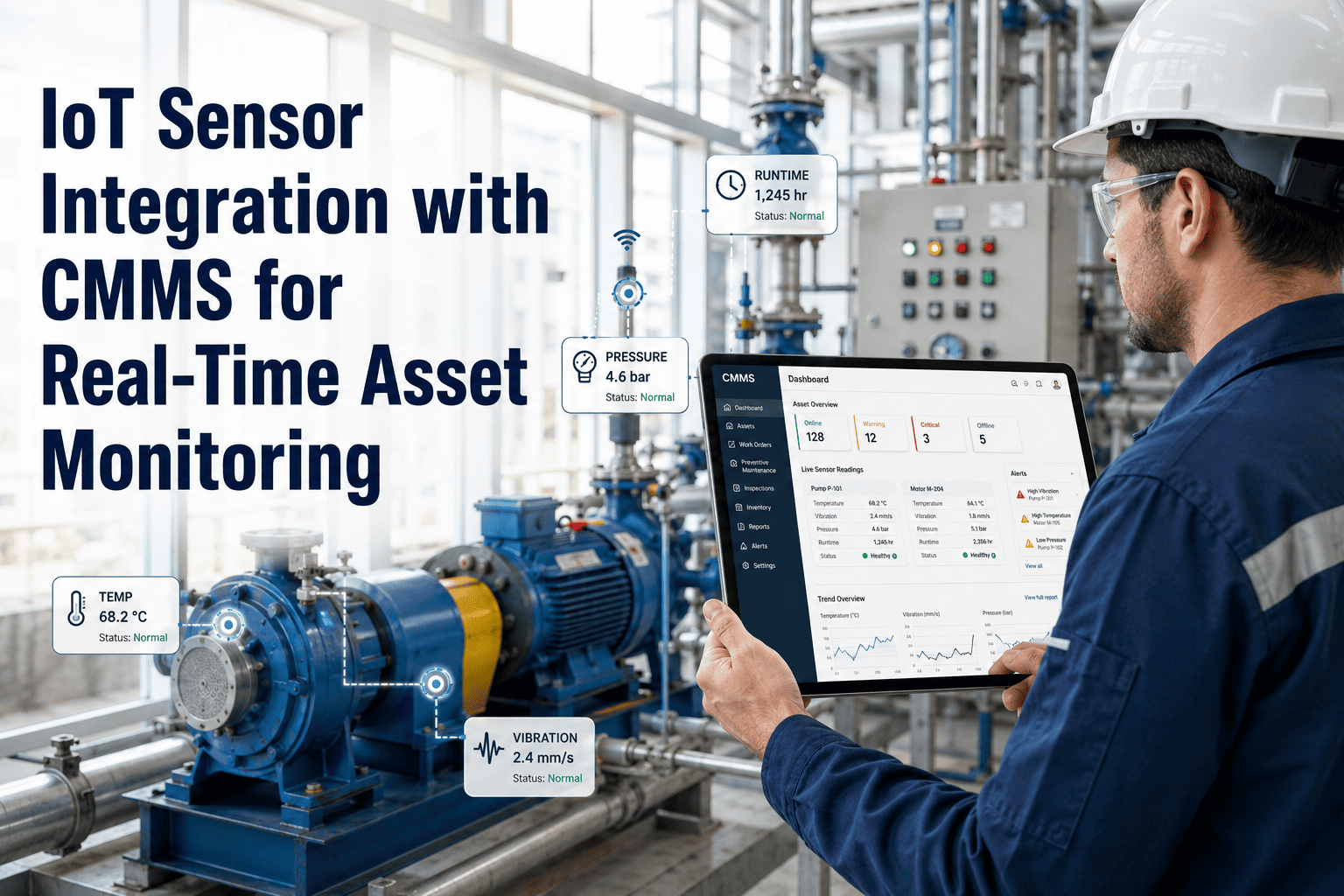
The enterprise deployed Oxmaint CMMS to create a seamless Edge-to-Cloud monitoring workflow. This shifted operations from reactive manual checks to a dynamic, proactive model, ensuring all facilities used updated standardized protocols, synchronized telemetry instantly, and utilized global dashboard tools.
+
Standardized IoT Dashboards: Cloud-based views are centrally managed, ensuring every plant monitors the same critical KPIs. Threshold limits for asset health eliminate subjective interpretation errors.
+
Automated Critical Fault Workflow: If a sensor reads any primary metric (Temperature, Vibration, Pressure) outside standard deviations, the workflow automatically triggers an urgent SMS and email alert to the Central Engineering Team, bypassing administrative delays.
+
Global Cloud Synchronization: The platform allows full visibility from any location. Edge computing devices gather data locally and auto-sync to the central cloud platform in real-time.
+
Integrated Work Orders: When early-stage anomalies are noted, the system automatically toggles a Maintenance Required sequence, instantly generating a diagnostic work order for the local maintenance division within the same platform.
+
Asset Lifecycle Tracking: The system maintains a longitudinal history of every machine. Engineers can view previous months' performance graphs directly on their screens, allowing for precise degradation modeling.
Manufacturing firms ready to digitize their monitoring workflows can start with a free 30-day trial, gaining access to ISO-compliant templates, real-time dashboards, and automated reporting.
Designing a data-driven program — a remote monitoring framework
The new workflow creates a linear, accountable path: (1) Sensor detects anomaly -> (2) Telemetry data is pushed to the cloud with exact timestamps -> (3) System triggers auto-validation against baseline parameters -> (4) Cloud sync pushes alerts to the global dashboard -> (5) Engineer reviews real-time graphs and digital diagnostics -> (6) Validated work order is dispatched to local technicians.
Example impact: During a high-load cycle on Extruder #402, an IoT sensor detected severe vibration. Using the new workflow, the system recorded the metric and flagged the condition as critical. The Central Engineering logic immediately prioritized the alert in the dashboard. The VP of Reliability received a push notification, reviewed the telemetry within 15 minutes, and ordered a controlled shutdown before the motor seized. Cost: $0 in unplanned downtime. Avoided cost: Complete motor replacement and missed shipping deadlines. This real-time response capability is now standard across all 12 global facilities.
To set up remote monitoring workflows for your global operations, schedule a technical consultation. Our experts will help you configure sensor integrations, set up critical alert rules, and establish centralized protocols.
Results: Measurable Uptime & Efficiency
65%
Faster Response
Time from fault detection to corrective action reduced from 14 days to 4 days on average
100%
ISO Compliance
Zero compliance failures due to missing data or undocumented maintenance procedures
100%
Data Visibility
Eliminated siloed data incidents entirely; every critical asset is monitored and logged
$1.2M
Downtime Savings
Reduction in catastrophic failures and emergency repair costs across the global division
4 hrs
Critical Resolution
Average time to diagnose severe anomalies reduced from 4 days to 4 hours via automated alerts
440%
ROI in Year 1
Investment recovered through production uptime and optimized maintenance scheduling
"The shift to a real-time remote monitoring workflow transformed our culture. We stopped reacting to broken machines and started predicting failures before they happened. The central teams love the cloud dashboard because it works flawlessly across borders, and local technicians love it because they get precise instructions immediately. It’s the most significant operational upgrade we’ve made in twenty years."
— Sarah Jenkins
VP of Global Reliability
Operations teams of any size can achieve these results. Start your free 30-day trial to begin building your remote monitoring workflow today—complete with automated alerts, global dashboards, and predictive tools.
Key Takeaways for Global Operations Teams
>>
Real-time visibility is non-negotiable: Monitoring workflows must function seamlessly across borders to support global infrastructure, syncing automatically to a single source of truth.
>>
Automate critical fault alerts: Reliance on manual notification for severe anomalies creates dangerous delays. Automated workflows ensure safety-critical data jumps the queue immediately.
>>
Integrate telemetry with execution: Keeping sensor data separate from maintenance systems leads to operational bottlenecks. Integrated workflows bind diagnostic data to specific work orders instantly.
>>
Remote monitoring empowers local teams: Centralized visibility doesn't replace local technicians; it provides them with exactly the insights they need to fix issues faster on the floor.
>>
Audit trails ensure compliance: Digital workflows create an unalterable history of asset health, response times, and preventative actions, providing crucial standardization for ISO audits.
Ready to Optimize Your Global Operations?
See how enterprise manufacturing teams achieve peak operational efficiency and compliance using Oxmaint CMMS—IoT integration, automated alerts, global dashboards, and predictive maintenance in one platform.
Frequently Asked Questions
How does remote monitoring work across different time zones?
Oxmaint's cloud architecture normalizes all incoming telemetry data with UTC timestamps while displaying local times for users based on their login location. This ensures central engineering teams in one country can accurately assess machine events happening in real-time on another continent without calculation errors.
Is the monitoring workflow compliant with ISO standards?
Yes. The system comes with pre-built documentation controls designed to meet strict asset management and quality standards like ISO 55001 and ISO 9001. All automated work orders and telemetry logs create a permanent digital audit trail.
Can we integrate our existing SCADA or PLC systems?
Absolutely. We support robust API endpoints and custom integration protocols to pull data directly from existing SCADA architectures, PLCs, and edge devices. This ensures you don't need to rip and replace existing hardware to gain central visibility.
What happens if a critical machine fault is detected?
You can configure targeted alert logic within the platform. If a specific metric passes a critical threshold, the system instantly triggers an automated workflow, generating an emergency work order and sending SMS/email alerts directly to designated reliability engineers based on escalation rules.