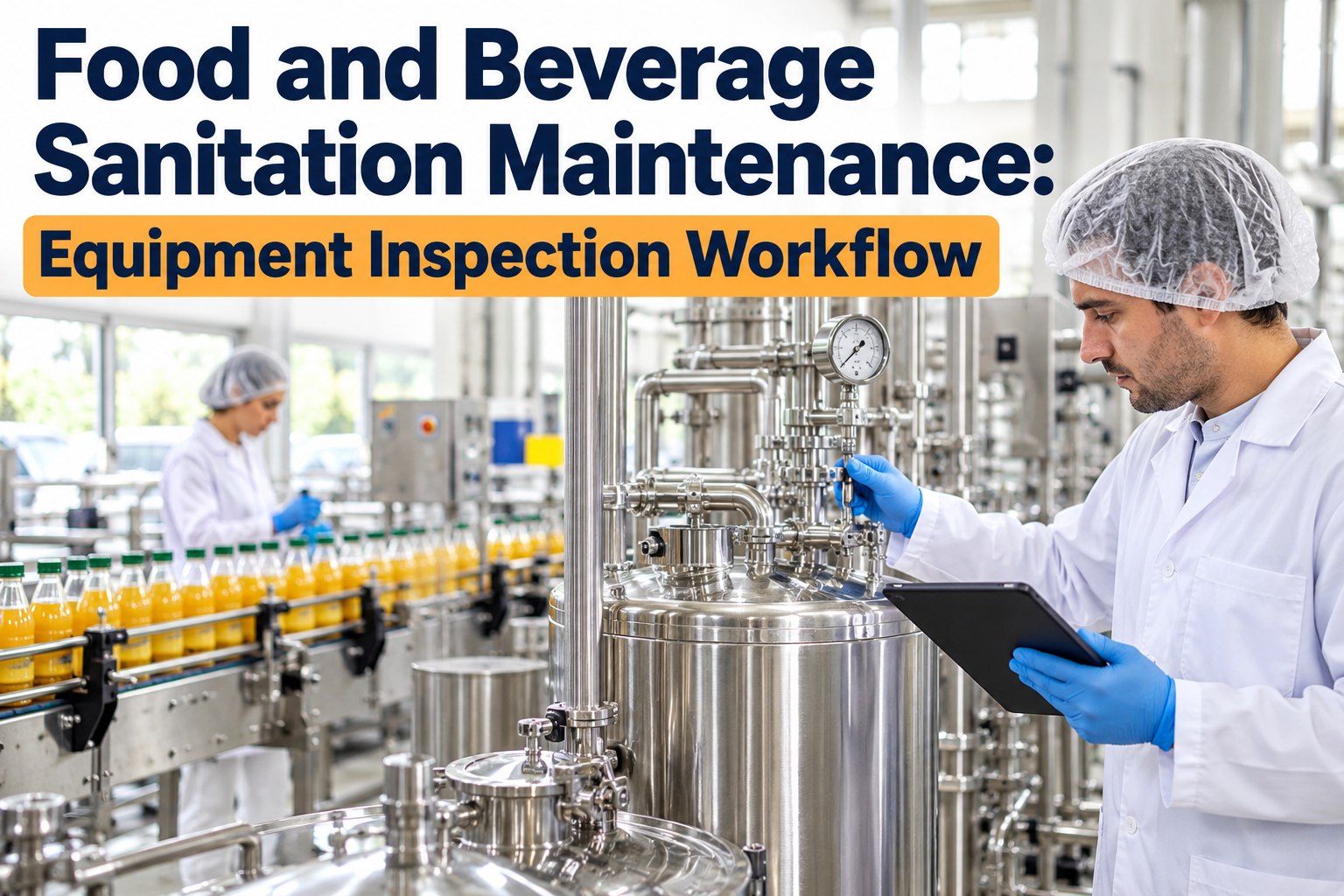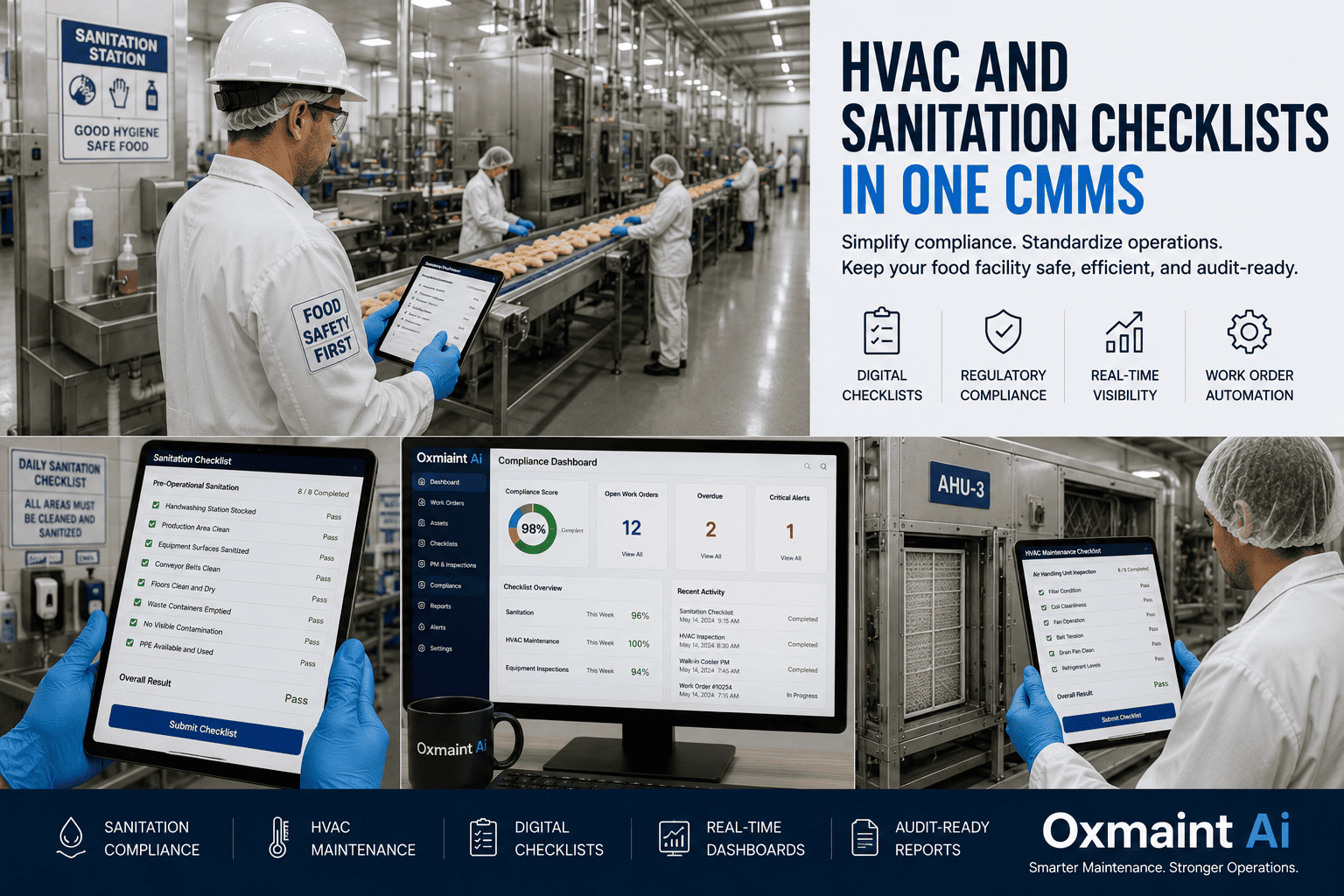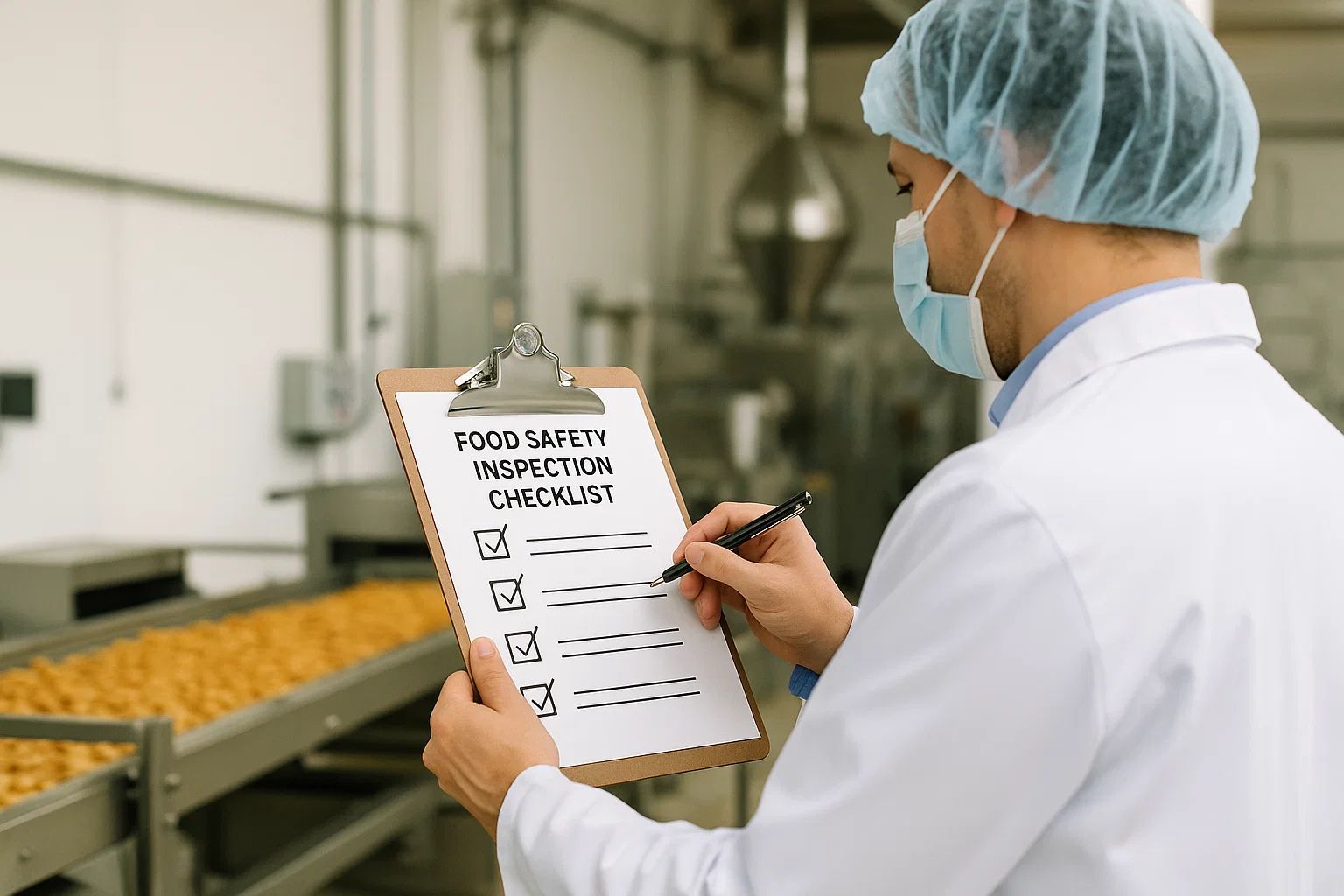
Food manufacturing plants face a brutal compliance reality: one missed sanitation record, one unsigned inspection log, one undocumented corrective action — and you are facing an FDA 483 observation, a FSMA violation, or worse, a recall. Paper-based sanitation checklists fail because they depend entirely on staff discipline and manual filing, leaving audit trails full of gaps and timestamps that cannot be verified. Start a free trial to see how Oxmaint's digital sanitation checklist platform closes every compliance gap automatically, or book a demo and we will walk through your specific plant hygiene workflow and audit requirements.
Food Manufacturing Sanitation Checklist Software
How modern food plants are replacing paper sanitation logs with digital inspection workflows — cutting audit prep time, eliminating missed checks, and building real-time compliance visibility across every production line.
What Is Food Manufacturing Sanitation Checklist Software
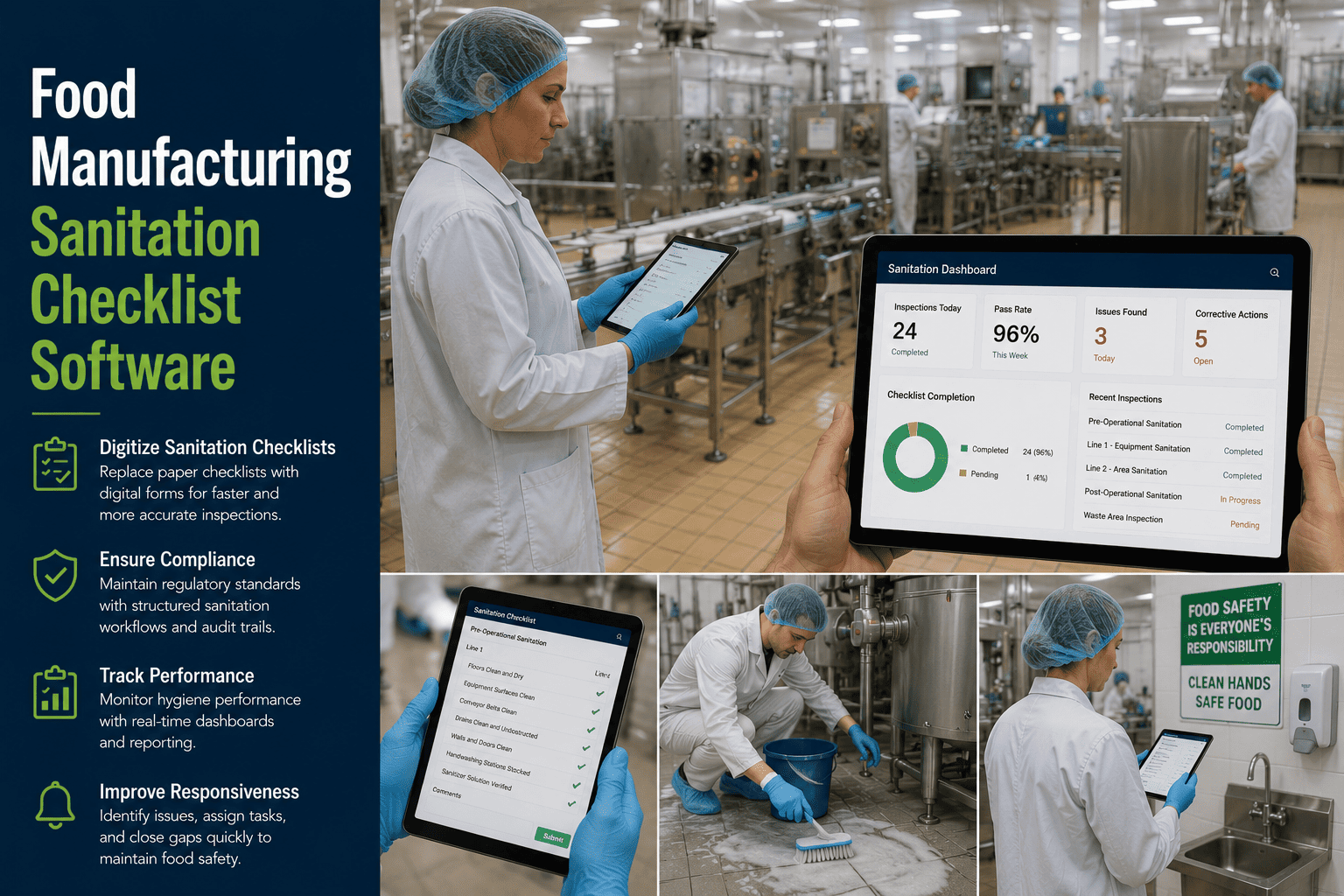
Food manufacturing sanitation checklist software replaces paper-based hygiene logs, manual inspection forms, and spreadsheet tracking with a structured digital workflow. Every sanitation task — from equipment CIP cycles and surface swab verifications to environmental monitoring and pre-operational checks — is assigned, completed on mobile, time-stamped with photo evidence, and automatically stored in a searchable audit log.
The core difference from paper is verifiability. A digital system records who performed each inspection, exactly when, with GPS or QR-location confirmation, and what was found. Corrective actions are triggered automatically when deviations are logged. Supervisors see real-time completion dashboards instead of hunting for clipboards. Auditors receive structured reports in minutes instead of days of manual assembly.
For FSMA-regulated facilities, GMP-compliant operations, SQF-certified plants, and BRC-audited manufacturers, this level of documentation is not optional — it is the difference between a clean audit and a 483. That is why operations teams managing compliance-critical environments are moving to platforms like Oxmaint — start a free trial to digitize your sanitation program, or book a demo to see the inspection workflow live on your own facility structure.
Core Concepts in Digital Sanitation Management
Understanding these eight components is essential to building an inspection program that satisfies regulators, protects product safety, and runs without daily friction.
Sanitation Standard Operating Procedures converted into step-by-step mobile checklists with mandatory fields, photo capture, and pass/fail thresholds built in.
Pre-shift equipment readiness checks tied to zone-based sanitation schedules — no production line starts until pre-op sign-off is recorded and timestamped.
Swab site tracking, Listeria and pathogen monitoring schedules, and test result logging integrated with corrective action workflows when positives are detected.
Clean-In-Place and Clean-Out-of-Place cycle completion records with chemical concentration logs, rinse verification, and equipment return-to-service authorization.
Automatic work order generation when inspections flag deviations — assigned to responsible staff with due dates, photo proof of correction, and closure verification.
Scheduled internal GMP audits with scored inspection forms, trend reporting across zones, and automatic escalation for recurring non-conformances.
QR codes at each sanitation zone confirm physical presence of the inspector — preventing desk-based check-offs and providing location-stamped inspection evidence.
One-click compliance reports showing inspection frequency, completion rates, deviation history, and corrective action closure — formatted for FDA, SQF, BRC, and FSMA auditors.
Where Paper-Based Sanitation Programs Break Down
A hospital failed an inspection because maintenance logs were incomplete. A food plant lost its SQF certification because sanitation records for two weeks were missing from a binder that was never filed. These are not edge cases — they are the predictable outcome of relying on paper in high-volume, shift-based food manufacturing environments.
Paper checklists get skipped during shift rushes and back-filled later. There is no way to verify whether a sanitation task was actually completed at the time recorded — and auditors know it.
When an inspector flags a failed pre-op check on paper, the notification chain depends entirely on who picks up the form. Corrective actions are missed, undocumented, or discovered only during audits.
Supervisors have no live view of which zones have been sanitized, which checks are overdue, or which production lines are waiting for pre-op clearance. Every status check requires a physical walkdown.
Assembling three months of sanitation records, corrective action logs, and environmental monitoring data from paper files and disconnected spreadsheets takes 2–5 days of staff time per audit cycle.
When a sanitation failure is discovered at shift changeover, paper records rarely make it possible to trace exactly who completed (or skipped) a specific task and when. Root cause analysis becomes guesswork.
Organizations operating multiple food plants have no consolidated view of sanitation compliance across facilities. Each site runs its own paper system with no way to benchmark performance or spot systemic gaps.
Teams that move from paper to structured digital inspection workflows see an average 40% reduction in audit preparation time and near-elimination of incomplete records — start a free trial to build your digital sanitation program, or book a demo and we will map Oxmaint to your current SSOP structure.
How Oxmaint Solves Food Plant Sanitation Compliance
Oxmaint replaces disconnected paper logs with a single mobile-first platform that covers the full sanitation cycle — from scheduled inspection assignment and QR-verified completion to automatic corrective actions and one-click audit reports.
Staff complete inspections on any smartphone or tablet — scanning zone QR codes to confirm location, capturing photos as evidence, and logging pass/fail results with mandatory comment fields for deviations.
When a sanitation inspection flags a failure, Oxmaint automatically generates a corrective action work order, assigns it to the responsible team, sets a due time, and tracks closure with proof-of-correction photo upload.
Supervisors see live inspection completion rates by zone, shift, and production line. Overdue checks escalate automatically. No walkdowns needed to know current sanitation status across the facility.
Every inspection, deviation, and corrective action is stored with an immutable timestamp, user ID, and GPS/QR location tag. Audit reports export in minutes — structured for FDA, FSMA, SQF, BRC, and HACCP reviewers.
SSOP-based sanitation tasks are scheduled as recurring preventive work orders — daily, weekly, post-production, or event-triggered — so no check is ever missed due to a forgotten paper schedule.
Portfolio managers see sanitation compliance scores, overdue inspections, and open corrective actions across all plants in a single dashboard — with drill-down to any zone, line, or asset at any facility.
Paper-Based Sanitation vs Digital Inspection Workflow
The operational difference between paper and digital sanitation management is not just efficiency — it is the difference between an audit trail that holds up under scrutiny and one that does not.
| Workflow Area | Traditional Paper Process | Oxmaint Digital Workflow |
|---|---|---|
| Inspection Assignment | Printed schedules posted on boards — easy to miss, often back-filled | Auto-assigned work orders pushed to mobile, with shift-based escalation if not started on time |
| Identity and Location Verification | Handwritten signature — no way to verify who actually performed the task or where | QR scan at zone + user login confirmation — timestamped, location-tagged, non-repudiable |
| Deviation Documentation | Notes in margins, often skipped — no standard format, no follow-up trigger | Mandatory deviation comment + photo upload + automatic corrective action work order generated instantly |
| Corrective Action Tracking | Verbal handoffs, sticky notes — frequently lost between shifts, no closure confirmation | Assigned WO with due time, reminder notifications, photo proof required at closure, full audit trail |
| Supervisor Visibility | Physical walkdowns required — status unknown until someone checks each zone manually | Live dashboard: completed, in-progress, overdue by zone and shift — accessible from any device |
| Audit Preparation | 2–5 days assembling binders, locating missing logs, reconstructing corrective action history | One-click export: full inspection history, deviation log, corrective actions — formatted for FDA/SQF/BRC auditors |
| Multi-Site Compliance View | No consolidated view — each plant operates its own disconnected paper system | Portfolio dashboard: compliance scores, open issues, and trend data across all facilities in one screen |
| Environmental Monitoring Tracking | Swab site logs in separate binders, test results filed manually, no trend alerts | Swab schedules in CMMS, results logged digitally, automatic escalation on positive hits — full EMP audit trail |
ROI and Compliance Outcomes from Digital Sanitation Programs
Food manufacturers that transition from paper sanitation logs to digital inspection platforms report measurable improvements across audit readiness, staff accountability, and incident response time — with results visible within the first 30 days of deployment.
Facilities running Oxmaint across multiple food manufacturing sites report significant reductions in audit prep time and near-elimination of documentation deficiency findings — start a free trial to track your own sanitation compliance metrics, or book a demo to see the ROI dashboard built around your current facility data.
Frequently Asked Questions
How does Oxmaint handle FSMA and HACCP documentation requirements for sanitation?
Can Oxmaint manage environmental monitoring programs including Listeria and pathogen swab tracking?
How do QR codes work in Oxmaint for sanitation zone verification?
How long does it take to implement Oxmaint's sanitation checklist software in a food manufacturing plant?
Turn Every Sanitation Task Into a Verified, Audit-Ready Record
See how much compliance risk you can eliminate from your food manufacturing facility with structured digital sanitation workflows.
- Real-time sanitation compliance visibility across every zone and shift
- Automatic corrective action work orders on every failed inspection
- One-click audit reports for FDA, FSMA, SQF, BRC, and HACCP reviews