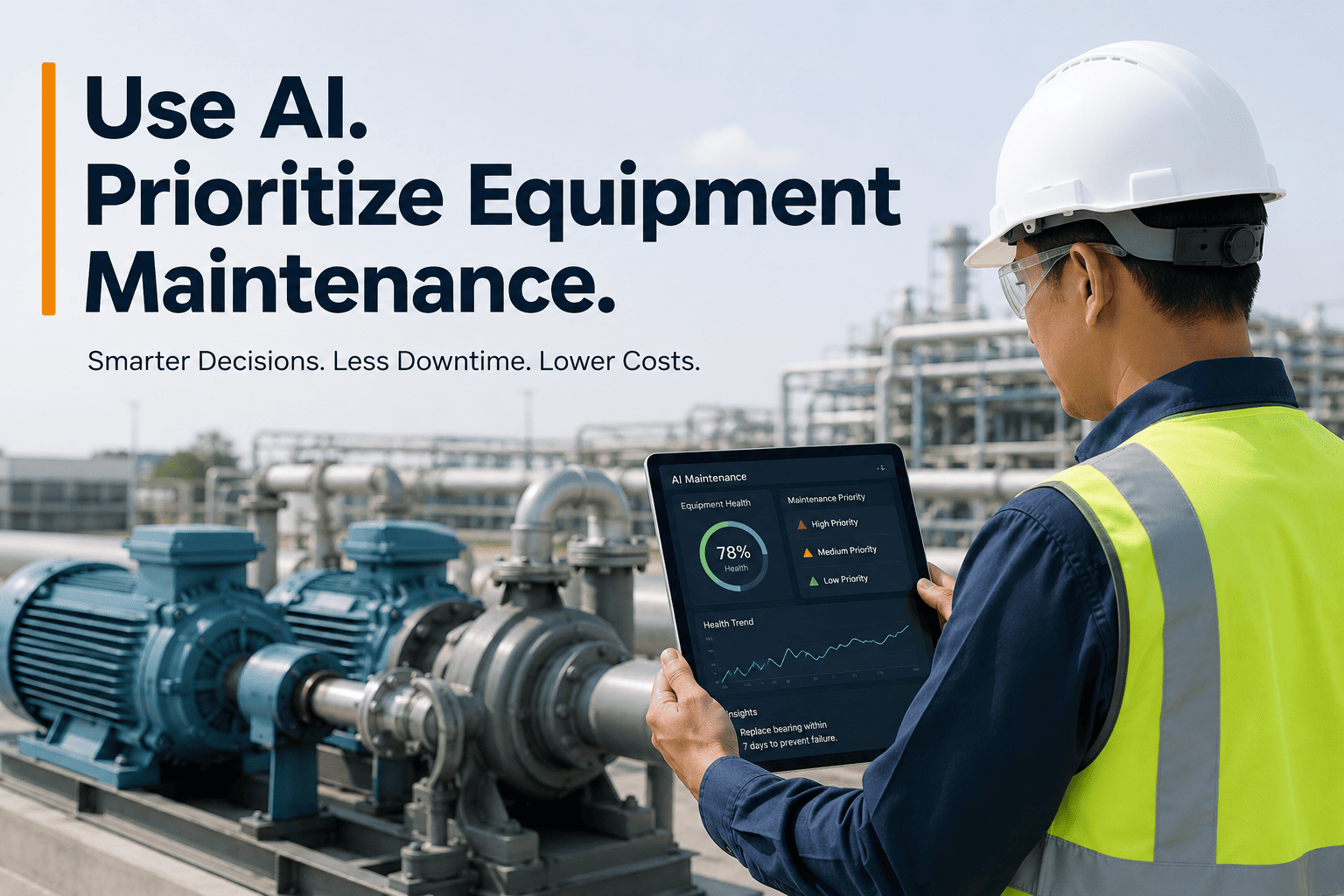
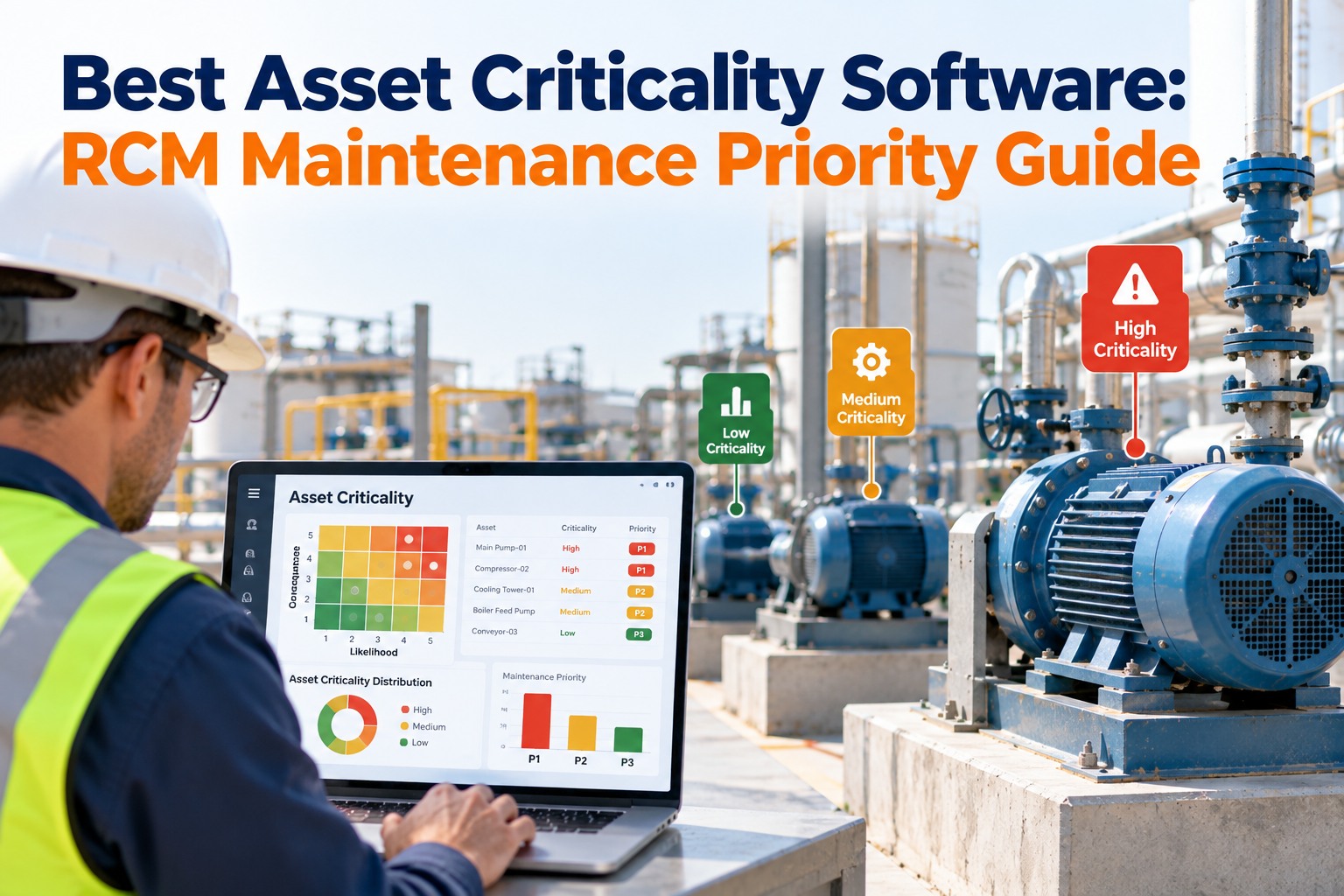
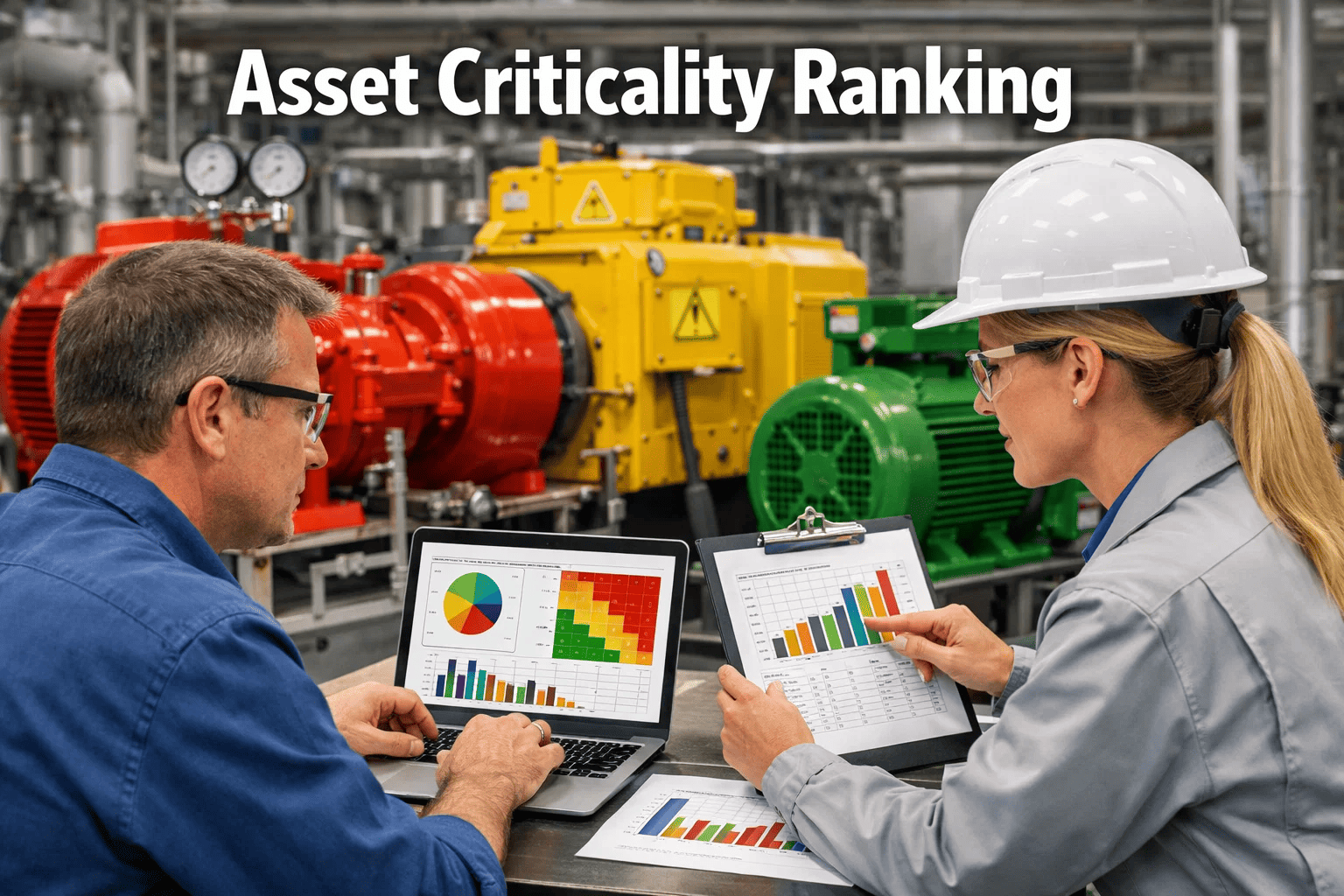
AI maintenance prioritization changes the answer to one of the most consequential questions in industrial operations: which machine do you fix first when you have twelve alerts and six technicians? Without AI asset risk scoring, that decision defaults to whoever shouted loudest, whichever asset has the longest work order queue, or pure instinct. With it, every asset in your facility gets a continuously updated failure probability score, a criticality weighting, and a ranked position in a prioritized action list — and your team focuses effort where a failure would actually hurt you most.
See how Oxmaint AI ranks your assets by failure risk so your maintenance team always works the right problem first.
✓ Real-time asset health scoring across your full equipment register
✓ AI prioritizes work orders by failure probability and criticality
✓ 94% prediction accuracy on equipment failures before they occur
Trusted by 1,000+ maintenance teams · 62% less unplanned downtime · Live in days
94%
AI failure prediction accuracy using IoT sensor and maintenance history data
Oxmaint predictive maintenance
62%
Reduction in unplanned downtime for teams using AI-prioritized maintenance
Oxmaint client outcomes
5×
Higher repair cost for reactive failures vs. planned maintenance interventions
Industry maintenance cost benchmarks
80%
Less manual inspection time when AI continuously scores asset health
Oxmaint AI monitoring outcomes
What Is AI Maintenance Prioritization
AI maintenance prioritization: what it is and how asset risk scoring works
AI maintenance prioritization is the process of using machine learning algorithms to score every asset in a facility by its current probability of failure, the consequence of that failure, and the cost of intervention — then ranking all open maintenance needs against that score so technicians always address the highest-risk problem first.
Asset risk scoring combines multiple data streams: IoT sensor readings (vibration, temperature, current), maintenance history, age and runtime, production criticality classification, and failure mode profiles from historical events. The AI model outputs a dynamic risk score for each asset — not a static classification from a spreadsheet, but a continuously updated number that changes as sensor data changes.
The practical output is a ranked action list that replaces the maintenance manager's gut-feel prioritization with data. When that list feeds directly into a work order management system that routes tasks to technicians automatically, the loop closes: AI detects the risk, scores it, creates the work order, and assigns it to the right person — start a free trial to see how Oxmaint maps this across your asset register, or book a demo to walk through your highest-criticality equipment classes.
How the Risk Score Is Built
The eight inputs that determine an asset's AI risk score
Without AI-driven prioritization, 63% of maintenance managers report making daily dispatch decisions based on incomplete information. The assets that shout loudest get the attention — not the assets that need it most.
Industry Pain Points
Four ways poor maintenance prioritization damages operations and budgets
Loudest machine wins the technician
When prioritization is informal, assets that produce visible symptoms or generate complaints from operators get attention. Critical but quiet early-stage failures — the ones where AI would flag a 15% sensor deviation — are missed until they become emergencies. Reactive maintenance costs 3–5 times more per event than planned intervention.
PM intervals applied uniformly regardless of condition
Calendar-based PM schedules apply the same maintenance interval to a motor running in clean, cool conditions and one running 24/7 in a hot, dusty environment. Condition-blind scheduling either over-maintains low-risk assets (wasting budget) or under-maintains high-risk assets (inviting failure).
Multiple alert sources with no common risk language
Vibration monitoring alerts, CMMS scheduled work orders, operator-reported faults, and inspection findings all arrive in different systems. Without a unified risk score that normalizes across all these inputs, maintenance managers face a decision queue with no basis for rational triage.
CapEx decisions made without asset health data
Replace or repair decisions are made from age alone, without data on actual remaining useful life. Teams replace healthy assets that had years of service left, and keep failing assets that were already past economical repair threshold — both decisions cost money that AI risk scoring could redirect.
If any of these patterns describe your operation, see how Oxmaint AI and automation creates a unified risk-scored maintenance queue across all your alert sources and asset types.
How Oxmaint Solves It
How Oxmaint AI prioritizes maintenance across your full asset register
Step 1
Asset register with criticality classification
Every asset in Oxmaint carries a criticality class — from single-point-of-failure production assets to low-criticality redundant utilities. Criticality class is the multiplier that converts raw sensor anomaly data into a risk score that reflects actual business impact, not just mechanical severity. See
Oxmaint asset management.
Step 2
Continuous sensor data feeds into the AI engine
IoT vibration, temperature, current, and process sensors stream data continuously into Oxmaint's
predictive maintenance AI. The model runs against each asset's learned baseline and failure mode library, updating risk scores as readings change — not once a day, but continuously.
Step 3
Risk score calculation: failure probability × criticality × consequence
The AI combines the sensor anomaly magnitude, rate of change, historical failure pattern match, asset criticality class, and time-since-maintenance factors into a single normalized risk score per asset. This score is comparable across all asset types — a pump score of 87 and a conveyor score of 87 represent equivalent priority levels regardless of their different failure modes.
Step 4
Ranked work order queue with auto-assignment
High risk scores automatically generate
work orders ranked by their score. Oxmaint routes each work order to the nearest certified technician, with the asset's sensor trend, risk score justification, and recommended inspection procedure already in the task. Dispatch decisions that previously took 20 minutes of manager judgment take zero.
Step 5
Closed-loop learning from maintenance outcomes
When a technician completes a work order and logs the finding, the AI model learns whether the risk score accurately reflected the actual fault severity. Outcomes that match predictions reinforce the model. Misses trigger model recalibration. Over time, prediction accuracy improves continuously from your own asset fleet's history.
Step 6
Asset health reporting for leadership and CapEx planning
Oxmaint's
analytics and reporting module converts individual asset risk scores into fleet health dashboards. Operations leaders see which asset classes are trending toward failure, which sites have the highest concentration of at-risk equipment, and where the next replacement budget needs to go — before the failure forces the decision.
The same maintenance team achieves 62% less unplanned downtime — not by working harder, but by working on the right assets in the right order. AI risk scoring is the routing layer that makes that possible.
Before vs. After: AI Risk-Based Prioritization
Gut-feel dispatch vs. AI risk scoring: what the difference looks like in practice
| Maintenance Decision |
Without AI Prioritization |
With Oxmaint AI Risk Scoring |
| Which machine gets the technician first? |
Loudest complaint, longest queue, or manager instinct |
Highest risk score: failure probability × criticality × consequence |
| PM interval determination |
OEM calendar interval applied uniformly |
Condition-based: interval adjusts to actual asset health score |
| Detection of developing failures |
Discovered at failure or scheduled inspection |
Flagged 3–6 weeks early via sensor anomaly + AI pattern match |
| Work order generation |
Manual, after complaint or scheduled date |
Automatic on risk score threshold breach, pre-populated with context |
| Technician dispatch basis |
Available tech nearest to complaint source |
AI routes to nearest certified tech for that asset class |
| Fleet health visibility |
Manager's mental model plus ad hoc reports |
Live risk-scored dashboard across all assets by site and class |
| CapEx replacement decisions |
Asset age and post-failure emergency |
AI health score trend predicts replacement window months ahead |
| Unplanned downtime incidence |
Industry average: 8–12 unplanned events per 100 assets per year |
62% reduction in unplanned downtime (Oxmaint client outcomes) |
ROI and Results
What AI-prioritized maintenance delivers for operations teams
AI prediction accuracy
Oxmaint equipment failure prediction on IoT sensor and maintenance history data
62%
Less unplanned downtime
Reported by Oxmaint manufacturing and industrial clients using AI prioritization
80%
Reduction in manual inspection hours
When AI continuously scores asset health vs. scheduled floor walkarounds
5×
Lower cost per repair event
Planned vs. reactive intervention — the financial case for prioritized maintenance
1,000+
Client maintenance teams
Running AI-prioritized maintenance programs across 9+ industries on Oxmaint
Use the Oxmaint ROI calculator to estimate the unplanned downtime cost reduction available for your specific asset count and industry, or book a demo to see AI risk scoring applied to your actual equipment register.
Frequently Asked Questions
AI maintenance prioritization and asset risk scoring: questions from operations leaders
How does AI prioritize maintenance work orders differently from a traditional CMMS?
A traditional CMMS prioritizes work orders by due date, asset class, or manually assigned priority — all static inputs set by a person at the time the work order was created. AI prioritization uses continuously updated sensor data, failure probability scores, and criticality-weighted consequence calculations to rank work orders dynamically. A work order for a low-criticality asset remains low priority even if it is overdue. A new work order for a critical asset with rapidly deteriorating sensor readings jumps to the top of the queue within hours of the anomaly being detected.
What data does AI need to produce accurate asset risk scores?
At minimum: a clean asset register with criticality classifications and IoT sensor feeds (vibration and temperature cover the majority of use cases). Higher accuracy comes from adding maintenance history (failure events and corrective actions), runtime data, and process variables (production load, operating temperature range). Oxmaint begins producing useful risk scores with basic sensor data and improves prediction accuracy as historical maintenance outcomes are recorded over the first 6–12 months of operation.
Can AI asset risk scoring replace the maintenance manager's judgment?
No — and it is not designed to. AI risk scoring replaces the parts of maintenance decision-making that depend on data synthesis across dozens of assets simultaneously, which humans cannot reliably do at speed. It does not replace judgment on safety exceptions, access coordination, resource constraints, or operational priorities that do not appear in sensor data. The best implementations treat AI risk scores as the primary input to a dispatch decision, with the maintenance manager retaining authority over final resource allocation and safety override situations.
How long does it take for AI maintenance prioritization to show measurable results?
Teams typically see measurable reductions in reactive emergency work orders within the first 60–90 days, as AI flags developing faults that would previously have been discovered at failure. The full 62% downtime reduction reported by Oxmaint clients typically develops over 6–12 months as the AI model accumulates failure event data from the specific asset fleet and calibrates its baseline predictions. The first months produce the highest-value detections simply because the legacy reactive backlog contains faults that have been developing undetected for months.
Let AI Decide Which Machine Comes First
AI maintenance prioritization: stop guessing, start scoring
Every day your maintenance team dispatches based on instinct instead of AI risk scoring, the most critical developing failures are competing with the loudest complaints for attention. Oxmaint's AI ranks every asset in your facility by actual failure probability and production impact — so your team spends every hour on the highest-risk problem, not the most recent one reported.
✓ 94% AI prediction accuracy for equipment failures using IoT sensor data
✓ Continuous risk scoring across all assets, updated in real time
✓ Auto-generated, auto-routed work orders ranked by failure risk and criticality
Trusted by 1,000+ maintenance teams across 9+ industries · Live in days, not months