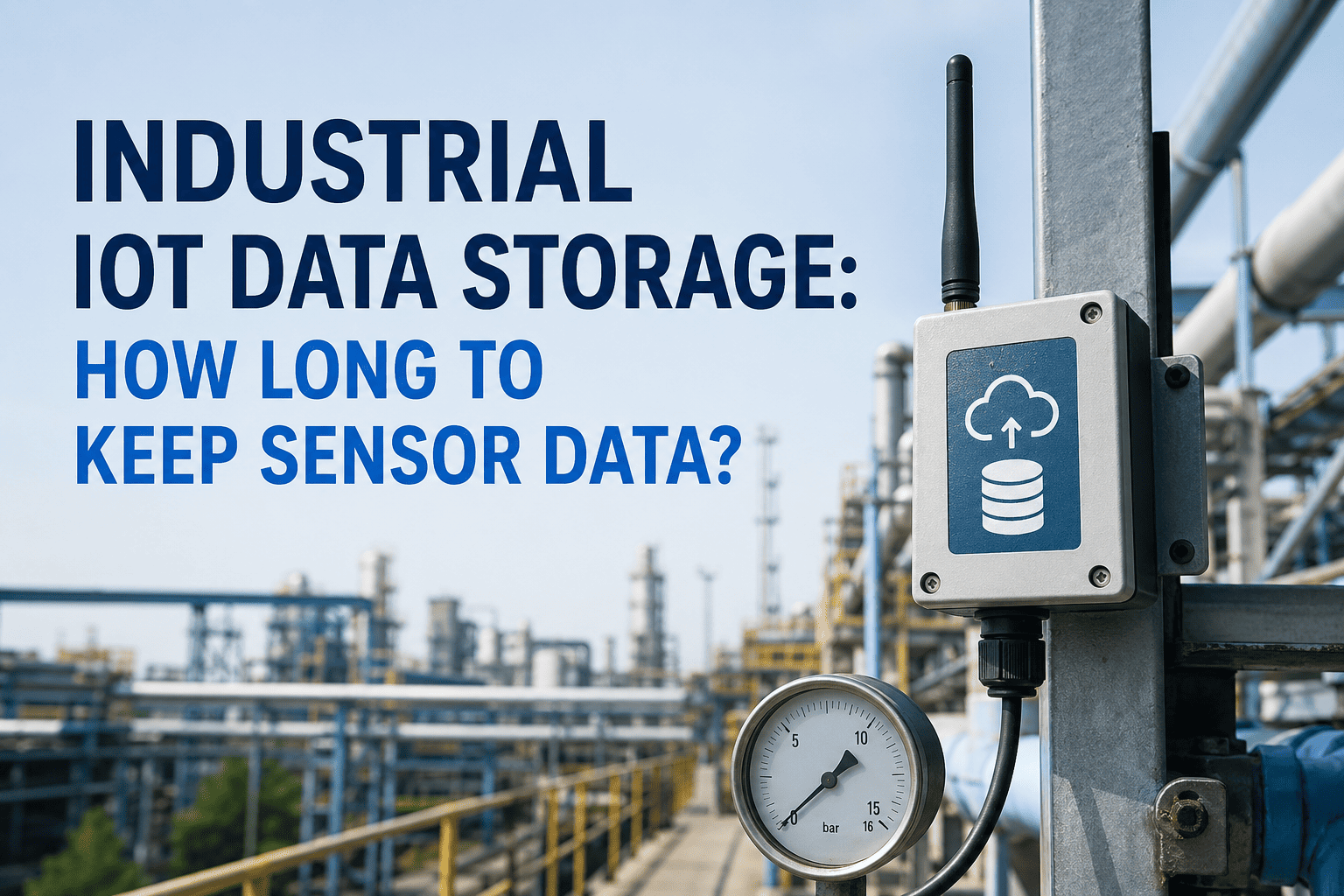
Industrial IoT data storage decisions made in the first year of a sensor program quietly determine whether your maintenance analytics stay useful or become a compliance liability five years later. Most teams underestimate how fast IoT sensor data accumulates — a single vibration sensor sampling at 1 kHz generates more than 80 GB of raw data per year — and overestimate how much of that data they actually need to retain at full resolution.
See how Oxmaint manages IoT sensor data retention so your analytics stay fast and your audits stay clean.
✓ Automated sensor data tiering: hot, warm, and cold storage
✓ Compliance-ready retention policies with audit trail integrity
✓ Predictive analytics that improve as historical data accumulates
Trusted by 1,000+ maintenance teams · 94% prediction accuracy · Live in days
80 GB+
Raw data per year from a single 1 kHz vibration sensor
Industrial sensor data benchmarks
2x
Rate at which industrial IoT data volume doubles, approximately every 18 months
IDC industrial data forecast
7 years
Minimum maintenance record retention required under many industrial compliance standards
ISO 55001, OSHA regulatory benchmarks
94%
AI failure prediction accuracy when trained on 12+ months of sensor history
Oxmaint predictive maintenance
What Is Industrial IoT Data Retention
Industrial IoT data storage: what you need to keep and for how long
Industrial IoT data storage refers to the policies, infrastructure, and tools that govern how long sensor data from machines, equipment, and facilities is retained, at what resolution, and in what form. For maintenance teams, three questions drive every storage decision: does this data still have value for detecting faults, does compliance require it to be kept, and does keeping it cost more than it saves?
Not all sensor data ages the same way. High-frequency raw vibration samples — collected at kilohertz rates — have their highest value in the first 72 hours for real-time anomaly detection. After that, their marginal diagnostic value drops sharply unless a specific fault event is under investigation. Aggregated trend data — hourly or daily summaries of vibration amplitude, temperature, and current — retains high value for months and years as training material for AI predictive models.
The practical answer to "how long should you keep sensor data" is: keep raw data for 30–90 days at full resolution, roll it up into trend summaries for 2–5 years of analytical value, and retain compliance-relevant records permanently or to the applicable regulatory horizon. Connecting this lifecycle to a predictive maintenance platform that handles tiering automatically is how teams avoid both storage bloat and compliance gaps — start a free trial to see how Oxmaint structures your sensor data, or book a demo and we'll walk through your specific compliance requirements.
The IoT Data Lifecycle Framework
Six stages of industrial IoT sensor data lifecycle management
1
Data ingestion at the edge
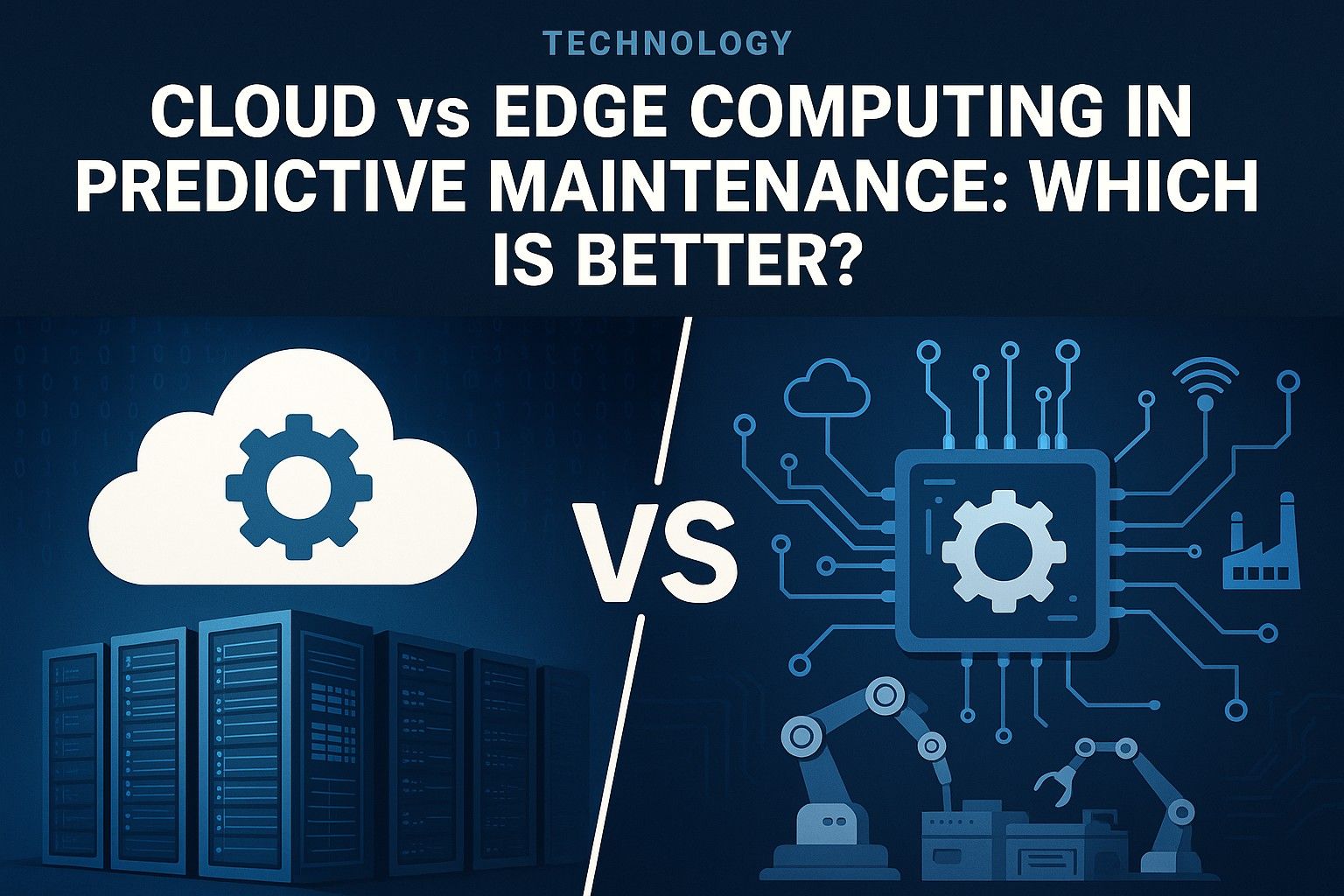
Sensors transmit raw readings to an edge device or gateway before cloud upload. Edge processing filters noise, performs first-pass anomaly detection, and reduces bandwidth by transmitting only statistically significant data — cutting cloud storage costs by 60–80% vs. raw stream upload.
Retention at edge: 24–72 hours | Typical volume: full resolution raw
2
Hot storage: real-time analytics window
Full-resolution sensor data held in high-performance storage for active anomaly detection, trending, and live dashboards. This is the most expensive tier and should hold only what is actively queried. Most operations need 7–30 days of hot storage depending on fault development rates for their equipment types.
Retention: 7–30 days | Use case: active fault monitoring, live dashboards
3
Warm storage: predictive model training data
Downsampled or summarized sensor records — hourly or daily statistics — retained for AI model training, seasonal trend analysis, and failure pattern recognition. This tier is where the long-term predictive value lives. Two to five years of trend data is the typical range for mature predictive programs.
Retention: 1–5 years | Use case: AI training, trend analysis, failure history
4
Cold storage: compliance archive
Compressed, indexed records retained to satisfy regulatory obligations. ISO 55001, OSHA, EPA, and industry-specific standards (NERC, GMP, HACCP) require documented evidence of monitoring activity and corrective maintenance action. Cold storage retains enough to reconstruct the evidence chain, not the full sensor stream.
Retention: 5–10 years | Use case: audit evidence, regulatory compliance, litigation
5
Event-triggered full capture
When an anomaly is detected, the system captures a high-resolution data burst around the event window — typically 30 minutes before and after the anomaly. This event record is retained longer than standard hot data because it becomes diagnostic evidence for root cause analysis and failure mode characterization.
Retention: 2–7 years per event | Use case: root cause, warranty, failure mode library
6
Data expiry and secure deletion
Data that has expired across all regulatory and operational retention requirements must be formally deleted, with a deletion record retained. Indefinite accumulation of obsolete data creates GDPR/privacy exposure, increases storage costs without benefit, and degrades query performance on active analytics platforms.
Action: certified deletion with record | Trigger: end of retention policy horizon
A typical manufacturing plant with 200 IoT sensors generates over 5 TB of raw sensor data per year. Without a tiering policy, most of that cost buys storage of data that stopped being useful in the first 30 days.
Compliance Retention Requirements
Four compliance realities that govern how long you must keep sensor data
OSHA / Safety
Equipment inspection and monitoring records
OSHA standards require equipment inspection records to be kept for the life of the equipment or a minimum of 5 years depending on the specific standard. For IoT-monitored equipment, the sensor log and the associated work order or corrective action record together constitute the inspection evidence. Keeping one without the other leaves an audit gap.
ISO 55001
Asset condition and maintenance evidence
ISO 55001 asset management certification requires documented evidence of asset condition monitoring and maintenance activities. For IoT programs, this means the sensor reading that triggered an action must be traceable to the work order that resolved it, and that record chain must survive the certification audit cycle — typically 3-year intervals with historical evidence reviews.
GMP / HACCP
Food, pharma, and regulated manufacturing
FDA 21 CFR Part 11, EU GMP Annex 11, and HACCP Critical Control Point records require electronic records to be retained in a format that cannot be altered without leaving a detectable audit trail. For IoT monitoring in food and pharma facilities, the retention period is typically a minimum of the product's shelf life plus 1 year, often putting the practical horizon at 3–7 years.
NERC / Utilities
Power generation and critical infrastructure
NERC CIP reliability standards and FERC regulations require maintenance records for critical assets to be retained for defined periods ranging from 3 to 10 years depending on asset classification. For utility operators, the IoT monitoring record and the maintenance action it triggered are both subject to regulatory audit and must be producible on demand.
Oxmaint's safety and compliance module automatically links sensor readings to work orders, creating the complete evidence chain that auditors require without any manual record assembly.
How Oxmaint Manages IoT Data Storage
How Oxmaint solves the sensor data retention problem for maintenance teams
Automated data tiering without configuration overhead
Oxmaint automatically tiers sensor data from hot through warm to cold storage based on configurable retention policies, without requiring manual data management from the maintenance team. Policies can be set by asset class, criticality tier, or compliance standard.
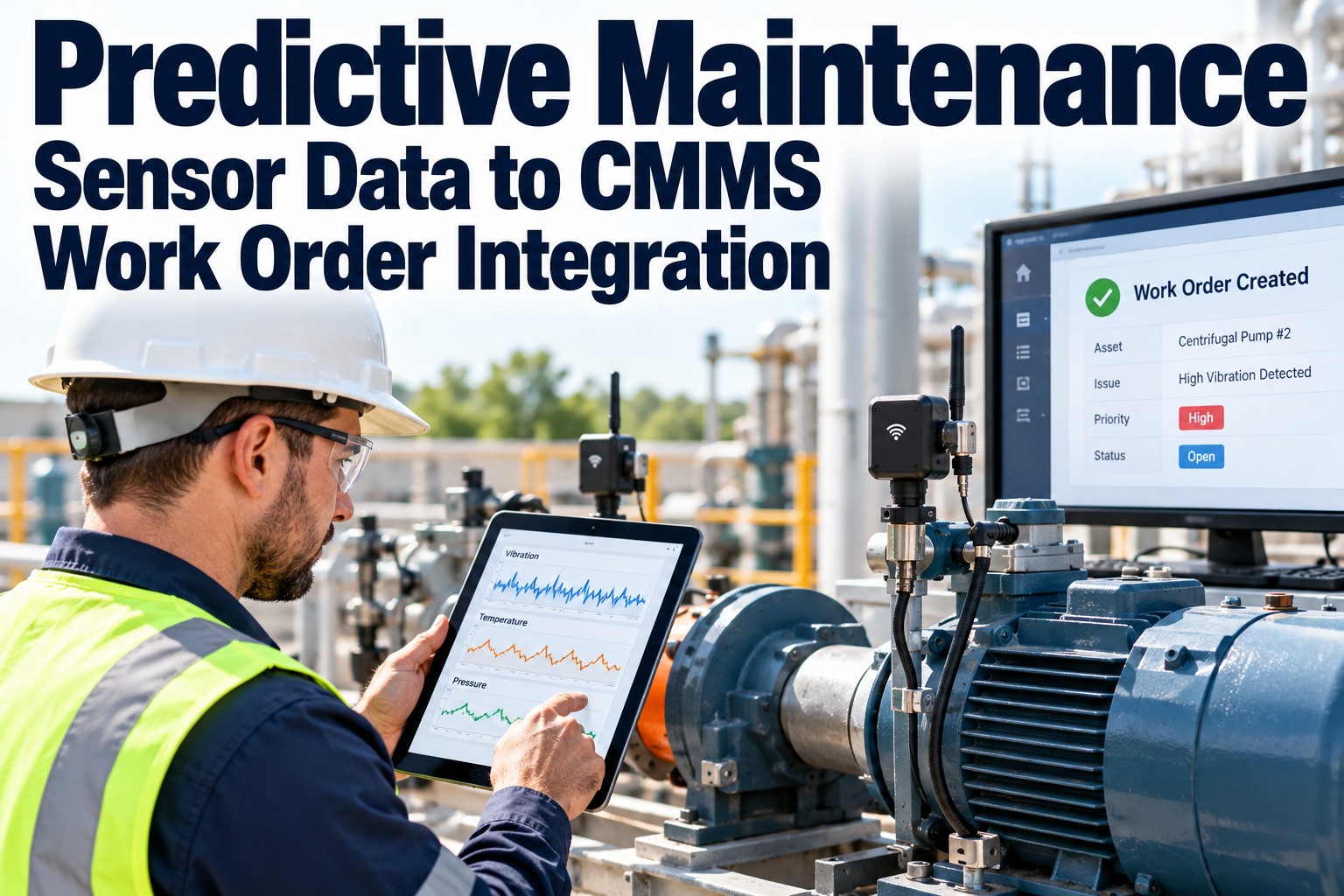
Linked sensor-to-work-order evidence chain
Every sensor anomaly that generates a work order in Oxmaint retains a permanent link between the triggering sensor reading and the corrective action record. This linked chain is the core artifact that
compliance audits require and the most time-consuming record to reconstruct manually.
Historical data powers predictive model improvement
Oxmaint's AI models improve continuously as sensor history accumulates in warm storage. The failure patterns learned from 24 months of sensor data produce substantially more accurate predictions than models trained on 3 months — long-term retention directly improves the 94% prediction accuracy maintained across Oxmaint's
analytics platform.
On-demand compliance report generation
Oxmaint generates regulatory audit documentation — sensor readings, anomaly logs, work order records, corrective action timestamps — on demand rather than requiring days of manual compilation. Audit prep that previously took a team 3–5 days becomes a same-day export.
The most common IoT data mistake maintenance teams make is keeping everything at full resolution indefinitely. The second most common is deleting trend data before its predictive value matures. Both are avoidable with a tiering policy.
Storage Approach Comparison
Keeping everything vs. tiered retention: what the difference costs over 5 years
| Factor |
Keep Everything (No Policy) |
Tiered Retention Policy |
| Storage cost over 5 years |
Grows exponentially with sensor fleet |
Predictable, manageable as data ages to cheaper tiers |
| Query performance over time |
Degrades as database volume grows |
Hot tier stays fast; aged data queries from cold are less frequent |
| AI model training quality |
Good, but noisy with stale full-resolution data |
Optimized: trend summaries provide clean long-term patterns |
| Compliance documentation |
All data present but difficult to navigate |
Compliance records indexed and producible on demand |
| GDPR / data privacy risk |
High: indefinite retention of potentially private operational data |
Low: defined expiry policies with certified deletion records |
| Incident investigation capability |
Full data present but unindexed |
Event bursts retained in dedicated forensic store, easily retrieved |
| Maintenance team effort |
None initially, significant cleanup debt later |
Policy configured once, automated thereafter |
ROI and Operational Results
What smart sensor data management delivers across a maintenance program
60–80%
Storage cost reduction
Typical saving when edge filtering and tiering replace full raw stream cloud upload
94%
Prediction accuracy maintained
Oxmaint AI performance sustained by 12+ months of quality trend data in warm storage
Same day
Audit documentation turnaround
vs. 3–5 days of manual record compilation when data is properly indexed and linked
7+ years
Compliance horizon covered
Oxmaint cold storage policies cover ISO 55001, OSHA, NERC, GMP, and HACCP minimum requirements
See how your current sensor data volume maps to a managed retention policy at the Oxmaint ROI calculator, or book a demo to walk through your compliance requirements in detail.
Frequently Asked Questions
Industrial IoT data storage and retention: questions maintenance teams ask most
How long should industrial IoT sensor data be retained for maintenance purposes?
For operational analytics: 30–90 days at full resolution in hot storage. For AI predictive model training: 1–5 years of trend summaries in warm storage. For regulatory compliance: 5–10 years in cold archive depending on the applicable standard (OSHA, ISO 55001, NERC, GMP). For incident investigation evidence: 2–7 years per event in a dedicated forensic store. The specific answer for your facility depends on your industry regulation, your equipment criticality, and your AI maturity — a tiering policy addresses all three without keeping everything at full resolution indefinitely.
What is the difference between edge storage, cloud hot storage, and cold archive for IoT data?
Edge storage holds raw sensor data locally at the gateway for 24–72 hours for immediate processing and first-pass anomaly detection, before uploading filtered data to the cloud. Cloud hot storage is high-performance, higher-cost storage holding 7–30 days of data for active querying, live dashboards, and real-time AI analysis. Cold archive is compressed, lower-cost storage for compliance records and long-term trend data that is accessed infrequently. The transition between tiers should be automated by the CMMS or IoT platform, not managed manually.
Does longer sensor data retention improve predictive maintenance AI accuracy?
Yes, significantly up to a point. AI predictive models improve substantially when trained on 12–24 months of sensor history versus 1–3 months, because seasonal load patterns, annual maintenance cycles, and gradual degradation trends all become visible in longer datasets. Beyond 3–5 years of trend data, marginal improvements diminish and storage costs begin to exceed the accuracy benefit. The sweet spot for most industrial predictive programs is 2–5 years of quality trend data in warm storage, with selective retention of failure event records for failure mode characterization.
What compliance regulations specify how long equipment sensor data must be kept?
OSHA standards require inspection and monitoring records for 5 years minimum for most equipment categories, and the life of the equipment for some critical items. ISO 55001 requires evidence of condition monitoring activities for the asset management certification period. NERC CIP specifies 3–10 years depending on asset criticality classification. FDA 21 CFR Part 11 and EU GMP Annex 11 require electronic records in food and pharma for the product shelf life plus 1 year, typically 3–7 years. If you operate across multiple regions, the longest applicable requirement governs your archive retention horizon.
Your Sensor Data Should Work for You, Not Against You
Industrial IoT data storage: stop accumulating cost, start building predictive intelligence
Without a retention policy, sensor data becomes either a runaway cost or a compliance liability — often both. Oxmaint handles data tiering automatically, keeps the compliance evidence chain intact, and uses your long-term sensor history to continuously improve predictive accuracy. Your team focuses on maintenance decisions, not data management.
✓ Automated hot, warm, and cold tiering with configurable retention policies
✓ Compliance-ready audit trails linking sensor readings to work orders
✓ AI prediction accuracy that improves as historical sensor data matures
Trusted by 1,000+ industrial maintenance teams · Live in days, not months